
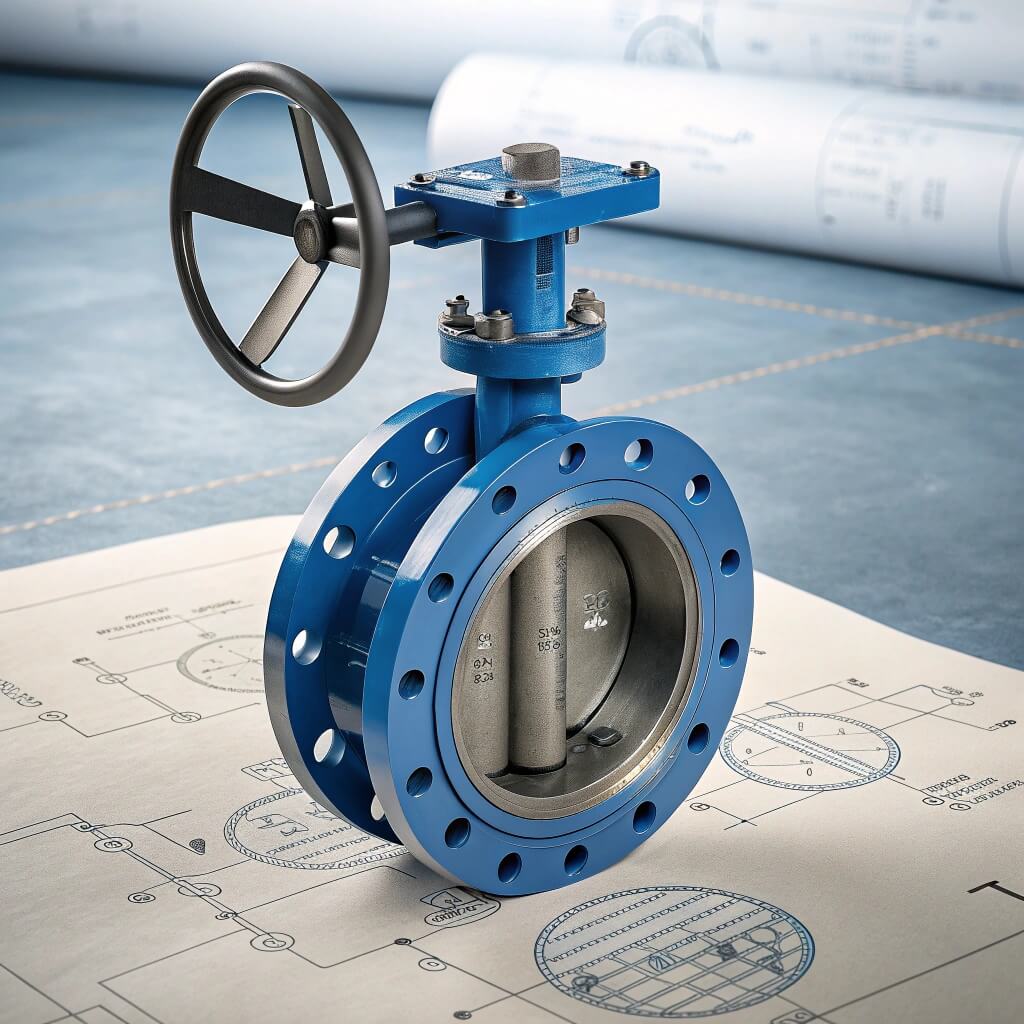
Struggling to select the right butterfly valve can feel like a guessing game, often leading to inefficient systems that waste energy and money. Poorly sized valves cause excessive pressure drops, drive up operational costs, and risk unexpected downtime, derailing your project timelines and budgets. This guide demystifies the relationship between the flow coefficient (CV) and pressure drop, empowering you to choose the perfect butterfly valve for optimal performance and reliability every time.
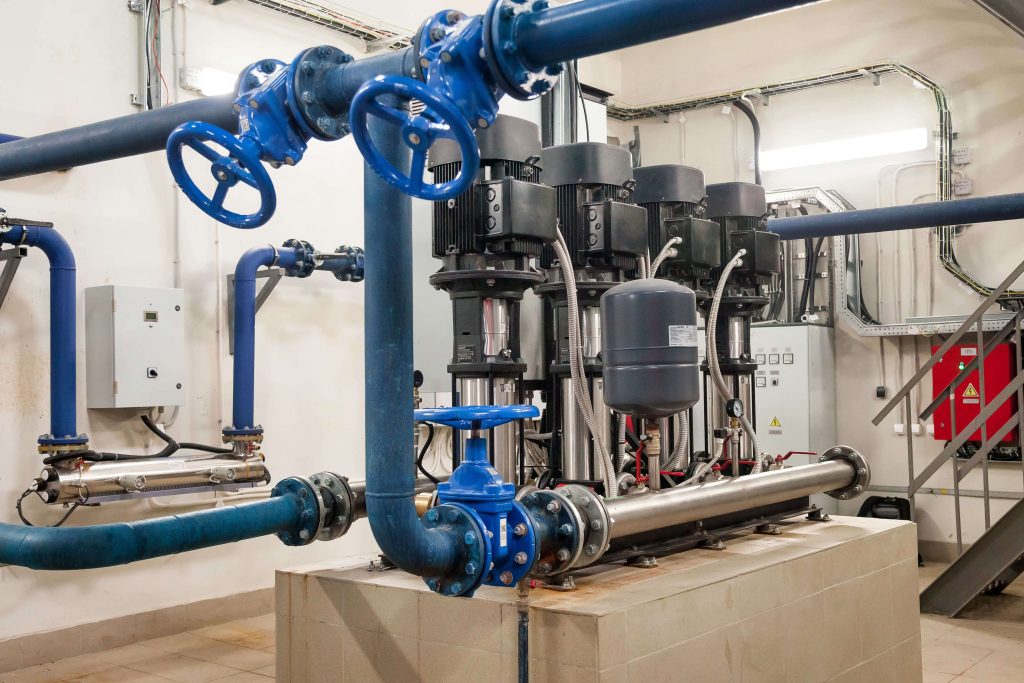
Basics of pressure drop across butterfly valve
What is pressure drop fundamentally?
Pressure drop is the reduction in fluid pressure that occurs as it moves through a pipe or valve, representing the energy lost due to friction and turbulence. In any fluid system, you will always encounter some level of pressure loss as the fluid interacts with the internal surfaces of the components. This loss is a critical factor in determining pump requirements and overall system efficiency.
Why does a valve cause a pressure drop?
A butterfly valve introduces a restriction in the flow path, forcing the fluid to change velocity and direction as it passes around the disc. This disruption creates turbulence and friction, converting some of the fluid’s pressure energy into heat. Here’s the deal: the more the valve closes, the greater the restriction and the higher the resulting pressure drop.
How is pressure drop measured in a system?
You measure pressure drop using pressure gauges or differential pressure transmitters placed upstream and downstream of the valve. The difference between the upstream (P1) and downstream (P2) pressure readings gives you the exact pressure loss across the component. This measurement is vital for:
- Verifying system performance against design specifications.
- Diagnosing flow issues or blockages.
- Ensuring the valve operates within its intended parameters.
Key Takeaway: Measuring pressure drop allows you to quantify a valve’s impact on your system’s energy consumption, ensuring efficient and predictable operation.
| Concept | Description | System Impact |
|---|---|---|
| Pressure Drop (ΔP) | Loss of pressure as fluid passes through the valve. | Directly affects energy consumption and pump sizing. |
| Friction & Turbulence | The physical causes of pressure drop inside the valve. | Increases with flow rate and valve closure. |
| Measurement | Using gauges to find the difference between P1 and P2. | Essential for system diagnostics and validation. |
This data confirms that pressure drop is a direct, measurable consequence of a valve’s physical presence in a pipeline.
CV & pressure drop across butterfly valve
How does CV relate to flow capacity?
The Flow Coefficient (CV) is a value that quantifies a valve’s efficiency at allowing fluid to pass through it. A higher CV value means the valve has a greater flow capacity for a given pressure drop, indicating it is less restrictive. Think of it as a standardized rating for how “open” a valve is to flow.
What is the CV to pressure drop formula?
You can calculate the relationship between CV and pressure drop using a standard formula, which varies slightly based on the fluid. For liquids, the formula is often expressed as: CV = Q * √(SG / ΔP). Here, Q is the flow rate, SG is the specific gravity of the fluid, and ΔP is the pressure drop.
Why is a high CV rating often desired?
A high CV rating is generally preferred because it signifies that the valve can pass a large volume of fluid with minimal pressure loss. But wait, there’s more: this translates directly into lower energy consumption, as your pumps don’t have to work as hard to move the fluid. Choosing a valve with an appropriate CV value ensures:
- Reduced operational costs.
- Enhanced system efficiency.
- Less strain on upstream equipment like pumps.
Key Takeaway: A higher CV value means lower energy bills and a more efficient system, as less pressure is wasted pushing fluid through the valve.
| Factor | Relationship to Pressure Drop | Implication for Selection |
|---|---|---|
| Flow Coefficient (CV) | Inversely related; higher CV means lower ΔP for the same flow. | Seek a high CV for energy efficiency. |
| Flow Rate (Q) | Directly related; higher flow increases ΔP. | Must be known for accurate sizing. |
| Specific Gravity (SG) | Directly related; denser fluids increase ΔP. | Must be considered for non-water fluids. |
Understanding these relationships is crucial for using the CV formula to accurately predict valve performance.
Sizing and pressure drop across butterfly valve
How does valve size affect pressure drop?
Valve size, or nominal diameter, has a significant impact on pressure drop. A larger valve presents a wider flow path, resulting in lower fluid velocity and less friction, which in turn leads to a smaller pressure drop for the same flow rate. Conversely, a smaller valve creates a tighter restriction and a higher pressure drop.
Can you easily oversize a butterfly valve?
Yes, oversizing a butterfly valve is a common and costly mistake. An oversized valve will operate mostly in the near-closed position to achieve the desired flow rate, leading to poor control, potential seat wear, and high velocity zones that can cause erosion. Here’s the critical part: you lose throttling precision and risk damaging the valve over time.
What are the risks if the valve is undersized?
An undersized valve creates an excessive pressure drop, acting as a major bottleneck in your system. This forces the pump to work harder, consuming more energy and potentially failing to deliver the required flow rate. The main risks include:
- High energy consumption and operational costs.
- Potential for cavitation and flashing due to a large pressure differential.
- Inability to meet the system’s maximum flow demand.
Key Takeaway: Proper valve sizing is a balancing act—avoiding both oversizing for control and undersizing for efficiency is essential for system longevity.
| Sizing Issue | Primary Consequence | Secondary Risks |
|---|---|---|
| Oversized Valve | Poor throttling control; valve is too sensitive. | Seat erosion, reduced lifespan. |
| Correctly Sized Valve | Stable control and predictable pressure drop. | Optimal performance and efficiency. |
| Undersized Valve | Excessive pressure drop and high energy use. | Cavitation, noise, inability to meet flow demand. |
This comparison highlights that correct sizing is paramount for balancing control, efficiency, and equipment health.
Factors in pressure drop across butterfly valve
How does the disc angle impact pressure?
The disc angle is the primary factor you control to modulate flow and pressure drop in a butterfly valve. When the valve is fully open (0° or 90°, depending on the design), the disc presents minimal obstruction, resulting in the lowest pressure drop. As the disc closes, it increasingly obstructs the flow path, creating more turbulence and a significantly higher pressure drop.
Does fluid type change the pressure drop?
Absolutely. The properties of the fluid, specifically its viscosity and specific gravity, directly influence the pressure drop. Here’s why that matters:
- Viscosity: More viscous fluids (like oil) generate more internal friction, leading to a higher pressure drop than less viscous fluids (like water) at the same flow rate.
- Specific Gravity: Heavier fluids require more energy to move, which also results in a greater pressure drop across the valve.
What role does the adjacent piping play?
The piping configuration immediately upstream and downstream of the valve plays a surprisingly large role in pressure drop. Elbows, reducers, or other fittings located too close to the valve can disrupt the flow profile, creating turbulence before the fluid even enters the valve. But what does this mean for you? It means the actual pressure drop can be higher than calculated if you don’t account for straight pipe runs.
Key Takeaway: To accurately predict pressure drop, you must consider not only the valve itself but also the disc position, fluid properties, and surrounding pipe layout.
| Influencing Factor | Impact on Pressure Drop (ΔP) | Design Consideration |
|---|---|---|
| Disc Angle | ΔP increases exponentially as the disc closes. | Select a valve with good control characteristics for your operating range. |
| Fluid Properties | Higher viscosity or specific gravity increases ΔP. | Always use correct fluid data in sizing calculations. |
| Adjacent Piping | Bends/fittings near the valve increase turbulence and ΔP. | Ensure adequate straight pipe runs before and after the valve. |
These factors demonstrate that pressure drop is a dynamic variable influenced by operational settings and system design.
High pressure drop across butterfly valve issues
What are cavitation and flashing?
Cavitation and flashing are destructive phenomena caused by a severe pressure drop across the valve. Flashing occurs when the fluid pressure drops below its vapor pressure and it boils, remaining a vapor downstream. Cavitation is when the pressure recovers downstream and the vapor bubbles violently collapse, or implode, back into liquid.
How does noise indicate system problems?
Excessive noise from a valve is a clear warning sign that you have a problem with high-pressure drop or turbulence. A loud rumbling or popping sound often indicates cavitation, where collapsing vapor bubbles create intense, localized shockwaves. Here’s the deal: if your valve sounds like it’s full of gravel, you are likely damaging your equipment.
Can it damage the valve or piping?
Yes, high pressure drop conditions, especially cavitation, can cause severe physical damage. The implosion of cavitation bubbles releases powerful energy jets that can erode the valve disc, body, and downstream piping. This damage includes:
- Pitting and erosion of metal surfaces.
- Increased vibration, leading to fatigue failure in the stem or actuator.
- Compromised sealing and eventual valve failure.
Key Takeaway: Ignoring the symptoms of high pressure drop, like noise and vibration, can lead to catastrophic valve failure and costly system downtime.
| Issue | Description | Symptom |
|---|---|---|
| Flashing | Liquid turns to vapor and stays vapor. | High-velocity flow, potential for erosion. |
| Cavitation | Liquid boils and vapor bubbles collapse downstream. | Loud noise (like gravel), heavy vibration. |
| Erosion | Surface material is worn away by high-velocity fluid. | Pitting, reduced performance, eventual leakage. |
These destructive phenomena are direct results of mismanaging pressure drop within your system.
Control pressure drop across butterfly valve
How can you optimize valve selection?
Optimizing valve selection involves a detailed analysis of your system’s requirements to find a valve that provides the desired control without creating excessive pressure loss. This means looking beyond just pipe size and considering the required flow rates, inlet/outlet pressures, and fluid properties. The goal is to choose a valve with a CV that fits your normal operating point, not just the maximum flow.
Can trim design mitigate pressure drop?
Yes, specialized valve trim can help manage high-pressure drop conditions effectively. Some butterfly valves feature contoured discs or specially designed seats that stage the pressure drop more gradually or direct flow to minimize the risk of cavitation. Here’s the critical part: for severe service applications, selecting an engineered trim can prevent noise, vibration, and damage.
When should you use multiple valves in series?
Using multiple valves in series is a practical strategy for handling a very large pressure drop that would destroy a single valve. By splitting the total pressure drop across two or more valves, you ensure that the pressure at each individual valve stays above the fluid’s vapor pressure. This approach is commonly used to prevent:
- Cavitation and its associated damage.
- Excessive noise and vibration.
- Poor control in high-pressure differential applications.
Key Takeaway: Proactively managing pressure drop through smart valve selection, specialized trims, or multi-valve setups is key to ensuring long-term system reliability and safety.
| Control Strategy | How It Works | Best For |
|---|---|---|
| Optimized Selection | Matching valve CV to the system’s true operating range. | General applications to improve efficiency and control. |
| Specialized Trim | Using engineered discs/seats to stage pressure drop internally. | Severe service with high ΔP where cavitation is a risk. |
| Valves in Series | Splitting the total ΔP across multiple valves. | Very high-pressure drop applications to eliminate cavitation. |
Employing these advanced strategies allows you to design robust systems capable of handling even the most demanding pressure conditions.
Conclusion
You now have the insights to move beyond guesswork and make informed decisions about butterfly valve selection. By understanding how CV value, sizing, and system factors contribute to pressure drop, you can prevent inefficiency, mitigate damaging conditions like cavitation, and optimize control. Don’t let improper valve selection compromise your system’s performance; let our experts help you specify the exact valve for your application using our advanced sizing tools. Our commitment is to engineer fluid control systems that deliver unparalleled efficiency and rock-solid reliability for years to come.
FAQ
- Can I use a single CV value for all disc positions?
No, the CV value changes dynamically with the valve’s disc angle. Manufacturers provide a characteristic curve showing the CV at different percentages of opening, which is essential for evaluating control performance. - What’s the best way to estimate pressure drop early on?
The best way is to use a preliminary sizing formula with your target flow rate and an estimated CV for a valve of your pipe size. While not exact, this gives you a valuable baseline for pump sizing and system design before finalizing the valve selection. - How do I know if cavitation is damaging my valve?
Listen for a loud, rumbling noise, like gravel or rocks flowing through the pipe, and feel for excessive vibration. A post-shutdown visual inspection that reveals pitting or erosion on the disc or valve body is definitive proof of cavitation damage. - Is a higher CV always better for a butterfly valve?
Not necessarily. While a high CV is good for on/off valves to minimize pressure loss, for a control valve, you need a CV that is appropriately sized for your operating range. An excessively high CV can lead to poor control, as tiny movements of the valve will cause large changes in flow. - Can I install a valve that is smaller than my pipe size?
Yes, this is a common and often effective practice called “necking down.” It is done to increase fluid velocity for better control and to match the valve’s optimal operating range to the system’s needs, but it requires using pipe reducers and must be calculated carefully.