
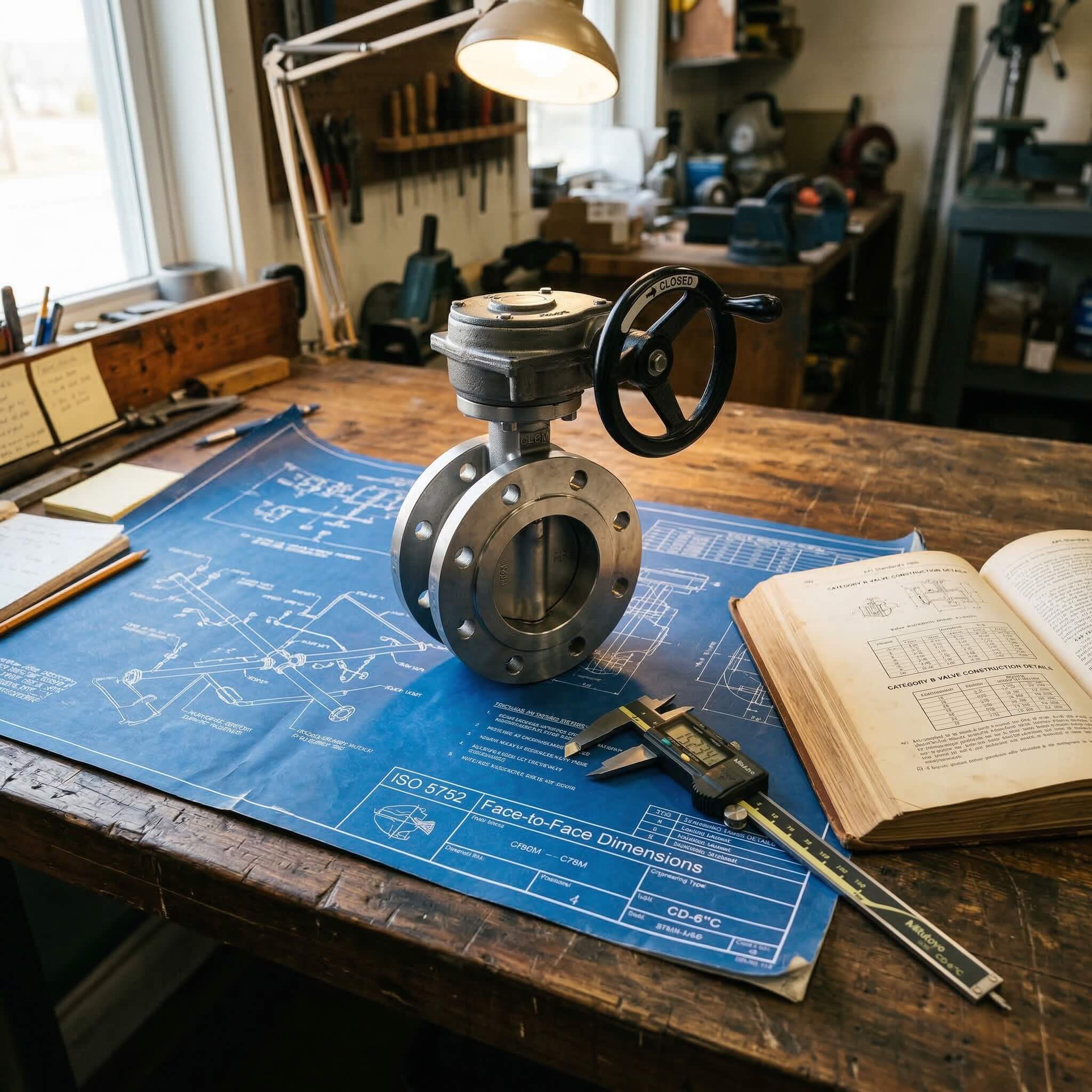
Selecting the correct industrial hardware is often a high-stakes challenge for procurement managers and engineers. When you are tasked with maintaining a complex piping network, the sheer variety of regulatory frameworks can feel overwhelming. Without a clear butterfly valve specification standard, you risk purchasing components that fail to align with existing flanges or, worse, rupture under operational pressure.
Integrating non-compliant valves into a high-pressure system creates significant safety hazards and financial liability. A single mismatch in material grade or pressure rating can lead to toxic leaks, unplanned shutdowns, and expensive emergency repairs. These technical oversights don’t just delay projects; they compromise the structural integrity of your entire fluid control infrastructure.
Fortunately, adhering to internationally recognized benchmarks ensures that every butterfly valve specification standard is met with precision. By following established guidelines like API, ASME, and ISO, professionals can guarantee component interchangeability and long-term reliability. This guide breaks down the essential standards required to optimize your industrial operations and ensure complete system safety.
Why is a uniform standard necessary for safety?
A uniform butterfly valve specification standard ensures that every valve produced meets minimum safety, thickness, and performance requirements. These regulations eliminate the danger of using substandard materials in critical environments. Consistency across the industry allows engineers to design systems with predictable safety margins.
Does standardization reduce catastrophic risks?
Standardized designs prevent mechanical failures by mandating specific wall thicknesses and structural reinforcements. When a valve is built to a known code, its failure points are well-documented and tested.
But that’s not all.
- Standards require rigorous pressure testing before any unit leaves the factory.
- They mandate material traceability to prevent the use of brittle or weak alloys.
- Uniform dimensions ensure that valves fit perfectly into pipes without creating stress points.
How does it impact global system compatibility?
Compatibility allows operators to source replacement parts from multiple global suppliers without fearing a mismatch. This flexibility is vital for maintaining uptime in 24/7 industrial facilities.
Think about it:
- Standardized flange patterns mean a valve from Asia will fit a pipe in Europe.
- Unified face-to-face dimensions simplify the replacement process during maintenance.
- Common labeling systems help technicians identify pressure limits instantly.
Key Takeaway: Adhering to these safety codes protects your personnel and your bottom line by ensuring every component is built to withstand its environment.
The following table summarizes why these safety protocols are indispensable for modern piping.
| Safety Factor | Impact on Operations | Benefit to User |
|---|---|---|
| Structural Rules | Prevents body ruptures | Enhanced site safety |
| Material Tracking | Guarantees alloy quality | Longer service life |
| Pressure Caps | Sets safe operating limits | Risk mitigation |
What are the primary API 609 requirements?
The API 609 butterfly valve specification standard is the definitive benchmark for valves used in the oil, gas, and petrochemical sectors. It provides detailed criteria for both resilient-seated and high-performance offset designs. Following this butterfly valve specification standard ensures that equipment can handle the volatile nature of hydrocarbon processing.
What is the difference between Category A and B?
API 609 separates valves into two categories based on their design complexity and intended service severity. Category A covers concentric valves, while Category B focuses on high-performance, often triple-offset models.
Here is why it matters:
- Category A valves are typically used for utility services and lower pressures.
- Category B valves feature specialized designs for extreme temperatures and pressures.
- Selecting the wrong category can lead to rapid seat wear and leakage.
How does it define body shell thickness?
This standard mandates specific shell thicknesses to ensure the valve body does not deform under maximum rated pressure. It accounts for the mechanical stresses applied by piping weight and thermal expansion.
The result?
- Bodies are engineered to resist high-velocity fluid impacts.
- Structural integrity is maintained even during pressure surges.
- External leakage is prevented through robust casing designs.
Key Takeaway: Implementing API 609 designs ensures that your critical process lines are equipped with valves capable of managing the world’s most demanding fluids.
This table provides a quick look at the API 609 categorization system.
| Category | Design Focus | Typical Application |
|---|---|---|
| Category A | Concentric/Resilient | Water and utility air |
| Category B | Offset/High-Performance | Oil, gas, and steam |
How does ASME B16.34 manage pressure limits?
ASME B16.34 is a comprehensive butterfly valve specification standard that regulates the relationship between material strength and operating temperature. It provides the mathematical framework used to determine how much pressure a valve can safely hold as heat increases. This ensures that valves remain functional under varying thermal conditions.
Does temperature dictate pressure ratings?
As temperatures rise, the molecular strength of the valve metal decreases, necessitating a lower allowable pressure. ASME B16.34 provides tables that adjust the maximum PSI based on the specific material grade.
But that’s not all:
- It prevents engineers from over-pressurizing systems in high-heat environments.
- It classifies valves into “Classes” such as 150, 300, or 600.
- The standard covers a wide range of materials from carbon steel to exotic alloys.
Why are wall thickness calculations critical?
Wall thickness calculations protect the valve from bursting due to internal fluid pressure or external environmental stress. ASME B16.34 provides the minimum dimensions required for every pressure class.
Here is the truth:
- Thicker walls provide a safety buffer against internal corrosion.
- They allow the valve to withstand the torque required for tight sealing.
- Calculations are based on the weakest point of the valve body.
Key Takeaway: Using ASME B16.34 ensures your valve selection is scientifically grounded in the physics of pressure and temperature.
The table below outlines the relationship between ASME classes and safe operating thresholds.
| ASME Class | Pressure at 100°F | Pressure at 400°F |
|---|---|---|
| Class 150 | 285 PSI | 230 PSI |
| Class 300 | 740 PSI | 600 PSI |
What standards apply to water utility networks?
In water and wastewater treatment, the AWWA C504 butterfly valve specification standard is the governing authority. It focuses on long-term durability, corrosion resistance, and the specific needs of potable water systems. Utilizing this butterfly valve specification standard ensures that municipal infrastructure remains reliable for decades.
Is AWWA C504 the benchmark for municipal use?
AWWA C504 is specifically designed for the unique challenges of public water distribution, including buried service and large diameters. It prioritizes the longevity of the valve seal over thousands of cycles.
But it gets better:
- It regulates valves up to 72 inches and larger for massive transmission lines.
- The standard dictates specific testing for cycle life and torque.
- It includes requirements for the actuators used in water plants.
Does corrosion resistance follow strict rules?
Since water valves are often submerged or buried, the standard mandates specialized coatings and non-corrosive internal parts. This prevents iron from leaching into the water supply and keeps the mechanism from seizing.
The reality?
- Internal parts must be made from stainless steel or bronze alloys.
- Epoxy coatings are required to protect the exterior from soil acidity.
- Seal materials must be safe for contact with drinking water.
Key Takeaway: Choosing AWWA-compliant valves guarantees that your water project meets the highest hygiene and durability standards required by public law.
Review the primary features of the AWWA C504 standard in the summary below.
| Feature | Requirement | Benefit |
|---|---|---|
| Diameter Range | 3″ to 72″+ | Covers all utility sizes |
| Seal Cycles | High cycle life | Reduced maintenance |
| Coating | NSF-61 Epoxy | Potable water safety |
Why do ISO 5752 dimensions matter for fitment?
ISO 5752 is the international butterfly valve specification standard that dictates the physical dimensions of the valve body. It ensures that a valve labeled as “DN100” will actually fit into the space allocated in the piping blueprints. Accurate dimensions are the foundation of any successful installation.
Uniformity in size prevents the need for costly field modifications or custom spacers.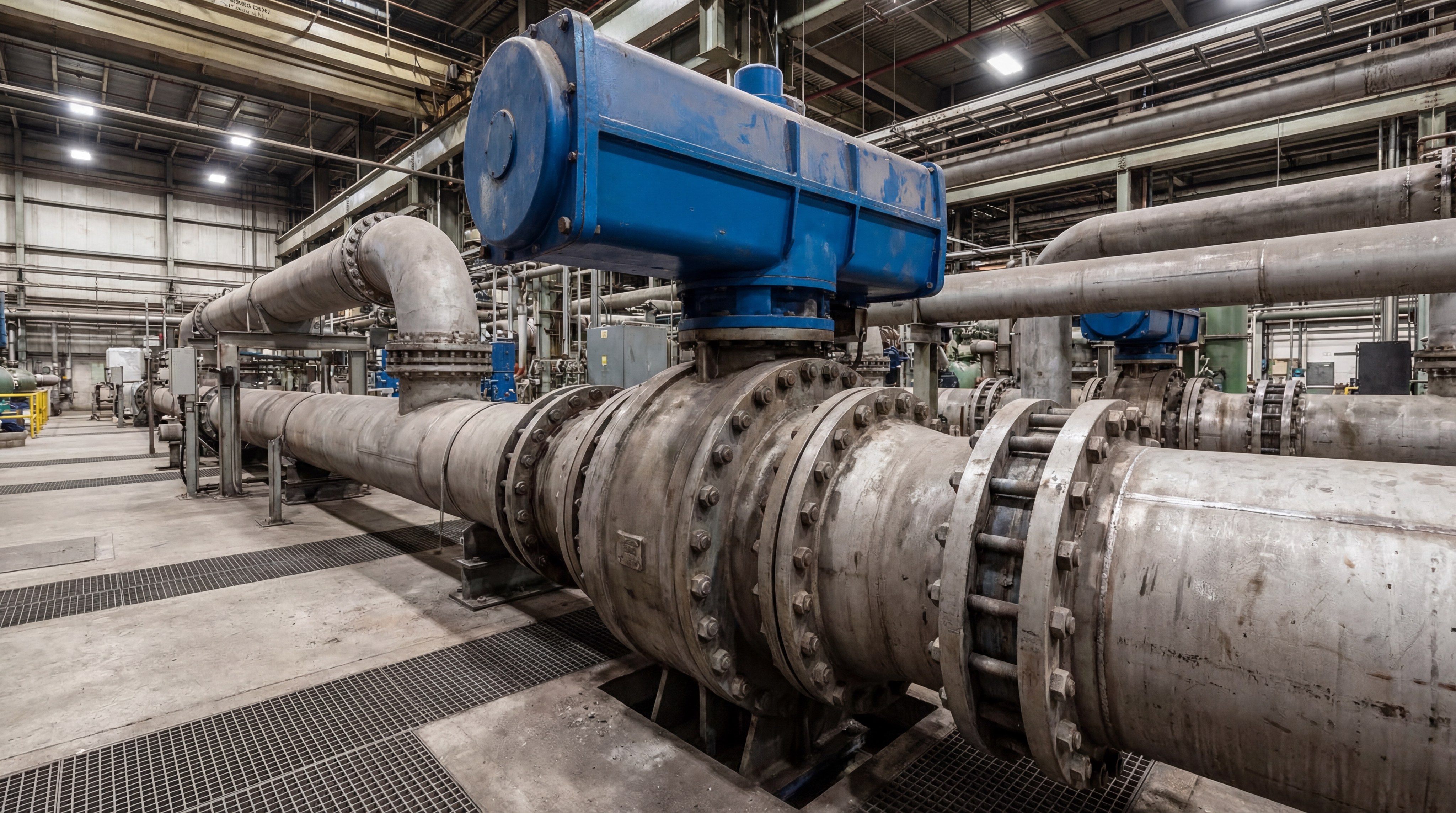
Can face-to-face lengths vary by standard?
Even if two valves have the same diameter, their face-to-face length can differ depending on whether they follow ISO, ASME, or EN standards. ISO 5752 provides a series of “face-to-face” tables to prevent this confusion.
Consider these facts:
- Wafer and lug valves have much shorter lengths than double-flanged versions.
- Series 13 and Series 14 specify different widths for the same valve size.
- Correct sizing prevents the pipe flanges from being forced apart.
How does ISO 5211 standardize automation?
ISO 5211 defines the interface between the valve top and the actuator, ensuring that any standard motor or piston can be mounted. This standardizes the bolt patterns and drive stem dimensions.
Why does it matter?
- It allows you to switch between electric and pneumatic actuators easily.
- It eliminates the need for expensive custom mounting brackets.
- The standard ensures the actuator can safely transmit torque to the disc.
Key Takeaway: Proper dimensional compliance ensures a seamless installation process, reducing labor costs and eliminating the risk of piping stress.
The following table compares common dimensional series under the ISO framework.
| ISO Series | Type | Dimensional Profile |
|---|---|---|
| Series 13 | Short | Ideal for compact spaces |
| Series 14 | Medium | Standard for general piping |
| Series 20 | Long | Used for heavy-duty isolation |
How does EN 593 regulate European markets?
The EN 593 butterfly valve specification standard is the primary regulation for metallic valves sold within the European Union. It combines design, testing, and documentation requirements into a single cohesive framework. Companies using this butterfly valve specification standard can easily achieve CE marking and trade across borders.
What are the specific testing mandates?
EN 593 requires every valve to undergo rigorous hydrostatic testing of the shell and a seat leakage test. These tests must be performed at pressures significantly higher than the intended working limit.
Here is why it matters:
- It ensures that there are no “pinhole” leaks in the cast body.
- The seat test confirms the valve provides a bubble-tight shutoff.
- Testing data must be archived for quality control audits.
Is material traceability a core requirement?
EN standards place heavy emphasis on the origin of materials, requiring EN 10204 Type 3.1 certificates for all pressure-retaining parts. This ensures that the chemical composition of the steel matches the design specification.
Think about it:
- Traceability prevents the use of “scrap” metal in valve manufacturing.
- It allows for precise forensic analysis if a failure ever occurs.
- The standard ensures the valve can withstand the specified temperature range.
Key Takeaway: Complying with EN 593 is essential for any project within the European market to ensure legal safety compliance and performance quality.
A summary of EN 593 compliance categories is provided below.
| Compliance Area | Requirement | Goal |
|---|---|---|
| Testing | EN 12266-1 | Zero leakage proof |
| Marking | EN 19 | Easy identification |
| Documentation | 3.1 Certification | Full traceability |
Which material standards prevent fluid leakage?
Material selection follows the butterfly valve specification standard defined by organizations like ASTM. These rules dictate the exact chemical makeup of the body, disc, and stem to ensure they don’t react with the fluid. Choosing the correct material prevents premature erosion and internal leaks.
Are ASTM grades necessary for metal parts?
ASTM grades like A126 (Cast Iron) or A351 (Stainless Steel) provide a guarantee of mechanical properties like tensile strength and hardness. These grades ensure the valve won’t crack under mechanical load.
But that’s not all:
- ASTM A536 (Ductile Iron) provides the flexibility needed for water systems.
- A351 CF8M (Stainless Steel) is required for aggressive acid service.
- Using non-ASTM metals risks “unpredictable” failure under stress.
How do elastomers meet sealing standards?
The soft seals in a butterfly valve must follow standards like FDA or WRAS if they are used in food or water systems. These standards ensure the rubber doesn’t leach chemicals or degrade.
Here is the truth:
- EPDM is the standard for steam and hot water applications.
- PTFE is used for the highest level of chemical resistance.
- Nitrile (NBR) is preferred for oil and gas environments.
Key Takeaway: Selecting the right material based on global standards is the only way to prevent corrosion-related failures and fluid contamination.
This table highlights common material standards for butterfly valve components.
| Component | Common Standard | Preferred Environment |
|---|---|---|
| Body | ASTM A536 | General Industrial |
| Disc | ASTM A351 CF8M | Corrosive Processing |
| Seat | PTFE / EPDM | Temperature sensitive |
What testing protocols ensure valve performance?
Testing is the final checkpoint in any butterfly valve specification standard. Standards like API 598 or ISO 5208 define exactly how a valve must be pressurized to prove it is fit for service. This butterfly valve specification standard provides the peace of mind that a valve won’t leak when first installed.
Is fire safety testing required for hazards?
In industries handling flammable fluids, valves must pass API 607 or ISO 10497 fire tests. These tests involve burning the valve at high heat to ensure it still seals after the soft parts are destroyed.
Here is why it matters:
- Fire-safe valves prevent a small leak from fueling a massive explosion.
- They allow the valve to remain operational for emergency shut-off.
- The test confirms the secondary “metal-to-metal” seal works.
How do shell and seat checks prevent leaks?
The shell test checks the body for structural cracks, while the seat test checks the disc’s ability to stop flow completely. Most standards require these tests to be conducted with water at 1.1 to 1.5 times the rated pressure.
The result?
- It identifies manufacturing defects before the valve is buried or installed.
- It verifies that the torque required to close the valve is within limits.
- A “Zero Leakage” result is often the requirement for acceptance.
Key Takeaway: Rigorous testing protocols are the only objective way to verify that a valve is safe for its intended pressure class.
The table below summarizes the standard testing pressures used in the industry.
| Test Type | Pressure Multiple | Media |
|---|---|---|
| Shell Test | 1.5x Rated | Water/Air |
| Seat Test | 1.1x Rated | Water/Air |
| High Pressure | 100% of Rated | Nitrogen |
How do MSS SP-67 and SP-68 differ?
The Manufacturers Standardization Society (MSS) provides specialized butterfly valve specification standard codes for unique applications. SP-67 is the standard for general-purpose butterfly valves, while SP-68 is reserved for high-pressure, offset designs. Understanding these differences is key for proper procurement.
Is one better for general industrial use?
MSS SP-67 is the go-to standard for resilient-seated valves used in basic water and air systems. It focuses on the simplicity and cost-effectiveness of the concentric design.
But that’s not all:
- It covers wafer and lug types with a focus on ease of installation.
- The standard is less complex than API 609, making it easier to follow for basic projects.
- It is the preferred standard for HVAC and general utility lines.
Do these standards cover offset designs?
MSS SP-68 is specifically written for “high-performance” butterfly valves that use an offset disc to reduce seat wear. This standard covers the increased torque and pressure requirements of these advanced models.
The result?
- It provides guidelines for valves used in steam and chemical lines.
- The standard ensures the offset geometry allows for a tighter seal.
- It bridges the gap between basic utility and heavy process valves.
Key Takeaway: Using MSS standards allows you to choose a level of engineering that matches the budget and technical needs of your specific system.
Compare the two MSS standards in the table below to see which fits your needs.
| Standard | Valve Type | Ideal Application |
|---|---|---|
| MSS SP-67 | Resilient Seated | HVAC and General Utility |
| MSS SP-68 | High Performance | Steam and Chemicals |
How do you choose the right design standard?
The final choice of a butterfly valve specification standard depends on your industry, geography, and specific fluid characteristics. To ensure you make the right decision, you must consult with a qualified butterfly valve specification standard expert. Balancing cost with compliance is the ultimate goal of any successful project.
Should industry type dictate the selection?
Yes, because different industries face different risks. For example, a power plant prioritizes thermal limits (ASME), while a water treatment plant prioritizes corrosion resistance (AWWA).
Here is the truth:
- Oil and Gas projects should almost always default to API 609.
- Chemical plants often look for EN 593 or ISO 5752 for global consistency.
- Residential plumbing follows different, less stringent standards.
What documentation confirms full compliance?
Always request a Mill Test Certificate (MTC) and a hydrostatic test report before accepting delivery. These documents prove that the valve has met the specified butterfly valve specification standard during manufacturing.
The result?
- You have a legal record of safety for your insurance and safety audits.
- You can verify that the materials used are exactly what you ordered.
- The reports confirm that the valve passed its final pressure checks.
Key Takeaway: Thoroughly vetting your standards and documentation ensures your fluid control system operates at peak efficiency with zero safety compromises.
Use this selection matrix to guide your next procurement decision.
| Priority | Recommended Standard |
|---|---|
| Extreme Heat/Pressure | ASME B16.34 |
| High-Volatility Fluids | API 609 |
| Municipal Potable Water | AWWA C504 |
Conclusion
Navigating the world of butterfly valve standards is essential for preventing system failure, ensuring personnel safety, and maintaining operational uptime. By choosing the correct API, ASME, ISO, or AWWA framework, you solve the critical problems of component mismatch and structural instability. At RUITO, we are committed to delivering precision-engineered solutions that meet or exceed these rigorous global benchmarks. Our vision is to empower industrial progress through fluid control systems that are as safe as they are efficient. If you need assistance selecting the perfect standard for your next project, contact us today for a professional technical consultation.
FAQ
Can I use an AWWA valve in an oil refinery?
Generally no, because AWWA standards are designed for water systems and lack the high-temperature and fire-safe ratings required for hydrocarbons. Refineries require API 609 or ASME B16.34 to handle flammable fluids safely.
What’s the best standard for an HVAC system?
The best standard for HVAC is usually MSS SP-67, as it covers the resilient-seated valves typically used for chilled and hot water loops. It provides the necessary safety without the excessive cost of high-performance process standards.
How do I know if a valve is CE marked?
You can confirm a CE mark by checking the nameplate on the valve body and reviewing the manufacturer’s Declaration of Conformity. This mark indicates that the valve meets the essential safety requirements for the European market.
Can I install a wafer valve in a dead-end line?
No, you should use a lug-type valve for dead-end service because wafer valves require pressure from both sides to stay secure. A lug valve can be bolted directly to the flange, allowing the downstream pipe to be removed safely.
How do I know if the seat material is standard-compliant?
Verify compliance by checking the material code stamped on the valve or reviewing the technical data sheet provided by the supplier. Standard seat materials like EPDM or PTFE will be clearly labeled to ensure they match your fluid’s chemical profile.