
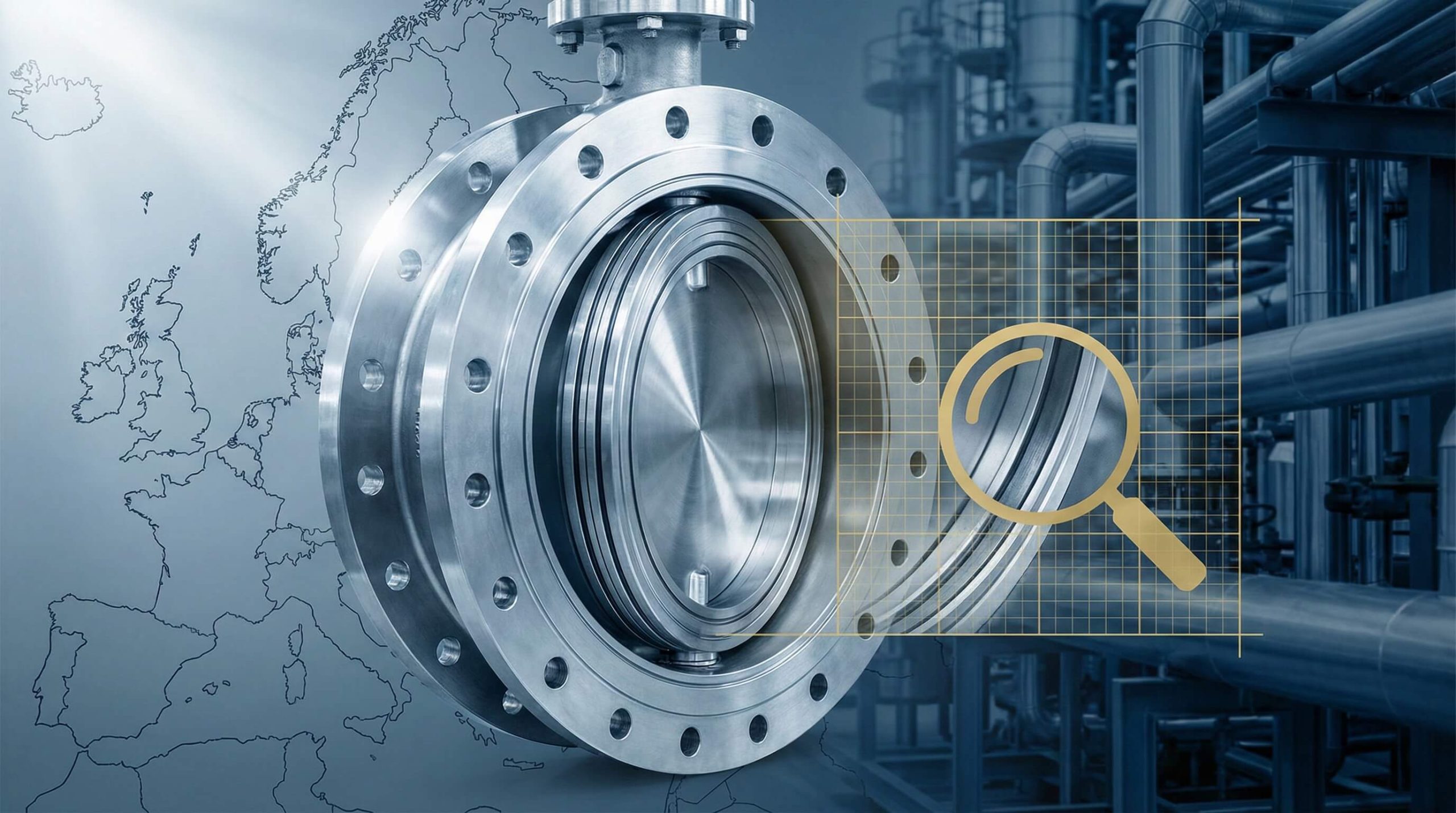
Identifying the top 21 best butterfly valve manufacturers in the world for 2025 requires a rigorous evaluation of engineering precision, material traceability, and global certification compliance. In today’s complex industrial landscape, procurement managers face the daunting challenge of sourcing components that balance high-tier performance with cost-efficiency. A single valve failure in a high-pressure system can lead to catastrophic downtime, environmental hazards, and significant financial losses. This comprehensive guide provides the necessary insights into the global market and the leading butterfly valve manufacturers in europe to ensure your fluid control systems remain safe and efficient.
How do top global butterfly valve manufacturers compare?
Top global manufacturers compare primarily through their adoption of advanced sealing technologies and their ability to meet stringent international testing standards. When evaluating butterfly valve manufacturers in europe against global competitors, the focus often shifts toward specialized machining and material purity. These industry leaders set themselves apart by investing heavily in research and development to reduce operating torque and extend the lifecycle of the valve.
Evaluation Criteria for 2025 Market Leaders
Modern procurement requires a checklist that goes beyond simple price points to ensure long-term operational stability. The elite tier of manufacturers is defined by several critical technical factors.
- Machining Accuracy: Use of multi-axis CNC machines for seat and disc finishing.
- Material Traceability: Provision of Mill Test Certificates (MTC) for all pressure-retaining parts.
- Testing Protocols: Adherence to API 598 or EN 12266-1 pressure testing standards.
- Sealing Longevity: Rated cycle life for both soft-seated and metal-seated designs.
The Shift Toward Triple Offset Technology
Think about this: Why are more industries moving away from standard gate valves in favor of advanced butterfly designs? The move toward triple offset technology is driven by the need for zero-leakage performance in high-temperature applications. These designs eliminate the friction that typically wears down seals, allowing for a much longer service life in harsh environments.
Key Takeaway: Global leaders are prioritizing sealing longevity and reduced maintenance cycles over low initial costs to provide better total cost of ownership.
| Feature | Concentric Design | Triple Offset Design |
|---|---|---|
| Sealing Type | Resilient/Soft Seat | Metal-to-Metal |
| Friction Level | High during travel | Zero until contact |
| Pressure Class | Usually up to PN25 | Up to PN100+ |
| Application | Water/Low Pressure | Steam/High Pressure |
Analysis: High-tier manufacturing hubs in Europe and Asia are increasingly shifting their production capacity toward triple offset designs to meet 2025 energy sector demands.
Why choose butterfly valve manufacturers in Europe?
You choose European manufacturers because they offer unparalleled adherence to environmental regulations and high-precision engineering for critical safety applications. The reputation of butterfly valve manufacturers in europe is built on decades of metallurgical expertise and a strict regulatory framework. These suppliers often lead the market in developing solutions for high-purity and highly corrosive media.
Stringent Environmental and Safety Directives
European production is governed by some of the most rigorous safety standards in the global industrial sector. These directives ensure that every component produced is capable of handling the specified mechanical stresses.
- PED 2014/68/EU: Mandatory compliance for pressure equipment safety.
- ATEX Directive: Certification for equipment used in explosive atmospheres.
- CE Marking: Guarantee of conformity with health and safety standards.
- ISO 14001: Commitment to environmentally sustainable manufacturing processes.
High-Purity Applications and Sanitary Standards
Here is the deal: For food, beverage, and pharmaceutical sectors, European standards are considered the global gold standard. Manufacturers in this region specialize in polished stainless steel and USP Class VI elastomers. This ensures that the valves do not contaminate the media and remain easy to sterilize during CIP (Clean-in-Place) procedures.
Key Takeaway: European manufacturers excel in high-purity and corrosive environments where regulatory compliance is non-negotiable for project approval.
| Country | Regional Specialization | Target Industries |
|---|---|---|
| Germany | Precision Engineering | Chemical & Power |
| Italy | Forged Valve Bodies | Oil & Gas |
| France | Nuclear Grade Valves | Energy |
| Spain | Desalination Solutions | Water Treatment |
Analysis: The cost-to-quality ratio for European engineered valves remains high, making them the preferred choice for high-tier industrial projects.
What defines high-performance butterfly valve designs?
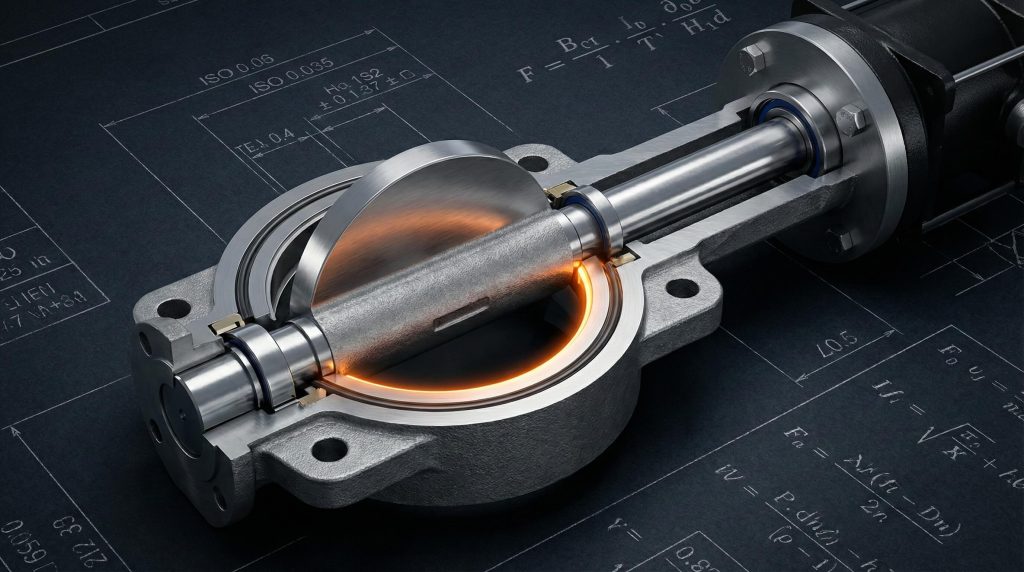
High-performance designs are defined by their sophisticated offset geometries which allow for bi-directional sealing and high-cycle reliability. While searching for butterfly valve manufacturers in europe, you will find that “high-performance” typically refers to double offset valves. These units are engineered to handle pressures and temperatures that would destroy a standard concentric valve.
Double and Triple Offset Sealing Mechanisms
The geometry of the valve disc relative to the stem and seat is the primary factor in its performance rating. By offsetting the shaft, the disc “cam-closes” into the seat rather than rubbing against it.
- Zero Leakage: Achievement of bubble-tight shutoff in both flow directions.
- Lower Torque: Reduced friction allows for smaller, more cost-effective actuators.
- Extended Seat Life: Minimal wear during the opening and closing cycles.
- Temperature Resilience: Ability to operate in ranges from cryogenic to over 500°C.
Advanced Coating and Lining Innovations
You might be wondering: Does the internal coating of the valve really matter for performance? In many chemical applications, the coating is the only thing preventing total structural failure. Premium manufacturers utilize PTFE, PFA, or specialized epoxy coatings to protect the underlying metal from aggressive chemical attack.
Key Takeaway: High-performance valves are defined by their ability to handle extreme pressure-temperature cycles without losing sealing integrity.
| Pressure Rating | Standard Butterfly | High Performance |
|---|---|---|
| ANSI Class 150 | Common | Standard |
| ANSI Class 300 | Rare | Standard |
| ANSI Class 600 | N/A | Available (Triple Offset) |
| Max Temp (°C) | 120°C | 550°C+ |
Analysis: Precision in design significantly extends the operational life of the attached actuator by maintaining consistent torque requirements.
How to select the right butterfly valve for your system?
Selecting the right valve involves a detailed analysis of your system’s pressure, temperature, and the chemical nature of the fluid. Many butterfly valve manufacturers in europe provide technical consultation to help you match valve specifications to your specific application. Making the wrong choice can lead to cavitation or premature seal degradation, which compromises the entire piping system.
Matching Valve Material to Media Compatibility
The material of the body, disc, and seat must be compatible with the fluid to prevent corrosion or erosion. Choosing the wrong alloy is one of the most common causes of premature valve failure in industrial settings.
- Ductile Iron: Best for general water and non-corrosive utilities.
- Stainless Steel (304/316): Standard for food, chemical, and marine environments.
- Duplex Steel: Required for high-chloride environments like desalination.
- Bronze/Aluminum Bronze: Excellent for seawater and fire protection systems.
Understanding Flow Coefficients and Cv Values
Let’s look closer: Why does the Cv value matter so much for your system’s overall efficiency? The flow coefficient represents the volume of water that will flow through a wide-open valve with a pressure drop of 1 psi. Incorrectly sizing a valve can lead to excessive pressure drops or high-velocity flows that damage downstream equipment.
Key Takeaway: Correct sizing and material matching are the most critical factors in preventing cavitation and premature mechanical wear.
| Valve Size (DN) | Average Cv (Concentric) | Average Cv (High Performance) |
|---|---|---|
| DN100 (4″) | 600 – 800 | 450 – 650 |
| DN200 (8″) | 2,500 – 3,200 | 1,800 – 2,500 |
| DN400 (16″) | 11,000 – 14,000 | 8,000 – 11,000 |
| DN600 (24″) | 25,000 – 30,000 | 18,000 – 24,000 |
Analysis: Calculating the required torque for automation requires a step-by-step logic that accounts for safety factors and media viscosity.
What certifications should premium manufacturers hold?
Premium manufacturers should hold a suite of international certifications that validate their quality management and product safety. When you audit butterfly valve manufacturers in europe, these certifications serve as the baseline for entry into high-stakes projects. Without third-party verification, it is impossible to guarantee that a valve will perform as advertised under stress.
Global Quality Management Systems (ISO 9001)
ISO 9001 is the foundation of any reliable manufacturing operation, ensuring consistency from the design phase to final delivery. It mandates that the factory has documented processes for every stage of production.
- Design Control: Verification that engineering drawings meet safety standards.
- Supplier Evaluation: Strict control over the quality of raw materials and castings.
- Corrective Action: A system for identifying and fixing manufacturing defects.
- Continuous Improvement: Regular audits to improve production efficiency and quality.
Industry-Specific Approvals (API, WRAS, DNV)
Wait, there’s more. Certifications are often the only objective proof of performance in specific environments like offshore rigs or drinking water systems. For example, API 609 specifically covers the design and testing of butterfly valves for the petroleum industry, while WRAS is essential for the UK water market.
Key Takeaway: Never source valves for critical systems without verified 100% pressure test reports and relevant industry certifications.
| Certification | Industry Sector | Primary Focus |
|---|---|---|
| API 609 | Oil & Gas | Design & Fire Safety |
| WRAS / NSF | Water Treatment | Potable Water Safety |
| DNV / ABS | Marine / Offshore | Structural Integrity |
| SIL 3 | Automation | Functional Safety |
Analysis: Third-party inspections by firms like SGS or TUV are essential for de-risking global procurement and ensuring material authenticity.
Which materials are best for corrosive fluid control?
The best materials for corrosive fluid control are those that offer a high Pitting Resistance Equivalent Number (PREN) and chemical inertness. Leading butterfly valve manufacturers in europe utilize high-grade alloys to combat the effects of acids, alkalis, and chlorides. Selecting the right material is a balance between initial cost and the expected lifecycle of the plant.
The Dominance of Stainless Steel and Exotic Alloys
Stainless steel remains the most versatile choice for the majority of corrosive applications. However, for more aggressive environments, exotic alloys are often required to prevent stress corrosion cracking.
- 316L Stainless Steel: High resistance to pitting in chloride environments.
- Monel 400: Ideal for hydrofluoric acid and sea water applications.
- Hastelloy C276: Excellent resistance to a wide range of chemical media.
- Titanium: The ultimate choice for high-temperature bleaching and salt solutions.
Resilience of PTFE and Elastomer Seating
The best part? Modern elastomers can now handle temperatures up to 200°C while maintaining chemical resistance. PTFE-lined valves offer near-universal chemical resistance, making them a staple in the chemical processing industry. These linings protect the metal body from contact with the corrosive fluid, allowing for the use of less expensive base metals.
Key Takeaway: Material selection should always focus on the 25-year lifecycle performance rather than the immediate purchase price.
| Chemical | Preferred Seat | Preferred Disc |
|---|---|---|
| Sulfuric Acid | PTFE / Viton | Hastelloy |
| Sodium Hypochlorite | EPDM | Titanium |
| Hydrochloric Acid | PFA Lining | PFA Coated SS |
| Brine/Seawater | BUNA-N | Aluminum Bronze |
Analysis: Technical material purity impacts the reliability of the valve seat, especially in high-cycle automated applications.
How does triple offset design improve reliability?
Triple offset design improves reliability by completely eliminating the friction between the seat and the seal during the valve’s travel. For butterfly valve manufacturers in europe, this technology represents the pinnacle of valve engineering for the power and oil industries. The unique geometry ensures that the seal only makes contact at the final point of closure.
Eliminating Friction and Seat Wear
Traditional butterfly valves suffer from friction as the disc rubs against the seat throughout its rotation. The triple offset design uses three distinct offsets to create a cam-like action.
- Offset 1: The shaft is located behind the sealing plane.
- Offset 2: The shaft is centerline-offset from the pipe.
- Offset 3: The seat cone axis is inclined relative to the pipe centerline.
- Result: Friction-free opening and closing for thousands of cycles.
Bidirectional Zero-Leakage Performance
Actually: Most standard concentric valves only seal effectively in one direction. Triple offset valves, however, are designed to provide bubble-tight shutoff regardless of flow direction. This is critical for safety in systems where backflow could lead to hazardous conditions or equipment damage.
Key Takeaway: Triple offset technology is the ultimate solution for high-pressure steam and gas applications where standard valves fail.
| Leakage Class | Standard | Performance Level |
|---|---|---|
| Class IV | ANSI/FCI 70-2 | Metal-to-metal (Standard) |
| Class VI | ANSI/FCI 70-2 | Resilient/Soft Seat |
| Zero Leakage | API 598 / ISO 5208 | Triple Offset / High Perf |
| Bubble Tight | EN 12266-1 | Premium Soft Seat |
Analysis: While the initial investment is higher, the cost-benefit analysis of upgrading to triple offset valves shows significant savings in maintenance.
What industries rely most on precise butterfly valves?
Precise butterfly valves are the backbone of industries that require large-scale fluid handling with minimal space requirements. Many butterfly valve manufacturers in europe tailor their product lines to meet the specific demands of these high-volume sectors. From water treatment to heavy petrochemical processing, the versatility of the butterfly design makes it indispensable.
Municipal Water and Desalination Infrastructure
Large-diameter butterfly valves are the standard for municipal water distribution due to their compact face-to-face dimensions and light weight. In desalination plants, the focus shifts to material durability against high-salinity water.
- Large Bore Sizes: Ability to manufacture valves up to DN3000 and beyond.
- Corrosion Resistance: Use of specialized coatings for buried service.
- Actuation Compatibility: Seamless integration with electric or hydraulic actuators.
- Low Head Loss: Optimized disc profiles to reduce energy consumption in pumping.
Oil, Gas, and Petrochemical Processing
But wait: What about extreme offshore environments? In these settings, valves must withstand high pressures and the corrosive effects of salt spray. The oil and gas industry relies on high-performance butterfly valves for emergency shutdown (ESD) and fire-safe applications where reliability is the only priority.
Key Takeaway: Demand for high-precision valves is highest in sectors requiring high-cycle reliability and low long-term maintenance.
| Industry | Market Share (Est. 2025) | Primary Valve Type |
|---|---|---|
| Water & Wastewater | 35% | Concentric / Large Bore |
| Oil & Gas | 25% | Triple Offset |
| Chemical Processing | 20% | Lined / High Perf |
| Power Generation | 15% | High Temp / Metal Seat |
Analysis: Regional growth analysis shows that while Asia leads in volume, Europe remains the leader in specialized valve infrastructure.
How to evaluate the manufacturing quality of suppliers?
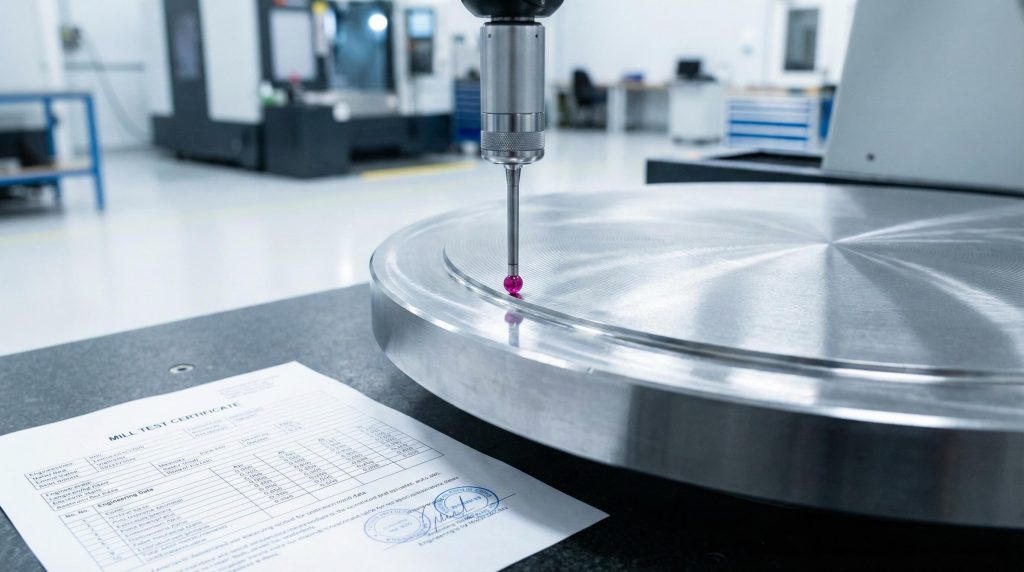
Evaluating manufacturing quality requires a deep dive into the supplier’s internal quality control (QC) and their machining precision. When assessing butterfly valve manufacturers in europe, look for transparency in their foundry operations and testing labs. A manufacturer that hides its process is likely cutting corners on material quality or testing rigor.
CNC Machining and Dimensional Accuracy
The performance of a butterfly valve is entirely dependent on the tight tolerances of the disc and seat interface. Modern factories use high-precision CNC equipment to ensure every valve meets the engineering drawings.
- Disc Profile Machining: Ensuring a smooth, spherical edge for consistent sealing.
- Stem Hole Alignment: Critical for preventing stem leakage and high torque.
- Surface Finish (Ra): Measured in microns to ensure seat longevity.
- Hardness Testing: Verification of heat treatment for metal-seated components.
Testing Protocols and Traceable Documentation
Keep this in mind: No Mill Test Certificate (MTC) means there is no guarantee of what material is actually inside your valve. Reliable suppliers provide a full documentation package with every shipment. This includes pressure test reports, material heat numbers, and third-party inspection certificates.
Key Takeaway: Reliable suppliers provide full transparency and traceable documentation from the initial foundry pour to the final assembly.
| Audit Checkpoint | Requirement | Purpose |
|---|---|---|
| Foundry Quality | ISO 9001 / PED | Cast integrity |
| Machining | CNC Centers | Dimensional accuracy |
| Pressure Test | 100% of Units | Leakage verification |
| Documentation | MTC 3.1 / 3.2 | Material traceability |
Analysis: The implementation of automation in modern factories has reduced the defect rate to well under 0.5% for Tier 1 suppliers.
What are the future trends for industrial valves in 2025?
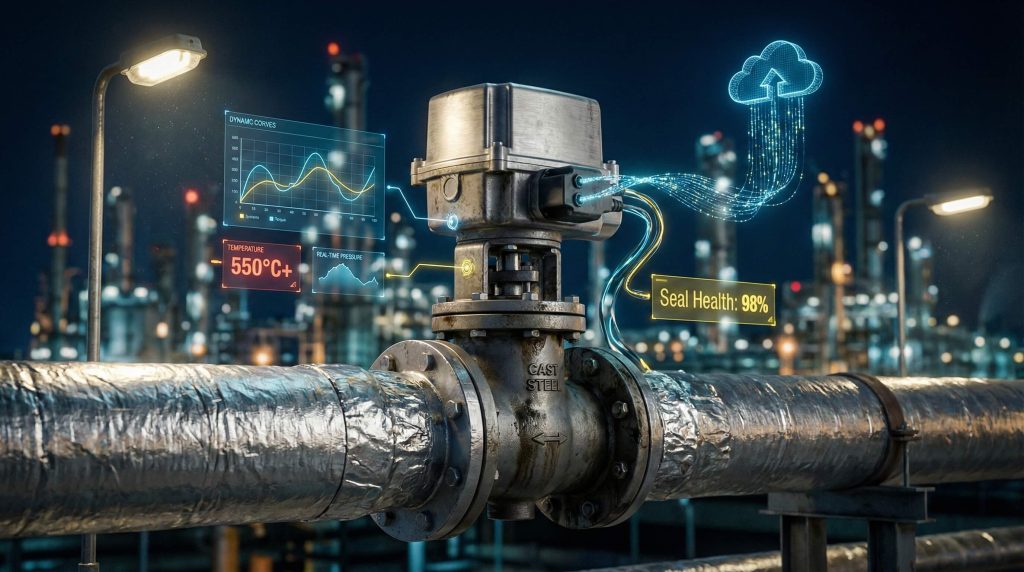
The future of industrial valves is being shaped by digital integration and the global push toward sustainable manufacturing. Leading butterfly valve manufacturers in europe are already integrating IoT sensors into their valve assemblies. These “smart valves” can communicate their health status directly to a centralized control system, allowing for predictive rather than reactive maintenance.
Integration of Smart Actuators and IoT Monitoring
Smart actuators are no longer a luxury but a requirement for modern industrial plants. These systems monitor parameters like torque, cycle count, and temperature to predict when a valve might fail.
- Remote Diagnostics: Ability to troubleshoot valve issues from across the globe.
- Predictive Maintenance: Replacing seats based on wear data rather than a calendar.
- Energy Efficiency: Optimizing valve positions to reduce pump energy usage.
- Safety Alerts: Instant notification if a critical valve fails to reach its position.
Sustainable Manufacturing and Green Materials
The bottom line: Sustainability is no longer an optional part of the corporate social responsibility report; it is a procurement requirement. Manufacturers are moving toward carbon-neutral production and using materials that are easier to recycle at the end of the valve’s life. This shift is particularly evident in Europe, where carbon taxes and green directives influence every manufacturing decision.
Key Takeaway: Digital transformation is making real-time flow monitoring and health diagnostic capabilities a standard industry requirement.
| Trend | Impact on Operations | Implementation Level |
|---|---|---|
| IoT / Smart Valves | High (Predictive) | Rapidly Growing |
| 3D Printing (Parts) | Medium (Lead Time) | Specialized / R&D |
| Green Foundry | Low (Regulatory) | Mandatory in EU |
| Digital Twins | High (Simulation) | Tier 1 Engineering |
Analysis: Advanced technologies like 3D printing and Finite Element Analysis (FEA) are significantly shortening the R&D cycles for custom valve solutions.
Summary and Strategic Outlook
Selecting the best butterfly valve manufacturers in 2025 requires a strategic approach that balances engineering excellence with global compliance. As we have explored, the challenges of supply chain complexity and high-stakes operational risks make choosing a certified partner essential. Whether you are looking for specialized butterfly valve manufacturers in europe or global leaders with high-volume capacity, the focus must remain on material traceability, precision design, and the integration of future-ready technologies like IoT actuators.
At RUITO, we are committed to providing industrial valve solutions that meet the highest international standards for safety and reliability. Our vision for 2025 is to continue bridging the gap between high-end engineering and practical industrial application, ensuring your systems run without interruption. To learn more about our comprehensive range of fluid control products or to discuss your specific project requirements, contact us today for expert guidance and technical support.
Frequently Asked Questions
What are the most common standards for butterfly valves in 2025?
It depends on your region and industry, but the primary standards include API 609 for oil and gas, EN 593 for European water systems, and ISO 10631 for general industrial use. These standards govern dimensions, pressure ratings, and testing requirements.
How do European butterfly valve manufacturers ensure zero leakage?
Yes, they achieve zero leakage by utilizing high-grade sealing materials like reinforced PTFE and implementing advanced triple offset geometries. These designs ensure a tight, friction-free seal that meets Leakage Class VI or better.
What is the typical lead time for custom-engineered valves?
It depends on the complexity and material, but the typical range is between 15 to 25 days for standard custom orders. Specialized exotic alloys or very large bore sizes may require additional time for casting and testing.
Why is triple offset preferred over concentric designs in power plants?
Yes, triple offset is preferred because it can withstand high-pressure steam and extreme temperatures that would melt the soft seats of a concentric valve. Additionally, the friction-free closing significantly extends the valve’s life in high-cycle environments.
How can I verify the material authenticity of a valve shipment?
Yes, you can verify authenticity by requesting a Mill Test Certificate (MTC) 3.1 or 3.2, which tracks the chemical composition of the metal back to the foundry. Many premium manufacturers also perform Positive Material Identification (PMI) testing before shipment.