
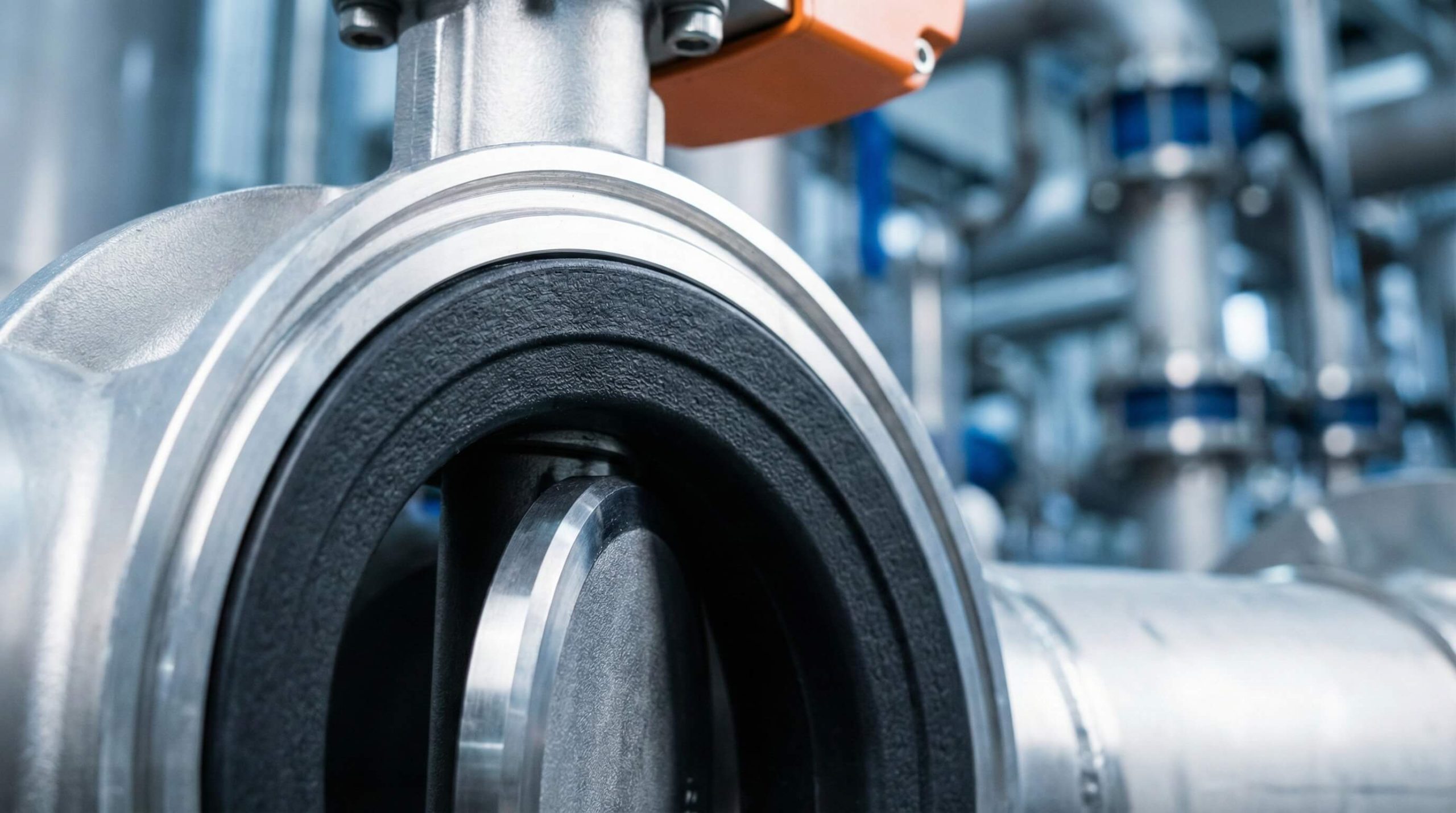
Butterfly valves are primarily classified by their body design, seat material, and disc offset, including concentric, double offset, and triple offset variations. In many industrial operations, choosing the wrong valve leads to frequent leakage and unexpected system downtime. You likely struggle with high maintenance costs and pressure losses because of improper component selection. Integrating a reliable soft seated butterfly valve into your piping network ensures a bubble-tight seal and long-term operational efficiency.
Why choose a concentric soft seated butterfly valve?
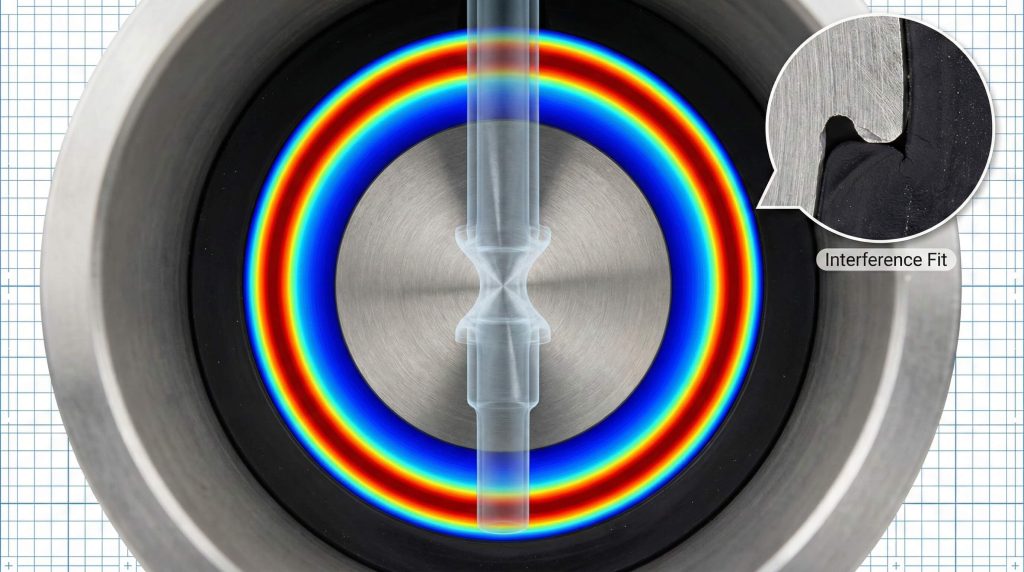
A concentric soft seated butterfly valve is chosen for its simple design where the stem is centered in the middle of the disc. This configuration ensures that the disc remains in constant contact with the resilient seat throughout its full 90-degree rotation. It is the most common choice for low-pressure water and air systems.
Understanding the center-line stem alignment
Look at it this way: you need a design that provides a basic yet effective seal for standard utility services. The center-line alignment allows the disc to press into the rubber seat evenly.
- Balanced pressure distribution.
- Simple manufacturing process.
- Low operational torque.
Here is why: the shaft passes through the center of the disc and the seat. You benefit from a symmetrical design that functions efficiently in both flow directions.
- 360-degree seat contact.
- Bi-directional shutoff.
- Uniform wear patterns.
Key Takeaway: The concentric design is the industry standard for general-purpose applications requiring a dependable resilient seal.
| Component | Alignment Detail | Advantage |
|---|---|---|
| Stem | Center of Disc | Simplicity |
| Seat | Center of Body | Uniform Seal |
| Disc | 0-Offset | Low Cost |
This data confirms that concentric valves are the optimal choice for cost-sensitive projects without extreme pressure requirements.
Is a double offset soft seated butterfly valve better?
A double offset soft seated butterfly valve is better for high-performance applications where you need to reduce seat friction and extend the life of the valve. The stem is displaced from the center-line of the disc and the seat, creating an eccentric movement. This allows the disc to “lift” off the seat almost immediately upon opening.
Reducing seat friction and operational wear
Think about it: you want to avoid the constant rubbing that wears down standard rubber seats. The eccentric motion ensures the disc only contacts the seat during the final degrees of closing.
- Reduced seal deformation.
- Extended seat service life.
- Lower breakout torque.
Here is why: by minimizing contact time, you significantly reduce the risk of seat tearing or permanent compression set. You will notice much smoother operation during frequent cycling.
- High-cycle reliability.
- Improved sealing integrity.
- Better performance at higher pressures.
Key Takeaway: Double offset designs are superior for high-performance tasks where durability and reduced friction are critical.
| Feature | Design Impact | Operational Benefit |
|---|---|---|
| First Offset | Stem behind disc | Improved sealing |
| Second Offset | Stem off-center | Reduced friction |
| Seal Material | Reinforced Polymer | High pressure |
This comparison highlights why eccentric designs are the preferred upgrade for demanding industrial flow environments.
When to avoid a soft seated butterfly valve for high heat?
You should avoid a soft seated butterfly valve when operating temperatures exceed the thermal limits of elastomers like EPDM or PTFE. While resilient seats provide excellent shutoff, they can melt or degrade rapidly in steam or high-heat oil services. In these scenarios, metal-to-metal seated valves are the necessary alternative.
Comparing soft seats to metal-seated options
Look at it this way: you are choosing between a bubble-tight seal and extreme temperature resistance. Soft seats excel at zero-leakage but fail when the heat rises too high for polymers.
- Zero-leakage performance.
- Limited to < 200°C.
- Excellent for chemicals.
Here is why: metal seats handle thousands of degrees but often allow a small amount of permissible leakage. You must decide if thermal stability outweighs the need for a perfect shutoff.
- High-temperature stability.
- Fire-safe certification.
- Susceptible to minor leaks.
What are the temperature limits for resilient materials?
Here is the truth: you must match your valve seat material to the maximum possible temperature of your media. Exceeding these limits leads to seat swelling and valve seizure.
- EPDM: Up to 120°C.
- Viton (FKM): Up to 200°C.
- PTFE: Up to 180°C.
Look at it this way: choosing a seat that cannot handle the heat will result in an immediate system failure. You should always verify the technical datasheet before installation.
- Prevents seat melting.
- Ensures disc movement.
- Maintains seal integrity.
Key Takeaway: Resilient seats are limited by temperature; always transition to metal seats for high-heat or steam applications.
| Material | Max Temp (°C) | Best Use Case |
|---|---|---|
| EPDM | 120 | Water systems |
| NBR | 80 | Oil and Gas |
| PTFE | 180 | Corrosive chemicals |
Understanding these thermal boundaries is essential for ensuring the safety and longevity of your piping infrastructure.
How does a wafer soft seated butterfly valve save space?
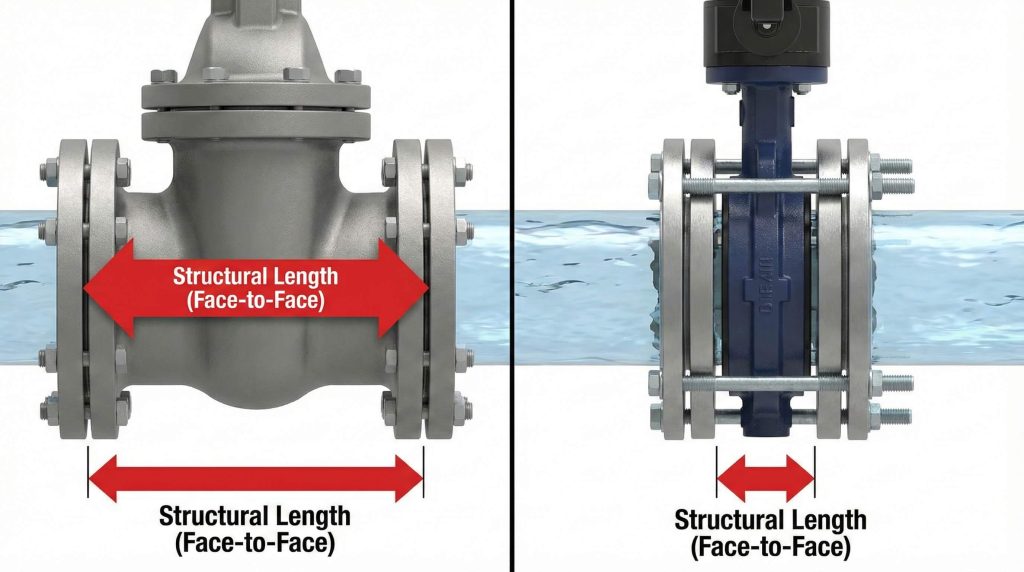
A wafer soft seated butterfly valve saves space by utilizing a very thin body profile designed to be sandwiched between two pipe flanges. This “wafer” design eliminates the need for bulky integrated flanges on the valve itself. You can find more details on this compact design at the wafer type product section.
Understanding the slim wafer connection profile
Look at it this way: you are dealing with tight piping layouts where every inch of space matters. The wafer body fits snugly between existing flanges using long bolts that span the entire valve.
- Minimal face-to-face length.
- Lightweight construction.
- Low material cost.
Here is why: the valve uses the surrounding pipe flanges for structural support rather than its own heavy body. You effectively reduce the weight load on your piping supports.
- Easy to handle.
- Fast installation.
- Reduced shipping costs.
Key Takeaway: Wafer-style valves offer the most compact and economical solution for installations with limited space.
| Attribute | Wafer Design | Benefit |
|---|---|---|
| Weight | Very Low | Lower support cost |
| Length | Short | Fits tight spaces |
| Installation | Sandwich style | Quick assembly |
The slim profile of wafer valves makes them the go-to choice for modular skids and compact water treatment plants.
Can a lug style soft seated butterfly valve handle end-of-line?
A lug style soft seated butterfly valve can handle end-of-line service because it features threaded inserts (lugs) that allow it to be bolted to one side of a flange. This means you can disconnect downstream piping while the valve remains securely attached to the upstream side. It provides a level of versatility that wafer designs cannot match.
Advantages of threaded bolt holes for maintenance
Look at it this way: you need to perform maintenance on a pump without draining the entire system. The lug design allows you to remove the downstream pipe while the valve holds the pressure.
- Independent bolting.
- Dead-end service capable.
- Secure mechanical fit.
Here is why: because each side has its own set of bolts, the valve body acts as a permanent structural component of the pipeline. You save time during repairs and upgrades.
- Faster maintenance cycles.
- No system drainage needed.
- Increased safety for workers.
Key Takeaway: Lug-style valves provide the necessary structural integrity for end-of-line service and frequent downstream maintenance.
| Feature | Lug Design | Service Advantage |
|---|---|---|
| Bolt Holes | Threaded | Independent mounting |
| Service | End-of-line | High versatility |
| Material | Ductile Iron/Steel | Robust durability |
This design flexibility ensures that your system remains operational even when sections of the piping are removed.
Where is a flanged soft seated butterfly valve most useful?
A flanged soft seated butterfly valve is most useful in large-diameter pipelines and high-pressure applications where extra stability is required. These valves feature built-in flanges that match the pipe’s bolt pattern, ensuring a very secure and leak-proof connection. You can explore these robust options at the flanged type category page.
Managing high pressure with double flanged bodies
Look at it this way: you are moving massive volumes of water or chemicals at significant pressures. The double flanged body provides the rigid support needed to prevent any movement or vibration.
- Excellent seal at high PN.
- High structural rigidity.
- Superior alignment.
Here is why: the flanged connection distributes the mechanical stress across a larger surface area of the valve body. You will experience fewer leaks at the joint compared to wafer types.
- Robust for buried service.
- Handles large pipe loads.
- Reduced gasket blowout risk.
Key Takeaway: Flanged valves are the preferred choice for heavy-duty industrial and municipal water applications.
| Spec | Flanged Valve | Application |
|---|---|---|
| Connection | Bolt-to-bolt | High pressure |
| Size Range | Large (DN600+) | Main water lines |
| Stability | Maximum | Heavy vibration |
The increased surface area of the flanged connection provides the ultimate security for critical infrastructure projects.
How to automate a soft seated butterfly valve effectively?
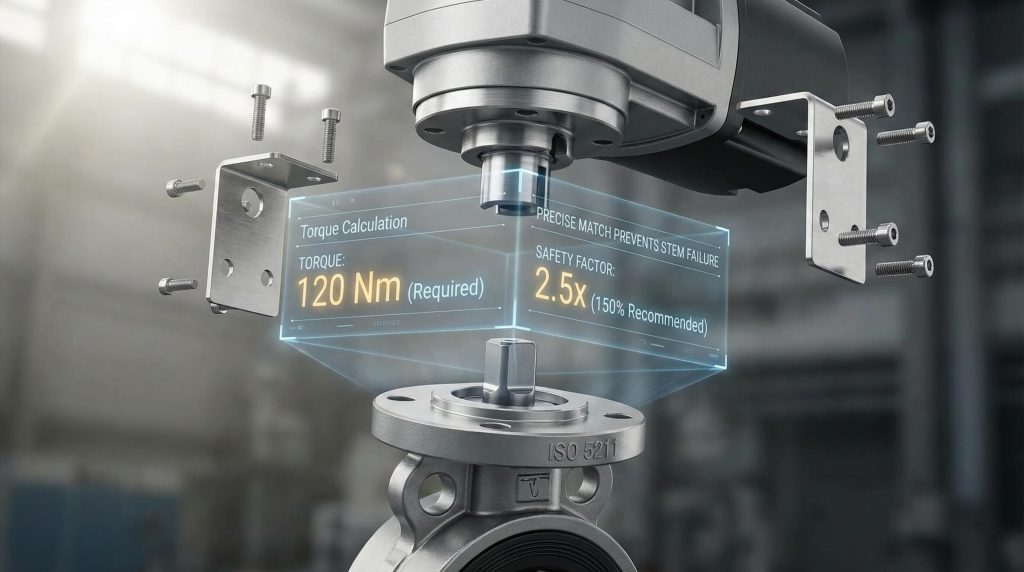
You can automate a soft seated butterfly valve effectively by mounting pneumatic or electric actuators onto the valve’s ISO 5211 top flange. Automation allows for remote operation and precise flow modulation. For motor-driven solutions, choosing the right electric actuator is vital for system safety and control accuracy.
Why is torque calculation vital for automation?
Look at it this way: if your actuator is too weak, the valve won’t open; if it’s too strong, you might snap the stem. You must use precise torque calculation methods to match the actuator to the valve.
- Prevents actuator failure.
- Ensures smooth operation.
- Accounts for seat friction.
Here is why: factors like media viscosity and operating pressure significantly change the force required to turn the disc. You need to include a safety factor to guarantee performance under all conditions.
- Longer actuator life.
- Reliable shutoff.
- Optimized energy use.
Benefits of bare shaft designs for custom actuation
Look at it this way: you might already have a preferred brand of actuators in your facility. A bare shaft valve allows you to mount any compatible actuator using a standard bracket.
- Universal compatibility.
- Lower inventory costs.
- Flexible control options.
Here is why: you are not locked into a single manufacturer’s integrated solution. This gives you the freedom to choose the best actuation technology for your specific logic controller.
- Easy field upgrades.
- Modular maintenance.
- Custom mounting kits.
Key Takeaway: Effective automation requires precise torque matching and standard mounting interfaces for long-term reliability.
| Automation Step | Importance | Tool/Standard |
|---|---|---|
| Sizing | Critical | Torque Chart |
| Mounting | Essential | ISO 5211 Pad |
| Testing | Required | Cycle Counter |
Using standardized calculation and mounting methods ensures your automated valves perform flawlessly in remote locations.
What is the maintenance for a soft seated butterfly valve?
The maintenance for a soft seated butterfly valve involves periodic inspection of the resilient liner for signs of wear, hardening, or chemical degradation. Unlike metal seats, the soft seat is a wear part that will eventually require replacement to maintain a bubble-tight seal. Regular cleaning of the disc and stem area also prevents buildup that can increase operating torque.
Inspecting resilient seats for wear and tear
Look at it this way: you want to catch a potential leak before it becomes a major flood. Regularly checking the seat for cracks or thinning ensures the valve continues to seal properly.
- Visual inspection.
- Torque monitoring.
- Leak detection tests.
Here is why: chemical exposure can cause elastomers to swell or become brittle over time. You should replace the seat if you notice any changes in its flexibility or surface texture.
- Prevents unexpected leaks.
- Maintains low torque.
- Extends valve body life.
Key Takeaway: Proactive seat inspection is the most cost-effective way to manage butterfly valve maintenance.
| Maintenance Task | Frequency | Objective |
|---|---|---|
| Seat Check | Annual | Detect wear |
| Stem Lubrication | Bi-annual | Smooth turning |
| Torque Test | Quarterly | Actuator health |
Regular maintenance schedules significantly reduce the total cost of ownership by preventing catastrophic valve failures.
Is a soft seated butterfly valve ideal for seawater use?
A soft seated butterfly valve is ideal for seawater use provided you select corrosion-resistant materials like aluminum bronze for the disc and EPDM for the seat. Seawater is highly corrosive to standard carbon steel or basic stainless steel. Using the correct marine-grade materials prevents pitting and ensures a long service life in brine environments.
Selecting materials for marine and brine environments
Look at it this way: you are dealing with salt, minerals, and bio-fouling that eat through standard metals. You must specify materials that naturally resist chloride-induced corrosion.
- Aluminum Bronze discs.
- Duplex Stainless Steel.
- High-grade EPDM seats.
Here is why: choosing the wrong material leads to rapid disc thinning and seat failure within months. You will save a fortune by investing in the right alloy from the start.
- Years of service life.
- Reduced bio-fouling.
- Lower replacement costs.
Key Takeaway: Material selection is the single most important factor when using soft seated valves in seawater applications.
| Material | Rating | Sea Water Compatibility |
|---|---|---|
| Al-Bronze | Excellent | High |
| SS316 | Good | Moderate |
| Cast Iron | Poor | Low |
Investing in marine-grade components ensures your desalination or offshore system operates without corrosion-related interruptions.
Which soft seated butterfly valve fits your specific flow?
Choosing the right soft seated butterfly valve requires an analysis of your media’s chemical compatibility, pressure, and temperature. You must decide between different seat elastomers like EPDM, NBR, or PTFE based on the fluid’s properties. Engineering the perfect fit involves balancing initial cost with the expected maintenance lifecycle.
Choosing between PTFE and rubber seat materials
Look at it this way: you are deciding between the resilience of rubber and the chemical inertness of PTFE. Rubber is best for water, while PTFE handles aggressive acids and solvents.
- NBR for oils.
- EPDM for water/steam.
- PTFE for chemicals.
Here is why: the wrong seat material will dissolve or swell, causing the valve to stick or leak. You must cross-reference your media with a chemical resistance chart for safety.
- Assured seal integrity.
- Safe chemical handling.
- Optimized seat life.
Key Takeaway: Matching the elastomer to the media is the final and most critical step in valve selection.
| Media Type | Recommended Seat | Benefit |
|---|---|---|
| Potable Water | EPDM (FDA) | Safe & Durable |
| Diesel/Oil | NBR | Swell Resistance |
| Sulfuric Acid | PTFE/PFA | Chemical Inert |
This final selection criteria ensures that your flow control system is both safe and efficient for its specific environment.
Frequently Asked Questions
What is the best way to prevent leaks in a soft seated valve?
The best way is to ensure the seat material is chemically compatible with the media and the operating pressure does not exceed the valve’s rating. Regular inspection for seat wear is also vital.
Can I use a soft seated butterfly valve for high-pressure gas?
Yes, but you must ensure the valve is rated for the specific gas and pressure, and typically, a double-offset design is preferred for better sealing under high pressure.
What’s the best seat material for wastewater treatment?
EPDM is usually the best choice because it offers excellent resistance to water, ozone, and common chemicals found in municipal waste streams.
How long does a resilient seat typically last?
A high-quality resilient seat can last for 10,000 to 50,000 cycles, depending on the abrasiveness of the media and the frequency of operation.
Can I replace the seat without replacing the whole valve?
Yes, in most concentric and lug-style designs, the resilient seat is a replaceable insert, allowing for easy field maintenance without removing the valve body from the line.
Conclusion
Selecting the appropriate butterfly valve is a strategic decision that impacts the safety and profitability of your entire operation. Whether you require the compact design of a wafer valve or the robust performance of a double offset model, understanding these technical nuances is key to solving persistent leakage and maintenance issues. We are committed to providing the highest quality flow control solutions tailored to your specific industrial needs. To optimize your system with the right components, contact us today for expert guidance and technical support.