
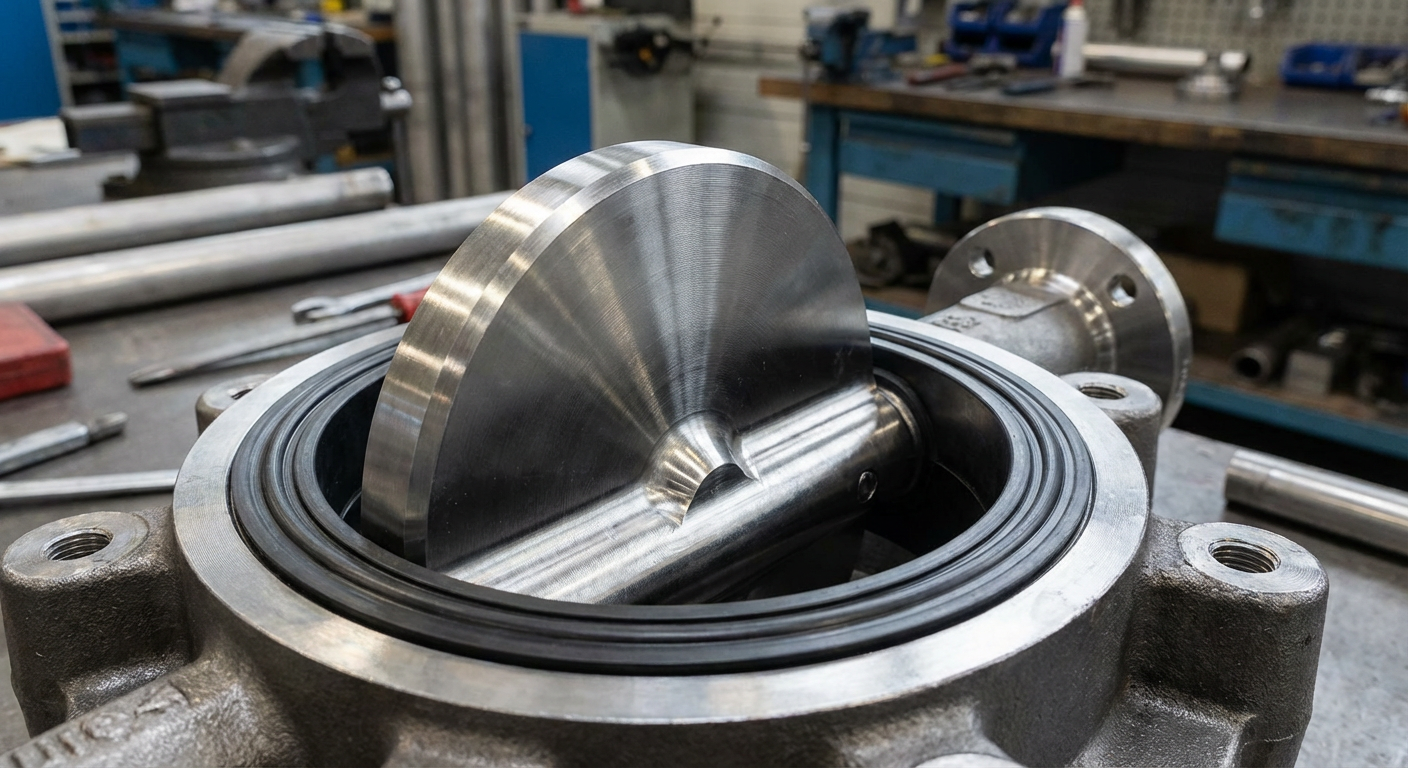
The flow coefficient, or Cv, is the definitive metric for determining the capacity and sizing requirements of a throttling valve in any fluid system. If you select an incorrect valve size, your piping system will suffer from excessive pressure drops, energy waste, and noise issues that compromise operational stability. The challenge is that improper sizing leads to cavitation and turbulence, which can physically destroy internal components over time. Our solution involves a deep understanding of the butterfly control valve cv, allowing you to balance flow efficiency with precise control for long-term reliability.
What defines a butterfly control valve cv?
The butterfly control valve cv is a standardized coefficient representing the volume of water at 60°F that will flow through the valve in one minute with a pressure drop of 1 psi. By utilizing the butterfly control valve cv, you can accurately predict how much fluid a specific valve size can handle under your project’s pressure conditions.
The Standardized Formula
Engineers rely on a mathematical relationship between flow rate and pressure differential to derive this value. Look at it this way: the Cv provides a “common language” to compare different valve brands and styles.
- Flow rate (GPM) is the numerator.
- Square root of pressure drop is the denominator.
- Specific gravity of the fluid acts as a multiplier.
Importance of Water Temperature
The reference temperature of 60°F ensures that the data is consistent across all industrial testing environments. Since density changes with temperature, having a fixed point allows you to apply correction factors for high-heat applications.
Key Takeaway: Understanding the baseline definition of the flow coefficient is the first step toward avoiding procurement errors and ensuring that the selected valve matches the hydraulic demands of the system.
| Metric | Definition | Importance |
|---|---|---|
| Temperature | 60°F (15.5°C) | Consistency |
| Pressure Drop | 1 psi | Baseline |
| Unit | GPM (Gallons Per Minute) | Capacity |
The table above summarizes the fundamental parameters used to establish the baseline performance metrics for industrial flow control.
Why calculate butterfly control valve cv accurately?
Calculating the butterfly control valve cv with precision is vital because it prevents the dangerous effects of valve hunting and mechanical vibration. If you choose a valve with a Cv that is too high, the disc will operate nearly closed, causing rapid wear on the seat and poor control sensitivity.
Avoiding Destructive Cavitation
The challenge is that high pressure drops across a small opening can lead to the formation and collapse of vapor bubbles. This cavitation can pit even the strongest stainless steel discs.
- Reduces noise pollution in the plant.
- Prevents pitting on the valve disc.
- Extends the life of downstream piping.
Optimizing Pump Energy
When the Cv is matched perfectly to the system, the pump does not have to work against unnecessary resistance. This directly translates to lower monthly utility bills and a smaller carbon footprint for your facility.
Key Takeaway: Accuracy in Cv calculation protects your mechanical assets from self-destruction while maximizing the energy efficiency of the entire fluid transport network.
| Operational Risk | Impact of Poor Cv | Benefit of Accurate Cv |
|---|---|---|
| Vibration | Structural fatigue | System stability |
| Control | Hunting/Oscillation | Precise modulation |
| Maintenance | Frequent seal replacement | Extended MTBF |
Accurate calculations serve as a preventative maintenance strategy, reducing the total cost of ownership over the valve’s lifecycle.
How does size affect butterfly control valve cv?
The physical dimensions of the pipe and disc directly dictate the maximum butterfly control valve cv that can be achieved when the valve is fully open. As the nominal diameter increases, the area available for fluid passage grows exponentially, leading to significantly higher flow capacities.
Scaling and Pipe Geometry
A 2-inch valve might have a Cv of 130, whereas a 12-inch version can exceed 12,000. Here’s why this matters: small changes in pipe diameter result in massive shifts in the volume of liquid the system can move.
- NPS (Nominal Pipe Size) scaling.
- Internal bore clearance.
- Disc thickness compensation.
Comparison to a Gate Valve
While a butterfly valve is compact, a gate valve often offers a higher Cv because it provides an unobstructed flow path. However, for throttling, the butterfly design is much more effective despite the slightly lower maximum capacity.
Key Takeaway: You must balance the need for high flow capacity with the physical space constraints of your facility, ensuring the valve size matches both the pipe and the flow requirements.
| Valve Size (Inches) | Typical Max Cv | Application |
|---|---|---|
| 2″ | 135 | Small branch lines |
| 6″ | 1,600 | Main distribution |
| 12″ | 12,000 | Large industrial intake |
The relationship between nominal size and flow capacity follows a predictable curve that is essential for initial system drafting.
Does disc angle change butterfly control valve cv?
The butterfly control valve cv is highly dynamic and changes according to the disc’s angle of rotation relative to the flow direction. At 0 degrees, the Cv is zero, but as the valve opens toward 90 degrees, the coefficient climbs rapidly in a non-linear fashion.
The Throttling Range
Most effective control occurs between the 30-degree and 70-degree positions. The bottom line? Operating outside this “sweet spot” often leads to unstable flow or excessive pressure drop.
- Linear flow characteristics.
- Equal percentage curves.
- Modified parabolic options.
Turbulence at Low Angles
When the disc is only slightly open, the fluid is forced through narrow gaps, creating high-velocity jets. This turbulence can affect the accuracy of downstream sensors and flow meters.
Key Takeaway: You should always size your valve so that your normal operating flow rate falls within the 50% to 70% open range to ensure the most stable control.
| Opening Angle | Cv Percentage | Flow Type |
|---|---|---|
| 10° | ~5% | High turbulence |
| 50° | ~45% | Stable control |
| 90° | 100% | Full capacity |
Monitoring the disc angle is just as important as the initial sizing when aiming for high-precision process modulation.
Can you optimize butterfly control valve cv for flow?
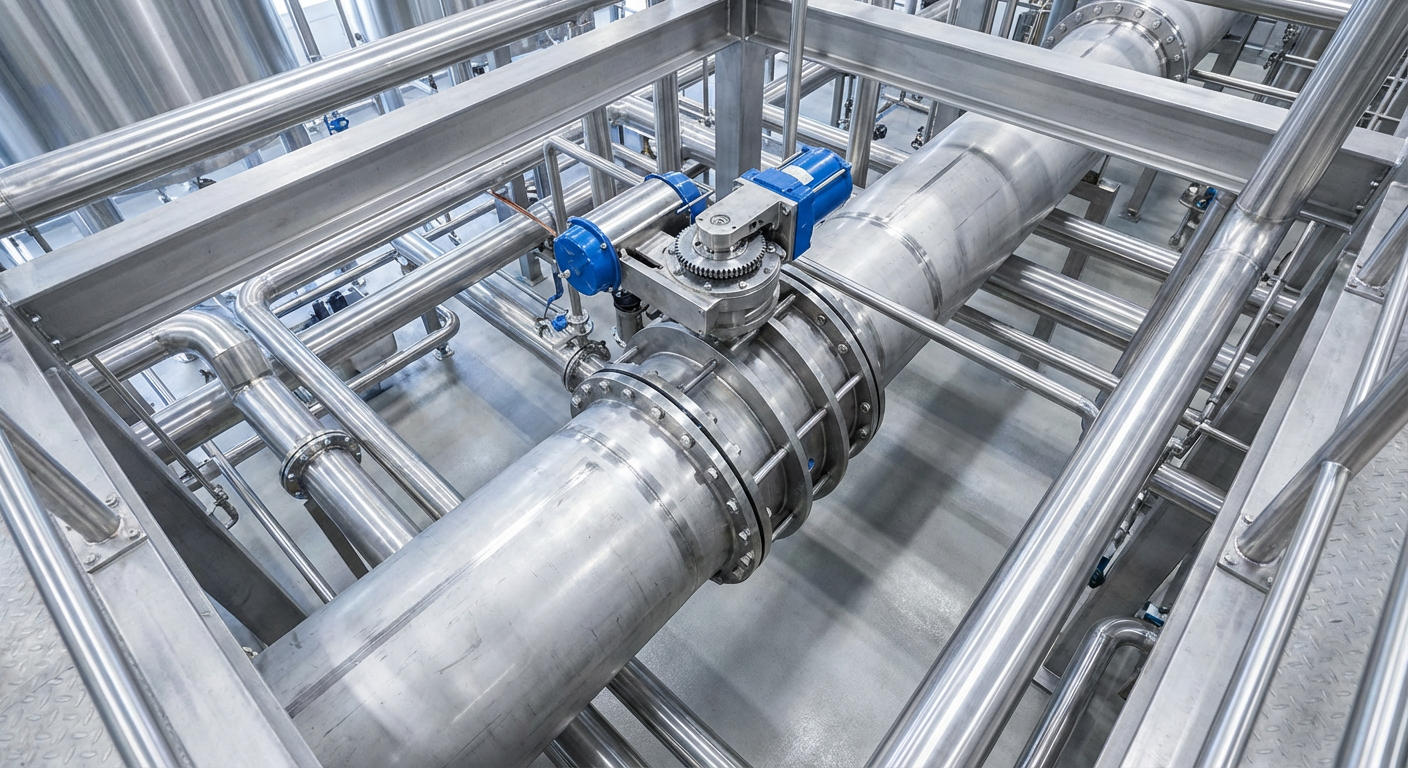
You can optimize the butterfly control valve cv by selecting high-performance disc profiles that are engineered to reduce drag and minimize the “shadow” cast by the stem. By choosing advanced engineering solutions, you can achieve higher flow rates without increasing the physical size of the valve.
Profiled Disc Advantages
Modern discs are often contoured to allow the fluid to wrap around the edges more smoothly. This reduces the pressure drop and increases the effective Cv for a given diameter.
- Hydrodynamic disc shapes.
- Reduced stem interference.
- Polished surface finishes.
Alternative Valve Choices
If your system requires a higher Cv than a butterfly valve can provide in a specific footprint, a ball valve might be the answer. Look at it this way: the right valve type is just as important as the right valve size.
Key Takeaway: Optimization isn’t just about the formula; it’s about selecting the right internal geometry to maximize throughput and minimize mechanical stress.
| Optimization Factor | Effect on Cv | Benefit |
|---|---|---|
| Disc Thinning | Increase | Lower drag |
| Offset Design | Increase | Better sealing/flow |
| Seat Material | Stable | Consistent friction |
Advanced manufacturing techniques allow for the fine-tuning of flow coefficients to meet specific project demands.
Is butterfly control valve cv linked to pressure drop?
The butterfly control valve cv and the pressure drop across the device are intrinsically linked by the laws of fluid mechanics. Specifically, as the Cv of the valve increases (meaning it is more “open” or efficient), the pressure drop (Delta P) decreases for a constant flow rate.
Managing High Velocity
Our solution for systems with high Delta P is to select a valve with a specific Cv that maintains fluid velocity within safe limits. If velocity exceeds recommended thresholds, you risk eroding the valve liner.
- Inlet pressure (P1).
- Outlet pressure (P2).
- Critical flow pressure.
Check Valve Comparisons
In systems where you also use a check valve, you must account for the cumulative pressure drop of both units. Unlike control valves, check valves have a fixed Cv that only changes based on the cracking pressure of the internal spring.
Key Takeaway: Always calculate the expected pressure drop at your maximum required flow rate to ensure the valve body and downstream components can handle the resulting forces.
| Flow Rate | Pressure Drop | Resulting Cv |
|---|---|---|
| High | High | Needs Large Cv |
| Low | High | Throttled Cv |
| High | Low | Efficient Cv |
Pressure drop analysis is the cornerstone of safe valve selection, especially in high-pressure steam or chemical lines.
What are standard butterfly control valve cv ranges?
Standard butterfly control valve cv ranges are typically categorized by the valve’s nominal size and the specific design standard, such as API or ISO. These benchmarks allow you to quickly estimate if a valve is appropriate for your application before performing detailed calculations.
Industrial Benchmarks
For most general-purpose rubber-lined valves, the Cv values remain fairly consistent across different manufacturers. Here’s why this matters: it allows for easier interchangeability during system upgrades or repairs.
- Water treatment standards.
- HVAC flow requirements.
- Chemical processing specs.
Custom Engineering
In specialized industries like oil and gas, you may require engineering solutions that provide non-standard Cv ratings. Custom-bore valves are often necessary for unique piping configurations.
Key Takeaway: Use standard tables as a starting point, but always verify the specific manufacturer’s data before finalizing your engineering designs.
| Valve Size | Standard Cv (Approx) | High-Perf Cv (Approx) |
|---|---|---|
| 4″ | 600 | 450 |
| 8″ | 3,200 | 2,800 |
| 16″ | 15,000 | 13,500 |
Note that high-performance (double or triple offset) valves often have slightly lower Cv values than resilient-seated versions due to their more robust disc construction.
How to measure butterfly control valve cv in the field?
You can measure the actual butterfly control valve cv in a live system by installing pressure transducers both upstream and downstream of the valve. By comparing these pressure readings with the real-time flow data from a flow meter, you can verify if the valve is performing as advertised.
Sensor Placement
To get an accurate Delta P, you should place sensors at least two pipe diameters upstream and six diameters downstream. This avoids measuring the localized turbulence directly at the valve disc.
- Upstream pressure port.
- Downstream pressure port.
- Flow meter integration.
Data Logging Tools
The bottom line? Continuous monitoring allows you to see how the Cv changes as the valve wears or as debris accumulates in the line. This data is invaluable for predictive maintenance.
Key Takeaway: Field verification acts as a “sanity check” for your initial calculations and helps identify when a valve has reached the end of its functional life.
| Step | Action | Equipment |
|---|---|---|
| 1 | Capture Flow Rate | Flow Meter |
| 2 | Record P1 and P2 | Pressure Gauge |
| 3 | Apply Formula | Calculator |
Regular field testing ensures that your system continues to operate within the design parameters established during the commissioning phase.
Does media viscosity impact butterfly control valve cv?
While the base butterfly control valve cv is calculated using water, high-viscosity media like oils or slurries will significantly restrict flow. You must apply a viscosity correction factor to the standard Cv formula to ensure your valve isn’t undersized for thick liquids.
Slurry Considerations
The challenge is that thick media creates more internal friction against the valve disc and walls. Look at it this way: pushing molasses through a pipe requires a much “larger” opening than pushing water.
- Specific gravity adjustments.
- Reynolds number calculation.
- Laminar vs. turbulent flow.
Temperature Effects
As temperature increases, most fluids become less viscous, which can actually increase the effective flow rate. You must consider the full range of operating temperatures when selecting your valve size.
Key Takeaway: Never assume water-based Cv data is sufficient for chemical or oil applications; always consult a fluid specialist for viscosity corrections.
| Fluid Type | Viscosity (cP) | Cv Adjustment |
|---|---|---|
| Water | 1 | None |
| SAE 30 Oil | 250 | Moderate |
| Molasses | 5,000+ | Significant |
Adjusting for fluid properties is the only way to guarantee that your control valve provides the necessary throughput under real-world conditions.
Where can you verify butterfly control valve cv data?
You should always verify the butterfly control valve cv data by reviewing the manufacturer’s technical data sheets or requesting certified test reports. For critical infrastructure projects, relying on generic tables is a risk that could lead to system failure or safety violations.
Certification Standards
Reliable manufacturers test their valves in accordance with ISA and ANSI standards to ensure the published Cv is accurate. Here’s why this matters: certified data provides the legal and technical assurance required for high-stakes projects.
- ISO 9001 certified testing.
- API 609 compliance.
- ISA S75.01 formulas.
Requesting Technical Sheets
Most professional suppliers provide detailed catalogs that list the Cv for every 10 degrees of opening. If this data isn’t readily available, you should request it directly from the engineering department.
Key Takeaway: Documentation is the foundation of engineering integrity; always insist on verified Cv tables before making a final purchase.
| Document Type | Information Provided | Use Case |
|---|---|---|
| Data Sheet | Max/Min Cv | Initial Sizing |
| Flow Curve | Cv vs Angle | Control Tuning |
| Test Report | Verified Performance | Quality Assurance |
Accessing the correct technical documentation ensures that your project meets all regulatory and performance requirements.
Summary and Conclusion
Navigating the complexities of the butterfly control valve cv is essential for any professional involved in fluid management. By addressing the problems of improper sizing, such as cavitation and energy loss, you ensure that your system remains efficient and reliable. Throughout this guide, we have explored how size, disc angle, and fluid properties impact the flow coefficient, providing you with the insights needed to make informed procurement decisions.
At our core, we are dedicated to providing the high-precision components and engineering support required to keep global industries moving safely. Our vision is to empower engineers with the data and quality products they need to build sustainable, high-performance piping systems.
For expert assistance with your next project or to receive a custom quote for your specific flow requirements, contact us today.
Frequently Asked Questions (FAQ)
Can I use the Cv of a ball valve for a butterfly valve of the same size?
No, because the internal geometries and flow paths of different valve types are significantly different, resulting in unique Cv ratings.
What is the best opening angle for control?
Generally, the best control range is between 30 and 70 degrees, as this avoids the instability found at very small openings and the loss of sensitivity near 90 degrees.
Can I calculate Cv for gas systems using the same formula?
No, gas Cv calculations must account for compressibility, temperature, and pressure ratios, requiring a more complex version of the standard formula.
How do I know if my valve is oversized?
If your valve is achieving the required flow rate at an opening angle of less than 20 degrees, it is likely oversized and will suffer from poor control.
Is Cv the same as Kv?
No, Kv is the metric equivalent of Cv; you can convert Cv to Kv by multiplying by 0.865.