
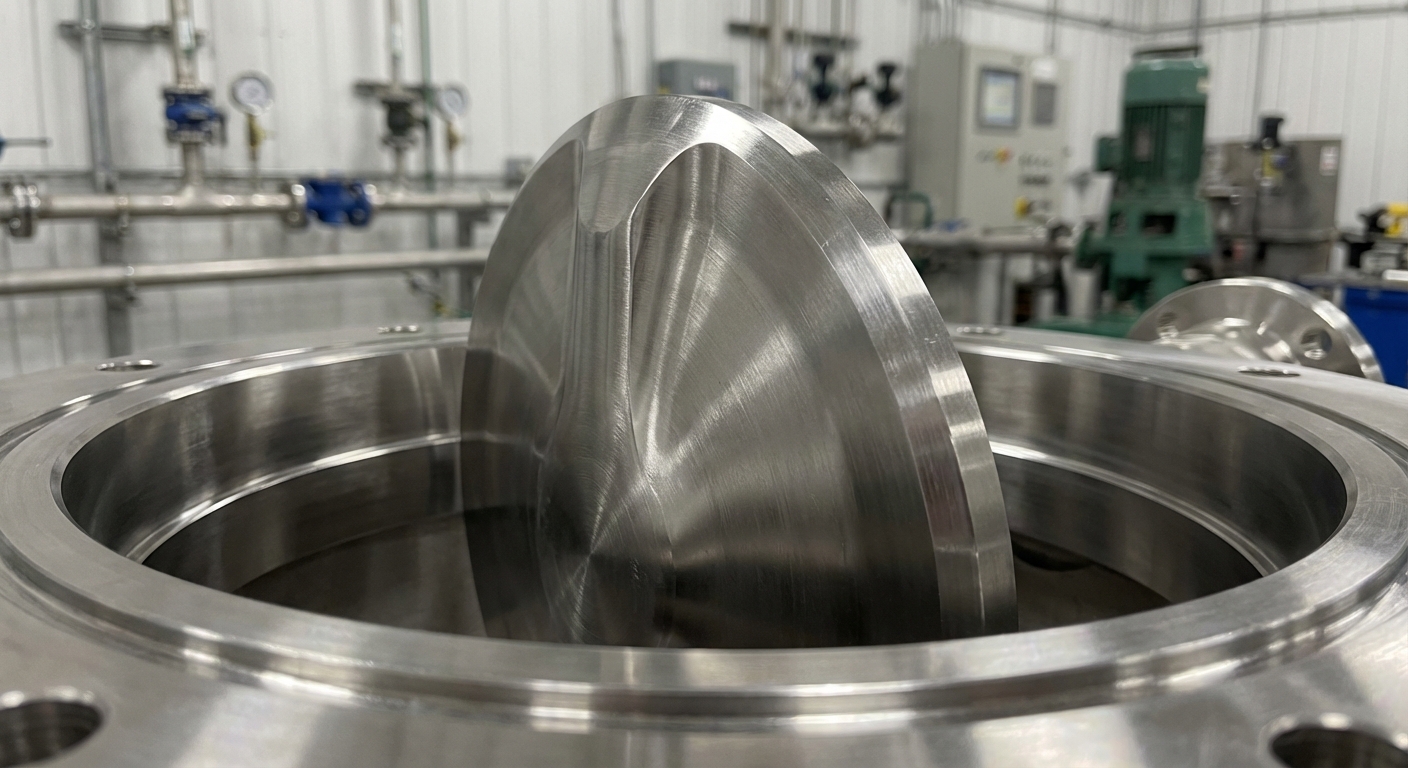
The flow coefficient of butterfly valve CV value is an imperial measurement defining the volume of water at 60°F that will pass through a valve per minute with a pressure drop of 1 psi. Imagine you are overseeing a high-pressure cooling line, but the pumps are working overtime while the flow remains stagnant. This inefficiency often stems from an overlooked butterfly valve flow coefficient, leading to wasted energy and potential cavitation. By matching your valve selection to the specific flow capacity needed, you can restore system efficiency and prevent premature hardware failure.
What defines the butterfly valve flow coefficient?
The butterfly valve flow coefficient is defined as the number of U.S. gallons per minute of 60°F water that will flow through a wide-open valve with a pressure drop of 1 psi. This value acts as a standardized index that allows you to compare the flow capacities of different valve designs regardless of the manufacturer.
Here is the bottom line:
- Cv is measured at a constant 60°F (15.5°C).
- The unit of measurement is GPM (Gallons Per Minute).
- It assumes a consistent 1 psi pressure differential.
- It provides a baseline for all hydraulic sizing.
Understanding Standard Testing Conditions
You must recognize that this value is determined through empirical testing in a laboratory environment. Manufacturers use these tests to map out how the valve performs across its entire range of motion from fully closed to fully open.
Key Takeaway: The flow coefficient is the primary metric used to predict the pressure-drop performance of a valve in a live piping system.
| Metric | Definition | Standard Unit |
|---|---|---|
| Cv | US Flow Coefficient | GPM @ 1 psi |
| Kv | Metric Flow Coefficient | m³/h @ 1 bar |
| S.G. | Specific Gravity | Ratio to Water |
These fundamental metrics allow engineers to calculate the precise flow capacity of any liquid or gas system under specific pressure conditions.
Why is butterfly valve flow coefficient critical?
The butterfly valve flow coefficient is critical because it dictates the energy efficiency and mechanical stability of your entire fluid transport network. If you install a valve with a Cv that is too low, you create a bottleneck that forces your pumps to consume more power and induces damaging turbulence.
- Higher Cv values indicate lower resistance to flow.
- Lower Cv values lead to increased pump wear.
- Correct sizing prevents the onset of cavitation.
- Proper coefficients ensure stable flow control.
But that’s only half the story.
Preventing Excessive Pressure Drop
You can avoid the most common causes of system failure by selecting a valve with a high flow capacity. Using lower-resistance alternatives like gate valves or high-performance butterfly designs ensures that your process maintains its design pressure throughout the line.
Key Takeaway: Selecting the correct Cv value is essential for minimizing operational costs and preventing mechanical damage to downstream equipment.
| Risk Factor | Impact of Low Cv | Impact of High Cv |
|---|---|---|
| Energy Cost | Significantly Higher | Optimized and Lower |
| Noise/Vibration | Increased Risk | Minimal Risk |
| Component Life | Reduced due to stress | Extended service life |
By prioritizing the flow coefficient during the design phase, you ensure that the system operates within its most efficient hydraulic envelope.
How to calculate butterfly valve flow coefficient?
You calculate the butterfly valve flow coefficient by dividing the flow rate by the square root of the pressure drop, then multiplying by the square root of the media’s specific gravity. This formula allows you to determine exactly which valve size will meet your required flow rate without exceeding a specific pressure loss limit.
You might be wondering why:
- Flow rate (Q) is measured in GPM.
- Pressure drop (ΔP) is measured in psi.
- Specific gravity (G) is relative to water (1.0).
- Viscosity corrections may be needed for thick oils.
Basic Sizing Formulas for Liquids
The standard equation for liquid service is Cv = Q / √(ΔP / G). You must accurately identify the maximum and minimum flow rates required for your application to choose a valve that offers control throughout its travel.
Key Takeaway: The Cv formula is an essential tool for engineers to ensure that the chosen valve can handle the peak demands of the process.
| Variable | Description | Typical Value (Water) |
|---|---|---|
| Q | Flow Rate | System Dependent |
| ΔP | Pressure Drop | 1 psi (Standard) |
| G | Specific Gravity | 1.0 |
Applying this mathematical approach eliminates guesswork and ensures that your valve selection is supported by hard engineering data.
Does size affect butterfly valve flow coefficient?
Yes, the size of the unit significantly affects the butterfly valve flow coefficient because a larger port diameter inherently reduces the restriction placed on the moving fluid. As the nominal diameter of the valve increases, the cross-sectional area of the flow path grows exponentially, leading to much higher Cv values.
Think about this for a moment.
- A 2-inch valve has a Cv of roughly 135.
- A 6-inch valve increases this capacity to 1579.
- Large 24-inch valves can reach over 43,000 Cv.
- Double-offset designs may have slightly different values than concentric ones.
Impact of Nominal Diameter on Capacity
When you move from a small bore to a large bore valve, the internal geometry changes to accommodate the increased volume. You should always consult a manufacturer’s table because the relationship between pipe size and Cv is not strictly linear.
Key Takeaway: Valve size is the single most influential factor in determining the total flow capacity of a butterfly valve at full opening.
| Valve Size (Inch) | Valve Size (mm) | Cv at 90° (Full Open) |
|---|---|---|
| 2″ | 50 | 135 |
| 4″ | 100 | 600 |
| 6″ | 150 | 1579 |
| 12″ | 300 | 8250 |
Comparing these values shows how rapidly the flow capacity expands as you increase the nominal diameter of the piping system.
How does angle impact butterfly valve flow coefficient?
The opening angle impacts the butterfly valve flow coefficient because the disc acts as a variable obstruction that changes the effective flow area as it rotates. At low angles, such as 10 to 20 degrees, the valve provides high resistance for throttling, while at 90 degrees, it offers its maximum capacity for high-volume transport.
Here is the kicker:
- 10°: Extremely high resistance.
- 30°: Beginning of effective flow.
- 60°: Significant capacity available.
- 90°: Maximum flow coefficient achieved.
Throttling Performance and Full Open Capacity
You should generally avoid using a butterfly valve for control below 20 degrees or above 70 degrees of opening. Within this middle range, the flow coefficient changes in a way that allows you to manage the flow rate with greater precision.
Key Takeaway: The Cv value of a butterfly valve changes dramatically based on the disc’s angle of rotation, making it critical for actuator sizing.
| Opening Angle | 2″ Cv Value | 6″ Cv Value | 12″ Cv Value |
|---|---|---|---|
| 10° | 0.1 | 2 | 5 |
| 30° | 12 | 95 | 495 |
| 60° | 64 | 605 | 3162 |
| 90° | 135 | 1579 | 8250 |
This data illustrates how flow capacity shifts dramatically once the disc clears the initial 30-degree rotation threshold.
Is butterfly valve flow coefficient linear?
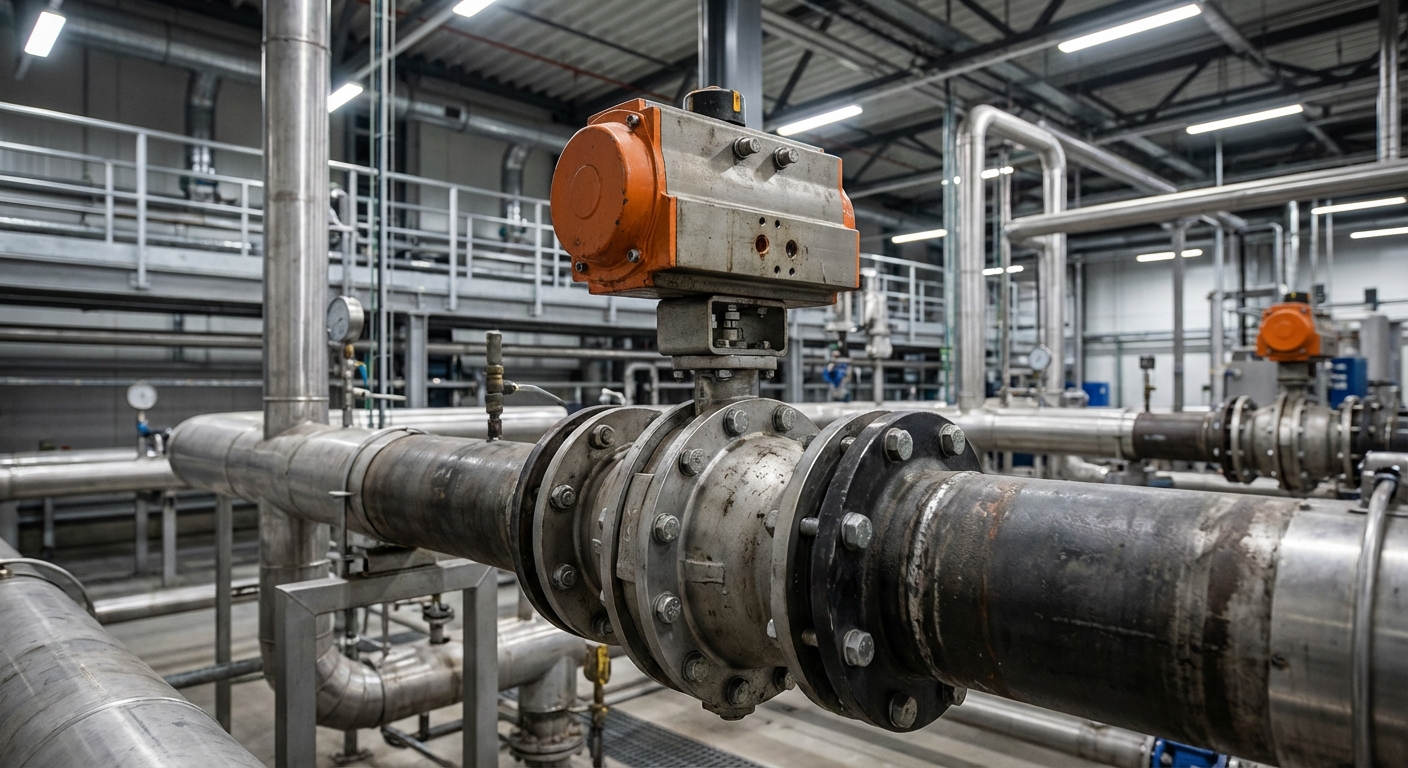
No, the butterfly valve flow coefficient is non-linear, meaning that a 50% change in the disc angle does not result in a 50% change in the flow rate. Because the disc is a circular plate rotating in a cylindrical bore, the change in the open area follows a complex geometric curve rather than a straight line.
Why does this matter?
- It makes manual control difficult at low angles.
- It requires “equal percentage” characteristics for precision.
- Globe valves are often better for linear control needs.
- Actuators must be programmed for non-linear curves.
Explaining Non-Linear Flow Curves
You will notice that the flow capacity increases slowly at first and then accelerates rapidly as the valve opens past 45 degrees. You must account for this “quick opening” characteristic when designing automated control loops to prevent system hunting or instability.
Key Takeaway: Understanding the non-linear nature of Cv allows you to select the correct actuator and control logic for stable operation.
| Opening Range | Flow Characteristic | Control Difficulty |
|---|---|---|
| 0° – 30° | Very Slow Increase | High |
| 30° – 60° | Moderate Increase | Medium |
| 60° – 90° | Rapid Increase | High |
This non-linear behavior is the primary reason why specialized control valves are often required for high-precision chemical or pharmaceutical applications.
Can media change butterfly valve flow coefficient?
Yes, the specific type of media flowing through the system affects the effective butterfly valve flow coefficient because density and viscosity change how the fluid interacts with the valve disc. While the Cv is a physical property of the valve, the actual flow you achieve will vary if you are moving heavy oil instead of clean water.
But wait, there’s more.
- Viscous fluids require a correction factor.
- Specific gravity directly alters the pressure drop.
- Gaseous media require expansion factor calculations.
- Slurries can create localized turbulence.
Effects of Viscosity and Specific Gravity
You need to adjust your calculations if your fluid’s specific gravity is significantly higher than that of water. For high-capacity applications, some engineers prefer ball valves because they offer a straight-through flow path that is less affected by media density.
Key Takeaway: While Cv is a fixed valve constant, the media’s physical properties determine the resulting flow rate and pressure loss.
| Media Type | Specific Gravity | Viscosity Impact |
|---|---|---|
| Fresh Water | 1.0 | None |
| Seawater | 1.03 | Minimal |
| Crude Oil | 0.8 – 0.9 | Significant |
Adjusting for these media variables is the only way to ensure that your valve sizing remains accurate in real-world operating conditions.
Where to find butterfly valve flow coefficient data?
You can find the butterfly valve flow coefficient data in the technical data sheets or catalogs provided by the valve manufacturer. This data is usually presented in a grid format showing the Cv values for every valve size at 10-degree increments of the opening angle.
It gets even better.
- Digital sizing tools are now common.
- 3D CAD models often include flow data.
- Lab reports verify the published numbers.
- ANSI/ISA standards define the testing methods.
Reading Standardized Manufacturer Tables
When you look at a Cv table, make sure you are looking at the specific model and seat type you intend to buy. Variations in disc thickness or seat material can cause slight deviations in the published flow coefficient.
Key Takeaway: Always use the manufacturer-specific Cv table rather than generic industry averages to ensure precise system modeling.
| Data Source | Reliability | Recommended Use |
|---|---|---|
| OEM Catalog | Highest | Final Selection |
| Sizing Software | High | Initial Design |
| Generic Tables | Low | Rough Estimation |
Using verified data from the manufacturer protects you against performance shortfalls and ensures compliance with project specifications.
How to optimize butterfly valve flow coefficient?
You can optimize the butterfly valve flow coefficient by selecting a disc design that minimizes turbulence and offers the largest possible open area at 90 degrees. High-performance valves with thin, profiled discs and offset stems provide less obstruction to the fluid stream compared to standard concentric designs.
Here is the secret:
- Use polished discs for low friction.
- Choose double or triple offset stems.
- Ensure the pipe ID matches the valve ID.
- Avoid placing elbows directly before the valve.
Selecting Efficient Disc Profiles
You should look for “streamlined” discs that allow fluid to pass around them with minimal drag. When maximum flow is the priority, comparing a butterfly valve to a full-port ball valve can help you decide if a different design is more appropriate for your high-volume needs.
Key Takeaway: Optimization involves balancing the physical obstruction of the disc with the structural requirements of the pressure rating.
| Design Feature | Impact on Cv | Benefit |
|---|---|---|
| Thin Disc | Increases | Lower Resistance |
| Polished Finish | Increases | Lower Friction |
| Triple Offset | Variable | Better Sealing |
Focusing on these design details during procurement can lead to significant energy savings over the lifespan of the installation.
What limits the butterfly valve flow coefficient?
The physical diameter of the valve body and the thickness of the disc are the primary factors that limit the butterfly valve flow coefficient. Because the disc remains in the flow path even when fully open, it will always create a higher pressure drop than a gate or ball valve of the same nominal size.
Let’s be honest.
- The stem diameter occupies flow space.
- Seat thickness reduces the effective bore.
- High velocity leads to choked flow.
- Turbulent eddies form behind the disc.
Choked Flow and Sonic Velocity Limits
You must be careful when the pressure drop across the valve exceeds 50% of the inlet pressure, especially with gases. At this point, the flow becomes “choked,” and increasing the butterfly valve flow coefficient or the upstream pressure will not result in a higher flow rate.
- Cavitation in liquid service.
- Sonic velocity in gas service.
- Heavy vibration and noise.
- Mechanical fatigue of the stem.
Key Takeaway: Every valve has an ultimate physical limit where increasing the flow rate will cause damaging sonic or cavitating conditions.
FAQ
Can I use the Cv value to size an actuator?
Yes, because the flow coefficient relates to the torque required to move the disc against fluid pressure.
What’s the best opening angle for throttling?
The best range is between 30 and 60 degrees where the flow coefficient is most predictable.
Can I estimate Cv for a size not on the table?
No, you should avoid extrapolation because the internal geometry changes non-linearly with size.
What’s the best way to convert Kv to Cv?
You can simply multiply the Kv value by 1.156 to get the approximate Cv value.
Can I ignore the specific gravity for water?
Yes, because water has a specific gravity of 1.0, it does not change the result of the calculation.
Conclusion
Mastering the complexities of the flow coefficient is the key to achieving peak performance in your industrial piping systems. By moving beyond simple pipe-size matching and embracing data-driven Cv selection, you can eliminate energy waste and prevent costly equipment failures. At RUITO, our brand vision is to empower engineers with the precision-engineered solutions needed to overcome these critical hydraulic challenges. If you have any resolved problems regarding pressure drops or need technical guidance on your next project, please contact us today. Our team is ready to help you optimize your fluid control strategy for long-term success.