
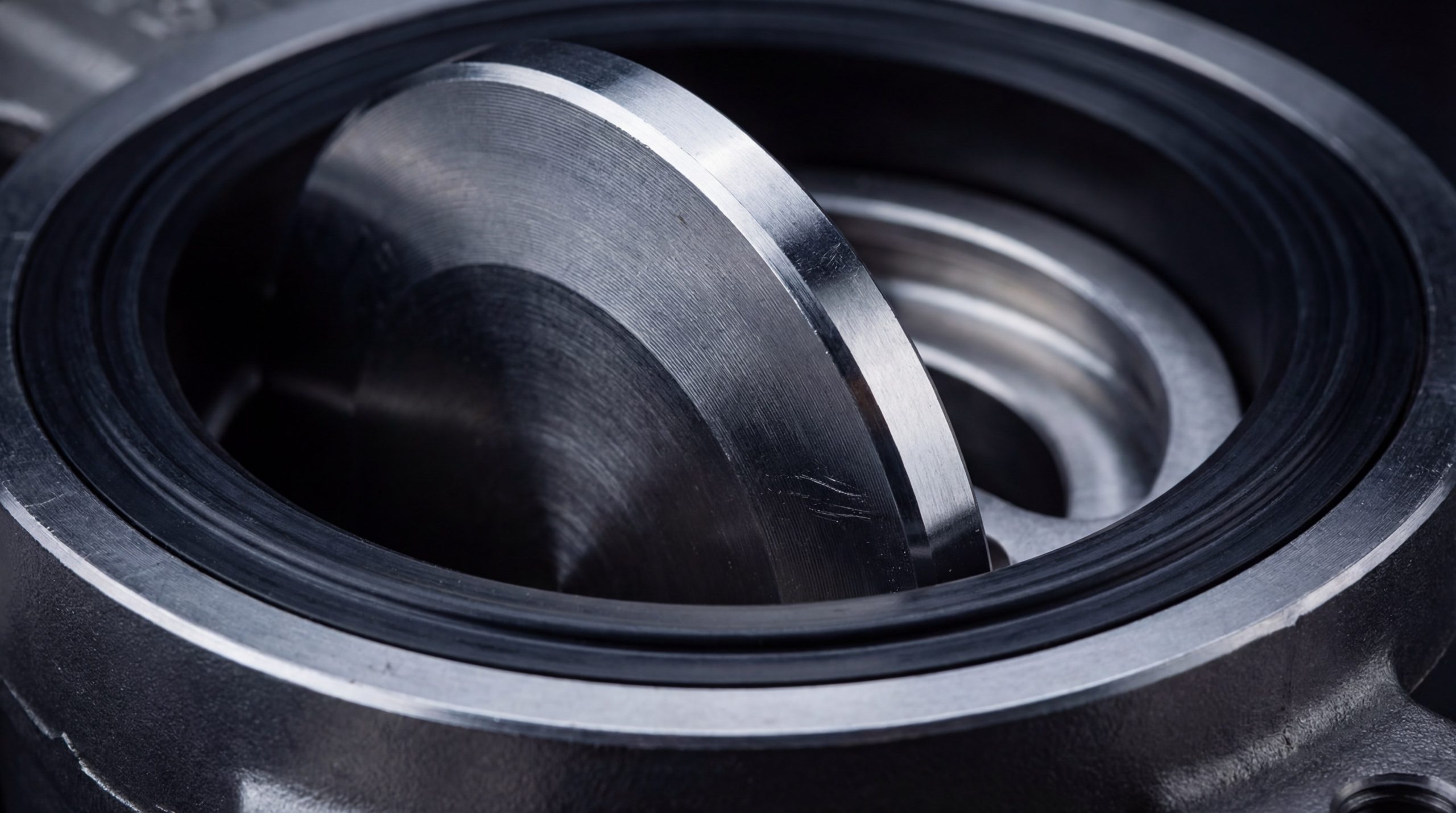
Butterfly valve flow characteristics determine how fluid volume and pressure change as the internal disc rotates from a closed to an open position. Inconsistent flow regulation often leads to system instability, excessive energy consumption, and premature equipment wear in industrial pipelines. If you struggle with unpredictable pressure drops, it is likely because you haven’t matched your specific butterfly control valve flow characteristic to your application’s requirements. Our precision-engineered valves provide the reliable, predictable curves needed to stabilize your most demanding fluid processes.
What defines the butterfly control valve flow characteristic?
The butterfly control valve flow characteristic is primarily defined by the relationship between the opening angle of the disc and the resulting flow capacity. This physical relationship dictates how the valve behaves across its entire operating range, from shut-off to full capacity.
Here is the thing.
Mechanical Angle Dynamics
The rotation of the disc creates a variable opening that is not strictly linear by nature. As you turn the handle or actuator, the available area for fluid to pass increases at varying rates depending on the current angle.
- Initial Opening: The first 10 to 20 degrees often show minimal flow change.
- Mid-Range Control: The most stable modulation occurs between 30 and 70 degrees.
- Full Capacity: Beyond 75 degrees, the flow area increases slowly as it reaches maximum.
Fluid Path Resistance
Fluid must travel around the disc, which acts as a permanent obstruction even when fully open. This geometry creates a specific resistance profile that differs from gate or globe designs.
- Turbulence Generation: The disc edge can create eddies at low opening angles.
- Laminar Flow: Streamlined discs help maintain smooth flow at high angles.
- Pressure Recovery: The shape of the disc influences how quickly pressure stabilizes downstream.
Key Takeaway: The physical interaction between the disc and the fluid stream is the fundamental driver of any flow characteristic curve.
| Angle (Degrees) | Flow Profile Description | Control Stability |
|---|---|---|
| 0° – 20° | High restriction, low sensitivity | Poor |
| 30° – 70° | Predictable area change | Excellent |
| 80° – 90° | Maximum volume, low regulation | Moderate |
Analyze the flow profile specifically in the 30-70 degree range to ensure your system remains stable during modulation.
How does the Cv value influence system performance?
The flow coefficient (Cv) serves as the numerical representation of the butterfly control valve flow characteristic for any given size. It quantifies the valve’s capacity to pass fluid at a standardized pressure drop, allowing for accurate system modeling.
But wait, there’s more.
Standardizing Flow Capacity
Cv tells you exactly how many gallons of water can pass through the valve per minute with a 1 psi pressure drop. This number is essential for selecting the correct valve size for your specific flow requirements.
- Calculated Volume: Allows for precise flow rate predictions.
- Size Comparison: Facilitates easy comparison between different valve models.
- Efficiency Metrics: Higher Cv values indicate lower internal resistance.
Predicting System Pressure Drops
You must know the Cv at various opening angles to prevent excessive pressure loss in your system. If the Cv is too low for your required flow, the resulting pressure drop will force your pumps to work harder and increase costs.
- Energy Savings: Proper Cv sizing reduces pumping power requirements.
- Noise Reduction: Avoiding high pressure drops prevents vibration and noise.
- Longevity: Balanced flow prevents erosion on the valve seat and disc.
Key Takeaway: Correct Cv calculation is the foundation of efficient system design and long-term valve reliability.
| Opening % | Relative Cv % | System Impact |
|---|---|---|
| 25% | 10% – 15% | High Throttling |
| 50% | 40% – 50% | Standard Modulation |
| 100% | 100% | Full Capacity |
Review the Cv curve provided by the manufacturer to ensure your peak operational flow falls within the linear portion of the valve stroke.
Why is the disc design critical for flow regulation?
Disc geometry directly shapes the butterfly control valve flow characteristic by altering the fluid’s velocity and direction. A poorly designed disc can cause turbulence that ruins control precision and damages downstream components.
Check this out.
Throttling Geometry Impact
A thin, streamlined disc allows for a higher Cv and smoother flow transitions compared to thick or flat discs. You will find that the edge profile of the disc determines how quickly the flow area opens during the first few degrees of rotation.
- Disc Thickness: Thinner discs provide more flow area when fully open.
- Edge Contouring: Beveled edges reduce turbulence during throttling.
- Symmetry: Symmetrical discs provide balanced torque during operation.
Material Surface Friction
The surface finish of the disc affects the boundary layer of the fluid, influencing the overall flow characteristic. Smooth surfaces minimize friction losses and help maintain the integrity of the predicted flow curve.
- Coating Options: PFA or epoxy coatings can reduce fluid friction.
- Corrosion Resistance: Maintains the disc shape over years of service.
- Seat Interaction: The disc-to-seat contact affects the “zero point” of the flow curve.
Key Takeaway: Precision machining of the disc edge is the difference between a high-performance control valve and a simple isolation valve.
| Disc Shape | Flow Efficiency | Control Range |
|---|---|---|
| Flat Disc | Low | Narrow |
| Streamlined | High | Wide |
| Contoured | Moderate | Precise |
Select a streamlined disc design if your application requires both high volume capacity and fine throttling control.
Which flow profiles are available for industrial use?
Manufacturers offer different versions of the butterfly control valve flow characteristic to suit various control loop requirements. Choosing between linear, equal percentage, and fast-opening profiles is essential for process stability.
Let’s dive in.
Linear vs. Equal Percentage
In a linear profile, the flow rate is directly proportional to the disc angle, which is ideal for liquid level control. Equal percentage profiles provide smaller changes at low openings and larger changes at high openings, which is better for pressure control.
- Linear Curve: Best for constant pressure drop applications.
- Equal % Curve: Compares well with ball valve performance in complex loops.
- Modification: Actuators can often modify the base characteristic of the valve.
Fast Opening Utility
Fast-opening characteristics reach maximum flow capacity very early in the stroke, usually within the first 30 to 40 degrees. You should typically reserve this profile for on-off isolation tasks rather than precision modulation.
- Rapid Shut-off: Ideal for emergency isolation systems.
- Low Sensitivity: Hard to control at mid-range positions.
- System Flush: Useful for high-volume flushing operations.
Key Takeaway: Matching the valve profile to the control loop logic prevents “hunting” and ensures smooth process transitions.
| Profile Type | Response Sensitivity | Primary Application |
|---|---|---|
| Linear | Constant | Level Control |
| Equal % | Increasing | Pressure/Temp Control |
| Fast Opening | High Initial | Isolation/On-Off |
Verify that your controller’s PID settings are compatible with the specific flow profile selected for the valve.
Does valve size affect control precision and stability?
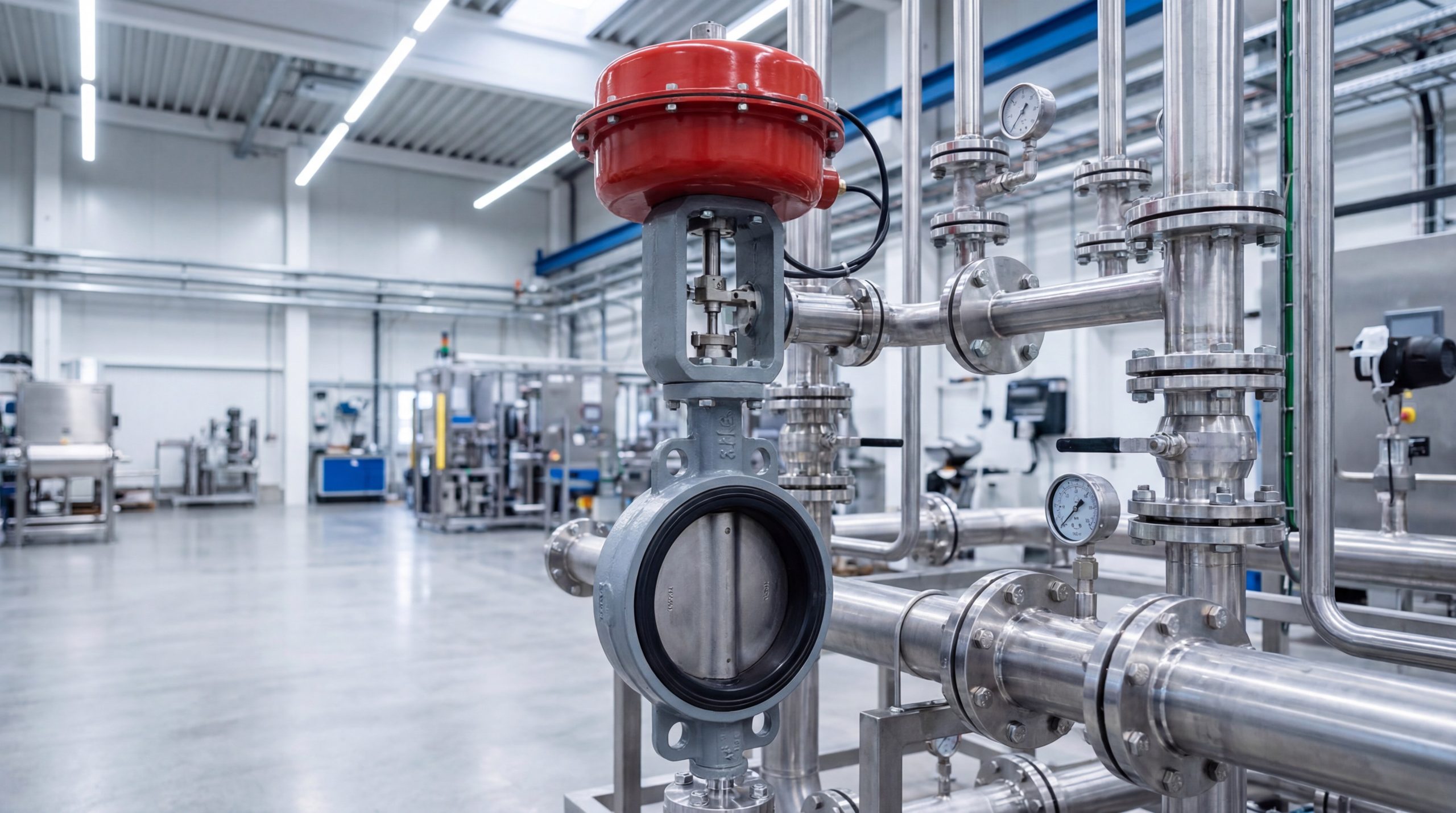
Selecting the correct diameter is vital because an oversized valve will compromise the butterfly control valve flow characteristic. If the valve is too large for the pipe, it will operate only in the nearly-closed position where control is least stable.
You might be wondering.
Sensitivity and Size Scale
Large valves have high gain, meaning a tiny movement in the actuator results in a massive change in flow volume. This high sensitivity makes it difficult for positioners to maintain a steady flow rate without oscillating.
- Gain Control: Smaller valves provide finer resolution for small flow changes.
- Velocity Limits: Larger valves must be carefully sized to avoid high fluid velocities.
- Torque Requirements: Size dictates the power needed for precise positioning.
Avoiding Oversizing Risks
Many engineers mistakenly size valves based on pipe diameter rather than actual flow requirements. This leads to valves operating in the unstable “seat-leakage” zone where the flow characteristic is highly non-linear.
- Seat Erosion: Operating nearly closed causes high-velocity “wire-drawing” wear.
- Control Hunting: The actuator struggles to find a stable point near the seat.
- Cost Inefficiency: Oversized valves and actuators waste capital budget.
Key Takeaway: Always size the valve based on the Cv required for your maximum flow, which may mean using a valve smaller than the pipe.
| Valve vs. Pipe Size | Control Quality | Risk Level |
|---|---|---|
| 1:1 Ratio | Often Oversized | High |
| Reduced Port | High Precision | Low |
| Significant Under-size | High Pressure Drop | Medium |
Compare your peak flow rate against the Cv at 70% open to determine if a reduced-size valve is appropriate for your line.
Can concentric designs meet high-performance needs?
Concentric valves are the most common industrial option, but their butterfly control valve flow characteristic is best suited for specific low-pressure tasks. In these designs, the stem passes directly through the center of the disc and seat.
The results are clear.
Simplified Fluid Paths
The concentric design is symmetrical, meaning the flow splits evenly around both sides of the disc. While this creates a predictable path, the constant contact with the seat during rotation can affect control at small angles.
- Low Torque: Easier for small actuators to manage.
- Center-Pivot: Symmetrical flow prevents stem side-loading.
- Versatility: Works well for water, air, and neutral gases.
Low Pressure Suitability
Because the seat is usually a resilient rubber liner, concentric valves are limited by pressure and temperature. If you exceed these limits, the seat can deform, causing the flow characteristic to deviate from the factory curve.
- Resilient Seats: Provide bubble-tight shut-off.
- Operating Limits: Usually restricted to PN10 or PN16 ratings.
- Wear Pattern: Continuous friction can change the low-angle Cv over time.
Key Takeaway: Concentric valves are excellent for HVAC and water treatment but may struggle in high-precision chemical modulation.
| Feature | Concentric Design | Performance Impact |
|---|---|---|
| Seat Style | Resilient Liner | High Shut-off, Low Temp |
| Flow Path | Symmetrical | Predictable, High Turbulence |
| Cost | Economical | Best ROI for standard tasks |
Use concentric valves for non-critical water and air loops where cost is a primary driver and precision requirements are moderate.
Why choose eccentric designs for throttling tasks?
Eccentric or “high-performance” valves offer a superior butterfly control valve flow characteristic by using an offset stem design. This geometry allows the disc to “cam” into the seat rather than rubbing against it during the entire stroke.
It gets better.
Offset Performance Benefits
The double or triple offset design ensures that the disc only contacts the seat in the final few degrees of closing. This reduces friction and allows for more precise modulation throughout the mid-range of the valve’s travel.
- Lower Friction: Increases the life of the sealing surface.
- Better Modulation: Excellent performance when compared to a globe valve.
- High Pressure: Suitable for steam and high-pressure process lines.
Reducing Operational Wear
By minimizing contact between the disc and seat, eccentric valves maintain their original flow characteristic for much longer than concentric types. This consistency is vital for automated systems that rely on fixed PID parameters.
- Zero Leakage: Often available with metal-to-metal seating.
- Cycle Life: Can endure hundreds of thousands of cycles without curve drift.
- Tight Control: Reduced “stiction” allows for smoother actuator movement.
Key Takeaway: Eccentric designs are the professional choice for high-cycle throttling and critical process control applications.
| Design Type | Seat Contact | Throttling Precision |
|---|---|---|
| Double Offset | Minimal | High |
| Triple Offset | Cam-Action | Superior |
| Standard | Continuous | Moderate |
Invest in triple offset designs for high-temperature or high-pressure steam applications where seal integrity is paramount.
How do butterfly valves compare to globe and ball types?
Every valve type has a unique butterfly control valve flow characteristic that makes it suitable for specific industrial niches. While globe valves are known for precision, butterfly valves offer distinct advantages in weight and cost.
Think about it.
Space vs. Precision
A butterfly valve is much narrower and lighter than a globe or ball valve of the same size. While a globe valve offers more precise low-flow throttling, the butterfly valve provides a much higher Cv per pound of weight.
- Installation: Easier to install in tight piping racks.
- Support: Requires less structural support than heavy ball valves.
- Throttling: Adequate for most large-scale industrial processes.
Total Cost Analysis
When you factor in the valve, actuator, and installation labor, butterfly valves are usually the most cost-effective option for sizes 6″ and larger. They offer a reliable flow characteristic that meets the needs of 80% of industrial applications.
- Automation: Requires lower torque actuators than comparable ball valves.
- Maintenance: Fewer internal parts mean lower long-term repair costs.
- Backflow: Use in conjunction with a high-quality check valve to protect your system.
Key Takeaway: For large diameter lines, the butterfly valve provides the best balance of flow control performance and capital economy.
| Valve Type | Size Range | Cost/Performance Ratio |
|---|---|---|
| Butterfly | 2″ – 60″+ | Excellent |
| Ball Valve | 1/2″ – 24″ | High (Costly in large sizes) |
| Globe Valve | 1/2″ – 12″ | Moderate (Specialized) |
Compare the total weight and footprint of your valve selection to ensure it fits within your existing infrastructure without costly modifications.
What limitations impact flow characteristic accuracy?
Certain physical phenomena can interfere with the butterfly control valve flow characteristic, leading to noise and mechanical failure. Understanding these boundaries is essential for maintaining a safe and efficient system.
Here is the catch.
Cavitation and Noise
If the pressure drop across the valve is too high, vapor bubbles can form and collapse, causing cavitation. This process erodes the disc and seat, fundamentally changing the flow characteristic and creating massive noise.
- Vibration: Cavitation causes mechanical stress on stems and actuators.
- Erosion: Pitted discs will not follow the manufacturer’s Cv curve.
- Limit: Keep the pressure drop ratio within safe engineering limits.
Thermal Sealing Effects
Extreme temperatures can cause the disc and seat to expand or contract at different rates. This thermal movement can cause the valve to stick or leak, shifting the “zero” point of your control characteristic.
- Binding: High heat can cause the disc to jam in the seat.
- Leakage: Cold temperatures can make resilient seats brittle.
- Stability: Use metal-seated eccentric valves for extreme thermal ranges.
Key Takeaway: Operating outside of the specified pressure and temperature limits will invalidate your flow control calculations.
| Factor | Risk to Characteristic | Mitigation Strategy |
|---|---|---|
| Cavitation | High | Limit Pressure Drop |
| Heat Expansion | Medium | Use High-Temp Alloys |
| Fluid Velocity | Medium | Correct Sizing |
Monitor your system for high-pitched “gravel” noises, which are a primary indicator of cavitation and potential valve damage.
How can you optimize the flow control curve?
You can enhance the butterfly control valve flow characteristic through smart engineering and modern automation tools. Optimization ensures that your valve operates in its most stable region throughout the process cycle.
The bottom line is this.
Digital Positioner Support
Modern digital positioners can “re-map” the physical characteristic of a valve. If your valve is inherently linear but you need an equal percentage response, the positioner can adjust the signal to achieve the desired output.
- Characterization: Digitally matches the valve to the process.
- Diagnostics: Tracks curve drift over time to predict maintenance.
- Calibration: Ensures the actuator and disc are perfectly aligned.
Strategic Sizing Protocols
Optimizing the flow characteristic starts with sizing the valve so that your normal operating range is between 30% and 70% open. This avoids the non-linearities found near the seat and the full-open position.
- Headroom: Leave 10-20% capacity for surge control.
- Safety Margin: Ensure the valve can shut off against full system pressure.
- Consistency: Use the same sizing methodology across your entire plant.
Key Takeaway: Combining high-quality mechanical design with digital control is the ultimate way to achieve process perfection.
| Optimization Step | Action | Expected Result |
|---|---|---|
| 1. Sizing | Calculate Max/Min Cv | Stable Modulation |
| 2. Selection | Choose Offset Design | Lower Torque/Wear |
| 3. Automation | Install Digital Positioner | Custom Flow Curve |
Implement a regular calibration schedule for your automated valves to ensure the flow characteristics remain within factory specifications.
Conclusion
Achieving stable fluid management requires a deep understanding of how the butterfly control valve flow characteristic interacts with your specific piping environment. By selecting the correct disc design, sizing for Cv rather than pipe diameter, and utilizing eccentric designs for critical tasks, you can eliminate the risks of system hunting and premature wear. At Ruitoflow, our vision is to empower global industry with precision-engineered valve solutions that maximize efficiency and safety.
Ready to stabilize your system? Explore our high-performance range or contact us for a technical consultation today.
Frequently Asked Questions
Can I use a butterfly valve for high-precision chemical throttling?
Yes, but you must select a high-performance eccentric or triple-offset design rather than a standard concentric valve to ensure a stable flow curve and long seat life.
What’s the best way to prevent cavitation in my control valve?
The best approach is to size the valve correctly so the pressure drop remains within the manufacturer’s specified limits and avoids the critical cavitation index.
How do I know if my valve is oversized for the system?
You can tell a valve is oversized if it typically operates at less than 20% open to maintain the required flow rate, leading to frequent oscillations and seat wear.
Can I replace a globe valve with a butterfly valve to save space?
Yes, in most high-volume applications, a high-performance butterfly valve can replace a globe valve while providing a similar equal percentage characteristic at a fraction of the weight.
What’s the best design for minimizing total system energy costs?
A streamlined, concentric butterfly valve provides the highest Cv per inch, meaning it offers the lowest resistance and pressure drop when fully open.