
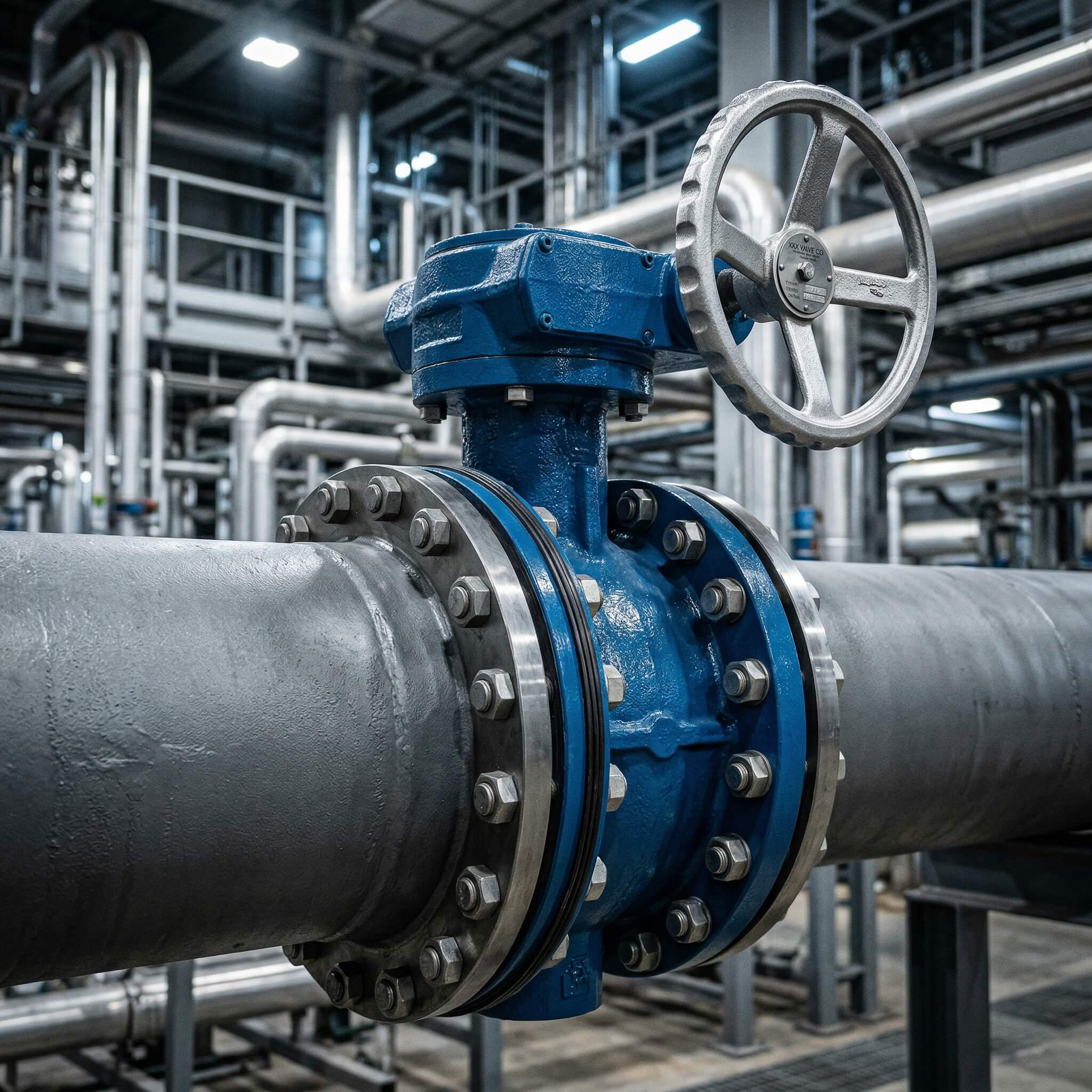
The main butterfly valve end connection types are wafer, lug, double-flanged, and welded ends. You are likely facing increased operational costs and potential system leaks due to improper valve selection in your piping network. This mismatch agitates maintenance schedules and leads to expensive downtime. By selecting the correct butterfly valve end connection types, you can optimize fluid control, simplify installation, and ensure the structural integrity of your industrial system.
What Are the Main Types of Butterfly Valve Connections?
The primary butterfly valve end connection types include wafer, lug, flanged, and welded configurations, each serving distinct mechanical purposes. You will find that these designs dictate how the valve is secured between or to the pipe flanges. Selecting the wrong interface can lead to gasket failure or mounting instability.
Overview of Primary Mounting Designs
These designs vary from the slim wafer profile to the robust double-flanged body. You need to assess your pipe spacing and pressure requirements before choosing a specific mounting style.
Think about it.
- Wafer style: Clamped between flanges.
- Lug style: Bolted directly to flanges via threaded inserts.
- Flanged style: Integrated flanges for heavy-duty bolting.
Factors Influencing System Selection
Engineers must prioritize safety and ease of maintenance when evaluating butterfly valve end connection types. The connection determines if you can perform maintenance on one side of the pipe without draining the entire system.
Here is the kicker:
- Operating pressure limits.
- Temperature fluctuations in the media.
- Mechanical vibration in the pipeline.
Key Takeaway: Choosing the right mounting design ensures that your system remains leak-proof and accessible for routine inspections.
| Connection Type | Mounting Style | Best Use Case |
|---|---|---|
| Wafer | Sandwich / Clamped | Low-pressure utility |
| Lug | Threaded Lugs | End-of-line service |
| Flanged | Bolt & Nut | Large diameter pipes |
Understanding the fundamental differences in mounting allows you to prevent installation errors that compromise flow efficiency.
Why Choose Wafer Type Butterfly Valves for Your System?
You choose wafer types for their compact, lightweight design which makes them the most cost-effective butterfly valve end connection types for general utility services. This style is engineered to be sandwiched between two pipe flanges using long bolts. Because they use less material than other body styles, they significantly reduce the overall weight of your piping system.
Compact Design and Weight Advantages
Wafer valves are essentially flangeless and feature a very short face-to-face dimension. You can install them in tight spaces where traditional flanged valves simply would not fit.
The best part?
- Significant reduction in material costs.
- Easier handling during high-elevation installations.
- Minimal footprint in crowded mechanical rooms.
Understanding Pressure and Seal Limits
Wafer valves rely on the compression of the pipe flanges to maintain a seal against the internal pressure. You must ensure that the bolts are torqued evenly to prevent gasket displacement or leakage.
Let’s be honest:
- Limited to medium and low-pressure systems.
- Not suitable for dead-end service scenarios.
- Requires precise flange alignment.
Key Takeaway: Wafer valves offer the best value for standard flow control where space is limited and dead-end service is not required.
| Feature | Wafer Benefit |
|---|---|
| Weight | Lightest option |
| Installation | Fast and simple |
| Space | Minimal face-to-face |
Strategic use of wafer valves can lower your project’s total capital expenditure while maintaining reliable fluid control.
How Do Lug Type Butterfly Valves Support Dead-End Service?
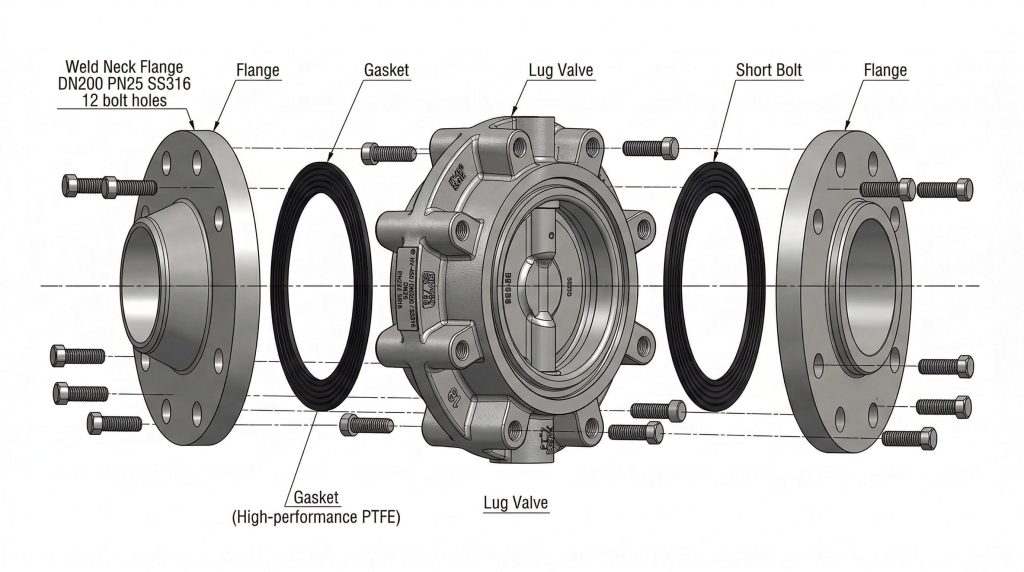
Lug type butterfly valve end connection types support dead-end service by featuring threaded metal inserts (lugs) that allow for independent bolting from either side of the pipeline. You can remove the piping from one side of the valve while the other side remains pressurized. This capability is essential for systems where equipment downstream requires frequent maintenance or replacement.
Threaded Lugs and Independent Bolting
The body of a lug valve contains a series of protrusions with internal threads matching the bolt pattern of the pipe flange. You can secure the valve to one flange using short bolts, making the connection much more stable than a wafer design.
The bottom line?
- Allows for “dead-end” piping isolation.
- Provides superior structural support.
- Prevents valve movement during maintenance.
Maintenance Flexibility in Piping Systems
With a lug-style connection, you don’t have to shut down the entire line to work on a single section. You simply close the valve and disconnect the downstream piping without affecting the upstream pressure.
Think about it.
- Faster equipment repairs.
- Reduced system-wide downtime.
- Increased safety for your maintenance crew.
Key Takeaway: Lug valves provide the mechanical security needed for end-of-line applications and high-frequency maintenance zones.
| Capability | Lug Style Performance |
|---|---|
| Dead-End Service | Fully Supported |
| Bolting | Independent per side |
| Security | High |
Using lugged connections is a proactive strategy to reduce long-term labor costs during industrial system upgrades.
When Are Double Flanged Butterfly Valves Necessary?
Double flanged butterfly valve end connection types are necessary when you are dealing with large-diameter pipelines or high-pressure applications that require maximum structural integrity. You will see these used frequently in water treatment and heavy industrial plants. These valves feature two separate flanges built into the body, allowing them to be bolted to pipe flanges in the same way as a gate or globe valve using standard butterfly valve end connection types protocols.
Robust Sealing for Large Diameters
The double-flanged design provides a massive surface area for gaskets, which ensures a tight seal even in high-vibration environments. You typically find this style in sizes exceeding DN600 where weight and pressure forces are substantial.
The kicker:
- Maximum mechanical strength for large bores.
- Excellent alignment with heavy piping.
- Enhanced resistance to pipe stress.
High-Pressure and Heavy-Duty Performance
These valves are built to withstand severe service conditions that would deform a wafer or lug body. You can rely on them for critical infrastructure where a failure would result in catastrophic system loss.
You see:
- Suitable for high-pressure ANSI classes.
- Compatible with heavy-duty actuators.
- Longer service life in harsh environments.
Key Takeaway: Double-flanged valves are the gold standard for large-scale projects where reliability and safety outweigh cost considerations.
| Diameter Range | Best Connection |
|---|---|
| Small (< DN200) | Wafer/Lug |
| Large (> DN600) | Double Flanged |
| Critical Path | Double Flanged |
Investing in flanged connections for large-diameter lines prevents the warping and leakage common in lesser body styles.
What Are the Benefits of Welded End Butterfly Valves?
Welded end butterfly valve end connection types offer a permanent, leak-proof solution by fusing the valve body directly to the pipeline. You choose this option for hazardous media or high-temperature steam lines where any potential leak path must be eliminated. Since there are no flanges or gaskets to fail, the maintenance requirements for the connection itself are virtually zero.
Permanent Leak-Proof Connections
By welding the valve into place, you create a seamless transition between the pipe and the flow control device. This is particularly useful in power plants and chemical processing where safety is the highest priority.
What’s the catch?
- Zero leak paths at the connection.
- Ideal for hazardous or toxic fluids.
- No bolts to retighten over time.
Butt Weld vs. Socket Weld Applications
Depending on your pipe size, you will use either butt welding for larger diameters or socket welding for smaller, high-pressure lines. You must have skilled welders on-site, as the heat from welding can damage the valve seat if not managed correctly.
Wait, there’s more.
- Butt Weld: Best for large-bore thermal expansion.
- Socket Weld: Best for small, high-vibration lines.
- Material matching is critical for weld integrity.
Key Takeaway: Welded connections eliminate the risk of flange leaks, making them the safest choice for high-temperature and hazardous services.
| Connection Type | Permanence | Maintenance |
|---|---|---|
| Welded End | Permanent | Very Low |
| Flanged | Removable | Moderate |
| Wafer | Removable | High |
Specify welded ends only when the system design does not require the valve to be removed for the duration of its service life.
How Does Body Design Influence Connection Performance?
Body design significantly impacts how butterfly valve end connection types handle torque and sealing pressure. You must consider whether a concentric or offset design better suits your connection style to avoid premature wear. For example, high-performance triple offset valves often require specific flanged connections to handle the high closing torques required for zero-leakage sealing.
Impact of Concentric vs. Offset Designs
Concentric designs are common for wafer and lug connections in low-pressure systems. However, if you are using high-pressure connections, an offset design reduces seat friction and protects the integrity of the connection.
The best part?
- Reduced operating torque.
- Extended seat life for connections.
- Better sealing in high-pressure flanged units.
Material Compatibility with Pipeline Flanges
You must match the valve body material with your pipe flanges to prevent galvanic corrosion. If you connect a stainless steel valve to a carbon steel pipe without proper insulation, the connection will eventually fail.
Think about it.
- Avoids electrochemical corrosion.
- Ensures consistent thermal expansion.
- Maintains the structural bond between pipe and valve.
Key Takeaway: A well-matched body design and material choice ensure that your connection performs reliably throughout its lifecycle.
| Design Type | Best Connection | Advantage |
|---|---|---|
| Concentric | Wafer | Lowest cost |
| Double Offset | Lug/Flanged | High cycle life |
| Triple Offset | Flanged/Welded | Zero leakage |
Selecting an offset design for your flanged connections can dramatically reduce the mechanical stress on your actuators and piping.
Which Connection Type is Best for High-Pressure Use?
The best butterfly valve end connection types for high-pressure use are flanged and welded ends because they provide the mechanical strength to resist internal surge pressures. You should avoid wafer designs in high-pressure scenarios, as the long bolts required can stretch under pressure, leading to gasket blowout. For critical high-pressure lines, the bolted-flange or welded interface ensures the valve stays securely in place.
Analyzing Pressure Ratings by Connection
Double-flanged valves are typically rated for much higher pressures (ANSI 300 or 600) compared to wafer types. You can rely on the distributed bolting of a flange to maintain a seal even when the system experiences pressure spikes.
The bottom line?
- Flanged: High pressure (300+ PSI).
- Welded: Extreme pressure and temperature.
- Wafer: Low to medium pressure only.
Risk of Gasket Blowout in Wafer Types
In high-pressure systems, the compression force on a wafer valve can fluctuate. You run a high risk of “blowing” a gasket if the line pressure exceeds the clamping force of the long bolts.
Here is the kicker:
- Long bolts are prone to thermal expansion.
- Uneven torque leads to localized leaks.
- Flanged connections offer “encapsulated” gaskets.
Key Takeaway: Flanged and welded connections provide the safety margin required for high-pressure industrial applications.
| Pressure Level | Recommended Connection |
|---|---|
| < 150 PSI | Wafer / Lug |
| 150 – 300 PSI | Lug / Flanged |
| > 300 PSI | Flanged / Welded |
Never prioritize the low cost of a wafer valve over the safety requirements of a high-pressure fluid system.
How Do Actuation Needs Affect Your Connection Choice?
Actuation needs affect your choice of butterfly valve end connection types by requiring a stable platform that can withstand the dynamic torque generated by electric or pneumatic operators. You will find that automated valves on lug or flanged bodies are more stable than those on wafer bodies. If the valve body moves or shifts during a high-torque opening cycle, it can misalign the actuator and lead to mechanical failure.
Mounting Actuators on Lugged Bodies
Lugged valves provide a much firmer base for mounting heavy gearboxes or pneumatic actuators. Because the valve is bolted directly to the flanges, the torque from the actuator is transferred efficiently into the piping rather than twisting the valve body.
The best part?
- Eliminates valve “rotation” during cycling.
- Supports the weight of large electric actuators.
- Ensures consistent valve stem alignment.
Electric vs. Pneumatic Torque Demands
High-speed pneumatic actuators can create sudden shocks to the valve connection. You need a robust connection like a flanged or lugged end to absorb these forces without vibrating the gaskets loose.
What’s the catch?
- Pneumatic: High shock loads.
- Electric: Consistent, heavy weight.
- Wafer valves may shift under rapid cycling.
Key Takeaway: Choosing a lugged or flanged connection provides the necessary stability for automated and high-cycle valve systems.
| Actuator Type | Recommended Connection | Stability Benefit |
|---|---|---|
| Manual Lever | Wafer | Sufficient for low load |
| Pneumatic | Lug | Resists shock loads |
| Electric | Flanged | Supports heavy weight |
Ensure your valve connection is strong enough to handle the mechanical stresses of automation to prevent premature actuator failure.
What Maintenance Factors Should You Consider Early On?
Maintenance factors such as the ease of valve removal and the longevity of threaded components are critical when evaluating butterfly valve end connection types. You should choose a connection that minimizes labor time and prevents system-wide shutdowns during routine service. For example, while wafer valves are cheap to buy, they often require more labor to replace because the entire section of the pipeline must be depressurized and supported.
Ease of Pipeline Disassembly
Lug-style valves are superior for maintenance because you can disconnect one side of the pipe while the valve remains in place. You save hours of labor and avoid the need for temporary pipe supports that are often required when removing wafer valves.
Think about it.
- Lug: 50% faster removal.
- Wafer: Requires full line shutdown.
- Flanged: High accessibility.
Longevity of Tapped Lug Threads
If you are working in a corrosive environment, you must consider the durability of the threads in your lugged valves. You should use stainless steel or coated threads to prevent galling, which can make the valve impossible to remove later.
The bottom line?
- Prevents bolt seizing.
- Ensures threads remain functional.
- Reduces the risk of body damage during repair.
Key Takeaway: Selecting a maintenance-friendly connection like the lug style significantly reduces the long-term operational cost of your plant.
| Maintenance Task | Easiest Connection |
|---|---|
| Seal Replacement | Lug / Flanged |
| Complete Valve Swap | Wafer (if supported) |
| Emergency Isolation | Lug |
Focusing on maintenance accessibility during the design phase prevents expensive “workarounds” during the operational phase of the system.
How to Select the Right Connection for Your Industry?
You select the right connection for your industry by balancing the specific safety standards of your sector with the operational needs of your facility. By reviewing butterfly valve end connection types, you can match the mechanical interface to your medium—whether it is potable water, corrosive chemicals, or high-pressure steam. For instance, the water treatment industry favors wafer and lug designs for their cost, while the oil and gas sector demands flanged or welded ends for fire safety.
HVAC and Water Treatment Solutions
In the HVAC sector, you usually prioritize low weight and ease of installation. Wafer valves are standard here because the pressures are relatively low and the fluids are non-hazardous.
Here is the kicker:
- Low initial capital investment.
- Easy integration into standard PVC or steel lines.
- Sufficient for 150 PSI systems.
Oil, Gas, and Chemical Requirements
For hazardous environments, you need connections that offer zero-leakage and high fire-resistance. Flanged or welded connections are often mandated by safety codes to prevent catastrophic leaks during a fire or pressure surge.
You see:
- Mandatory compliance with API 607/609.
- Resistance to aggressive chemical corrosion.
- Enhanced safety in explosive zones.
Key Takeaway: Aligning your valve connection with industry-specific safety standards ensures both regulatory compliance and operational reliability.
| Industry | Primary Connection | Priority |
|---|---|---|
| Water / HVAC | Wafer | Cost / Speed |
| Chemical | Lug / Flanged | Maintenance / Safety |
| Oil & Gas | Flanged / Welded | Fire Safety / Pressure |
A strategic selection checklist should always include pressure rating, maintenance frequency, and media hazardousness to determine the final connection type.
Optimize Your Flow Control Today
Selecting the perfect butterfly valve end connection types is the first step toward a more efficient and reliable industrial system. At Ruitoflow, we specialize in precision-engineered valve solutions that solve your most complex fluid control challenges. Whether you need lightweight wafer valves for a high-rise HVAC project or heavy-duty flanged units for a municipal water plant, our engineering team is ready to provide the technical documentation and high-quality products you require. We believe in advancing global industrial standards through supply discipline and manufacturing excellence. To receive a custom engineering consultation or a rapid quote for your next project, contact us today.
FAQ
Can I use a wafer valve for dead-end service?
No. Wafer valves rely on two flanges for compression; removing one side would cause the valve to lose its seal and potentially be ejected from the line.
What’s the best connection for high-vibration systems?
Flanged or Welded. These provide the most secure mechanical bond, preventing the valve from shifting or the gaskets from loosening over time.
How do I know if I need a lug or a wafer valve?
Choose Lug if you need to perform maintenance on one side of the pipe without shutting down the system; choose Wafer if you need the most cost-effective solution for a continuous line.
Can I weld a flanged butterfly valve into the pipe?
No. You should use a valve specifically designed with butt-weld or socket-weld ends to ensure the body material and seat can handle the welding heat.
What’s the most durable connection for seawater applications?
Double Flanged. This provides a robust seal area and allows for specialized coatings or material matching (like bronze or SS316) to resist harsh salt corrosion.