
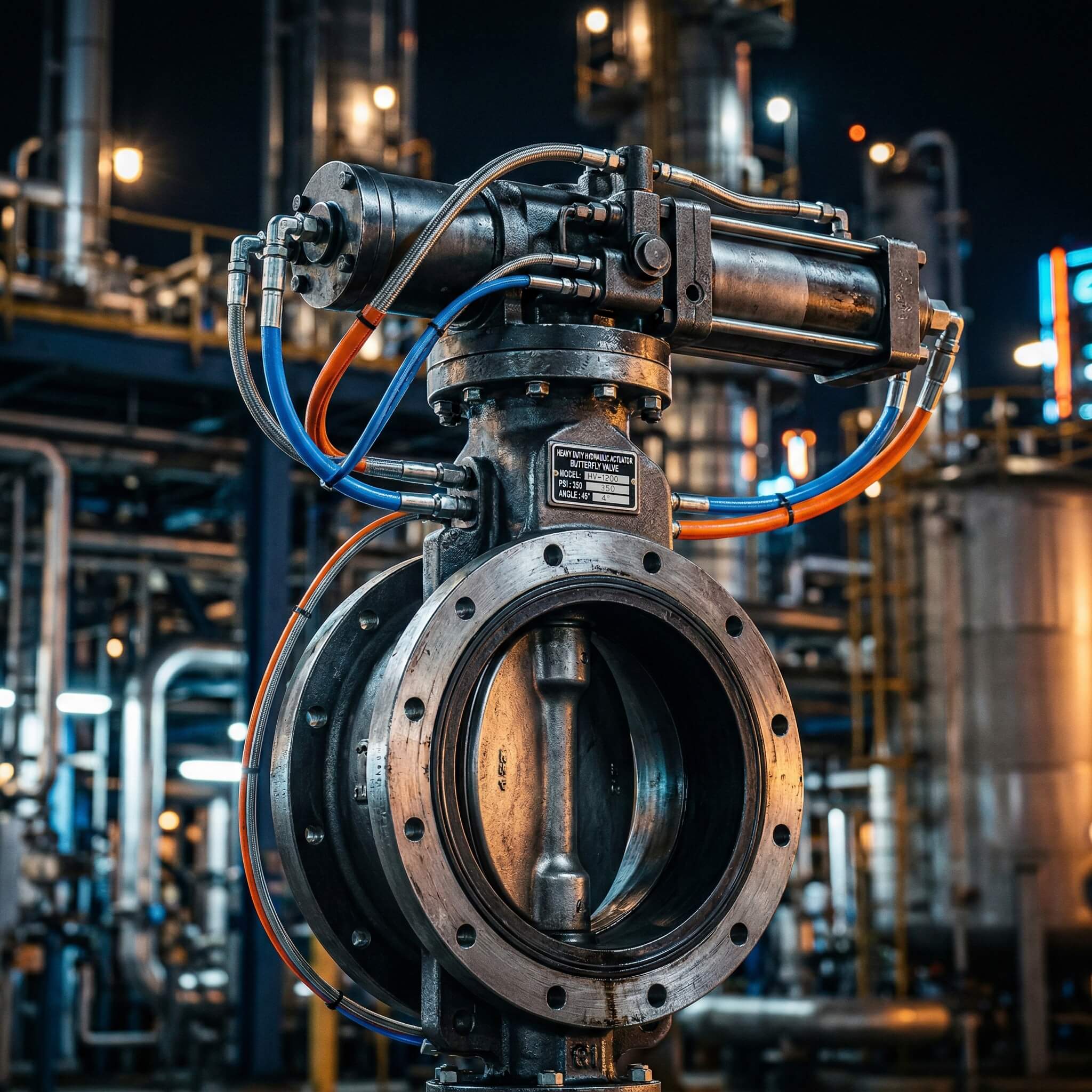
Actuated butterfly valves are essential components for automated fluid control and isolation in modern piping systems. You often face significant challenges when manual valves fail to provide the speed or torque required for high-pressure operations. These delays in shut-off can agitate your system’s stability, leading to costly downtime or even equipment damage. By integrating a hydraulic actuator butterfly valve into your facility, you ensure precision-engineered reliability that handles demanding industrial loads with ease.
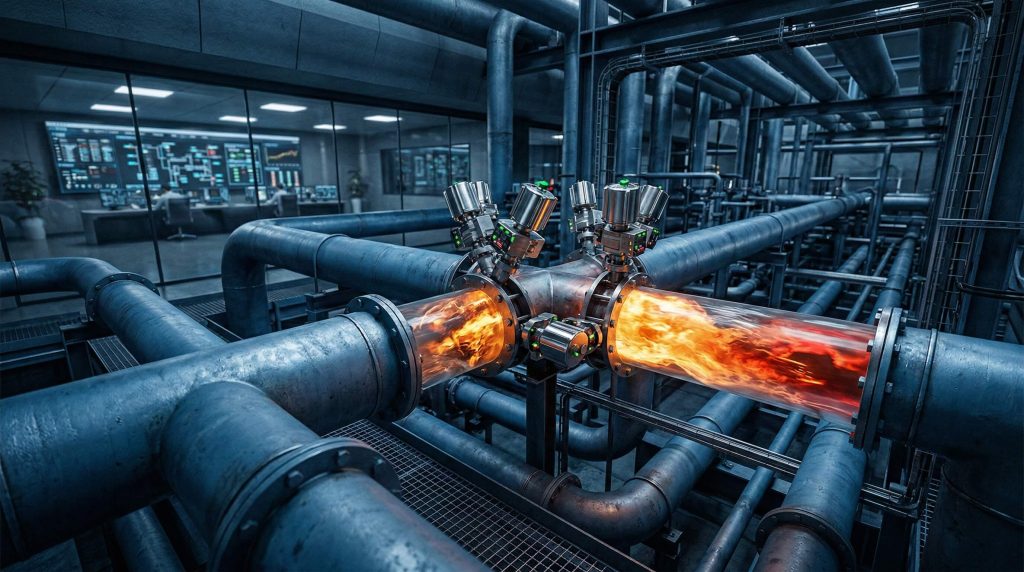
What is a hydraulic actuator butterfly valve?
A hydraulic actuator butterfly valve is a quarter-turn flow control device that utilizes pressurized fluid to generate the high torque needed for disc rotation. This assembly consists of a traditional butterfly valve body coupled with a hydraulic piston or motor mechanism. You rely on the hydraulic actuator butterfly valve when your application exceeds the power capabilities of pneumatic or electric alternatives. It provides a compact yet powerful solution for managing large-bore pipes and high-viscosity media.
Essential Components and Design
Think about this: the strength of this valve lies in its heavy-duty construction and simplified mechanical interface. You will find that the integration of the actuator directly onto the valve stem minimizes mechanical loss and improves response time.
- Centrally placed disc for 90-degree rotation.
- Hydraulic piston or rotary cylinder.
- High-pressure fluid ports for double-acting or spring-return.
- Resilient or metal-to-metal seating surfaces.
Key Takeaway: Selecting the right components ensures that your automated systems remain operational under extreme pressure conditions without frequent manual intervention.
| Component | Function |
|---|---|
| Valve Disc | Regulates flow through 90-degree rotation |
| Hydraulic Cylinder | Converts fluid pressure into mechanical torque |
| Stem Coupling | Transfers power from actuator to disc |
This table highlights how integrated components work together to provide superior torque for heavy-duty piping tasks.
How does a hydraulic actuator butterfly valve work?
This hydraulic actuator butterfly valve works by converting hydraulic energy into mechanical force to move a disc between open and closed positions. When you introduce pressurized oil into the actuator chamber, it pushes a piston that rotates the valve stem exactly 90 degrees. This movement aligns the disc parallel or perpendicular to the fluid flow to regulate or stop the process. You can control this action remotely to ensure your system reacts instantly to changing operational demands.
The Mechanics of Flow Control
Here is the deal: the precision of the hydraulic fluid allows for incremental adjustments that other actuation methods might struggle to match. You can achieve smooth throttling or rapid shut-off by managing the volume of fluid entering the actuator.
- Hydraulic pressure enters the primary port.
- The piston translates linear force into rotary motion.
- The disc shifts to allow or block media passage.
- Seals engage to prevent leakage at the stem and seat.
Key Takeaway: Understanding the mechanical conversion of fluid power allows you to optimize the opening and closing speeds for your specific piping requirements.
| Action | Outcome |
|---|---|
| Pressurization | Piston moves to rotate the valve disc |
| De-pressurization | Spring or opposing fluid returns disc to home |
| Position Feedback | Sensors signal the current disc angle |
The mechanical reliability of this process ensures that your valve maintains its position even under significant back-pressure.
Why use a hydraulic actuator butterfly valve in piping?
You use a hydraulic actuator butterfly valve because it offers the highest torque-to-size ratio among all common valve actuation technologies. This makes it the ideal choice for massive industrial pipelines where space is limited but power requirements are substantial. The hydraulic system also provides inherent damping, which protects your pipes from the damaging effects of water hammer during rapid closures. You gain a level of control that balances high-speed operation with long-term mechanical protection of your infrastructure.
Performance Advantages in Heavy Systems
The best part? You can operate these valves in environments where electricity might be hazardous or compressed air is unavailable. They offer a self-contained power solution that remains stable even in extreme temperature fluctuations.
- Exceptional torque for large-diameter valves.
- Compact footprint compared to pneumatic cylinders.
- Superior throttling capabilities for process control.
- Built-in fail-safe options like spring-return mechanisms.
Key Takeaway: Leveraging the high power density of hydraulic systems allows you to automate large-scale piping without the need for massive external structures.
| Advantage | Benefit |
|---|---|
| High Torque | Operates large valves in high-pressure lines |
| Damping Effect | Prevents system shock and water hammer |
| Reliability | Performs consistently in harsh industrial zones |
These benefits demonstrate why hydraulic solutions are often the preferred choice for critical infrastructure and heavy manufacturing plants.
When to pick a hydraulic actuator butterfly valve?
You should choose a hydraulic actuator butterfly valve when your application involves extremely high pressures or requires a 100% duty cycle. While electric actuators might overheat during frequent cycling, the hydraulic fluid in this valve helps dissipate heat and maintains performance. You will also find this setup necessary for subsea or offshore applications where external environmental pressure is a factor. It is the go-to solution when reliability is non-negotiable and the failure of a smaller actuator could lead to system-wide catastrophe.
Selecting for Duty Cycles
Keep in mind: not all actuators are built for continuous operation, but hydraulic units thrive under constant use. You will save on maintenance costs by selecting a unit that matches the intensity of your production schedule.
- High-frequency cycling environments.
- Remote locations without reliable electrical grids.
- Piping systems carrying heavy or abrasive slurries.
- Applications requiring explosion-proof operation.
Key Takeaway: Matching the actuator type to your duty cycle prevents premature wear and ensures your automation remains responsive during peak loads.
| Scenario | Recommended Choice |
|---|---|
| Frequent Cycling | Hydraulic (100% Duty Cycle) |
| High Pressure | Hydraulic (High Torque) |
| Explosive Zones | Hydraulic (Inherently Safe) |
Strategic selection based on these criteria ensures that your investment provides the longest possible service life in your facility.
Where is a hydraulic actuator butterfly valve used?
You will find the hydraulic actuator butterfly valve utilized across diverse sectors including oil and gas, power generation, and large-scale water treatment facilities. These industries require the robust power that only hydraulic systems provide for moving heavy discs against high-velocity flows. In municipal water systems, you use them to manage main distribution lines where reliability prevents service interruptions for thousands of citizens. They are also common in marine engineering for ballast systems and cargo handling on large vessels.
Industrial Application Sectors
Look at it this way: wherever high-stakes fluid control is required, these valves are likely the primary choice for engineers. You can trust them in environments ranging from scorching power plants to freezing offshore platforms.
- Offshore oil platforms and refineries.
- Hydroelectric and thermal power stations.
- Wastewater treatment and desalination plants.
- Marine shipbuilding and ballast control.
Key Takeaway: The versatility of these valves across multiple critical industries proves their status as a gold standard for heavy-duty automation.
| Industry | Application |
|---|---|
| Oil & Gas | Emergency shut-off and process isolation |
| Water | Mainline distribution and pump protection |
| Marine | Bilge, ballast, and cargo fluid management |
The wide adoption in these sectors highlights the valve’s ability to perform in the most demanding conditions on earth.
Who needs a hydraulic actuator butterfly valve setup?
EPC contractors and plant engineers are the primary professionals who require a hydraulic actuator butterfly valve setup for their large-scale projects. If you are responsible for the design of a chemical processing plant or a municipal utility, you need the reliability these valves offer. System integrators also rely on them to ensure that their automated control loops function without mechanical lag. You will find that procurement specialists prioritize these valves when looking for ISO-certified components that meet international safety and performance standards.
Professional Utility and Value
Wait, there is more: even maintenance managers benefit from these valves because their robust design reduces the frequency of emergency repairs. You gain peace of mind knowing your critical flow paths are secured by industrial-grade hardware.
- EPC contractors managing infrastructure builds.
- Process engineers in chemical and power plants.
- Maintenance supervisors seeking low-failure rates.
- OEM manufacturers building specialized fluid systems.
Key Takeaway: Professional trust in hydraulic actuation stems from its proven track record in preventing costly operational failures in high-pressure systems.
| Role | Primary Benefit |
|---|---|
| Project Engineer | Simplifies design with compact power |
| Plant Manager | Reduces downtime with 99.5% reliability |
| Safety Officer | Ensures fail-safe operation in emergencies |
This professional alignment ensures that every stakeholder in a project sees the value of investing in high-quality hydraulic actuation.
Which hydraulic actuator butterfly valve is the best?
The best hydraulic actuator butterfly valve is one that is precision-engineered to meet specific standards like API 609 and ISO 9001. You should look for models that offer a wide working temperature envelope, typically ranging from -20°C to +200°C. High-quality valves feature triple-offset designs to minimize friction and wear on the seals during high-torque operation. You also want a manufacturer that provides full documentation and pressure testing at 1.5 times the working pressure to ensure safety.
Evaluation of Quality Metrics
Check this out: performance isn’t just about torque; it’s about the longevity of the materials used in the valve body and disc. You must verify that the metallurgy matches your media to prevent corrosion.
- Traceable material certificates (MTC/PMI).
- Compliance with DIN, EN, or API standards.
- Proven low defect rates in batch testing.
- Availability of 3D models for design integration.
Key Takeaway: Prioritizing certified manufacturing and rigorous testing protocols ensures you receive a valve that exceeds minimum industry requirements.
| Metric | High-Quality Standard |
|---|---|
| Pressure Test | 1.5x Working Pressure |
| Standards | API 609 / EN 593 |
| Defect Rate | Less than 0.5% |
Focusing on these benchmarks will guide you toward selecting a valve that provides the best long-term return on investment.
How to maintain a hydraulic actuator butterfly valve?
Maintaining your hydraulic actuator butterfly valve involves regular inspections of the fluid levels and the integrity of the hydraulic seals. You should establish a schedule to check for leaks at the connection points and ensure the oil remains free of contaminants. Periodically testing the cycle speed helps you identify if there is any internal wear in the cylinder or friction building up in the valve seat. You will extend the life of the unit by ensuring the hydraulic fluid is replaced according to the manufacturer’s recommendations.
Proactive Service Protocols
Consider this fact: most hydraulic failures are caused by contaminated fluid rather than mechanical breakage. You can prevent almost all unplanned outages by simply maintaining a clean hydraulic circuit.
- Quarterly seal and gasket inspections.
- Annual hydraulic fluid analysis and flushing.
- Monthly verification of limit switch accuracy.
- Routine lubrication of the valve stem and bearings.
Key Takeaway: A structured maintenance program transforms your automated valves from potential points of failure into the most reliable parts of your plant.
| Task | Frequency |
|---|---|
| Fluid Check | Monthly |
| Seal Inspection | Quarterly |
| Full Bench Test | Annually |
By following these simple steps, you ensure that your high-torque valves are always ready to respond to critical system commands.
Why choose our hydraulic actuator butterfly valve?
You should choose our hydraulic actuator butterfly valve because we integrate 15 years of engineering expertise into every unit we manufacture. We provide 100% hydrostatic and air testing at 1.5 times the working pressure to guarantee zero-leakage performance. Our team offers a 24-hour technical response, ensuring that your project schedules remain on track during the critical design and installation phases. You benefit from a global supply chain that delivers ISO-certified products with full documentation for your EPC or OEM requirements.
Manufacturing Excellence and Support
It gets better: we don’t just sell valves; we provide custom-engineered solutions that fit your specific drawings and site conditions. You will receive a comprehensive QA pack with every batch to simplify your handover process.
- ISO 9001, CE, and DNV certifications.
- Custom engineering for unique pipe dimensions.
- Fast delivery windows ranging from 5 to 25 days.
- Proven 99.5% reliability rating in the field.
Key Takeaway: Partnering with an expert manufacturer gives you access to high-performance fluid control that is backed by rigorous quality assurance.
| Feature | Our Commitment |
|---|---|
| Lead Time | 5-25 Days (Fast Delivery) |
| Tech Support | 24-Hour Response Guarantee |
| Warranty | 12-Month Quality Assurance |
Our commitment to engineering excellence ensures that your piping systems operate at peak efficiency with minimal risk.
Can a hydraulic actuator butterfly valve improve safety?
Yes, a hydraulic actuator butterfly valve significantly improves safety by providing reliable emergency shut-off capabilities that operate even during total power failures. You can equip these valves with accumulator tanks or fail-safe springs that close the valve automatically if the main system pressure drops. This prevents hazardous leaks and protects your personnel and the surrounding environment from fluid spills. The precision of the hydraulic control also allows for “slow-close” settings to eliminate the risk of pipe bursts caused by sudden pressure spikes.
Safety Features and Redundancy
Here is the deal: the inherent stability of hydraulic systems makes them the safest choice for toxic or high-pressure media. You can integrate multiple layers of redundancy into the actuation circuit to ensure a fail-state is always achieved.
- Mechanical spring-return for fail-closed logic.
- Accumulator storage for emergency operation.
- Lock-in-place features for maintenance safety.
- Explosion-proof hydraulic control panels.
Key Takeaway: Investing in hydraulic automation is a direct investment in the safety and longevity of your industrial infrastructure.
| Safety Feature | Protection Level |
|---|---|
| Fail-Safe Spring | High (No Power Needed) |
| Accumulator | Medium (Stored Energy) |
| Hydraulic Lock | High (Position Security) |
These safety layers ensure that your facility remains protected against the most common causes of industrial piping accidents.
Frequently Asked Questions
Can I use a hydraulic actuator butterfly valve for seawater?
Yes, you can use these valves for seawater applications provided the body and disc materials are marine-grade, such as bronze or duplex stainless steel, and are DNV certified for offshore use.
What’s the best way to control the speed of a hydraulic valve?
The best way is to use flow control valves within the hydraulic circuit to regulate the volume of fluid entering the actuator, allowing for precise adjustment of opening and closing times.
Can I retrofit a manual butterfly valve with a hydraulic actuator?
Yes, you can often retrofit manual valves if the valve body has an ISO 5211 mounting pad and the stem is designed to handle the increased torque of a hydraulic system.
What is the typical lifespan of a hydraulic actuator?
You can expect a high-quality hydraulic actuator to last over 15 years with proper maintenance, including regular fluid changes and seal inspections.
Can I integrate this valve with my existing PLC system?
Absolutely, you can use solenoid valves and positioners to interface the hydraulic actuator with your electronic control systems for fully automated plant operation.
Conclusion
Mastering the application of actuated butterfly valves is essential for any professional managing modern fluid systems. Whether you are dealing with high-pressure water mains or critical oil and gas lines, the hydraulic solution provides the power and precision you need. We invite you to contact us today to discuss your specific piping requirements with our technical experts.
Secure your fluid control future with RUITO—where precision engineering meets industrial reliability.
Our vision is to provide the world’s most dependable valve solutions, ensuring every industrial system operates with maximum safety and efficiency.