
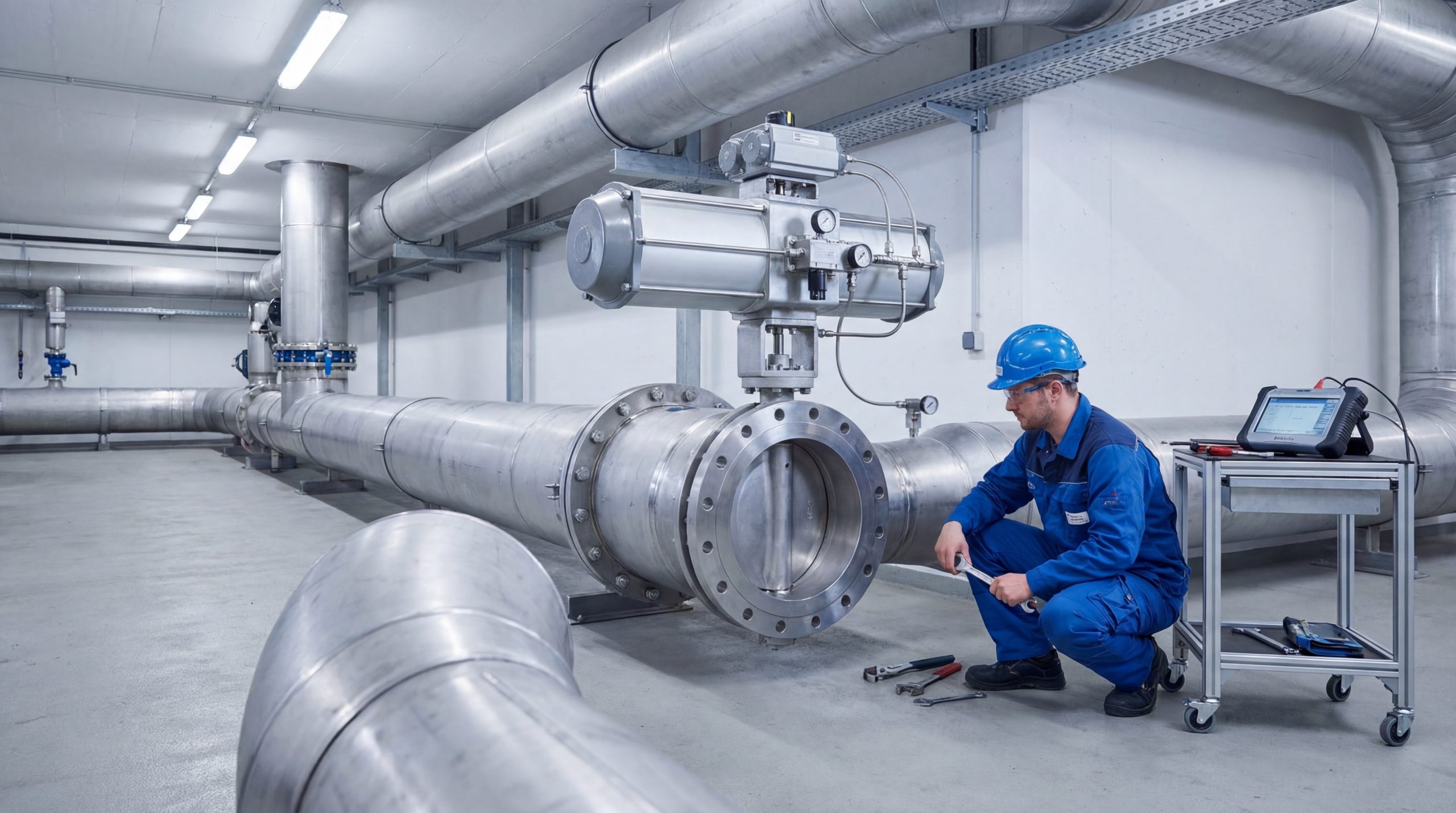
To fix a leaking butterfly valve, you must first identify the leakage source—whether internal through the seat or external through the stem packing—and then adjust actuator limit stops, clear debris from the sealing surfaces, or replace the resilient seat and gaskets.
A compromised valve disrupts your production schedule and risks safety compliance across your entire facility. Even a minor butterfly valve leakage can lead to significant fluid loss, pressure drops, and eventual equipment failure. Fortunately, most leakage issues can be resolved through systematic troubleshooting and precision component replacement.
What are the primary causes of butterfly valve leakage?
Physical debris, chemical degradation of the seat, and worn stem packing are the most common culprits for performance failure. Identifying the specific cause of butterfly valve leakage is the first step toward restoring system integrity.
Debris in the valve seat
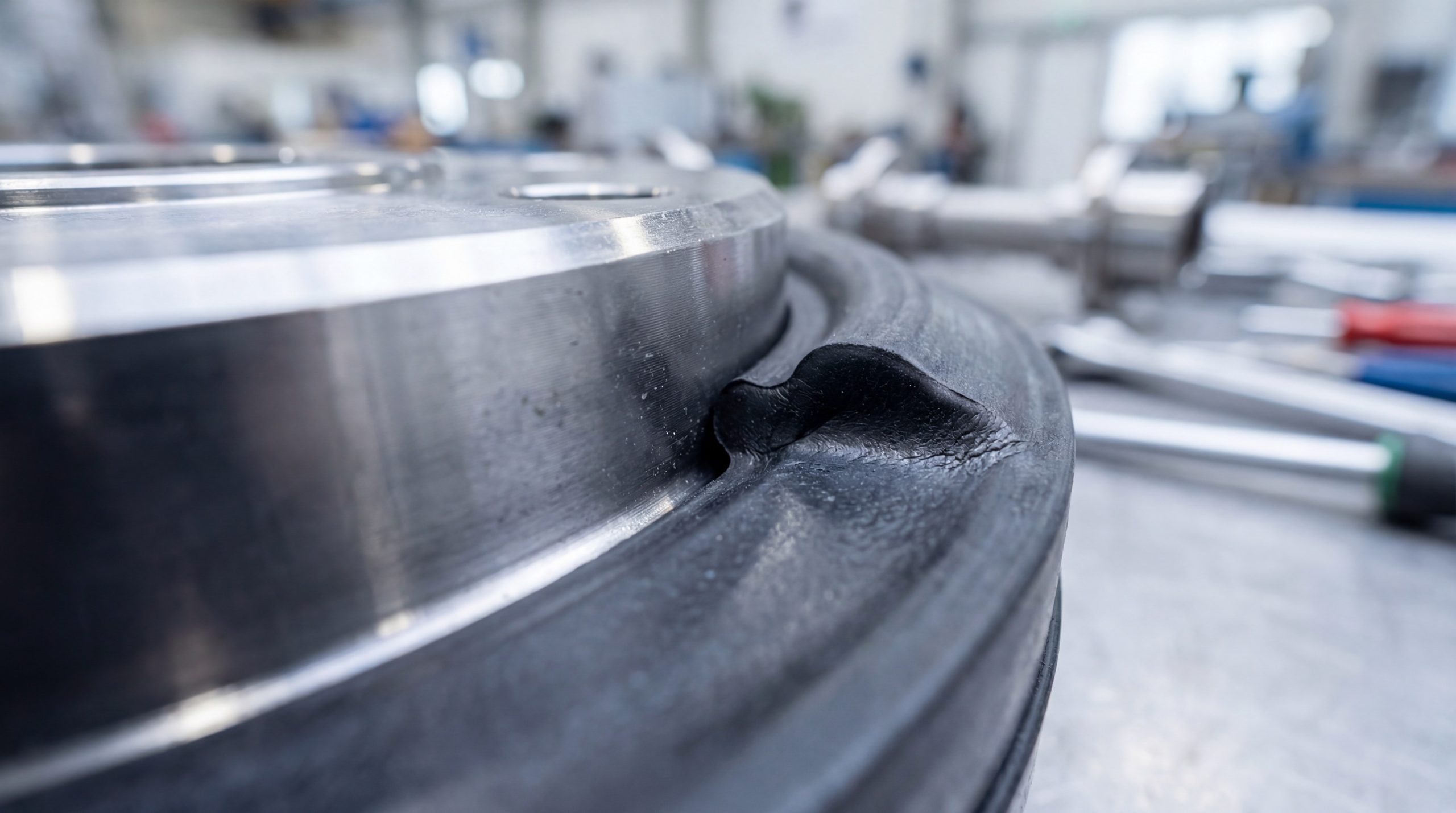
Accumulated dirt, rust, or scale on the disk and seat prevents a tight mechanical seal from forming. If these particles are not flushed, they will eventually score the elastomer or metal surfaces.
Look at it this way:
- Silt and sand act as abrasives.
- Large debris prevents full disk travel.
- Rust from pipes causes surface pitting.
Here is the deal: Even microscopic particles can create a high-velocity leak path that erodes the valve internals over time.
Material degradation
Chemical incompatibility between the process medium and the seal material causes the seat to swell, harden, or crack. When the seat loses its elasticity, it can no longer conform to the disk edge.
Think about it:
- EPDM fails in hydrocarbon services.
- High temperatures can “cook” soft seats.
- Corrosive acids eat through standard alloys.
The bottom line is: Using the wrong material is a recipe for premature seal failure regardless of installation quality.
Worn stem packing
Fugitive emissions often escape to the atmosphere through degraded packing bores located at the top of the valve. This occurs when the stem experiences excessive friction or mechanical misalignment.
| Component | Failure Mode | Impact |
|---|---|---|
| Valve Seat | Scoring/Tearing | Internal fluid bypass |
| Valve Stem | Rust/Corrosion | Friction and seal gaps |
| Stem Packing | Wear/Compression | Atmospheric leakage |
The data shows that stem-related failures often compromise environmental safety before they affect the primary flow control.
Key Takeaway: Leakage is often the result of physical obstruction or material degradation within the internal sealing components.
How to identify butterfly valve leakage tolerances?
You identify tolerances by comparing measured flow bypass against industry standards like API 598 or FCI 70-2 Class VI. Understanding these benchmarks ensures you do not waste resources fixing a butterfly valve leakage that falls within “allowable” limits.
Class VI bubble-tight standards
Soft-seated valves are often held to Class VI standards, which are designed for applications requiring the tightest possible seal. These standards define a specific, minimal bubble count during factory testing.
You might be wondering:
- Is “zero leakage” actually zero?
- How many bubbles are allowed per minute?
- Does the valve size change the limit?
In other words: Class VI is the gold standard for resilient-seated valves used in critical isolation.
Medium-specific seepage
Gases like helium or hydrogen can escape through metal-seated valves while remaining within technical tolerances. Liquid mediums typically require a more stringent seal compared to gas applications.
Make no mistake:
- Gases penetrate smaller gaps than liquids.
- Higher pressure increases the leak rate.
- Temperature changes affect fluid viscosity.
It gets better: Knowing your medium helps you set realistic expectations for seal performance in harsh environments.
API 598 testing protocols
API 598 provides a structured roadmap for pressure testing to verify seat and shell integrity. It defines the duration and pressure levels required for a valid leakage assessment.
| Standard | Seat Type | Allowable Rate |
|---|---|---|
| FCI 70-2 Class VI | Soft/Resilient | Bubble-tight (nominal) |
| API 598 | Metal/Soft | Defined by valve size |
These standards provide the quantitative data needed to decide if a valve requires immediate repair or continued monitoring.
Key Takeaway: Not all “leaks” are failures; engineers must differentiate between allowable seepage and functional failure based on industry standards.
Is incorrect sizing causing butterfly valve leakage?
Yes, valves that are not properly sized for the flow velocity or pressure can suffer from seat erosion and cavitation-related butterfly valve leakage. Oversized or undersized valves cannot maintain the necessary interference between the disk and seat.
Managing pressure limits
Operating outside the manufacturer’s specified pressure envelope causes the seat to deform or the disk to deflect. This deflection creates a gap that allows high-pressure fluid to bypass the seal.
Look at it this way:
- Excess pressure crushes elastomer seats.
- Disk deflection breaks the seal line.
- Torque requirements increase with pressure.
Here is the deal: A valve rated for 150 PSI will likely fail if pushed to 250 PSI, even if it looks identical.
Thermal expansion risks
Extreme temperature fluctuations cause the valve body and disk to expand or contract at different rates. This thermal movement can either jam the valve or leave gaps in the seal.
Think about it:
- Metals expand when heated.
- Elastomers harden in extreme cold.
- Rapid cycling causes thermal shock.
The bottom line is: You must account for the full operating temperature range when selecting your valve dimensions and materials.
Valve sizing factors
Correct sizing ensures the velocity of the medium stays within safe limits to prevent cavitation. Cavitation generates shockwaves that can pit the metal and shred the valve seat.
| Factor | Risk | Result |
|---|---|---|
| Oversizing | Reduced velocity/cavitation | Seat erosion |
| Temp Extremes | Thermal expansion | Seal hardening/cracking |
Properly sized valves maintain a consistent seal by ensuring the disk makes uniform contact across the entire circumference of the seat.
Key Takeaway: Oversized or undersized valves cannot maintain the necessary interference between the disk and seat to ensure a seal.
Can orientation prevent butterfly valve leakage?
Correct orientation, such as installing the stem horizontally in slurry lines, prevents sediment from accumulating in the bottom seat area. Improper valve orientation places excessive load on the y-axis, leading to premature stem wear.
Horizontal pipe positioning
In horizontal piping, the disk axis should ideally be horizontal to allow the flow to sweep away debris. This prevents solids from settling in the bottom of the seat where they could be crushed by the disk.
You might be wondering:
- Why does stem position matter?
- Does gravity affect the seal?
- Is vertical installation always better?
In other words: Horizontal stem placement is a simple trick to extend the life of your valve seats in dirty systems.
Gravity and y-axis load
Excessive weight from the actuator or heavy disk can cause the stem to score the lining over time. This creates small leak paths that are difficult to seal even with new packing.
Make no mistake:
- Heavy actuators need secondary support.
- Stem friction increases with side loading.
- Misalignment leads to uneven seat wear.
It gets better: Supporting the valve correctly ensures the internal components stay centered and function as designed.
Orientation best practices
Following standard installation orientations reduces the mechanical stress on the valve components. It ensures that the torque required to close the valve remains consistent over its service life.
| Pipe Position | Recommended Disk Axis | Benefit |
|---|---|---|
| Horizontal | Horizontal Axis | Prevents sediment in bottom seat |
| Vertical | Any | Uniform seal wear |
By aligning the valve with the flow dynamics of your system, you eliminate one of the most common causes of chronic leaking.
Key Takeaway: Improper valve orientation places excessive load on the y-axis, leading to premature stem wear.
Why use strainers to stop butterfly valve leakage?
Strainers remove abrasive particles that would otherwise score the valve disk or seat during the closing cycle. Upstream filtration is the most effective preventative measure against physical butterfly valve leakage.
Filtering large particles
Abrasive solids like silt, sand, or welding slag can score the elastomer seat during the closing cycle. Once the seat is scratched, it loses the ability to provide a bubble-tight seal.
Look at it this way:
- Strainers act as a first line of defense.
- Clean fluid extends seat life by years.
- Mesh size must match particle risk.
Here is the deal: Investing in a quality strainer costs significantly less than a full valve replacement and the associated downtime.
Maintenance of filtration
Clogged strainers cause significant pressure drops that can stress the valve components downstream. Regular cleaning of the strainer basket ensures the flow remains steady and free of contaminants.
Think about it:
- Pressure drops can cause cavitation.
- Clogged screens starve the pump.
- Maintenance is faster than repair.
The bottom line is: A strainer is only effective if it is kept clean through a regular inspection and flushing schedule.
Upstream protection benefits
Pairing your valves with proper filtration ensures that the sealing surfaces remain smooth and undamaged. This configuration is particularly important for high-cycle applications where wear is accelerated.
| Particle Type | Damage Potential | Prevention |
|---|---|---|
| Silt/Sand | Abrasive wear | Fine mesh strainer |
| Large Debris | Disk jamming/scoring | Basket strainer |
Proactive filtration prevents the mechanical damage that leads to the majority of internal valve leaks in industrial settings.
Key Takeaway: Upstream filtration is the most effective preventative measure against physical damage to the valve disk and seat.
How to troubleshoot actuator butterfly valve leakage?
You troubleshoot actuator-related leaks by checking the pneumatic end stops and ensuring sufficient air supply to fully close the disk. Many leakage issues are actually calibration errors rather than mechanical seat failures.
Resetting pneumatic end stops
Misaligned end stops prevent the disk from reaching the “bubble-tight” position within the seat. If the actuator stops even one degree short of full closure, fluid will bypass the disk.
You might be wondering:
- How do I adjust the stop bolts?
- Does the actuator have enough travel?
- Is the mounting bracket loose?
In other words: A simple turn of a wrench on the end-stop bolts can often stop a leak without opening the pipe.
Solenoid and air pressure
Insufficient air pressure—typically below 5-6kg—can lead to incomplete closure under high line pressure. A sticking solenoid valve may also prevent the actuator from receiving the full signal to close.
Make no mistake:
- Low pressure causes “lazy” closing.
- Solenoids can fail intermittently.
- Air leaks in the tubing reduce force.
It gets better: Monitoring your air supply ensures that your automated valves always have the torque needed to overcome line resistance.
Limit switch calibration
A loose or miscalibrated limit switch may send a “closed” signal to the control room before the valve is physically sealed. This false feedback leads operators to believe the system is secure when it is actually leaking.
| Symptom | Probable Cause | Remedy |
|---|---|---|
| Partial Seal | Incorrect End Stop | Readjust actuator travel |
| Intermittent Leak | Solenoid Sticking | Clean or replace solenoid |
| No Movement | Low Air Pressure | Supply min 6kg pressure |
Correcting actuator settings is the fastest and least invasive way to resolve leakage issues in automated systems.
Key Takeaway: Many leakage issues are actually calibration errors where the actuator fails to drive the disk to the fully closed position.
What are the steps to repair butterfly valve leakage?
Repairing the valve involves isolating the line, removing the actuator, replacing the seat, and re-calibrating the closing torque. Following a structured sequence is vital to ensuring the new butterfly valve leakage repair is successful.
Safe removal and disassembly
Always isolate the power and air sources and depressurize the pipeline before loosening any hex screws or nuts. Once the valve is out of the line, the actuator can be separated from the body for inspection.
Look at it this way:
- Pressure is dangerous during teardown.
- Tag and lock out all energy sources.
- Keep all small hardware organized.
Here is the deal: Safety during the disassembly phase prevents injury and ensures the valve can be rebuilt without missing parts.
Lubrication and seat installation
Apply an appropriate lubricant to the stem and seat slot to ensure smooth operation and a flush fit. When installing the new seat, ensure it is compressed evenly into the body groove to avoid bunching.
Think about it:
- Lubricant reduces assembly friction.
- Alignment must be perfect.
- Tools should not scratch the seat.
The bottom line is: A poorly installed seat will leak just as quickly as a worn one, making precision assembly essential.
Final sequence and testing
After reassembly, perform a hydrostatic test at 1.5x working pressure to verify the new seal’s integrity. Re-calibrate the actuator to ensure the disk seats firmly without over-torquing the elastomer.
| Step | Action | Critical Check |
|---|---|---|
| 1 | Disassembly | Inspect stem for rust |
| 2 | Seat Install | Compress seat for flush fit |
| 3 | Re-calibration | Test open/close torque |
Testing the valve before returning it to service prevents the cost and embarrassment of a failed repair in a live system.
Key Takeaway: If troubleshooting fails, a complete seat replacement and component overhaul are required to restore the seal.
Can regular maintenance reduce butterfly valve leakage?
Routine inspections allow you to detect stem scoring and seal wear before they evolve into catastrophic failures. Preventive maintenance identify “scored” stems and “worn” seats while they are still manageable.
Establishing testing schedules
Regular interval testing ensures that any increase in leakage does not exceed safety tolerances. By tracking leakage rates over time, you can predict exactly when a valve will need a seat replacement.
You might be wondering:
- How often should I test?
- What data should I record?
- Can I automate the inspection?
In other words: Data-driven maintenance moves you from reactive “firefighting” to proactive system management.
Checking stem and packing
Damaged stems will quickly destroy new packing and seats if the metal surfaces are not polished or replaced. Visually inspect the stem for signs of rust or mechanical scoring during every maintenance cycle.
Make no mistake:
- A rough stem acts like a file.
- Packing leaks are often invisible at first.
- Early detection saves the valve body.
It gets better: Replacing a small packing set today is much cheaper than replacing a 24-inch valve disk tomorrow.
Operational checklist
A comprehensive checklist ensures that every critical component is evaluated during a shutdown. This includes checking actuator torque, verifying limit switch signals, and inspecting the flange gaskets.
| Interval | Action | Objective |
|---|---|---|
| Quarterly | Visual Inspection | Check for external packing leaks |
| Annually | Operational Test | Verify actuator torque/timing |
| Bi-annually | Seal Inspection | Check seat for deformities |
Maintaining a rigorous schedule is the only way to guarantee the long-term reliability of your fluid control infrastructure.
Key Takeaway: Preventive maintenance identifies “scored” stems and “worn” seats before they result in expensive fluid loss.
Which standards govern butterfly valve leakage rates?
API 598 and ANSI B16.34 are the primary standards that define the maximum allowable butterfly valve leakage for industrial equipment. Adherence to these standards during installation and testing is the only way to guarantee certified performance.
API 598 protocols
This standard covers the specific testing requirements for both seat and shell integrity. It defines the test duration and the medium (water or air) that must be used for a valid certification.
Look at it this way:
- API 598 is the industry benchmark.
- It specifies test pressures.
- It defines “zero leakage” limits.
Here is the deal: If your valve does not pass an API 598 test, it is not considered fit for service in high-stakes environments.
ASME B16.34 requirements
This standard focuses on the valve design, including the pressure-temperature ratings and wall thicknesses. Following these protocols during installation prevents body distortion that can cause leaks.
Think about it:
- Body strength affects seal geometry.
- Flange bolting must be uniform.
- Design limits must be respected.
The bottom line is: A valve built to ASME standards has the structural integrity to maintain its seal under full load.
Standards summary
Certified performance depends on the manufacturer’s ability to meet these rigorous global requirements. When repairing a valve, always aim to restore it to its original certified standard.
| Standard | Focus Area | Application |
|---|---|---|
| API 598 | Pressure Testing | Seat/Shell Integrity |
| ASME B16.34 | Valve Design | Pressure/Temp Ratings |
Understanding the governing standards allows you to communicate effectively with safety inspectors and quality control teams.
Key Takeaway: Adherence to API and ANSI standards during installation is the only way to guarantee certified performance.
How to choose parts to stop butterfly valve leakage?
Selecting the right seat material, such as EPDM for water or PTFE for chemicals, is the foundation of a leak-free system. Material compatibility between the medium and the seal prevents the degradation that leads to failure.
Elastomer vs metal seats
Elastomer seats provide a soft, resilient seal that is ideal for clean water and air applications. Metal-seated valves are necessary for high-temperature steam or abrasive slurries where elastomers would melt.
You might be wondering:
- Can I use PTFE for everything?
- Which is more durable?
- Does metal always leak a little?
In other words: Matching the seat hardness to your medium’s properties is the key to balancing seal tightness and longevity.
Chemical compatibility
Corrosive chemicals require specialized coatings or high-grade stainless steel components to resist pitting. Using 316L stainless steel for the disk and stem is often necessary in pharmaceutical or chemical processing.
Make no mistake:
- One wrong seal can ruin a batch.
- Compatibility charts are essential.
- Coatings can peel if not applied correctly.
It gets better: Modern materials like Viton and specialized fluoropolymers allow butterfly valves to handle increasingly aggressive fluids.
Material selection table
Choosing the correct combination of body, disk, and seat materials is the most critical decision in the valve procurement or repair process.
| Medium | Recommended Seat | Recommended Body |
|---|---|---|
| Potable Water | EPDM (WRAS) | Ductile Iron |
| Chemicals | PTFE/Viton | SS316 |
| Steam | Metal-Seated | Carbon Steel |
Correct material selection ensures that the valve remains operational and leak-free for its intended service life.
Key Takeaway: Material compatibility between the medium and the seal is the foundation of a leak-free system.
Conclusion
Fixing a leaking valve requires a systematic approach, moving from simple actuator adjustments to full seat replacements. By following industry standards, ensuring material compatibility, and implementing rigorous maintenance, you can significantly extend the service life of your infrastructure and maintain operational safety. Our vision is to empower industrial facilities with the knowledge and hardware required to achieve zero-leakage performance. For expert technical consultation or to source high-reliability replacements, contact us today to explore our full range of fluid control solutions.
Frequently Asked Questions
- Can a butterfly valve be repaired while under pressure?
No. The system must be fully depressurized and isolated before any maintenance is performed to prevent catastrophic injury. - Why does my new butterfly valve leak immediately after installation?
This is usually caused by over-tightened flanges, incorrect disk orientation, or debris trapped in the seat during the initial line flush. - How long should a butterfly valve seat last?
With proper sizing and strainers, a quality seat can last 5-10 years, though high-cycle applications may require changes every 2 years. - Does zero leakage actually exist for metal-seated valves?
While “bubble-tight” is achievable with triple-offset designs, most metal-seated valves have a defined allowable leakage rate under FCI 70-2. - What lubricant should I use for the valve seat?
Always use a lubricant compatible with the seal material—such as silicone-based for EPDM—to avoid swelling or chemical degradation.