
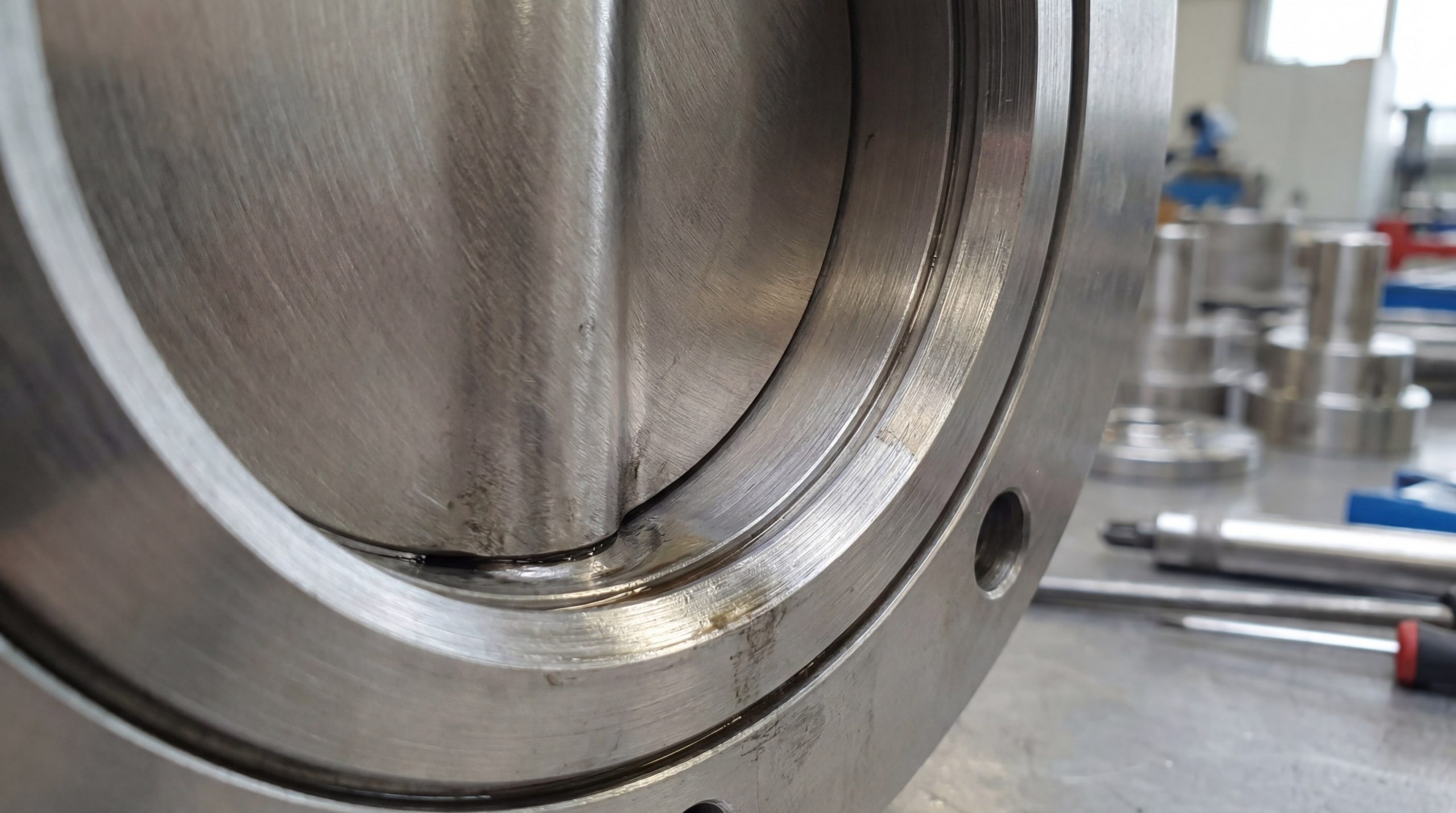
A triple offset butterfly valve is the right choice for your application if you require zero-leakage, bi-directional shutoff in high-pressure or extreme-temperature environments.
Standard resilient-seated valves often fail when exposed to the high pressures and aggressive media found in modern industrial processes. If your system experiences persistent leaks or seal degradation, the resulting downtime can devastate your operational efficiency and safety margins. Utilizing triple offset butterfly valve advantages provides a robust, metal-seated solution that survives where conventional designs fail.
What makes the triple offset design unique?
The uniqueness of this design lies in three distinct offsets that eliminate friction between the seal and seat until the final moment of closure. Understanding these triple offset butterfly valve advantages begins with the geometric cam-action that prevents rubbing. You will find that this mechanical separation extends the life of the sealing components significantly.
How do the offsets eliminate friction?
The first two offsets position the shaft away from the center of the pipe and the seat.
Think about it:
If the disc rubs against the seat during the entire stroke, the seal wears down in weeks.
- The third offset introduces an angular conical geometry.
- This creates a “cam-like” motion.
- Contact only occurs at the point of final seating.
- Friction is virtually eliminated during the 90-degree rotation.
Why is the conical seat geometry unique?
The conical shape ensures that the disc makes a right-angled contact with the seat.
Here is the deal:
This right-angled approach prevents the jamming common in standard butterfly designs.
- It allows for a non-rubbing tight seal.
- You get consistent performance over thousands of cycles.
- The design compensates for thermal expansion.
Key Takeaway
Precision geometry enables frictionless operation and prevents premature seal failure in your system.
| Offset Type | Mechanical Function | Benefit to You |
|---|---|---|
| First Offset | Shaft behind the sealing surface | Allows continuous 360-degree sealing |
| Second Offset | Shaft eccentric to the pipe centerline | Creates an eccentric rotation path |
| Third Offset | Conical axis offset from pipe centerline | Eliminates rubbing during opening/closing |
These three offsets work in harmony to preserve seal integrity and minimize mechanical wear.
Can these valves achieve zero leakage?
Yes, they provide bi-directional, bubble-tight shutoff through a torque-seated metal-to-metal sealing mechanism. You can rely on triple offset butterfly valve advantages to meet the most stringent leakage standards, such as API 598 or ISO 5208. The mechanical force of the actuator drives the seal into the seat, creating a permanent barrier.
How is zero leakage achieved with metal?
The seal ring is typically made of a laminated metal and graphite or a solid metal alloy.
Look:
The actuator torque compresses the seal ring into the conical seat to form the seal.
- This creates a high-pressure contact zone.
- It does not rely on the elasticity of a rubber liner.
- You achieve a true “bubble-tight” shutoff.
- The seal remains effective even after severe thermal cycling.
Does line pressure assist the seal?
In many designs, the pressure of the media actually helps press the disc into the seat.
Think about it:
Higher system pressures can lead to even tighter sealing performance.
- Bi-directional capability is standard.
- The valve handles flow in both directions equally well.
- You reduce the risk of catastrophic failure during surges.
Key Takeaway
Torque-seating ensures a bubble-tight seal in both flow directions, even under high-pressure conditions.
| Sealing Method | Mechanism | Leakage Class |
|---|---|---|
| Resilient Seat | Interference fit (friction) | Class VI (Limited) |
| Double Offset | High interference (rubbing) | Class VI (Limited) |
| Triple Offset | Torque-seated (compression) | Zero Leakage / Class VI |
This performance level matches the most stringent industry standards for hazardous and critical media.
Why is torque-seating beneficial for you?
Torque-seating allows the valve to remain tightly closed without relying on the physical position of the disc alone. By utilizing triple offset butterfly valve advantages, you ensure that the valve maintains its seal even if the disc shifts slightly due to vibration. This mechanism is far more reliable than the interference-fit seals found in simpler designs.
Why is torque superior to position?
In position-seated valves, the disc must hit a specific degree of rotation to seal.
Here is the deal:
If the actuator is slightly out of calibration, the valve will leak.
- Torque-seating uses mechanical force to seal.
- The valve stops when the seal is tight, regardless of angle.
- You get a more forgiving and reliable closure.
- Wear and tear do not affect the sealing point.
Does this reduce actuator size requirements?
Because the disc does not rub against the seat, the running torque is much lower.
Look:
You only need maximum torque at the very beginning and end of the stroke.
- This allows you to use smaller actuators.
- You save money on automation hardware.
- It reduces the overall weight of the valve assembly.
Key Takeaway
Lower torque requirements allow for more compact and affordable automation packages for your facility.
| Performance Metric | Position-Seated | Torque-Seated (TOV) |
|---|---|---|
| Running Torque | High (due to friction) | Low (frictionless) |
| Sealing Reliability | Sensitive to adjustment | Highly consistent |
| Automation Cost | Higher (larger actuators) | Lower (smaller actuators) |
Reducing actuator size significantly lowers the total footprint and cost of your valve assembly.
Are they suitable for high-temperature use?
These valves are specifically engineered to thrive in temperatures ranging from cryogenic levels up to 1,200°F. The core triple offset butterfly valve advantages stem from the all-metal construction, which avoids the melting points of elastomers. You can safely deploy these in high-pressure steam or molten salt applications.
How do metal seats handle heat?
Metal alloys like Stellite or Inconel are used to overlay the sealing surfaces.
Look:
These materials do not degrade or soften when the temperature spikes.
- They maintain their shape and hardness.
- You avoid the “sticky” seals common in rubber-lined valves.
- The design allows for controlled thermal expansion.
- It prevents the valve from seizing during cooling.
Is the design inherently fire-safe?
Since there are no soft seats to burn away, the valve remains operational during a fire.
Think about it:
Safety is paramount when you are dealing with flammable or hazardous fluids.
- Most designs meet API 607 standards.
- You maintain shutoff integrity during emergencies.
- It provides critical protection for your plant personnel.
Key Takeaway
Metal seats withstand temperatures exceeding 1,000°F without losing their critical sealing properties.
| Operating Condition | Resilient Seat | Triple Offset (Metal) |
|---|---|---|
| Max Temp (°F) | 400°F | 1,200°F+ |
| Fire Rating | Not Fire Safe | Inherently Fire Safe |
| Thermal Cycle | Poor (Seal fatigue) | Excellent (Expansion control) |
Thermal stability is the primary reason engineers specify these for severe steam and refinery service.
How do they perform in cryogenic systems?
In cryogenic environments, these valves maintain their seal integrity where other materials become brittle and fail. Leveraging triple offset butterfly valve advantages allows you to manage liquid nitrogen or LNG at temperatures as low as -320°F. The lack of cavities prevents the trapped media from expanding and damaging the valve body.
Why are they better for LNG?
Cryogenic fluids require a valve that can handle intense contraction without leaking.
Here is the deal:
The triple offset geometry self-adjusts as the metal contracts in the cold.
- It prevents the disc from jamming in the seat.
- You get a repeatable seal even in deep-freeze states.
- There are no soft liners to crack or shatter.
- It ensures safe handling of liquified gases.
Can they handle bi-directional flow?
Yes, the torque-seating mechanism works independently of the flow direction.
Look:
In complex piping systems, flow can occasionally reverse during pump cycles.
- You don’t need to worry about flow direction markers.
- It simplifies the installation process for your team.
- You get consistent bubble-tight shutoff every time.
Key Takeaway
These valves maintain flexibility and tight shutoff even at -320°F in liquid nitrogen and LNG service.
| Fluid Type | Temperature Range | Valve Compatibility |
|---|---|---|
| Liquid Nitrogen | -320°F | Excellent (Triple Offset) |
| LNG | -260°F | Excellent (Triple Offset) |
| Liquid Oxygen | -297°F | Excellent (Cleaned) |
Choosing the right alloy is critical for maintaining performance in these deep-freeze environments.
What industries require this specific valve?
Industries ranging from power generation to petrochemical refining rely on triple offset butterfly valve advantages for their most critical lines. These valves are essential for any process involving high-pressure steam, hydrocarbons, or corrosive chemicals. You will often find them in applications where gate valves were previously the only option.
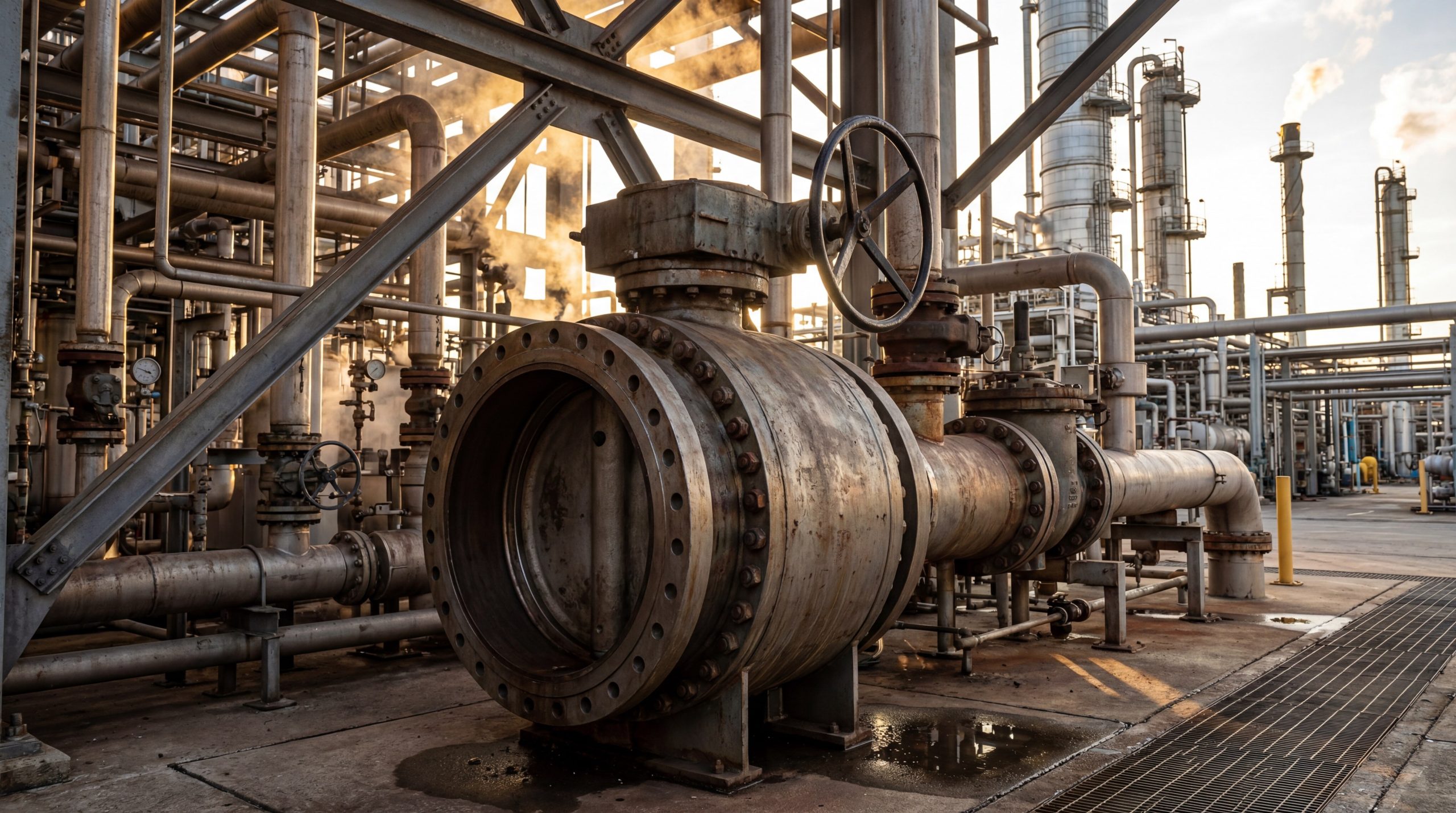
Why is power generation a primary user?
Modern power plants operate at extreme pressures and temperatures to maximize efficiency.
Think about it:
A single leaking valve in a steam line can cost thousands of dollars in energy loss.
- High-pressure steam isolation is a perfect fit.
- Boiler feed water systems use them for reliability.
- You reduce maintenance downtime during plant turnarounds.
- They are lighter than the gate valves they replace.
How are they used in oil and gas?
Refineries use these valves to isolate volatile hydrocarbons and hydrogen gas safely.
Wait, there’s more:
The metal-to-metal seal is resistant to the abrasive catalysts used in refining.
- Crude oil processing requires durable shutoff.
- Flare gas systems use them for emergency isolation.
- They handle the high cycling of molecular sieve units.
- You get better control over volatile organic emissions.
Key Takeaway
Power generation and oil refineries rely on these for the safe isolation of volatile and high-energy fluids.
| Industry Sector | Common Application | Primary Benefit |
|---|---|---|
| Power Plant | Main Steam Isolation | Energy efficiency |
| Oil Refining | Hydrocarbon Isolation | Safety/Fire protection |
| Chemical | Aggressive Acids | Corrosion resistance |
Critical infrastructure demands the high reliability and safety offered by this specialized mechanical design.
Is maintenance easier with this design?
Maintenance is streamlined because the frictionless design drastically reduces the wear on the sealing surfaces. By focusing on triple offset butterfly valve advantages, you can extend your service intervals to over 50,000 cycles without needing a seal replacement. When service is eventually required, many models allow for the seal ring to be changed without removing the valve from the line.
Does the “cam-action” prevent wear?
Since the seal and seat only touch at the final point of closure, rubbing is gone.
Look:
In standard valves, every time you open it, the seat gets scraped.
- This prevents the “rounding” of sealing edges.
- Your seal remains sharp and effective for years.
- You avoid the frequent seat replacements of soft-seated valves.
- It leads to much higher system uptime.
How does this impact the life cycle?
You can expect a service life that is three to five times longer than a double-offset valve.
Here is the deal:
Lower wear means fewer spare parts and less labor over the life of the plant.
- Total cost of ownership drops significantly.
- You spend less time on emergency repairs.
- The valve maintains its performance class longer.
Key Takeaway
Reducing friction and utilizing cam-action extends maintenance intervals to 50,000+ cycles.
| Maintenance Factor | Resilient Valve | Triple Offset Valve |
|---|---|---|
| Seal Wear | High (continuous) | Low (at closure only) |
| Repair Interval | Frequent (1-2 years) | Long (5-10 years) |
| Field Service | Body removal needed | Often field-repairable |
Simplifying repair procedures and extending cycles leads to substantial labor savings over time.
Can they replace heavy gate valves?
Yes, they are a lighter and more compact alternative that provides the same level of shutoff performance. The triple offset butterfly valve advantages include a face-to-face dimension that is significantly shorter than a gate valve of the same size. You can reduce the total weight of your piping system by up to 70% by making the switch.
Is the weight savings significant?
A large gate valve can weigh several tons, requiring heavy structural supports.
Think about it:
Heavy valves make installation difficult and increase the cost of the piping rack.
- Triple offset valves are much thinner.
- They require less space between pipe flanges.
- You can install them in tighter locations.
- It reduces the mechanical stress on your pipe joints.
How does the footprint compare?
The quarter-turn operation means you don’t need a tall stem that rises when the valve opens.
Look:
This makes them ideal for skids and tight offshore platforms.
- You save vertical space in your facility.
- Automation is faster with a 90-degree turn.
- Gate valves take much longer to open and close.
Key Takeaway
TOBVs offer a lighter, more compact footprint while maintaining the same flow capacity as gate valves.
| Valve Type | Size (12-inch) | Relative Weight |
|---|---|---|
| Gate Valve | ~900 lbs | 100% |
| Ball Valve | ~600 lbs | 66% |
| Triple Offset | ~250 lbs | 27% |
Lowering the weight of the valve simplifies the structural support requirements of your entire piping system.
Are these valves truly cost-effective?
While the initial purchase price is higher than simpler valves, the long-term savings are substantial. You should consider triple offset butterfly valve advantages as an investment in reducing future operational expenses. Between lower maintenance, smaller actuators, and extreme durability, the total cost of ownership is much lower.
How do maintenance costs compare?
Over a five-year period, you will spend far less on labor and parts for a triple offset valve.
Here is the deal:
A cheap valve that fails every year is actually the most expensive option.
- You avoid the cost of unplanned shutdowns.
- Reduced wear means fewer replacement units.
- You save on the cost of large actuator maintenance.
Does field-replaceability reduce downtime?
Being able to swap a seal ring in the field saves you from shipping the valve to a repair shop.
Look:
Downtime is the most expensive part of any industrial operation.
- Repairs take hours instead of days.
- You don’t need to cut the valve out of the line.
- It keeps your process running at peak capacity.
Key Takeaway
Higher upfront investment is quickly offset by significantly lower total cost of ownership (TCO) over time.
| Cost Component | Initial Cost | 10-Year Total Cost |
|---|---|---|
| Soft Seat | $ (Low) | $$$ (High) |
| Double Offset | $$ (Medium) | $$ (Medium) |
| Triple Offset | $$$ (High) | $ (Low) |
Upfront investment is rapidly recovered through reduced repair, replacement cycles, and energy savings.
How do you choose the right specifications?
Choosing the right valve requires a detailed analysis of your pressure, temperature, and media characteristics. When evaluating triple offset butterfly valve advantages, you must ensure the materials of construction match your process fluids. You should consult with an engineering expert to verify that the valve meets all local safety and industry standards.
What technical specs are critical?
You must provide the exact pressure class (ANSI/ASME) and the operating temperature range.
Look:
A valve rated for steam may not be the same as one rated for sulfuric acid.
- Check the body and disc materials (WCB, CF8M, etc.).
- Verify the seal ring metallurgy.
- Confirm the required leakage class for your application.
Should you consult with an expert?
Every application has unique variables that can affect the performance of a triple offset valve.
Think about it:
Small errors in specification can lead to expensive leaks or premature failure.
- Experts help you navigate API and ISO standards.
- They can suggest the most cost-effective alloy.
- You ensure the actuator is sized correctly for your pressure.
Key Takeaway
Accurate pressure, temperature, and media data are non-negotiable for a successful installation.
| Selection Factor | Detail Needed | Why it Matters |
|---|---|---|
| Pressure Class | e.g., ANSI 300 | Prevents body failure |
| Media Type | e.g., High-pressure steam | Determines seal material |
| Connection | e.g., Lug, Wafer, Flanged | Ensures piping compatibility |
Proper specification ensures the valve performs reliably and safely throughout its entire service life.
FAQ
Can I use a triple offset valve for throttling applications?
Yes. The frictionless design and precise torque-seated control characteristics make it excellent for both isolation and throttling service.
What’s the best way to replace a heavy gate valve?
Use a triple offset design. While face-to-face dimensions differ, the significant weight reduction often simplifies the overall structural support requirements.
Can I rely on these valves for cryogenic nitrogen service?
Absolutely. The metal-to-metal seal is specifically engineered to maintain its integrity at temperatures as low as -320°F without becoming brittle.
Can I maintain the seal ring in the field?
Yes, in most cases. Many high-quality designs feature field-replaceable seal rings and seats to minimize system downtime during routine maintenance.
Can I achieve zero leakage in both flow directions?
Yes. The torque-seating mechanism allows for true bi-directional, bubble-tight shutoff that is not dependent on line pressure for its primary seal.
Conclusion
Selecting the right flow control solution is a critical decision for your facility’s safety and efficiency. If you are ready to upgrade your system with high-performance engineering, please contact us to discuss your specific requirements. We are dedicated to delivering precision-engineered valve solutions that define the future of industrial reliability and environmental stewardship.