
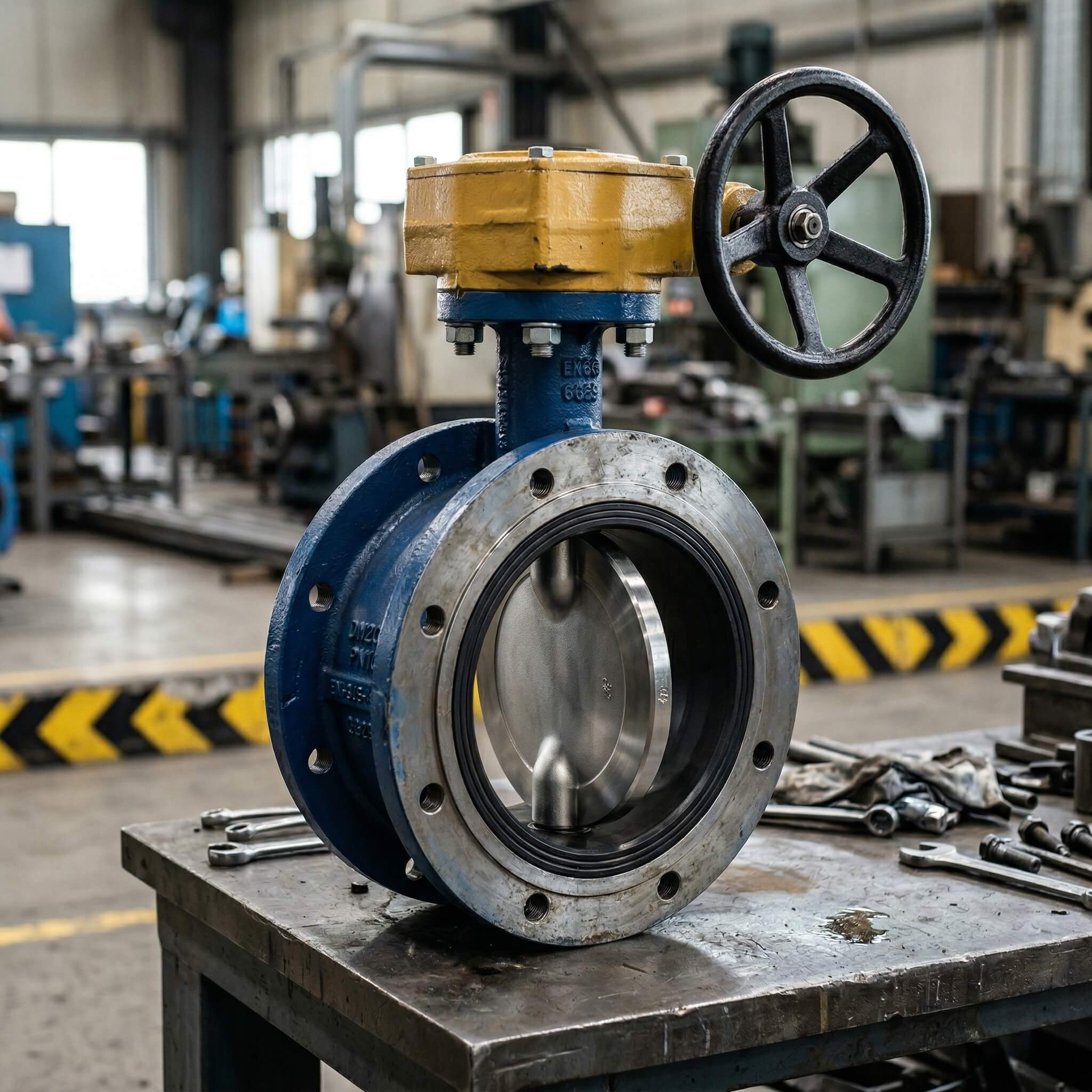
The butterfly valve parts name and components include the body, disc, stem, and seat, which work together to regulate fluid flow in industrial systems. Identifying specific components for repairs often leads to confusion when you lack the correct technical nomenclature. One incorrect specification can stall a multi-million dollar project or lead to catastrophic leaks in your pipeline. Mastering these terms ensures you choose the right materials and configurations for maximum efficiency.
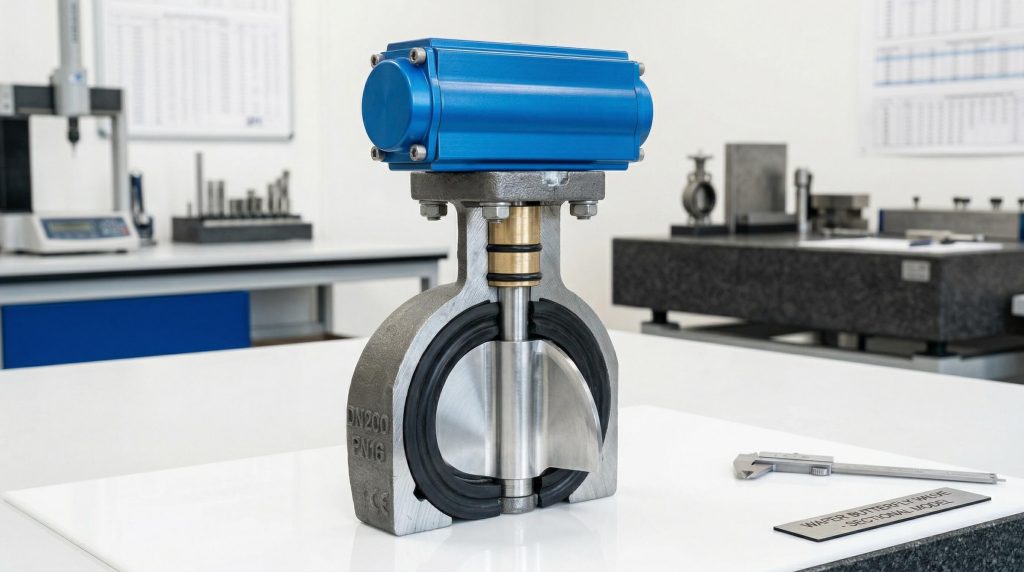
What is the standard butterfly valve parts name list?
The standard butterfly valve parts name list includes the body, disc, stem, seat, and actuator. Understanding these five main components is the first step in successful valve selection and maintenance. You will find that these parts are present in almost every variation of the valve design.
The core structural components
Look at it this way: you cannot maintain a system without knowing its skeleton. The primary structural parts are:
- Valve Body: The outer shell.
- Disc: The closure member.
- Stem: The connecting shaft.
Essential sealing elements
But wait, there’s more to consider. For a valve to be effective, it requires high-quality sealing parts.
- Valve Seat: Provides the main seal.
- O-rings: Prevent external leaks.
- Packing: Seals the stem area.
How do these parts work together?
Here is the kicker: every part relies on the next for zero-leakage performance. When the actuator turns the stem, the disc rotates against the seat to stop the flow.
Key Takeaway: A valve is only as strong as its weakest component.
| Component | Function | Material Examples |
|---|---|---|
| Body | Houses internal parts | Ductile Iron, Stainless Steel |
| Disc | Controls flow | SS316, Bronze |
| Stem | Transmits torque | 410SS, 17-4PH |
The structural integrity of a butterfly valve depends on the compatibility of these primary mechanical parts.
Which butterfly valve parts name refers to the body?
The butterfly valve parts name for the primary outer shell that houses the internal flow control components is simply the body. You will encounter several body styles depending on how the valve connects to your piping system. The body must withstand the full line pressure and protect internal components from external stress.
Differences between Wafer and Lug bodies
You might be wondering which one is right for you. Each style offers unique advantages for specific installation scenarios.
- Wafer Body: Light, cheap, and sandwiched between flanges.
- Lug Body: Features threaded inserts for independent piping removal.
- Flanged Body: Uses its own flanges for heavy-duty connections.
Material choices for the body
It gets even better when you consider material durability. Choosing the right metal prevents premature corrosion in harsh environments.
- Cast Iron: Best for low-pressure water systems.
- Ductile Iron: Offers better impact resistance.
- Stainless Steel: Perfect for corrosive chemical media.
Key Takeaway: Always match the body style to your specific piping installation requirements.
| Body Type | Best Use Case | Pressure Rating |
|---|---|---|
| Wafer | Compact spaces | PN10 – PN16 |
| Lug | Dead-end service | PN16 – PN25 |
| Flanged | Large diameters | Up to PN40 |
Selecting the correct body type ensures the valve remains secure under high-stress industrial conditions.
How does the disc butterfly valve parts name operate?
The butterfly valve parts name for the flow closure member is the disc, which rotates 90 degrees to block or allow media. This component is the “heart” of the valve and is always in contact with the fluid. You must ensure the disc is aerodynamically efficient to minimize pressure drops across your system.
Concentric vs. Eccentric disc designs
Believe it or not, the way the disc is mounted changes everything. Different offsets are used to reduce wear and improve sealing.
- Concentric: Standard center-mounted disc.
- Double Offset: Reduces seat friction.
- Triple Offset: Allows for metal-to-metal sealing.
Why disc coating matters
But that’s not all. Coatings can significantly extend the life of your valve components.
- Nylon Coating: Reduces friction and wear.
- PTFE Coating: Excellent for chemical resistance.
- Chrome Plating: Increases hardness and durability.
Key Takeaway: The disc design and coating directly impact the valve’s torque and longevity.
| Disc Type | Advantage | Common Material |
|---|---|---|
| Standard | Cost-effective | Ductile Iron |
| High Performance | Low friction | SS316 |
| Lined | Chemical proof | PTFE / EPDM |
Analysis reveals that disc geometry is the primary factor in determining the flow coefficient of the valve.
Why is the stem butterfly valve parts name so vital?
The butterfly valve parts name used to describe the shaft that connects the actuator to the disc is the stem. Without a robust stem, you cannot transmit the torque required to open or close the valve. It is a critical safety component that must resist twisting and shearing forces.
One-piece vs. Two-piece stem construction
Here is the deal: not all stems are built the same way. The choice between them depends on your flow requirements.
- One-piece Stem: Stronger and more rigid.
- Two-piece Stem: Provides higher flow capacity (Cv).
- Square Drive: Easiest for actuator mounting.
Preventing stem blowout
Here is the kicker: pressure can actually try to eject the stem. High-quality designs include safety features to prevent this.
- Retaining Rings: Keep the stem in place.
- Blowout-proof design: Essential for high-pressure safety.
- Internal pins: Secure the disc to the shaft.
Key Takeaway: Ensure your stem is rated for the maximum torque of your actuator.
| Stem Design | Strength Level | Flow Efficiency |
|---|---|---|
| One-piece | High | Moderate |
| Split-stem | Moderate | High |
| Pinless | High | High |
A well-engineered stem ensures precise disc positioning and operational safety under maximum pressure loads.
What makes the seat butterfly valve parts name unique?
The butterfly valve parts name for the internal lining that provides the seal against the disc is the seat. You rely on the seat to create a bubble-tight shutoff and prevent internal leakage. Because it experiences constant friction from the disc, the seat is often the first part to require replacement.
Resilient seats vs. Metal seats
Look at it this way: your temperature and media dictate the material. Soft seats are great for water, but high heat requires metal.
- EPDM: Standard for water and steam.
- PTFE: The king of chemical resistance.
- Metal-to-Metal: Handles temperatures over 200°C.
Understanding seat replacement
But wait, there’s more. Some seats are bonded to the body, while others are easily replaceable.
- Cartridge Seat: Easy to swap in the field.
- Bonded Seat: Better for vacuum services.
- In-situ repair: Saves time on maintenance.
Key Takeaway: Matching the seat material to your fluid chemistry prevents swelling and seal failure.
| Seat Material | Temperature Range | Media Compatibility |
|---|---|---|
| EPDM | -20 to 120°C | Water, Glycol |
| PTFE | -30 to 200°C | Acids, Solvents |
| NBR | -10 to 80°C | Oils, Fuels |
Seat material selection is the most critical decision for ensuring a long-term, leak-free valve installation.
How to choose the right actuator butterfly valve parts name?
The butterfly valve parts name for the device that provides the force to move the disc is the actuator. You can choose between manual control or automated systems depending on your facility’s needs. The actuator must be sized correctly to overcome the “break-to-open” torque of the valve.
Manual, Pneumatic, and Electric options
You might be wondering which power source is best. Each has a specific role in industrial automation.
- Lever Handle: Quick, manual 1/4 turn.
- Gear Operator: Best for large, high-torque valves.
- Pneumatic: Fast acting and fail-safe capable.
The ISO 5211 mounting pad
But that’s not all. Standardized mounting makes your life much easier when replacing parts.
- Universal Fit: Allows for actuator swapping.
- Alignment: Ensures the stem and actuator are centered.
- Direct Mount: Eliminates the need for brackets.
Key Takeaway: Always verify your actuator’s torque output exceeds the valve’s torque requirement by 20%.
| Actuator Type | Speed | Control |
|---|---|---|
| Manual Lever | Manual | On/Off |
| Pneumatic | <1 Second | Modulating |
| Electric | 10-30 Seconds | Precise Positioning |
Automation through correct actuation reduces human error and optimizes the performance of fluid control systems.
Does the seal butterfly valve parts name prevent leaks?
The butterfly valve parts name for the auxiliary components like O-rings and packing that prevent external leaks is the seal. You need these small parts to protect the environment and your equipment from escaping media. While they are small, their failure can lead to significant safety hazards.
The role of O-rings and packing
Look at it this way: the seat stops flow in the pipe, but the seals stop flow from leaving the valve.
- Stem O-rings: Secondary defense against leaks.
- V-cup Packing: Adjusts to pressure for a better seal.
- Gaskets: Used for flanged connections.
Identifying a worn-out seal
Here is the kicker: signs of wear are often visible before a total failure occurs. Regular inspections save you from emergency shutdowns.
- Weeping: Small drops around the stem.
- Corrosion: Scaling on the valve neck.
- Stiffness: Harder to turn the handle.
Key Takeaway: Replace seals during every major maintenance cycle to ensure continuous safety.
| Seal Type | Location | Purpose |
|---|---|---|
| O-ring | Stem / Shaft | Prevent external leakage |
| Packing | Bonnet / Stuffing box | Dynamic stem sealing |
| Flange Gasket | Body / Pipe interface | Static joint sealing |
Proper seal maintenance is the most effective way to prevent environmental contamination and fluid loss.
What is the manual butterfly valve parts name set?
The butterfly valve parts name set for manual operation includes the lever, gear box, and handwheel. You use these components when automation is not required or as a manual override for safety. These parts are designed for ergonomic use and long-term durability in outdoor environments.
Lever handles vs. Gear operators
Believe it or not, the size of the valve usually dictates the handle type. Larger valves require mechanical advantage to turn.
- 10-Position Lever: Allows for basic throttling.
- Worm Gear: Provides slow, controlled movement.
- Travel Stops: Prevent the disc from over-rotating.
The locking plate and notches
But wait, there’s more to manual control than just a handle. Safety features prevent accidental operation.
- Padlock Holes: For Lock-out Tag-out (LOTO).
- Notch Plate: Keeps the valve at a specific angle.
- Pointer: Shows the exact disc position.
Key Takeaway: Use gear operators for valves larger than 6 inches to ensure operator safety.
| Manual Part | Best For | Benefit |
|---|---|---|
| Lever | Small Valves | Fast operation |
| Handwheel | Large Valves | High torque |
| Locking Plate | Safety | Prevents accidents |
Manual components remain essential for providing reliable, non-powered control over fluid systems in all industries.
Which butterfly valve parts name ensures shaft stability?
The butterfly valve parts name for the internal bushings and bearings that support the stem is the shaft support system. You need these parts to reduce friction and prevent the stem from deflecting under high pressure. Stable shafts mean better alignment and a longer-lasting seat.
The function of bushings and bearings
Look at it this way: without bushings, the metal stem would rub directly against the body.
- Upper Bushing: Supports the stem near the actuator.
- Lower Bushing: Keeps the bottom of the disc aligned.
- Bronze/PTFE Materials: Reduce the effort needed to turn.
Preventing shaft deflection
Here is the kicker: high-pressure flow pushes against the disc, trying to bend the stem. Quality bearings prevent this movement.
- Alignment: Keeps the disc centered in the seat.
- Longevity: Reduces uneven wear on the seals.
- Torque Reduction: Makes the valve easier to automate.
Key Takeaway: High-quality bushings are the secret to maintaining low operating torque over time.
| Support Part | Material | Primary Job |
|---|---|---|
| Bushing | Bronze / PTFE | Friction reduction |
| Bearing | Stainless Steel | Load distribution |
| Thrust Washer | Composite | Axial alignment |
Internal support components are invisible heroes that determine the mechanical efficiency of the entire valve assembly.
Where is the complete butterfly valve parts name diagram?
The butterfly valve parts name diagram is usually found in the manufacturer’s technical manual or exploded view drawing. You should keep this document handy for procurement and maintenance planning. It serves as the “blueprint” for your specific valve model and configuration.
Reading an exploded view drawing
You might find it helpful to see how every tiny screw and washer fits together. It helps you identify exactly what to order.
- Numbered Callouts: Link parts to the bill of materials.
- Assembly Order: Shows how to put the valve back together.
- Spare Parts Kit: Lists common items like seats and seals.
Using the list for maintenance
But that’s not all. A parts list helps you create a preventative maintenance schedule that works.
- Traceability: Track material heat numbers.
- Inventory: Know exactly what to keep in stock.
- Training: Educate your technicians on valve anatomy.
Key Takeaway: Never attempt a valve repair without referring to the specific model’s parts diagram.
| Document Type | Content | User |
|---|---|---|
| Exploded View | Visual assembly | Technicians |
| Parts List | Material specs | Procurement |
| O&M Manual | Step-by-step guides | Engineers |
Comprehensive documentation is the foundation of a successful and safe industrial valve maintenance program.
Frequently Asked Questions
Can I replace the seat without removing the entire valve?
Yes, if you are using a lug or flanged style valve, you can often access the internal seat for replacement without disturbing the entire pipeline. However, for wafer valves, the entire body must be removed from between the flanges to swap the seat.
What’s the best material for a disc in saltwater applications?
Certainly, aluminum bronze or duplex stainless steel is the best choice for saltwater. These materials offer superior resistance to pitting and crevice corrosion compared to standard stainless steels or cast iron.
How do I know if my valve stem is broken?
Immediately, you will notice that the handle or actuator turns freely without changing the flow of the media. If the position indicator shows “closed” but the fluid is still moving, the connection between the stem and disc has likely failed.
Can I upgrade a manual lever to an automated actuator later?
Absolutely, most modern valves feature an ISO 5211 mounting pad that allows for easy field conversion. You simply remove the lever and bolt on a pneumatic or electric actuator using a standard bracket and coupler.
What’s the best way to extend the life of my butterfly valve parts?
Regularly, you should exercise the valve by cycling it open and closed to prevent “freezing” due to sediment buildup. Additionally, replacing soft seals every two to three years ensures that minor wear doesn’t turn into a major system failure.
Conclusion
Understanding every butterfly valve parts name is the key to maintaining a safe and efficient fluid control system. By identifying components like the disc, stem, and seat, you solve the problem of ordering incorrect parts and prevent costly project delays. Our vision at RUITO is to provide you with precision-engineered solutions that eliminate the agitation of equipment failure. We are committed to high-reliability manufacturing that stands up to the most demanding industrial challenges. To optimize your pipeline performance and secure your infrastructure, contact us today for a technical consultation.