
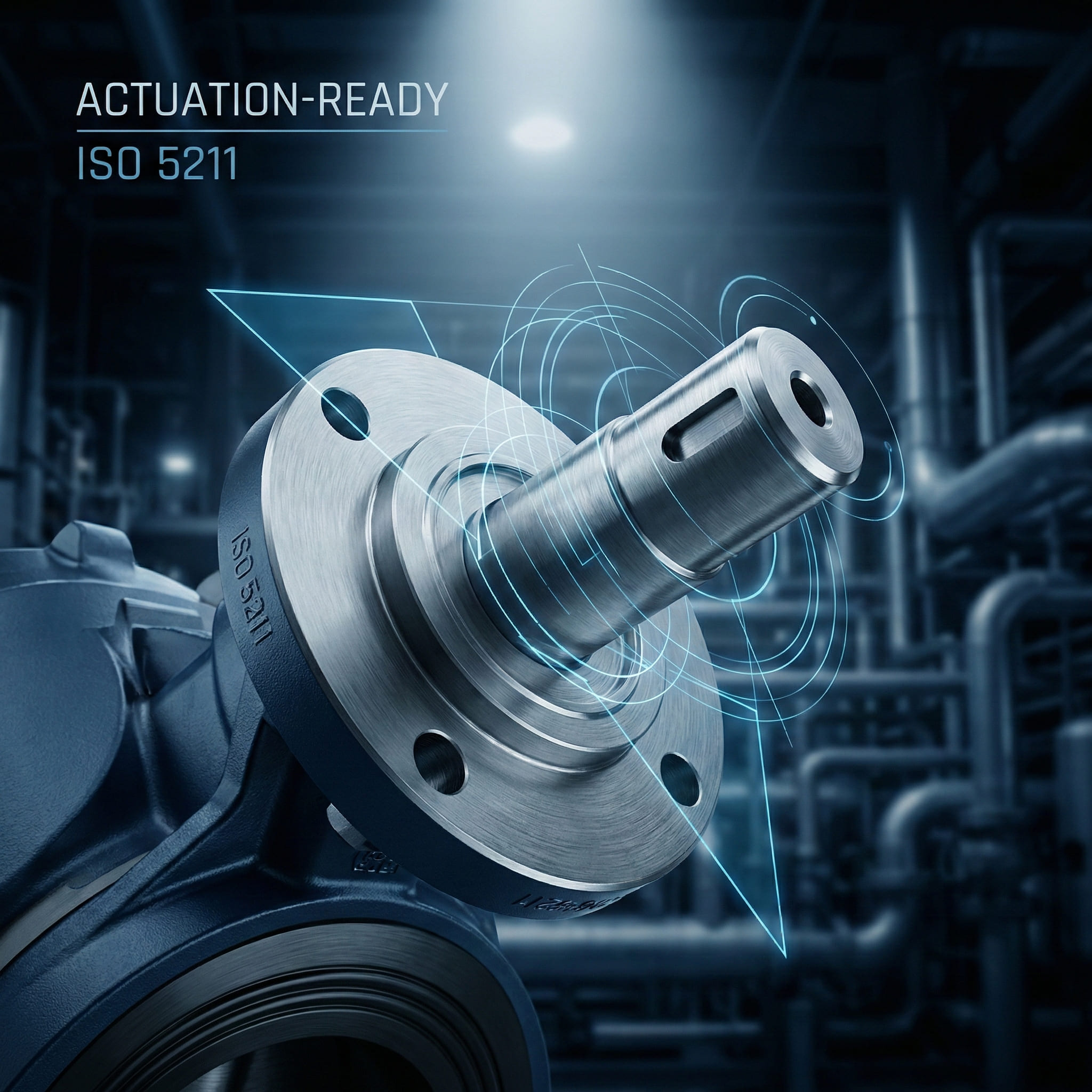
Partnering with a specialized bare shaft butterfly valve manufacturer allows you to source high-precision fluid control components designed specifically for seamless actuator integration. You often face the frustrating problem of trying to mount third-party actuators onto generic valves, only to discover that mounting pads don’t align or torque requirements are undocumented. This mismatch agitates the production cycle, leading to stem leaks, premature seal failure, and expensive downtime in your critical processing lines. The solution lies in sourcing actuation-ready valves that feature standardized interfaces and verified mechanical data to streamline your entire automation strategy.
What is a bare shaft butterfly valve exactly?
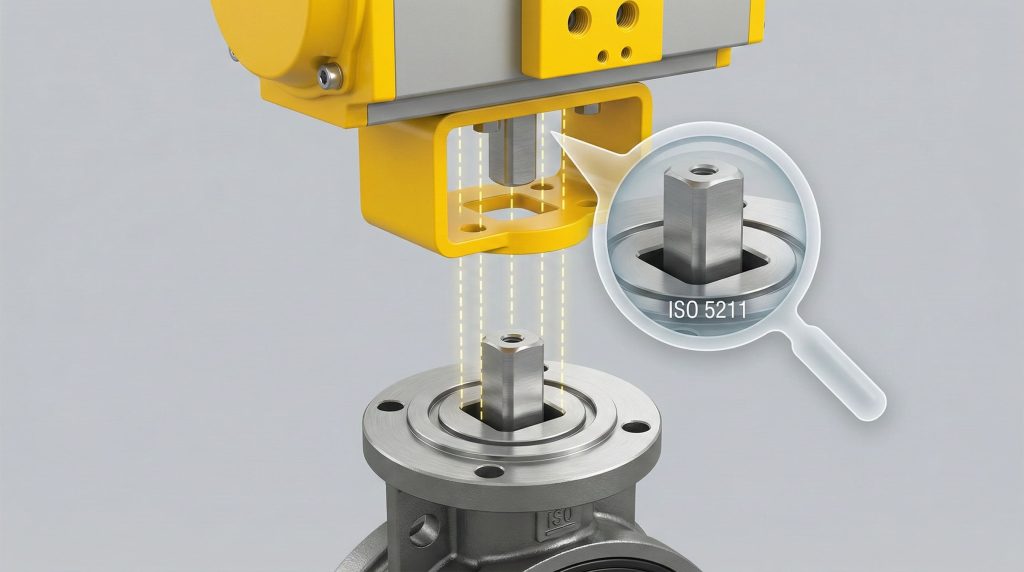
A bare shaft butterfly valve is a “headless” industrial valve supplied without a handle, gear, or actuator, featuring an exposed stem for direct mounting. You use these units as foundational components when you intend to install your own pneumatic, electric, or hydraulic automation systems.
Definition of a Headless Valve
This design removes the manual lever to provide a clean interface for external operation. It is the preferred choice for EPC projects where standardized automation is a requirement for system-wide control.
Actuation-Ready Design Features
Look: the design focuses entirely on how the valve interacts with a mounting bracket and drive shaft. Most manufacturers ensure these units are ready for immediate bolt-on assembly without requiring additional machining.
- Absence of manual handles or handwheels.
- Standardized top flange for mounting actuators.
- Exposed stem with square or keyed ends for coupling.
Key Takeaway: Bare shaft valves serve as the mechanical core for automated systems, providing the necessary interface for third-party actuation.
| Feature | Description |
|---|---|
| Component Status | Headless / Un-actuated |
| Primary Use | Integration with Pneumatic/Electric Actuators |
| Interface | ISO 5211 Mounting Pad |
The standardized interface of a bare shaft valve ensures that mechanical energy is transferred efficiently from the actuator to the valve disc.
Why buy from a bare shaft butterfly valve manufacturer?
Purchasing directly from a bare shaft butterfly valve manufacturer ensures you receive technical transparency and custom engineering that distributors often cannot provide. You gain access to factory-direct pricing while eliminating the mid-tier assembly markups that inflate project budgets.
Cost-Efficiency and Component Flexibility
Buying direct allows you to maintain a flexible inventory where a single valve body can be paired with various actuator types. This modularity reduces your overhead and simplifies the replacement process for long-term maintenance.
Precision Machining Standards
Why does this matter? High-quality manufacturing involves 100% pressure testing and traceable material certificates for every batch.
- Direct access to DN25–DN1200 size specifications.
- Verified torque data for accurate actuator sizing.
- Compliance with global standards like DIN and API.
Key Takeaway: Manufacturer-direct sourcing provides the technical data and quality assurance needed to de-risk large-scale industrial procurement.
| Benefit | Impact on Procurement |
|---|---|
| Custom Specs | Tailored to DN25–DN1200 requirements |
| Lower Cost | Eliminates mid-tier assembly markups |
| QA Control | Traceable MTC and test reports per batch |
Direct manufacturing oversight guarantees that every valve meets the strict dimensional tolerances required for high-cycle automated operation.
Which industries use a bare shaft butterfly valve?
A bare shaft butterfly valve is utilized in sectors ranging from municipal water treatment to complex chemical processing where automated flow control is mandatory. Our industry expertise covers diverse environments where reliability and corrosion resistance are non-negotiable.
Water Treatment and HVAC Systems
You will find these valves in large-scale desalination plants and municipal wastewater networks. They are essential for managing the high-volume flow required in cooling towers and building climate control systems.
Chemical and Petrochemical Processing
The best part? These valves are engineered to handle aggressive media with zero-leakage performance in hazardous environments. They are frequently deployed on offshore platforms and in refineries where remote operation is a safety requirement.
- Desalination and potable water plants.
- Offshore drilling and marine environments.
- Mining operations for abrasive slurry handling.
Key Takeaway: The versatility of the bare shaft design makes it a staple in any industry requiring remote-controlled fluid management.
| Industry | Typical Media | Critical Requirement |
|---|---|---|
| Power Gen | Cooling Water | 99.9% Reliability Rating |
| Marine | Seawater | Corrosion Resistance (DNV Approval) |
| Mining | Abrasive Slurries | Heavy-duty wear resistance |
The wide industrial adoption of these valves stems from their ability to be customized with specific materials suited for various chemical and thermal stresses.
How to select a bare shaft butterfly valve size?
Selecting the correct bare shaft butterfly valve size depends on your system’s required flow coefficient (Cv) and the maximum differential pressure. You must match the nominal diameter (DN) of the valve to your existing piping while ensuring the shaft can handle the necessary torque.
Analyzing the DN32 to DN2400 Range
Small bore valves are typical for utility lines, while large bore units are reserved for main transmission pipes. You should consult detailed sizing charts to ensure the valve body fits the flange standards of your region, whether DIN, ANSI, or JIS.
Flow Coefficient (Cv) and Torque Values
But that’s not all. You must also calculate the breakaway torque required to open the valve under full pressure to select a compatible actuator.
- Small Bore: DN32 – DN150 for localized control.
- Medium Bore: DN200 – DN600 for industrial mains.
- Large Bore: DN700 – DN2400 for municipal infrastructure.
Key Takeaway: Accurate sizing involves balancing the physical pipe dimensions with the mechanical torque limits of the valve stem.
| Size Category | Range | Common Standards |
|---|---|---|
| Small Bore | DN32 – DN150 | PN10, PN16, 150LB |
| Medium Bore | DN200 – DN600 | DIN, EN, API 609 |
| Large Bore | DN700 – DN2400 | AWWA, ISO, GB/T |
Selecting the right size prevents cavitation and ensures the actuator operates within its optimal efficiency range.
What materials suit a bare shaft butterfly valve?
The material selection for a bare shaft butterfly valve must be based on the chemical compatibility of the media and the operating temperature range. You typically choose between ductile iron for general utilities or stainless steel for corrosive environments.
Body Material Durability Factors
Ductile iron is the standard for water and HVAC due to its high tensile strength and cost-effectiveness. For pharmaceutical or food applications, SS316L is required to maintain hygiene and prevent contamination.
Resilient vs. PTFE Sealing Options
Think about it this way: the seat material dictates how well the valve seals over thousands of cycles. EPDM is perfect for hot water, while PTFE is the gold standard for resisting aggressive acids and chemicals.
- Body: Ductile Iron, WCB Carbon Steel, SS316.
- Seat: EPDM (Water), NBR (Oil), FKM (High Temp).
- Disc: Nylon-coated DI, Stainless Steel, or Bronze.
Key Takeaway: Choosing the right combination of body and seat materials extends the valve’s lifespan and reduces maintenance frequency.
| Material | Temperature Range | Best Application |
|---|---|---|
| Ductile Iron | -10°C to +120°C | HVAC & Water Utilities |
| SS316L | -29°C to +200°C | Food & Pharma, Chemicals |
| WCB Steel | -29°C to +425°C | High-Pressure Industrial Steam |
Matching material properties to the specific media prevents premature degradation and ensures the integrity of your fluid control system.
Is a bare shaft butterfly valve ISO 5211 compliant?
A professional bare shaft butterfly valve is manufactured to ISO 5211 standards to ensure universal compatibility with international actuator brands. This standard defines the dimensions of the mounting flange and the drive nut, allowing you to swap actuators without custom brackets.
Standardized Mounting Pad Importance
The ISO 5211 mounting pad features a specific bolt circle diameter and pilot ring that centers the actuator perfectly over the valve stem. This precision prevents side-loading on the stem seals, which is a major cause of leaks in automated valves.
Shaft Interface Compatibility
Here is the bottom line: without ISO compliance, your automation costs will skyrocket due to the need for custom-machined adapters. A standard square or keyed shaft allows for a “plug-and-play” experience with most modern actuators.
- F05 to F12 flange patterns for various sizes.
- Defined stem diameters and heights.
- Standardized bolt hole orientations.
Key Takeaway: ISO 5211 compliance is the most critical feature for any bare shaft valve intended for automated service.
| ISO 5211 Type | Flange Circle (mm) | Typical Torque (Nm) |
|---|---|---|
| F05 | 50 | Up to 125 |
| F07 | 70 | Up to 250 |
| F10 | 102 | Up to 500 |
Standardization allows for a predictable mechanical interface, which simplifies the engineering work required for system integration.
How does a manufacturer test a bare shaft butterfly valve?
A reputable industrial valve manufacturer performs 100% hydrostatic and pneumatic testing to verify the structural integrity and sealing performance. You should expect every valve to be tested at 1.5 times its rated working pressure to ensure safety under surge conditions.
1.5x Working Pressure Hydro-Tests
The shell test checks for any casting defects or porosity in the valve body by applying high-pressure water. This is followed by a seat leakage test to confirm the valve achieves a bubble-tight shutoff as per API 598 standards.
Batch Traceability and Documentation
Wait, there’s more. Every test result is recorded and linked to a batch number for full traceability throughout the product’s life.
- Shell hydrostatic testing at 1.5x PN.
- Low-pressure air seat leakage verification.
- Material PMI (Positive Material Identification) checks.
Key Takeaway: Rigorous testing protocols protect your facility from catastrophic failures and ensure compliance with environmental regulations.
| Test Type | Standard | Acceptance Criteria |
|---|---|---|
| Hydrostatic | API 598 | Zero visible leakage at 1.5x PN |
| Pneumatic | ISO 5208 | Bubble-tight shutoff |
| Material PMI | ASTM | Verification of alloy composition |
Testing provides the empirical evidence needed to trust the valve’s performance in high-stakes industrial environments.
What is the lead time for a bare shaft butterfly valve?
The typical lead time for a bare shaft butterfly valve ranges from 5 days for stocked items to 25 days for custom-engineered solutions. You can plan your project schedule with confidence knowing that critical path items can often be fast-tracked.
Rapid Start Production (72 Hours)
For urgent maintenance or breakdown scenarios, some manufacturers can launch emergency production within 72 hours. This rapid response minimizes your operational downtime and helps you avoid the costs of a stalled assembly line.
Global Logistics and Export Packaging
The best part? Professional manufacturers use export-grade packaging to ensure your valves arrive without stem damage or coating scratches.
- Stocked standard valves: 5-7 working days.
- Custom-to-drawing builds: 15-25 days.
- Priority emergency slots: 72-hour launch.
Key Takeaway: Understanding lead times allows you to manage inventory effectively and meet tight commissioning deadlines for EPC projects.
| Order Type | Processing Time | Logistics |
|---|---|---|
| Stock Items | 5 Working Days | Express Sea/Air |
| Custom Build | 15 – 25 Days | Phased Container Shipments |
| Emergency Lot | 72-Hour Start | Priority Production Slot |
Consistent lead times are a hallmark of a well-organized manufacturing system, providing predictability for your supply chain.
Can a bare shaft butterfly valve handle high pressure?
A bare shaft butterfly valve can be engineered to handle pressures up to PN40 or Class 300, depending on the body design and disc reinforcement. You must ensure that the shaft diameter and material are capable of withstanding the torque generated at high differential pressures.
PN10 to PN40 Pressure Ratings
While PN10 and PN16 are standard for water utilities, heavy industrial applications often require the thicker walls found in PN25 or PN40 rated valves. High-performance double-offset designs are typically used when you need to bridge the gap between resilient-seated and high-pressure requirements.
Temperature Resistance Limits
Look: high pressure often comes with high temperature, requiring you to carefully select seat materials like metal-to-metal or reinforced PTFE. These components ensure the valve remains functional even when the media reaches extreme thermal limits.
- PN10/PN16 for general municipal utilities.
- PN25/PN40 for heavy-duty industrial lines.
- JIS 10K/20K for specific marine standards.
Key Takeaway: Pressure capacity is a function of both the valve’s physical construction and the mechanical strength of its drive components.
| Pressure Class | Max Working Pressure | Typical Connection |
|---|---|---|
| Class 150 | 20 Bar (Approx) | Wafer / Lug |
| PN16 | 16 Bar | Flanged / U-Type |
| PN25 | 25 Bar | High Performance Double Offset |
Selecting a valve with an appropriate pressure rating prevents stem deformation and ensures long-term sealing reliability.
How to install a bare shaft butterfly valve safely?
To install a bare shaft butterfly valve safely, you must ensure perfect alignment between the pipe flanges and the valve center to avoid uneven seat wear. You should always contact technical experts if you are unsure about the specific torque required for mounting your actuator.
Alignment and Actuator Mounting Procedures
Before tightening any bolts, check that the valve disc is slightly open to prevent the seat from being pinched or distorted. Once the valve is secured in the line, mount the actuator and use a calibrated torque wrench to tighten the ISO 5211 mounting bolts.
Remote Maintenance and Support Guidelines
The best part? Most manufacturers provide detailed installation manuals and remote technical support to guide your team through the process.
- Inspect the stem and mounting pad for debris.
- Center the valve disc within the pipeline flanges.
- Apply calibrated torque to all mounting hardware.
Key Takeaway: Proper installation and actuator alignment are the most important factors in preventing premature valve failure.
| Installation Step | Action | Quality Check |
|---|---|---|
| Pre-Check | Inspect stem and pad | Verify ISO 5211 dimensions |
| Alignment | Center disc in pipeline | Check flange parallelness |
| Mounting | Apply calibrated torque | Ensure 90-degree full travel |
Following a structured installation checklist ensures that your automated valve assembly operates smoothly from the first cycle.
Frequently Asked Questions
Can I install any actuator on a bare shaft butterfly valve?
Yes, provided the mounting pad follows ISO 5211 standards and the actuator’s torque output exceeds the valve’s breakaway torque by a safety margin. You should typically allow for a 20-30% safety factor to account for seat friction changes over time.
What’s the best body material for a bare shaft butterfly valve in marine environments?
Ductile iron with a Rilsan coating or 316L Stainless Steel are the preferred choices for saltwater resistance. These materials are often required to meet DNV or ABS certifications for use on offshore platforms and vessels.
How do I determine the torque of a bare shaft butterfly valve?
You should request torque tables from the manufacturer, which are calculated based on the differential pressure and media type. Remember that dry media or high-viscosity fluids will increase the required operating torque significantly.
Are there any specific maintenance requirements for the shaft area?
Yes, you should regularly inspect the stem packing for leaks, especially since the shaft is exposed in this design. Keeping the area free from abrasive dust and debris will prevent premature wear on the primary seals.
Can a bare shaft butterfly valve be used for throttling?
Yes, they can be used for throttling when paired with a modulating actuator and a high-performance disc design. However, they are most efficient when operated between 20 and 70 degrees of the opening stroke to maintain stable flow control.
Optimize Your Fluid Control Systems Today
Ruitoflow is dedicated to providing precision-engineered valve solutions that empower engineers to build more efficient and reliable industrial systems. Our mission is to bridge the gap between high-quality manufacturing and global project requirements through technical transparency and unwavering quality control.
If you are ready to upgrade your infrastructure with actuation-ready components, contact us today for a comprehensive technical consultation and custom quote tailored to your specific project needs.