
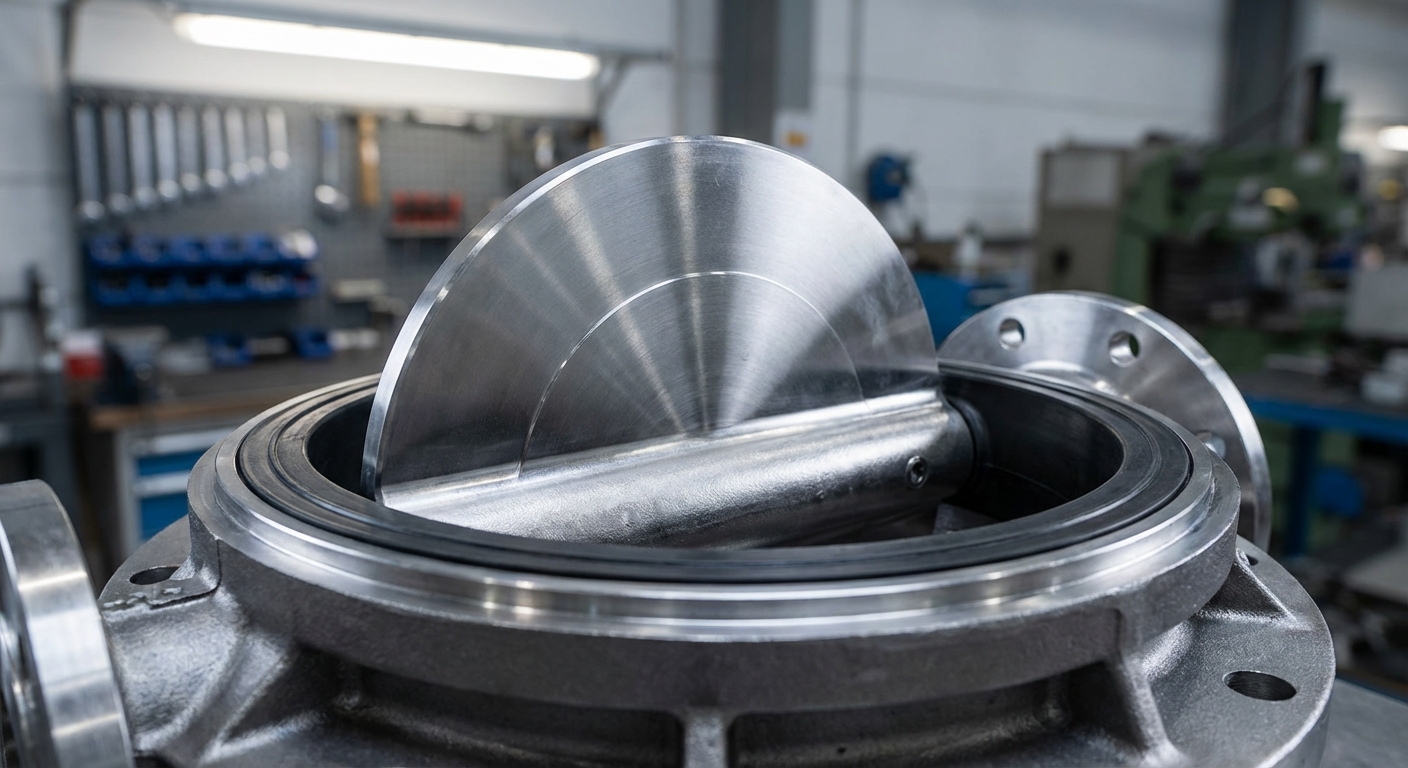
An intake valve is a mechanical device designed to regulate the flow of water or fluid from an external source into a pump or piping system. Industrial fluid systems frequently encounter operational bottlenecks due to inefficient flow control and excessive friction loss. Utilizing sub-optimal components increases the risk of leakage and corroded internals, which compromises safety standards and erodes your project’s profitability. Ruitoflow provides precision-engineered butterfly valve intake solutions designed for 99.5% reliability across diverse industrial sectors.
What defines a high-performance butterfly valve intake?
High-performance intakes are defined by their ability to provide precise flow regulation while minimizing friction loss in industrial networks. A butterfly valve intake achieves this through a compact, quarter-turn design that manages high flow rates efficiently. You need components that balance structural integrity with operational speed to maintain system pressure.
Essential Engineering Standards
You must prioritize compliance with global API and ISO certifications to ensure the valve performs under stress. These standards confirm that the internal components can handle specified vacuum and pressure levels without deformation.
Think about this:
- API 609 design standards
- ISO 9001:2015 quality control
- Zero-leakage seat testing
- Full material traceability
Our ball valve options offer great shut-off, but the butterfly design is often lighter for similar flow requirements. Choosing the right standard is the first step toward a failure-free system.
Key Takeaway: High-performance valves must meet rigorous international standards to ensure reliability in critical industrial applications.
| Feature | Requirement |
|---|---|
| Design Standard | API 609 / EN 593 |
| Pressure Test | 1.5x Nominal Pressure |
| Reliability Rate | 99.5% Standard |
This data shows that certified engineering is the foundation of industrial safety.
How does a butterfly valve intake control fluid flow?
A butterfly valve intake operates using a disk that rotates 90 degrees to allow or block the entry of fluid. When you turn the handle, the disk moves from a position perpendicular to the flow to one that is parallel. This mechanism allows for rapid manual or automated adjustments during critical production cycles.
The Role of the Rotating Disk
The disk is the heart of the valve, sitting directly in the center of the waterway. It must be precision-machined to ensure a perfect seal against the resilient liner when closed.
Here is why this matters:
- Quarter-turn action saves time
- Streamlined disk reduces turbulence
- Manual and remote control compatibility
But that’s not all. The disk design directly influences the torque required to operate the system effectively.
Key Takeaway: The rotating disk design allows for quick response times and efficient flow management in compact spaces.
| State | Position | Flow Impact |
|---|---|---|
| Fully Open | Parallel to flow | Maximum volume |
| Throttling | Angled | Regulated flow |
| Fully Closed | Perpendicular | Zero leakage |
Operating efficiency depends entirely on the precision of the internal disk rotation.
Why choose a butterfly valve intake for fire services?
Fire service applications require valves that can deliver massive volumes of water almost instantly. The butterfly valve intake is favored because its quarter-turn operation is significantly faster than traditional multi-turn valves. This speed is essential when firefighters are establishing a water supply from a hydrant or drafting source.
Space-Saving Wafer Designs
Wafer-style intakes are significantly thinner than standard check valve assemblies, saving valuable space on pump panels. This allows for a more ergonomic layout on firefighting trucks where space is at a premium.
Check this out:
- Compact face-to-face dimensions
- Reduced vehicle payload weight
- Simplified mounting on external panels
- Lower maintenance footprint
Here is the bottom line: speed and size are the primary drivers for this selection.
Key Takeaway: The compact size and rapid operation of butterfly intakes make them the ideal choice for emergency fire service equipment.
| Category | Advantage |
|---|---|
| Operation Speed | 90-degree turn |
| Installation | Space-saving wafer |
| Weight | Lightweight casting |
These advantages ensure that fire crews can deploy their water supply with minimal delay.
What materials make a butterfly valve intake durable?
The durability of a butterfly valve intake depends on the use of high-grade ductile iron and stainless steel for the main body and disk. These materials provide the necessary tensile strength to withstand high-pressure surges and environmental stressors. Ruitoflow ensures that every material used is matched to the specific corrosive profile of the fluid being handled.
Ductile Iron and Specialized Liners
Ductile iron provides a robust frame, while liners like EPDM or PTFE ensure a chemical-resistant seal. You should choose your liner based on the temperature and chemical composition of your system’s fluid.
The best part?
- Corrosion-resistant SS316 disks
- High-tensile ductile iron bodies
- Temperature-resilient EPDM seats
While a ball valve might be used in smaller lines, the material efficiency of the butterfly design is superior for larger intakes.
Key Takeaway: Matching high-strength body materials with specialized liners prevents premature failure and extends the valve’s service life.
| Material Component | Common Choice |
|---|---|
| Valve Body | Ductile Iron (DI) |
| Disc Material | Stainless Steel (CF8M) |
| Seat/Liner | EPDM or PTFE |
Selecting the correct material combination is vital for achieving a 12-month trouble-free warranty.
How to maintain your butterfly valve intake effectively?
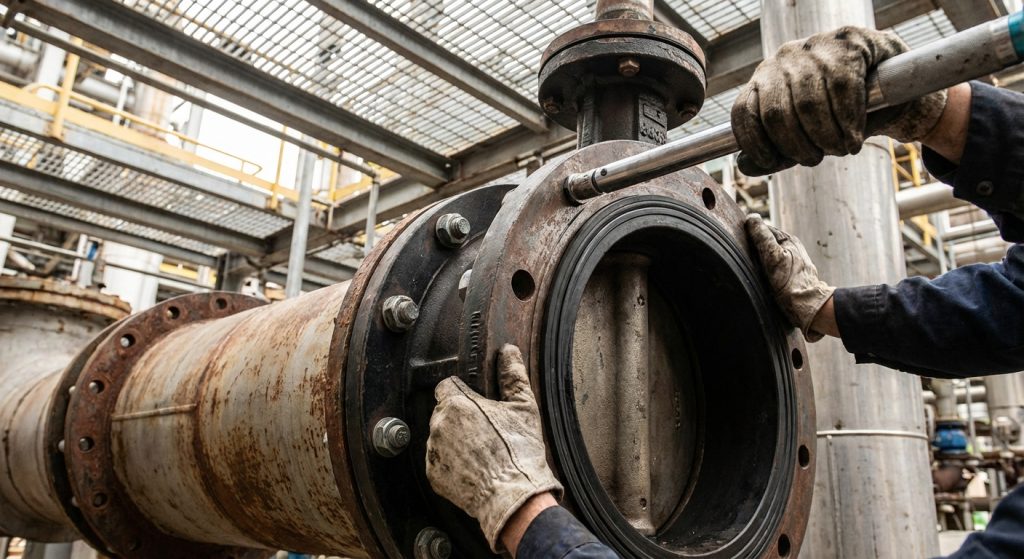
Effective maintenance of a butterfly valve intake involves regular inspections of the operating torque and the condition of the resilient seat. You must ensure that the disk moves freely without catching on debris or corroded internals. Early diagnosis of seal wear prevents unplanned downtime and costly emergency repairs.
Diagnosing Leakage and Torque Issues
You should monitor the force required to turn the handle, as an increase often signals internal buildup. Routine cleaning of the intake area ensures that the disk can reach a full zero-leakage closure.
Here is why this matters:
- Prevents catastrophic seal failure
- Maintains 99.5% reliability ratings
- Reduces long-term ownership costs
Check this out: regular lubrication of the stem and actuator is also necessary for smooth operation.
Key Takeaway: Proactive torque monitoring and seat cleaning are the most effective ways to ensure the longevity of your intake system.
| Task | Frequency | Purpose |
|---|---|---|
| Torque Check | Monthly | Detect friction |
| Visual Inspection | Weekly | Find leaks |
| Seal Cleaning | Quarterly | Remove debris |
Consistency in maintenance schedules directly correlates with the total cost of ownership.
What is the Cv rating of a butterfly valve intake?
The Cv rating of a butterfly valve intake is a critical metric that defines how much fluid can pass through the unit with a 1 PSI pressure drop. You need a high Cv value to ensure that your pump receives the maximum possible volume without excessive friction loss. Ruitoflow provides detailed flow characteristic curves to help you size your intake correctly for your specific pump capacity.
Calculating Flow Coefficients
Higher flow coefficients indicate a more efficient internal design with fewer obstructions. You must calculate the Cv to ensure your piping system doesn’t experience cavitation during high-demand periods.
But that’s not all.
- Optimized disk profiles increase Cv
- Smooth internal bores reduce turbulence
- Accurate sizing prevents pump damage
Here is the bottom line: knowing your Cv helps you optimize the entire fluid network.
Key Takeaway: A high Cv rating ensures maximum flow efficiency and protects downstream equipment from starvation or cavitation.
| Valve Size | Typical Cv | Efficiency Level |
|---|---|---|
| DN100 (4″) | 600+ | High |
| DN200 (8″) | 2500+ | High |
| DN300 (12″) | 5000+ | High |
Using these ratings allows engineers to design systems that minimize energy consumption.
Can a butterfly valve intake prevent system leakage?
A butterfly valve intake can achieve zero-leakage performance when equipped with precision-seated resilient liners. These valves are often tested to Leakage Class VI standards, ensuring no fluid passes through when the disk is fully closed. You can rely on these seals to protect your system from environmental contamination and fluid loss.
Achieving Zero-Leakage Standards
The interference fit between the disk and the seat creates a bubble-tight seal. This is particularly important in municipal water systems where every drop of treated water represents a cost.
Think about this:
- Resilient EPDM liners for water
- PTFE liners for chemical resistance
- Bi-directional sealing capabilities
While a globe valve is excellent for throttling, our butterfly designs offer superior sealing with much less weight.
Key Takeaway: Modern engineering allows butterfly intakes to provide high-performance sealing that meets the strictest environmental standards.
| Leakage Class | Standard | Performance |
|---|---|---|
| Class VI | API 598 | Zero-Leakage |
| Class V | ANSI/FCI 70-2 | High Integrity |
Zero-leakage is no longer a luxury but a requirement for modern industrial compliance.
How to install a butterfly valve intake in pipelines?
To install a butterfly valve intake correctly, you must ensure precise flange alignment to prevent uneven pressure on the seals. Improperly aligned flanges can distort the resilient liner, leading to immediate leakage or premature wear. You should always use a star-pattern bolt tightening sequence to distribute the load evenly across the valve body.
Flange Alignment and Bolt Torque
The valve should be installed in the slightly open position to prevent the disk from damaging the seat during tightening. You must also verify that the piping is properly supported so no weight is transferred onto the valve body itself.
Here is why this matters:
- Prevents liner distortion
- Ensures smooth operation
- Eliminates installation-related leaks
But that’s not all. Using the correct gasket material for the flange connection is just as important as the valve itself.
Key Takeaway: Proper flange alignment and torque application are critical to preventing leaks and ensuring long-term valve performance.
| Step | Action | Priority |
|---|---|---|
| Alignment | Level flanges | Critical |
| Tightening | Star pattern | High |
| Verification | Cycle the valve | Moderate |
Following these steps ensures the valve reaches its full 12-month warranty life without issues.
Is a butterfly valve intake better than gate valves?
A butterfly valve intake is generally superior to gate valves in terms of weight, cost, and operational speed. While gate valves are robust, they require many turns to open and are significantly heavier, making them harder to install and maintain. You will find that the butterfly design offers a more efficient flow-to-weight ratio for most industrial and municipal applications.
Weight and Cost Comparisons
The reduced material used in a butterfly valve intake leads to a lower purchase price and lower shipping costs. This makes it the preferred choice for large-scale projects where budget and logistics are key considerations.
Check this out:
- 60% lighter than gate valves
- Faster quarter-turn response
- Lower maintenance requirements
Our gate valve options still have their place in high-pressure isolation, but butterfly valves win on versatility.
Key Takeaway: For most fluid control tasks, the butterfly intake provides a more cost-effective and agile solution than the traditional gate valve.
| Feature | Butterfly Valve | Gate Valve |
|---|---|---|
| Weight | Light | Heavy |
| Speed | Fast (90 deg) | Slow (Multi-turn) |
| Cost | Lower | Higher |
The shift toward butterfly valves reflects the industry’s need for faster and more efficient control.
Where to buy a reliable butterfly valve intake today?
Finding a reliable butterfly valve intake requires selecting a manufacturer with proven export experience and recognized certifications. Ruitoflow offers over 120 models designed for 99.5% reliability, backed by 15 years of precision engineering. We provide full QR code traceability for every unit, ensuring you receive the exact specifications your project demands.
Choosing a Certified Manufacturer
You should look for ISO 9001, CE, and DNV GL certifications to guarantee the quality of your fluid control components. Our team offers 24/7 technical support to assist you with selection, installation, and maintenance.
Here is the bottom line:
- 15-25 day custom production
- 12-month comprehensive warranty
- 100% pressure-tested units
Choosing a reliable partner like Ruitoflow ensures your system stays operational and efficient.
Key Takeaway: Reliable valve procurement depends on finding a manufacturer that combines technical certifications with a proven track record of reliability.
| Service | Ruitoflow Standard | Benefit |
|---|---|---|
| Warranty | 12 Months | Peace of mind |
| Testing | 100% of Units | Guaranteed quality |
| Support | 24/7 Technical | Expert assistance |
Investing in high-quality valves today prevents the massive costs of system failure tomorrow.
Conclusion
Ruitoflow is committed to solving your fluid control challenges with high-performance, zero-leakage solutions. Our valves are designed to eliminate system bottlenecks and reduce your total cost of ownership through superior durability. We believe in providing the most reliable components to the global EPC and OEM markets, ensuring safety and efficiency in every installation. If you are ready to optimize your industrial or municipal network, contact us today for a custom quote on your next project.
Frequently Asked Questions
Can I use a butterfly valve for high-pressure drafting?
Yes, provided the valve is specifically rated for the vacuum and pressure levels of your pump system.
What’s the best seal material for corrosive chemicals?
PTFE (Teflon) is generally the best choice for aggressive chemicals due to its high chemical resistance.
Can I automate my intake valve system?
Absolutely, our butterfly valves are compatible with pneumatic, electric, and hydraulic actuators for remote operation.
What’s the most durable body material for marine use?
For marine environments, stainless steel 316 or specialized bronze alloys offer the best resistance to salt corrosion.
Can I replace a gate valve with a butterfly intake?
In most cases, yes, though you must verify that the face-to-face dimensions and flow characteristics align with your system design.