
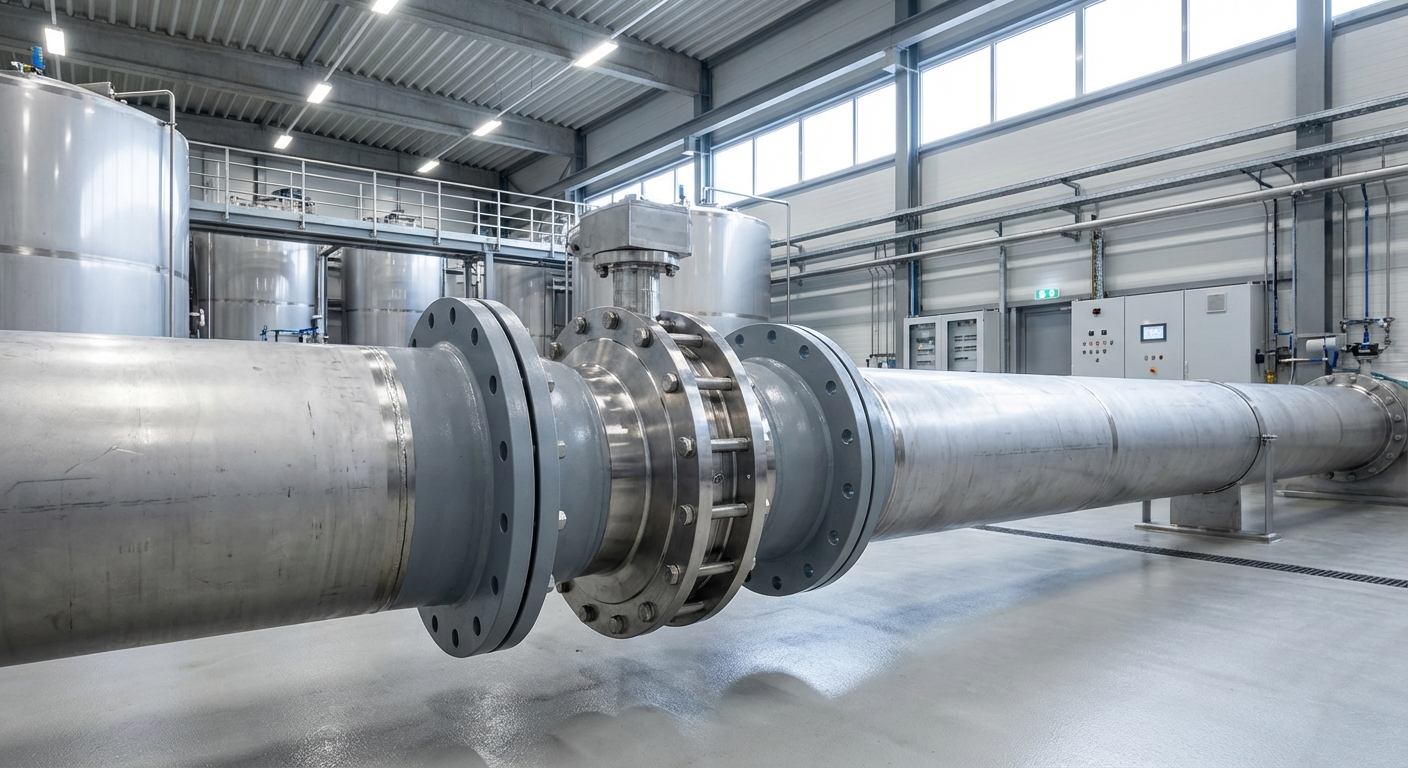
The different types of butterfly valves are primarily classified by their body style, such as wafer and lug, or by their disk offset, including concentric, double, and triple eccentric designs. Choosing the right flow control component can feel like a daunting challenge when you are faced with high-pressure demands and limited installation space. Inefficient valves lead to frequent leaks and costly downtime that disrupt your entire production line. The solution lies in selecting a high-quality sandwich type butterfly valve that offers a compact footprint without sacrificing performance.
Why choose a sandwich type butterfly valve?
You choose this specific valve because its slender profile allows for easy installation between existing pipe flanges. This design significantly reduces the weight of the valve assembly compared to flanged alternatives. It is the go-to choice for engineers looking to optimize space in complex piping networks.
Space-Saving Benefits in Piping Systems
The sandwich design minimizes the face-to-face dimensions required for the valve to sit within your pipeline. Look:
- It eliminates the need for bulky integrated flanges.
- You can install it in narrow corridors where other valves won’t fit.
- The reduced weight puts less stress on your pipe supports.
But here is the kicker: the compactness does not mean you lose durability. You get a robust seal in a fraction of the size.
Cost-Effectiveness of the Sandwich Design
This valve type is generally more affordable because it requires significantly less raw material for manufacturing. Since there are no heavy flanges or complex bolt holes on the body itself, your shipping and installation costs drop. You save money on both the initial purchase and the long-term structural maintenance of your system.
Key Takeaway: The sandwich design offers the highest efficiency-to-size ratio for modern industrial applications.
| Feature | Sandwich Type | Flanged Type |
|---|---|---|
| Weight | Very Low | High |
| Material Volume | Minimal | Extensive |
| Installation Effort | Quick/Simple | Heavy/Complex |
| Relative Cost | Lower | Higher |
The table demonstrates that the sandwich design provides a clear economic advantage for large-scale infrastructure.
How does a sandwich type butterfly valve work?
The sandwich type butterfly valve operates by rotating a disk 90 degrees within the fluid stream to start or stop flow. This quarter-turn movement is controlled by an external handle or actuator that turns the internal stem. It provides a simple yet effective way to manage high-volume flow with minimal physical effort.
The Quarter-Turn Mechanism Explained
When you turn the handle, the disk rotates from a position parallel to the flow to a position perpendicular to it. Think about it:
- A 0-degree position means the valve is fully open.
- A 90-degree position blocks the flow entirely.
- Intermediate angles allow you to throttle or regulate the flow volume.
The best part? This mechanism is incredibly fast, allowing for rapid emergency shutdowns if necessary.
Sealing Principles in Wafer Configurations
The valve relies on the pressure from the surrounding pipe flanges to compress the seat against the disk. As you tighten the through-bolts, the seat deforms slightly to create a leak-proof barrier. This bi-directional sealing ensures that fluid cannot bypass the disk from either side of the pipeline.
Key Takeaway: Reliable sealing depends on the uniform compression provided by the external flange bolts.
| Operation Phase | Disk Position | Seal Status | Flow State |
|---|---|---|---|
| Fully Open | 0° (Parallel) | No Contact | Maximum Flow |
| Throttling | 15° – 75° | Partial Contact | Regulated |
| Fully Closed | 90° (Perpendicular) | Full Compression | Zero Flow |
Understanding the mechanical phases ensures you operate the valve within its intended performance parameters.
Is a lug style or sandwich type butterfly valve better?
Determining which is better depends entirely on whether you require the ability to disconnect one side of the piping while the valve remains in place. A lug style valve features threaded inserts that allow it to be bolted directly to a single flange. Conversely, the sandwich type is held in place by bolts that span the entire width of the valve body.
Comparing Bolt Threading and Mounting
Sandwich designs use long bolts that pass through one pipe flange, go past the valve body, and secure into the second flange. In plain English:
- You need fewer bolts for a sandwich installation.
- The alignment is handled by the bolt circle of the pipe flanges.
- You cannot easily remove downstream piping without removing the valve.
It is a simpler mounting system that works perfectly for continuous line applications.
Maintenance and End-of-Line Service Differences
Lug valves are superior for end-of-line service because they stay attached to the pipe even when the other side is removed. With a sandwich design, removing the bolts causes the valve to fall out of the line. You must shut down the entire system and drain the pipes before performing maintenance on a sandwich-style setup.
Key Takeaway: Choose the sandwich style for cost and space, but use lug valves if you need frequent downstream access.
| Criterion | Sandwich (Wafer) | Lug Style |
|---|---|---|
| End-of-Line Service | Not Recommended | Excellent |
| Bolt Type | Through-Bolts | Cap Screws |
| Installation Weight | Lighter | Heavier |
| Price Point | Budget-Friendly | Mid-Range |
This comparison shows that while sandwich valves are more economical, lug valves offer greater operational flexibility.
When to use a sandwich type butterfly valve?
You should use a sandwich type butterfly valve in systems where weight reduction and budget constraints are high priorities. They are ideal for low-pressure water systems and HVAC applications where space is at a premium. These valves excel in environments where the fluid is non-corrosive and the temperatures remain relatively stable.
Ideal Industries for Compact Valve Solutions
Many industries rely on this design to keep their infrastructure lean and efficient. Consider these sectors:
- Municipal water treatment and distribution.
- Commercial HVAC and cooling tower systems.
- Light chemical processing and food production.
- Fire protection systems in high-rise buildings.
Let’s face it: if your facility has miles of piping, the weight savings alone justify this choice.
Pressure and Temperature Suitability
These valves are generally rated for Class 150 or Class 300 pressure standards, depending on the seat material. You must ensure the elastomer seat can withstand the specific temperature of your media. If your process involves extreme heat, you may need to upgrade to a metal-seated version.
Key Takeaway: Always verify that your system’s pressure does not exceed the valve’s seat rating.
| Material Type | Temp Range | Pressure Rating | Common Media |
|---|---|---|---|
| EPDM Seat | -20°F to 250°F | Up to 250 PSI | Water/Air |
| Viton Seat | 0°F to 400°F | Up to 200 PSI | Chemicals/Oils |
| Metal Seat | -400°F to 1000°F | Up to 1480 PSI | Steam/Refining |
The material matrix helps you match the valve components to your specific industrial environment.
What is a double eccentric sandwich type butterfly valve?
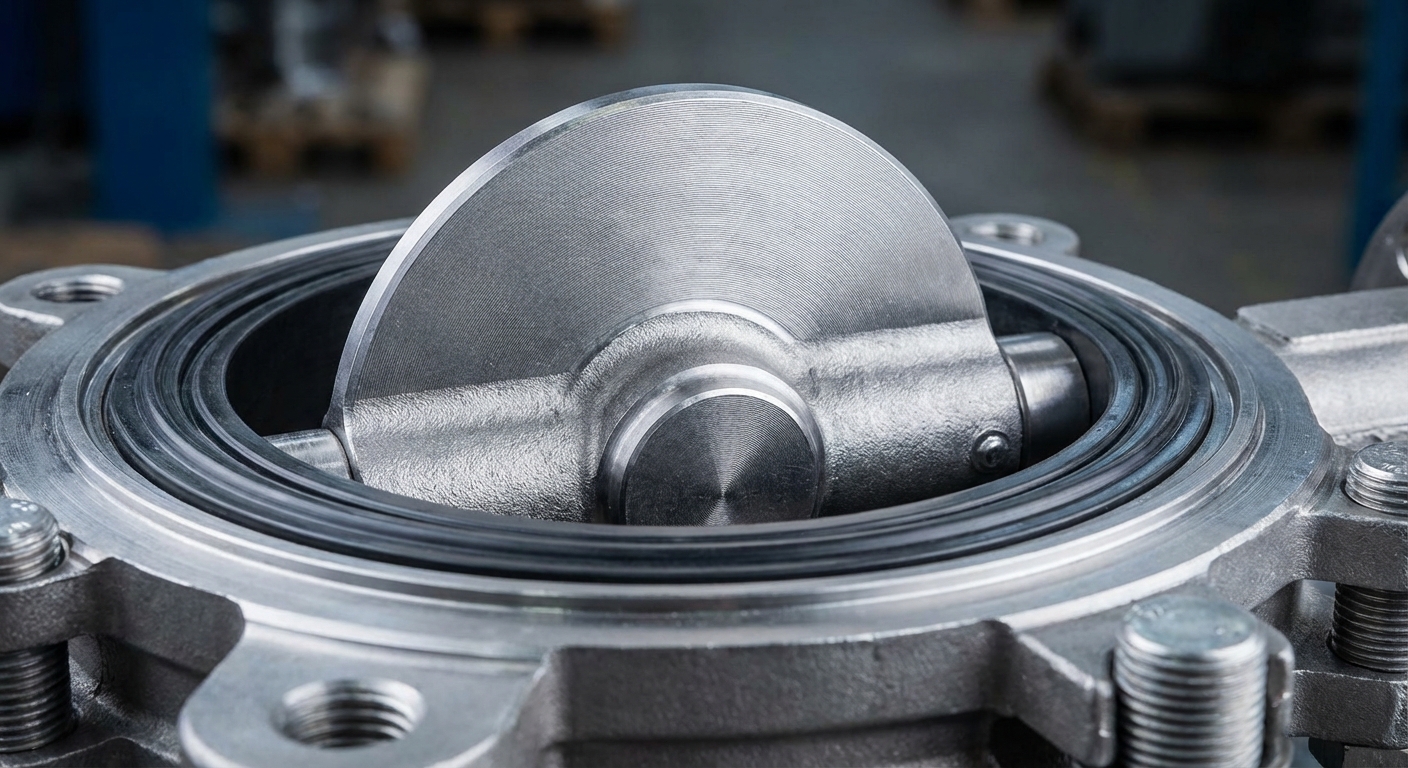
A double eccentric valve features a disk that is offset from both the center of the stem and the center of the valve body. This geometry ensures that the disk only contacts the seat during the final few degrees of closing. It is a high-performance design meant to reduce wear and extend the life of the valve.
Understanding the Offset Shaft Design
The shaft is positioned behind the disk and slightly to one side of the center line. You might be wondering:
- Why move the shaft?
- It creates a cam-like action for the disk.
- The disk “lifts” off the seat immediately upon opening.
This reduces the torque required to operate the valve and prevents the seat from being “scuffed” during movement.
Benefits of Reduced Seat Friction
By minimizing the contact time between the disk and the seat, you significantly increase the interval between maintenance cycles. This design is perfect for systems that cycle frequently. It prevents the permanent deformation of the sealing surface that often plagues standard concentric valves.
Key Takeaway: Double offset valves are the preferred choice for high-cycle industrial automation.
| Benefit | Double Eccentric | Standard Concentric |
|---|---|---|
| Seat Life | Extended | Moderate |
| Operating Torque | Lower | Higher |
| Sealing Quality | Superior | Standard |
| Maintenance Need | Infrequent | Frequent |
The data confirms that double eccentric designs offer a higher return on investment through durability.
Can a sandwich type butterfly valve ensure zero leakage?
A sandwich type butterfly valve can achieve zero leakage when equipped with triple offset technology or high-quality resilient seats. Triple offset designs use a metal-to-metal seal that is geometrically designed to eliminate friction entirely. This allows for a “bubble-tight” seal even in high-pressure steam or gas applications.
The Role of Triple Offset Technology
Triple offset valves add a third conical offset to the disk’s sealing surface. Here is the deal:
- The seal is achieved through contact pressure rather than friction.
- It prevents the “rubbing” that leads to seal failure.
- This technology allows butterfly valves to compete with gate and globe valves for tight shut-off.
It provides a level of precision that was previously impossible for a quarter-turn valve.
Resilient vs. Metal Seating Options
Resilient seats made of EPDM or NBR provide excellent sealing for liquids at lower temperatures. However, for high-pressure or high-heat scenarios, metal seats are required to maintain integrity. Metal seats are less prone to “blow-out” under intense pressure spikes.
Key Takeaway: Zero leakage is possible across all temperatures if you select the correct offset and seat material.
| Leakage Standard | Seat Material | Typical Offset | Application |
|---|---|---|---|
| Class VI (Zero) | PTFE / Metal | Triple | Gas/Hazardous |
| Class IV | Metal | Double | Steam/High Temp |
| Bubble Tight | EPDM / NBR | Concentric | Water/General |
Matching the leakage class to your safety requirements prevents environmental hazards and product loss.
How to install a sandwich type butterfly valve?
Installing this valve correctly requires you to center the body perfectly between the pipe flanges before tightening the bolts. If the valve is off-center, the disk may hit the pipe wall or the seat may not seal properly. You must follow a specific cross-pattern tightening sequence to ensure even pressure across the sealing face.
Alignment and Flange Preparation Steps
Before you begin, ensure the pipe flanges are clean and free of old gasket material. Look:
- Inspect the flange faces for deep scratches or pits.
- Use the through-bolts as a “cradle” to hold the valve in position.
- Slowly tighten the bolts by hand to check disk clearance.
The best part? Because the valve body is thin, you can often slide it into place without moving the heavy piping significantly.
Common Installation Mistakes to Avoid
One of the most frequent errors is over-tightening the bolts, which can crush the resilient seat and cause the disk to bind. Another mistake is installing the valve with the disk fully closed. Always keep the disk slightly open during installation to prevent it from getting stuck against the flange.
Key Takeaway: Precision alignment is the most critical factor in a successful valve installation.
| Installation Step | Action Required | Result if Missed |
|---|---|---|
| Cleaning | Remove debris | Leakage at flange |
| Centering | Align with bore | Disk damage |
| Tightening | Star/Cross pattern | Uneven seal |
| Disk Positioning | Slightly open | Seat tearing |
Following this checklist guarantees that your valve will function as intended from day one.
Is a sandwich type butterfly valve durable for chemicals?
The durability of a sandwich type butterfly valve in chemical environments depends entirely on the materials used for the body, disk, and seat. You can specify valves with stainless steel disks and PTFE liners to handle highly aggressive acids. With the right configuration, these valves offer excellent resistance to corrosion and erosion.
Material Selection for Corrosive Media
You must match the valve’s metallurgy to the specific chemical composition of your fluid. Think about it:
- 316 Stainless Steel is standard for most mildly corrosive liquids.
- Alloy 20 or Monel may be required for concentrated acids.
- Plastic-lined bodies offer an affordable alternative to exotic metals.
Choosing the wrong material can lead to “pitting” that destroys the valve in a matter of weeks.
Protective Coatings and Liner Options
Liners act as a protective barrier that prevents the fluid from ever touching the metal valve body. PTFE and PFA are common choices because they are chemically inert to almost all industrial substances. This allows you to use a standard ductile iron body while maintaining high chemical resistance.
Key Takeaway: Chemical durability is a matter of material specification, not valve design style.
| Chemical Agent | Recommended Disk | Recommended Seat | Resistance Level |
|---|---|---|---|
| Sulfuric Acid | Hastelloy | PTFE | High |
| Caustic Soda | Stainless 316 | EPDM | Moderate |
| Hydrocarbons | Carbon Steel | Viton | High |
| Brine/Salt Water | Aluminum Bronze | NBR | High |
This matrix guides you toward the most cost-effective material combination for your specific media.
How to maintain a sandwich type butterfly valve?
Maintaining these valves involves regular inspections of the seat for wear and ensuring the actuator is properly lubricated. You should cycle the valve periodically to prevent the disk from seizing in one position. Because of their simple design, most maintenance can be performed quickly once the line is depressurized.
Routine Inspection and Cleaning Protocols
You should check for leaks around the stem and between the flanges at least once a quarter. To make matters worse, ignoring small leaks can lead to stem corrosion that makes the valve impossible to turn. Establish a schedule to:
- Check bolt tightness on the flanges.
- Inspect the actuator for smooth movement.
- Clean any debris from the external moving parts.
Look: a few minutes of inspection can save you thousands in emergency repairs.
Troubleshooting Common Seat Wear Issues
If you notice the valve is not providing a tight shut-off, the seat may be worn or clogged with debris. You can often flush the valve by opening and closing it several times while the fluid is flowing. If the leak persists, the resilient seat may need to be replaced.
Key Takeaway: Proactive cycling and cleaning prevent the majority of valve failures.
| Symptom | Potential Cause | Corrective Action |
|---|---|---|
| External Leak | Loose flange bolts | Tighten in sequence |
| Hard to Turn | Stem corrosion | Lubricate or replace |
| Internal Leak | Seat debris | Flush the system |
| Vibration | Disk misalignment | Re-center valve |
A systematic approach to troubleshooting keeps your operations running without unexpected interruptions.
Where to buy a quality sandwich type butterfly valve?
Finding a reliable sandwich type butterfly valve requires you to partner with a manufacturer that prioritizes precision engineering and material traceability. You should look for suppliers that provide comprehensive testing reports for every valve they ship. A quality manufacturer will offer technical support to help you select the exact specifications for your project.
Selecting a Reliable Valve Manufacturer
The best manufacturers have decades of experience and a proven track record in your specific industry. It gets better: they often hold large inventories, ensuring you get the parts you need without long lead times. You should evaluate:
- Their manufacturing certifications (ISO, API).
- Availability of custom material options.
- The responsiveness of their technical team.
Don’t settle for “generic” valves that lack the documentation needed for critical safety systems.
Standards and Certifications to Verify
Always ensure the valves meet international standards such as API 609 for design or AWWA C504 for water service. These certifications guarantee that the valve has been tested for pressure integrity and dimensional accuracy. Without these marks, you have no way to verify the safety of the component in your facility.
Key Takeaway: Certifications are your insurance policy against substandard equipment and safety risks.
| Standard | Organization | Focus Area |
|---|---|---|
| API 609 | American Petroleum Institute | Design & Dimensions |
| ASME B16.34 | Amer. Soc. Mech. Engineers | Pressure/Temp Ratings |
| ISO 5211 | ISO | Actuator Mounting |
| EN 12266-1 | European Standards | Pressure Testing |
Verifying these standards ensures that your procurement process meets global industrial benchmarks.
Conclusion
Selecting the right valve is not just about the price; it is about ensuring the safety and efficiency of your entire operation. At Ruitoflow, we specialize in providing high-performance flow control solutions that stand up to the most demanding industrial environments. Whether you need a standard wafer design or a custom triple-offset configuration, our team is here to ensure you get the perfect fit. For expert guidance on your next project or to request a quote, feel free to contact us.
FAQ
Can I use a sandwich type valve for end-of-line service?
No, you generally cannot use a sandwich (wafer) type valve for end-of-line service because it relies on two flanges for structural stability. If you remove the downstream piping, the valve will not remain secured to the upstream flange.
What’s the best seat material for high-temperature steam?
The best material for high-temperature steam is typically a metal-to-metal seat, often found in triple eccentric valves. For lower-temperature steam, reinforced PTFE may be suitable, but metal is the gold standard for durability.
How do I ensure the valve is perfectly centered between flanges?
You can ensure centering by using the through-bolts as guides and slowly tightening them in a cross pattern while the disk is slightly open. Some valves also feature centering lugs on the body to assist with this process.
Should I choose a double eccentric design for water treatment?
You should choose a double eccentric design if the valve will be cycled frequently or if you want to maximize the life of the seat. While standard concentric valves work for basic water service, the double offset reduces long-term maintenance costs.
Is it possible to replace the seat on a high-performance valve?
Yes, it is possible to replace the seat on most high-performance sandwich valves, but it usually requires removing the valve from the line. Many modern designs feature field-replaceable seats to minimize downtime.