
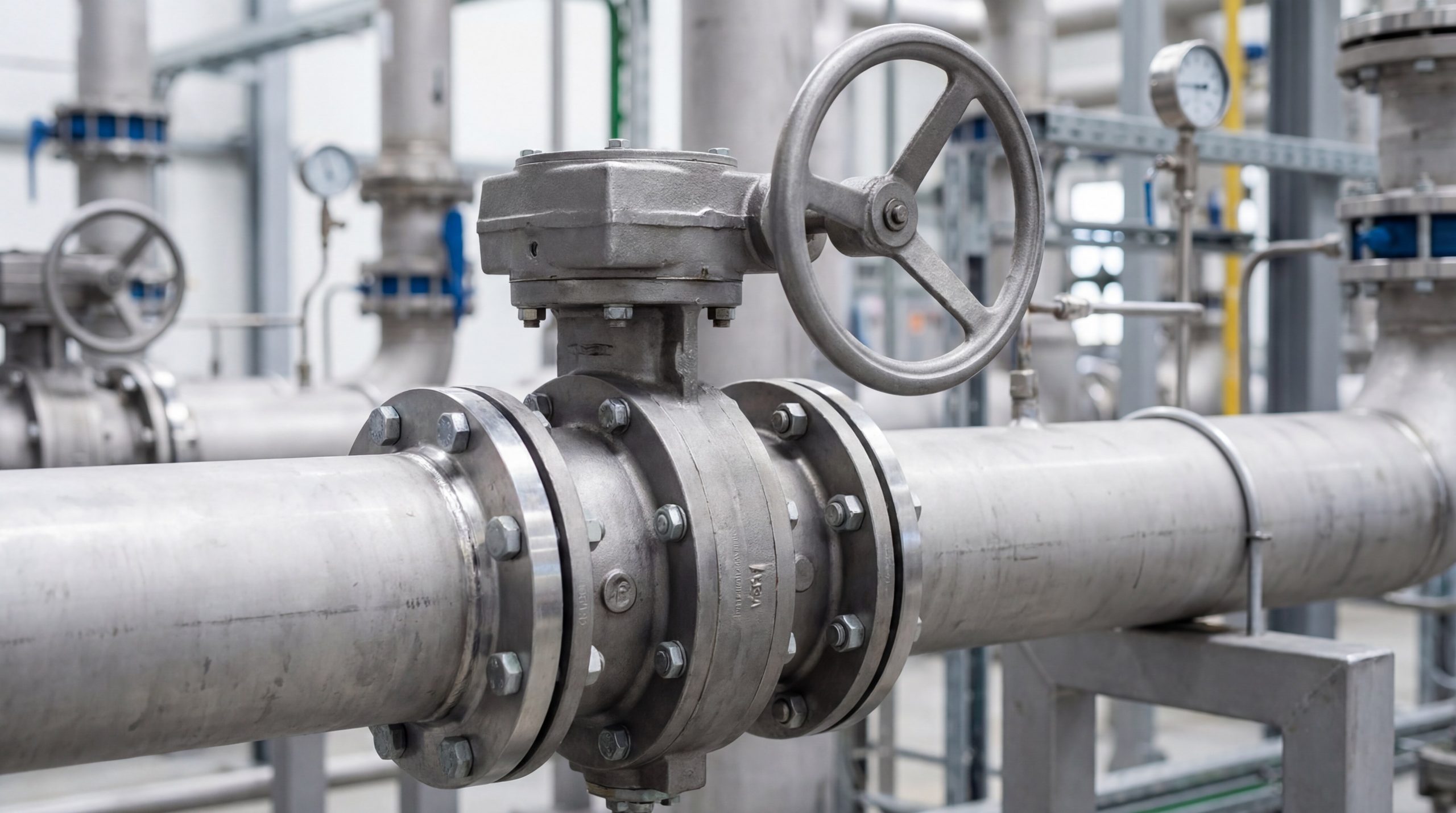
This guide provides everything you need to know about selecting, maintaining, and troubleshooting worm gear butterfly valves for efficient industrial flow control. Managing industrial fluid systems often leads to leaks or inconsistent flow control that disrupts your operations. These failures aren’t just annoying; they are expensive, causing downtime, safety hazards, and potentially catastrophic equipment damage. Utilizing a worm gear wafer butterfly valve ensures precise manual operation and long-term reliability in your pipelines.
Why pick a worm gear wafer butterfly valve?
You should pick a worm gear wafer butterfly valve when you require high torque and easy manual operation for large diameter pipelines. This mechanical advantage allows you to manage heavy flow without physical strain.
Is it best for large diameter pipelines?
The gearbox design makes it the superior choice for pipelines exceeding 8 inches. Because the gear ratio reduces the force needed to turn the disc, you can operate large valves with minimal effort.
Think about it:
- Mechanical advantage reduces operator fatigue.
- Compact wafer design saves space between flanges.
- Lower costs compared to gate or globe valves.
Does it handle high differential pressure easily?
Here is the kicker: the worm gear provides self-locking capabilities that prevent the valve from being forced open by high-pressure flow. This ensures that your settings remain fixed even under fluctuating stress.
- Prevents “water hammer” effects during slow closure.
- Resists torque generated by high-velocity media.
- Maintains seat integrity under pressure.
Can it hold stable intermediate positions?
You can achieve excellent throttling control because the worm gear holds the disc at any degree of rotation. Unlike lever handles that might slip, this geared system stays exactly where you set it.
Keep this in mind:
- Perfect for balancing flow in HVAC systems.
- Allows for gradual startup of fluid systems.
- Visual position indicators show the exact disc angle.
Key Takeaway: Choosing this valve type provides you with a high-torque solution that ensures stability and ease of use in heavy-duty piping systems.
| Feature | Benefit |
|---|---|
| Gear Ratio | High torque with low manual effort |
| Self-Locking | Prevents accidental disc movement |
| Wafer Design | Lightweight and easy installation |
This analysis confirms that geared valves are essential for large-scale manual flow regulation.
When to skip a worm gear wafer butterfly valve?
You may need to skip a worm gear wafer butterfly valve if your application demands rapid-fire opening and closing cycles. The slow operation inherent in the gear design can be a bottleneck in emergency shut-off scenarios.
Is high-frequency operation a dealbreaker?
The reality is that turning a handwheel dozens of times to close a valve is inefficient for high-speed tasks. If you need to cycle a valve every few minutes, you will quickly find the manual process exhausting.
The bottom line is:
- Slow closure times can delay process changes.
- Manual labor costs increase with frequent use.
- Lever handles are faster for small-bore pipes.
Can it be integrated into digital automation?
While you can add limit switches, a standard geared valve is not natively built for complex digital control loops. You would typically choose a pneumatic or electric actuator for full automation needs.
Think about it:
- Lacks the instant feedback of digital actuators.
- Requires manual intervention for every adjustment.
- Integration into SCADA systems is more complex.
Is it precise enough for micro-flow control?
You will find that while geared valves are great for throttling, they are not designed for laboratory-grade precision. At very low flow rates, the disc geometry may not provide the linear response you need.
Make no mistake:
- Seat design is optimized for shut-off, not micro-metering.
- Best used for general flow regulation.
- High-precision needle valves are better for tiny flows.
Key Takeaway: Avoiding geared valves in high-speed or fully automated environments saves you from operational bottlenecks and labor inefficiencies.
| Limitation | Impact |
|---|---|
| Operating Speed | Slow response in emergencies |
| Automation | Requires extra hardware for signals |
| Precision | Not suitable for micro-metering |
Use this guide to determine if a faster lever-operated or automated valve is a better fit.
How to upgrade a worm gear wafer butterfly valve?
Upgrading a worm gear wafer butterfly valve is simple with modular accessories that enhance safety and operational feedback. These additions allow you to customize the valve for specific environmental or safety requirements.
Can you add an extension lever for depth?
If your valve is buried or located in a pit, an extension stem allows you to operate the gearbox from the surface. This keeps you safe while ensuring the valve remains accessible for routine adjustments.
Here is the secret:
- Eliminates the need for confined space entry.
- Keeps the gearbox away from corrosive floor liquids.
- Standardized connections make installation easy.
Does it support safety locking devices?
You can easily add lockout/tagout (LOTO) kits to the gearbox handwheel to prevent unauthorized operation. This is a critical upgrade for industrial safety and regulatory compliance.
Don’t overlook this:
- Prevents accidental flow changes during maintenance.
- Compatible with most padlock styles.
- Increases site safety for your technicians.
Are limit switches available for signals?
Adding limit switches provides your control room with a remote signal indicating whether the valve is open or closed. This bridges the gap between manual operation and system monitoring.
Consider this:
- Provides remote verification of valve status.
- Can be wired into alarm systems.
- Rugged housings protect switches from weather.
Key Takeaway: Upgrading your valves with safety and feedback accessories reduces operational risk and improves system visibility.
| Upgrade Type | Primary Purpose |
|---|---|
| Stem Extension | Accessibility in deep pits |
| Locking Device | Safety and LOTO compliance |
| Limit Switches | Remote position monitoring |
These upgrades turn a basic manual valve into a sophisticated piece of industrial equipment.
What protects a worm gear wafer butterfly valve?
Various enclosures and coatings protect a worm gear wafer butterfly valve from harsh environmental factors like corrosion and water ingress. Without these protections, your gearbox can seize and lead to system failure.
Is a waterproof gearbox necessary for outdoors?
If your valve is exposed to rain or wash-down procedures, an IP65 or IP67 rated gearbox is essential. This prevents water from entering the gear casing and causing internal rust.
The fact is:
- Moisture is the leading cause of gear failure.
- Sealed units require less frequent re-greasing.
- Protection extends the overall lifespan of the valve.
Should you include a position indicator?
A high-visibility position indicator on top of the gearbox allows you to see the valve status from a distance. This simple protection prevents operators from over-torquing the handwheel when the valve is already closed.
Here is the kicker:
- Prevents internal damage from forced rotation.
- Improves operator efficiency during inspections.
- Bright colors are easy to see in low-light areas.
Key Takeaway: Investing in environmental protection and visual aids prevents mechanical damage and reduces your long-term maintenance costs.
| Protection | Benefit |
|---|---|
| Epoxy Coating | Prevents external rust and corrosion |
| IP-Rated Seals | Keeps moisture out of the gear mechanism |
| Disc Indicator | Prevents over-tightening damage |
Selecting the right protection level ensures your valve survives in any outdoor or industrial environment.
How to fix a stuck worm gear wafer butterfly valve?
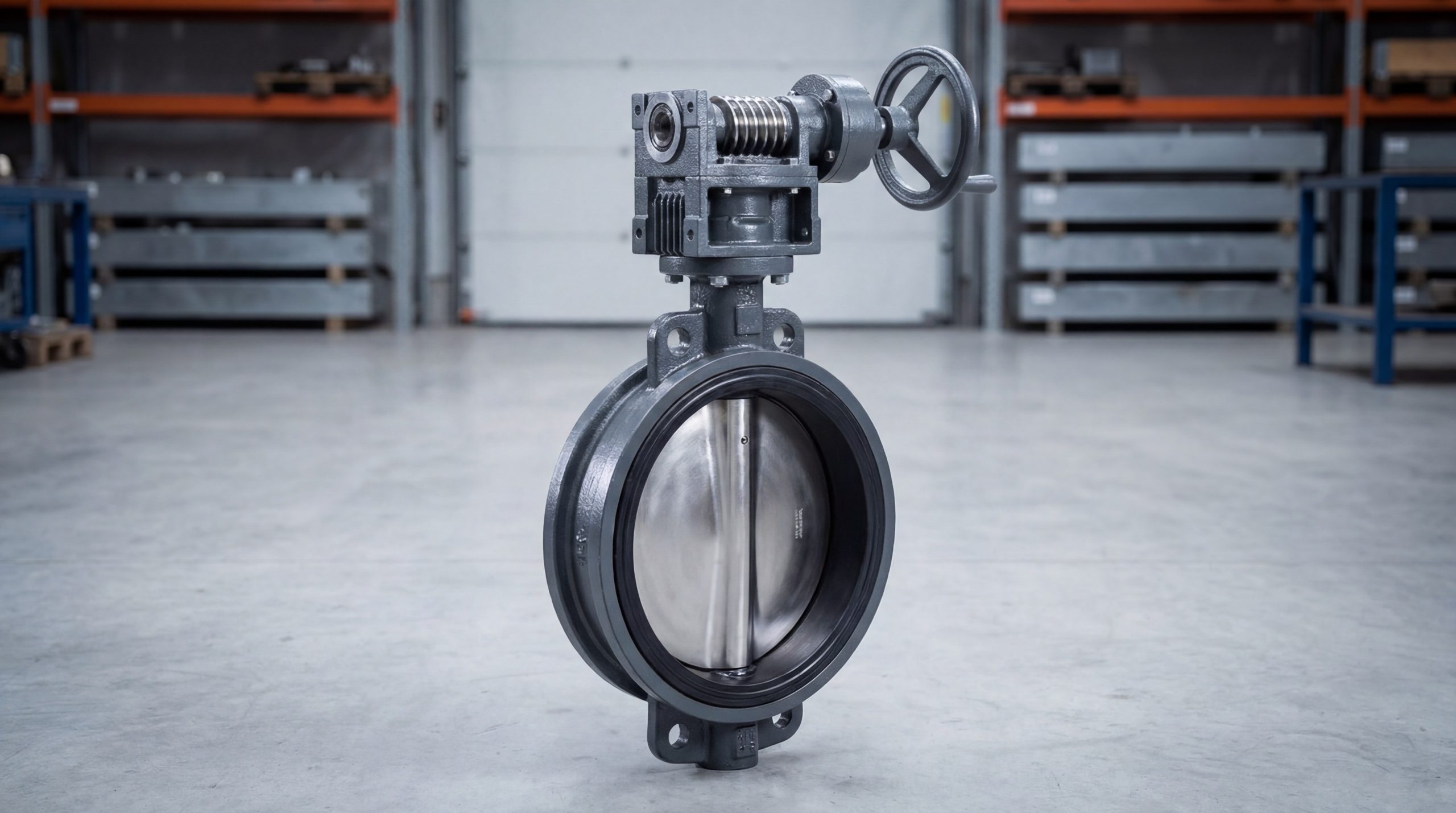
You can fix a stuck worm gear wafer butterfly valve by inspecting the lubrication levels or clearing debris from the internal gear teeth. Addressing these issues early prevents permanent damage to the stem or gear housing.
What if the handwheel is hard to rotate?
A stiff handwheel usually indicates that the grease inside the gearbox has hardened or the valve seat has accumulated scale. You should never force it, as this can snap the internal drive key.
Think about it:
- Forcing the wheel leads to expensive repairs.
- Scale buildup is common in hard water lines.
- Loosening the packing nut can sometimes help.
Does insufficient lubrication cause seizing?
Without regular greasing, the friction between the worm and the gear will eventually cause the metals to gall and seize. Routine application of industrial grease is the easiest way to keep your system moving.
Here is the truth:
- Grease acts as a barrier against internal rust.
- Regular movement prevents the gears from “setting.”
- Different temperatures require specific grease types.
Key Takeaway: Quick intervention and proper lubrication are the keys to restoring a stuck valve without needing a full replacement.
| Symptom | Probable Cause | Fix |
|---|---|---|
| High Resistance | Hardened Grease | Clean and re-lubricate |
| Complete Seizure | Internal Rust | Disassemble or replace gearbox |
| Rough Turning | Debris in Teeth | Inspect and clear gear housing |
Follow these steps to ensure your valves remain operational even in challenging environments.
Why does a worm gear wafer butterfly valve idle?
A worm gear wafer butterfly valve may idle if the internal keyway shears or the worm gear loses contact with the drive sleeve. When this happens, you will feel the handwheel turn, but the disc inside the pipe won’t move.
Why does the handwheel spin without movement?
This phenomenon, often called “idling,” usually means the mechanical connection between the wheel and the disc has failed. You are likely dealing with a sheared pin or a stripped gear tooth.
The reality is:
- It creates a dangerous false sense of security.
- The valve may be stuck in a partially open position.
- Requires immediate disassembly to diagnose.
Is a broken stem or internal gear the cause?
A broken stem is a serious issue often caused by over-torquing the valve during a jam. If the stem snaps, the disc will remain stationary regardless of how much you turn the handwheel.
Make no mistake:
- Stems usually break at the weakest point (the keyway).
- Gear teeth can strip if the material is too soft.
- Using a “cheater bar” on the wheel is the main cause.
Key Takeaway: Understanding why a valve idles helps you identify mechanical failures that could lead to uncontrolled flow.
| Failure Point | Consequence | Replacement |
|---|---|---|
| Drive Key | Handwheel spins freely | Replace key only |
| Stem | Disc does not move | Full stem/valve replacement |
| Gear Teeth | Intermittent movement | Replace gearbox internal |
This guide ensures you can distinguish between a simple gearbox fix and a major stem failure.
Why won’t a worm gear wafer butterfly valve seal?
A worm gear wafer butterfly valve might fail to seal if the travel limit bolts are incorrectly calibrated or the seat is damaged. Even a small gap allows media to bypass the disc, leading to system inefficiencies and potential contamination.
Why won’t the valve close completely?
If the disc hits a physical stop before it reaches the fully closed position, it is likely that the gearbox limits need adjustment. Alternatively, debris trapped in the seat could be preventing a tight seal.
Think about it:
- A 1% gap can cause significant leakage over time.
- Debris can scar the soft seat material permanently.
- Misalignment with the pipe flanges can also cause leaks.
How to adjust the limit bolts correctly?
The limit bolts on the side of the gearbox control exactly where the disc stops at 0 and 90 degrees. You must adjust these bolts while the valve is in the line to ensure the disc is perfectly centered.
The bottom line is:
- Proper adjustment extends the life of the seat.
- Over-tightening can crush the seat material.
- Check both open and closed limits during setup.
Key Takeaway: Correctly calibrating your limit bolts is the most effective way to ensure 100% bubble-tight shut-off.
| Component | Role in Sealing | Maintenance Tip |
|---|---|---|
| Limit Bolts | Stop disc at perfect 90° | Adjust after installation |
| Rubber Seat | Provides the seal | Inspect for tears or hardening |
| Disc Edge | Compresses against seat | Keep clean of abrasive particles |
Always verify your seal integrity under pressure after making any gearbox adjustments.
What stops worm gear wafer butterfly valve wobbling?
Ensuring proper bolt torque and gear alignment stops a worm gear wafer butterfly valve from wobbling during high-velocity flow. Unstable valves can lead to vibrations that damage surrounding pipework and cause joint leaks.
Why does the valve spring back unexpectedly?
If you notice the handwheel “kicking back” when you let go, the worm gear might be worn or the load is exceeding the gear’s locking capacity. This spring-back effect can lead to inaccurate flow settings.
Keep this in mind:
- Excessive vibration can wear down gear teeth.
- Backlash in the gearbox is often the culprit.
- High-velocity flow creates “dynamic torque” on the disc.
What causes gearbox rattling or shaking?
A rattling gearbox usually indicates loose mounting bolts or a lack of internal grease to dampen movement. This vibration is not just noisy; it accelerates the wear of the internal gear mechanism.
Here is the kicker:
- Loose bolts can lead to gear misalignment.
- Metal-on-metal vibration causes fatigue.
- Proper mounting to the valve ISO pad is vital.
Key Takeaway: Eliminating wobble and vibration preserves the integrity of your gears and prevents premature mechanical failure.
| Source of Vibration | Solution |
|---|---|
| Loose Mounting | Re-torque ISO pad bolts |
| Gear Backlash | Replace worn gears or tighten worm |
| High Flow Velocity | Check valve sizing for application |
Stability is the foundation of a long-lasting and quiet industrial piping system.
How to maintain a worm gear wafer butterfly valve?
Maintaining a worm gear wafer butterfly valve involves periodic grease replenishment and visual inspections for seat wear. A proactive maintenance schedule prevents the majority of common operational issues.
How often should you check lubrication?
You should inspect the lubrication every six months in standard conditions, or more frequently if the valve is located in a high-temperature or dusty environment. Fresh grease ensures smooth operation and protects against rust.
The fact is:
- Lubrication is the cheapest form of insurance.
- Dry gears are prone to chipping and seizing.
- Use water-resistant grease for outdoor units.
Which parts need regular cleaning?
The exterior of the stem and the visible portions of the seat should be kept clear of dirt and corrosive chemicals. Cleaning the area around the gearbox input shaft prevents grit from entering the gears.
Here is the secret:
- Grit can act like sandpaper on seals.
- Clean stems move more freely through packing.
- Inspecting for rust helps you catch issues early.
Can you prevent gear wear and corrosion?
Using epoxy-coated gearboxes and stainless steel hardware significantly reduces the impact of corrosion. Regularly cycling the valve—even if it’s not needed for the process—keeps the internal parts from bonding together.
Think about it:
- A “stagnant” valve is a failing valve.
- Protective caps for the input shaft are a plus.
- Stainless steel internals last longer in salt air.
Key Takeaway: Routine care and the right materials can double the service life of your butterfly valves.
| Task | Frequency | Objective |
|---|---|---|
| Greasing | 6 – 12 Months | Reduce friction and rust |
| Visual Check | Monthly | Identify leaks or corrosion |
| Full Cycle | Quarterly | Prevent gears from seizing |
Consistent maintenance is the only way to guarantee your valves work when you need them most.
Where is a worm gear wafer butterfly valve applied?
The most common environments where a worm gear wafer butterfly valve is applied include water treatment, HVAC, and industrial cooling systems. Their versatility and compact design make them a staple in modern infrastructure.
Is it suitable for water treatment plants?
Because they offer reliable shut-off and can be fitted with corrosion-resistant liners, these valves are perfect for municipal water systems. They handle both raw and treated water with ease.
Consider this:
- Often used in pump stations and reservoirs.
- Geared operation allows for slow, safe closure.
- Liner materials can be certified for drinking water.
Does it work well in HVAC systems?
In large commercial buildings, geared butterfly valves are used to balance chilled and hot water loops. Their ability to hold a precise position makes them ideal for maintaining temperature stability.
Make no mistake:
- Space-saving wafer design is key for tight mechanical rooms.
- Provides excellent shut-off for seasonal maintenance.
- Compatible with common insulation thicknesses.
Can it be used in urban pipeline networks?
You will find these valves in the underground piping that supports city infrastructure, such as fire protection and district heating. Their durability ensures they remain operational for decades with minimal intervention.
Don’t forget:
- Can be operated via street-level key extensions.
- High torque handles the demands of old pipelines.
- Reliable in both buried and exposed applications.
Key Takeaway: Recognizing the diverse applications of these valves helps you choose the right model for your specific industry needs.
| Industry | Typical Use Case | Preferred Feature |
|---|---|---|
| Water Treatment | Pump isolation | EPDM Liner |
| HVAC Systems | Chilled water balancing | Position Indicator |
| Industrial | Cooling towers | Gearbox Protection |
By choosing a geared valve, you are opting for a proven solution used by engineers globally.
Conclusion
Throughout this guide, we have explored how worm gear butterfly valves solve the most common challenges in industrial flow control, from managing high torque to ensuring precise throttling. By addressing issues like gear seizing, sealing failures, and environmental wear, you can maintain a highly efficient and safe piping system. At our core, we believe that high-quality flow control is the backbone of industrial progress, and we are dedicated to providing the reliable components you need to succeed. If you are ready to optimize your system or need expert advice on specific valve configurations, please contact us today to speak with a specialist.
FAQ
Can I convert a lever-operated valve to a worm gear type?
Yes, most modern butterfly valves feature a standardized ISO 5211 mounting pad that allows you to swap a lever handle for a gearbox. You simply need to ensure the gearbox is compatible with the valve’s stem dimensions and torque requirements.
What’s the best way to determine if my gear is worn?
You should look for “slop” or excessive play in the handwheel, where you can turn the wheel significantly before the disc begins to move. If you feel grinding or hear clicking noises during operation, the internal gears are likely chipped or misaligned.
How do I know if my valve seat needs replacing?
The most obvious sign is persistent leakage when the valve is fully closed, even after you have adjusted the gearbox limit bolts. If the handwheel becomes extremely difficult to turn at the very end of the closing stroke, the seat may be swollen or damaged.
Can I use a worm gear valve for steam applications?
It depends entirely on the temperature and the materials used for the seat and seals. While standard rubber-seated valves are not for steam, high-performance metal-seated butterfly valves with gearboxes are commonly used in steam systems.
How do I know if I need a waterproof gearbox?
You definitely need a waterproof (IP-rated) gearbox if the valve will be installed outdoors, in a wash-down area, or in a humid underground pit. Keeping moisture out of the gear mechanism is the single best way to prevent the valve from seizing over time.