
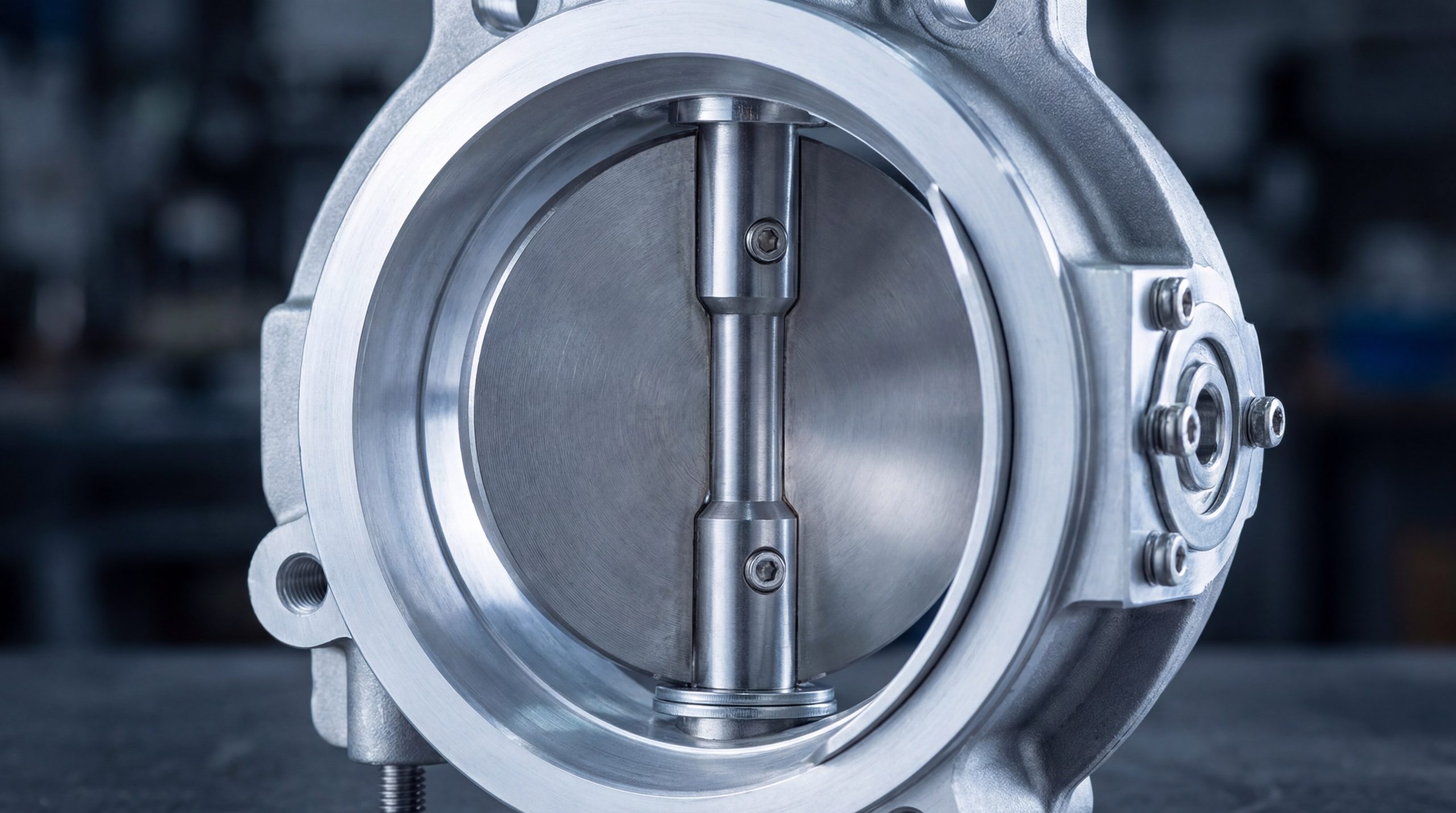
Actuated butterfly valves are quarter-turn components used to regulate or isolate flow in complex industrial piping systems. Managing fluid flow manually in large-scale operations often leads to inconsistent pressure and slow response times. This lack of automation can agitate your production schedule, causing costly downtime and safety risks if a manual override is too slow. Integrating a precision-engineered engine butterfly valve from Ruitoflow provides the solution by automating flow control with high-torque accuracy and remote reliability.
What is an automated engine butterfly valve?
An automated engine butterfly valve is a flow control device where an external actuator moves a central disc to start, stop, or throttle fluid. These valves are essential for modern piping because they allow for precise, remote adjustments without manual labor. By mounting an actuator to the valve stem, you can manage critical system parameters from a central control room.
What are the primary components?
The core of this system consists of the valve body, a rotating disc, a stem, and the powering actuator. In an engine butterfly valve, the disc sits in the center of the pipe, rotating 90 degrees to permit or block the media flow.
You might be wondering…
- The Disc: The primary obstructing element that pivots on the stem.
- The Stem: The rod that transmits torque from the actuator to the disc.
- The Seat: The internal lining that ensures a bubble-tight seal.
- The Actuator: The “brain” that provides the force to turn the stem.
Why choose an automated system over manual?
Automated systems provide a level of safety and speed that manual levers simply cannot match. This is especially true for large-diameter pipes where the force required to move the disc is significant.
Here is the deal:
- Safety: Remote operation keeps workers away from hazardous areas.
- Consistency: Digital signals ensure the valve opens to the exact required angle.
- Efficiency: Automation allows for complex sequencing in water treatment or engine exhaust systems.
- Rapid Shut-off: Actuators can close the valve in milliseconds during emergencies.
Key Takeaway: Implementing an automated engine butterfly valve enhances your facility’s safety and operational precision by removing human error from flow regulation.
| Component | Function | Material Priority |
|---|---|---|
| Actuator | Provides motive force | IP67/68 Protection |
| Disc | Controls fluid passage | Corrosion resistance |
| Seat | Ensures tight seal | Temperature rating |
The synergy between these components determines the overall reliability and lifespan of your piping infrastructure.
How does the engine butterfly valve function?
The engine butterfly valve functions by rotating a disc 90 degrees within the pipe bore to obstruct or permit flow. When the actuator receives a signal, it generates torque that turns the stem, aligning the disc parallel or perpendicular to the fluid stream. This quarter-turn mechanism is what makes the design so efficient for both isolation and modulation.
How does the actuator initiate movement?
Actuators respond to control signals, such as electrical pulses or air pressure changes, to trigger movement. This signal forces the internal piston or motor to rotate the valve’s stem.
But there’s more:
- Signal Input: Receives data from a PLC or manual switch.
- Torque Conversion: Changes power into rotational force.
- Stem Linkage: Directly moves the internal valve components.
- Limit Feedback: Confirms the valve’s position back to the system.
Can it handle throttling applications?
Yes, an engine butterfly valve is highly effective for throttling when paired with a modulating actuator. By holding the disc at various angles, you can precisely control the volume of media passing through the line.
You see:
- Mid-range control: Ideal for managing flow between 30 and 70 degrees.
- Pressure Drop: Aerodynamic discs minimize energy loss during modulation.
- Backpressure: Useful in engine exhaust systems to maintain performance.
- Linearity: High-end actuators provide a linear response to control signals.
Key Takeaway: Understanding the functional mechanics allows you to utilize the engine butterfly valve for complex throttling tasks that require high repeatability.
| Operation | Movement | Benefit |
|---|---|---|
| Isolation | Full 90° Turn | Complete system shut-off |
| Throttling | Incremental Degrees | Precise flow rate control |
| Modulation | Continuous Adjustment | Dynamic system balancing |
Effective functioning ensures that your system maintains optimal pressure levels without manual intervention.
Which engine butterfly valve designs are available?
Available engine butterfly valve designs include concentric and eccentric offsets tailored for different pressure and temperature needs. Concentric designs are standard for general utility, while eccentric (high-performance) types are used for steam or chemical processing. Choosing the right design depends on how much wear the seat will endure during high-frequency cycling.
What is a concentric design?
In a concentric engine butterfly valve, the stem passes through the center of the disc and the center of the seat. This design is often rubber-seated and is the most cost-effective choice for low-pressure water systems.
In other words:
- Zero Offset: The simplest mechanical configuration.
- Resilient Seat: Uses materials like EPDM or Viton for sealing.
- Low Torque: Requires less force to operate than metal-seated valves.
- Bi-directional: Can typically handle flow from either direction.
Why use eccentric or high-performance types?
High-performance valves use double or triple offsets to move the stem away from the center of the pipe. This prevents the disc from rubbing against the seat throughout the entire stroke, significantly reducing wear and tear.
Believe it or not:
- Double Offset: The stem is behind the disc and slightly to one side.
- Triple Offset: Adds a conical seat geometry for a friction-free seal.
- Metal Seating: Allows for operation in extreme high-heat environments.
- Longer Life: Drastically reduces the frequency of seat replacements.
Key Takeaway: Selecting an eccentric engine butterfly valve design for high-heat or high-pressure systems will reduce your long-term maintenance costs.
| Design Type | Seat Material | Pressure Class |
|---|---|---|
| Concentric | Rubber/Soft | Low to Medium |
| Double Offset | PTFE/Metal | High |
| Triple Offset | Metal-to-Metal | Extreme |
Matching the valve design to your specific media ensures the integrity of the seal over thousands of cycles.
How is an engine butterfly valve powered?
An engine butterfly valve is powered through pneumatic, electric, or hydraulic actuators depending on the required torque and speed. Pneumatic systems use compressed air for rapid action, while electric versions rely on motors for precision. Hydraulic power is typically reserved for massive valves that need thousands of foot-pounds of torque to turn.
When is pneumatic power best?
Pneumatic actuators are the industrial standard for an engine butterfly valve because they are fast, durable, and relatively inexpensive. They are particularly useful in hazardous environments where electrical sparks could pose a fire risk.
That’s not all:
- Failsafe Options: Easy to implement spring-return for safety.
- High Speed: Can cycle open or closed in under a second.
- Hazardous Duty: Safe for use with flammable gases or fluids.
- Maintenance: Simple mechanical parts that are easy to field-service.
What about electric and hydraulic options?
Electric actuators offer the most precise modulation and are preferred when compressed air is not available. Hydraulic actuators provide the highest torque density for the largest industrial piping systems.
Here’s why:
- Electric Precision: Excellent for 4-20mA control signals.
- Lower Energy: Only consumes power while the motor is moving.
- Hydraulic Force: Handles the highest pressures in steam or oil lines.
- Self-Contained: Some hydraulic units don’t require external fluid lines.
Key Takeaway: Selecting the right power source for your engine butterfly valve ensures that your actuator has sufficient force to overcome system pressure.
| Power Source | Best For | Typical Speed |
|---|---|---|
| Pneumatic | High-frequency cycling | Very Fast |
| Electric | Precise modulation | Moderate |
| Hydraulic | Heavy-duty/Large bore | Slow to Moderate |
Your choice of power should align with your facility’s existing infrastructure and required response times.
What benefits does an engine butterfly valve offer?
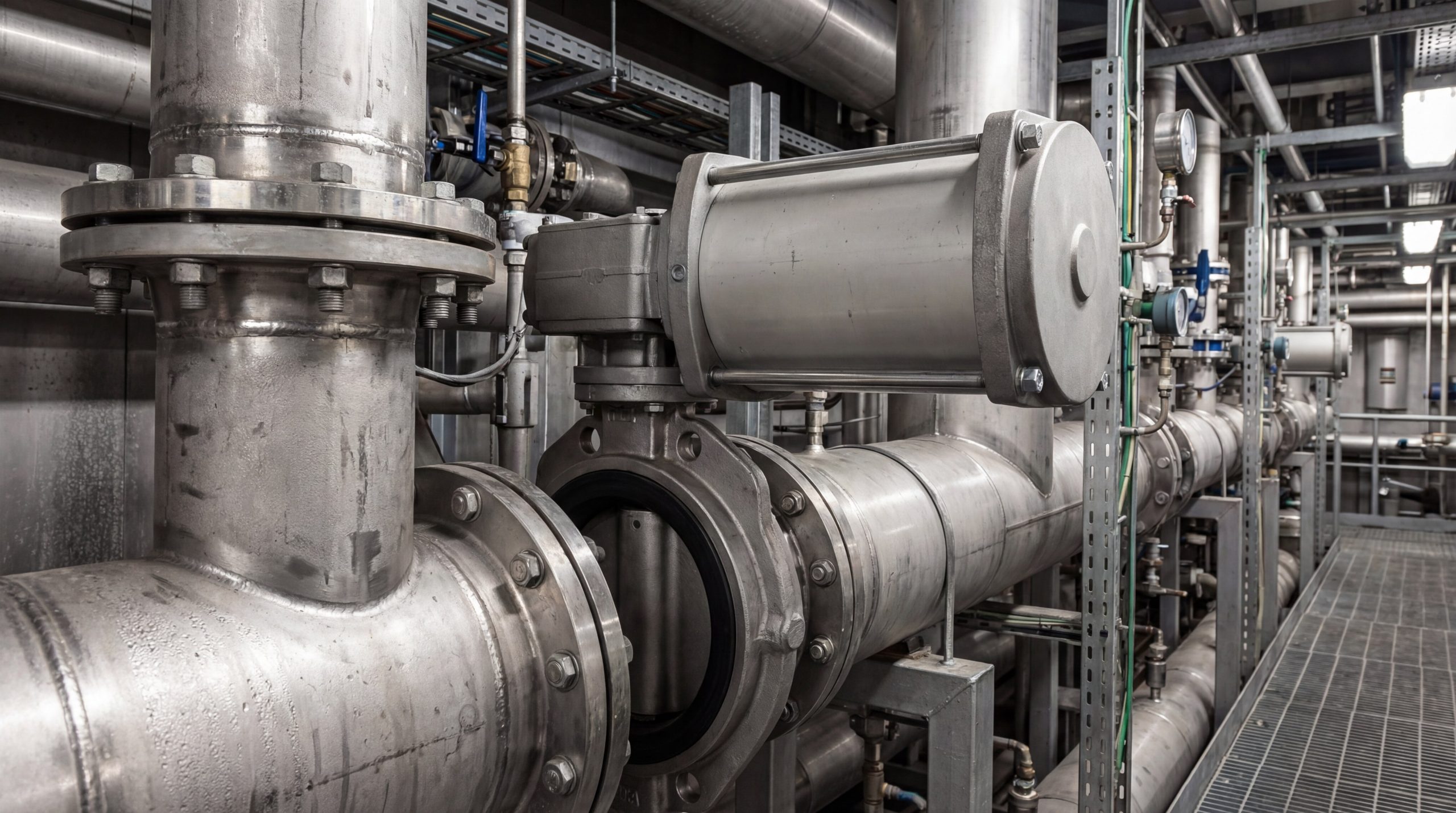
The engine butterfly valve offers benefits like a compact footprint, lower costs for large diameters, and rapid quarter-turn operation. Because the disc stays within the flow path, the valve body is much shorter than that of a gate or globe valve. This saves valuable space in tight engine rooms or industrial piping racks.
How does it save space?
The narrow “wafer” or “lug” profile allows these valves to be sandwiched between flanges. This design makes the engine butterfly valve ideal for modular skid-mounted systems.
Let’s look closer:
- Short Face-to-Face: Occupies minimal linear pipe space.
- Lightweight: Requires less structural support than heavy gate valves.
- Easy Mounting: Simple bolt patterns speed up installation.
- Low Profile: Actuators can be oriented to fit tight clearances.
Why is it cost-effective?
The simplicity of the design means fewer raw materials are required for manufacturing. This translates to a lower purchase price, especially as the pipe diameter increases.
The best part?
- Material Savings: Less metal is used in the valve body construction.
- Easy Maintenance: The seat can often be replaced without replacing the whole valve.
- Lower Torque: Smaller, cheaper actuators can often be used.
- Longer Life: High-performance designs survive millions of cycles.
Key Takeaway: Utilizing the engine butterfly valve reduces both initial capital expenditure and ongoing structural maintenance costs.
| Advantage | Benefit | Impact on ROI |
|---|---|---|
| Compact Size | Lower installation costs | High |
| Low Weight | Fewer pipe supports needed | Medium |
| Low Cost | Reduced CAPEX for large lines | High |
By choosing a compact design, you optimize the layout of your piping system while keeping budget constraints in check.
How to choose the right engine butterfly valve?
Choosing the right engine butterfly valve involves assessing the media characteristics, temperature ranges, and required operating torque. You must ensure that the seat material can withstand the chemicals and heat of your process fluid. Furthermore, the actuator must be sized with a safety factor to ensure it can open even under full differential pressure.
Why check media compatibility?
The process fluid determines what materials you should select for the disc and seat. Using the wrong elastomer in an engine butterfly valve can lead to swelling, cracking, and eventual leakage.
It’s simple:
- Corrosive Media: Require stainless steel or coated discs.
- Abrasive Fluids: Need hardened seats or specialized alloys.
- Food Grade: Must use FDA-approved EPDM or silicone.
- Oil/Gas: Typically requires Viton or NBR seals.
What role does pressure play?
Higher system pressures require more torque to break the seal and move the disc. You must calculate the “break-away torque” to select an actuator that won’t stall.
Here is the kicker:
- Differential Pressure: The difference in pressure across the closed disc.
- Static Pressure: The total pressure the valve body must contain.
- Shut-off Class: Defines how much leakage is allowed when closed.
- Velocity: High-speed flow can cause disc flutter if not properly rated.
Key Takeaway: A properly sized engine butterfly valve avoids mechanical failure by matching its material and torque ratings to your real-world operating conditions.
| Selection Factor | Consideration | Recommended Step |
|---|---|---|
| Media Type | Chemical reactivity | Check compatibility charts |
| Temperature | Seat expansion/contraction | Select high-temp offsets |
| Torque | Actuator power reserve | Apply a 20-30% safety factor |
Careful selection during the design phase prevents costly “re-dos” after the piping system is commissioned.
Where are engine butterfly valve units applied?
Applications for the engine butterfly valve range from industrial exhaust systems to heavy-duty power plant air intake regulation. In the power sector, they manage massive volumes of cooling water and exhaust gases efficiently. They are also common in chemical processing, where precise flow control is mandatory for production quality.
Are they used in HVAC?
In large-scale commercial HVAC, the engine butterfly valve is the standard for cooling tower and chiller management. Their compact size allows them to be installed in mechanical rooms where space is at a premium.
It gets better:
- Chilled Water: Perfect for isolating different zones in a building.
- Cooling Towers: Manage water levels and temperature-controlled bypass.
- Boiler Systems: Control feed water with high-temp resilient seats.
- Vibration Resistance: Naturally handles the pulses of large pumps.
What about water treatment?
Municipal and industrial water treatment plants use these valves to handle high-volume filtration and chemical dosing. Their quarter-turn operation is ideal for the rapid cycles found in backwashing sequences.
You might wonder:
- Filtration Skids: Control the flow into sand or carbon filters.
- Desalination: High-performance versions handle corrosive salt water.
- Wastewater: Large-bore valves manage primary effluent with ease.
- Chemical Feed: Small, precise actuated valves inject chlorine or alum.
Key Takeaway: The versatility of the engine butterfly valve makes it a “workhorse” component across almost every liquid-handling industry.
| Industry | Typical Application | Common Size Range |
|---|---|---|
| HVAC | Chiller isolation | 4″ to 24″ |
| Water Treatment | Filter backwash | 6″ to 48″ |
| Power Generation | Intake/Exhaust control | 12″ to 72″+ |
Whether managing air or water, these valves provide the reliability needed for 24/7 industrial operations.
How to install an engine butterfly valve?
Installing an engine butterfly valve requires precise flange alignment and careful actuator calibration to ensure a leak-proof seal. If the flanges are not parallel, the valve seat may be pinched, leading to premature failure or sticking. You should also ensure the disc is slightly open during installation to prevent it from jamming against the flange face.
Why is flange alignment critical?
Misaligned pipes put uneven stress on the valve body and the seat. This is the most common cause of leaks in an engine butterfly valve shortly after commissioning.
Pay attention:
- Even Tension: Tighten bolts in a star pattern for uniform pressure.
- Disc Clearance: Check that the disc doesn’t hit the internal pipe wall.
- Gasket Use: Concentric valves often don’t require extra gaskets.
- Flange Spacing: Leave enough room to slide the valve in without scraping.
How to mount the actuator?
The actuator must be perfectly squared with the valve stem to prevent “side-loading.” Side-loading causes the stem seals to wear out quickly and increases the required torque.
Now for the secret:
- Coupling Check: Ensure the drive nut fits the stem flats perfectly.
- Bracket Security: Bolts should be torqued to prevent vibration loosening.
- Limit Switches: Calibrate the “open” and “closed” electrical signals.
- Manual Override: Test the handwheel before applying power.
Key Takeaway: Proper installation of your engine butterfly valve extends the life of the seals and ensures the actuator operates at peak efficiency.
| Step | Action | Objective |
|---|---|---|
| Pre-Check | Inspect disc and seat | Ensure no shipping damage |
| Alignment | Use flange pins | Prevent seat pinching |
| Actuation | Set limit switches | Prevent motor over-travel |
A meticulous installation process is the first line of defense against unexpected system downtime.
How to maintain an engine butterfly valve?
To maintain an engine butterfly valve, you must regularly inspect seat integrity and test the actuator’s fail-safe functionality. Resilient seats are wear items that will eventually need replacement, especially in high-cycle or abrasive applications. Keeping the actuator clean and the stem lubricated will ensure smooth operation over many years.
When to replace seals?
Internal leakage is the primary indicator that the seat in your engine butterfly valve has reached the end of its life. If you notice pressure dropping downstream while the valve is closed, it’s time for a rebuild.
As a result:
- Visual Inspection: Look for tears or hardening in the elastomer.
- Cycle Count: Replace proactively based on manufacturer limits.
- Operating Noise: Squealing can indicate a dry or worn seat.
- Torque Spikes: Increasing power needs suggest the seat is dragging.
Why test the actuator?
The actuator is a mechanical system that can suffer from air leaks, motor burnout, or electronic drift. Regular functional testing ensures that when you need the valve to move, it does so immediately.
Keep this in mind:
- Pneumatic Leaks: Check fittings and seals for “hissing” air.
- Battery Backup: Test fail-safe batteries in electric units.
- Calibration: Verify that 50% signal equals a 45-degree opening.
- Lubrication: Grease the gearbox or internal rack-and-pinion.
Key Takeaway: Routine maintenance on the engine butterfly valve prevents small issues from turning into major catastrophic failures.
| Maintenance Task | Frequency | Benefit |
|---|---|---|
| Leak Testing | Quarterly | Prevents product loss |
| Limit Switch Check | Bi-annually | Protects actuator motor |
| Seat Replacement | As needed | Maintains shut-off integrity |
Proactive maintenance schedules significantly reduce the total cost of ownership for your piping components.
What is the future for the engine butterfly valve?
The future for the engine butterfly valve involves smart actuators with IoT sensors for predictive maintenance and enhanced material durability. New coatings and alloys are being developed to allow these valves to operate in environments that were previously too corrosive or hot. Integration with digital twins will soon allow operators to see the “health” of every valve in real-time.
Will automation get smarter?
Next-generation actuators for the engine butterfly valve will include built-in diagnostics that alert you to a failing seat before a leak occurs. This shift from reactive to predictive maintenance is the cornerstone of Industry 4.0.
Look out:
- Wireless Control: Reduces the need for expensive control wiring.
- Energy Harvesting: Self-powered actuators for remote pipelines.
- Digital Feedback: High-resolution positioning data for exact flow.
- Cloud Analytics: Compare valve performance across different sites.
Are new materials coming?
Manufacturers are experimenting with advanced ceramics and nanocoatings to make the engine butterfly valve even more resilient. These materials allow the valves to handle slurry and abrasive powders that would destroy standard steel components.
In the end:
- Ceramic Discs: Virtually immune to wear from abrasive particles.
- Composite Bodies: Lighter and more corrosion-resistant than iron.
- Reinforced Seals: Handle higher pressures without deforming.
- Thermal Barriers: Allow standard actuators to sit on high-heat lines.
Key Takeaway: Staying updated on engine butterfly valve innovations allows you to upgrade your system for better longevity and smarter control.
| Future Trend | Technology | Expected Benefit |
|---|---|---|
| Predictive Care | IoT Sensors | Zero unplanned downtime |
| Abrasive Control | Ceramic Linings | 5x longer service life |
| Smart Mesh | Wireless Protocol | 40% lower installation cost |
Embracing these advancements ensures your piping infrastructure remains competitive and efficient in a digital-first world.
Frequently Asked Questions
Can I use an engine butterfly valve for dead-end service?
Yes, but only if you choose a lug-style body. Lug valves have threaded inserts that allow you to remove downstream piping while keeping the valve pressurized and secure, whereas wafer types require pipe on both sides.
What’s the best way to prevent disc cavitation?
Concise judgment: Ensure the valve is sized for high-velocity flow and consider a high-performance offset design. Cavitation occurs when pressure drops too rapidly, so using a valve with an aerodynamic disc and proper seat geometry helps maintain laminar flow.
How do I know if my actuator is undersized?
Concise judgment: Look for slow operation or stalling during the initial opening phase. If the valve fails to reach the fully open or closed position under full line pressure, the actuator lacks the necessary break-away torque to overcome the differential.
Can I install a butterfly valve with the stem horizontal?
Yes, and in some cases, it is preferred. For media with sediment or heavy particles, a horizontal stem prevents debris from collecting in the lower bearing, which can jam the valve over time.
What’s the best seat material for steam applications?
Concise judgment: Use metal-to-metal seats or reinforced PTFE. Resilient elastomers like EPDM will melt or degrade rapidly under the extreme temperatures of steam service, making metal-seated triple offset valves the industry standard.
Conclusion
For more technical support or to find the perfect fit for your system, contact us today. We are dedicated to providing world-class flow control solutions that empower industrial efficiency across the globe. Our vision is to lead the piping industry through innovation, quality manufacturing, and unwavering commitment to our clients’ success.