
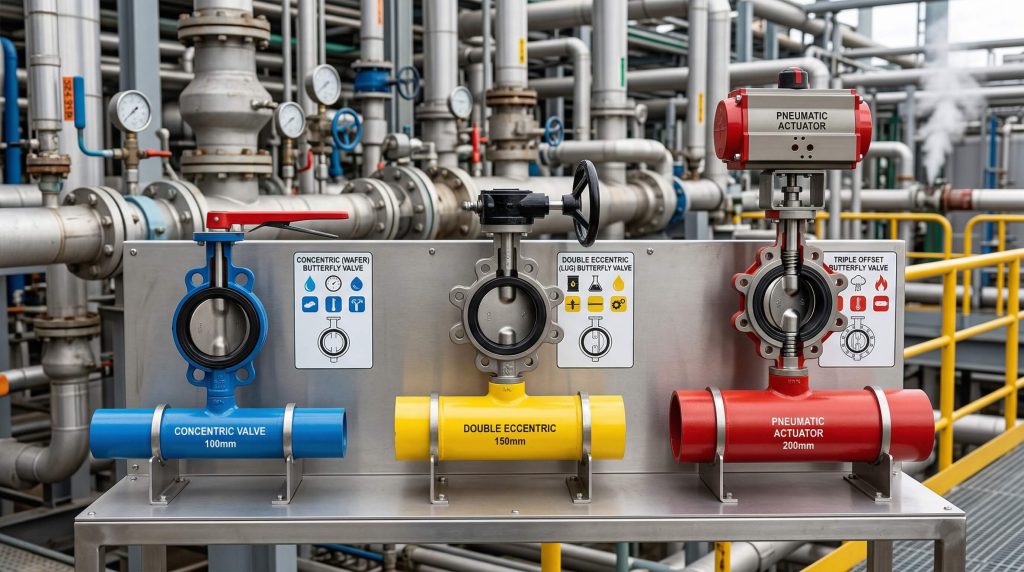
The different types of butterfly valves include concentric, double eccentric, and triple offset designs, as well as wafer, lug, and flanged body styles. Choosing the wrong flow control component can lead to catastrophic system leaks and frequent, costly maintenance shutdowns. You need a reliable, high-performance solution that balances initial procurement costs with long-term operational efficiency. By selecting the appropriate butterfly type valve, you can ensure system safety while optimizing your flow control processes for maximum reliability.
Why should you choose a butterfly type valve?
You should choose this valve for its lightweight design, rapid quarter-turn operation, and exceptional cost-efficiency in large piping systems. The butterfly type valve serves as a versatile solution for industries ranging from water treatment to chemical processing. Its compact footprint significantly reduces the structural support needed for your pipeline.
Benefits of quarter-turn operation
The 90-degree rotation allows you to achieve a full open or closed position with incredible speed. This efficiency is vital when you need rapid shut-off to protect downstream equipment. Here is the deal: multi-turn valves simply cannot match the cycle speed of a quarter-turn mechanism.
Compact design for space-saving
Your installation footprint is often limited by the existing piping layout and surrounding machinery. These valves feature a thin, “wafer-like” profile that fits into tight spaces where larger gate valves would fail to clear.
- Reduced structural stress on pipes.
- Lower weight for easier installation.
- Minimal space requirements.
Cost-effective flow control solutions
When you are managing large-diameter applications, the material savings become a major factor in your budget. These valves require significantly less metal to manufacture compared to globe or gate alternatives.
Key Takeaway: Butterfly valves provide high-efficiency flow control with lower material costs and easier installation than gate or globe valves.
| Feature | Butterfly Valve | Standard Gate Valve |
|---|---|---|
| Weight | Lightweight | Heavy |
| Cost | Economical | Expensive |
| Operation Speed | Very Fast (90°) | Slow (Multi-turn) |
These characteristics make the quarter-turn design the most logical choice for modern industrial infrastructure.
What defines a wafer or lug butterfly type valve?
A wafer butterfly type valve is designed to be sandwiched between pipe flanges using long bolts, whereas a lug valve features threaded inserts for independent piping connection. These body styles dictate how you will install and maintain your system over its lifecycle. Understanding the structural differences is the first step toward a successful specification.
Wafer style for low-cost isolation
The wafer design is the most economical choice for general fluid isolation. It relies on the clamping force of the flange bolts to stay in position and maintain a seal. But wait, there’s more: because it lacks threaded holes, it is generally lighter and faster to install than other styles.
Lug style for dead-end service
If you need to perform maintenance on one side of a pipe without draining the entire system, the lug style is your best friend. Its threaded lugs allow you to remove downstream piping while keeping the valve pressurized on the upstream side. This butterfly-valve design provides a higher level of safety for your technicians.
- Threaded inserts for bolt-on installation.
- Ability to perform dead-end service.
- Superior stability in high-vibration areas.
Key Takeaway: Lug valves offer superior safety for downstream maintenance, while wafer types provide the most economical solution for general isolation.
| Selection Criteria | Wafer Style | Lug Style |
|---|---|---|
| Bolting Method | Through-bolts | Threaded bolts |
| Pressure Rating | Standard | High |
| Dead-end Service | Not Recommended | Suitable |
Safety must remain your primary concern when choosing between these two common body configurations.
How does a concentric butterfly type valve work?
A concentric butterfly type valve works by rotating a disc around a center axis that is perfectly aligned with the valve body and the seat. In this configuration, the butterfly type valve maintains constant contact between the disc edge and the resilient seat throughout its entire movement. This simple design is highly effective for low-pressure applications where a bubble-tight seal is required.
Simple zero-offset design basics
The stem passes directly through the center of the disc and the center of the valve bore. This symmetry ensures that the flow is split evenly when the valve is partially open. You might be wondering: how does it seal so well? The disc actually deforms the soft seat slightly to create a pressurized seal.
Applications in low-pressure systems
You will typically find these valves in HVAC systems, water distribution networks, and fire protection lines. They excel in environments where the media is non-corrosive and the pressure remains moderate.
- HVAC air and water flow.
- Municipal water treatment.
- Basic fire protection systems.
Replacing standard resilient seats
Maintenance is straightforward because the rubber liners are often replaceable without buying a whole new valve. These liners, typically made of EPDM or NBR, protect the metal body from the flowing media.
Key Takeaway: Concentric designs are the industry standard for general-purpose water and air services due to their simplicity and reliable sealing.
| Specification | Concentric Valve |
|---|---|
| Common Materials | DI, CI, EPDM, NBR |
| Temp Limits | -20°C to 120°C |
| Typical Industry | Water Treatment, HVAC |
Simple designs often provide the longest service life when used within their specified operating parameters.
When is a double eccentric butterfly type valve used?
A double eccentric butterfly type valve is used in high-performance industrial applications where higher pressures and frequent cycling are common. This butterfly type valve design features two distinct offsets that allow the disc to “cam” into the seat. This movement reduces friction and extends the life of the internal components significantly.
High-performance double offset features
The first offset places the stem slightly behind the centerline of the sealing surface. The second offset moves the stem slightly to one side of the vertical pipe centerline. Think about it: this geometry allows the disc to move in an elliptical path, clearing the seat almost immediately.
Reducing torque and seat wear
Because the disc only touches the seat at the final point of closure, the torque required to operate the valve is much lower. This allows you to use smaller, less expensive actuators for your automated systems.
- Lower operating torque.
- Extended seal longevity.
- Better performance in high-cycle tasks.
Use in waterworks and power plants
In municipal water networks, these valves handle the higher pressures found in main transmission lines. They are also rugged enough for the cooling water systems in power generation facilities.
Key Takeaway: Double eccentric valves significantly reduce operational torque and mechanical wear, making them ideal for high-cycle industrial environments.
| Advantage | High-Performance Double Offset |
|---|---|
| Cycle Life | Very High |
| Torque Reduction | Significant |
| Pressure Ratings | Class 150 to 300 |
Reducing mechanical friction is the most effective way to lower your long-term maintenance costs in industrial settings.
Is a triple offset butterfly type valve better?
A triple offset butterfly type valve is better for critical, high-pressure, and high-temperature applications that require a 100% leak-proof metal seal. By adding a third offset to the butterfly type valve geometry, engineers have created a valve that seals through contact pressure rather than friction. This makes it a formidable competitor to traditional gate and globe valves in the harshest environments.
Conical sealing for zero leakage
The third offset involves the geometry of the seat and disc sealing surfaces, which are machined into an asymmetrical conical shape. The best part? This design ensures that the disc only makes contact with the seat at the very last degree of closure.
Handling extreme temperatures and steam
When you are dealing with high-pressure steam or volatile hydrocarbons, soft seats will melt or degrade. Triple offset valves use metal-to-metal seating that can withstand temperatures exceeding 400°C.
- Ideal for high-pressure steam.
- Excellent for oil and gas refining.
- Fire-safe by design.
Metal-to-metal seating advantages
Using materials like Stellite or hardened stainless steel ensures that the sealing surfaces remain intact even with abrasive media. This durability prevents the “wire-drawing” effect often seen in lesser valve types.
Key Takeaway: Triple offset valves provide the performance of a globe or ball valve with the weight and cost benefits of a butterfly design.
| Performance Metric | Triple Offset Valve |
|---|---|
| Leakage Class | Zero Leakage (Class VI) |
| Temp Range | -196°C to 600°C+ |
| Critical Apps | Steam, Oil, Cryogenics |
Advanced geometry allows these valves to survive where standard resilient designs would fail in minutes.
Which seats fit a resilient butterfly type valve?
The seats that fit a resilient butterfly type valve are typically made of elastomer materials like EPDM, NBR, or specialized fluoropolymers like PTFE. Selecting the right seat for your butterfly type valve is the most important decision you will make regarding chemical compatibility. If the seat fails, the entire valve becomes useless, leading to system downtime.
EPDM and NBR elastomer options
EPDM is your go-to material for water, steam, and alcohols, offering excellent resistance to ozone and weathering. NBR, or Nitrile, is the superior choice when your media contains oils, fats, or hydraulic fluids. Now, consider this: using EPDM with oil will cause the seat to swell and the valve to jam.
PTFE linings for chemical resistance
For the most aggressive acids and caustic solutions, you need a PTFE-lined valve. These seats provide a nearly inert barrier that protects the valve body from corrosive attack.
- Universal chemical resistance.
- High-purity for food and pharma.
- Low friction for smooth operation.
Comparing soft vs. metal seats
Soft seats provide a tighter seal at lower pressures, while metal seats are reserved for high-heat or abrasive scenarios. You must balance the need for a “bubble-tight” shut-off against the environmental reality of your pipeline.
Key Takeaway: Selecting the correct seat material is the most critical factor in preventing premature valve failure and ensuring chemical compatibility.
| Seat Material | Temp Range | Best For |
|---|---|---|
| EPDM | -30°F to 300°F | Water, Glycol |
| NBR | 10°F to 180°F | Oils, Air |
| PTFE | -20°F to 400°F | Acids, Chemicals |
Compatibility ensures that your valve remains operational and leak-free for its intended service life.
How do butterfly type valves compare to gate valves?
Butterfly type valves are generally lighter, more compact, and more affordable than gate valves, especially in sizes above six inches. While the butterfly type valve offers superior speed and modulation, it does introduce a slight pressure drop because the disc remains in the flow path. Understanding these trade-offs helps you choose the right technology for your specific flow requirements.
Butterfly vs. ball valve efficiency
A ball-valve offers a completely clear flow path, but it becomes prohibitively heavy and expensive in large diameters. But that’s not all: butterfly valves provide similar quarter-turn speed at a fraction of the weight and cost when you reach pipe sizes over 12 inches.
When to use gate valves instead
You should stick with a gate-valve if your system requires regular “pigging” for cleaning or if you need the absolute lowest possible pressure drop. Gate valves move the entire sealing element out of the flow stream, allowing for a full-bore opening.
- Use gate valves for viscous slurries.
- Choose butterfly for frequent throttling.
- Ball valves are best for high-pressure gas.
Selecting the right flow technology
Engineers must look at the total lifecycle cost, including the cost of actuation and supporting structures. Quarter-turn valves are almost always cheaper to automate than multi-turn gate valves.
Key Takeaway: While butterfly valves excel in weight and cost, gate and ball valves may be necessary for specific “full-bore” or extreme high-pressure requirements.
| Feature | Butterfly | Gate | Ball |
|---|---|---|---|
| Footprint | Small | Large | Medium |
| Throttling | Good | Poor | Fair |
| Automation | Cheap | Expensive | Moderate |
Your choice between these three pillars of flow control will define the efficiency of your entire plant.
How do you automate a butterfly type valve?
You automate a butterfly type valve by mounting a pneumatic, electric, or hydraulic actuator onto the valve’s ISO 5211 mounting pad. Because the butterfly type valve is a quarter-turn device, it is exceptionally easy to link to remote control systems. This automation allows for precise process control and enhances the safety of your facility by removing the need for manual operation in hazardous areas.
Manual levers and gear operators
For small diameters, a simple 10-position hand lever is often sufficient for basic on/off service. Look at it this way: as the valve size increases, the torque becomes too high for a human to manage, necessitating a worm-gear operator with a handwheel.
Pneumatic and electric actuators
Pneumatic actuators are the industry standard for fast, reliable action in plants with existing compressed air lines. Electric actuators are preferred when you need precise positioning and integration into a digital SCADA system.
- Pneumatic for “fail-safe” speed.
- Electric for precise modulation.
- Hydraulic for massive torque needs.
ISO 5211 mounting standards
Standardized mounting pads ensure that you can swap actuators between different valve brands without custom machining. This interchangeability simplifies your spare parts inventory and reduces maintenance headaches.
Key Takeaway: Proper actuator sizing requires precise torque data, including safety factors for seat friction and media type.
| Power Source | Op Speed | Best Use Case |
|---|---|---|
| Pneumatic | < 1 sec | General Industry |
| Electric | 10-30 sec | Remote / Precise |
| Manual | Varies | Small / Occasional |
Automation transforms a simple mechanical component into a powerful tool for industrial process optimization.
How to maintain your butterfly type valve?
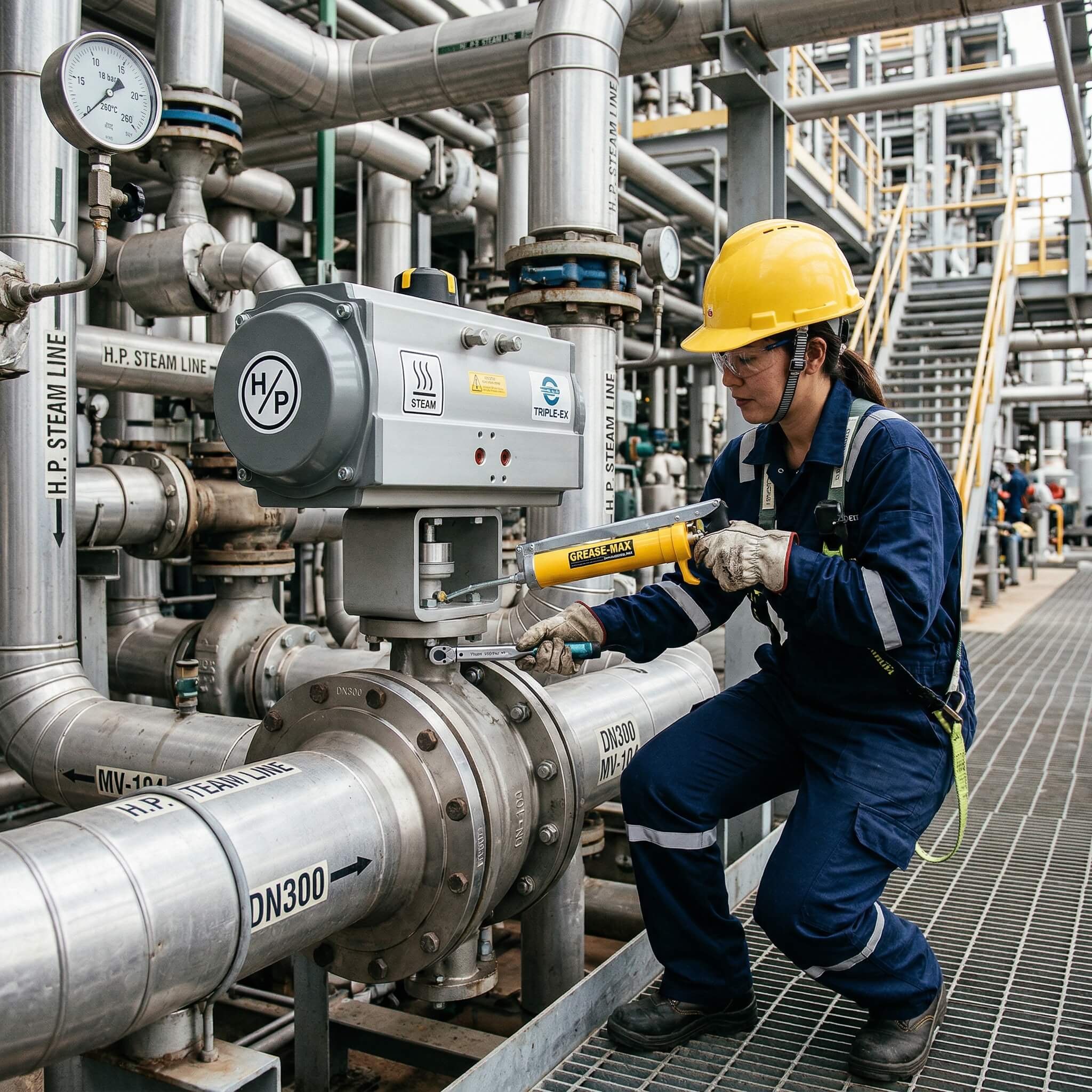
To maintain your butterfly type valve, you must perform regular visual inspections, lubricate the stem assembly, and cycle the valve periodically to prevent seat “set.” The butterfly type valve is generally low-maintenance, but neglecting these simple steps can lead to premature seal failure or stem binding. A proactive maintenance schedule is the best insurance against unplanned system downtime.
Routine inspection and lubrication
Check the mounting bolts and the connection between the actuator and the stem for any signs of loosening or corrosion. Believe it or not: a small amount of grease on the stem can prevent the friction that leads to actuator burnout.
Troubleshooting seat leakage issues
Our experts at the about Ruitoflow engineering division suggest checking for debris trapped in the seat if you notice a bypass. Often, simply cycling the valve once or twice can clear the obstruction and restore the seal.
- Check for actuator misalignment.
- Inspect seat for abrasive wear.
- Monitor for stem packing leaks.
Best practices for long-term service
Avoid leaving resilient-seated valves in the closed position for months at a time, as this can permanently deform the rubber. Always ensure the valve is slightly open during installation to prevent the disc from damaging the seat edge.
Key Takeaway: Regular cycling and correct alignment during installation can extend the service life of a butterfly valve by over 50%.
| Frequency | Task |
|---|---|
| Monthly | Visual inspection & cycling |
| Quarterly | Stem lubrication check |
| Annual | Full seal & actuator test |
A small investment in routine care will pay dividends in the form of years of trouble-free operation.
Which butterfly type valve is right for you?
The right butterfly type valve for you depends on a combination of your system pressure, operating temperature, and the chemical nature of the fluid. Selecting a basic butterfly type valve for a high-pressure steam line is a recipe for disaster. Conversely, over-specifying a triple offset valve for a simple water line is a waste of capital.
Assessing pressure and temperature
Start by identifying your maximum operating conditions and adding a safety margin. High-temperature applications immediately narrow your search to double or triple offset designs with metal seats. Simply put: the harsher the environment, the more “offsets” you need.
Evaluating media compatibility
Consider whether your fluid is abrasive, corrosive, or prone to buildup. Slurries require hardened discs, while high-purity chemicals demand PTFE or PFA linings.
- Abrasive: Hardened Stainless Steel.
- Corrosive: PTFE or Hastelloy.
- Standard: Ductile Iron / EPDM.
Final selection checklist for EPCs
Procurement teams must evaluate the total cost of ownership, not just the initial purchase price. A cheaper valve that requires replacement every six months is far more expensive than a premium valve that lasts five years.
Key Takeaway: A successful valve specification balances upfront cost with the total cost of ownership, focusing on reliability and maintenance intervals.
| Application | Recommended Type |
|---|---|
| Low Pressure Water | Concentric / Wafer |
| Process Chemicals | PTFE Lined / Lug |
| High Pressure Steam | Triple Offset / Flanged |
By following this logical framework, you can ensure your facility operates with maximum safety and efficiency.
Optimized Flow Solutions for Your Infrastructure
Choosing the right valve technology is the difference between a high-performing system and one plagued by constant failures. We have explored the nuances of concentric, double eccentric, and triple offset designs to help you navigate the complexities of flow control. Our team is dedicated to solving your most challenging fluid handling problems with precision-engineered hardware.
At Ruitoflow, we believe that fluid control isn’t just about moving liquids; it’s about the integrity and safety of the industrial world. Whether you are building a new municipal water plant or upgrading a chemical refinery, our expertise is your greatest asset. If you need technical guidance or a customized quote for your next project, please contact us today to speak with one of our senior application engineers.
Frequently Asked Questions
What’s the best butterfly valve for high-pressure steam?
The triple offset butterfly type valve is the industry standard for steam due to its metal-to-metal seating and ability to handle extreme thermal expansion without jamming.
How do I know if my valve seat needs replacement?
If you observe downstream leakage when the valve is fully closed or notice a significant increase in the torque required to operate the valve, the resilient seat has likely reached its wear limit.
Can I use a wafer valve for dead-end service?
No, wafer valves should not be used for dead-end service because they require a downstream flange to maintain their sealing pressure. You must use a lug-style valve, which allows the downstream piping to be removed while the valve remains secured.
What’s the best seat material for corrosive chemicals?
PTFE (Teflon) or PFA-lined seats are generally the best choice for corrosive environments because they offer near-universal chemical resistance for acids and aggressive solvents.
How do I know if I need a triple offset design?
You should opt for a triple offset design if your application requires zero-leakage shut-off (Class VI), operates at temperatures exceeding 200°C, or involves high-pressure steam where soft seats would fail.