
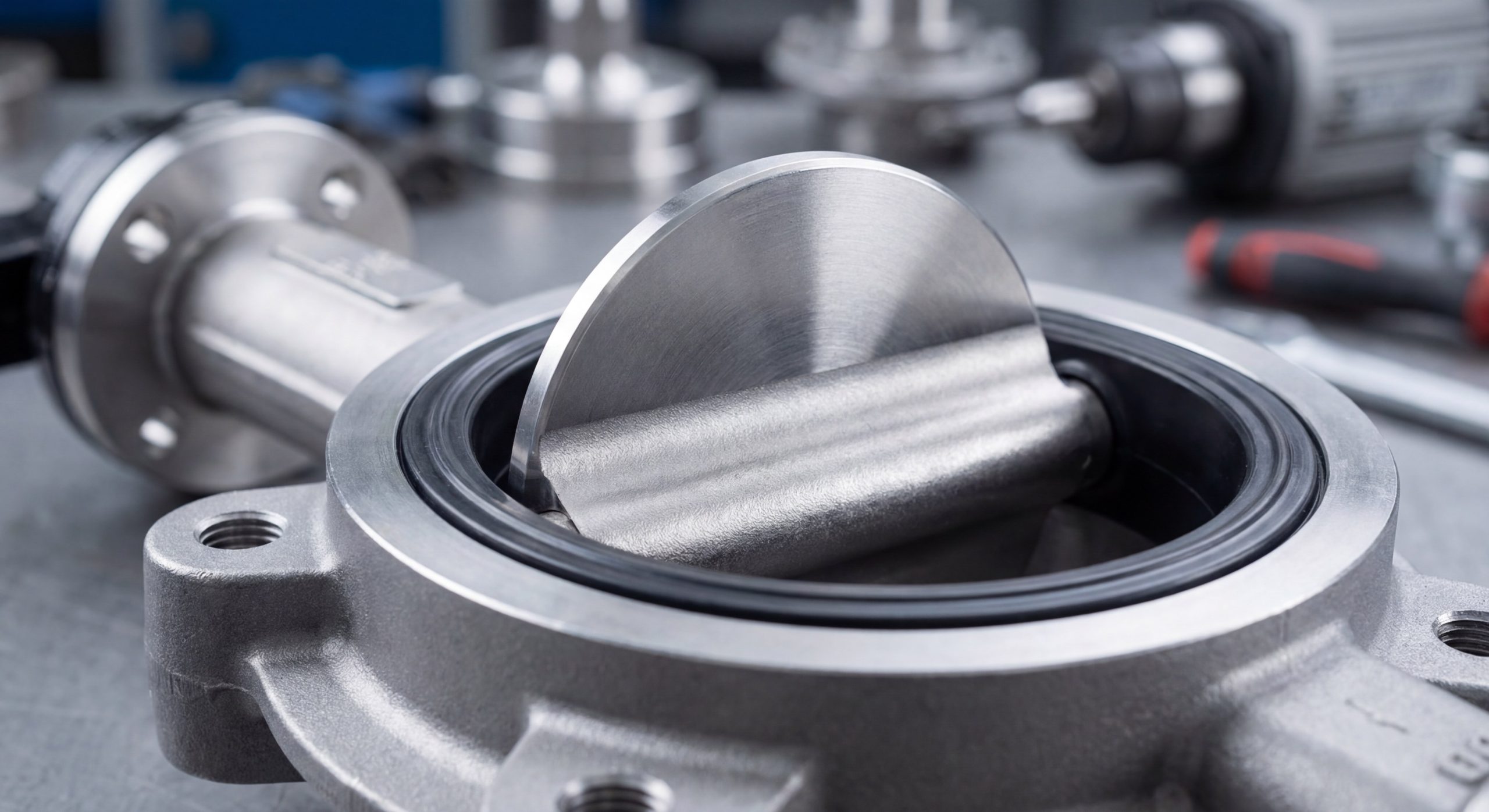
A double eccentric butterfly valve is a high-performance flow control component where the shaft and disc are both offset from the center line to minimize friction and wear.
Imagine you are managing a municipal water network and a critical isolation valve fails during a routine pipe repair. Standard concentric valves often develop leaks because their rubber seats are constantly compressed, leading to permanent deformation and costly service interruptions. The high-performance butterfly valve double eccentric provides a definitive solution by utilizing a dual-offset design that lifts the disc off the seat immediately upon opening.
What defines a butterfly valve double eccentric?
A butterfly valve double eccentric is defined by two specific offsets: the shaft is positioned behind the sealing surface and to one side of the pipe’s center line. This high-performance butterfly valve double eccentric is engineered to resolve the leakage and seizing issues common in standard utility valves. It provides a more robust seal suitable for high-pressure industrial and municipal water applications.
Understanding the dual offset geometry
The first offset places the shaft center away from the valve’s center line, while the second offset moves the shaft away from the seat’s plane. You will notice that this creates an elliptical path for the disc during operation.
Look:
- Shaft offset from seat center line.
- Shaft offset from pipe center line.
- Reduced interference during rotation.
How the eccentric shaft improves sealing
By moving the shaft, the disc only makes contact with the seat at the final few degrees of closing. This design choice prevents the rubber from being “pinched” while the valve stays in the open position for long periods.
But here is the kicker:
- Friction is localized to the sealing moment.
- Seat life is extended by several years.
- Lower torque is required for automation.
Key Takeaway
The dual-offset geometry creates a camming action that preserves the integrity of the sealing surface over thousands of cycles.
| Component | Standard Valve | Double Eccentric Valve |
|---|---|---|
| Shaft Position | Center of pipe | Offset in two directions |
| Seat Contact | Constant during rotation | Only at point of closure |
| Wear Rate | High due to friction | Minimal due to cam action |
This table provides a direct comparison of how the offset geometry fundamentally changes the mechanical performance of the unit.
How does the double offset design work?
A butterfly valve double eccentric operates by using a cam-like motion to lift the disc out of the seat the moment you begin to open it. This butterfly valve double eccentric configuration ensures that the sealing components do not rub against each other through the full 90-degree turn. This motion significantly reduces the energy required to operate the valve, especially under high differential pressure.
The mechanics of the camming action
When you turn the handle or actuator, the dual offsets cause the disc to move in an elliptical arc rather than a simple circle. This means the disc “cams” into the seat for a tighter, bubble-tight seal at the end of the stroke.
Listen:
- Disc lifts away from the seat immediately.
- Reduced drag during the opening cycle.
- Improved flow characteristics at partial openings.
Reducing operational torque requirements
Because the disc isn’t rubbing against the seat for the majority of the travel, the friction torque is nearly eliminated. You can use smaller, more cost-effective actuators because the “break-to-open” torque is significantly lower than concentric designs.
The best part?
- Lower energy consumption for automated systems.
- Faster response times in critical scenarios.
- Reduced stress on the internal drive train.
Key Takeaway
The camming action turns linear torque into a powerful sealing force without damaging the resilient seat material.
| Mechanical Factor | Concentric Design | Double Eccentric Design |
|---|---|---|
| Sealing Torque | Moderate | Very High (Cam-assisted) |
| Running Torque | High (Constant Friction) | Low (Zero Friction) |
| Actuator Size | Typically Larger | Often Smaller/More Compact |
Review this analysis to understand why the camming motion is the secret behind the valve’s high-performance rating.
Why choose a butterfly valve double eccentric over standard types?
Choosing a butterfly valve double eccentric is often a strategic decision to reduce long-term maintenance costs and prevent system downtime. While a standard butterfly valve double eccentric might be cheaper initially, it often fails in high-cycle or high-pressure environments where the seat suffers from compression set. The double eccentric design offers superior isolation capabilities for water, gas, and industrial media.
Preventing the common “seat set” failure
Standard valves fail because the disc stays pressed into the rubber for months, creating a permanent divot or “leak path.” You can avoid this with the double eccentric design because the disc stays clear of the seat while fully open.
Think about it:
- No permanent deformation of rubber.
- Reliable sealing after months of inactivity.
- Zero leakage in critical isolation points.
Eliminating the need for frequent exercising
Many engineers are forced to “exercise” standard valves every month to prevent them from seizing due to corrosion or seat bonding. With this high-performance design, you can leave the valve open for years and it will still close smoothly when needed.
Now:
- Reduced labor costs for maintenance crews.
- Lower risk of the valve getting stuck during emergencies.
- Extended intervals between major overhauls.
Key Takeaway
Investing in the double eccentric design eliminates the primary failure points that plague standard water and process valves.
| Failure Mode | Standard Solution | Double Eccentric Solution |
|---|---|---|
| Seat Compression | Regular Replacement | Non-contact Open Position |
| Seizing/Sticking | Monthly Exercising | Dry Shaft / O-ring Seals |
| Leak Paths | Complex Repair | Simple Seat Replacement |
This guide highlights how the double eccentric model addresses the most common complaints in the valve industry.
Where is a butterfly valve double eccentric typically installed?
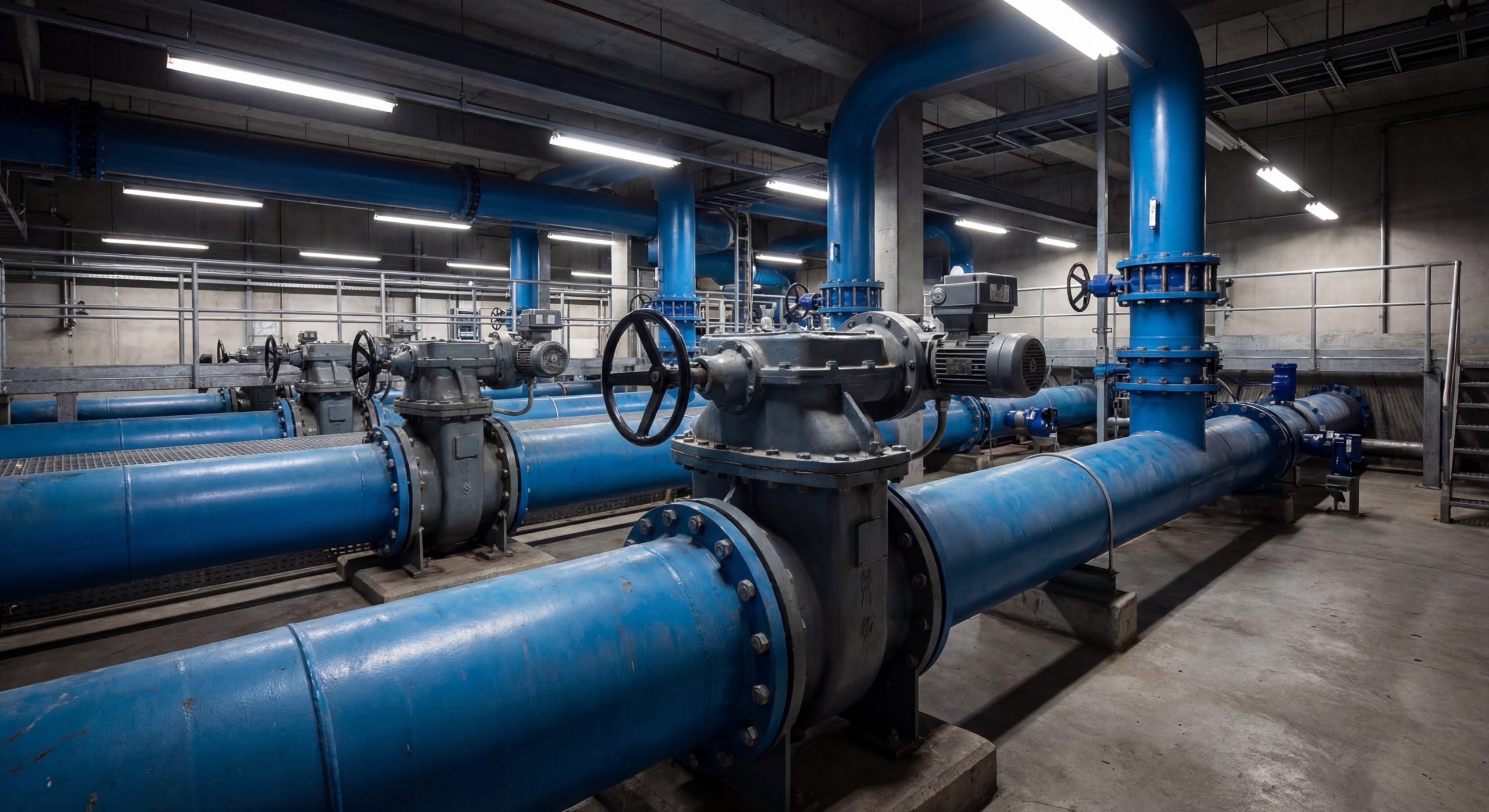
A butterfly valve double eccentric is typically installed in large-scale water treatment plants, power generation facilities, and chemical processing lines. This butterfly valve double eccentric is the preferred choice for transmission lines where reliable isolation is non-negotiable for system safety. They are versatile enough to handle clean water, wastewater, and even some corrosive gases.
Applications in municipal water systems
In water distribution, you often need valves that can isolate massive reservoirs or pump stations without leaking a drop. These valves provide the “bubble-tight” shutoff required for high-velocity transmission lines.
Believe it or not:
- Reservoir intake and isolation.
- Pump control and discharge.
- Filtration and backwash systems.
Roles in power and industrial plants
Power plants require valves that can withstand high temperatures and rapid cycling in cooling water systems. You will find these valves managing the flow of condenser water where failure could shut down an entire turbine.
Wait, there’s more:
- Condenser cooling water loops.
- Chemical processing isolation.
- General plant utility services.
Key Takeaway
These valves excel in critical infrastructure where high pressure and large pipe diameters require reliable, low-maintenance isolation.
| Industry Sector | Primary Use Case | Media Handled |
|---|---|---|
| Municipal Water | Transmission Isolation | Potable/Raw Water |
| Power Generation | Cooling Systems | Brackish/Fresh Water |
| Manufacturing | Process Isolation | Industrial Gas/Liquids |
The following table summarizes the most common environments where these high-performance valves are successfully deployed.
Does a butterfly valve double eccentric require regular exercise?
No, a butterfly valve double eccentric does not require a rigorous exercise program because its design prevents the internal components from seizing or bonding. Unlike a standard butterfly valve double eccentric that might rust if left stationary, this model uses bronze bushings and multi-layered O-ring seals to keep the shaft area dry. This means the valve remains operational even after long periods of inactivity in the open position.
The benefits of a dry shaft design
Most valve failures start at the shaft where raw iron meets the media, causing rust and binding. You get a “dry shaft” system with this design, where seals prevent water from ever reaching the uncoated areas of the body.
Why does this matter?
- Corrosion cannot build up on the shaft.
- No need to “break” rust loose before closing.
- Seal integrity is maintained for decades.
Reducing long-term maintenance labor
If you manage a large facility, the labor hours spent walking the lines to turn valves just to keep them moving can be massive. Switching to this design allows you to focus your team on actual repairs rather than preventative “exercising.”
It gets better:
- Lower operational overhead.
- Improved safety during emergency shutdowns.
- Simplified maintenance scheduling.
Key Takeaway
The combination of the camming action and dry shaft technology makes these valves virtually maintenance-free between service intervals.
| Maintenance Task | Concentric Valve | Double Eccentric Valve |
|---|---|---|
| Exercising Frequency | Monthly/Quarterly | Not Required |
| Shaft Lubrication | Often Required | Lifetime Sealing |
| Corrosion Inspection | Critical/Frequent | Low Risk (Dry Shaft) |
Use this comparison to evaluate how much labor you can save by upgrading your infrastructure to double eccentric models.
What materials are used in a butterfly valve double eccentric?
A butterfly valve double eccentric is typically constructed from high-strength ductile iron or carbon steel to handle the stresses of high-pressure flow. The disc of a butterfly valve double eccentric is often made from stainless steel or aluminum bronze to resist corrosion from the media. Material selection is critical for ensuring the valve survives the specific chemicals or temperatures present in your piping system.
Choosing the right disc and body materials
For municipal water, ductile iron bodies with fusion-bonded epoxy coatings are the standard choice for durability. You should opt for 316L stainless steel discs if you are dealing with brackish water or mildly corrosive industrial chemicals.
Look:
- Ductile Iron for impact resistance.
- Stainless Steel for chemical compatibility.
- Epoxy coatings for external protection.
Resilient seat options for different media
The seat is the “heart” of the valve and can be made from various elastomers like EPDM, NBR, or Viton. You must choose a seat material that matches the temperature and chemical profile of your specific application to prevent premature failure.
But here is the kicker:
- EPDM for general water service.
- NBR for oil and hydrocarbon gas.
- Viton for high-temperature chemicals.
Key Takeaway
High-quality materials like 17-4PH stainless steel for shafts ensure the valve can handle the high torque of automated operation.
| Component | Standard Option | Premium Option |
|---|---|---|
| Valve Body | Ductile Iron (DI) | Carbon Steel / SS316 |
| Valve Disc | SS304 | SS316L / Al-Bronze |
| Sealing Seat | EPDM | Reinforced PTFE / Viton |
Review these material combinations to determine which build is most suitable for your current project specifications.
Can a butterfly valve double eccentric handle high pressure?
Yes, a butterfly valve double eccentric is specifically engineered for high-pressure environments that would destroy a standard concentric valve. This butterfly valve double eccentric can often handle ratings up to PN25 or even higher depending on the specific model and material build. The offset design allows for a much thicker, more rigid seat and disc structure that maintains its shape under extreme stress.
Performance under differential pressure
When you have high pressure on one side and atmospheric pressure on the other, standard valves can deform and leak. This high-performance design uses the media pressure to actually push the disc tighter into the seat, creating a more effective seal.
The best part?
- Self-energized sealing action.
- Reliable shutoff at maximum rated pressure.
- Reduced risk of “blow-by” during surges.
Preventing cavitation and turbulence damage
High-pressure flow often leads to turbulence that can vibrate a valve disc and cause premature wear. The double eccentric design is more stable because the shaft is supported by robust bushings that dampen vibrations.
Think about it:
- Quieter operation in high-velocity lines.
- Reduced wear on bearings and seals.
- Longer service life in demanding pump stations.
Key Takeaway
The reinforced internal structure and pressure-assisted sealing make this valve the standard for high-pressure water transmission.
| Pressure Rating | Typical Application | Suitable Valve Type |
|---|---|---|
| PN10 | Low Pressure Water | Concentric / Double Eccentric |
| PN16 | Standard Municipal | Double Eccentric |
| PN25+ | High-Head Transmission | High-Performance Double Eccentric |
Analyze these ratings to ensure your valve selection meets the safety margins required for your specific pressure zone.
How is a butterfly valve double eccentric maintained?
Maintaining a butterfly valve double eccentric is a straightforward process because most designs allow for on-site seat replacement without a full teardown. You will find that these valves have an exceptionally long service life, with the first major maintenance cycle often occurring 20 to 25 years after installation. This butterfly valve double eccentric uses simple mechanical components that can be serviced by any trained technician.
The simplicity of seat replacement
Unlike some valves that require specialized factory tools, these seats are often held in place by a simple retaining ring. You can remove the ring and swap the seat in the field, which minimizes the time your line is out of service.
Now:
- No need to ship the valve back to the factory.
- Reduced “mean time to repair” (MTTR).
- Lower cost of spare parts kits.
Long-term reliability metrics
Because the design minimizes wear, the intervals between service are much longer than utility-grade options. You should expect the primary seals and bushings to last for decades if the valve was sized and installed correctly.
Believe it or not:
- 25-year initial service life.
- Minimal degradation of sealing surfaces.
- High “return on investment” over the life of the plant.
Key Takeaway
Simple, field-serviceable components ensure that your operational costs remain low throughout the valve’s multi-decade lifespan.
| Maintenance Item | Frequency | Complexity |
|---|---|---|
| Visual Inspection | Annual | Very Low |
| Seal Replacement | 20-25 Years | Moderate (Field Serviceable) |
| Actuator Check | Bi-Annual | Low |
This summary highlights the minimal effort required to keep your fluid control system running at peak efficiency.
Is a butterfly valve double eccentric cost-effective?
While the initial purchase price is higher than a basic model, a butterfly valve double eccentric is significantly more cost-effective when you consider the total cost of ownership. This butterfly valve double eccentric saves money by reducing water loss through leaks and eliminating the labor required for frequent exercising and repairs. Over a 20-year period, the savings in maintenance and energy often pay for the valve several times over.
Calculating total cost of ownership (TCO)
You have to look beyond the “sticker price” to understand the true value. Factor in the cost of emergency repairs, water loss, and the man-hours required to maintain standard valves.
Wait, there’s more:
- Fewer emergency call-outs for leaks.
- No lost revenue from non-revenue water (NRW).
- Longer replacement cycles.
Energy savings through reduced torque
Since these valves require less torque to move, you can use smaller actuators that consume less power. For a large facility with hundreds of valves, these energy savings can contribute significantly to your sustainability goals.
Why does this matter?
- Reduced electricity costs for automation.
- Smaller footprint for control systems.
- Lower initial cost for the actuation package.
Key Takeaway
Reliability and low maintenance are the primary drivers that make the double eccentric design the most economical choice for critical systems.
| Cost Category | Concentric Valve (20 Years) | Double Eccentric Valve (20 Years) |
|---|---|---|
| Purchase Price | Low | Medium/High |
| Maintenance Labor | High | Very Low |
| Repair Parts | Frequent | Rare |
Use this financial analysis to justify the shift toward high-performance infrastructure in your next budgetary cycle.
How do you size a butterfly valve double eccentric correctly?
Correctly sizing a butterfly valve double eccentric involves matching the valve’s flow coefficient (Cv) to your system’s required flow rate and pressure drop. You should never simply match the valve size to the pipe size without first checking the fluid velocity to avoid cavitation. A properly sized butterfly valve double eccentric will provide optimal control and longevity without causing excessive noise or vibration.
Evaluating flow velocity and cavitation
If the fluid moves too fast through a partially open valve, it can create vacuum bubbles that implode and eat away at the metal. You must ensure your flow velocity stays within the recommended limits for the valve’s specific seat and disc material.
It gets better:
- Smoother flow transitions.
- Reduced noise levels in the plant.
- Protected internal components.
Matching pressure ratings to system surges
System surges or “water hammer” can exert forces much higher than your normal operating pressure. You need to select a pressure rating that includes a safety margin to handle these temporary spikes without compromising the seal.
Look:
- Check for peak surge pressures.
- Match ANSI or PN ratings accurately.
- Verify flange compatibility for installation.
Key Takeaway
Accurate sizing ensures the valve operates in its “sweet spot,” maximizing both control accuracy and mechanical life.
| Parameter | Selection Guide | Impact of Incorrect Sizing |
|---|---|---|
| Flow Velocity | Stay under 5m/s for water | Cavitation and Erosion |
| Pressure Drop | Minimize for energy efficiency | System Inefficiency |
| Disc Angle | 30-70 Degrees for control | Poor Regulation / Hunting |
This final table provides the essential metrics you need to consider before placing your next order for a high-performance valve.
Conclusion
Recap: Standard valves often fail due to seat deformation, shaft corrosion, and high operational torque, leading to leaks and seized lines. The butterfly valve double eccentric solves these issues through its dual-offset camming motion and dry-shaft design, offering a bubble-tight seal and a 25-year service life.
Ready to upgrade your system with precision-engineered fluid control? Contact us today for a technical consultation. At RUITO, we are dedicated to providing the global industry with the most reliable and efficient valve solutions available.
Frequently Asked Questions (FAQ)
Can I install this valve in any orientation?
Yes, you can install it horizontally or vertically, but the best practice for large sizes is a horizontal shaft to prevent sediment from settling in the bottom bearing.
What’s the best material for wastewater applications?
The best choice is usually a ductile iron body with an NBR (Nitrile) seat and a stainless steel disc to resist the oils and abrasive solids found in waste streams.
How do I know if my valve is leaking?
You can verify the seal by performing a pressure drop test or using ultrasonic leak detection, though these valves are designed for bubble-tight shutoff per API 598.
Can I use this for steam applications?
No, these are typically resilient-seated valves; for steam, you would need a triple eccentric valve with a metal-to-metal seal to handle the extreme temperatures.
How do I choose between a wafer and flanged style?
You should choose the flanged style for larger diameters and higher pressures to ensure maximum stability and ease of alignment during the installation process.