
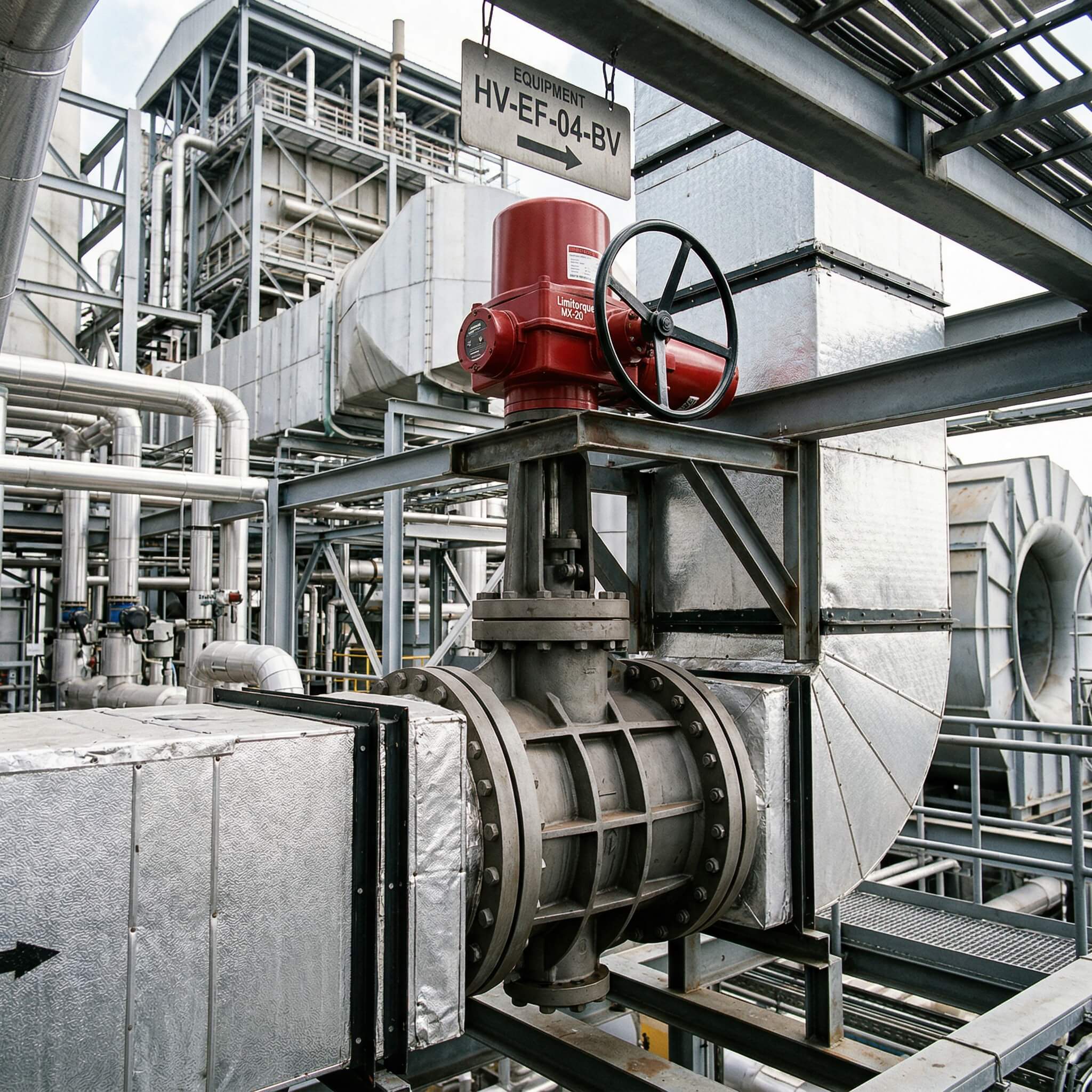
A damper butterfly valve primarily regulates the flow of air and low-pressure gases in large ducts, whereas a standard butterfly valve is designed for high-pressure liquid or gas isolation in piping. You are likely struggling with a system where air leakage or pressure instability is causing significant energy waste and equipment strain. The constant hunt for a component that balances cost-effectiveness with operational reliability can lead to frustration and costly downtime for your facility. By selecting a high-performance damper butterfly valve, you gain an engineered solution that provides precise volumetric control and structural durability for your most demanding ventilation and process lines.
Is a damper butterfly valve built for precision?
When you analyze a damper butterfly valve, you will find it is specifically engineered for volumetric regulation rather than absolute sealing at high pressures. This type of damper butterfly valve utilizes a thin disc to minimize resistance and maximize flow in air-handling environments. While they offer excellent throttling for air, they are not intended for the “bubble-tight” shut-off required in fluid processing.
Precision vs. Volume Metrics
The real difference lies in how you measure the success of your flow control. Here is the deal: dampers focus on moving massive volumes of air with minimal energy loss. You must determine if your process requires incremental adjustments or just bulk movement through a duct.
- Volumetric Focus: High-speed air movement in large diameters.
- Disc Profile: Thinner construction for lower resistance.
- Throttling: Ideal for HVAC and exhaust gas balancing.
The best part? You can customize the disc geometry to match the specific air velocity of your system.
Key Takeaway: Prioritize damper designs when your primary goal is the efficient movement of large air volumes through expansive ductwork.
| Performance Metric | Damper Butterfly Valve | Standard Butterfly Valve |
|---|---|---|
| Control Precision | Volumetric | Positional/Throttling |
| Flow Medium | Low-Pressure Air/Gas | High-Pressure Liquids |
| Seat Tolerance | Moderate to High | Low/Zero Leakage |
This comparison highlights why your choice of hardware must align with the specific precision needs of your medium.
How does the medium affect a damper butterfly valve?
The substance moving through your system dictates whether a lightweight damper butterfly valve or a heavy-duty valve is necessary. You must account for the density and viscosity of the medium to prevent pressure drop issues that could cripple your pump or fan efficiency. While liquids require reinforced sealing, air systems benefit from the lightweight design of a damper.
Fluid vs. Air Handling Requirements
Managing heavy fluids requires a valve that can withstand the kinetic energy of liquid flow. Here is the kicker: air-handling systems prioritize low drag to keep your operational costs down. You should evaluate the moisture content of your air to prevent internal corrosion.
- Liquid Media: Requires heavy discs and reinforced shafts.
- Gaseous Media: Uses lighter components for rapid response.
- Abrasive Air: Needs hardened coatings for longevity.
Key Takeaway: Use a damper butterfly valve for air and gas applications to maximize fan efficiency and reduce unnecessary weight in your ducting.
| Medium Category | Best Equipment Choice | Critical Concern |
|---|---|---|
| Ambient Air | Damper Butterfly Valve | Energy Resistance |
| Raw Water | Standard Butterfly Valve | Corrosion Resistance |
| Process Exhaust | Damper Butterfly Valve | Thermal Expansion |
Selecting the right device based on the medium ensures your system operates within its designed performance parameters.
Where is a damper butterfly valve most effective?
A damper butterfly valve is most effective in expansive environments like HVAC systems, power plant exhaust, and industrial ventilation. You will find that these systems often use rectangular or large circular ducts where standard piping valves are too heavy or expensive. These dampers are built to fit the unique geometry of air distribution networks.
Confined vs. Expansive Environments
In confined piping, the compact profile of a wafer or lug-style valve is a lifesaver for your floor plan. But wait, there’s more: expansive ducting requires frames that can support large-diameter discs without structural sagging. You should check your available footprint before finalizing your component selection.
- Piping Hubs: Use compact butterfly valves for space-saving.
- Duct Networks: Use dampers for large-scale air management.
- Cleanrooms: Require precision-sealed butterfly designs.
Key Takeaway: Install damper butterfly valves in large ducting systems where volumetric flow is more critical than high-pressure containment.
| Installation Zone | System Type | Spatial Requirement |
|---|---|---|
| HVAC Mainline | Ducting | Moderate to High |
| Chemical Line | Piping | Minimal |
| Boiler Exhaust | Flue | High |
Understanding the physical constraints of your facility helps you choose a device that integrates seamlessly into your infrastructure.
Does pressure matter for a damper butterfly valve?
High-pressure environments are unsuitable for a standard damper butterfly valve as they can cause the thin disc to deform or fail. You need to ensure your system efficiency is protected by choosing a component that matches your PSI requirements. Dampers typically operate under 5 PSI, whereas butterfly valves can handle hundreds of pounds of pressure.
Pressure Containment Limits
If your system exceeds atmospheric pressure by more than a few pounds, a standard damper will likely leak. You should look for a high-performance butterfly valve if you are dealing with pressurized steam or water. Here is the deal: selecting a low-pressure damper for a high-pressure line is a recipe for catastrophic failure.
- Low Pressure: Dampers provide cost-effective control.
- High Pressure: Requires double or triple offset valves.
- Vacuum Lines: Necessitate specialized reinforced seating.
Key Takeaway: Limit the use of damper butterfly valves to low-pressure ventilation systems to ensure the safety and longevity of your hardware.
| Pressure Level | Device Recommendation | Primary Risk |
|---|---|---|
| Low (< 5 PSI) | Damper Butterfly Valve | Air Seepage |
| Medium (5-50 PSI) | Standard Butterfly Valve | Mechanical Wear |
| High (> 150 PSI) | High-Performance Valve | Disc Deformation |
Matching the device to your system pressure prevents premature equipment replacement and hazardous leaks.
Why is sealing critical for a damper butterfly valve?
The sealing integrity of a damper butterfly valve determines how much energy you lose during idle system periods. You will encounter different leakage classes, ranging from metal-to-metal seats that allow some bypass to resilient soft seats that offer a tighter seal. Understanding your leakage tolerance is the first step in optimizing your energy budget.
Sealing Performance and Isolation
Dampers are often designed with a slight clearance to allow for thermal expansion in hot gas lines. Here is the kicker: if you need 100% isolation for maintenance safety, a standard damper is not enough. You should specify a resilient-seated butterfly valve when hazardous gas containment is your top priority.
- Metal Seats: Best for high-temperature exhaust air.
- Soft Seats: Essential for zero-leakage fluid control.
- Louver Designs: Allow for high-volume air diversion.
Key Takeaway: Choose metal-seated damper designs for high-heat applications where thermal expansion would otherwise jam a tighter valve.
| Sealing Method | Expected Leakage | Best Application |
|---|---|---|
| Metal-to-Metal | Minimal Bypass | High-Temp Air |
| Resilient Rubber | Zero Leakage | Potable Water |
| Step-Seat | Low Leakage | General Ventilation |
Evaluating the sealing requirements of your process ensures you don’t overspend on over-engineered components.
What materials suit a damper butterfly valve?
Selecting the right alloy for your damper butterfly valve is essential for achieving long-term performance in corrosive environments. You must match the metallurgy to the chemical profile of your exhaust or process media. While galvanized steel is common for dampers, butterfly valves often utilize stainless steel or ductile iron.
Metallurgy and Material Compatibility
Corrosive fumes will eat through standard carbon steel dampers in a matter of months. You should consider 316 stainless steel or nickel-based alloys if your exhaust gas contains acidic vapors. The best part? Modern coatings like epoxy or PTFE can extend the life of cheaper base metals significantly.
- Carbon Steel: Suitable for dry, non-corrosive air.
- Stainless Steel: Best for food-grade or chemical air.
- Aluminum: Lightweight choice for residential HVAC.
Key Takeaway: Consult a material compatibility chart to ensure your valve body and disc can withstand your specific chemical environment.
| Environment | Body Material | Disc Material |
|---|---|---|
| Industrial Exhaust | Carbon Steel | 304 Stainless |
| Coastal Air | 316 Stainless | 316 Stainless |
| Residential HVAC | Galvanized Steel | Aluminum |
The right material selection protects your investment from environmental degradation and unplanned maintenance.
How do you install a damper butterfly valve?
Installation techniques for a damper butterfly valve vary significantly depending on whether you are working with pipes or ducts. You must ensure the shaft is oriented correctly to prevent debris from settling in the bottom bearing. Improper alignment during the installation phase is the primary cause of seat failure and high operating torque.
Installation Methods for Ducting
Duct-mounted dampers often require external supports to handle the weight of heavy electric actuators. Here is the deal: if you are installing into a vertical duct, you need to ensure the disc won’t slam shut due to gravity. You should always verify the flow direction marked on the valve housing before bolting it in.
- Flange Connection: Standard for circular ducting.
- Weld-In: Common for high-heat industrial flues.
- Slip-On: Used in lightweight residential systems.
Key Takeaway: Always use a torque-limiting wrench to prevent over-tightening the flanges, which can warp the damper’s frame.
| Installation Step | Piping (Valve) | Ducting (Damper) |
|---|---|---|
| Alignment | High Precision | Standard |
| Support | Pipe Hangers | Frame Brackets |
| Sealing | Full Gasket | Caulking/Strip |
Following strict installation guidelines ensures your system starts up smoothly without leaks or mechanical interference.
What are costs for a damper butterfly valve?
Managing your budget requires a clear understanding of the selection guide for industrial flow control. A damper butterfly valve is typically less expensive than a high-pressure butterfly valve because it uses less material. However, you must consider the total cost of ownership, including energy loss from leakage and maintenance labor.
Budgeting and Lifecycle Expenses
Initial purchase prices can be deceiving when it comes to system efficiency. But wait, there’s more: a cheap damper that allows air leakage can cost you thousands in wasted fan power over its lifetime. You should weigh the higher upfront cost of a precision valve against the long-term energy savings it provides.
- Purchase Price: Dampers are 20-40% cheaper than valves.
- Maintenance: Valves generally have longer service intervals.
- Energy Loss: Tight-sealing valves reduce operational waste.
Key Takeaway: Invest in higher-quality sealing for dampers in critical HVAC lines to capture rapid ROI through energy savings.
| Cost Factor | Low-Cost Damper | High-Performance Valve |
|---|---|---|
| Initial Outlay | Low | Medium to High |
| Installation | Simple | Technical |
| Energy Impact | High | Low |
Balancing your capital expenditure with operational savings is the hallmark of a well-managed industrial project.
How do you automate a damper butterfly valve?
Automating a damper butterfly valve allows for real-time adjustments based on temperature or pressure sensors in your facility. You can choose between electric, pneumatic, or manual operators depending on your infrastructure. The speed of the actuator must be matched to the sensitivity of your process to prevent “hunting” or pressure spikes.
Automation and Control Strategy
Electric actuators are the standard for HVAC dampers because they offer precise incremental control. Here is the kicker: pneumatic actuators are better for fast-acting safety shut-offs in hazardous gas lines. You must ensure your power supply can handle the peak torque required to break the seal after long periods of inactivity.
- Electric: Best for modulation and HVAC.
- Pneumatic: Fast, reliable for safety systems.
- Manual: Cost-effective for rarely moved dampers.
Key Takeaway: Implement electric modulation for air-balancing dampers to maintain consistent environmental conditions throughout your facility.
| Actuator Type | Control Speed | Best Use Case |
|---|---|---|
| Electric | 15-60 Seconds | HVAC Modulation |
| Pneumatic | < 2 Seconds | Emergency Shut-off |
| Manual | N/A | Maintenance Bypass |
Smart automation turns a simple mechanical component into a key part of your building’s intelligent control system.
How do you maintain a damper butterfly valve?
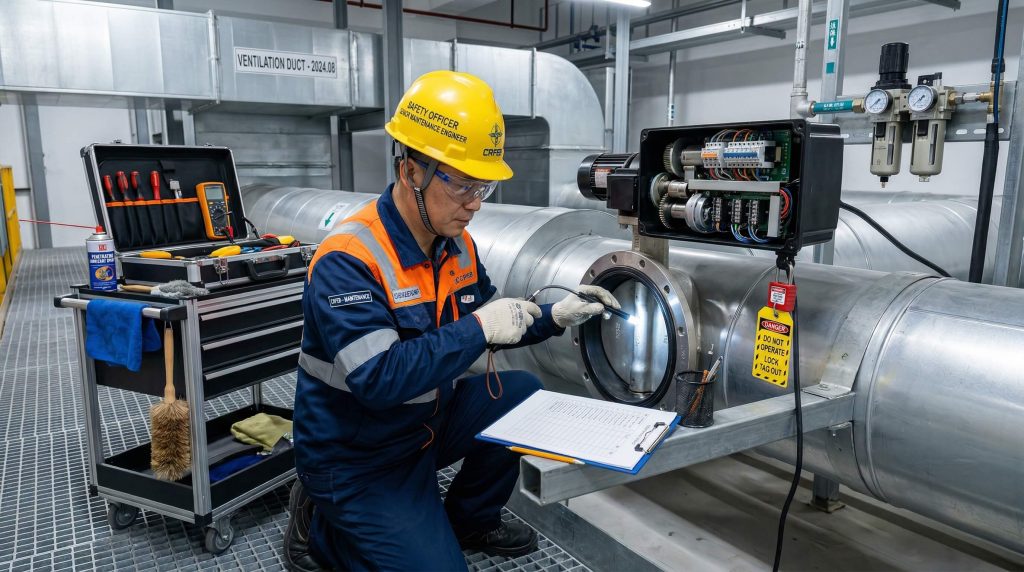
Proactive maintenance of your damper butterfly valve prevents the buildup of dust that can cause the disc to jam. You should establish a quarterly inspection schedule to check for shaft corrosion and seal wear. Neglecting these small checks leads to actuator burnout and significant system downtime.
Longevity and Cleaning Protocols
Cleaning the disc surface is critical if your exhaust air contains sticky particulates or heavy dust. Here is the deal: a build-up of only 1mm of debris can increase the required operating torque by 50%. You should lubricate the external linkages to ensure smooth movement and prevent motor strain.
- Visual Inspection: Check for external leaks quarterly.
- Cycle Testing: Move the disc monthly to prevent seizing.
- Cleaning: Remove scaling and dust from the disc.
Key Takeaway: Schedule semi-annual maintenance during plant shutdowns to ensure your air dampers are ready for the next peak season.
| Maintenance Task | Frequency | Operational Benefit |
|---|---|---|
| Lubrication | Quarterly | Reduces Actuator Wear |
| Seal Inspection | Annually | Prevents Energy Loss |
| Torque Check | Semi-Annually | Ensures Safety Closure |
Regular maintenance routines transform your flow control hardware into a reliable long-term asset for your facility.
Conclusion
Understanding the difference between a damper and a butterfly valve is essential for optimizing your industrial airflow and fluid systems. Whether you are managing high-pressure liquid lines or large-scale HVAC ductwork, selecting the right component ensures safety, efficiency, and longevity. Our team of experts is ready to help you navigate these technical choices to find the perfect fit for your application. We are committed to engineering excellence and providing the global industrial community with reliable, high-performance flow control solutions that drive productivity. To discuss your project specifications or request a custom quote, contact us today to speak with a specialist.
Frequently Asked Questions
Can I use a damper instead of a butterfly valve for water?
No, dampers are not built for liquid pressure and will leak significantly under hydraulic loads.
What’s the best material for a damper in high-heat exhaust?
Stainless steel or high-nickel alloys are the best choices to handle thermal expansion and oxidation.
How do I know if my existing unit is a damper or a valve?
Check the pressure rating on the nameplate; dampers will typically be rated for very low pressures (under 5 PSI).
Can I automate a manual damper butterfly valve later?
Yes, most designs allow for retrofitting an electric or pneumatic actuator with the correct mounting bracket.
What’s the best way to prevent a damper from seizing?
Cycling the valve fully open and closed at least once a month prevents debris buildup from locking the shaft.