
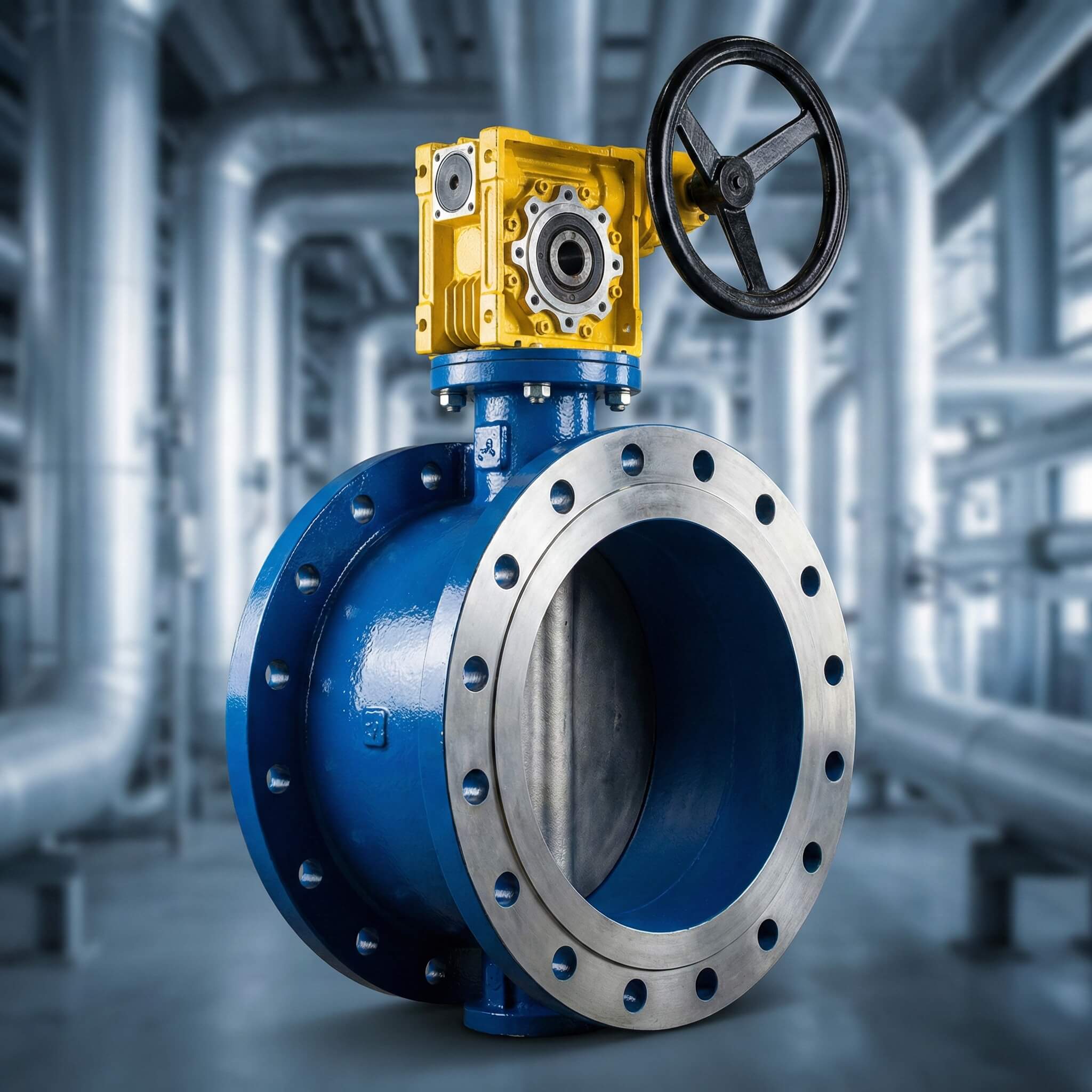
Butterfly valve end connection types include wafer, lug, and the heavy-duty flanged style which provides maximum structural integrity for large-scale piping. Many engineers struggle with pipe stress and alignment issues when managing high-pressure fluid systems. These technical weaknesses lead to costly downtime and hazardous leaks that compromise plant safety. You can resolve these vulnerabilities by implementing a high-performance flanged end butterfly valve, which offers the robust support and simplified handling necessary for critical infrastructure.
Why choose a flanged end butterfly valve for piping?
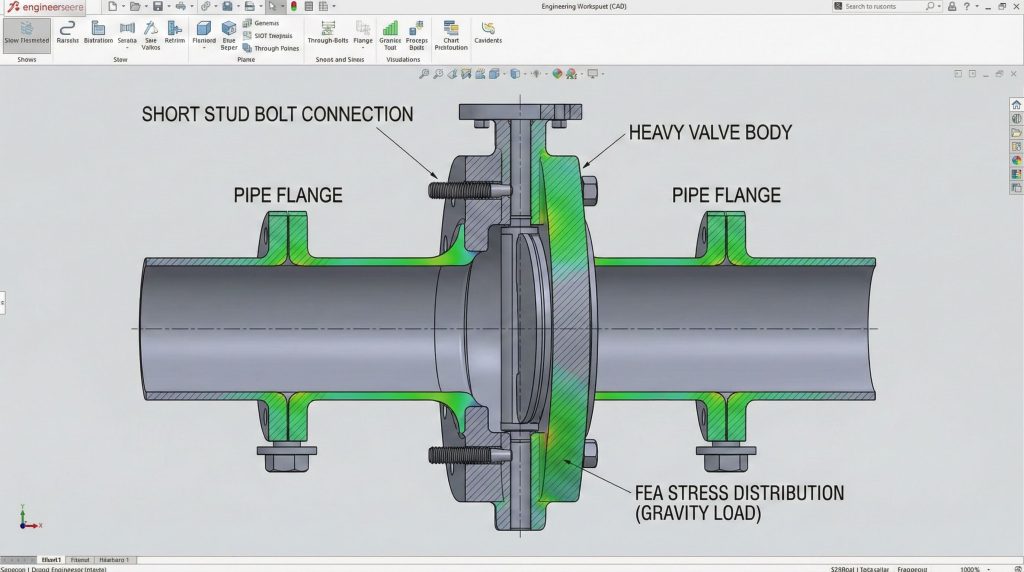
Choosing this connection type is essential for large-diameter lines where structural stability and ease of installation are paramount. In industrial settings, a flanged end butterfly valve serves as a rigid component that minimizes the risk of line deflection and gasket displacement.
Superior structural stability
The dual-flange design provides a level of mechanical support that other connection types cannot match. By bolting the valve directly to each pipe flange, the assembly becomes a unified, rigid part of the pipeline.
Simplified installation for large lines
Handling heavy valves in a plant environment can be difficult without the right connection style. Using a flanged design allows for easier positioning between pipe sections.
- Simplifies alignment during the lifting process.
- Provides accessible bolting for technicians.
- Reduces the risk of damaging the valve seat during insertion.
- Enables the use of standard industrial gaskets.
Enhanced bolt support for heavy systems
It gets better: the distribution of load across a full circle of bolts ensures the valve body remains unstressed by external pipe movements. This design is particularly effective in systems where thermal expansion or heavy flow might otherwise cause misalignment.
Key Takeaway: The structural benefits of a flanged connection make it the industry standard for high-integrity piping where stability is a non-negotiable requirement.
| Feature | Flanged End Benefit |
|---|---|
| Structural Integrity | Maximum rigidity for large systems |
| Installation Ease | Superior alignment for heavy units |
| Bolt Support | Distributed load across dual flanges |
This stability ensures that large-diameter pipes remain secure even under significant mechanical loads.
How does a flanged end butterfly valve prevent leaks?
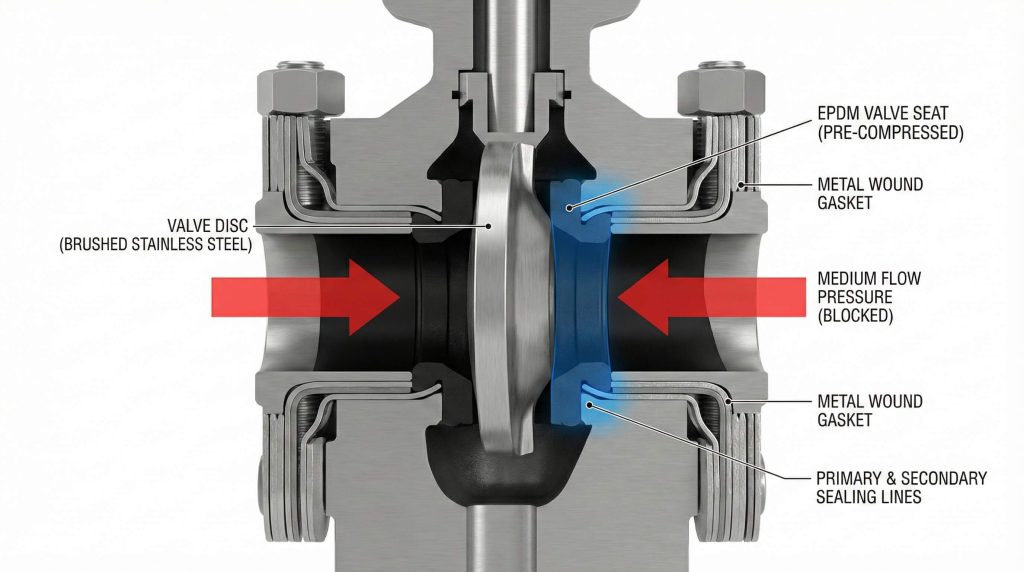
A flanged end butterfly valve prevents leaks by utilizing a dual-flange design that ensures uniform gasket compression and independent pipe support. Think about this: without proper sealing faces, your entire system remains at risk of catastrophic failure.
Secure dual flange sealing surface
The double-flanged body creates two distinct sealing zones that isolate the internal media from the external environment. This redundancy is a major advantage in hazardous chemical or steam applications.
Optimized gasket seat compression
Maintaining the correct pressure on a gasket is the only way to ensure a zero-leakage seal. The flanged design allows for precise torque application without warping the valve disc or seat.
- Ensures even pressure across the entire gasket face.
- Prevents “pinching” of the elastomer seat.
- Accommodates high-pressure spiral wound gaskets.
- Allows for independent tightening of each side of the valve.
Reducing external stress on the body
By isolating the valve internals from the mechanical weight of the piping, the flanged end preserves the integrity of the primary seal. This prevents the seat from deforming over years of continuous operation.
Key Takeaway: Dual-flange sealing provides a robust barrier against leaks by ensuring that gaskets are compressed evenly and protected from external mechanical stresses.
| Sealing Component | Functionality |
|---|---|
| Dual Flanges | Creates redundant sealing zones |
| Independent Bolting | Allows for precise gasket compression |
| Rigid Body | Prevents seat deformation under load |
A secure sealing surface is the primary defense against environmental contamination and media loss in modern factories.
Is a flanged end butterfly valve better than wafer types?
While wafer types are lighter and more cost-effective for tight spaces, the flanged end butterfly valve is superior for high-integrity applications requiring maximum durability. You might be wondering how they actually compare in a real-world industrial environment.
Structural integrity vs. compact design
The flanged version offers significantly more mass and rigidity than the thin profile of a wafer valve. This makes it much more resilient to the forces generated by high-velocity fluid flow.
- Heavier body construction for long-term durability.
- Better resistance to water hammer and pressure surges.
- Easier to maintain without dismantling the entire pipe section.
- Support for dead-end service which wafers cannot provide.
Suitability for high-vibration systems
In environments with heavy machinery or pumps, vibration can loosen the through-bolts used in wafer installations. The flanged connection uses shorter, individual bolts that are far less prone to vibration-induced fatigue.
Key Takeaway: The flanged design is the preferred choice for critical applications where the weight and cost of the valve are secondary to safety and reliability.
| Comparison Metric | Wafer Type | Flanged End |
|---|---|---|
| Installation Space | Minimal | Moderate |
| Structural Weight | Light | Heavy Duty |
| Vibration Resistance | Low | High |
Choosing a flanged connection over a wafer type significantly increases the lifespan of the valve in high-stress environments.
Can a flanged end butterfly valve handle high pressure?
Yes, a high-quality flanged end butterfly valve can handle high pressures up to PN40 because its body design is inherently more robust than lighter alternatives. The secret lies in the wall thickness and the way the load is distributed across the bolt circle.
Compliance with ASME and ANSI ratings
These valves are engineered to meet specific pressure classes, ranging from PN10 to high-pressure PN40 standards. This ensures they can be integrated into high-energy systems without the risk of body rupture.
Body wall thickness and durability
The increased metal volume in a flanged body allows it to withstand internal hoop stress far better than lug or wafer designs. This is the bottom line: thicker walls mean a safer plant.
- Casting designed for high-pressure fluid containment.
- Reinforced bolt holes to prevent flange cracking.
- Strict adherence to ASME B16.34 wall thickness requirements.
- Enhanced safety factors for critical utility lines.
Sealing performance under extreme load
Under high pressure, the internal disc exerts significant force on the seat and the body. The flanged connection keeps the body perfectly circular, ensuring the disc makes a 360-degree leak-tight seal every time.
Key Takeaway: Heavy-duty flanged designs provide the necessary wall thickness and structural support to manage high-pressure industrial processes safely.
| Pressure Factor | Impact on Flanged Valve |
|---|---|
| Wall Thickness | Resists internal pressure expansion |
| Bolt Pattern | Maintains seal integrity under load |
| Rating Support | Compatible with PN16, PN25, and PN40 |
Higher pressure ratings are easily achieved when the valve body is designed with the inherent strength of a flanged connection.
Where is the flanged end butterfly valve typically used?
This valve type is typically used in heavy industries like municipal water treatment, oil and gas, and marine engineering where safety and reliability cannot be compromised. Here is the bottom line: large-scale infrastructure requires components that can withstand environmental and mechanical stress.
Municipal water and wastewater treatment
In large-scale water networks, valves must manage thousands of gallons per minute through massive pipelines. The flanged design allows for the secure mounting of the heavy actuators required to move these large discs.
Industrial oil and gas pipelines
Transferring crude oil or refined products requires valves that can be serviced without shutting down entire sections of the facility. The flanged connection is ideal for the midstream and downstream sectors.
- Used in crude oil tank farm isolation.
- Ideal for cooling water systems in refineries.
- Preferred for offshore platform utility lines.
- Common in fire protection water systems.
Marine and shipbuilding applications
Sea-going vessels face constant movement and corrosive saltwater environments. The rugged nature of a flanged butterfly valve ensures that critical ballast and bilge systems remain operational despite the ship’s motion.
Key Takeaway: Flanged connections are the gold standard for infrastructure-heavy sectors where downtime is prohibitively expensive.
| Industry | Primary Application |
|---|---|
| Water Treatment | Large diameter main distribution lines |
| Marine | Ballast and bilge water management |
| Oil & Gas | Utility and process water systems |
The versatility of the flanged connection allows it to dominate applications where pipe diameters exceed DN300.
How to install a flanged end butterfly valve correctly?
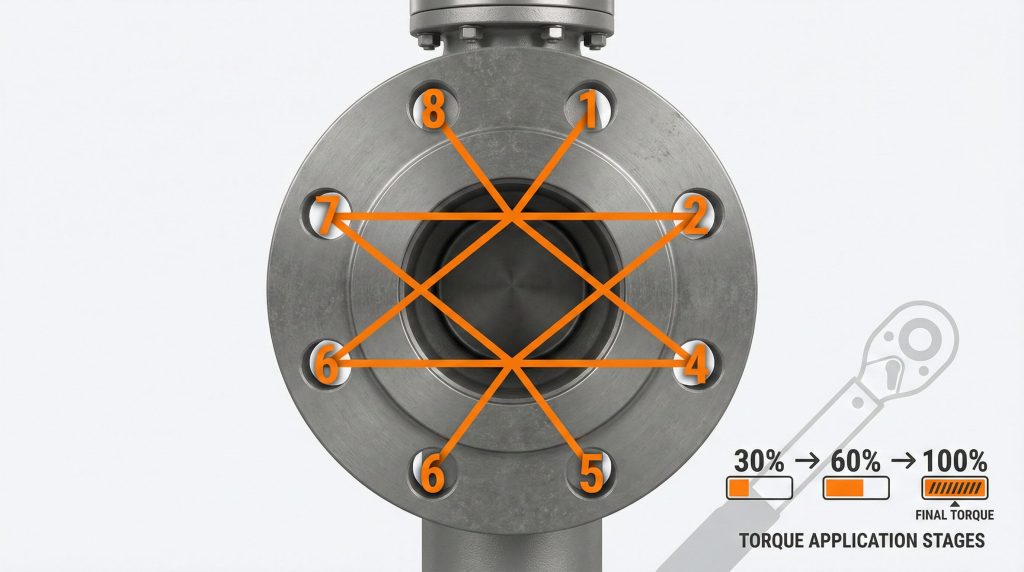
To install a flanged end butterfly valve correctly, you must ensure precise alignment with mating flanges and follow a specific star-pattern torque sequence. If you ignore these steps, you invite premature seal failure and potential leaks.
Aligning with existing mating flanges
Proper alignment prevents uneven stress on the valve body and ensures the disc can rotate freely without hitting the pipe wall. You should always use alignment pins or jacks to position the valve before tightening any bolts.
Proper bolt torque and tightening sequence
Applying the correct amount of torque is vital to prevent gasket crushing or flange deformation. You should always use a calibrated torque wrench and follow a cross-pattern sequence.
- Tighten bolts in a “star” pattern to ensure even pressure.
- Apply torque in three distinct stages (30%, 60%, 100%).
- Check for disc clearance after the first stage of tightening.
- Verify all bolts meet the manufacturer’s specified torque.
Inspecting flange faces before assembly
Before you even lift the valve into place, you must ensure the flange faces are clean, flat, and free of old gasket material. Even a small scratch on the flange face can create a leak path that is impossible to seal.
Key Takeaway: Precision during the installation process ensures that the inherent sealing advantages of a flanged valve are fully realized in operation.
| Installation Step | Critical Focus |
|---|---|
| Alignment | Prevents disc interference |
| Torque Sequence | Ensures uniform gasket compression |
| Face Inspection | Eliminates potential leak paths |
Following a standardized installation procedure significantly reduces the risk of post-commissioning failures.
What maintenance does a flanged end butterfly valve need?
Routine maintenance for a flanged end butterfly valve involves inspecting the seats for wear, checking the stem lubrication, and verifying bolt tightness. It gets better: because these valves are bolted directly to each pipe flange, they allow for dead-end service and easier removal for bench testing.
Routine inspection of seats and seals
The elastomer seat is a wear part that will eventually require replacement depending on the frequency of operation and the media type. You should monitor the torque required to operate the valve, as an increase often signals seat degradation.
Maintaining performance in dead-end service
A unique advantage of the flanged design is its ability to remain in place while the downstream piping is removed. This makes it a critical component for system maintenance and future expansion.
- Allows for downstream pipe repair without system drainage.
- Supports the full rated pressure in one direction.
- Simplifies the testing of individual pipe segments.
- Reduces the need for temporary blanking flanges.
Periodic lubrication of the valve stem
To prevent the valve from seizing, the stem and bushings should be lubricated according to the manufacturer’s schedule. This ensures the quarter-turn action remains smooth and reduces the wear on the actuator.
Key Takeaway: Regular maintenance and the ability to perform dead-end service make the flanged connection the most maintenance-friendly option for long-term operations.
| Maintenance Task | Frequency | Benefit |
|---|---|---|
| Seat Inspection | Annual | Prevents internal leakage |
| Stem Lubrication | Bi-Annual | Ensures smooth operation |
| Bolt Re-torque | Post-Commissioning | Maintains seal integrity |
Strategic maintenance ensures that your fluid control systems operate at peak efficiency for decades.
Which standards apply to a flanged end butterfly valve?
Most flanged end butterfly valve models are manufactured to meet global standards such as ANSI B16.5, DIN, and API 609 to ensure worldwide compatibility. Have you considered the impact of non-compliant hardware on your certification and safety audits?
Global ANSI and DIN flange dimensions
Standardization ensures that a valve purchased today will fit perfectly into a pipeline built twenty years ago. These standards define the bolt circle diameter, the number of holes, and the thickness of the flange.
ISO 9001 and API safety requirements
Quality management systems like ISO 9001 ensure that every valve is produced with consistent materials and processes. Furthermore, API standards dictate the testing protocols that prove a valve can survive in high-stakes environments.
- API 609: Specific design standard for butterfly valves.
- API 598: Standard for valve inspection and pressure testing.
- EN 12266: European testing standard for industrial valves.
- ASME B16.34: Rules for pressure-temperature ratings.
Key Takeaway: Adhering to international manufacturing and testing standards is the only way to guarantee the safety and interchangeability of industrial valves.
| Standard Body | Focus Area |
|---|---|
| API 609 | Valve design and dimensions |
| ANSI B16.5 | Flange bolting patterns |
| ISO 9001 | Manufacturing quality control |
Compliance with these benchmarks provides the necessary documentation for EPC contractors and safety inspectors.
How to select the right flanged end butterfly valve?
Selecting the right valve requires a careful assessment of the chemical media, the required flow capacity (Cv), and the pressure class of your existing piping. You should look closer at the material compatibility before making a final decision to avoid premature corrosion.
Assessing chemical media compatibility
The materials used for the body, disc, and seat must be resistant to the fluid being transported. For example, a valve handling saltwater requires different alloys than one handling treated wastewater.
- Ductile iron for general water and utility service.
- Stainless steel (304/316L) for corrosive chemicals.
- EPDM or NBR seats for standard water applications.
- PTFE or Viton for high-temperature or aggressive media.
Matching pressure classes to piping
You must ensure that the valve’s pressure rating matches or exceeds the maximum operating pressure of your system. Installing a PN10 valve in a PN25 system is a critical safety violation that could lead to catastrophic failure.
Key Takeaway: Selecting the correct material and pressure rating during the design phase is the most effective way to minimize total cost of ownership.
| Selection Factor | Primary Consideration |
|---|---|
| Media Type | Material compatibility (Body/Seat) |
| Flow Rate | Required Cv/Kv values |
| System Pressure | Proper PN or ANSI class rating |
A well-specified valve reduces maintenance needs and prevents unplanned system shutdowns.
Why buy a flanged end butterfly valve from Ruitoflow?
You should choose a flanged end butterfly valve from Ruitoflow because our products feature precision-engineered bodies, 100% pressure testing at 1.5x working pressure, and traceable documentation. We understand that your reputation depends on the quality and reliability of the components you install.
Expertise in precision-engineered valves
With over 15 years of industry experience, we specialize in delivering valves that meet the rigorous demands of EPC contractors and OEMs. Our engineering team provides the technical consultation needed to solve complex fluid control challenges.
Advanced automated coating and testing
Our manufacturing facility integrates CNC machining with automated coating lines to ensure every valve meets strict dimensional and aesthetic standards. Believe it or not, our defect rate is among the lowest in the industry.
- 100% hydrostatic and pneumatic testing on every unit.
- Full material traceability (MTC) provided per batch.
- Automated epoxy coating for superior corrosion resistance.
- Compliance with CE, DNV, and ISO 9001 standards.
Key Takeaway: Ruitoflow combines advanced manufacturing technology with rigorous quality control to deliver high-performance valves that keep your projects on schedule.
| Ruitoflow Advantage | Customer Benefit |
|---|---|
| 100% Testing | Guaranteed performance upon arrival |
| Fast Delivery | Stock items ship in 5 days |
| Full Documentation | Easy compliance and project handover |
Our commitment to quality and traceability makes us the trusted partner for critical industrial applications worldwide.
Conclusion
Selecting the correct butterfly valve end connection is the foundation of a safe and efficient piping system. While wafer and lug styles have their place, the flanged end butterfly valve remains the unparalleled choice for large-scale, high-pressure, and high-vibration environments. By focusing on structural integrity and adherence to international standards, you can significantly reduce long-term operational risks.
At Ruitoflow, we are dedicated to advancing the industry through precision engineering and transparent quality assurance. Our vision is to empower global infrastructure with fluid control solutions that are as reliable as they are innovative. If you are ready to optimize your system with high-performance valves, please contact us today for a technical consultation.
FAQ
Can I use a flanged end butterfly valve for dead-end service?
Yes. Because the valve is bolted independently to each flange, it can securely hold the full rated pressure when the downstream piping is removed for maintenance.
How do I replace the gaskets on a flanged valve?
You must first isolate the line and relieve the pressure. Then, loosen the bolts on one side of the valve to create a gap, slide out the old gasket, and insert a new one before re-torquing the bolts in a star pattern.
Can I install a flanged end butterfly valve in vertical lines?
Yes. These valves perform effectively in both horizontal and vertical orientations, provided the stem is positioned correctly to prevent sediment buildup in the bushings.
How do I determine the right size for my system?
Judgment should be based on the internal pipe diameter (DN) and the required flow coefficient (Cv) rather than the external dimensions of the valve body itself.
Can I use a flanged end butterfly valve for corrosive media?
Yes, provided you select a valve with a compatible body and disc material, such as 316L stainless steel, and a resilient seat material like PTFE or Viton.