
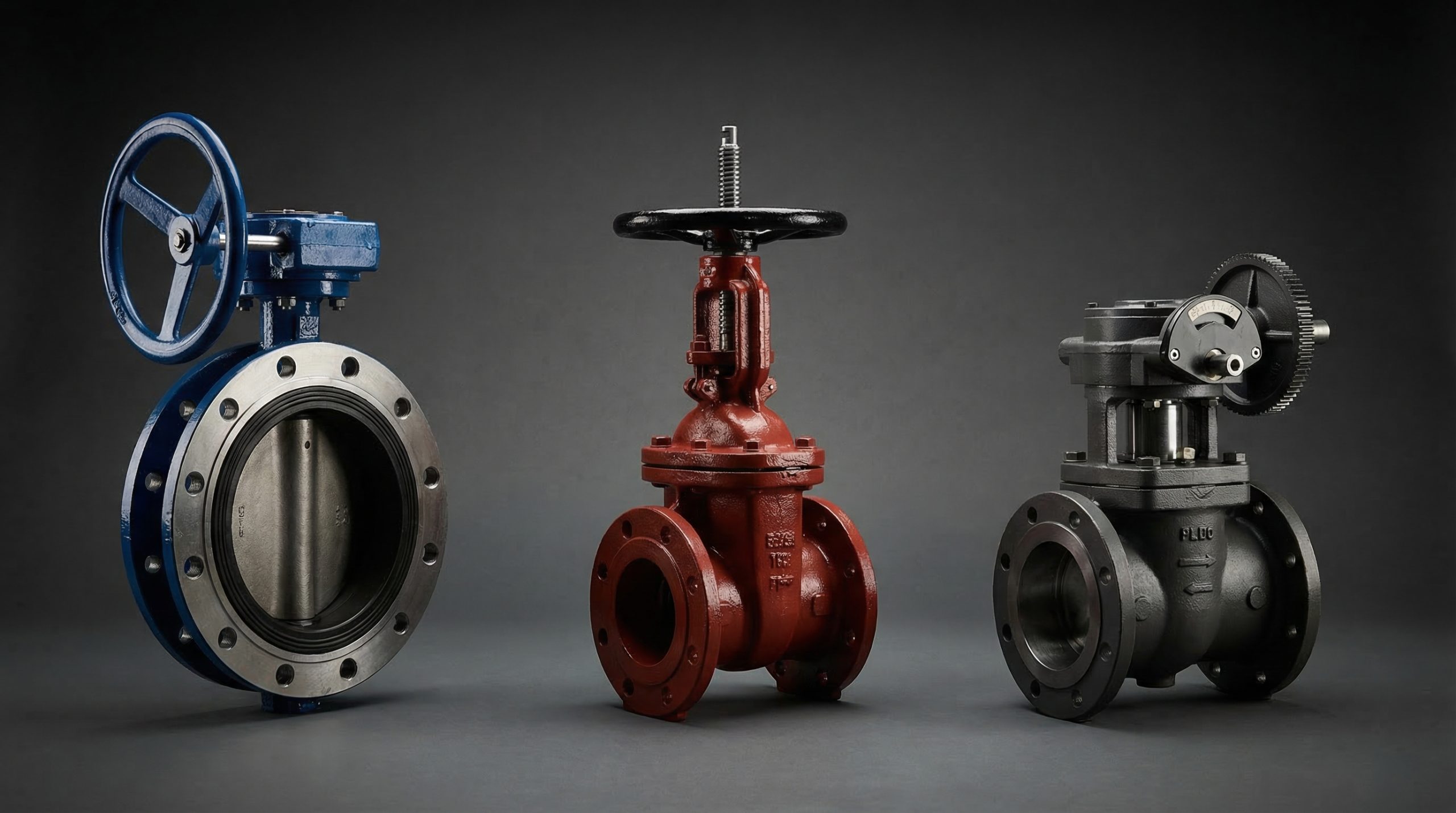
Selecting the correct shutoff valve depends on the media consistency, pressure requirements, and physical footprint of your piping system. Many industrial operators face the risk of choosing a valve that appears cost-effective initially but fails prematurely due to abrasive wear or seat deformation.
Misalignment between valve mechanics and fluid properties leads to catastrophic leakage and expensive system shutdowns. A single leaking valve in a high-pressure line doesn’t just waste resources; it creates significant safety hazards and increases operational costs. By evaluating the technical advantages of a shut off butterfly valve, gate valve, and plug valve, you can ensure long-term reliability for your infrastructure.
Why choose a shut off butterfly valve for water?
Butterfly valves are the superior choice for clean water applications because they offer a compact, lightweight solution that minimizes installation costs. In municipal and potable water systems, a shut off butterfly valve provides rapid isolation with a simple 90-degree turn.
Managing High-Volume Potable Water
You will find that these valves are ideal for large-diameter pipelines where weight and space are primary concerns. Their narrow face-to-face dimensions allow you to integrate them into tight pumping stations without structural modifications.
- Lightweight ductile iron bodies reduce pipe stress.
- Resilient EPDM seats ensure bubble-tight shutoff.
- Quarter-turn operation speeds up emergency response.
The bottom line is this:
When you need to manage clean water at scale, the butterfly design is unbeatable for efficiency.
Key Takeaway
For clean water systems, prioritize weight and operation speed to reduce your total cost of ownership.
| Feature | Butterfly Valve Benefit |
|---|---|
| Footprint | 60% smaller than gate valves |
| Weight | Significant reduction in support requirements |
| Operation | Fast 90-degree actuation |
This structural advantage makes it the first choice for engineers designing modern water networks.
When is a shut off butterfly valve better than gate?
A butterfly valve is better than a gate valve when your project requires fast actuation and limited physical space for installation. While a gate valve provides an unobstructed flow path, the shut off butterfly valve allows for much faster cycle times and easier automation in high-frequency applications.
Prioritizing Fast Actuation Speed
You should select the butterfly design if your process requires automated flow control that can react in seconds rather than minutes. Because it only requires a quarter-turn, you can use smaller and more affordable pneumatic or electric actuators.
- Eliminates the long stem travel of multi-turn gate valves.
- Reduces the torque required for large-diameter isolation.
- Offers better responsiveness for basic throttling needs.
You might be wondering:
Is the pressure drop a dealbreaker? In clean water, the minimal turbulence caused by the disc is usually offset by the massive savings in weight and cost.
Key Takeaway
Choose the butterfly design over gate valves when speed and automated integration are your primary operational goals.
| Criteria | Butterfly Valve | Gate Valve |
|---|---|---|
| Opening Speed | Quarter-turn (Fast) | Multi-turn (Slow) |
| Automation | Cost-effective and simple | Expensive and bulky |
| Throttling | Limited capability | Not recommended |
Evaluating these operational differences ensures you don’t over-engineer simple isolation points.
Can a shut off butterfly valve handle heavy slurries?
No, you should avoid using a butterfly valve for heavy slurries because the disc remains in the flow stream and is prone to erosion. For media with high solids content, a shut off butterfly valve is far less effective than an eccentric plug valve which moves the sealing surface out of the path of abrasive particles.
Protecting Seals from Abrasive Wear
You will notice that grit and solids tend to accumulate around the disc and seat of a butterfly valve, leading to “pitting” and leaks. If you are handling abrasive media, the particles act like sandpaper on the elastomer seat during every cycle.
- Abrasives damage the thin edge of the rotating disc.
- Solids can jam the disc, preventing full closure.
- Turbulence around the disc accelerates downstream pipe wear.
Here is the kicker:
Using the wrong valve for slurries will triple your maintenance budget within the first year of service.
Key Takeaway
Steer clear of butterfly valves in grit-laden systems to prevent frequent and costly seat replacements.
| Media Type | Recommended Valve |
|---|---|
| Clean Water | Butterfly Valve |
| Raw Sewage | Plug Valve |
| Chemical Slurry | Plug Valve |
This limitation highlights why understanding media consistency is the most critical step in valve selection.
Where is a shut off butterfly valve most space-efficient?
Butterfly valves are most space-efficient in modular plant designs or skids where “face-to-face” distance is extremely limited. The shut off butterfly valve utilizes a wafer or lug design that is significantly thinner than the body of any gate or plug valve of the same diameter.
Optimization of Modular Skids
You can significantly reduce the overall footprint of your pumping or filtration skid by utilizing wafer-style designs. This allows you to place valves in high-density arrays where multi-turn valves simply would not fit.
- Wafer designs fit between standard pipe flanges.
- Lug types allow for downstream maintenance without draining the system.
- Minimal vertical clearance is required for the low-profile levers.
Think about this:
In a 12-inch line, a butterfly valve is nearly 10 inches shorter than a gate valve.
Key Takeaway
When your piping layout is cramped, the butterfly valve’s slim profile is the only logical engineering choice.
| Valve Type | Average Width (DN200) | Space Saving |
|---|---|---|
| Butterfly | 60 mm | 75% |
| Gate Valve | 240 mm | Base Reference |
| Plug Valve | 220 mm | 10% |
This compact nature allows for more creative and cost-effective piping configurations in industrial facilities.
Is a shut off butterfly valve durable for wastewater?
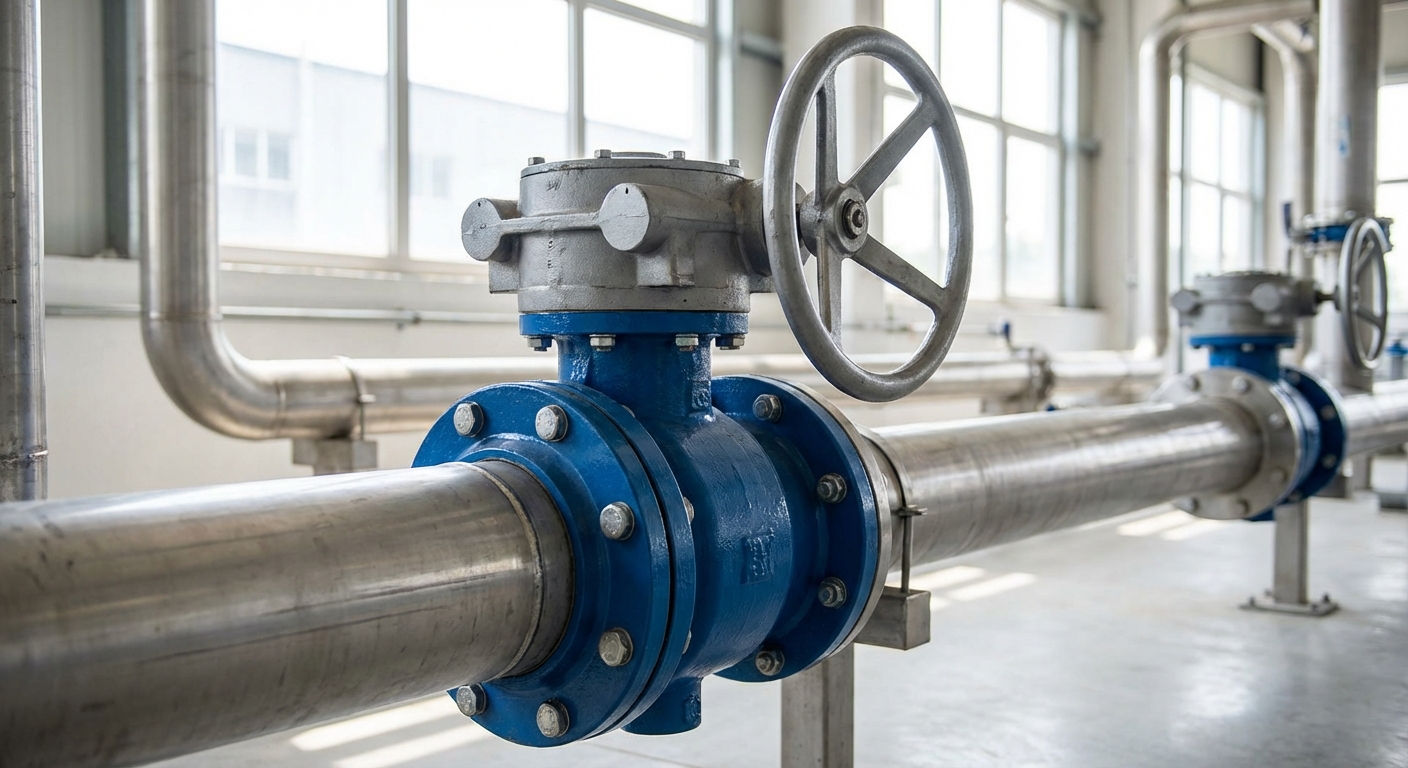
Butterfly valves are generally not recommended for raw wastewater because stringy materials and grit can clog the disc assembly. For wastewater service, a shut off butterfly valve is often replaced by a resilient-seated gate valve that lifts the wedge entirely out of the flow path to prevent debris build-up.
Combating Debris and Stringy Solids
You must consider that wastewater contains rags, plastic, and fibers that wrap around the shaft and disc of a butterfly valve. This creates a “damming” effect that increases head loss and eventually prevents the valve from reaching a tight seal.
- Full port gate valves provide an unobstructed passage.
- Plug valves offer a cavity-free design for wastewater.
- Butterfly seats are prone to tearing from sharp solids.
The bottom line is this:
Reliability in wastewater requires a valve that clears the flow path completely.
Key Takeaway
Prioritize gate or plug valves for raw sewage to minimize clogging risks and operational downtime.
| Feature | Butterfly (Wastewater) | Gate/Plug (Wastewater) |
|---|---|---|
| Clog Resistance | Poor | Excellent |
| Maintenance | High Frequency | Low Frequency |
| Seal Life | Short | Long |
Understanding the nature of the “dirty” water helps you choose a valve that stays in service longer.
Does a shut off butterfly valve offer better throttling?
Yes, a butterfly valve offers better basic throttling capabilities than a gate valve, but it is not a precision control instrument. While the shut off butterfly valve can be used to regulate flow at intermediate positions, it is still primarily designed for isolation and will experience wear if used for high-pressure throttling.
Controlling Flow Rates Moderately
You can use the multi-position lever of a butterfly valve to roughly balance system flow. Unlike gate valves, which vibrate and “chatter” when partially open, the butterfly disc is more stable at intermediate angles.
- Allows for rough flow balancing in HVAC systems.
- Avoids the catastrophic seat damage seen in partially open gate valves.
- Ideal for systems where flow doesn’t require extreme precision.
But wait, there’s more:
If your application requires fine-tuned flow control, you should look at a dedicated globe or V-port ball valve instead.
Key Takeaway
Use butterfly valves for rough throttling in clean systems, but avoid them for high-pressure drop control.
| Valve Type | Throttling Ability | Stability |
|---|---|---|
| Butterfly | Moderate | Fair |
| Gate Valve | Do Not Use | Poor (Vibrates) |
| Globe Valve | Excellent | Superior |
Recognizing the limits of “rough throttling” prevents you from damaging your isolation equipment.
How does a shut off butterfly valve impact flow pressure?
A butterfly valve creates a permanent, slight pressure drop because the disc remains in the center of the pipe even when fully open. For systems sensitive to head loss, you might consider a shut off butterfly valve alternative like a full-port gate valve which offers zero flow obstruction and maximum pressure recovery.
Evaluating Permanent Head Loss
You will need to calculate the Cv values carefully when designing high-efficiency pumping systems. Because the disc and shaft occupy space in the flow stream, they generate turbulence that converts some kinetic energy into heat and noise.
- Generates a higher drag coefficient than gate valves.
- May lead to cavitation in high-velocity liquid lines.
- Increases the electrical demand on your pump motors over time.
Here is the deal:
In most municipal water lines, this pressure drop is negligible compared to the cost savings of the valve itself.
Key Takeaway
Factor in the disc’s flow obstruction when your system operates at low pressures or requires maximum energy efficiency.
| Metric | Butterfly Valve | Full Port Gate Valve |
|---|---|---|
| Flow Restriction | Medium | None |
| Turbulence | Moderate | Very Low |
| Pumping Cost | Slightly Higher | Optimal |
Balancing initial hardware costs against long-term energy consumption is the hallmark of a skilled engineer.
When should you avoid a shut off butterfly valve?
You should avoid using a shut off butterfly valve in high-temperature steam lines or systems with extreme pressure differentials. In these high-energy environments, the elastomer seats can deform, and the dynamic torque on the disc can make the valve impossible to operate safely.
High Temperature and Pressure Limits
You will find that resilient-seated valves have a distinct temperature ceiling, usually around 200°C for specialized materials. Beyond these limits, you must switch to metal-seated gate valves or high-performance triple-offset butterfly designs.
- Elastomer seats lose their elasticity in high heat.
- High pressure can “blow out” the seat during opening/closing.
- Large pressure differentials require oversized, expensive actuators.
It gets worse:
Operating a butterfly valve near its pressure limit significantly increases the risk of stem failure.
Key Takeaway
Switch to gate or plug valves for extreme pressure or steam service to ensure operator safety and system integrity.
| Condition | Avoid Butterfly If… | Recommended Alternative |
|---|---|---|
| Heat | Above 200°C | Metal-Seated Gate |
| Pressure | Above PN25 | High-Pressure Gate |
| Abrasives | High Concentration | Eccentric Plug |
Matching the valve material and design to the environment is non-negotiable for critical safety systems.
Why use a shut off butterfly valve in chemical plants?
Chemical plants utilize butterfly valves for their excellent corrosion resistance when fitted with specialized liners like PTFE or PFA. A shut off butterfly valve provides a cost-effective way to handle aggressive media without the massive expense of solid exotic alloy gate valves.
Resisting Corrosive Media
You can protect the ductile iron body of the valve by using a complete internal liner that isolates the metal from the chemical. This allows you to handle acids and caustics with the same lightweight hardware used in water systems.
- PTFE liners offer near-universal chemical compatibility.
- Stainless steel or coated discs prevent internal corrosion.
- Lower weight simplifies the use of expensive plastic or lined piping.
You might be wondering:
Are they better than ball valves for chemicals? For large diameters (above 6 inches), the butterfly valve is much more economical than a large ball valve.
Key Takeaway
Utilize lined butterfly valves for large-scale chemical isolation to balance corrosion resistance with budget constraints.
| Material | Chemical Resistance | Cost |
|---|---|---|
| Lined Butterfly | High | Moderate |
| Alloy Gate | High | Very High |
| Standard Iron | None | Low |
This material flexibility makes the butterfly design a staple in modern process engineering.
What maintenance does a shut off butterfly valve require?
The primary maintenance requirement for a shut off butterfly valve is the periodic inspection and replacement of the resilient seat. Because the seat is the only component preventing internal leakage, you must monitor its elasticity and surface integrity to avoid “leak-through” that could damage downstream equipment.
Monitoring Seat Integrity and Stem Seals
You should establish a preventative maintenance schedule that includes testing the valve for bubble-tight shutoff at least once a year. If the valve is cycled frequently, the elastomer will eventually wear out and lose its ability to compress against the disc.
- Inspect for “compression set” or hardening of the rubber.
- Check stem O-rings for signs of external leakage.
- Lubricate the gear operator to prevent mechanical binding.
Keep this handy:
- [ ] Test for internal leakage at max pressure.
- [ ] Verify limit switches on automated units.
- [ ] Clean debris from around the disc during shutdowns.
- [ ] Inspect disc edges for erosion or pitting.
Key Takeaway
Regular seat maintenance is the most effective way to extend the life of your isolation valves and prevent unplanned outages.
| Maintenance Task | Frequency | Impact |
|---|---|---|
| Leak Testing | Annual | Prevents contamination |
| Stem Lubrication | Bi-Annual | Ensures smooth operation |
| Seat Replacement | 5-7 Years | Restores tight shutoff |
Consistent care ensures that your critical shutoff points remain reliable for the duration of their service life.
Conclusion
Selecting between a butterfly, gate, or plug valve is a technical decision that impacts your system’s longevity, safety, and operational cost. While the butterfly valve is the most versatile and space-efficient choice for clean media and large-diameter water lines, the gate and plug valves remain indispensable for high-pressure, wastewater, and slurry services. RUITO is dedicated to providing precision-engineered valve solutions that solve your most complex fluid control challenges with predictable reliability. If you need a custom technical consultation or a quote for your next project, contact us today to speak with our engineering team.
FAQ
- Can I use a butterfly valve for wastewater?
Concise Judgment: Generally no, unless the wastewater is filtered and free of solids. Raw wastewater contains fibers and grit that will wrap around the disc and erode the elastomer seat, leading to premature failure. For these conditions, a plug valve or resilient-seated gate valve is a significantly better investment. - What’s the best valve for throttling flow?
Concise Judgment: The butterfly valve is the best of the “shutoff” family for basic throttling. However, it is only suitable for rough flow balancing in low-pressure clean systems. If you require precise control or are operating under high pressure, a dedicated globe valve is required to prevent cavitation and seat damage. - Can I install a butterfly valve in any orientation?
Concise Judgment: Yes, they can be installed horizontally or vertically, but horizontal installation is preferred for larger sizes. When installed horizontally, the stem should be parallel to the ground to prevent debris from settling in the bottom stem bearing, which extends the life of the seals. - Can I automate a plug valve easily?
Concise Judgment: Yes, but it requires significantly more torque than a butterfly valve. Because plug valves have a much larger contact area between the plug and the body, the friction is higher. You will need a larger, more expensive actuator to achieve the same cycle speed as a butterfly valve. - What’s the best material for corrosive chemical media?
Concise Judgment: A PTFE-lined butterfly valve is the most cost-effective choice for large-diameter corrosive service. The liner protects the iron body from the media, providing the chemical resistance of an exotic alloy valve at a fraction of the cost and weight.