
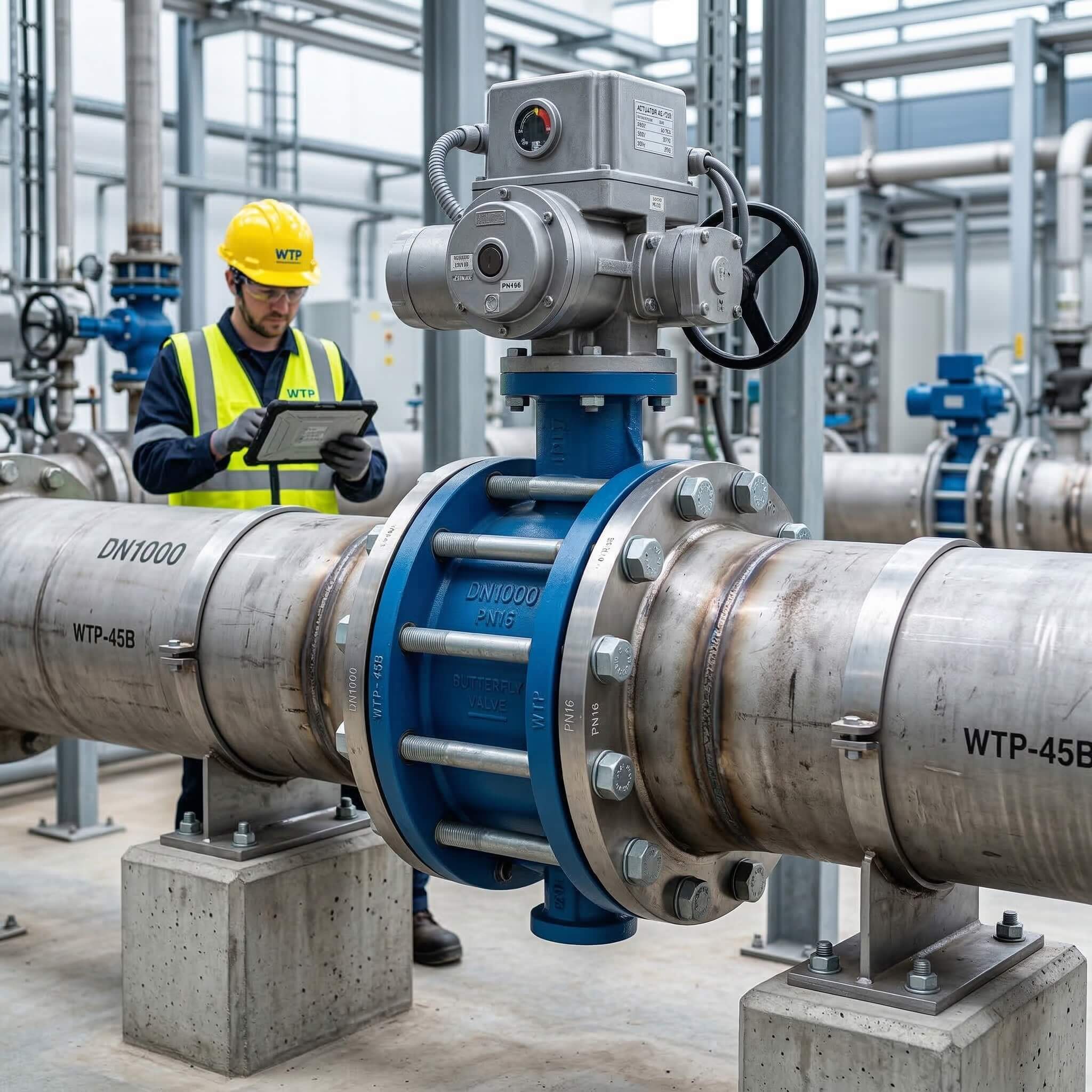
A single flanged butterfly valve is a specialized quarter-turn industrial valve featuring a singular central mounting flange for connecting to pipeline systems. Industrial engineers often struggle with finding a balance between the structural stability of double-flange valves and the space-saving benefits of wafer designs. This gap frequently leads to inflated project costs or compromised alignment in large-diameter piping networks. By choosing this unique design, you solve the dilemma of weight and cost while maintaining high sealing performance for medium-to-large industrial applications.
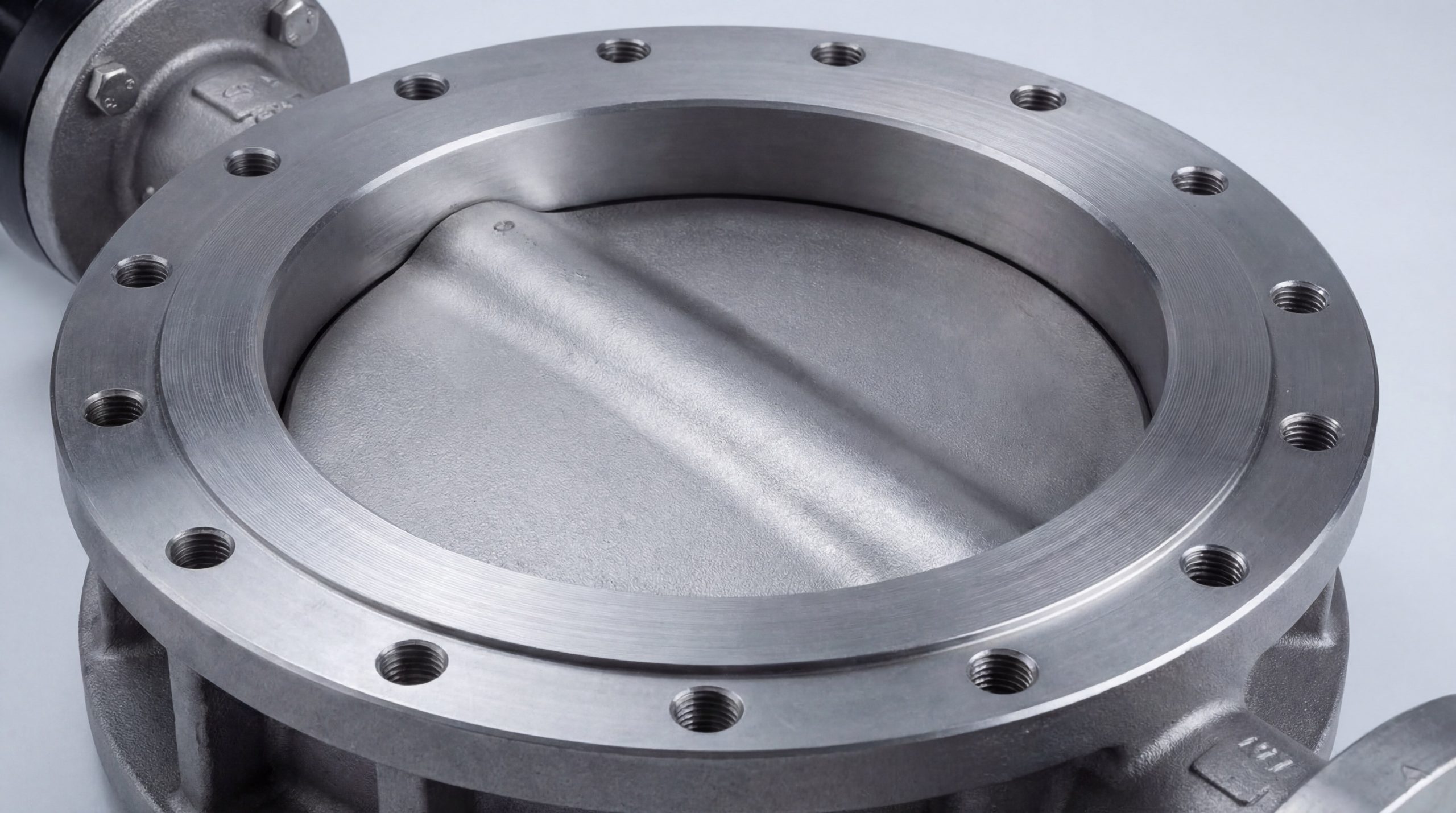
1. What is the technical definition of a single flanged butterfly valve?
A single flanged butterfly valve is defined as a flow control device with one flange located in the center of the valve body to facilitate bolting. This design acts as a hybrid, filling the sizing gap between standard Butterfly Valve types. It provides a more stable anchoring point than a wafer valve without the excessive bulk of double-flanged models.
Look:
Standard configurations usually target the DN700 to DN1000 size range where installation precision is critical.
- Body Style: Central single flange.
- Connection: Bolted directly to pipe flanges.
- Port Size: DN25 to DN1200 available for custom orders.
- Operation: Manual or actuated quarter-turn movement.
Key Takeaway: The single flange design offers a “middle ground” for engineers seeking stability without the weight of dual flanges.
| Feature | Specification Details | Analysis |
|---|---|---|
| Flange Type | Single Center Flange | Reduces material usage while aiding alignment. |
| Typical Range | DN700 – DN1000 | Fills the gap where wafer valves lose stability. |
| Mounting | Through-bolts | Simplifies the centering process during assembly. |
The centralized flange design ensures that even at larger diameters, the valve remains concentric with the pipe bore.
2. How does the single flanged butterfly valve mechanism operate?
The single flanged butterfly valve operates using a simple 90-degree rotational movement of an internal disc to block or permit fluid flow. When the valve is opened, the disc rotates to align with the flow, minimizing resistance. When closed, it turns perpendicular to the pipeline, pressing against the seat to create a tight seal.
Surprisingly,
this quick-turn action allows for faster response times compared to a traditional Gate Valve.
- Open Phase: Disc is parallel to the flow path.
- Closing Phase: Disc rotates to 90 degrees.
- Sealing Phase: Disc compresses against the elastic seat.
- Throttling Phase: Partial rotation regulates flow volume.
Is the flow direction important?
While most butterfly valves are bi-directional, a single flange version requires careful attention to the seat orientation. Proper alignment ensures that pressure pushes the disc into the seat for a more reliable seal.
Key Takeaway: The quarter-turn mechanism provides rapid shut-off and efficient throttling in a compact physical footprint.
| Operation Mode | Disc Angle | Flow Characteristic | Analysis |
|---|---|---|---|
| Full Open | 0 Degrees | Minimum pressure drop | High Cv values reduce energy consumption. |
| Modulating | 15 – 75 Degrees | Variable flow control | Linear flow control is possible in middle ranges. |
| Full Closed | 90 Degrees | Bubble-tight shutoff | Elastomer seats ensure zero-leakage performance. |
The streamlined disc design handles high-velocity fluids while maintaining low operational torque.
3. Why is the single flanged butterfly valve a cost-effective choice?
Choosing a single flanged butterfly valve significantly reduces project expenses by minimizing the raw metal required for valve production. Because it uses only one flange instead of two, the manufacturing weight is lower, leading to cheaper procurement costs. This makes it an ideal alternative to a heavy Ball Valve for large-scale water systems.
The best part?
Lower weight translates directly into reduced shipping fees and easier handling on the job site.
- Material Savings: Less iron or steel per unit.
- Logistics: Lower freight costs due to mass reduction.
- Installation: Requires fewer heavy lifting tools.
- Maintenance: Simplified design has fewer wear points.
Key Takeaway: Reducing structural bulk without sacrificing sealing integrity lowers the total cost of ownership for large projects.
| Cost Driver | Single Flange Impact | Project Benefit | Analysis |
|---|---|---|---|
| Metal Volume | Reduced by 15-25% | Lower purchase price | Significant savings on high-quantity EPC orders. |
| Rigging Cost | Lighter unit weight | Faster installation | Reduces the need for heavy-duty cranes and crews. |
| Parts Cost | Simplified internals | Lower lifecycle spend | Standardized seats and stems are easy to replace. |
By optimizing material usage, manufacturers can offer high-performance valves at a more competitive price point.
4. What are the core parts of a single flanged butterfly valve?
The single flanged butterfly valve consists of four main internal components: the body, the disc, the seat, and the stem. The body provides the structural house, while the disc and seat work together to manage the fluid. The stem acts as the bridge between the actuator and the internal moving parts.
Think about it:
High-quality materials in these parts determine whether the valve lasts 5 years or 15 years.
- Body: Typically ductile iron or stainless steel.
- Disc: Streamlined for low pressure drop.
- Seat: EPDM, NBR, or PTFE for zero leakage.
- Stem: High-strength stainless steel for torque.
Are manual or automatic actuators better?
Manual gearboxes are common for small sizes, but most large-diameter single flange valves utilize pneumatic or electric actuators. Automation allows for precise remote control in complex municipal or chemical networks.
Key Takeaway: Material selection for the seat and disc must be matched to the specific media to prevent premature failure.
| Component | Standard Material | Functional Role | Analysis |
|---|---|---|---|
| Valve Disc | Aluminum Bronze / SS316 | Primary flow control | Superior corrosion resistance for seawater or sludge. |
| Valve Seat | EPDM / PTFE | Pressure-tight sealing | WRAS-certified options ensure safety for potable water. |
| Valve Stem | SS420 / SS410 | Rotational drive | High-torque stems prevent shearing under pressure. |
Using CNC machining for these parts ensures tight tolerances and repeatable sealing across batches.
5. Where is the single flanged butterfly valve used most often?
The single flanged butterfly valve is widely used in municipal water treatment, HVAC systems, and chemical processing. Its ability to manage large volumes of water or gas with a small installation footprint makes it a favorite for system integrators. It is often paired with a Check Valve to protect pumps from backflow.
In fact,
these valves are the standard for cooling water systems in power plants.
- Water Treatment: Regulating raw and treated water.
- HVAC: Controlling chilled water in buildings.
- Chemical: Handling mildly corrosive process fluids.
- Marine: Managing ballast water in ships.
Can they handle food-grade liquids?
Yes, when equipped with polished stainless steel discs and specialized hygienic seals. They are commonly found in beverage plants controlling the flow of juices, milk, and syrups.
Key Takeaway: Versatility in material options allows this valve to serve across municipal, marine, and industrial sectors.
| Industry | Primary Media | Valve Requirement | Analysis |
|---|---|---|---|
| Municipal | Wastewater / Sludge | Corrosion resistance | Ductile iron bodies with epoxy coating prevent rust. |
| HVAC | Glycol / Chilled Water | Low pressure drop | Streamlined discs maintain energy efficiency ratings. |
| Oil & Gas | Utilities / Process Water | High reliability | API-compliant designs ensure safety in refineries. |
The single flange’s adaptability makes it a reliable choice for diverse fluid control scenarios.
6. Is the single flanged butterfly valve easy to install?
A single flanged butterfly valve offers superior ease of installation because the central flange helps align the valve between pipe ends. Unlike wafer valves that can shift during bolting, the single flange acts as a guide, ensuring the disc is perfectly centered. This prevents the disc from hitting the pipe wall when it opens.
Here is the deal:
Proper centering is the difference between a leak-proof system and a maintenance nightmare.
- Alignment: Central flange guides the through-bolts.
- Spacing: Narrow face-to-face fits tight spots.
- Bolting: Uses standard stud or through-bolt patterns.
- Orientation: Can be installed vertically or horizontally.
What is the best mounting orientation?
For systems carrying sediment, it is best to install the valve with the stem horizontal. This prevents debris from gathering at the bottom bearing, which could cause the valve to stick over time.
Key Takeaway: Built-in centering features reduce installation errors and labor time for field crews.
| Step | Installation Action | Impact | Analysis |
|---|---|---|---|
| Centering | Position flange between pipes | Perfect concentricity | Prevents mechanical damage to the disc during operation. |
| Fastening | Tighten bolts in star pattern | Uniform seal compression | Ensures even pressure across the elastomer seat. |
| Testing | Verify 90-degree rotation | Mechanical clearance | Confirms the disc won’t catch on the pipe gaskets. |
Reducing installation complexity directly lowers the risk of commissioning delays in EPC projects.
7. What are the size limits for a single flanged butterfly valve?
Most single flanged butterfly valve designs are optimized for the DN700 to DN1000 size range. While they can be manufactured in smaller sizes, their unique benefits are most apparent in these middle-to-large diameters where wafer stability becomes a concern. For very small lines, a standard wafer or Gate Valve is usually sufficient.
What’s more,
large-scale custom engineering can extend these valves up to DN1200 for municipal networks.
- Smallest Size: DN50 (common for consistency).
- Core Size: DN700 – DN1000.
- Large Size: Up to DN1200.
- Pressure Rating: Usually PN10 to PN25.
Are there depth constraints?
The face-to-face dimensions follow international standards like DIN 3202 or API 609. This ensures that a single flange valve can replace a standard wafer valve without modifying the existing pipe length.
Key Takeaway: The single flange is the preferred choice for mid-range diameters where cost and weight must be balanced with structural integrity.
| Size Range | Weight Comparison | Best Use Case | Analysis |
|---|---|---|---|
| DN50 – DN600 | Slightly heavier than wafer | General Industrial | Provides extra body strength for higher cycle rates. |
| DN700 – DN1000 | 30% lighter than double flange | Large Water Mains | Ideal for municipal infrastructure and power plants. |
| DN1100+ | Custom manufactured | Heavy Utilities | Requires specialized engineering for torque management. |
Adhering to standard sizing allows for easy interchangeability during system upgrades.
8. How do single flanged butterfly valves compare to wafer types?
The single flanged butterfly valve provides more structural support than a wafer valve but maintains a similar compact footprint. While wafer valves are thinner and lighter, they offer no centering assistance and are prone to misalignment in large diameters. The single flange solves this by providing a physical bolting guide.
By the way,
wafer valves are generally limited to DN600 before they become mechanically unstable.
- Stability: Single flange is more rigid.
- Centering: Flange guides bolts; wafer does not.
- Cost: Wafer is cheaper; single flange is safer for large sizes.
- Weight: Single flange is slightly heavier than wafer.
Key Takeaway: Transitioning from wafer to single flange at DN700 improves the safety factor and lifespan of the installation.
| Feature | Wafer Type | Single Flange Type | Analysis |
|---|---|---|---|
| Mounting | Clamped between pipes | Bolted via central flange | Single flange provides a much more secure connection. |
| Alignment | Visual adjustment | Mechanical centering | Reduces the risk of disc edge damage during startup. |
| Max Size | Typically DN600 | Typically DN1000 | Structural limits make single flange better for big pipes. |
Choosing the single flange design for larger diameters prevents common “wafer-shift” sealing failures.
9. Can single flanged butterfly valves handle abrasive media?
Actually, a single flanged butterfly valve is best suited for clean fluids or gases rather than heavy abrasive slurries. Because these valves use elastomer seats (like EPDM or NBR), sand or grit can quickly tear the sealing surface. For highly abrasive mining applications, a metal-seated or specialized Ball Valve is often preferred.
Look:
Abrasive media can destroy a soft seat in weeks if the velocity is too high.
- Clean Fluids: Water, air, and gas are ideal.
- Mild Slurries: Can be handled with reinforced seats.
- Heavy Sludge: Requires specialized coating on the disc.
- Abrasives: Generally avoided for long-term service.
What about temperature limits?
Because of the soft elastomer seats, most of these valves are limited to 200°C. If your application involves high-temperature steam, you must switch to a high-performance triple-offset design.
Key Takeaway: Soft-seated butterfly valves are precision tools for clean fluids; avoid using them in gritty or extreme-heat environments.
| Media Type | Suitability | Potential Risk | Analysis |
|---|---|---|---|
| Potable Water | Excellent | None | Safe for long-term municipal use with WRAS seals. |
| Raw Sewage | Good | Sediment buildup | Requires horizontal stem installation to clear grit. |
| Abrasive Sand | Poor | Seat erosion | Grit will bypass the disc and cut the elastomer seal. |
Matching the valve type to the media density is the most important factor in preventing system downtime.
10. Which standards apply to a single flanged butterfly valve?
A high-quality single flanged butterfly valve must comply with international standards such as API 609, EN 593, and ISO 5208. These standards define the design dimensions, material requirements, and pressure testing protocols. Compliance ensures that the valve you buy will fit your existing Check Valve and pipe flange configurations.
On top of that,
always demand a Material Test Certificate (MTC) to verify the chemical makeup of the casting.
- Design: API 609 or EN 593.
- Testing: API 598 or ISO 5208.
- Face-to-Face: DIN 3202 or ISO 5752.
- Certification: CE, DNV, or WRAS.
Key Takeaway: Rigorous pressure testing at 1.5x working pressure is the only way to guarantee field reliability.
| Standard Category | Relevant Code | Purpose | Analysis |
|---|---|---|---|
| Pressure Test | ISO 5208 / API 598 | Leakage verification | Ensures the valve can handle surges without failure. |
| Dimensions | DIN 3202 | Interchangeability | Guarantees the valve fits the space in the pipe gallery. |
| Quality | ISO 9001:2015 | Process control | Proves the factory maintains consistent QC across batches. |
Using standardized components simplifies procurement for international EPC projects and utility upgrades.
Conclusion
The single flanged butterfly valve addresses the critical need for a stable, cost-effective, and easy-to-install flow control solution for mid-to-large diameter pipelines. By bridging the gap between wafer and double-flange designs, it offers engineers the structural integrity they require without the excessive material costs. Whether you are managing municipal water networks or industrial HVAC systems, this valve ensures reliable sealing and energy efficiency. To find the perfect fit for your next project, feel free to contact us for a detailed technical consultation and custom quote.
Frequently Asked Questions
Can I use a single flanged butterfly valve for end-of-line service?
No, single flange valves are designed to be clamped between two pipes. For dead-end or end-of-line service, you should use a Lug-type or double-flange butterfly valve.
What is the standard lead time for custom DN1000 valves?
Standard stocked items ship in about 5 days, while custom-engineered solutions for large diameters typically take between 15 to 25 days to manufacture.
Are these valves suitable for high-pressure systems?
Most single flange designs are rated for PN10 or PN16. For extreme high-pressure applications, you may need a high-performance double or triple-offset valve.
Can I automate my existing manual single flange valve?
Yes, most designs feature an ISO 5211 mounting pad, allowing you to easily add a pneumatic or electric actuator later.
How do I choose the right seat material?
EPDM is best for general water and air, NBR is preferred for oil and hydrocarbons, and PTFE is required for aggressive chemicals.