
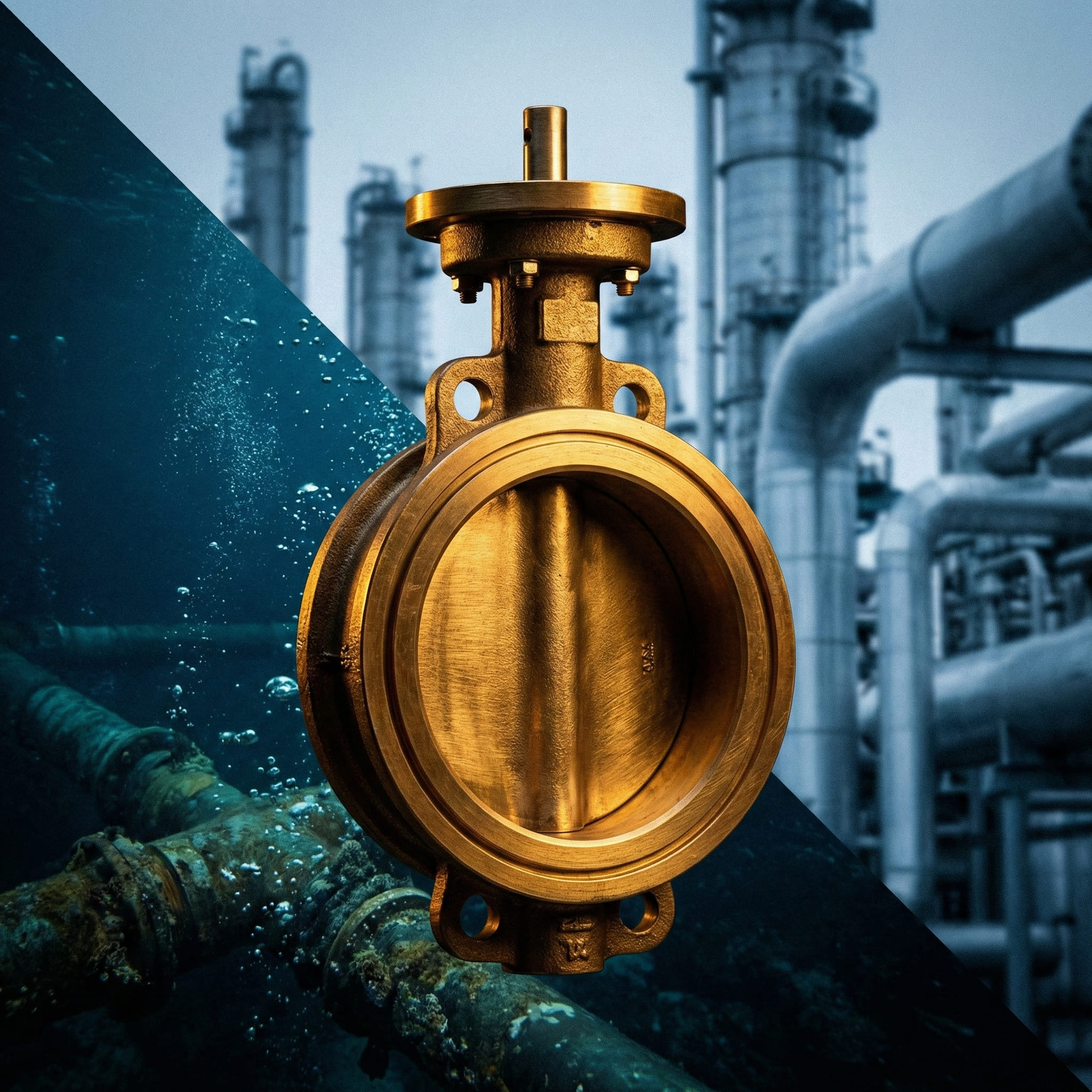
Aluminum bronze stem bushings are the critical engineered components that reduce operating torque and isolate the valve stem from the body to prevent seizure in an aluminium bronze butterfly valve. In demanding industrial environments, standard valve components often fail prematurely due to aggressive corrosion and high mechanical stress. This degradation leads to increased maintenance downtime, potential leaks, and total system failure in critical subsea or chemical processing applications. Utilizing high-performance aluminum bronze alloys for stem bushings provides a self-healing, corrosion-resistant solution that ensures smooth operation and long-term reliability under the most punishing conditions.
1. What are the Primary Applications for Butterfly Valve Stem Bushings?
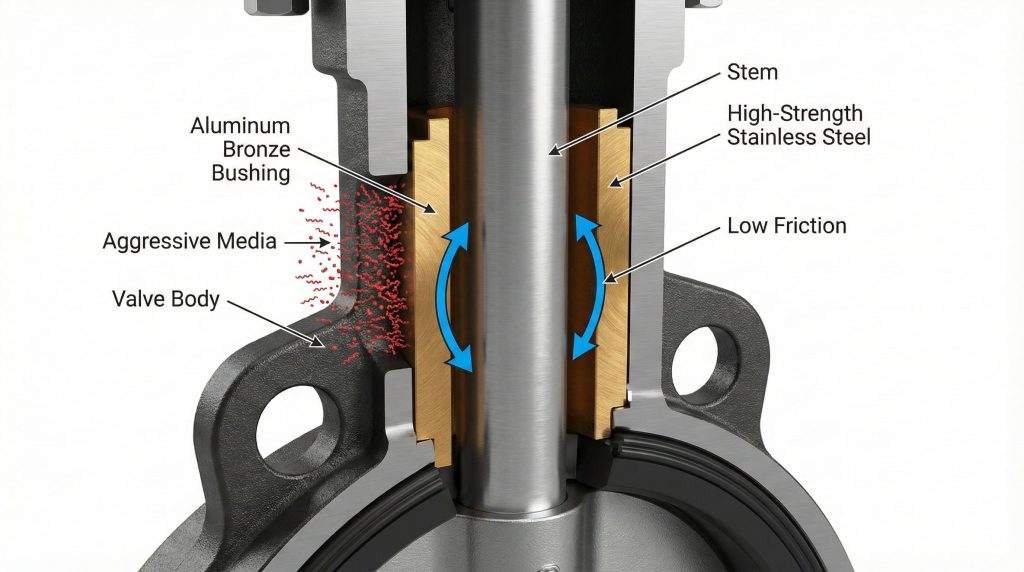
In the heavy-duty service of an aluminium bronze butterfly valve, the stem bushing serves as the primary bearing surface that allows the disc to pivot smoothly. These bushings are essential in flow control systems where the valve must remain operational after long periods of inactivity. Without a high-quality bushing, the metal-on-metal contact between the stem and the valve body would lead to rapid wear and eventual seizure.
Think about this:
Standard materials often fail when exposed to the high-load demands and abrasive environments common in modern processing plants.
- Subsea Oil & Gas: Protecting stems from high-pressure saltwater ingress.
- Chemical Processing: Handling aggressive media that would corrode standard steel components.
- Marine Engineering: Ensuring reliable operation in shipboard piping systems.
How Does the Bushing Isolate Media?
The bushing acts as a barrier, preventing the media from coming into direct contact with the stem journal. By isolating these components, the bushing prevents the buildup of corrosion products that cause stem binding. This protection is vital for maintaining the internal integrity of the valve over decades of service.
Can Bushings Reduce Actuation Torque?
In large-scale industrial valves, the force required to turn the disc can be immense. Aluminum bronze bushings provide a low-friction interface that significantly reduces the manual or automated torque required for actuation. This efficiency allows for smaller, more cost-effective actuators to be used on the valve assembly.
Key Takeaway: The primary role of the stem bushing is to ensure mechanical integrity and operational readiness by preventing friction-induced wear and environmental seizure in critical applications.
Table 1: Application Impact of Stem Bushings
| Application | Primary Stressor | Bushing Function |
|---|---|---|
| Subsea Extraction | Saltwater Corrosion | Stem Journal Isolation |
| Chemical Plants | Acidic/Alkaline Media | Chemical Neutralization |
| Municipal Water | High Cycle Frequency | Wear Resistance |
The selection of the bushing material directly determines the valve’s failure rate in high-stress environments.
2. Why is Aluminum Bronze the Ideal Material for These Bushings?
The selection of material for an aluminium bronze butterfly valve bushing is driven by the need for high load-bearing capacity and exceptional environmental resistance. Aluminum bronze alloys, particularly C95400, are favored because they offer a unique combination of physical and chemical properties that stainless steels cannot match. These alloys provide the necessary hardness to resist wear while maintaining enough ductility to handle mechanical shocks.
You might be wondering:
What makes this specific alloy stand out in a sea of industrial materials?
- High Strength-to-Weight Ratio: Comparable to low-alloy steels but with superior corrosion resistance.
- Excellent Wear Resistance: Natural lubricity that reduces galling during high-cycle operations.
- Thermal Stability: Maintains mechanical properties across a wide temperature range.
Does it Offer Superior Corrosion Resistance?
Aluminum bronze creates a protective oxide film that prevents the base metal from reacting with harsh environments. This is particularly effective against selective leaching (dealuminification) in saline environments. This chemical stability ensures that the bushing does not degrade or lose its structural integrity over time.
What are the Anti-Galling Properties?
Unlike stainless steel, which is prone to galling and “cold welding,” aluminum bronze provides a stable bearing surface that resists surface damage even under high pressure. The alloy’s microstructure allows it to slide against the stem without tearing the metal surface. This characteristic is critical for valves that are infrequently operated.
Key Takeaway: Aluminum bronze is the ideal material because it combines the mechanical strength of steel with the chemical inertness required for harsh industrial service.
Table 2: Material Property Comparison
| Feature | Aluminum Bronze (C95400) | Stainless Steel (316) |
|---|---|---|
| Corrosion Resistance | Excellent (Self-healing) | Good (Passive layer) |
| Galling Resistance | High | Low |
| Tensile Strength | ~75,000 PSI | ~70,000 PSI |
Comparing these materials highlights the technical superiority of aluminum bronze in preventing mechanical seizure.
3. How Does Aluminum Bronze Enhance Corrosion Resistance in Subsea Environments?
Subsea environments present a unique challenge for an aluminium bronze butterfly valve due to constant exposure to high-salinity water and varying hydrostatic pressures. The presence of chloride ions in seawater rapidly accelerates the degradation of inferior metals. Aluminum bronze is specifically engineered to resist this chloride-induced attack through its unique chemical composition.
Believe it or not:
The very environment that destroys most metals actually helps aluminum bronze maintain its integrity.
- Chloride Resistance: Virtually immune to pitting and crevice corrosion common in saltwater.
- Biofouling Prevention: The copper content in the alloy inhibits the growth of marine organisms.
- Oxidation Barrier: Immediate formation of a protective surface layer upon contact with water.
What is the Role of Aluminum Oxide?
When exposed to the environment, the aluminum in the alloy reacts to form a thin, tough layer of aluminum oxide. This layer is non-porous and prevents further penetration of oxygen or corrosive ions. If this layer is scratched, it reforms instantly to maintain the defense barrier.
How Does it Prevent Stem Seizure?
By remaining corrosion-free, the bushing ensures that no rust or scale builds up between the stem and the bushing inner diameter. This keeps the valve “free-moving” for years without the need for frequent lubrication. It eliminates the risk of the stem becoming locked within the valve body.
Key Takeaway: The chemical composition of aluminum bronze ensures that the critical moving parts of a subsea valve remain functional despite constant exposure to corrosive seawater.
Table 3: Subsea Performance Metrics
| Corrosive Agent | Aluminum Bronze Response | Result |
|---|---|---|
| Saltwater (NaCl) | Oxide Film Formation | Zero Pitting |
| Marine Growth | Natural Biocidal Effect | Clean Surfaces |
| Low Oxygen (Deep Sea) | Sustained Passivity | Long-term Stability |
The innate ability of aluminum bronze to withstand high-salinity environments makes it the benchmark for offshore reliability.
4. What Mechanical Advantages Does C95400 Provide for Valve Stems?
In the manufacturing of an aluminium bronze butterfly valve, the C95400 grade (also known as 9C) is the most common choice for heavy-duty bushings. This alloy provides the mechanical “muscle” needed to support the stem under high differential pressures. It ensures that the stem stays aligned even when the valve disc is subjected to high-velocity fluid flow.
The best part?
It provides these mechanical advantages without becoming brittle or prone to sudden fracture.
- Impact Resistance: Can withstand the sudden shocks of valve slamming or pressure surges.
- High Compressive Strength: Resists deformation even when the valve disc is under maximum load.
- Fatigue Strength: Maintains integrity through thousands of open/close cycles.
What is the Load Bearing Capacity?
C95400 is capable of supporting high localized loads from the stem, ensuring that the alignment of the disc remains perfect within the valve body. Proper alignment is essential for achieving a bubble-tight seal. Without this strength, the bushing would deform, leading to leakage.
How Important is Machinability?
Despite its toughness, C95400 can be machined to extremely tight tolerances, which is vital for maintaining the zero-leakage standards of modern valves. Precision fitment between the stem and bushing prevents vibration and reduces wear. This accuracy ensures the assembly functions as a single, cohesive unit.
Key Takeaway: C95400 aluminum bronze offers the mechanical robustness required to handle the physical stresses and precision requirements of industrial fluid control.
Table 4: C95400 Mechanical Specifications
| Property | Value (Typical) |
|---|---|
| Brinell Hardness | 170 |
| Yield Strength | 35,000 PSI |
| Elongation in 2 in. | 12% |
High yield strength and hardness are the primary drivers behind C95400’s dominance in valve component manufacturing.
5. How Does This Alloy Reduce Operating Torque and Maintenance?
The efficiency of an aluminium bronze butterfly valve is often measured by its ease of operation. High friction in the stem assembly increases the wear on actuators and requires larger, more expensive motors. Aluminum bronze bushings provide a naturally slick surface that reduces the energy needed to move the valve disc.
In other words:
A better bushing material directly translates to lower operational costs and smaller actuator footprints.
- Low Coefficient of Friction: Reduces the energy required for every valve movement.
- Self-Lubricating Properties: The material provides a backup safety margin if external grease fails.
- Reduced Wear Rate: Extends the intervals between scheduled maintenance shutdowns.
Can it Minimize Actuator Wear?
Consistent, low torque prevents “chatter” and uneven loading on the valve actuator, extending the lifespan of the entire control system. By reducing the peak torque requirements, you also reduce the mechanical stress on the actuator’s internal gearing. This leads to a more reliable automated system.
How Much Can Maintenance Costs be Saved?
By preventing seizure and excessive wear, aluminum bronze bushings can reduce maintenance-related costs by up to 40% over the valve’s lifecycle. Fewer replacements mean less downtime for the entire processing line. It also reduces the need for emergency repairs in difficult-to-reach locations.
Key Takeaway: Lower friction and high durability lead to significant long-term savings in both energy and maintenance labor for industrial operators.
Table 5: Torque and Maintenance Comparison
| Metric | Standard Bronze | Aluminum Bronze |
|---|---|---|
| Relative Torque | 100% | 85% |
| Maintenance Interval | 2 Years | 5+ Years |
| Failure Risk | Moderate | Low |
The reduction in relative torque directly improves the return on investment for automated valve systems.
6. Why is the Non-Sparking Nature of Aluminum Bronze Critical for Oil and Gas?
Safety is the paramount concern in the design of an aluminium bronze butterfly valve used in explosive atmospheres. In oil and gas refineries or offshore platforms, a single spark can lead to catastrophic events. Aluminum bronze is inherently non-sparking, making it the safest choice for bushings in these volatile environments.
Here is the reality:
Mechanical friction in volatile environments is a hidden danger that must be engineered out of the system.
- Non-Sparking: The material will not produce a spark when struck by steel or other metals.
- ATEX Compliance: Supports equipment certification for use in hazardous zones.
- Safety Assurance: Provides peace of mind in high-risk zones where flammable gases are present.
How Does it Ensure Safe Actuation?
The stem bushing is a point of potential friction; using non-sparking aluminum bronze ensures that even if lubrication fails, a spark will not be generated. This is vital during high-speed actuation or in the event of mechanical failure. It acts as a passive safety feature that requires no external power.
Are Non-Magnetic Properties Important?
In addition to being non-sparking, the alloy is non-magnetic, which prevents the attraction of metallic debris that could cause friction. This keeps the bearing surface clean and free of abrasive particles. It is especially useful in environments with high levels of ferrous particulate.
Key Takeaway: The non-sparking characteristic of aluminum bronze is a vital safety feature for any valve operating in explosive or flammable environments.
Table 6: Safety Characteristics
| Feature | Benefit | Environment |
|---|---|---|
| Non-Sparking | Explosion Prevention | Gas Plants / Refineries |
| Non-Magnetic | Reduced Debris Attraction | Precision Fluid Systems |
| Non-Toxic | Safe Handling | Potable Water Systems |
Safety-driven material selection is a non-negotiable requirement for modern oil and gas infrastructure.
7. How Does the Self-Healing Oxide Layer Improve Component Lifespan?
The longevity of an aluminium bronze butterfly valve depends on the ability of its internal parts to resist environmental attack over decades. Aluminum bronze has a unique “biological” defense mechanism against oxidation. This layer is not a coating but a natural part of the alloy’s surface chemistry.
It gets even better:
If the protective surface is scratched or damaged during operation, it actually repairs itself.
- Instant Reformation: The oxide layer reforms in milliseconds when exposed to air or water.
- Continuous Protection: No need for external coatings or platings that can flake off.
- Erosion Resistance: The tough film protects the metal from the high-velocity flow of abrasive fluids.
Does it Eliminate Contamination?
Unlike painted or plated bushings, there is no coating to fail, ensuring that the fluid media remains uncontaminated by debris. This is essential in food-grade or high-purity chemical processes. The bushing remains structurally sound without shedding material.
Is it Resistant to Chemical Attack?
The aluminum oxide film is highly stable and resists attack from a wide range of industrial chemicals, including diluted acids. This allows the same valve design to be used across multiple different process lines. It provides versatility for plant engineers managing diverse media.
Key Takeaway: The self-healing nature of the aluminum bronze oxide layer provides a permanent, maintenance-free barrier against environmental degradation.
Table 7: Lifespan Factors
| Factor | Traditional Bushing | Aluminum Bronze |
|---|---|---|
| Surface Damage | Leads to Corrosion | Self-Heals |
| Coating Integrity | Can Peel/Flake | Integrated Oxide |
| Expected Life | 5-10 Years | 20-25 Years |
The self-healing mechanism is the primary reason for the extended operational life of aluminum bronze components.
8. What Manufacturing Standards Apply to High-Performance Bushings?
To ensure the reliability of an aluminium bronze butterfly valve, the bushings must be manufactured to stringent international standards. Quality control in the casting and machining process is non-negotiable for critical infrastructure. Standards ensure that the material has the correct chemical balance and mechanical properties to survive in the field.
Think about it:
A bushing that is slightly out of spec can cause the entire valve to fail pressure tests.
- ASTM B148/B505: Standards for aluminum bronze sand and continuous castings.
- ISO 9001: Ensuring consistent manufacturing processes and traceability.
- Tight Machining Tolerances: Requiring accuracy within ±0.1 mm for perfect stem fitment.
How is Material Traceability Handled?
Each batch of aluminum bronze should be accompanied by a Material Test Report (MTR) to verify its chemical composition. This documentation allows engineers to trace a component back to its original pour. It provides the proof of quality required by high-stakes industries like nuclear or aerospace.
Why Use Precision CNC Machining?
Advanced CNC centers are used to turn and bore the bushings, ensuring that the concentricity of the stem remains perfect. Perfect concentricity is vital for the valve’s seal integrity and smooth operation. This precision manufacturing eliminates the “slack” that causes premature wear.
Key Takeaway: Adherence to global manufacturing standards ensures that every bushing performs exactly as designed in the field without unexpected failures.
Table 8: Key Manufacturing Standards
| Standard | Description |
|---|---|
| ASTM B505 | Continuous Cast Copper-Base Alloys |
| API 609 | Butterfly Valve Design Standard |
| EN 10204 3.1 | Material Certification Traceability |
Rigorous documentation and standardized production methods are essential for maintaining industrial safety levels.
9. Is Aluminum Bronze More Cost-Effective Than Alternative Alloys?
While the initial cost of an aluminium bronze butterfly valve component may be higher than basic brass, the Total Cost of Ownership tells a different story. The durability and reduced maintenance needs of aluminum bronze offer a much faster return on investment. It is an investment in the uptime of your entire facility.
Look at it this way:
Spending a little more today can prevent a multi-million dollar system shutdown tomorrow.
- Longer Replacement Cycles: Fewer bushings purchased over the life of the plant.
- Lower Labor Costs: Fewer man-hours spent on emergency repairs and overhauls.
- Insurance Against Failure: Reducing the risk of environmental fines and safety incidents.
How do Upfront and Lifecycle Costs Compare?
Initial material costs are often offset within the first two years of service through reduced maintenance and energy efficiency gains. When you factor in the cost of a plant shutdown, the premium for aluminum bronze becomes negligible. It is the most economical choice for long-term operations.
Does it Have High Scrap Value?
At the end of its long service life, aluminum bronze remains a valuable copper-based alloy with high secondary market value. This allows for some recovery of the initial investment when the valve is eventually decommissioned. It is a sustainable material choice that supports the circular economy.
Key Takeaway: Aluminum bronze is the most cost-effective choice when evaluating long-term operational expenses and risk mitigation in industrial settings.
Table 9: Financial Impact Summary
| Expense Category | Stainless Steel | Aluminum Bronze |
|---|---|---|
| Initial Purchase | Moderate | High |
| Repair Frequency | High (Galling) | Low |
| Lifecycle Cost | Very High | Lowest |
Analyzing the lifecycle cost reveals that aluminum bronze is the most financially sound choice for EPC projects.
10. How Should Aluminum Bronze Bushings Be Maintained for Long-Term Reliability?
Even a high-performance aluminium bronze butterfly valve requires a structured maintenance approach to reach its maximum 25-year life expectancy. Fortunately, the requirements for these bushings are minimal compared to traditional materials. Routine checks ensure that environmental factors haven’t exceeded the design limits of the alloy.
The reality is:
Consistency in inspection is more important than complex maintenance procedures.
- Regular Lubrication: Keeping the journal greased ensures peak efficiency and lowest torque.
- Visual Inspection: Checking for signs of excessive wear during scheduled valve overhauls.
- Torque Monitoring: Tracking the force required to actuate the valve as an early warning of wear.
How do I Identify Signs of Wear?
While rare, excessive play in the stem or a sudden increase in operating torque can indicate that the bushing has reached its service limit. If detected early, the bushing can be replaced during a planned shutdown rather than after a failure. Monitoring these indicators is the key to predictive maintenance.
When is Cleaning and Re-greasing Necessary?
During major plant turnarounds, bushings should be cleaned of old, oxidized grease and replenished with high-quality lubricants. This prevents the buildup of old grease that can harden and increase friction. A fresh application of marine-grade lubricant ensures the self-healing oxide layer remains protected.
Key Takeaway: Simple, proactive maintenance ensures that the inherent benefits of aluminum bronze are preserved for the entire life of the valve.
Table 10: Maintenance Checklist
| Frequency | Action | Goal |
|---|---|---|
| Annually | Operational Torque Check | Baseline Performance |
| 5 Years | Visual Inspection | Integrity Verification |
| 10 Years | Bushing Clearance Check | Precision Fitment |
A disciplined maintenance schedule maximizes the already impressive lifespan of aluminum bronze components.
Conclusion
Selecting the right materials for stem bushings is a critical decision that impacts the safety, efficiency, and longevity of your fluid control systems. At RUITO, we specialize in providing high-reliability valve solutions engineered for the world’s most demanding industries. Our commitment is to deliver precision-engineered components that ensure your operations remain on schedule and under control. We believe that quality manufacturing is the foundation of industrial progress. To optimize your project with the industry’s most durable materials, contact us today and let our engineers help you find the perfect solution for your application.
FAQ
Can I use aluminum bronze bushings in potable water systems?
Yes, aluminum bronze is highly resistant to corrosion in water and many grades are WRAS-approved for municipal water applications where long-term durability is required.
How do I know if my bushing is made of C95400?
Quality manufacturers provide Material Test Reports (MTRs) and batch-traceable documentation that verify the exact chemical composition and mechanical properties of the alloy.
Can I operate these valves without any lubrication?
While aluminum bronze has good natural lubricity, using a compatible grease is highly recommended to achieve the lowest possible operating torque and maximize the life of the stem journal.
How do I determine if a bushing needs replacement?
You should monitor the actuation torque and stem alignment; any significant increase in torque or visible stem play during an overhaul indicates it is time for a replacement.
Can aluminum bronze withstand high-temperature service?
Yes, aluminum bronze alloys maintain their mechanical strength and oxidation resistance at temperatures up to 200°C, making them suitable for most standard industrial thermal processes.