
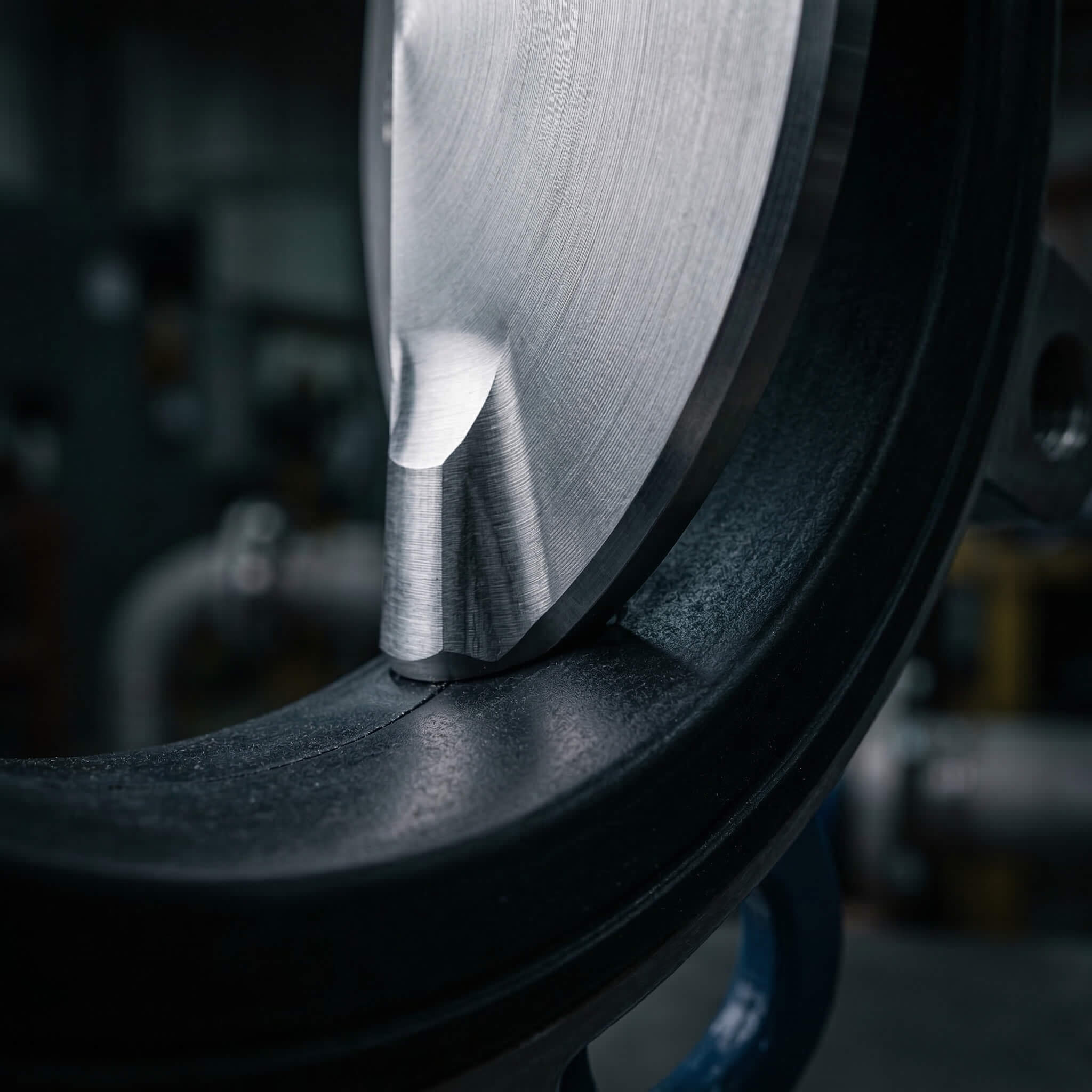
The ANSI 150lb. Butterfly Valve with CF8 Disc is critical because it ensures high corrosion resistance and reliable bubble-tight sealing for essential fluid control systems. In high-stakes industrial environments, such as municipal water treatment or chemical processing, equipment failure is not an option.
Imagine you are managing a large-scale municipal water facility where every minute of downtime costs thousands in lost productivity and repair labor. You discover that your current valves are seizing up due to disc corrosion, leading to frequent system bypasses and emergency maintenance calls. By upgrading to a high-quality ansi150 butterfly valve featuring a CF8 stainless steel disc, you eliminate the risk of premature oxidation and ensure long-term operational stability.
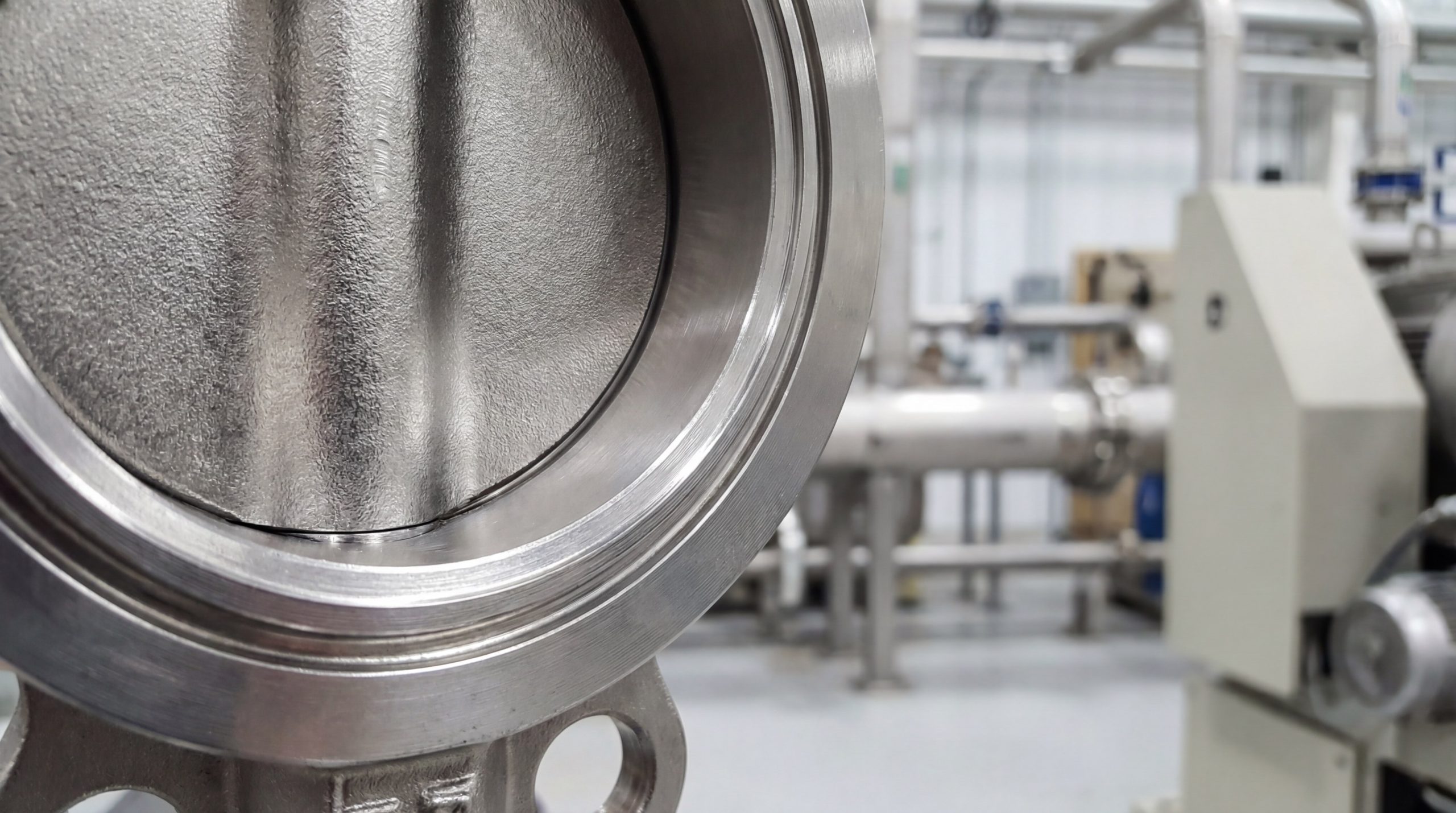
What is an ansi150 butterfly valve used for?
An ansi150 butterfly valve is primarily used for regulating or isolating the flow of liquids and gases in low to medium-pressure piping systems. This specific valve type is a staple in industries where space is limited but flow efficiency is a top priority. It provides a compact solution for controlling large volumes of media with minimal pressure drop.
Is it suitable for water treatment?
Look: water treatment plants require components that can withstand constant moisture without degrading. You will find that the CF8 disc provides the necessary resistance to oxidation and pitting caused by treated water.
- High corrosion resistance
- Lightweight design for easy installation
- Bubble-tight shut-off capabilities
The best part? You can rely on these valves to maintain water purity since the stainless steel disc does not leach contaminants into the stream.
What about general chemical processing?
Here is why: chemical facilities often handle mildly corrosive fluids that would quickly destroy standard ductile iron components. You can utilize the CF8 disc to ensure your process remains sealed and safe from external leaks.
- Compatible with various organic acids
- Resists erosion in high-velocity flows
- Durable in ambient temperature applications
Key Takeaway
The ANSI 150lb. butterfly valve with a CF8 disc is a versatile workhorse for both utility water and chemical transport.
| Application | Benefit | Disc Material |
|---|---|---|
| Water Treatment | Oxidation Resistance | CF8 Stainless |
| Chemical Processing | Erosion Shielding | CF8 Stainless |
| General Industry | Light Weight | CF8 Stainless |
The following data summarizes the operational advantages across primary industrial sectors.
Why use an ansi150 butterfly valve in HVAC systems?
Using an ansi150 butterfly valve in HVAC systems ensures efficient thermal management and reduced energy costs through precise flow modulation. These valves are ideal for large commercial buildings where chilled water and condenser water loops are backbone components. Their quarter-turn operation allows for rapid response to changing thermal loads.
Benefits for chilled water loops?
By the way, you need a valve that won’t sweat or corrode in cold environments. You can rely on the CF8 disc to maintain its structural integrity even when exposed to constant condensation.
- Smooth disc surface reduces friction
- Minimal torque required for actuation
- Low maintenance requirements
It gets better: the resilient seat provides a perfect seal every time you shut down a zone for maintenance.
Can it handle condensation issues?
Think about it: moisture is the enemy of industrial hardware in cooling applications. You will find that the stainless steel disc prevents the internal buildup of rust that typically leads to seat damage.
- Prevents disc-to-seat sticking
- Reduces the risk of actuator strain
- Extends the lifespan of the entire assembly
Key Takeaway
HVAC efficiency relies heavily on the corrosion resistance and low-torque performance of the CF8 disc.
| HVAC Component | Functional Priority | Solution |
|---|---|---|
| Chilled Water | Condensation Resistance | CF8 Disc |
| Condenser Loop | Flow Modulation | Quarter-turn Actuation |
| Maintenance Zones | Tight Shut-off | Resilient Seat |
The following table highlights how specific HVAC challenges are addressed by the valve’s design.
How does an ansi150 butterfly valve manage flow?
An ansi150 butterfly valve manages flow by rotating a disc 90 degrees within the pipe’s lumen to either allow or block passage. This simple mechanical movement makes it one of the fastest-acting valves available for industrial use. The disc remains in the flow path, which allows for a streamlined profile that minimizes turbulence.
What is the quarter-turn advantage?
Actually, you save significant time and energy when you can transition from fully open to fully closed in just seconds. You can easily automate this process using electric or pneumatic actuators for remote control.
- Faster response than gate valves
- Simplifies emergency shutdown procedures
- Reduces wear on internal components
The best part? You don’t need a massive amount of space to house the operating mechanism.
Efficiency in throttling applications?
Now: while butterfly valves are great for isolation, you can also use them for moderate throttling to balance your system. You will see that the disc shape is optimized to provide a linear flow characteristic through most of its travel.
- Precise control between 30 and 70 degrees
- Minimal pressure loss when fully open
- Reduced cavitation risks in liquid lines
Key Takeaway
The mechanical simplicity of the quarter-turn disc provides both speed and efficiency in flow regulation.
| Flow State | Disc Position | Performance Impact |
|---|---|---|
| Fully Open | 0 Degrees (Parallel) | Maximum Flow/Low Delta P |
| Throttling | 30-70 Degrees | Proportional Modulation |
| Fully Closed | 90 Degrees | Bubble-tight Isolation |
This breakdown illustrates the relationship between disc orientation and system performance.
Is the ansi150 butterfly valve seat leak-proof?
The ansi150 butterfly valve features a resilient seat design that ensures a leak-proof, bubble-tight seal under rated pressure conditions. The interference fit between the disc edge and the rubber seat creates a continuous compression zone. This design is specifically engineered to prevent even the smallest bypass of media.
How does the resilient seat work?
Look: the seat is typically made of EPDM or NBR, which compresses when the disc makes contact. You can trust that this elastic deformation fills any microscopic gaps to prevent leaks.
- High-grade elastomer materials
- Replaceable seat liners in many designs
- Wide temperature compatibility
Here is why: the seat also acts as the flange gasket, simplifying your installation and reducing potential leak points at the pipe joint.
Why is zero-leakage important?
It gets better: in many industrial processes, a small leak can lead to contamination or significant pressure loss. You will find that maintaining a bubble-tight seal protects your downstream equipment from damage.
- Protects sensitive instrumentation
- Reduces environmental waste
- Enhances system safety protocols
Key Takeaway
Zero-leakage is achieved through the synergy of a precision-machined CF8 disc and a high-elasticity resilient seat.
| Feature | Function | Result |
|---|---|---|
| EPDM Seat | Compression Seal | Zero Leakage |
| CF8 Disc Edge | Smooth Contact | Reduced Seat Wear |
| Interference Fit | Pressure Sealing | High Integrity |
This summary highlights the critical components that contribute to a 100% leak-proof environment.
What disc materials fit an ansi150 butterfly valve?
A variety of disc materials fit an ansi150 butterfly valve, but CF8 is the industry standard for durability and chemical resistance. Choosing the right material depends entirely on the chemistry and temperature of the media you are transporting. While ductile iron is common for air, stainless steel is necessary for more demanding environments.
Why choose the CF8 stainless disc?
The best part? CF8 is equivalent to 304 stainless steel, offering excellent toughness and resistance to atmospheric corrosion. You will find that it maintains a smooth surface over years of service, preventing debris buildup.
- Superior resistance to rusting
- High tensile strength
- Excellent weldability for repairs
Think about it: a smooth disc means less turbulence and lower energy costs for your pumps.
Comparing CF8 to ductile iron?
Here is why: while ductile iron is cheaper, you might face frequent replacements due to pitting and corrosion. You can avoid these hidden costs by investing in CF8 from the start.
- CF8 lasts longer in wet environments
- Ductile iron requires epoxy coatings
- CF8 is naturally resistant to many chemicals
Key Takeaway
Investing in a CF8 disc provides a higher return on investment through longevity and reduced maintenance.
| Material | Corrosion Rating | Cost-Effectiveness |
|---|---|---|
| CF8 Stainless | Excellent | High (Long Term) |
| Ductile Iron | Fair | Moderate (Short Term) |
| CF8M (316SS) | Superior | High (Specialized) |
This comparison assists in determining the most suitable material for your specific operational budget and environment.
Does the ansi150 butterfly valve allow insulation?
The ansi150 butterfly valve is designed with an extended neck to allow for full piping insulation without interfering with the actuator. This is a critical feature for systems handling chilled or heated media where thermal loss must be minimized. The long neck ensures that the valve handle or actuator remains accessible and cool to the touch.
Is there a long neck design?
Actually, you will notice that the distance between the flange and the mounting pad is purposely increased. You can wrap your insulation around the pipe and the valve body without blocking the moving parts.
- Standardized neck lengths
- Accommodates various insulation thicknesses
- Prevents condensation on the actuator
Look: this design also keeps heat away from the valve’s stem seals, extending their operational life.
Why does insulation matter in piping?
The best part? Proper insulation reduces your facility’s carbon footprint by maintaining the temperature of the fluid. You will find that insulated valves contribute to a more stable process and lower utility bills.
- Reduces thermal energy loss
- Prevents external pipe sweating
- Improves personnel safety around hot pipes
Key Takeaway
The extended neck design is essential for modern energy-efficient piping systems requiring thick insulation.
| Design Feature | Purpose | User Benefit |
|---|---|---|
| Extended Neck | Insulation Clearance | Easy Operation |
| Raised Mounting Pad | Actuator Isolation | Lower Heat Transfer |
| Compact Body | Narrow Insulation Profile | Material Savings |
The following table explains how the valve architecture supports thermal management goals.
Where to see an ansi150 butterfly valve diagram?
You can see an ansi150 butterfly valve diagram in the technical datasheets provided by manufacturers to help you understand the internal assembly. These diagrams are vital for maintenance teams who need to know how to disassemble the valve for seat replacement or stem seal checks. They illustrate the critical “pinless” or “through-bolt” designs often used in high-quality valves.
Understanding the wafer-type layout?
Think about it: a wafer diagram shows how the valve is sandwiched between two pipe flanges. You can see how the centering holes help you align the valve perfectly during installation.
- Slim profile visualization
- Bolt pattern identification
- Sealing face orientation
Now: you will notice that the wafer design uses the pipe flange bolts to stay in place, making it the most economical installation method.
Identifying the internal components?
Here is why: a detailed cutaway diagram identifies the stem, the disc, the seat, and the bushings. You will find that knowing these parts helps you troubleshoot flow issues or leaks much faster.
- Stem-to-disc connection details
- Blow-out proof stem design
- Upper and lower bushing locations
Key Takeaway
Technical diagrams are the roadmap for successful installation and long-term maintenance of your valves.
| Component | Function | Maintenance Note |
|---|---|---|
| Stem | Torque Transmission | Check for leaks |
| Disc (CF8) | Flow Barrier | Inspect for erosion |
| Bushing | Stem Alignment | Lubricate if required |
This list outlines the primary components you will encounter in any standard technical drawing.
Which standards govern an ansi150 butterfly valve?
The ansi150 butterfly valve is governed by strict international standards including API 609 and ASME B16.5 to ensure safety and interchangeability. Following these standards guarantees that the valve you buy today will fit into your existing piping system without modification. These certifications also confirm that the valve has undergone rigorous pressure and leakage testing.
What is the API 609 standard?
Look: API 609 covers the design, face-to-face dimensions, and pressure-temperature ratings. You can be confident that a valve meeting this standard will perform reliably under the specified industrial conditions.
- Defines structural integrity
- Standardizes dimensions for global use
- Sets testing requirements for shut-off
The best part? It ensures that a valve from one manufacturer is a direct drop-in replacement for another.
Compliance with ASME B16.5?
By the way, ASME B16.5 governs the flange dimensions and the pressure-temperature ratings for the body material. You will find that this compliance is necessary for the valve to bolt securely to your system flanges.
- Ensures bolt hole alignment
- Validates material thickness
- Confirms pressure class 150lb ratings
Key Takeaway
Compliance with API and ASME standards is non-negotiable for safety-critical industrial applications.
| Standard | Scope | Impact |
|---|---|---|
| API 609 | Valve Design | Operational Safety |
| ASME B16.5 | Flange Specs | Installation Fit |
| MSS SP-67 | Butterfly Valves | Quality Control |
The following data summarizes the regulatory framework that ensures your equipment is up to code.
What is the ansi150 butterfly valve delivery time?
The ansi150 butterfly valve delivery time typically ranges from a few days for stock items to several weeks for customized or large-quantity orders. Most standard sizes are kept in inventory to support urgent repair needs and maintenance shutdowns. However, if you require specific coatings or special actuator configurations, the lead time will increase.
How to expedite bulk orders?
Actually, you can reduce delivery times by working with a manufacturer that has a robust supply chain and in-house testing facilities. You should communicate your project timelines early to secure a production slot.
- Order standard sizes
- Provide clear technical specs
- Use domestic stock whenever possible
Here is why: clear communication prevents delays caused by technical clarifications midway through the manufacturing process.
Impact of customized configurations?
It gets better: while customization takes time, it ensures the valve is perfectly tailored to your application’s unique chemistry or pressure profile. You will find that a few extra weeks of waiting is worth the years of reliable service a custom valve provides.
- Special seat materials
- Extended stems for deep insulation
- Custom actuator mounting plates
Key Takeaway
Planning ahead and choosing standard configurations are the best ways to ensure a quick delivery timeline.
| Order Type | Typical Lead Time | Action Item |
|---|---|---|
| Stock Item | 2-5 Days | Confirm availability |
| Bulk Standard | 2-4 Weeks | Pre-schedule logistics |
| Custom Design | 6-10 Weeks | Detail specs early |
This schedule provides a general guideline for your procurement planning.
How to buy a quality ansi150 butterfly valve?
To buy a quality ansi150 butterfly valve, you must evaluate the manufacturer’s certifications, material traceability, and testing protocols. A high-quality valve is not just about the price; it is about the peace of mind that comes from knowing the component will not fail under pressure. You should always request a Mill Test Certificate (MTC) to verify that the disc is truly CF8 stainless steel.
What certifications should you check?
Look: you want to see ISO 9001 for quality management and CE/PED for pressure equipment safety. You can also ask if they have specific certifications for water use, such as WRAS or NSF.
- ISO 9001 (Quality)
- API 609 (Design)
- CE/PED (Pressure Safety)
The best part? These certifications prove that the factory follows a repeatable, high-standard manufacturing process.
Evaluating the supplier’s testing lab?
Now: you should ask if the supplier performs hydrostatic and pneumatic leakage tests on 100% of their valves. You will find that reputable manufacturers have transparent testing procedures that you can review.
- 1.5x body pressure test
- 1.1x seat leakage test
- Visual inspection for casting defects
Key Takeaway
Quality procurement is rooted in verifying certifications and demanding 100% testing of all delivered components.
| Selection Criteria | Importance | Verification Method |
|---|---|---|
| Material Quality | High | MTC (Mill Test Cert) |
| Leakage Testing | Critical | Pressure Test Report |
| Manufacturing | Essential | ISO 9001 Audit |
The following checklist assists you in making a data-driven purchasing decision.
Conclusion
The ANSI 150lb. Butterfly Valve with CF8 Disc solves the most pressing challenges in industrial fluid control: corrosion, leakage, and thermal inefficiency. By choosing a valve that combines the chemical resilience of stainless steel with the precision of a resilient seat, you ensure your systems operate with maximum uptime. We have explored how these valves manage flow, comply with international standards, and support critical HVAC insulation requirements.
If you are looking to upgrade your piping infrastructure or need technical advice on your next project, contact us today. We are committed to providing high-performance fluid control solutions that empower industrial efficiency and safety. Our vision is to set the standard for reliability in every valve we manufacture, ensuring your success through engineering excellence.
FAQ
Can I use an ANSI 150lb. butterfly valve for steam?
No, standard resilient-seated butterfly valves are typically limited to water and chemicals, as steam temperatures exceed the limits of elastomer seats.
What is the difference between CF8 and CF8M?
CF8 is equivalent to 304 stainless steel, while CF8M contains molybdenum (316 equivalent) for even higher corrosion resistance in chloride environments.
How do I install a wafer-type butterfly valve?
You should center the valve between two flanges, ensuring the disc is slightly open to prevent seat damage, and then tighten the bolts in a star pattern.
What is the pressure rating of an ANSI 150lb. valve?
It is designed for a maximum working pressure of approximately 285 PSI at ambient temperatures, following the ASME B16.5 standards.
Can I replace the seat on a butterfly valve?
Yes, most high-quality designs feature replaceable seats, allowing you to refurbish the valve without replacing the entire body and disc assembly.