
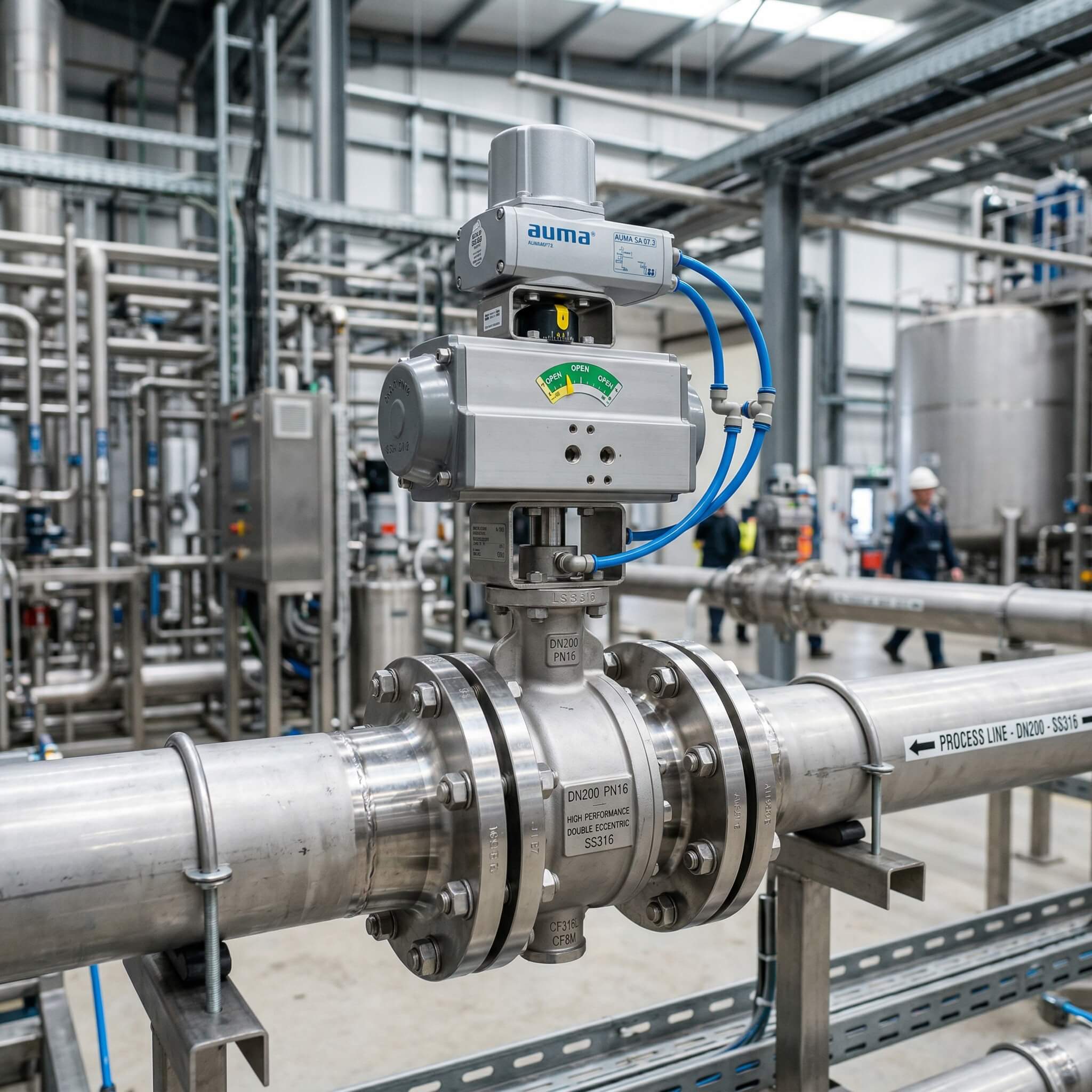
Butterfly valve construction relies on a disc-based design that provides efficient quarter-turn flow control in compact piping systems. You are likely facing issues with heavy, expensive valves that cause significant pressure drops and mechanical failure. These bulky components increase maintenance costs and operational downtime, frustrating your engineering team. By mastering butterfly valve construction, you can implement a lightweight, cost-effective solution that ensures high-performance sealing across diverse industrial applications.
1. What is standard butterfly valve construction?
Standard butterfly valve construction features a centered disc and stem that simplifies flow control in low-pressure systems. When evaluating your facility needs, understanding butterfly valve construction allows you to select the most cost-effective components for general water or air service. This basic layout ensures a straightforward installation process without requiring excessive pipe supports.
Concentric Zero-Offset Designs
Think about this: why is the concentric model so common?
- The stem passes through the center of the disc.
- The disc makes constant contact with the seat.
- It is the most economical solution for non-critical flows.
Basic Component Integration
In other words, the synergy of parts determines the valve’s lifespan.
- The body acts as a rigid pressure vessel.
- High-quality actuators provide the necessary torque.
- Replaceable liners simplify the maintenance cycle.
Key Takeaway: You benefit from a simple, low-cost design that provides reliable shut-off in non-demanding environments.
| Feature | Description | Benefit |
|---|---|---|
| Stem Position | Centered in disc | Easy assembly |
| Seat Type | Resilient liner | Bubble-tight seal |
| Application | Low pressure | Cost savings |
Proper alignment of these basic parts ensures a long-lasting service life for your standard utility lines.
2. How does offset affect butterfly valve construction?
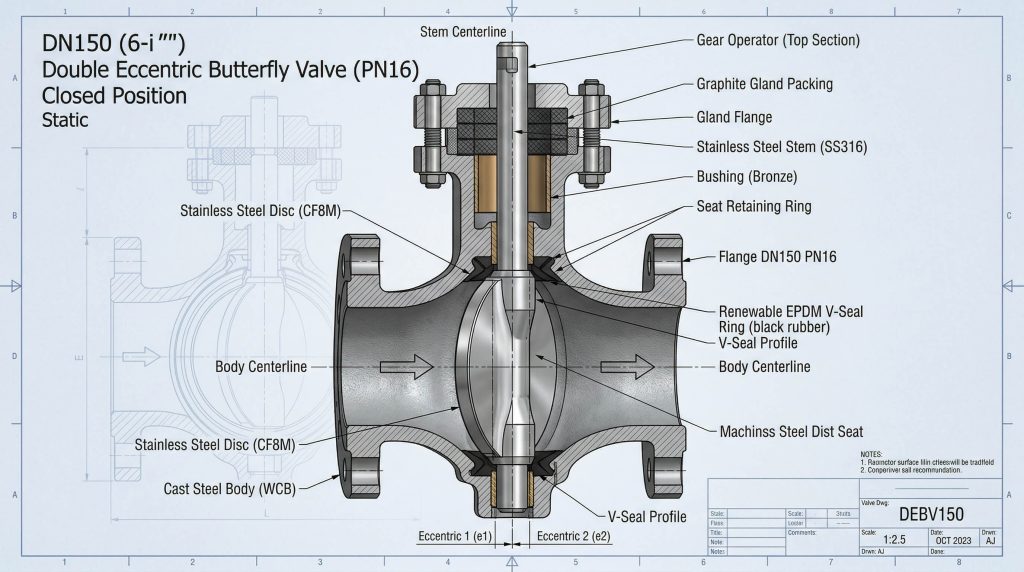
Offsets in butterfly valve construction reduce friction between the disc and the seat to enhance the valve’s sealing life. By moving the stem away from the disc’s centerline, the disc lifts away from the seat almost immediately upon opening. This reduces wear and tear, making the valve suitable for higher pressure ratings and more frequent operation.
Double Offset Performance Specs
Here is the kicker: the cam-like motion prevents seat deformation.
- The stem is positioned behind the disc face.
- An additional side offset minimizes seat rubbing.
- These designs handle medium-pressure industrial fluids easily.
Triple Offset Geometry Benefits
Furthermore, this geometry enables a zero-leakage metal-to-metal seal.
- A third offset uses a conical sealing surface.
- The disc only contacts the seat at the final closing point.
- It is the preferred choice for high-heat steam applications.
Key Takeaway: You can achieve superior sealing and lower maintenance costs by using offset designs in high-cycle environments.
| Offset Type | Mechanism | Primary Result |
|---|---|---|
| Double | Dual eccentricity | Reduced seat friction |
| Triple | Conical geometry | Zero leakage (Metal) |
Understanding these geometric differences helps you select a valve that survives harsh operating conditions.
3. Why choose eccentric butterfly valve construction?
Choosing eccentric butterfly valve construction is essential when you need to minimize operational torque and extend the life of soft seats. When you utilize butterfly valve construction with an eccentric design, the mechanical advantage allows for smaller actuators. This configuration is perfect for automation where space and energy efficiency are priorities for your project.
Friction Reduction Mechanics
The best part? You avoid the constant “rubbing” found in cheaper valves.
- The disc breaks contact with the seat immediately.
- Lower torque is required to move the disc.
- Actuator wear is significantly reduced over time.
High-Pressure Capability Seals
The bottom line is that eccentricity supports more robust materials.
- It allows for reinforced PTFE or stainless steel seats.
- Fire-safe designs are easily integrated into this framework.
- The construction maintains integrity under heavy pressure surges.
Key Takeaway: Eccentric designs provide you with a high-performance solution that reduces the total cost of ownership through automation efficiency.
| Parameter | Eccentric Value | Impact |
|---|---|---|
| Torque | Lower required | Smaller actuators |
| Seat Wear | Minimal | Longer service life |
By opting for eccentricity, you ensure your automated systems run smoother with less mechanical strain on the components.
4. How to optimize butterfly valve body construction?
Optimizing butterfly valve body construction involves selecting the right face-to-face dimensions and weight to fit your specific piping layout. The body must withstand external mechanical stresses while remaining compact enough to save valuable installation space. You can reduce the overall weight of your piping system by choosing bodies designed with high-strength alloys that meet international safety standards.
Face-to-Face Dimension Efficiency
Look: you can save up to 70% of the space compared to gate valves.
- Short laying lengths simplify installation in crowded plants.
- Lighter bodies require fewer heavy pipe hangers.
- Compact footprints allow for easier maintenance access.
Structural Integrity Standards
Believe it or not, thin profiles do not mean weak performance.
- Bodies are cast to meet strict pressure-temperature ratings.
- Epoxy coatings protect the exterior from corrosion.
- Reinforcing ribs are often added to larger diameter valves.
Key Takeaway: Optimizing the body style allows you to reduce structural costs and simplify the logistics of your valve installation.
| Body Aspect | Detail | System Benefit |
|---|---|---|
| Weight | Lightweight design | Lower structural load |
| Length | Short face-to-face | Fits tight spaces |
A well-chosen body configuration ensures your system remains safe while maximizing the use of available facility space.
5. What defines butterfly valve seat construction?
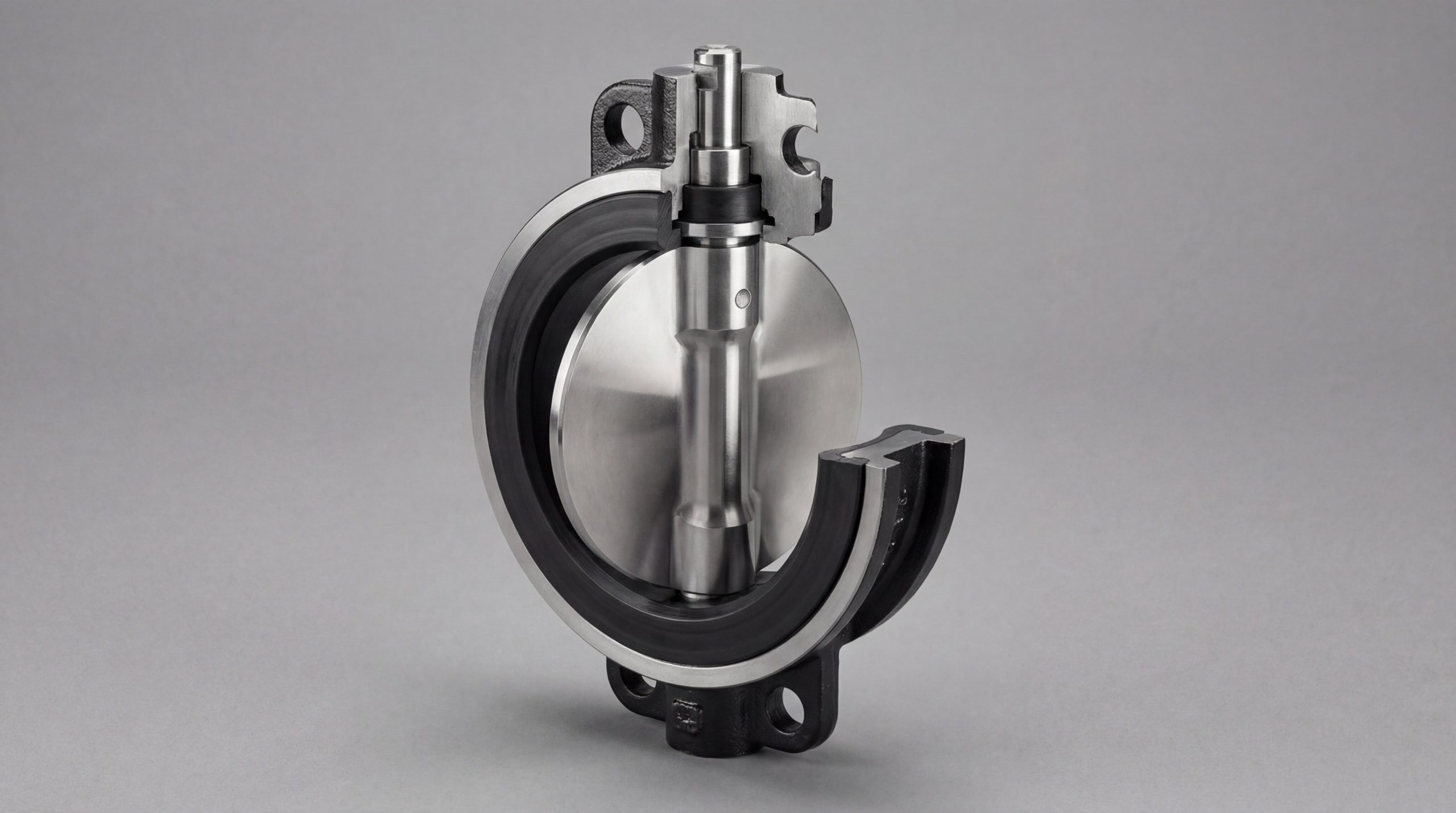
Butterfly valve seat construction is defined by the material’s ability to create a tight seal against the disc under varying pressures. In high-performance butterfly valve construction, the seat is the primary barrier against leaks and determines the temperature limits of the unit. Choosing the right seat material prevents media contamination and ensures the valve remains functional throughout its intended lifecycle.
Resilient Soft Seating Materials
The secret lies in the elastic memory of the rubber liner.
- EPDM provides excellent resistance to hot water.
- Viton is used for aggressive chemicals and oils.
- Soft seats offer bubble-tight shut-off for gas lines.
Metal-to-Metal Sealing Profiles
Conversely, metal seats are required for the most extreme environments.
- High-grade stainless steel rings resist abrasive media.
- Stellite facing increases the hardness of the contact area.
- These seats are essential for high-pressure steam.
Key Takeaway: You ensure system reliability by matching the seat construction to the chemical and thermal properties of your fluid.
| Material | Temp Limit | Best Media |
|---|---|---|
| EPDM | 120°C | Water / Steam |
| PTFE | 200°C | Corrosive acids |
| Metal | 600°C+ | High-heat steam |
Selecting the correct seat profile is the most important step in preventing unplanned downtime and hazardous leaks.
6. How do stems impact butterfly valve construction?
Stems impact butterfly valve construction by serving as the critical link that transmits torque from the handle or actuator to the disc. The stem must be strong enough to withstand high torsional loads without bending or snapping during operation. High-quality stem construction prevents internal seizing and ensures that the disc remains perfectly aligned with the seat for a consistent seal.
One-Piece vs Two-Piece Stem Designs
Specifically, you must choose between maximum strength and maximum flow.
- One-piece stems provide the highest torsional integrity.
- Two-piece stems reduce the profile for better flow capacity.
- Both types typically use high-strength stainless steel.
Disk and Stem Connection Methods
Here is the kicker: how the disc attaches determines the leak path risk.
- Thru-pinning is a secure, traditional locking method.
- Splined drives allow for a “floating” disc alignment.
- Pinless designs eliminate the need for holes in the disc.
Key Takeaway: You benefit from smoother control and safer operations when you invest in high-grade stem materials and secure connections.
| Stem Design | Best Feature | Operational Gain |
|---|---|---|
| One-Piece | High Strength | Reliable automation |
| Two-Piece | Low Profile | Higher flow (Cv) |
Robust stem construction is the backbone of your valve’s mechanical reliability, especially in high-torque automated systems.
7. Is bonnet design vital for butterfly valve construction?
Bonnet design is vital for butterfly valve construction because it houses the stem packing and provides the mounting surface for actuators. When you specify butterfly valve construction for critical services, the bonnet ensures that no media escapes into the environment. A well-designed bonnet also dissipates heat, protecting your expensive electronic actuators from thermal damage in high-temperature lines.
Stem Sealing and Packing Systems
The bottom line is that the packing prevents fugitive emissions.
- Adjustable glands allow you to tighten seals in the field.
- V-ring packing provides a self-adjusting, leak-free seal.
- Graphite packing is used for high-temperature applications.
Mounting Pads for Actuation
In other words, standardized pads make your life much easier.
- ISO 5211 pads ensure compatibility with all major actuators.
- High-mount bonnets keep heat away from sensitive electronics.
- Extended bonnets are necessary for cryogenic insulation.
Key Takeaway: A standardized, robust bonnet design allows you to automate your system easily while maintaining a safe, leak-free environment.
| Bonnet Feature | Specification | User Advantage |
|---|---|---|
| ISO Pad | ISO 5211 | Universal mounting |
| Packing | PTFE / Graphite | Leak prevention |
Choosing a valve with a high-quality bonnet ensures that your automation upgrades are seamless and your environmental compliance is met.
8. How do connections vary in butterfly valve construction?
Connections vary in butterfly valve construction to allow for different levels of safety and ease of maintenance within your piping system. You must choose between wafer, lug, or flanged styles based on whether you need to isolate downstream pipes for repair. Each connection type offers unique benefits in terms of weight, installation speed, and structural stability under high-pressure conditions.
Wafer and Lug Body Styles
Think about this: do you need to perform maintenance without shutting down?
- Wafer valves are the lightest and most economical.
- Lug valves allow for dead-end service and downstream work.
- Lugged bodies use threaded inserts for independent bolting.
Flanged and Butt-Weld Options
On the other hand, heavy-duty infrastructure requires more stability.
- Double-flanged valves offer the most secure mechanical joint.
- Butt-weld connections are used for permanent, leak-free lines.
- These are common in large-diameter water and power projects.
Key Takeaway: Selecting the right connection style allows you to balance your project budget with the need for future maintenance flexibility.
| Style | Installation | Security Level |
|---|---|---|
| Wafer | Between flanges | Standard |
| Lug | Bolted to flange | High (Dead-end) |
| Flanged | Bolted both sides | Maximum |
The right connection choice prevents system-wide shutdowns when a single component needs attention or replacement.
9. Can materials change butterfly valve construction?
Materials change butterfly valve construction significantly by dictating the pressure limits and chemical compatibility of the entire assembly. When choosing butterfly valve construction, you must select metallurgy that resists corrosion and erosion from your specific media. High-performance alloys and specialized linings can extend the life of your equipment from months to years in aggressive industrial environments.
Metallic Alloy Selection Factors
Look: cast iron isn’t always the best choice for industrial sites.
- Ductile iron offers better shock and impact resistance.
- Stainless steel is required for sanitary or food-grade lines.
- Carbon steel is the standard for high-temp oil and gas.
Liner and Coating Variations
In other words, the coating is your first line of defense.
- Nylon-coated discs resist wear from abrasive slurries.
- PTFE liners are essential for concentrated chemical acids.
- Rubber linings prevent the body from touching the media.
Key Takeaway: You save money on long-term replacements by investing in materials that are specifically rated for your fluid’s chemistry.
| Material | Environment | Key Benefit |
|---|---|---|
| Duplex SS | Seawater / Marine | Corrosion immunity |
| Cast Iron | HVAC / Indoor | Lowest initial cost |
Proper material selection ensures that your valves do not fail prematurely due to chemical attack or mechanical wear.
10. How to maintain butterfly valve construction quality?
Maintaining butterfly valve construction quality requires a structured schedule of inspections and routine part replacements to ensure zero leakage. You should monitor the condition of the seat and stem packing regularly to prevent small leaks from becoming major failures. By following a proactive maintenance plan, you extend the operational life of your valves and ensure the safety of your entire plant.
Routine Inspection Checklists
Specifically, you need to watch for signs of seat erosion.
- Check for external leakage around the stem gland.
- Inspect the disc edges for pitting or scale build-up.
- Cycle the valve monthly to prevent seat sticking.
Repair and Part Replacement Steps
The best part? Many designs allow for in-line seat replacement.
- Replaceable liners can be swapped without removing the body.
- Packing glands can be tightened during normal operations.
- Lubricating the gearbox ensures smooth actuator performance.
Key Takeaway: Regular maintenance prevents mechanical seizing and ensures your valves are ready to operate whenever they are needed.
| Task | Frequency | Target Area |
|---|---|---|
| Cycle Test | Monthly | Disc / Seat |
| Leak Check | Quarterly | Stem Packing |
Consistent care preserves the integrity of your high-performance valves, reducing the need for expensive, unplanned system overhauls.
Conclusion
Selecting the right butterfly valve construction ensures a long-lasting, high-efficiency system with minimal downtime. If you are struggling with leaky seals, high maintenance costs, or incompatible materials, it is time to upgrade to a precision-engineered solution. You can optimize your flow control today by implementing high-performance designs tailored to your specific industrial needs. Our vision is to empower global industries with reliable, sustainable, and high-quality flow control technology that stands the test of time. To find the perfect fit for your next project, contact us today for expert guidance and support.
FAQ: Common Questions on Construction
Can I use a wafer valve for dead-end service?
No, you should not use a wafer valve for dead-end service because it requires pipe flanges on both sides to remain securely in place. Lug-style valves are specifically designed for this purpose because they can be bolted directly to a single flange.
What’s the best material for a valve handling corrosive chemicals?
The best choice is typically a stainless steel body with a PTFE liner and a high-alloy disc. These materials are chemically inert and provide the highest level of protection against aggressive acids and bases.
How do I know if my valve needs a triple offset design?
You know you need it if your system involves high-pressure steam, extreme temperatures, or requires a zero-leakage metal seal. Concentric valves will fail quickly in these environments due to seat melting or excessive friction.
Can I automate any butterfly valve after installation?
Yes, most modern valves with an ISO 5211 mounting pad can be automated at any time. You simply need to remove the manual handle and install the appropriate pneumatic or electric actuator.
What’s the best way to prevent stem leakage in high-cycle systems?
The best method is to use a valve with a live-loaded packing system or high-quality V-ring seals. These designs automatically adjust for wear, maintaining a tight seal even after thousands of operations.