
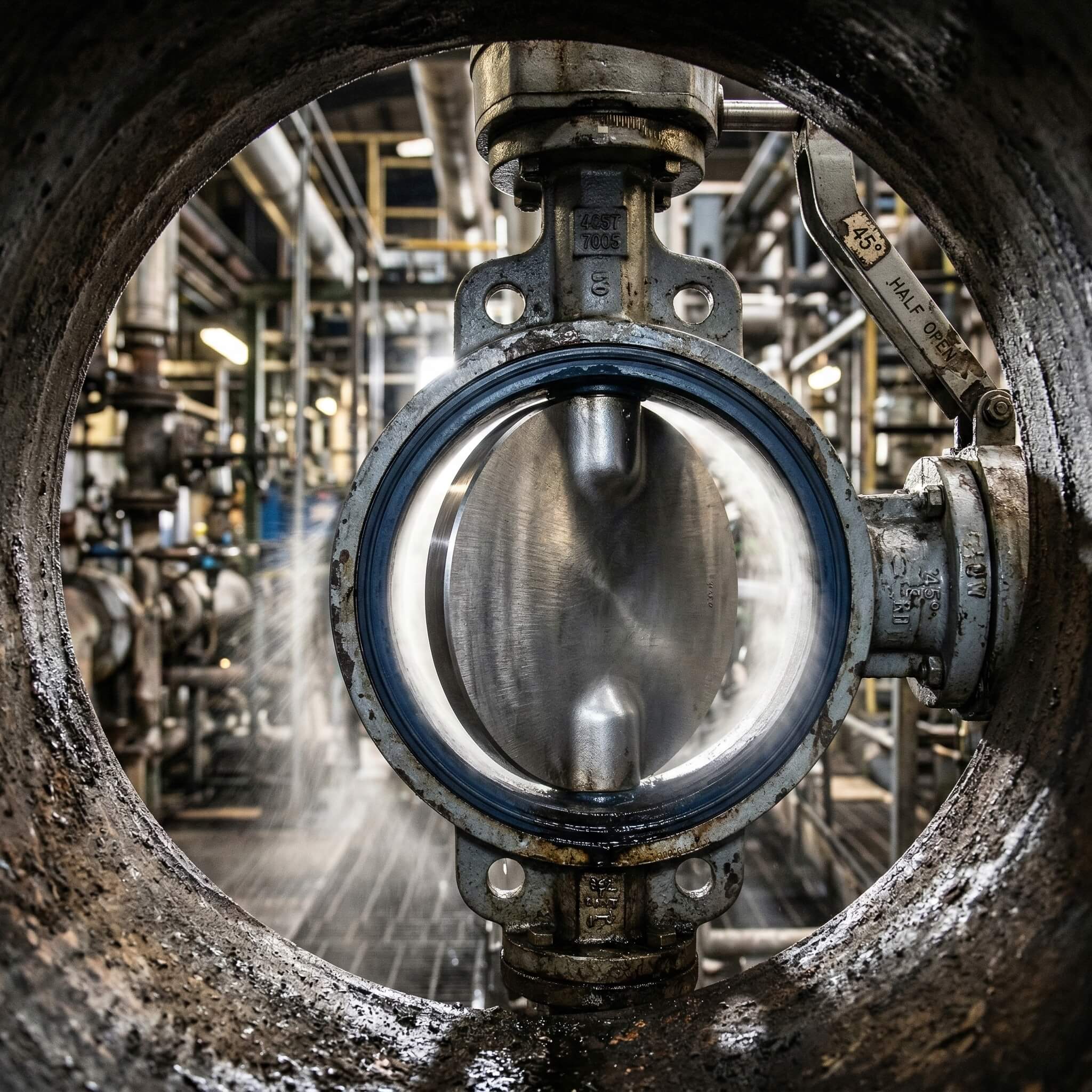
Yes, butterfly valves can be used for throttling, provided they are designed with the correct offset and material specifications for your specific hydraulic conditions. Imagine you are managing a high-pressure industrial cooling system where precise temperature control is a matter of safety. If you use a standard on/off valve for modulation, the resulting vibration and seat wear will eventually lead to a total system failure. By integrating a specialized butterfly valve throttle system, you can achieve stable flow regulation while significantly extending the life of your infrastructure.
How Do Butterfly Valves Work in Throttling?
Butterfly valves work in throttling by rotating a circular disc to create a variable opening that restricts fluid flow and induces a pressure drop. When you adjust a butterfly valve throttle to a partial angle, the fluid must navigate around the disc, which effectively modulates the volume passing through the line.
Understanding the Disc Rotation
You must realize that the angle of the disc directly correlates to the flow coefficient of the valve. As you turn the handle or actuator, the disc moves from a parallel position to an angular one.
Here is the thing:
- 0 degrees represents a fully closed state.
- 90 degrees represents a fully open state.
- Throttling occurs in the middle range.
Managing Variable Pressure Drops
Pressure drops are the primary mechanism by which you control the flow rate in any pipeline. A partially closed disc forces the media through a smaller area, increasing velocity and lowering pressure.
But there is a catch:
- High velocity can lead to turbulence.
- Energy is dissipated as heat or noise.
- You need a robust seat to handle these forces.
Key Takeaway
Throttling relies on precise angular control to create predictable resistance within the piping system.
| Opening Angle | Flow Characteristic | Control Level |
|---|---|---|
| 0° – 20° | High Resistance | Poor / High Wear |
| 30° – 70° | Linear Control | Optimal |
| 80° – 90° | Low Resistance | Minimal Control |
The table illustrates that the most effective regulation occurs when the valve is positioned in its mid-range opening.
Why Is Design Critical for Flow Control?
Design is critical because a standard zero-offset butterfly valve throttle can suffer from rapid seat degradation when used for frequent modulation. If the design does not account for the constant friction between the disc and the seal, you will experience internal leakage within a short operational window.
Limitations of Concentric Designs
In a concentric or zero-offset valve, the disc remains in contact with the seat throughout the entire 90-degree rotation. This creates constant rubbing that wears down the elastomer when you attempt to throttle.
Look closer:
- Friction increases as the disc moves.
- Seals can “set” or deform over time.
- You might lose the ability to shut off completely.
The Role of Material Selection
When you choose materials for a throttling application, you must consider the abrasive nature of high-velocity fluids. Harder disc coatings and reinforced seats are necessary to survive the turbulent environment created by the throttle.
Simply put:
- Stainless steel discs resist erosion.
- EPDM or PTFE seats provide flexible sealing.
- Ductile iron bodies offer structural integrity.
Key Takeaway
Standard designs are often insufficient for the mechanical stresses of continuous flow regulation.
| Design Element | Impact on Throttling | Lifecycle Result |
|---|---|---|
| Zero Offset | High Seat Friction | Shortened Life |
| Resilient Seat | Good Low-Pressure Seal | Wear Sensitive |
| Metal-to-Metal | High Temperature Resistance | Lower Sealing Class |
Choosing the wrong design leads to premature failure and increased maintenance costs for your facility.
Are Double Eccentric Valves Better for Service?
Double eccentric valves are significantly better for throttling service because their dual-offset shaft design lifts the disc away from the seat almost immediately upon opening. This specialized butterfly valve throttle configuration eliminates the rubbing friction that typically plagues standard valves during modulation.
Benefits of Reduced Seat Contact
The primary advantage you get with a double eccentric design is that the disc only contacts the seat in the final degrees of closure. This means that while you are throttling at a 45-degree angle, the seat is under no mechanical stress.
Think about it:
- Seat life is extended by 300% or more.
- Torque requirements are lower.
- You achieve more repeatable control.
Improving High-Cycle Reliability
In municipal and industrial waterworks, you often need a valve that can adjust hundreds of times per day. The double offset ensures that these cycles do not lead to the deformation of the sealing surface.
Wait, there’s more:
- They handle higher pressure differentials.
- They are suitable for clean and dirty water.
- You reduce unplanned downtime.
Key Takeaway
Double eccentric designs are the industry standard for reliable, high-performance flow regulation.
| Feature | Double Eccentric | Concentric |
|---|---|---|
| Seat Rubbing | Minimal (final 10%) | Constant (100%) |
| Throttling Capability | Excellent | Limited |
| Maintenance Need | Low | High |
This comparison highlights why engineers prioritize offset designs for systems requiring active flow management.
Does Throttling Increase the Risk of Cavitation?
Yes, a butterfly valve throttle significantly increases the risk of cavitation because the restricted flow path creates localized low-pressure zones. When the static pressure of the fluid drops below its vapor pressure, bubbles form and then collapse violently against the disc or pipe wall.
Identifying High-Velocity Zones
As you narrow the opening, the velocity of the fluid spikes at the edges of the disc. This is where you are most likely to see the destructive pitting associated with cavitation damage.
Look closer:
- Noise and vibration are early warning signs.
- Pitting can look like sandblasting.
- You may notice a drop in flow efficiency.
Strategies for Cavitation Prevention
You can mitigate cavitation by ensuring the pressure drop across the valve does not exceed critical limits. Sometimes, installing multiple valves in series or using anti-cavitation trims can protect your equipment.
The bottom line?
- Monitor the pressure recovery factor.
- Keep velocities within recommended ranges.
- You should size the valve correctly.
Key Takeaway
Cavitation is a physical reality of high-pressure throttling that requires careful hydraulic calculation to avoid.
| Warning Sign | Probable Cause | Impact |
|---|---|---|
| Loud Popping Noise | Vapor Bubble Collapse | Disc Erosion |
| Excessive Vibration | Turbulent Flow | Actuator Damage |
| Flow Choking | Vapor Formation | System Instability |
Recognizing these symptoms early allows you to adjust your process before catastrophic failure occurs.
When Is a Plunger Valve a Better Solution?
A plunger valve is a better solution when you require extreme precision or must manage very high pressure differentials that a standard butterfly valve throttle cannot handle. Plunger valves utilize a linear motion that keeps the flow path symmetrical, which prevents the turbulence common in disc-based designs.
Advantages of Linear Control
Plunger valves provide a nearly linear flow characteristic, giving you much finer control over small adjustments. If your process depends on exact flow increments, you will find the plunger design far more reliable.
It gets better:
- They manage cavitation internally.
- Flow is centered in the pipe.
- You get superior pressure recovery.
Remote Regulation and SCADA
These valves are ideal for integration with automated systems like SCADA. Because they respond predictably to input, you can program them to maintain exact levels or pressures without human intervention.
Think about it:
- Accurate sensors drive the plunger.
- Adjustments happen in real-time.
- You optimize energy usage.
Key Takeaway
While butterfly valves are versatile, plunger valves offer the ultimate performance for critical control points.
| Valve Type | Control Type | Cavitation Handling |
|---|---|---|
| Butterfly | Rotary / Non-linear | External Risk |
| Plunger | Linear | Internalized |
| Gate | On/Off Only | Not Applicable |
The data confirms that for high-precision regulation, a plunger-style mechanism is technically superior.
How Do You Calculate Sizing for Throttling?
Proper sizing for a butterfly valve throttle requires calculating the Flow Coefficient (Cv) to ensure the valve remains controllable across your entire operational range. If you select a valve that is too large, it will only throttle in the first few degrees of opening, leading to instability.
Determining the Flow Coefficient
You must determine the Cv value that corresponds to your maximum and minimum flow requirements. This ensures that the valve can provide the necessary pressure drop without being fully closed or wide open.
Simply put:
- Cv = Q * sqrt(SG / dP).
- Q is your flow rate.
- dP is the pressure drop.
Checking Velocity Limits
High velocity is the enemy of any throttling valve. You need to verify that the fluid speed through the narrowed orifice does not exceed the material limits of your disc and seat.
The best part?
- Most manufacturers provide tables.
- Software can model the flow.
- You avoid acoustic noise issues.
Key Takeaway
Accurate sizing prevents the “hunting” behavior of actuators and protects the valve from excessive wear.
| Sizing Error | Result | System Impact |
|---|---|---|
| Oversized Valve | Sensitive Control | Pressure Surges |
| Undersized Valve | Choked Flow | Restricted Capacity |
| High Velocity | Erosion | Rapid Failure |
Correct sizing is the single most important factor in the long-term success of a modulating valve installation.
What Is the Optimal Angle for Flow Control?
The optimal angle for using a butterfly valve throttle is generally between 30 and 70 degrees of opening. Operating your valve within this window ensures that you have a predictable relationship between the handle position and the actual flow rate.
Avoiding the Low Opening Zones
When you throttle below 30 degrees, the opening is so small that the fluid velocity becomes extremely high. This is the “danger zone” where cavitation and seat erosion are most likely to occur.
But there is a catch:
- Control becomes very sensitive.
- Small movements cause huge flow changes.
- You risk damaging the resilient seat.
Maximizing Regulation Efficiency
In the 30-to-70-degree range, the flow characteristic is most stable. You will find that your actuators perform much better here, as they don’t have to fight against extreme hydraulic forces.
Look closer:
- Flow is more laminar.
- Torque is balanced.
- You maintain precise control.
Key Takeaway
Designing your system to operate in the mid-range of the valve maximizes both control and component life.
| Angle | Control Quality | Risk Factor |
|---|---|---|
| 10° | Poor | Critical (Cavitation) |
| 45° | Excellent | Low |
| 85° | Poor | Low (Wide Open) |
Staying within the recommended angular limits ensures that your hydraulic system remains stable and manageable.
Can Automation Improve Throttling Performance?
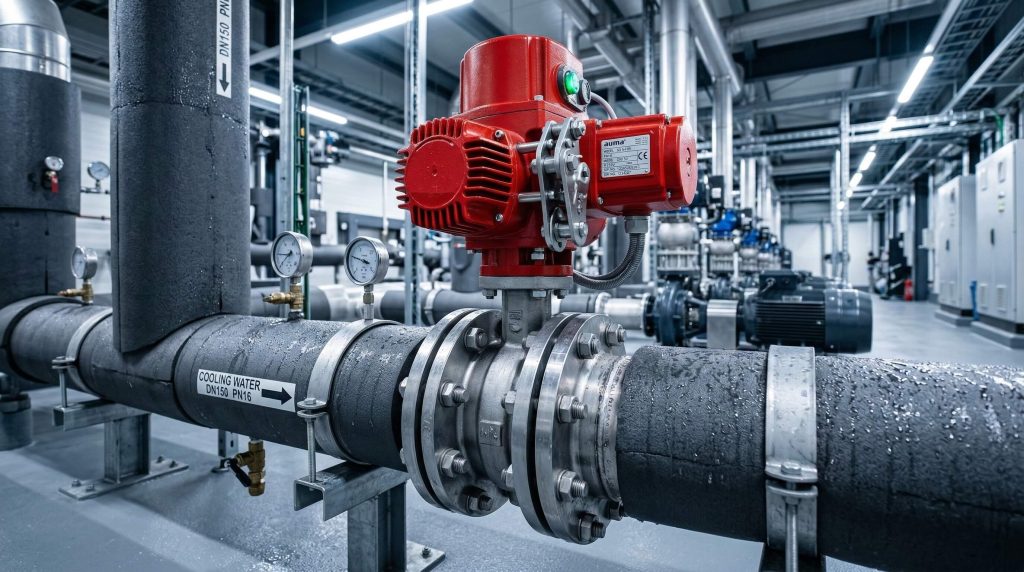
Automation significantly improves the performance of a butterfly valve throttle by providing repeatable, high-resolution adjustments that are impossible with manual operation. By using electric or pneumatic actuators, you can link the valve directly to your plant’s control logic.
Electric vs. Pneumatic Actuation
You have to choose the right power source based on your speed and precision requirements. Electric actuators offer great positioning accuracy, while pneumatic versions are excellent for fast-acting fail-safe scenarios.
Here is the thing:
- Modulating actuators use 4-20mA signals.
- Positioners provide real-time feedback.
- You can monitor valve health.
Feedback Loops and Sensors
Integrating pressure transducers or level sensors allows the valve to adjust itself automatically. If the downstream pressure drops, the actuator opens the valve slightly to compensate, maintaining a perfect equilibrium.
It comes down to this:
- No human error.
- Constant system optimization.
- You save on labor costs.
Key Takeaway
Automation transforms a simple mechanical device into a sophisticated component of a smart industrial network.
| Actuator Type | Speed | Accuracy |
|---|---|---|
| Manual | Slow | Low |
| Pneumatic | Fast | Moderate |
| Electric | Moderate | High |
Automated throttling is the preferred method for modern facilities aiming for maximum operational efficiency.
Is Maintenance Different for Regulation Valves?
Maintenance for a regulation butterfly valve throttle is more intensive than for standard on/off valves because the components are under constant hydraulic stress. You must schedule regular inspections to check for seat thinning and disc erosion, especially in high-cycle applications.
Routine Inspection Protocols
You should perform visual inspections and leak tests more frequently on throttling valves. Because they are always partially open, the “jetting” effect of the fluid can wear down the leading edge of the disc.
Wait, there’s more:
- Check for stem packing leaks.
- Lubricate the actuator linkage.
- You must listen for unusual noise.
Seal Replacement Techniques
Modern high-performance valves often allow for simple seal replacement without replacing the entire disc. Using basic tools like an Allen wrench, you can swap out a worn seat during a scheduled shutdown.
Simply put:
- Keep spare seats in stock.
- Clean the sealing surface well.
- You ensure a tight shutoff again.
Key Takeaway
Proactive maintenance is the only way to prevent a small wear issue from becoming a major line failure.
| Component | Check Frequency | Failure Mode |
|---|---|---|
| Resilient Seat | Annual | Internal Leakage |
| Stem Packing | Bi-annual | External Leakage |
| Disc Edge | Annual | Flow Inefficiency |
Following a structured maintenance plan keeps your regulation system running at peak performance year-round.
Are There Other Effective Throttling Designs?
While butterfly valves are excellent, you might also consider a Globe Valve or a Balancing Valve for specific sub-systems. Globe valves provide the highest level of precision for fine-tuning, while balancing valves are essential for maintaining hydraulic equilibrium in HVAC networks.
Globe Valve Precision
When you need to adjust flow in tiny increments, a globe valve is often the gold standard. Its design allows for very fine modulation, although it does come with a higher pressure drop compared to a butterfly valve.
The best part?
- Excellent for high-pressure steam.
- High shutoff integrity.
- You get predictable flow curves.
Balancing Valve Stability
In complex heating and cooling systems, you must use balancing valves to ensure every branch receives the correct amount of fluid. These valves are specifically designed to be set and locked at a specific throttle position.
Think about it:
- They prevent “starving” of circuits.
- They include measurement ports.
- You achieve thermal comfort.
Key Takeaway
Choosing the right tool for the job often means looking beyond a single valve type to find the best hydraulic fit.
| Media Type | Recommended Valve | Primary Benefit |
|---|---|---|
| Slurry | Butterfly | Wide Path |
| Clean Gas | Globe | High Precision |
| HVAC Water | Balancing | System Equilibrium |
Analyzing your media and system goals will lead you to the most efficient throttling solution for your project.
Conclusion
Navigating the complexities of flow regulation requires a deep understanding of valve mechanics and hydraulic forces. Whether you are implementing a high-performance butterfly valve throttle or integrating advanced plunger control, the right equipment is vital for system longevity. Our engineering team is dedicated to providing the precision-engineered solutions you need to keep your operations running smoothly. For expert guidance on your next project, contact us today. We are committed to delivering the reliability and performance that global industries trust.
FAQ
- Can I use a standard wafer butterfly valve for throttling?
No, a standard concentric wafer valve is generally discouraged for throttling because the constant seat contact leads to rapid wear and potential leakage. - What is the best angle for a butterfly valve throttle?
Throttling is most effective when the disc is positioned between 30 and 70 degrees; this range provides the most linear control with the least risk of cavitation. - How do I know if my valve is cavitating?
You can identify cavitation by a distinct noise similar to gravel moving through the pipe, accompanied by excessive vibration and a decrease in flow efficiency. - Can I automate a butterfly valve for remote throttling?
Yes, by equipping the valve with a modulating electric or pneumatic actuator, you can achieve precise, remote-controlled flow regulation via a SCADA system. - How often should I replace the seat in a throttling valve?
The interval depends on the media and cycle frequency, but you should inspect the seat at least once a year to ensure it hasn’t been deformed by turbulent flow.