
In the high-stakes world of industrial infrastructure, project managers and procurement officers face a relentless dilemma: balancing the catastrophic risks of valve failure against the spiraling costs of over-engineered solutions. A single compromised seal in a high-pressure chemical line or a municipal water treatment facility isn’t just a maintenance nuisance; it creates a severe safety hazard and inflicts a massive blow to your operational ROI. The anxiety of potential leaks, unplanned downtime, and safety violations keeps conscientious buyers awake at night, especially when the market is flooded with inconsistent products that lack rigorous validation.
But here is the reality you must face.
Many suppliers promise “high performance” yet deliver standard concentric valves that inevitably fail under the stress of rigorous cycling or pressure surges. Without comprehensive documentation, complete material traceability, and aggressive testing protocols—like 1.5x hydrostatic pressure checks—you are essentially gambling with the integrity of your infrastructure. True high-performance butterfly valves are the answer, engineered to maximize flow control while ensuring bubble-tight shutoff under the most demanding conditions. By bridging cost-effective manufacturing with strict adherence to ISO and DIN standards, and utilizing advanced seat materials like PTFE and EPDM, you can secure the reliability your sophisticated B2B operations demand.
1. What Distinguishes High-Performance Butterfly Valves?
Why choose offset designs over concentric?
Standard concentric valves rely on the interference fit of a rubber liner, which creates constant friction and rapid wear during every operation cycle. High-performance valves utilize double or triple offset geometries that physically cam the disc off the seat immediately upon rotation, eliminating friction and significantly extending service life. This engineering nuance allows these valves to handle higher pressures and temperatures while maintaining a reliable seal for years.
How does valve geometry affect sealing?
The geometric design of the valve directly correlates to its ability to maintain a tight seal under varying pressure loads.
- Concentric (Zero Offset): The stem is centered, causing the disc to rub the seat continuously, limiting pressure handling.
- Double Offset: The stem is offset from the disc and body center, reducing contact and allowing for higher pressure ratings like PN25.
- Triple Offset: A third angular offset creates a cone-shaped sealing profile, enabling metal-to-metal, zero-leakage shutoff in extreme heat.
Now, you might be wondering…
What are the pressure limits for these designs?
While standard rubber-lined valves typically max out at PN10 or PN16, high-performance variants are engineered to withstand significantly greater forces.
- Double Offset capabilities: Frequently rated for ANSI Class 150 to 300 (up to approx. 50 bar).
- Triple Offset capabilities: Can handle ANSI Class 600 and beyond, exceeding 100 bar in specialized applications.
- RUITO’s Focus: We specialize in the PN10 to PN25 range (150–600 PSI), covering the vast majority of industrial utility needs.
| Feature | Concentric (Zero Offset) | Double Offset (High Performance) | Triple Offset |
|---|---|---|---|
| Primary Seal Mechanism | Interference fit (Rubber compression) | Cam action compression (Soft/Metal) | Torque Seated (Metal-to-Metal) |
| Friction Level | High (Constant rubbing wears seat) | Low (Disc cams off seat) | Zero (No rubbing contact) |
| Pressure Rating Range | Low (PN6 – PN10) | Medium-High (PN10 – PN40) | Extreme (ANSI Class 600+) |
| Typical Applications | HVAC, Water Distribution | Chemical, High-Pressure Water, Gas | Steam, Extreme Heat, Oil & Gas |
Expert Analysis: Most seal failure on a standard butterfly valve occurs during the first and last few degrees of opening or closing due to scrubbing. High-performance offset designs eliminate this specific friction point, which is why RUITO’s double-eccentric valves can sustain long-term reliability even in high-cycle B2B applications where standard valves would fail within months.
Key Takeaway:
True high-performance status is defined by geometry, not marketing; moving from concentric to offset designs is the only way to achieve reduced seat wear, higher cycle life, and reliable operation in high-pressure industrial environments.
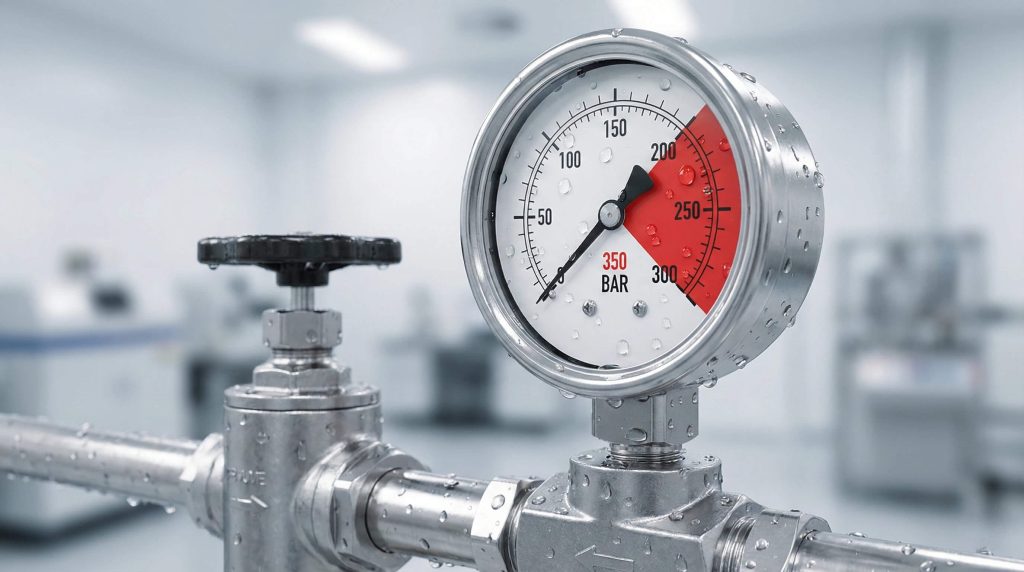
2. How Does Butterfly Valve Pressure Testing Ensure Safety?
Why is the testing protocol critical?
A valve’s pressure rating is only as good as the testing process that validates it, and statistical batch testing is simply an unacceptable risk for critical infrastructure. You must demand 100% inspection where every single unit is subjected to rigorous hydraulic and air tightness tests before it ever leaves the factory. At RUITO, we reject the industry standard of random sampling in favor of testing every valve from DN25 to DN3000.
Here is the bottom line.
What do PN ratings actually mean for you?
Understanding PN (Pressure Nominal) ratings is essential for selecting the correct valve for your system’s maximum operating pressure.
- PN10: Rated for 10 bar (approx. 145 psi), suitable for general water and irrigation.
- PN16: Rated for 16 bar (approx. 232 psi), the standard for many industrial water and HVAC systems.
- PN25: Rated for 25 bar (approx. 362 psi), designed for high-rise pumping and demanding process lines.
How to handle pressure surges?
Valves must be able to withstand temporary pressure spikes, known as water hammer, without suffering catastrophic shell failure.
- Safety Margins: Standards mandate testing above the working pressure to create a safety buffer.
- RUITO’s Protocol: We test at 1.5x the rated pressure (hydrostatic shell test) to ensure robustness.
- Real-World Implication: A PN16 valve is tested at 24 bar to guarantee it won’t crack under a surge.
| ISO Rating | Approx. ANSI Class | Max Working Pressure | RUITO Test Pressure (1.5x) | Typical Application |
|---|---|---|---|---|
| PN 10 | Class 75 | 10 Bar (145 PSI) | 15 Bar (217 PSI) | Water / Irrigation |
| PN 16 | Class 150 (Low) | 16 Bar (232 PSI) | 24 Bar (348 PSI) | HVAC / Industrial Water |
| PN 25 | Class 150 (High) | 25 Bar (362 PSI) | 37.5 Bar (543 PSI) | High-Rise Pumping / Process |
Expert Analysis: A mill test certificate is often treated as just paper, but the reality of quality lies in the testing rig capabilities. We invite our B2B partners to witness our 1.5x pressure tests via video or on-site visits because seeing a PN25 valve hold steady at 37.5 bar provides an assurance of structural integrity that no document alone can match.
Key Takeaway:
Never rely on the rated pressure alone; ensure your supplier validates safety through a mandatory 1.5x hydrostatic testing protocol on 100% of their inventory to protect your personnel and equipment from catastrophic pressure surges.
3. Which Seat Materials Withstand High Pressure?
When to specify PTFE seats?
PTFE (Polytetrafluoroethylene) is the premier choice for applications requiring superior chemical resistance and low friction coefficients.
- Chemical Shield: It is inert to nearly all industrial chemicals, acids, and alkalis.
- Pressure Handling: PTFE lined valves are excellent for maintaining seals in high-pressure corrosive lines.
- Longevity: Its low friction reduces the torque required to operate the valve, extending actuator life.
Is EPDM suitable for high pressure?
EPDM (Ethylene Propylene Diene Monomer) is an exceptionally resilient material ideal for water and steam applications but has specific limitations.
- Resilience: Excellent memory allows it to maintain a tight seal under repeated compression at moderate pressures.
- Temperature: Handles a range of -30°F to 225°F effectively.
- Vulnerability: It is absolutely unsuitable for hydrocarbons or oils, which cause rapid swelling and failure.
But be careful.
How does temperature impact the seal?
As operating temperatures rise, the allowable working pressure of the valve typically decreases, a phenomenon known as derating.
- Thermal Expansion: High heat can cause softer seat materials to expand or deform, compromising the seal.
- Cold Flow: PTFE can be susceptible to deformation under constant load at high temperatures if not reinforced.
- Material Selection: Choosing the right combination of body and seat is vital for maintaining pressure ratings at temperature.
| Characteristic | EPDM Seat | PTFE (Teflon) Seat | NBR (Buna-N) Seat |
|---|---|---|---|
| Primary Application | Water, Steam, Glycol | Corrosive Chemicals, Food | Oil, Gas, Fuels |
| Temp Range | -30°C to +120°C | -50°C to +200°C | -20°C to +90°C |
| Chemical Resistance | Excellent for polar fluids | Near-universal resistance | Good for petroleum oils |
| Weakness | Oils, Greases, Hydrocarbons | High Pressure Cold Flow | Ozone, Ketones, Sunlight |
Expert Analysis: Specifying the wrong seat material is the number one cause of premature valve failure in industrial settings. While EPDM is cost-effective for water, exposing it to even trace amounts of hydrocarbon oils causes swelling and seizure, whereas using PTFE for abrasive slurries can lead to premature wear; our engineers perform detailed fluid dynamics calculations to prevent these mismatches.
Key Takeaway:
Select seat materials based on a holistic view of your media’s chemical properties, operating temperature, and pressure requirements, using PTFE for chemical aggression and EPDM for water resilience, to ensure lasting seal integrity.
4. How to Manage Pressure Drop Challenges?
What causes excessive pressure loss?
The inherent design of a butterfly valve places the disc directly in the center of the flow path, creating an obstruction even when fully open.
- Turbulence: This obstruction interrupts laminar flow, creating turbulence downstream.
- Energy Cost: High pressure drops require pumps to work harder, increasing energy consumption.
- Sizing: Undersized valves exacerbate this issue, acting as a permanent throttle in the line.
It gets even trickier.
How does disc shape influence flow?
Advanced high-performance valves feature streamlined disc profiles designed to minimize resistance and improve flow coefficients (Cv).
- Profile: Thinner, aerodynamic discs reduce the wake generated in the fluid.
- Materials: High-strength materials like Stainless Steel allow for thinner discs without sacrificing strength.
- Efficiency: Optimized shapes allow for higher flow rates with lower pressure loss.
Can cavitation damage the valve?
Cavitation is a destructive phenomenon that occurs when rapid pressure drops cause vapor bubbles to form and violently collapse.
- Erosion: The imploding bubbles can pit the metal disc and destroy soft seats.
- Noise: It creates significant noise and vibration that can damage piping supports.
- Prevention: Never use a standard butterfly valve for severe throttling without calculating the cavitation index.
Key Takeaway:
Manage pressure drop by selecting valves with streamlined disc profiles and appropriate Cv values, and rigorously avoid using standard valves for throttling applications where cavitation risks could destroy your valve internals.
5. Why Is Seal Integrity Vital for Pressure Control?
What causes seal degradation?
Seal degradation is typically a result of chemical incompatibility, thermal cycling, or abrasive wear from particulate matter in the media.
- Chemical Attack: Incompatible fluids can soften or harden the elastomer, leading to cracks.
- Abrasion: Solids in the fluid can scour the seat surface every time the valve cycles.
- Aging: Elastomers lose their elasticity over time, reducing the compression force needed to seal.
How to prevent low-pressure leaks?
Paradoxically, some high-pressure valves rely on the system pressure to help energize the seal, making them prone to leaking at low pressures.
- Interference Fit: RUITO’s designs utilize a precise interference fit between the disc and seat to ensure sealing at zero differential pressure.
- Seat Design: Specialized seat geometries maintain contact regardless of line pressure.
- Testing: Low-pressure air tests are crucial to identify these leaks before installation.
Why is installation alignment crucial?
Even the highest quality valve will fail if it is installed incorrectly within the piping system.
- Misalignment: Piping misalignment places mechanical stress on the valve body, distorting the seat.
- Compression: Uneven tightening of flange bolts can cause uneven compression of the liner.
- Support: Lack of proper pipe support can transfer weight loads onto the valve.
Key Takeaway:
Seal integrity is maintained not just by material quality but by preventing low-pressure leaks through interference designs and ensuring precise installation alignment to avoid mechanical stress on the valve body.
6. How Do Manufacturing Standards Ensure Reliability?
What is the role of ISO 5752?
ISO 5752 is the global benchmark that specifies the face-to-face dimensions for metal valves to ensure interchangeability between different manufacturers.
- Compatibility: Ensures that a RUITO valve can drop into the same space as a valve from another brand.
- Series: Defines dimensions for various pressure ratings and valve types (wafer, lug).
- Global Trade: Facilitates international sourcing without fear of dimensional mismatch.
Why does API 609 compliance matter?
API 609 is the rigorous standard set by the American Petroleum Institute, focusing on design, testing, and performance for critical applications.
- Design: Covers structural forms like double and triple eccentric designs.
- Testing: Mandates stringent seat leakage specifications for bubble-tight shutoff.
- Reliability: Signals that the valve is built to withstand the harsh conditions of the oil and gas industry.
How does RUITO ensure traceability?
For risk-averse procurement managers, knowing the provenance of every component is non-negotiable.
- Archives: We maintain quality archives tracking production dates and operator details.
- Batching: Raw materials are tracked by batch numbers to ensure purity and compliance.
- Accountability: Test data is linked to specific operators, ensuring personal responsibility for quality.
| Standard | Focus Area | Benefit to Buyer |
|---|---|---|
| ISO 9001 | Quality Management Systems | Consistent manufacturing processes |
| ISO 5752 | Dimensional Standards | Guaranteed interchangeability |
| API 609 | Design & Performance | Suitability for critical/petroleum use |
| CE Marking | European Safety Compliance | Meets EU safety & health requirements |
| WRAS | Water Supply Regulations | Certified safe for potable water |
Expert Analysis: Adherence to standards like ISO 5752 and API 609 is not merely a box-ticking exercise; it is the blueprint for safety and compatibility. RUITO’s strict compliance ensures that our valves not only fit physically into your global supply chain but also perform reliably under the specific pressure and environmental stresses defined by international engineering bodies.
Key Takeaway:
Demand complete transparency and adherence to global standards like ISO 5752 and API 609, backed by full material traceability, to ensure your valves are safe, compatible, and engineered for the long haul.
7. How to Optimize TCO in Pressure Applications?
Why is initial cost misleading?
Focusing solely on the purchase price is a classic procurement error that often leads to higher long-term costs.
- Replacement: A cheap valve that fails annually costs far more in labor and downtime than a quality valve lasting five years.
- Efficiency: Inefficient valves increase pumping energy costs continuously.
- Risk: One failure can cause damage exceeding the cost of a hundred valves.
Here is why this matters to you.
How does cycle life impact ROI?
The number of times a valve can open and close before maintenance determines its true value to your operation.
- Wear Resistance: High-performance materials and offset designs extend cycle life significantly.
- Maintenance: Longer intervals between service requirements reduce operational expenditure (OPEX).
- Uptime: Reliable valves keep your production lines running, protecting revenue.
What is the value of documentation?
For “Rational Control” buyers, comprehensive documentation is a tangible asset that streamlines project management.
- Compliance: Material certificates and test reports prove compliance to auditors.
- Maintenance: Detailed drawings facilitate easier maintenance and parts ordering.
- Speed: Receiving full technical data upfront prevents installation delays.
| Cost Factor | Standard Supplier Approach | RUITO High-Performance Approach |
|---|---|---|
| Failure Rate | Variable (due to batch testing) | Low (100% tested reliability) |
| Documentation | Basic Invoice/Packing List | Full Material Certs, Test Reports, Drawings |
| Lead Time | Unpredictable | 72hr Dispatch (Standard), Defined Schedule |
| Technical Support | General Sales Reps | 8 R&D Engineers for Fluid Analysis |
| Testing | Random Sampling | 100% Inspection at 1.5x Pressure |
Expert Analysis: Total Cost of Ownership is optimized not by finding the cheapest unit price, but by investing in valves that eliminate unplanned downtime and maintenance labor. RUITO’s commitment to 1.5x pressure testing and traceable quality ensures that your investment yields returns through years of trouble-free operation, rather than becoming a recurring liability.
Key Takeaway:
Maximize your Return on Investment by shifting focus from sticker price to Total Cost of Ownership, prioritizing reliability, documentation, and technical support to eliminate the expensive hidden costs of valve failure.
Conclusion
Selecting the right high-performance butterfly valve is about more than simply matching pipe diameters and flange ratings; it is about aligning engineering integrity with your specific operational risks. Whether you are managing a complex municipal water project or a high-pressure chemical processing line, the ability to handle butterfly valve pressure variations reliably is what stands between smooth operations and costly, dangerous downtime. You need a partner who understands that “high performance” is a measurable standard, not a marketing slogan.
At RUITO, we don’t just manufacture valves; we engineer confidence for the most demanding B2B buyers. With 20 years of manufacturing expertise, a dedicated team of 96 professionals, and an unwavering commitment to 100% inspection at 1.5x rated pressure, we bridge the gap between cost-efficiency and world-class reliability. Our adherence to ISO 9001, CE, and API standards ensures that you receive a product that protects your infrastructure and your budget.
Ready to secure your pipeline integrity?
Don’t leave your system safety to chance. Contact RUITO’s engineering team today for a consultation on your specific pressure and media requirements, or request our detailed product catalog to see how we meet ISO/DIN standards for your next project.
FAQ
Q1: Can I use a high-performance butterfly valve to replace a gate valve?
Yes, in most isolation applications. High-performance butterfly valves are lighter, more compact, and faster to actuate (quarter-turn) than gate valves. However, you must ensure the pressure rating (PN) matches or exceeds the existing gate valve, and verify that the flow characteristics are suitable for your system if any throttling is required.
Q2: Why does RUITO test at 1.5x the working pressure?
Testing at 1.5x the rated working pressure (hydrostatic shell test) is a crucial safety buffer mandated by standards like API 598 and ISO 5208. It ensures that the valve body can withstand unexpected pressure surges, such as water hammer, without catastrophic failure, providing essential peace of mind for critical infrastructure.
Q3: How do I choose between a wafer and a lug style body?
Use a Wafer style valve for general installation between flanges where the valve is compressed by the surrounding pipe bolts. Choose a Lug style valve if you need end-of-line service or may need to remove downstream piping while keeping the upstream side under pressure, as lug valves are bolted directly to each flange independently.
Q4: What is the life expectancy of a PTFE seat compared to EPDM?
Life expectancy depends heavily on the media. In clean water applications, EPDM can last over 10 years. However, in chemical or high-temperature environments, PTFE is far superior and will significantly outlast EPDM. EPDM degrades rapidly when exposed to oils or petroleum, while PTFE remains inert to most chemicals.
Q5: Does RUITO provide traceability for materials used in high-pressure valves?
Absolutely. We maintain a complete quality archive for every product we manufacture. This includes raw material certificates, heat numbers for castings, production dates, and the identity of the specific operator responsible for the pressure testing, ensuring full accountability and transparency for your project documentation.