
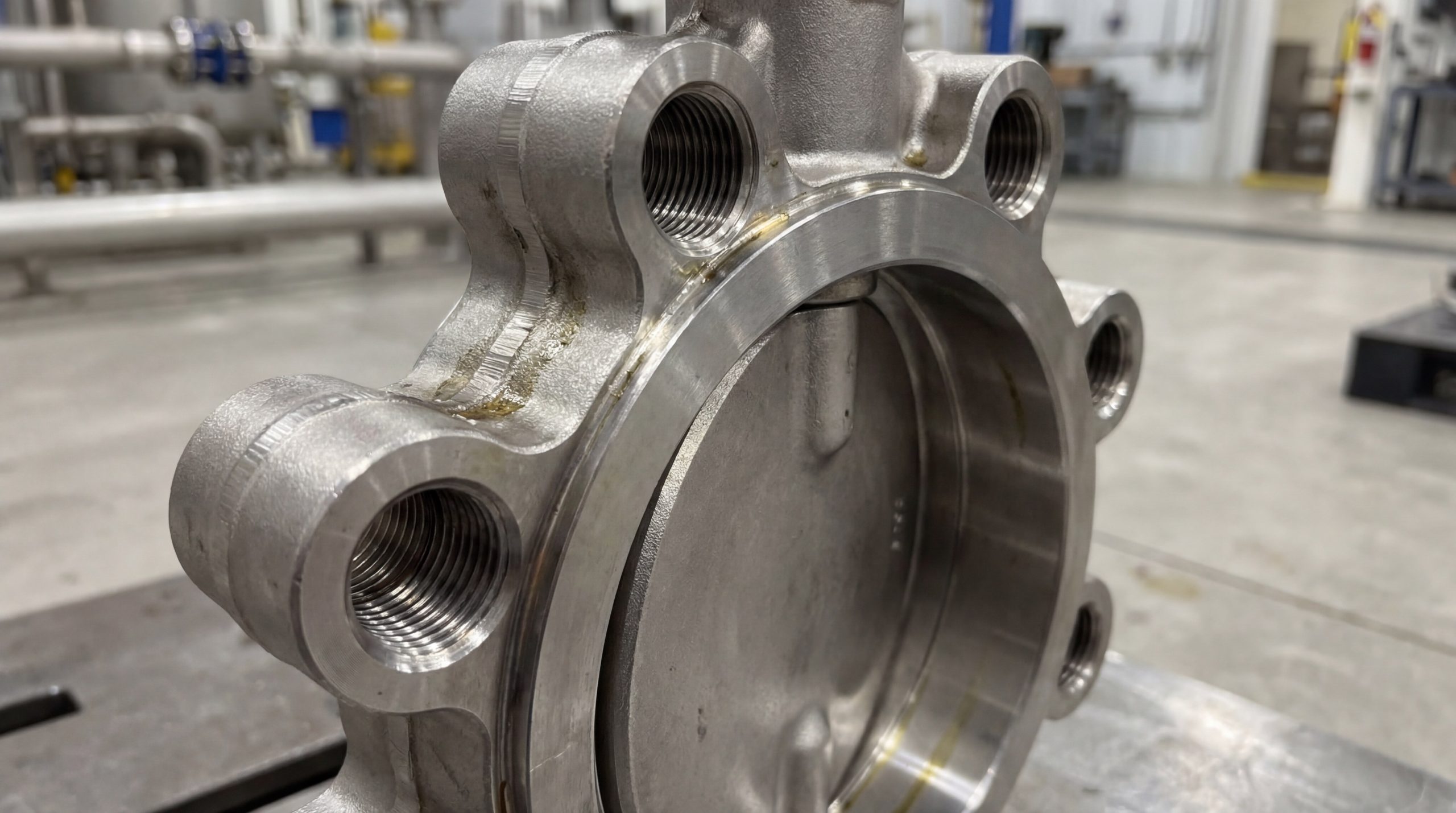
The primary difference between wafer and lug-style butterfly valves is that lug-style valves feature threaded metal inserts (lugs) that allow for independent bolting from either side of the pipe, whereas wafer valves are clamped between two pipe flanges by long bolts. Imagine your production line coming to a sudden halt because a downstream section requires maintenance, but your current valve choice won’t allow you to isolate that section without depressurizing the whole plant. This common industrial headache leads to massive revenue loss and safety risks for your crew. By integrating a butterfly valve lugged type, you gain the mechanical flexibility to perform end-of-line service safely while maintaining system integrity upstream.
What is a butterfly valve lugged type?
A butterfly valve lugged type is a high-performance flow control device characterized by its outer casing that includes protruding threaded holes or “lugs.” You will find that these lugs allow the valve to be securely fastened to each flange independently, unlike ball valves which often use different connection methods.
How does the lug design function?
The lugs act as built-in nuts for the flange bolts.
Look at this:
- The body has a full set of threaded bolt holes.
- Bolts enter from both sides of the pipe.
- No nuts are required on the valve side of the flange.
Is it different from a wafer body?
Yes, the lugged body contains significantly more metal and internal threading than the wafer counterpart.
Here is the deal:
- Wafer bodies are slimmer and lighter.
- Lugged bodies provide a more rigid mechanical connection.
- The extra material improves resistance to thermal stress.
Key Takeaway
The lugged design provides a dedicated anchoring system for each flange, making it a robust choice for heavy-duty industrial environments.
Compare the basic structural differences in the table below.
| Feature | Lugged Type | Wafer Type |
|---|---|---|
| Connection | Threaded Lugs | Through-bolting |
| Bolt Threads | Internal | External Only |
| Material Mass | High | Low |
How does a butterfly valve lugged type handle pressure?
A butterfly valve lugged type handles pressure by distributing the force across individual threaded connections rather than relying on a single set of long bolts. This distribution ensures that the valve remains centered and sealed even when the pipeline experiences significant surges or vibrations.
Why is pressure distribution important?
In high-pressure systems, any slight misalignment can lead to gasket failure or internal leakage.
But that is not all:
- Short bolts are less prone to stretching under pressure.
- Each lug absorbs a portion of the mechanical load.
- The valve remains stable during quarter-turn actuation.
Does it support bi-directional flow?
A high-quality lugged valve is typically designed to provide a bubble-tight seal in both flow directions.
Consider this:
- Threaded inserts prevent the body from shifting.
- It maintains seal integrity regardless of flow path.
- Suitable for systems with fluctuating pressure zones.
Key Takeaway
Pressure handling in lugged valves is superior because the independent bolting prevents the mechanical “creep” often seen in long-bolt wafer setups.
Analyze how pressure affects these configurations using this guide.
| Pressure Aspect | Lugged Performance | Wafer Performance |
|---|---|---|
| Bolt Stretch | Minimal | High |
| Seal Stability | Superior | Moderate |
| Surge Resistance | High | Low |
Can you use a butterfly valve lugged type for dead-end service?
A butterfly valve lugged type is the standard industry choice for dead-end service because its threaded lugs hold the valve body securely against the upstream flange. Unlike check valves that require flow to function, these valves provide a positive mechanical shut-off at the end of a line.
What is dead-end service?
Dead-end service occurs when you remove the downstream piping for cleaning or repair while the upstream side remains under pressure.
Here is the deal:
- The valve must hold the full system pressure alone.
- Threaded lugs provide the necessary anchoring strength.
- It prevents the valve from being “pushed” out of the line.
Are there safety considerations?
You must always verify the pressure rating of the valve specifically for dead-end applications, as it may differ from the standard rating.
The bottom line:
- Use a blind flange on the open side for maximum safety.
- Ensure bolts are torqued to manufacturer specifications.
- Regularly inspect lug threads for signs of wear.
Key Takeaway
The ability to perform dead-end service is the single greatest advantage of the lugged style over the wafer style.
Check the suitability for termination points in this comparison.
| Service Type | Lugged Compatibility | Wafer Compatibility |
|---|---|---|
| End of Line | Yes | No |
| Isolated Removal | Yes | No |
| Pressure Termination | Secure | Unsafe |
Why choose a butterfly valve lugged type over wafer?
Choosing a butterfly valve lugged type over a wafer version is a strategic decision for systems that require frequent maintenance or high reliability. You will find that the initial higher cost is offset by reduced downtime and improved system versatility over the valve’s lifecycle.
Versatility in Piping Layouts
Lugged valves allow you to design complex systems where components need to be swapped out without draining the entire network.
Look:
- Ideal for pump stations and manifold systems.
- Easier to install in tight spaces.
- Supports future system expansions effortlessly.
Durability in Harsh Conditions
The thicker body and threaded connections provide a level of durability that thinner wafer valves cannot match.
But wait, there’s more:
- Better resistance to external mechanical impacts.
- Handles thermal cycling without losing seal compression.
- Reduces the risk of “walking” or shifting in the line.
Key Takeaway
Select the lugged type when your priority is system uptime, maintenance flexibility, and long-term mechanical stability.
Review the primary reasons for selection in the table below.
| Selection Factor | Lugged Choice | Wafer Choice |
|---|---|---|
| Maintenance Need | Frequent | Rare |
| System Lifetime | Long-term | Budget-focused |
| Space Constraints | Flexible | Minimal |
Where are butterfly valve lugged type models typically installed?
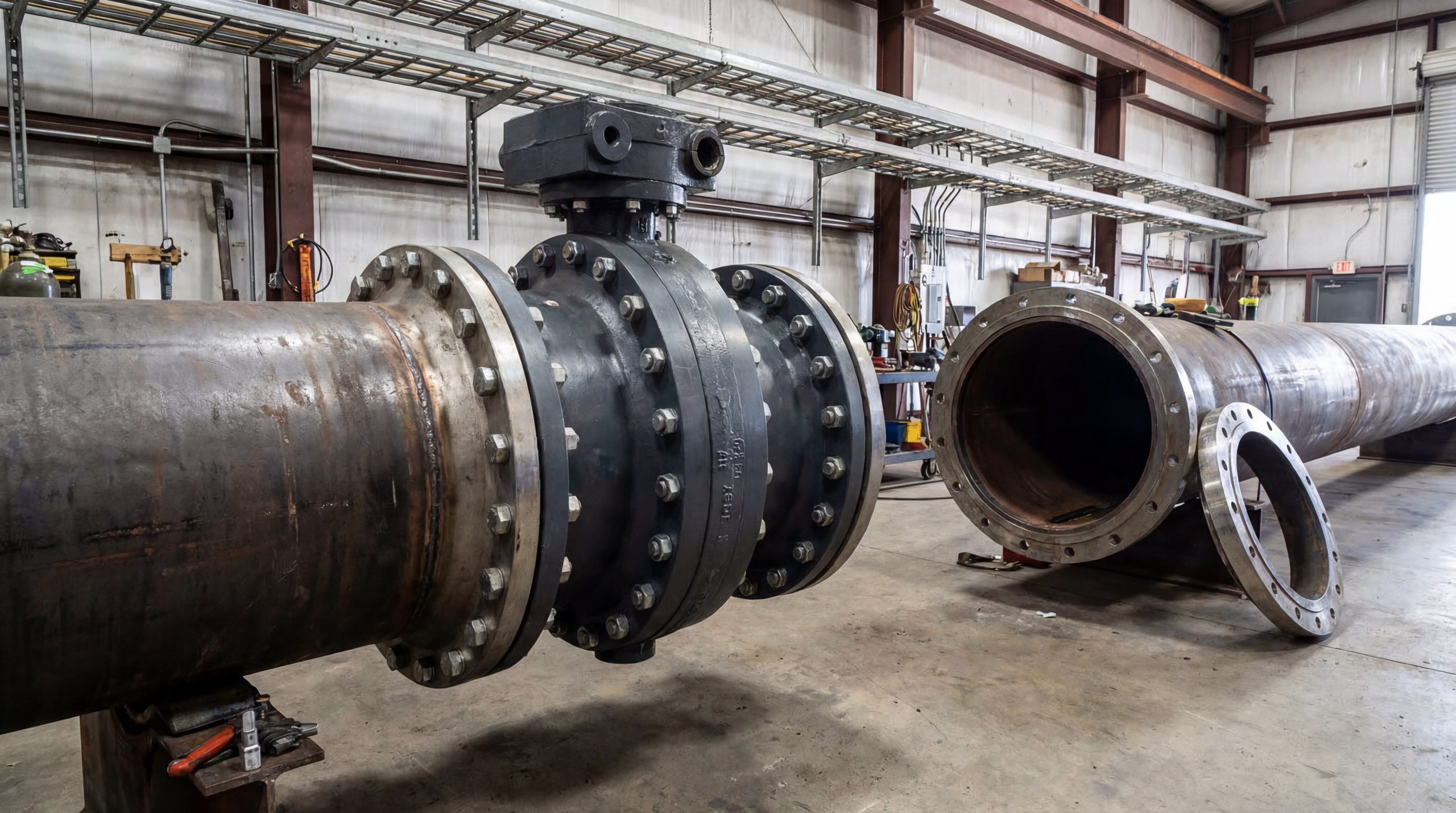
A butterfly valve lugged type is typically installed in industrial pipelines, chemical processing plants, and municipal water systems where reliable shut-off is critical. You will often see them placed directly after a gate valve to provide an additional layer of isolation for critical machinery.
Common Industrial Settings
From pharmaceuticals to food processing, these valves handle a wide range of media including solids, liquids, and gases.
Look at this:
- HVAC systems for large commercial buildings.
- Wastewater treatment plant aeration lines.
- Petrochemical refinery cooling water systems.
Specific Placement Zones
You should place these valves at strategic points where system segments might need to be isolated for inspection.
The deal is:
- Near pump inlets and outlets.
- At the base of storage tank discharge lines.
- On bypass loops for heat exchangers.
Key Takeaway
Strategic placement of lugged valves ensures that your facility can remain operational even during localized maintenance events.
This table identifies the best installation zones for these valves.
| Industry | Typical Fluid | Installation Point |
|---|---|---|
| Water Works | Potable/Waste | Main Distribution |
| Chemical | Aggressive Media | Processing Loops |
| Marine | Saltwater | Ballast Systems |
What materials are best for a butterfly valve lugged type?
A butterfly valve lugged type is most durable when constructed from materials like ductile iron, stainless steel, or specialized aluminum bronze. You must match the material of the valve body, disc, and seat to the specific chemical and temperature profiles of your application.
High-Strength Body Alloys
The body must be rigid enough to maintain thread integrity under high torque during installation.
Consider this:
- Ductile iron provides excellent strength-to-weight ratio.
- Stainless steel 316L is essential for corrosive environments.
- WCB carbon steel handles high-temperature utility steam.
Resilient Seat and Disc Materials
The internal components are what actually control the media, so their material choice is paramount.
But that is not all:
- EPDM seats are perfect for water and mild chemicals.
- PTFE (Teflon) handles aggressive acids and solvents.
- Nylon-coated discs reduce friction and increase lifespan.
Key Takeaway
Correct material selection prevents premature valve failure and ensures the threaded lugs do not seize over time.
Use this guide to select the right material for your media.
| Material | Media Type | Temp Range |
|---|---|---|
| Ductile Iron | Water/HVAC | -10°C to 120°C |
| 316 Stainless | Chemicals | -20°C to 200°C |
| Aluminum Bronze | Marine/Brine | -10°C to 150°C |
Is maintenance easier with a butterfly valve lugged type?
Maintenance is significantly easier with a butterfly valve lugged type because it allows you to remove downstream equipment while the valve stays bolted to the upstream side. This is a massive advantage over using a balancing valve or a wafer butterfly valve, which would require the entire line to be empty.
Simplified Component Replacement
You can swap out downstream pipes, pumps, or strainers without affecting the pressurized side of the valve.
Here is the deal:
- No need to support the valve with external rigging.
- Individual bolting means fewer hands on deck.
- Reduces the risk of seal damage during disassembly.
In-Line Inspection Capabilities
Since the valve remains anchored, you can visually inspect the disc and seat from the open downstream side.
Look:
- Checks for buildup or scale are faster.
- Verification of full closure is easier.
- Seat replacements can sometimes be done in situ.
Key Takeaway
The “independent bolting” feature of the lugged type translates directly into lower labor costs and faster maintenance turnarounds.
Evaluate the maintenance impact using the following table.
| Maintenance Task | Lugged Process | Wafer Process |
|---|---|---|
| Downstream Repair | Pressurized | Shut down only |
| Gasket Change | Easy access | Full removal |
| Inspection Time | Fast | Slow |
How do you size a butterfly valve lugged type correctly?
A butterfly valve lugged type must be sized based on the internal pipe diameter (DN) and the flange drilling standard (ANSI, DIN, or JIS) to ensure the lugs align perfectly. You should never force a valve into a line that doesn’t match its size, as this can strip the lug threads or cause leaks.
Matching Pipe and Valve Diameter
Ensuring the valve bore matches the pipe bore prevents turbulence and excessive pressure drops.
Look at this:
- Standard sizes range from DN50 up to DN1200.
- Check the Cv (Flow Coefficient) for your flow rate.
- Consider the disc thickness and its impact on flow.
Verification of Flange Standards
Because the lugs are threaded, the hole pattern must be an exact match for your existing flanges.
But wait, there’s more:
- ANSI Class 150 is common in North America.
- PN10/PN16 are the standard in European systems.
- Double-check bolt lengths to ensure full thread engagement.
Key Takeaway
Correct sizing involves more than just the diameter; it requires matching the mechanical interface of the lugs to your specific flange standard.
Follow this sizing checklist for your next project.
| Sizing Factor | Unit/Standard | Importance |
|---|---|---|
| Nominal Diameter | DN / Inches | Flow Capacity |
| Flange Pattern | ANSI / DIN | Bolt Alignment |
| Face-to-Face | ISO / API | Space Fitting |
Does a butterfly valve lugged type reduce system vibration?
A butterfly valve lugged type inherently reduces system vibration because its rigid, multi-point bolting system acts as a stabilizer for the piping joint. In high-velocity systems, a butterfly valve lugged type provides the structural damping necessary to prevent mechanical resonance.
Vibration Dampening via Rigid Coupling
The full-perimeter bolting creates a solid mechanical bridge between the two pipe ends.
Here is the deal:
- Direct lug contact prevents the valve from “floating.”
- It reduces harmonic noise in metal piping.
- Minimizes the chance of bolts loosening over time.
Impact on Actuator Longevity
Reduced vibration at the valve body means less stress on your electric or pneumatic actuators.
But that is not all:
- Prevents premature wear on the valve stem.
- Maintains accurate positioning for control.
- Extesnd the life of electronic limit switches.
Key Takeaway
In systems with heavy pumps or compressors, the lugged valve acts as a mechanical anchor that stabilizes the entire piping segment.
See how vibration is managed in these different setups.
| Vibration Factor | Lugged Effect | Wafer Effect |
|---|---|---|
| Noise Level | Low | Moderate |
| Bolt Loosening | Rare | Common |
| Actuator Stress | Low | Moderate |
What standards govern a butterfly valve lugged type?
A butterfly valve lugged type is manufactured to meet rigorous international standards such as API 609, EN 593, and ISO 5208 to ensure safety and performance. You should always demand full documentation and test reports, especially when sourcing from a global manufacturer to ensure compliance with your local regulations.
Key International Design Norms
These standards define everything from the thickness of the lugs to the testing pressure of the seals.
Consider this:
- API 609 covers design and face-to-face dimensions.
- MSS SP-67 is specific to butterfly valve manufacturing.
- ISO 9001 ensures consistent quality control processes.
Testing and Certification Requirements
Every valve should undergo a hydrostatic test at 1.5 times the working pressure before leaving the factory.
The bottom line:
- CE and DNV certifications are vital for marine/EU use.
- WRAS approval is needed for potable water systems.
- MTC (Material Test Certificates) verify the alloy content.
Key Takeaway
Compliance with recognized standards is your best insurance against catastrophic failure in high-stakes industrial applications.
Verify the standards applicable to your region in the table below.
| Standard | Region/Focus | Application |
|---|---|---|
| API 609 | Global / Design | Oil & Gas |
| EN 12266 | Europe / Testing | Industrial |
| NSF/ANSI 61 | USA / Safety | Water Treatment |
Precision Engineering for Global Infrastructure
At RUITO, we believe that the right valve can transform a standard system into a high-performance infrastructure. Our mission is to provide you with traceable, precision-engineered solutions that eliminate the risks of downtime and mechanical failure. Whether you are managing a municipal water network or a complex chemical refinery, our lugged butterfly valves are built to exceed international standards and deliver 24/7 reliability. For technical specifications or custom design requests, please contact us today to speak with our engineering team.
Frequently Asked Questions
Can I use a lug-style valve in place of a wafer valve?
Yes, in almost all cases. A lug-style valve can perform the same duties as a wafer valve, though it is heavier and more expensive. However, you cannot use a wafer valve in place of a lug valve for dead-end service.
What is the best material for a corrosive chemical line?
Stainless steel 316L or Hastelloy. These materials offer the best resistance to pitting and chemical degradation. Always pair them with a PTFE seat for maximum compatibility.
Can I install these valves vertically?
Yes, but with caution. While butterfly valves can be installed vertically, horizontal stems are often preferred in slurry applications to prevent sediment from settling in the bottom shaft bearing.
How do I know if the lugs are the right size for my bolts?
Check the flange standard. If your pipeline is ANSI 150, you must specify an ANSI 150 lug pattern. Using the wrong standard will lead to thread mismatch and installation failure.
What happens if a lug thread gets stripped?
The valve integrity is compromised. If a thread is stripped, that specific bolting point can no longer provide the necessary compression for the seal. It is usually more cost-effective to replace the valve body than to attempt a field repair on the threads.