
Yes, you can use a butterfly valve for throttling, provided you select the correct design and sizing for your specific flow requirements. Many industrial operators rely on standard valves for simple isolation, but when forced into a modulation role, these components frequently suffer from seat erosion and severe vibration. Without a precise understanding of fluid dynamics, a mismatched valve can compromise your entire process efficiency. This guide explores how to leverage a butterfly valve throttle configuration correctly to achieve stable, long-term flow control.
What is a butterfly valve throttle application?
Yes, a butterfly valve throttle application involves holding the disc at a partial angle between 0 and 90 degrees to create a specific flow restriction. This method allows you to regulate the volume and pressure of the media passing through the line rather than just stopping or starting it. Understanding the mechanics of this partial rotation is critical for preventing premature mechanical wear.
How does partial disc rotation work?
- The disc rotates on a central or offset axis to vary the open cross-sectional area.
- Flow velocity increases as the opening becomes more restricted.
- Actuators hold the disc steady against dynamic torque forces.
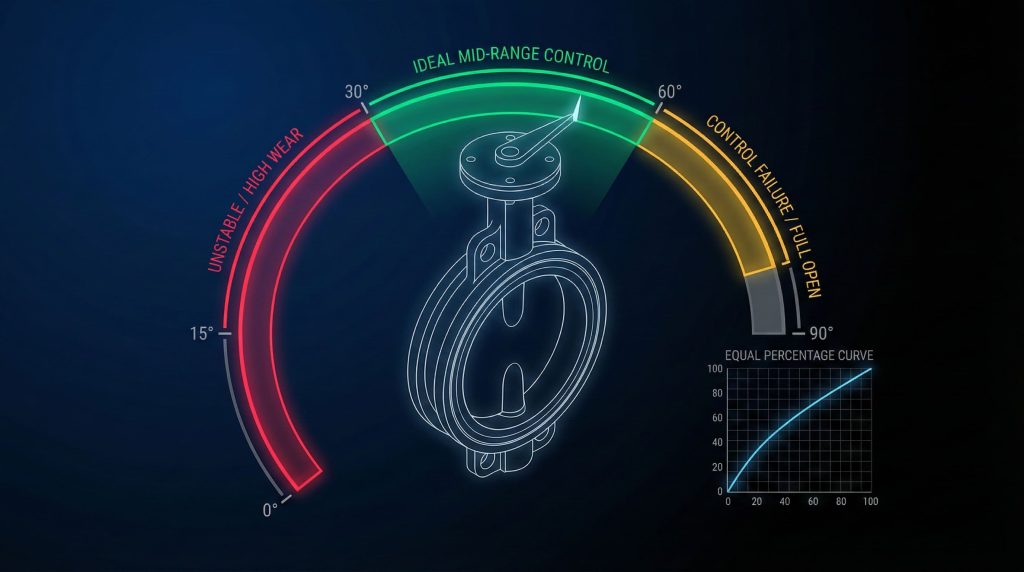
- Specific angles, typically between 20 and 70 degrees, offer the most stable control.
Is it different from system isolation?
The truth is that isolation and throttling serve two completely different mechanical purposes. While an isolation valve focuses on achieving a bubble-tight seal in the closed position, a throttling setup prioritizes the relationship between the disc angle and the resulting flow rate. You must ensure your hardware can withstand the constant turbulence associated with mid-travel positions.
Key Takeaway: Throttling requires a valve that can maintain stability at various angles while resisting the erosive forces of high-velocity fluid.
| Application Mode | Disc Position | Primary Objective | Wear Pattern |
|---|---|---|---|
| Isolation | 0° or 90° | Stop/Start Flow | Minimal on seat |
| Throttling | 15° to 70° | Regulate Volume | High on leading edge |
Mechanical stability at intermediate angles is the defining requirement for any successful throttling installation.
Is a butterfly valve throttle suitable for precision?
Yes, a butterfly valve throttle is suitable for precision control if you account for its inherent flow coefficients and equal percentage characteristics. Most industrial designs exhibit a predictable relationship between the disc opening and the flow capacity. This allows you to achieve fine-tuned modulation in systems where small changes in position must correspond to specific flow outputs.
What are flow coefficients and Cv values?
Think about this:
The flow coefficient (Cv) is the standard metric used to determine how much fluid can pass through the valve at a given pressure drop. For effective precision, you need to select a valve size where the required flow range falls within the most linear portion of its Cv curve. This ensures that your control system doesn’t “hunt” for the right position.
Why use equal percentage characteristics?
- Small opening changes at low flow result in small flow increases.
- Large opening changes at high flow result in large flow increases.
- This characteristic compensates for the non-linear pressure drops in piping.
- It provides much higher sensitivity at the lower end of the control range.
Key Takeaway: Precision is achievable when the valve’s Cv curve matches your system’s dynamic requirements.
| Parameter | Control Behavior | Impact on Sensitivity |
|---|---|---|
| Low Opening | Equal Percentage | High precision for low flow |
| Mid-Range | Transitional | Moderate control response |
| High Opening | Near-Linear | Rapid flow adjustment |
Choosing a valve with a well-documented flow curve is the only way to guarantee repeatable process accuracy.
How does design impact a butterfly valve throttle?
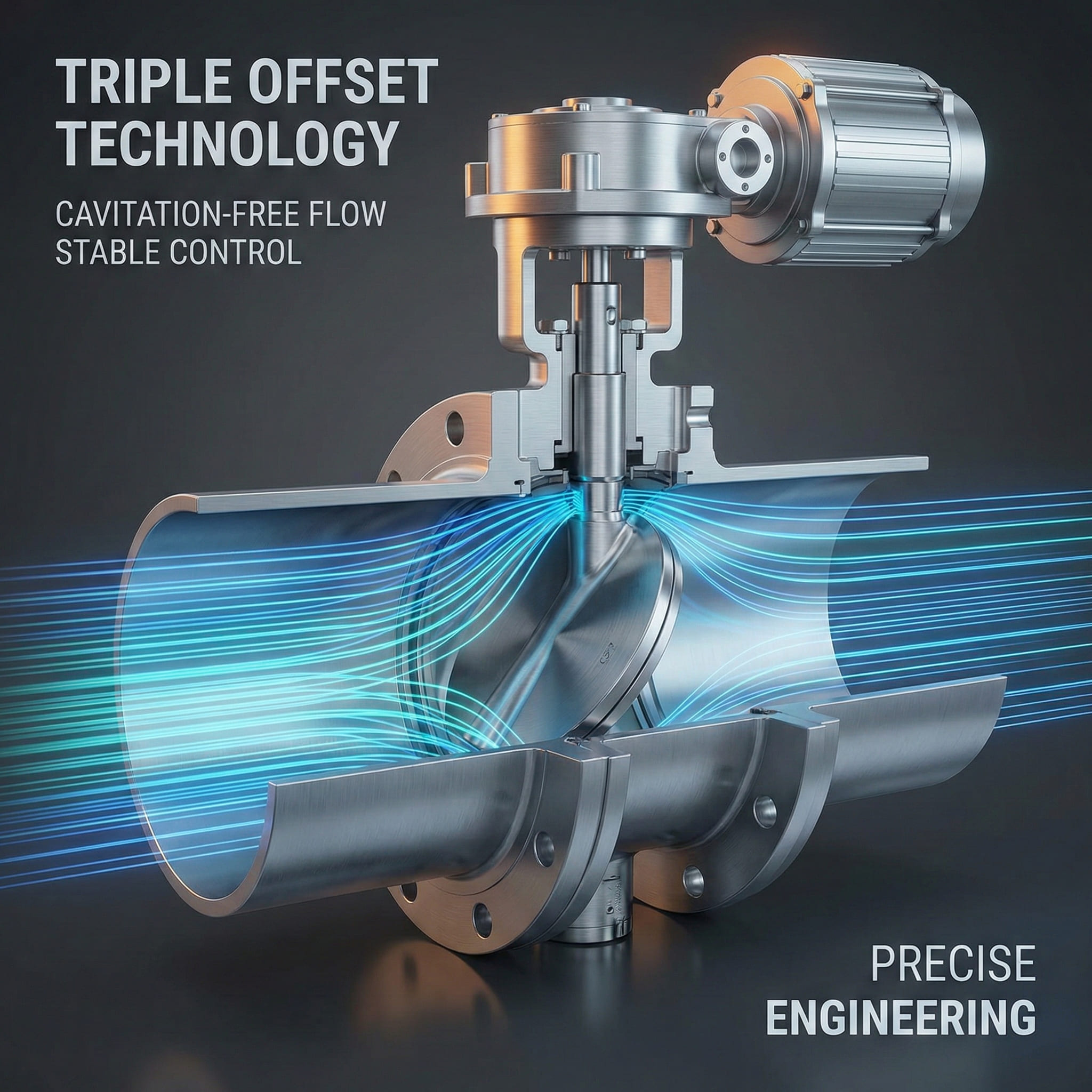
Yes, the mechanical design of the butterfly valve throttle—specifically whether it is concentric or eccentric—directly impacts its service life and control quality. Concentric designs, where the stem passes through the center of the disc, often experience high friction and seat wear. In contrast, eccentric designs use offsets to improve the sealing geometry and reduce mechanical stress during modulation.
Why avoid zero offset concentric designs?
The fact is:
Concentric valves require the disc to be in constant contact with the seat throughout its entire rotation. When you use these for constant throttling, the high-velocity fluid can pull at the resilient liner, leading to deformation or complete seal failure. They are generally reserved for low-pressure or non-critical applications where high precision is not the priority.
Do double eccentric valves perform better?
- The offset stem lifts the disc away from the seat immediately.
- Friction is eliminated for the majority of the stroke.
- The camming action preserves seat integrity over thousands of cycles.
- Higher pressure ratings are achievable compared to concentric models.
Key Takeaway: High-performance eccentric designs are the industry standard for reliable, long-term throttling service.
| Design Type | Stem Position | Seat Contact | Throttling Durability |
|---|---|---|---|
| Concentric | Center | Continuous | Limited (Low Pressure) |
| Double Offset | Double Eccentric | Only at Closure | Excellent (Industrial) |
| Triple Offset | Triple Eccentric | Non-rubbing | Superior (Critical) |
The reduction of mechanical friction is the primary factor in extending the life of your control hardware.
Can cavitation ruin a butterfly valve throttle?
Yes, cavitation is a major threat to a butterfly valve throttle when there is a significant pressure drop across the disc. As fluid speeds up through the narrow opening, the local pressure can drop below the vapor pressure, forming bubbles. When these bubbles collapse further downstream, they release micro-jets of energy that can pit the metal and destroy your equipment.
What are the high velocity risks?
- Rapid erosion of the disc edges and the valve body.
- Extreme vibration that can loosen stem packing and fasteners.
- Choked flow conditions that limit your maximum system capacity.
- Loss of control accuracy due to turbulent fluid behavior.
How do you identify vapor bubbles?
You might be wondering:
How do you know if cavitation is occurring before the valve fails? The most common sign is a distinct sound often described as “shaking a bag of gravel” coming from the pipe. If you ignore this acoustic warning, the resulting pitting will eventually lead to structural failure of the disc or the downstream piping walls.
Key Takeaway: Managing pressure drops and fluid velocity is essential to prevent cavitation-induced destruction.
| Cavitation Stage | Physical Manifestation | Mitigation Strategy |
|---|---|---|
| Incipient | Slight popping noise | Increase downstream pressure |
| Severe | Gravel-like roar | Use cavitation-trim or multi-stage |
| Choked Flow | No flow increase | Resize the valve or piping |
Preventing cavitation requires a careful analysis of the pressure profile throughout your entire operating range.
Why does seal wear affect a butterfly valve throttle?
Yes, seal wear is a critical concern for any butterfly valve throttle because the media is constantly hitting the exposed seat area. In a partially open position, the fluid acts like a sandblaster against the resilient materials. If the seal becomes compromised, the valve will no longer be able to provide a tight shutoff when the system eventually needs to be isolated.
Does flow impingement cause deformation?
Here is the deal:
When a valve is throttled near the seat, the concentrated flow path creates a high-pressure zone that can physically pull the rubber or PTFE liner out of its groove. This deformation not only causes leaks but can also jam the disc, preventing it from moving to the fully closed or open positions. You must select seat materials that are rated for high-velocity abrasion.
How do offset models reduce friction?
- The disc cams into the seat only during the last few degrees.
- Wear is distributed more evenly across the sealing surface.
- Material fatigue is significantly reduced compared to concentric models.
- Seal life is extended by minimizing contact during modulation.
Key Takeaway: Protecting the seat from constant abrasion is vital for maintaining the dual-purpose role of control and isolation.
| Seat Material | Abrasion Resistance | Temperature Limit | Common Use Case |
|---|---|---|---|
| EPDM | Moderate | 120°C | Water Treatment |
| PTFE | High | 200°C | Chemical Processing |
| Metal | Very High | 500°C+ | Steam / High Pressure |
Investing in high-grade seat materials reduces the frequency of expensive maintenance shutdowns.
What media works for a butterfly valve throttle?
Yes, a butterfly valve throttle is effective for a wide range of media, including water, gasses, and even certain types of slurries. Because the valve provides a relatively straight flow path when open, it is less prone to clogging than more complex valve designs. However, the viscosity and abrasiveness of the media will dictate the specific materials you need for the disc and liner.
Can you regulate viscous slurries?
- The disc design prevents solids from settling in the valve body.
- Hardened disc edges can resist the wear of abrasive particles.
- Streamlined flow paths reduce the chance of localized blockages.
- Large-diameter valves handle high-volume slurry flow efficiently.
Is it safe for low-pressure steam?
As it turns out:
Butterfly valves are frequently used in large-diameter low-pressure steam lines for temperature and pressure regulation. While they may not offer the extreme precision of a globe valve, their ability to handle massive volumes with minimal weight makes them the practical choice for most HVAC and utility systems. You just need to ensure the seals are rated for steam temperatures.
Key Takeaway: Versatility across different media types makes the butterfly valve a go-to solution for diverse industrial processes.
| Media Type | Throttling Performance | Material Requirement |
|---|---|---|
| Clean Liquids | Excellent | Standard Resilient Seats |
| Gasses/Air | Very Good | High-Speed Actuation |
| Slurries | Good | Hardened Disc / Polyurethane |
Matching the valve materials to the chemical and physical properties of the media is the key to longevity.
Which actuators suit a butterfly valve throttle?
Yes, selecting the right actuator is just as important as the valve itself for any butterfly valve throttle system. For basic manual control, a gear-operated handwheel is sufficient, but automated processes require pneumatic or electric actuators. These units must be equipped with digital positioners to interpret control signals and maintain the disc at the precise angle required.
Are manual handwheels effective enough?
The truth is:
Manual gear operators are only suitable for “set-and-forget” applications where the flow rate rarely needs to be adjusted. They provide the mechanical advantage necessary to overcome dynamic torque, but they lack the response speed needed for active process loops. If your system requires frequent adjustments, an automated solution is mandatory.
Why use pneumatic or electric units?
- Pneumatic actuators offer fast fail-safe speeds and high durability.
- Electric actuators provide precise positioning and easy SCADA integration.
- Digital positioners ensure the disc angle matches the input signal.
- Feedback sensors allow for remote monitoring of the valve’s status.
Key Takeaway: Automated actuators with smart positioners transform a standard valve into a high-performance control device.
| Actuator Type | Speed | Accuracy | Best For |
|---|---|---|---|
| Manual Gear | Slow | Low | Static Flow Setup |
| Pneumatic | Fast | High | Dynamic Control Loops |
| Electric | Moderate | Very High | Remote / Precision Sites |
The synergy between the actuator and the positioner determines the overall stability of your control loop.
How to size a butterfly valve throttle correctly?
Yes, sizing your butterfly valve throttle correctly is the most important factor in preventing system instability. A common mistake is choosing a valve that matches the pipe diameter, which usually leads to an oversized valve that only throttles in the “near-closed” position. This causes the disc to vibrate and the seat to erode prematurely due to excessive fluid velocity.
How do you avoid the oversizing pitfall?
- Calculate the required Cv based on your maximum and minimum flow rates.
- Select a valve where the normal operating flow occurs at 30° to 60° open.
- Avoid sizing so the valve must operate below 15° for long periods.
- Check that the maximum flow doesn’t exceed 70% to 80% of the valve’s capacity.
What is the effective control range?
The reality is:
Most butterfly valves lose their ability to provide stable control once they are opened beyond 70 degrees or closed below 15 degrees. In the wide-open position, small changes in the disc angle have almost no effect on the flow. Conversely, near the closed position, the high pressure drop creates turbulence that the actuator may not be able to stabilize.
Key Takeaway: Proper sizing ensures the valve operates in its most stable and sensitive control zone.
| Sizing Outcome | Operating Angle | Resulting Performance |
|---|---|---|
| Oversized | 5° to 20° | Vibration, seat wear, hunting |
| Correctly Sized | 30° to 60° | Stable flow, high sensitivity |
| Undersized | 80° to 90° | High pressure drop, limited flow |
A valve that is one or two sizes smaller than the surrounding pipe is often the ideal choice for throttling.
Is a butterfly valve throttle better than a globe valve?
Yes, a butterfly valve throttle offers several advantages over a globe valve, particularly regarding weight, cost, and installation footprint. While globe valves are the gold standard for extreme precision, they are heavy and prohibitively expensive in large diameters. For most general industrial applications, a high-performance butterfly valve provides a better balance of performance and value.
Is the installation footprint smaller?
Think about this:
Butterfly valves have a “wafer” or “short” face-to-face dimension, meaning they take up significantly less space in your piping layout. This reduces the need for heavy structural supports and allows for more compact system designs. In retrofit scenarios where space is limited, the butterfly valve is often the only viable option for adding a control point.
Why is it more cost-efficient?
- Less raw material is required for manufacturing the valve body.
- Shipping and handling costs are lower due to reduced weight.
- Installation requires fewer man-hours and less heavy equipment.
- Standardization across sizes makes spare parts more affordable.
Key Takeaway: The cost-to-performance ratio of butterfly valves makes them the preferred choice for large-bore piping.
| Feature | Butterfly Valve | Globe Valve |
|---|---|---|
| Cost (Large Bore) | Lower | Much Higher |
| Weight | Low | High |
| Precision | Moderate to High | Very High |
| Flow Capacity | High | Low to Moderate |
While globe valves win on pure precision, butterfly valves are usually the superior choice for overall system efficiency.
How to maintain a butterfly valve throttle system?
Yes, maintaining a butterfly valve throttle requires a more rigorous inspection schedule than a standard isolation valve. Because the components are under constant dynamic stress, you must regularly check for signs of mechanical fatigue. Specifically, you should focus on the stem packing, the integrity of the seat, and the calibration of the actuator to ensure the system remains reliable.
When should you inspect the shaft?
- Check for lateral movement or “play” in the stem every six months.
- Inspect the packing for leaks caused by high-frequency vibration.
- Ensure that the bearings are adequately lubricated in gear-operated models.
- Verify that the actuator mounting bolts remain tight under operational loads.
How do you monitor for vibration?
You might be wondering:
How can you tell if the internal vibrations are becoming a problem? Periodically use a vibration meter or even a simple acoustic check to see if the valve’s noise profile has changed. An increase in noise or physical shaking of the actuator often indicates that the internal disc or stem components are beginning to wear down due to flow forces.
Key Takeaway: Proactive maintenance prevents small mechanical issues from turning into catastrophic system failures.
| Component | Maintenance Action | Recommended Frequency |
|---|---|---|
| Stem Packing | Leak check and adjustment | Quarterly |
| Seat Integrity | Visual check for erosion | Annually |
| Positioner | Calibration and signal test | Bi-annually |
A structured maintenance program is the best way to maximize the return on your valve investment.
Summary FAQ
Can I use a standard wafer butterfly valve for throttling?
Yes, but it is not recommended for high-pressure or high-velocity systems. Standard wafer valves often have concentric designs that suffer from rapid seat wear when held in a partially open position.
What’s the best angle for a butterfly valve throttle?
The most stable and precise control range is usually between 30 and 60 degrees. Operating outside of this range (below 15° or above 70°) often leads to instability or poor flow sensitivity.
What is the best way to prevent cavitation damage?
The most effective way is to ensure the pressure drop across the valve is managed correctly. You can do this by using a high-performance valve with cavitation-resistant trim or by installing multiple valves in series.
Can I throttle with a manual handle?
It is possible, but it is very difficult to achieve precision. For most throttling applications, a gear-operated handwheel or an automated actuator is required to hold the disc steady against the flow.
How often should I calibrate my control valve?
You should calibrate the actuator and positioner at least twice a year. This ensures that the physical position of the disc still corresponds accurately to your control system’s commands.
Conclusion
Choosing the right partner for your fluid control needs is about more than just buying a component; it is about securing the reliability of your entire operation. At RUITO, we specialize in precision-engineered valves that bridge the gap between high-performance control and cost-effective operation. Our commitment to ISO-certified manufacturing and rigorous pressure testing ensures that every product we deliver meets the most demanding global standards. For technical guidance on optimizing your flow systems or to request a customized quote, contact us today. Together, we can build a more efficient and reliable industrial future.