
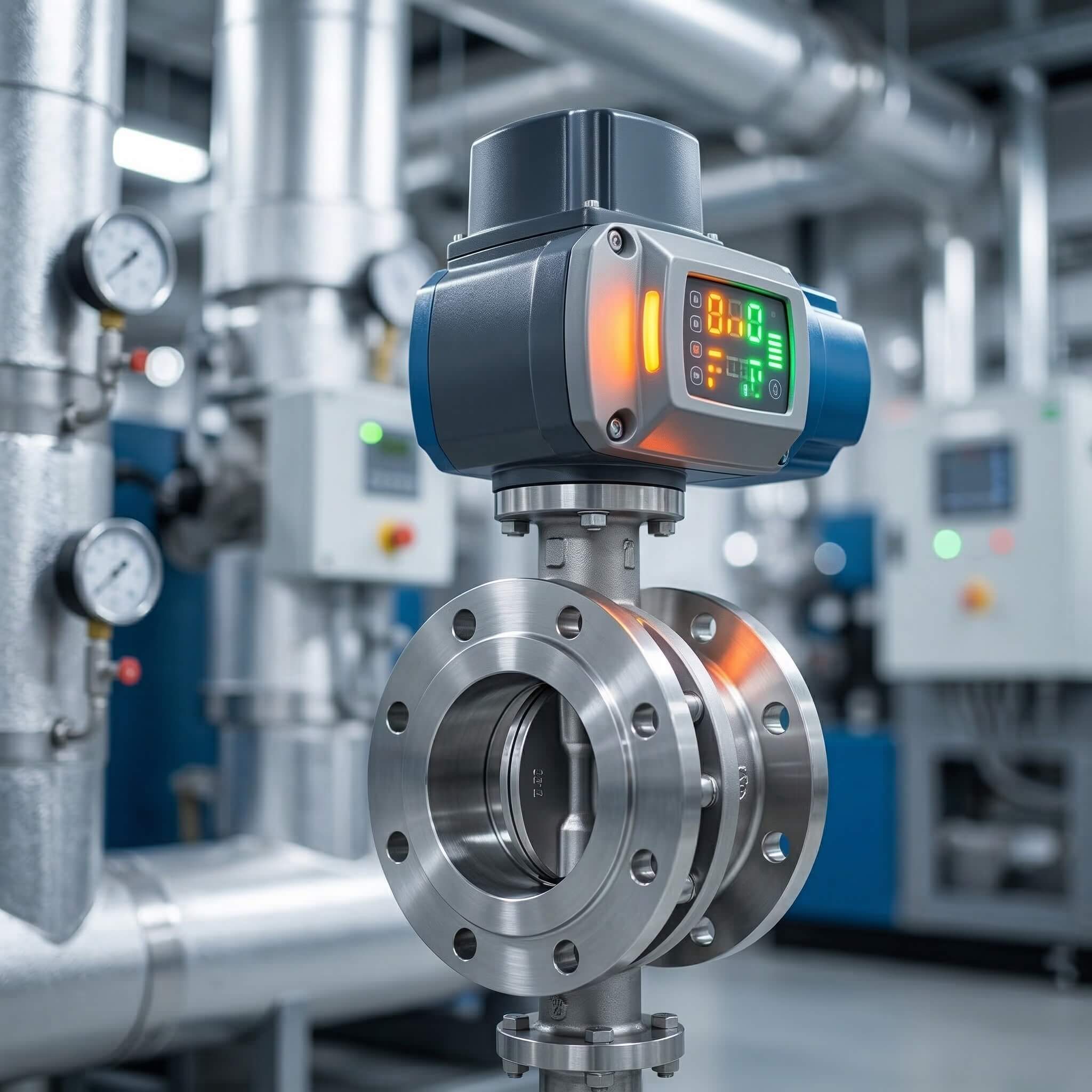
A butterfly valve is a quarter-turn rotational motion valve used to stop, regulate, and start fluid flow. If you are struggling with bulky gate valves that leak or slow manual operations that hinder your facility’s efficiency, you are not alone. These outdated systems often lead to significant pressure drops and increased physical strain on your piping infrastructure. Modern industrial projects require a more streamlined solution to optimize fluid control and reduce energy waste. Understanding the primary fungsi butterfly valve is the first step toward achieving a high-performance, compact, and cost-effective piping system.
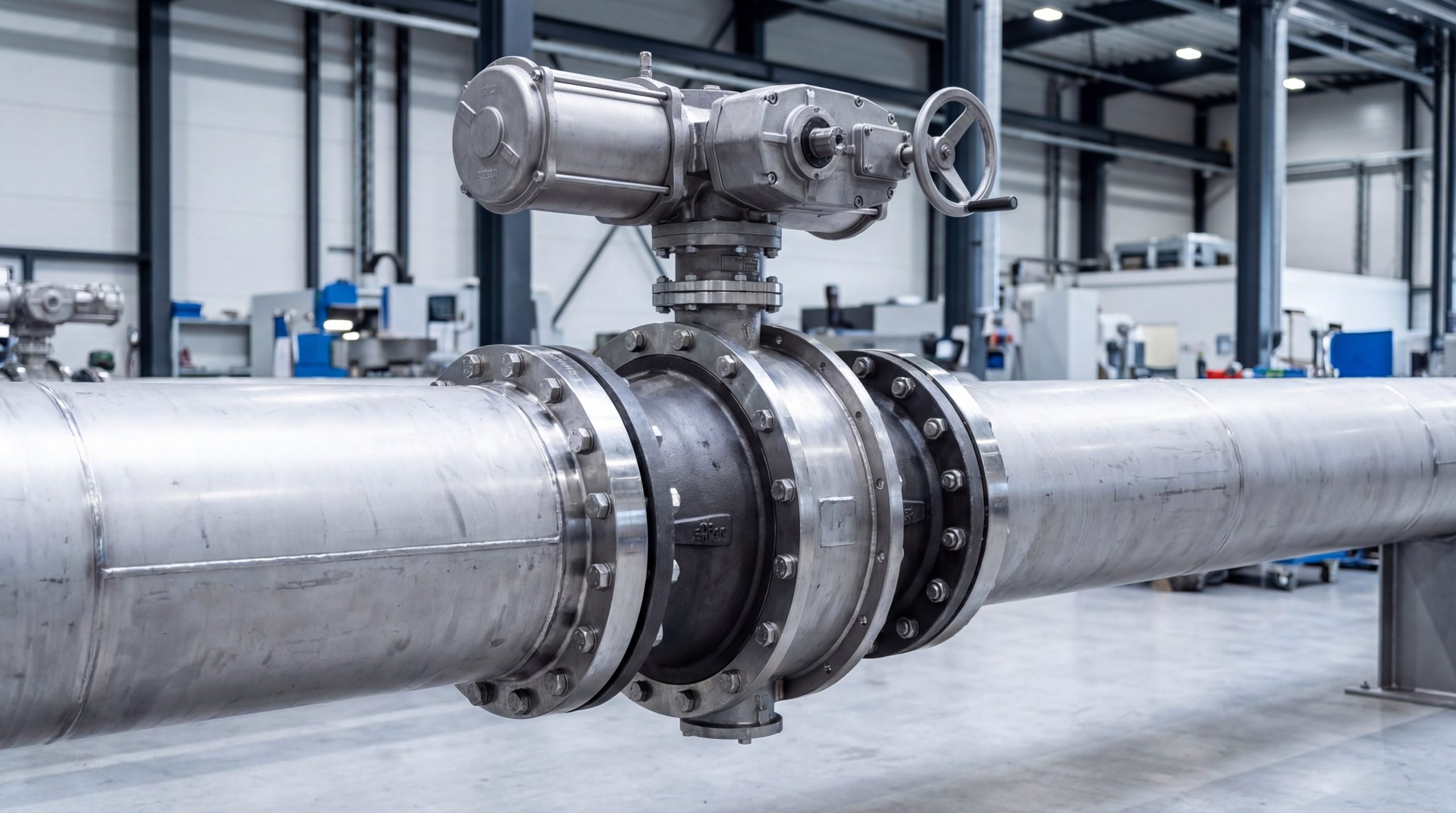
What defines a modern butterfly valve?
A modern butterfly valve is characterized by a rotating disc that controls the flow of media within a pipe. This specific fungsi butterfly valve allows you to manage large volumes of fluid with a device that is significantly lighter than traditional valve alternatives.
The rotating disc mechanism
But that’s not all. The design features a circular disc positioned in the center of the pipe, connected to an external actuator by a rod.
- Rotating the actuator turns the disc.
- Parallel orientation allows full flow.
- Perpendicular orientation stops the flow.
Quarter-turn operational benefits
Here is why this matters: The mechanism only requires a 90-degree turn to move from fully open to fully closed. This simplicity ensures your team can actuate the system rapidly during critical operations.
- Fast opening and closing speeds.
- Reduced wear on internal components.
- Lower torque requirements for automation.
Key Takeaway: The streamlined quarter-turn design provides a rapid and efficient method for flow isolation in various industrial environments.
| Feature | Industrial Benefit |
|---|---|
| 90-Degree Turn | Rapid Actuation |
| Slim Profile | Space Efficiency |
| Rotating Disc | Low Pressure Drop |
This mechanical simplicity translates directly into lower operational costs and faster response times for your facility.
How does the internal mechanism operate?
The internal mechanism operates by rotating a metal disc against a resilient or metal seat to create a seal. Mastering the fungsi butterfly valve ensures that you can maintain tight shut-off even in high-pressure scenarios.
Role of the valve seat
You might be wondering: How does the seal stay airtight? The valve seat provides the necessary friction and contact surface to prevent leakage when the disc is in the closed position.
- Elastomeric seats for standard water.
- Metal-to-metal seats for high heat.
- Reinforced PTFE for chemical resistance.
Achieving precise flow modulation
Think about it: A valve isn’t just for on and off service. By positioning the disc at specific angles, you can throttle the flow to meet the exact demands of your variable system.
- Linear flow characteristics.
- Equal percentage modulation options.
- Precision control with smart actuators.
Key Takeaway: Robust seating and incremental disc positioning allow for both reliable isolation and sophisticated flow regulation.
| Component | Primary Function |
|---|---|
| Valve Seat | Leakage Prevention |
| Internal Disc | Flow Obstruction |
| Valve Stem | Torque Transmission |
Effective sealing and modulation depend entirely on the synergy between the disc geometry and the seat material.
Why use butterfly valves instead of ball valves?
Butterfly valves are generally preferred over ball valves in large-diameter applications because they are more compact and cost-effective. The specific fungsi butterfly valve becomes more advantageous as your pipe sizes grow beyond four inches.
Cost effectiveness for large diameters
Consider this: As the diameter of a ball valve increases, the material costs and weight skyrocket. Butterfly valves maintain a slim profile and use less metal, saving you significant capital on large-scale installations.
- Lower initial purchase price.
- Reduced shipping and handling costs.
- Minimal material waste during manufacturing.
Comparing weight and footprint
The best part? Because these valves are much thinner face-to-face, they take up far less space in your mechanical room. This allows you to design tighter piping configurations without sacrificing accessibility.
- Less physical strain on pipes.
- Easier installation in tight spaces.
- Smaller structural supports required.
Key Takeaway: For large-scale systems, the butterfly design offers superior value through reduced weight and lower material investments.
| Valve Type | Weight Profile | Cost (Large Bore) |
|---|---|---|
| Butterfly | Extremely Light | Economical |
| Ball Valve | Heavy/Bulky | Expensive |
Choosing the lighter alternative reduces the total load on your infrastructure while keeping project budgets under control.
How do they compare to traditional gate valves?
Compared to gate valves, butterfly valves offer much faster operation and require far less maintenance over time. Utilizing the fungsi butterfly valve helps you avoid the common pitfalls associated with slow-moving gate mechanisms.
Speed of operation advantages
Look closer: A gate valve requires multiple turns of a handwheel to fully open or close. In contrast, the butterfly’s quarter-turn action allows your operators to respond to system changes in seconds.
- Instantaneous emergency shut-off.
- Improved productivity for manual tasks.
- Simplified automation integration.
Reduced maintenance requirements
It gets even better: Gate valves often suffer from sediment buildup in the bottom groove, which prevents a proper seal. The streamlined disc of a butterfly valve allows debris to pass through more easily, extending your service intervals.
- Fewer mechanical parts to fail.
- No bottom pockets to trap solids.
- Easier seat replacement procedures.
Key Takeaway: The absence of sediment traps and the speed of a 90-degree turn make these valves a more reliable long-term choice.
| Operational Factor | Butterfly Valve | Gate Valve |
|---|---|---|
| Actuation Time | Very Fast | Slow (Multi-turn) |
| Debris Buildup | Minimal | High Risk |
Switching to a quarter-turn solution minimizes downtime and ensures a cleaner, more responsive fluid network.
Can they offer the precision of globe valves?
High-performance butterfly valves can offer precision that rivals traditional globe valves while maintaining a much lower pressure drop. This fungsi butterfly valve is essential for modern HVAC systems that prioritize energy efficiency.
High performance throttling
Here is the kicker: When paired with high-quality actuators, these valves provide equal percentage flow control. This ensures your system responds smoothly to fluctuations in demand without the “hunting” common in lower-quality setups.
- Consistent flow control curves.
- High rangeability for various loads.
- Precise positioning via digital signals.
Minimizing system pressure drops
Wait, there’s more: Globe valves force fluid through a convoluted path, leading to massive energy loss. The straight-through path of a butterfly valve keeps your pumping costs low and your system efficiency high.
- Higher Cv values for the same size.
- Lower energy consumption for pumps.
- Reduced turbulence in the pipeline.
Key Takeaway: You can achieve professional-grade modulation without the energy penalties and bulkiness of a standard globe valve.
| Efficiency Metric | Butterfly Valve | Globe Valve |
|---|---|---|
| Pressure Loss | Low | High |
| Control Accuracy | High (Modified) | Excellent |
Modern engineering allows these valves to bridge the gap between simple isolation and complex modulation.
What are the primary body style variations?
The primary body styles include wafer and lug designs, each suited for specific installation requirements. Selecting the correct fungsi butterfly valve configuration is vital for the safety and serviceability of your system.
Wafer vs Lug style differences
Actually, it’s quite simple: Wafer valves are sandwiched between flanges, while lug valves have threaded inserts for independent bolting. Lug styles are mandatory if you need to disconnect downstream piping while keeping the upstream side pressurized.
- Wafer: Lightweight and inexpensive.
- Lug: Ideal for end-of-line service.
- Easy alignment with flange bolts.
High pressure offset designs
Does it work? For extreme environments, double and triple-offset designs move the stem away from the center. This reduces seat friction and allows the valve to handle much higher pressures and temperatures.
- Reduced operating torque.
- Longer seat life in high cycles.
- Zero-leakage performance ratings.
Key Takeaway: Body style selection dictates how the valve is integrated into your piping and how it handles mechanical stress.
| Style | Installation Type | Best Use Case |
|---|---|---|
| Wafer | Flange Sandwich | General Water/Air |
| Lug | Threaded Bolting | End-of-Line/Safety |
Matching the body style to your specific piping layout prevents installation errors and enhances safety.
Which actuation methods are most efficient?
Automated electric and pneumatic actuators are the most efficient methods for managing butterfly valves in modern facilities. This fungsi butterfly valve allows you to integrate your hardware directly into a centralized building management system.
Benefits of automated actuators
Let’s dive in: Automation eliminates human error and allows for remote monitoring of every valve in your network. Using brushless DC motor technology can reduce your energy consumption by up to 80% compared to older AC motors.
- Lower power consumption.
- Longer operational lifespan.
- Precise, repeatable positioning.
Smart connectivity and diagnostics
Why does this happen? Many modern actuators now feature Near Field Communication (NFC) and support BACnet or Modbus protocols. This allows you to perform diagnostics and commissioning via a smartphone app.
- Fast commissioning without power.
- Real-time performance tracking.
- Predictive maintenance alerts.
Key Takeaway: Digital integration and efficient motor technology transform simple valves into intelligent system components.
| Actuation | Control Method | Integration Level |
|---|---|---|
| Manual | Hand Lever/Gear | None |
| Automated | Electric/Pneumatic | Full BMS/IoT |
The shift toward smart actuation ensures your facility remains future-ready and energy-efficient.
Where is this technology most applicable?
Butterfly valves are most applicable in HVAC systems, water treatment plants, and general industrial utility lines. The fungsi butterfly valve is perfectly suited for handling the large volumes of water required for cooling and heating.
HVAC and building services
The result? These valves have become the industry standard for chilled water, hot water, and condenser water loops. Their small footprint is essential for crowded mechanical rooms in commercial skyscrapers and data centers.
- Cooling tower isolation.
- Heat exchanger control.
- Primary and secondary pump loops.
Industrial process water systems
Ready for the solution? With stainless steel discs and chemical-resistant liners, these valves excel in harsh industrial environments. They manage everything from treated wastewater to aggressive chemical process lines with ease.
- Wastewater treatment plants.
- Chemical processing facilities.
- Power generation utilities.
Key Takeaway: The versatility in material selection makes these valves suitable for both commercial HVAC and heavy industrial processing.
| Industry | Typical Medium | Primary Need |
|---|---|---|
| HVAC | Chilled/Hot Water | Space/Efficiency |
| Industrial | Process Water/Slurry | Durability/Flow |
Whether you are managing a central plant or a chemical line, the butterfly design provides a reliable solution.
What are the installation and weight benefits?
The lightweight and compact design of butterfly valves significantly simplifies the installation process for mechanical contractors. This fungsi butterfly valve reduces the labor hours required and the physical strain on your entire piping network.
Space saving compact designs
Sound familiar? Trying to fit a massive gate valve into a tight corner is a nightmare for installers. Butterfly valves are much shorter in face-to-face dimensions, allowing you to optimize your piping layout and save space.
- Shorter installation windows.
- Lower labor costs for contractors.
- Simplified retrofit upgrades.
Reducing physical piping strain
Make no mistake: Excessive weight can lead to flange leaks and structural fatigue over time. A butterfly valve can weigh half as much as a globe valve, protecting your pipes from sagging and stress-related failures.
- Less need for heavy pipe hangers.
- Safer handling for installation teams.
- Lower risk of structural damage.
Key Takeaway: Reduced weight and size simplify every stage of the project, from shipping to final commissioning.
| Physical Metric | Butterfly Valve | Gate/Globe Valve |
|---|---|---|
| Face-to-Face | Short/Compact | Long/Bulky |
| Weight | Light | Heavy |
Minimizing physical mass is a strategic advantage that improves both safety and system longevity.
How do you select the right valve materials?
Selecting the right materials involves matching the disc, seat, and body to the temperature and chemical properties of your fluid. Understanding the specific fungsi butterfly valve materials ensures your hardware won’t corrode or fail prematurely.
Disc and seat compatibility
Here’s the deal: The media traveling through your pipe determines what the disc and seat should be made of. Using the wrong elastomer can lead to swelling and valve jamming, which stops your production entirely.
- Ductile iron for standard water.
- Stainless steel for corrosion.
- EPDM or NBR for various oils.
Environmental durability factors
Bottom line: If your valve is installed on a rooftop or in a damp basement, you need housing that can withstand the elements. Look for NEMA 4X rated actuators and corrosion-resistant coatings to protect your investment.
- UV-resistant actuator housing.
- Epoxy-coated valve bodies.
- High-grade stainless steel hardware.
Key Takeaway: Proper material specification is the single most important factor in preventing premature valve failure.
| Material | Application | Benefit |
|---|---|---|
| SS316 Disc | Corrosive Media | Rust Prevention |
| PTFE Seat | Chemicals | High Resistance |
Expert material matching ensures your system operates reliably for decades without unplanned maintenance.
Frequently Asked Questions
Can I use a butterfly valve for high-pressure steam?
Standard resilient-seated valves are not suitable for steam; however, you can use specialized triple-offset butterfly valves designed specifically for high-temperature and high-pressure steam service.
What’s the best orientation for installation?
Generally, it is recommended to install the valve with the stem in the horizontal position. This prevents sediment from settling in the bottom bearing and ensures a longer operational lifespan for the seal.
How do I know if I need a lug or wafer style?
If you need to perform maintenance on downstream piping without shutting down the entire system, a lug style is the best choice. For standard through-flow applications where cost is a factor, a wafer style is sufficient.
Can I automate my existing manual valve?
Yes, most modern butterfly valves feature an ISO 5211 mounting pad. This allows you to easily install an electric or pneumatic actuator in the future without removing the valve from the line.
What’s the typical lifespan of these valves?
In a standard HVAC or water system, a high-quality butterfly valve can easily last 15 to 25 years. This longevity depends on selecting the right materials for your specific fluid medium and operating conditions.
Conclusion
Implementing high-performance butterfly valves is a proven strategy for improving the energy efficiency and reliability of your fluid control systems. At RUITO, our vision is to empower global industries with precision-engineered valve solutions that reduce operational risk and enhance sustainability. If you are ready to optimize your infrastructure with the latest in valve technology, contact us today for a technical consultation.