
1. Introduction
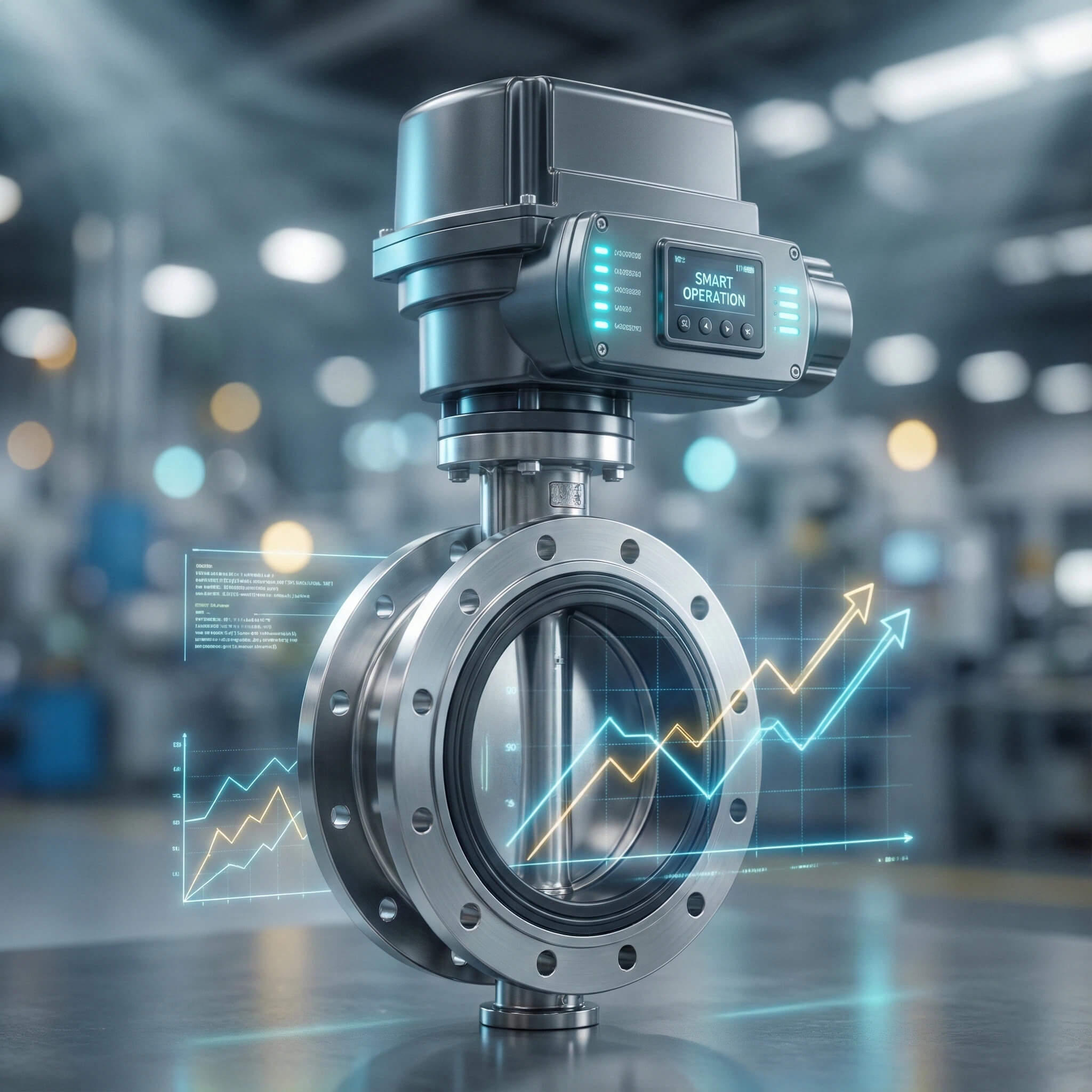
In the high-stakes world of industrial fluid management, relying on manual valve operation is a gamble that modern facilities can no longer afford to make. Inconsistencies in manual flow regulation inevitably lead to pressure fluctuations, undetected leaks, and energy inefficiencies that silently hemorrhage your operational budget month after month. These issues do more than just inflate overhead; they expose your facility to unplanned downtime, increase wear on pumping infrastructure, and place personnel at significant risk in hazardous processing zones. Implementing automated butterfly valves eliminates these vulnerabilities, providing the precise, remote-controlled authority necessary to secure your infrastructure and optimize production yields.
2. Understanding the Core Motorized Butterfly Valve Function
The Mechanics of Electric Actuation
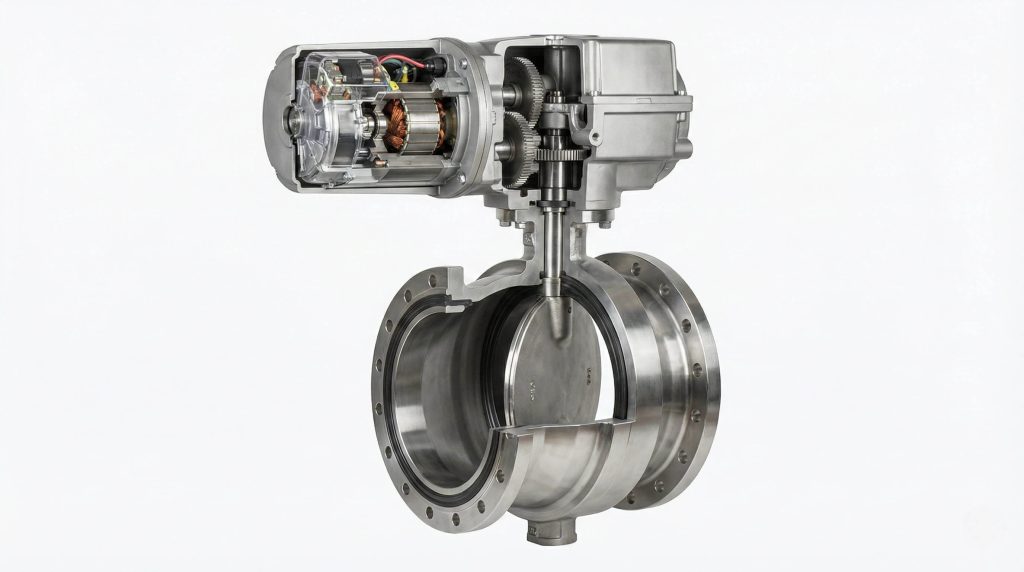
The heart of a motorized butterfly valve function lies in its ability to convert electrical energy into precise mechanical torque without human physical intervention.
- Electric Motor: Drives the gear train to rotate the valve stem with consistent force.
- Reduction Gears: Amplify torque to handle high-pressure differential flows.
- Control Module: Interprets signals to dictate exact disc positioning.
Here is the deal:
This electromechanical synergy ensures that every cycle is performed with identical speed and force, eliminating the variable of operator strength.
Precision in Quarter-Turn Operations
Automated systems leverage the inherent efficiency of the quarter-turn design to maximize system responsiveness.
- 90-Degree Rotation: Moves from fully open to fully closed in mere seconds.
- Low Friction Movement: Reduces wear on the seat and stem during frequent cycling.
- Compact Stroke: Requires significantly less time than multi-turn gate valves.
But consider this:
Speed is meaningless without control; the actuator’s ability to stop at exact intermediate angles is what truly revolutionizes flow regulation.
Integration with Digital Control Systems
A critical aspect of motorized butterfly valve function is its capacity to communicate seamlessly with your facility’s central nervous system.
- SCADA Connectivity: Allows for centralized monitoring of valve status across the plant.
- Feedback Loops: Real-time position transmission ensures the valve is exactly where it needs to be.
- Automated Logic: Triggers operation based on pressure or temperature sensors.
You might be wondering:
How does this connectivity translate into tangible operational improvements for your specific engineering challenges?
Key Takeaway: The shift to automation transforms your valves from passive piping components into intelligent, responsive assets that enforce strict process control and enable real-time system optimization.
3. How Motorized Butterfly Valve Functions Enhance Process Precision
Eliminating the Hysteresis of Manual Control
Manual valves suffer from “deadband” and human estimation errors that automated solutions completely eradicate.
- Exact Positioning: Actuators can achieve accuracy within 0.1% of the span.
- Zero Drift: The internal braking mechanism holds the disc firmly against flow pressure.
- Repeatability: Ensures the same flow rate for the same signal, every single time.
Here is the kicker:
This level of precision is non-negotiable in chemical dosing or blending applications where a 1% variance ruins the product batch.
Throttling Capabilities for Dynamic Flow
The advanced motorized butterfly valve function allows for sophisticated modulation beyond simple on/off duties.
- Linear Flow Control: Modified disc shapes allow for near-linear flow characteristics.
- PID Loop Integration: The valve adjusts continuously to maintain set process variables.
- Soft Start/Stop: Ramps speed up or down to prevent water hammer damage.
It gets better:
By integrating a positioner, you gain the ability to micro-adjust flow rates dynamically in response to downstream demand changes.
Why Feedback Signals Matter
Operating “blind” is a major risk in manual systems, but automation provides total situational awareness.
- 4-20mA Output: Transmits precise disc angle data back to the control room.
- Fault Detection: Immediate alerts if the valve fails to reach the commanded position.
- Torque Monitoring: Smart actuators warn you if the valve seat is becoming sticky.
Why does this matter?
It allows your maintenance team to address potential failures before they cause a system-wide shutdown.
Key Takeaway: Automation delivers the mathematical precision required for modern ISO-certified processes, ensuring that your flow control is proactive, data-driven, and free from the variance of human error.
4. Economic Impact: ROI of Motorized Butterfly Valve Function
Reducing Operational Expenditure (OPEX)
While the upfront cost is higher, the motorized butterfly valve function drastically lowers your daily running costs.
- Energy Efficiency: Electric actuators consume power only when moving, unlike pneumatic systems.
- Labor Reduction: Eliminates the need for technicians to physically walk the line.
- Waste Minimization: Precise control prevents raw material wastage in processing.
Let’s face it:
The cost of a single spoiled batch or an hour of unplanned downtime often exceeds the price of the automation upgrade.
Extending Equipment Lifespan
Automated control protects not just the valve, but your entire piping infrastructure from mechanical stress.
- Controlled Cycling: Prevents the “slamming” that damages seats and causes leaks.
- Pressure Regulation: Protects pumps from running against closed heads.
- Preventive Wear: Smooth operation reduces stress on flange gaskets and pipe supports.
Here is the truth:
Manual operators often overtighten valves to “ensure a seal,” causing premature seat failure; automation applies the exact torque required.
Analyzing the Total Cost of Ownership
To understand the true value, you must look at the financial picture over the lifecycle of the valve.
- Installation: Higher initial CAPEX due to wiring and actuation hardware.
- Maintenance: Lower long-term costs due to predictive diagnostics.
- Uptime: Significantly higher revenue potential due to reduced interruptions.
Let’s break it down:
| Cost Factor | Manual Valve System | Automated Butterfly Valve |
|---|---|---|
| Initial Investment | Low | High (Actuator + Integration) |
| Labor Costs | High (Manual rounds required) | Minimal (Remote operation) |
| Energy Efficiency | Low (Risk of pressure loss) | High (Optimized flow control) |
| Maintenance Strategy | Reactive (Fix when broken) | Predictive (Data-driven) |
| Risk of Error | High (Human variability) | Near Zero (Programmed logic) |
Expert Analysis: Although the initial capital expenditure for automated valves is typically 3 to 4 times that of manual counterparts, the return on investment is usually realized within 18 to 24 months. This is primarily driven by a 15-25% reduction in pumping energy costs and the elimination of labor-intensive manual adjustments. For facilities operating 24/7, the ROI timeline can be as short as 12 months.
Key Takeaway: Investing in automated butterfly valves is a strategic financial decision that shifts your budget from covering operational inefficiencies to funding production optimization, delivering a rapid and sustained ROI.
5. Safety Protocols and Motorized Butterfly Valve Function
Mitigating Risks in Hazardous Zones
Utilizing motorized butterfly valve functions keeps your personnel safe by removing them from dangerous environments.
- Remote Isolation: Close valves in toxic or high-temperature zones from the control room.
- Explosion Proofing: ATEX-certified actuators operate safely in volatile atmospheres.
- Leak Containment: Rapid closure limits exposure to fugitive emissions.
Consider this:
Every time you send a technician into a hazardous zone to turn a wheel, you increase your company’s liability and accident risk.
Implementing Emergency Shut Down (ESD)
In critical failure scenarios, the speed and reliability of automation are your first line of defense.
- Fail-Safe Logic: Springs or capacitors return the valve to a safe state during power loss.
- Instant Reaction: Sensors trigger closure in milliseconds upon detecting a pressure spike.
- SIL Compliance: Meets Safety Integrity Level standards for critical process industries.
Here is the deal:
A manual operator simply cannot react fast enough to stop a catastrophic pipe burst; an automated system reacts instantly.
Reducing Ergonomic Injuries
Large-diameter valves require immense physical force to operate manually, leading to workplace injuries.
- High Torque Handling: The gearbox and motor do the heavy lifting.
- Access Issues: Eliminates the need to climb ladders or enter confined spaces.
- Repetitive Strain: Removes the physical burden of frequent valve cycling.
You might ask:
How much is a lost-time injury costing your operation in terms of insurance and productivity?
Key Takeaway: Automation is the ultimate safety upgrade, ensuring that critical isolation procedures are executed instantly and reliably without exposing your workforce to physical hazards or toxic environments.
6. Motorized Butterfly Valve Function in Water and Wastewater
Optimizing Filtration and Backwashing
The precise motorized butterfly valve function is essential for managing the complex cycles of modern filtration systems.
- Sequence Control: Automatically cycles valves for efficient filter backwashing.
- Flow Modulation: Maintains constant flow rates as filter media becomes clogged.
- Bubble-Tight Sealing: Prevents cross-contamination between clean and dirty water lines.
This leads us to:
Reliable sealing is critical here; a leaking backwash valve can contaminate your entire supply of treated water.
Handling Sludge and Viscous Media
Automated valves provide the torque and durability needed to manage difficult waste streams.
- Torque Reserve: Electric actuators power through sludge buildup that would stall manual operation.
- Full Port Flow: Disc design minimizes obstruction to prevent clogging.
- Abrasion Resistance: Specialized seat materials withstand the grit of wastewater.
But here is the kicker:
Automated torque monitoring can actually detect a blockage forming in the line before it becomes a critical obstruction.
Regulating Municipal Distribution
For large-scale water networks, automation ensures consistent pressure and supply to the end-user.
- Pressure Management: Modulates flow to prevent pipe bursts during low-demand periods.
- Leak Reduction: Optimizes system pressure to minimize water loss in aging infrastructure.
- Reservoir Control: Automatically fills and isolates storage tanks based on level sensors.
Ready for the good part?
This automation allows municipal water authorities to manage the entire city grid from a single dashboard.
Key Takeaway: In water treatment, automated butterfly valves provide the relentless reliability needed to protect public health, ensuring efficient filtration and distribution while handling the toughest waste streams.
7. Optimizing HVAC Efficiency via Motorized Butterfly Valve Function
Precise Chilled Water Control
In HVAC, the motorized butterfly valve function is the key to balancing comfort with energy consumption.
- Variable Flow: Adjusts chilled water volume to match actual building cooling load.
- Delta-T Management: Ensures optimal temperature difference for chiller efficiency.
- System Balancing: Eliminates the need for manual balancing valves in dynamic systems.
What is the real story?
Static manual balancing wastes energy; dynamic automated balancing ensures you only pump the water you actually need.
Enhancing Condenser Loop Performance
Automated valves ensure that cooling towers and condensers operate within their peak efficiency bands.
- Bypass Control: Diverts flow to maintain minimum temperatures during startup.
- Isolation: Automatically cycles cooling tower cells based on heat rejection needs.
- Weather Adaptation: Adjusts flow rates in real-time based on ambient wet-bulb temperatures.
Here is the deal:
Proper control of the condenser loop prevents chiller surge and significantly extends the lifespan of your central plant equipment.
Integration with Building Management Systems (BMS)
The true power of these valves is unlocked when they are networked into the building’s brain.
- Occupancy Scheduling: Opens or closes zones based on building usage patterns.
- Energy Metering: valve position data helps calculate precise thermal energy usage.
- Remote Diagnostics: Maintenance teams can identify a stuck valve without climbing a ladder.
Consider this:
A smart building is only as smart as its field devices; automated valves provide the data needed for intelligent decisions.
Key Takeaway: For HVAC engineers, automated butterfly valves are the linchpin of energy efficiency, allowing systems to dynamically adapt to changing loads and delivering substantial savings on utility bills.
8. Chemical Processing and Motorized Butterfly Valve Function
Combating Corrosion and Aggressive Media
The motorized butterfly valve function in chemical plants relies on material science to survive harsh conditions.
- PTFE Linings: Provide a chemically inert barrier against aggressive acids and alkalis.
- Stainless Discs: Resist pitting and crevice corrosion in chloride-rich environments.
- Sealed Actuators: Protect electrical components from corrosive ambient fumes.
Let’s face it:
In chemical processing, a valve failure is not just a leak; it is a potential environmental disaster and safety hazard.
Managing Fugitive Emissions
Automation plays a crucial role in meeting strict environmental regulations regarding chemical leakage.
- Live-Loaded Packing: Maintains seal pressure to prevent stem leaks during thermal cycling.
- Reduced Cycle Shock: Smooth automated movement preserves the integrity of stem seals.
- Leak Detection: Smart actuators can integrate with sniffers to auto-close upon detecting emissions.
Here is the kicker:
Automated valves help you comply with ISO 15848 standards, keeping your facility green and compliant.
Selecting the Right Materials
Choosing the correct valve configuration is critical for safety and longevity in chemical applications.
- Body Material: Ductile iron for general use, Stainless Steel for corrosive areas.
- Seat Type: EPDM for water/glycol, Viton for hydrocarbons, PTFE for aggressive chemicals.
- Disc Coating: Halar or PFA coatings for ultra-pure or highly corrosive applications.
Let’s look at the data:
| Chemical Media | Recommended Seat Material | Recommended Disc Material |
|---|---|---|
| Sulfuric Acid (<90%) | PTFE / Viton | Stainless Steel 316 / Alloy 20 |
| Chlorine Gas (Dry) | PTFE | Monel / Hastelloy |
| Sodium Hydroxide | EPDM / PTFE | Stainless Steel 316 |
| Hydrocarbons/Oil | Viton (FKM) | Stainless Steel 316 |
| Potable Water | EPDM (Food Grade) | Stainless Steel 304/316 |
Expert Analysis: The failure of chemical valves is rarely due to the actuator; it is almost always a material incompatibility issue. For aggressive media, investing in a PTFE-lined butterfly valve with a PFA-coated disc is often the most cost-effective long-term solution, offering near-universal chemical resistance at a fraction of the cost of exotic alloy valves.
Key Takeaway: In chemical processing, the combination of automated precision and correct material selection ensures process integrity, prevents hazardous leaks, and guarantees compliance with stringent environmental standards.
9. Installation and Maintenance of Motorized Butterfly Valve Function
Ensuring Proper Alignment and Installation
The longevity of a motorized butterfly valve function is determined the moment it is bolted into the line.
- Flange Parallelism: Misaligned flanges introduce stress that distorts the seat and causes leaks.
- Disc Clearance: Verify the disc opens fully without hitting the pipe ID (especially on Schedule 80 pipe).
- Support: Large automated valves need support to prevent stress on the pipeline.
Pay attention here:
Never use the valve bolts to pull the pipe flanges together; this practice is the leading cause of valve body cracking and seat distortion.
Calibration and Commissioning
An automated valve is only effective if the actuator is perfectly synced with the valve body.
- Limit Switches: Must be set precisely to stop the motor before the disc impacts the seat too hard.
- Torque Settings: Ensure the close torque is sufficient to seal but not enough to damage the liner.
- Signal Verification: Confirm that a 50% signal from the PLC results in exactly 50% travel.
Here is the truth:
Most “valve failures” are actually calibration errors where the actuator is trying to push the disc past its mechanical stop.
Troubleshooting and Preventive Care
Proactive maintenance strategies keep your automated valves running reliably for decades.
- Cycle Testing: Operate idle valves monthly to prevent the seat from bonding to the disc.
- Thermal Inspection: Check actuator motors for overheating, which indicates torque overload.
- Seal Inspection: Look for weepage at the stem packing and tighten if necessary.
Maintenance Summary:
| Symptom | Probable Cause | Corrective Action |
|---|---|---|
| Valve leaks when closed | Limit switch set incorrectly | Recalibrate closed position limit |
| Actuator hums but won’t move | Jammed disc or low voltage | Check power supply & inspect seat |
| Stem leakage | Worn packing or O-ring | Tighten packing gland or replace seal |
| Jerky movement | High friction or air in line | Lubricate stem & check system pressure |
Expert Analysis: While “maintenance-free” is a common marketing term, reality dictates that the environment affects longevity. In high-vibration or corrosive atmospheres, checking the tightness of electrical connections and actuator mounting bolts every 6 months can prevent 90% of field failures.
Key Takeaway: A disciplined approach to installation alignment and routine calibration ensures that your automated butterfly valves perform flawlessly, protecting your investment and your process uptime.
10. Conclusion
The transition from manual to automated butterfly valves is a fundamental upgrade that redefines how modern facilities operate. We have explored how the motorized butterfly valve function delivers unmatched precision, drastically reduces operational costs, and safeguards your workforce in hazardous environments. From the energy savings in HVAC systems to the critical safety protocols in chemical processing, the evidence is clear: automation is not a luxury; it is a necessity for competitive, compliant, and efficient industrial operations.
We solve your flow control challenges.
At RUITO, we understand that every pipeline has unique demands. Our portfolio of high-performance, DIN/ISO compliant automated valves is engineered to withstand the rigors of your specific industry, backed by 20 years of manufacturing expertise.
Your partner in industrial excellence.
Don’t let outdated manual valves hold your operation back. Contact RUITO today for a technical consultation, and let us help you design a flow control solution that enhances safety, efficiency, and profitability for years to come.
11. FAQ
Can I automate a manual butterfly valve I already have installed?
Yes, provided the valve has an ISO 5211 standard mounting pad. You will need to remove the manual handle, check the stem condition, and ensure the new electric actuator is sized correctly for the valve’s torque requirements.
What is the difference between an on/off and a modulating electric actuator?
On/off actuators simply drive the valve to fully open or fully closed positions for isolation. Modulating actuators receive a continuous signal (like 4-20mA) to position the valve disc at precise intermediate angles for flow throttling.
How do I choose the right voltage for my motorized butterfly valve?
The choice depends on your facility’s available power and safety requirements. 24V DC is common for safer, low-voltage control integration, while 110V or 220V AC is often used for larger valves where higher power is needed without heavy cabling.
Why is my motorized valve humming but not turning?
This usually indicates a torque overload or a power issue. The valve disc may be jammed by debris, the seat may have swelled, or the voltage supplied to the actuator is too low to drive the motor under load.
Do motorized butterfly valves require a fail-safe backup?
For critical applications, yes. If power is lost, a standard electric actuator stays in its last position. If you need the valve to close or open automatically during a power outage, you must specify a “fail-safe” battery backup or spring-return unit.