
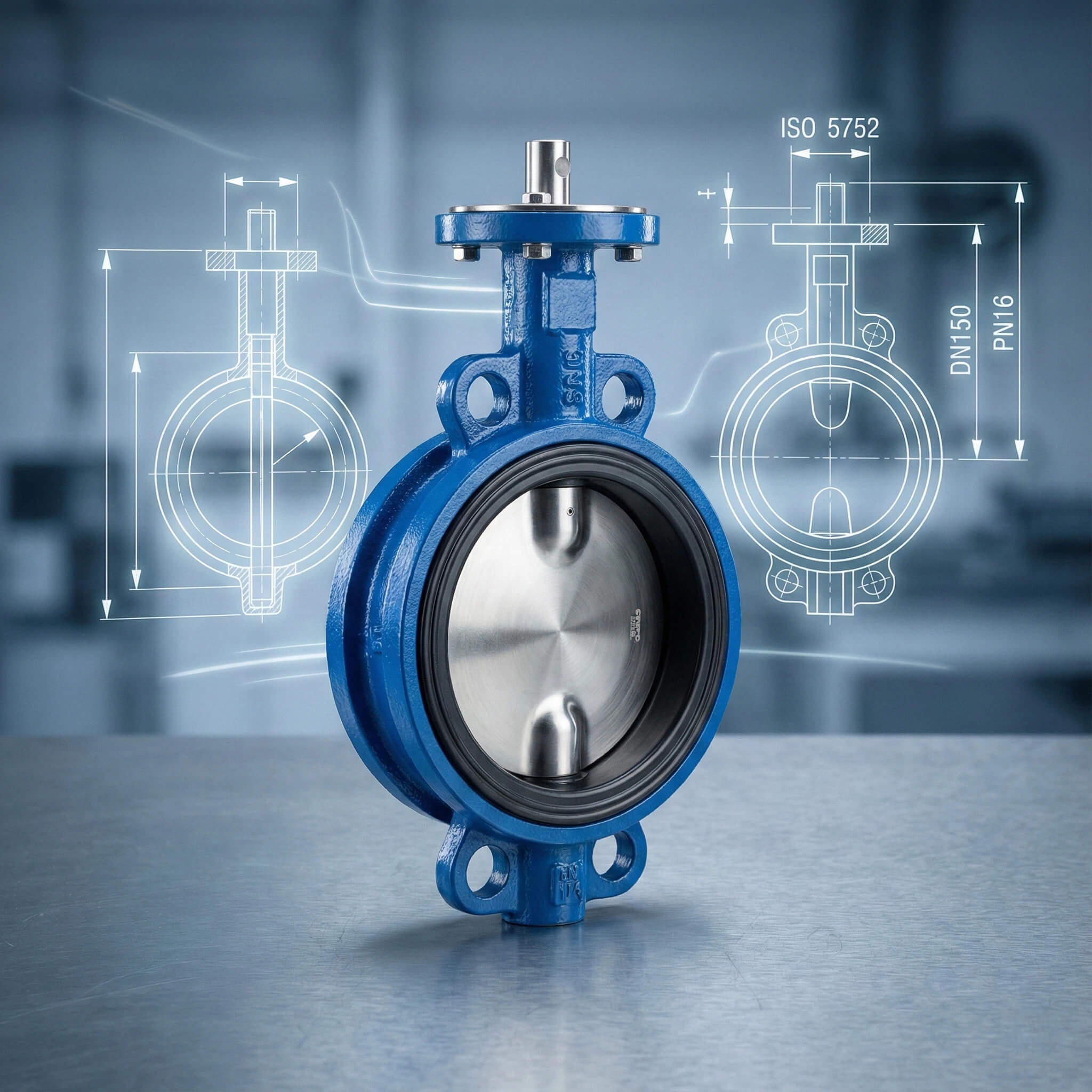
Sourcing industrial valves for European projects is a high-stakes game where reliability must meet cost-efficiency. You are likely facing the pressure of maintaining strict DIN and EN standards while managing a budget that seems to shrink every quarter. At RUITO, we solve the procurement headache by offering fully certified, high-performance soft seated butterfly valves that balance technical precision with factory-direct pricing.
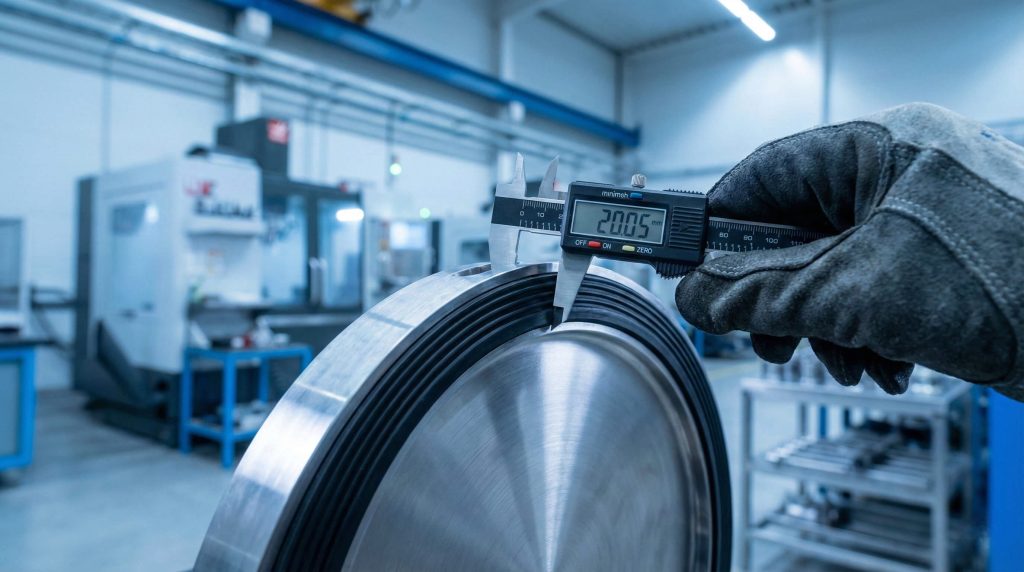
What is a Soft Seated Butterfly Valve?
Definition and Core Concept
A soft seated butterfly valve creates a bubble-tight seal using a resilient elastomer liner rather than metal-on-metal contact. But here’s the kicker… this design relies on the “interference fit” between the disc and the seat to ensure zero leakage.
- Utilizes elastomer liners (EPDM, NBR, PTFE).
- Ensures ISO 5208 Rate A (Zero Leakage).
- Operates via quarter-turn rotational motion.
The Economic Advantage
These valves are the workhorses of the industry, offering significant weight and cost reductions compared to gate or globe valves. You can reduce material costs by up to 30% without sacrificing the sealing performance required by DVGW or WRAS standards.
- Lighter weight reduces installation labor.
- Lower initial purchase price.
- Minimal maintenance requirements.
Primary Pressure and Temperature Limitations
While highly efficient, you must respect the physical limits of the elastomeric seat materials regarding heat and pressure. You might be wondering, “What are the hard limits?” generally, they are restricted to Class 150 ratings and temperatures below 200°C.
- Max Pressure: PN16 / Class 150.
- Max Temperature: 200°C (PTFE).
- Not suitable for high-pressure steam.
Key Takeaway: The Concentric Soft Seated Butterfly Valve offers a superior balance of cost and performance for low-pressure applications, provided the media is compatible with the liner.
| Feature | Specification Range |
|---|---|
| Nominal Diameter | DN50 – DN3000 (2″ – 120″) |
| Pressure Rating | PN10, PN16, Class 125/150 |
| Leakage Class | ISO 5208 Rate A (Zero Leakage) |
| Design Standard | EN 593, API 609, ISO 5752 |
Understanding these core specifications allows you to replace expensive gate valves in non-critical high-pressure lines.
How Concentric Sealing Mechanisms Work
The Quarter-Turn Operation
The valve operates on a simple 90-degree turn, moving the disc from perpendicular to parallel with the flow. What’s the real story? The magic happens in the final degrees of closing where the disc physically compresses the liner.
- Fast actuation speed.
- Visual position indication.
- Simple automation integration.
The Interference Fit
Sealing efficacy relies entirely on the seat’s internal diameter being slightly smaller than the disc’s external diameter. This compression stores elastic energy in the rubber, pushing back against the disc to create a perfect seal.
- Relies on rubber memory/elasticity.
- Compensates for minor wear.
- Requires precise machining tolerances.
Stem and Disc Connection Types
At RUITO, we recommend splined or square shaft connections (pinless design) for high-requirement projects to eliminate leak paths. Pins can become corrosion points, whereas a pinless connection increases structural integrity.
- Pin connections (Standard).
- Splined/Square connections (High Performance).
- Eliminates disc-face leak paths.
Key Takeaway: The reliability of the seal is dictated by the quality of the rubber’s elasticity and the structural integrity of the stem-to-disc connection.
| Component | Common Material | Function |
|---|---|---|
| Body | Ductile Iron (GGG40/50) | Pressure retention. |
| Disc | SS304, SS316, Alu-Bronze | Closing element. |
| Seat | EPDM, NBR, PTFE | Sealing interface. |
Invest in pinless connections to eliminate the most common point of failure in standard butterfly valves.
Selecting the Right Seat Material
EPDM for Water and Glycol
EPDM is the undisputed king for water applications, offering excellent resistance to heat, ozone, and steam. Ready for the good part? It is the standard for drinking water and HVAC systems involving glycol, provided it carries WRAS or ACS certification.
- Excellent for water and steam.
- Resistant to glycol and ozone.
- Not compatible with oils.
NBR for Hydrocarbons and Oils
If your project involves fuel lines or compressed air with oil mist, you must specify NBR (Nitrile) to prevent catastrophic swelling. A “standard” EPDM valve will fail instantly if exposed to petroleum-based media.
- Resistant to oils and fuels.
- Good for hydraulic fluids.
- Poor ozone resistance.
PTFE for Chemical Aggressiveness
When handling aggressive acids or alkalis, PTFE (Teflon) provides the necessary chemical inertness. RUITO often backs PTFE seats with a resilient EPDM strip to provide the “push back” elasticity that pure Teflon lacks.
- Highest chemical resistance.
- Wide temperature range (-40°C to +200°C).
- Ideal for corrosive processing.
Key Takeaway: Material compatibility is the single most critical factor in preventing valve failure; always cross-reference media chemistry with seat properties.
| Material | Best For | Worst For |
|---|---|---|
| EPDM | Water, Glycol, Dilute Acids | Oils, Hydrocarbons |
| NBR | Oil, Fuel, Hydraulic Fluid | Hot Water, Ozone |
| PTFE | Strong Acids, Solvents | Abrasive Slurries |
Never assume a “standard” valve fits all; a simple material check prevents costly system contamination.
Soft Seated vs. Metal Seated Valves
Cost Implications and TCO
For general industrial applications, a soft seated valve costs 30% to 50% less than a metal seated alternative. This is where it gets interesting… you often get a tighter seal (Class VI) with the cheaper valve option.
- Lower upfront capital expenditure.
- Reduced replacement costs.
- Better sealing performance (Class VI).
Leakage Class Differences
Metal seated valves are engineering marvels designed for extreme heat, but they typically allow permissible leakage (Class IV or V). Soft seated valves provide bubble-tight shut-off, which is essential for isolation duties.
- Soft Seat: Zero Leakage.
- Metal Seat: Allowable Leakage.
- Critical for potable water safety.
Application Suitability
If your application is below 200°C and 25 Bar, a soft seated valve is the superior engineering choice. Metal seats are overkill unless you are dealing with superheated steam or abrasive slurries.
- Use Soft Seat for < 200°C.
- Use Metal Seat for > 600°C.
- Use Metal Seat for Abrasives.
Key Takeaway: Choose Soft Seated Valves for cost-effective, zero-leakage isolation in standard temperature ranges, and reserve metal seats for extreme environments.
| Feature | Soft Seated Valve | Metal Seated Valve |
|---|---|---|
| Sealing | Class VI (Zero Leakage) | Class IV/V (Leaking) |
| Cost | Low | High |
| Temp Limit | Max 200°C | > 600°C |
Optimizing your budget means selecting the right tool for the job, avoiding over-specification.
Main Industrial Applications
Municipal Water and Wastewater
These valves are the standard for isolation in European infrastructure, from raw water intake to potable distribution. Here’s the deal. RUITO manufactures diameters up to DN3000, making them ideal for main trunk lines.
- WRAS/DVGW compliance.
- Corrosion protection required.
- Large diameter availability.
HVAC and Fire Protection
Their compact “wafer” design saves precious space in crowded mechanical rooms compared to bulky gate valves. You can effectively isolate chillers and cooling towers without sacrificing floor space.
- Space-saving design.
- Fast operation for fire safety.
- Reliable isolation.
Chemical and Food Processing
Valves with white EPDM or PTFE liners are essential here because they do not impart taste or smell to the product. RUITO supplies these “plastic-lined” valves as a cost-effective alternative to exotic alloys.
- Non-toxic materials (FDA).
- Chemical resistance.
- Hygienic design.
Key Takeaway: Soft seated valves are the standard solution across diverse industries, from clean water to corrosive chemicals, due to their versatility and liner options.
| Industry | Typical Configuration | Key Requirement |
|---|---|---|
| Waterworks | Ductile Iron / EPDM | WRAS/DVGW Cert |
| HVAC | Wafer / EPDM | Space Saving |
| Chemical | PTFE Lined | Corrosion Resistance |
Identifying your specific industry requirements ensures you select a valve configuration that meets regulatory standards.
Installation Impacts on Performance
Flange Alignment and Spacing
A soft seated butterfly valve is sensitive to flange conditions because the seat acts as its own gasket. You might be wondering, “Do I need extra gaskets?” No, adding them causes leakage and excessive torque.
- No extra gaskets needed.
- Requires parallel flanges.
- Clean flange faces essential.
The Importance of Disc Position
The most critical error occurs during insertion; the disc must be partially open (10 degrees) to protect the seal. If fully closed, the seat distorts; if fully open, the disc edge hits the pipe flange.
- Set disc to 10% open.
- Protect disc edge.
- Prevent seat tearing.
Torquing Procedures
Uneven tightening of bolts leads to body ovalization, preventing the disc from sealing evenly against the seat. We advise a strict star-pattern tightening sequence to ensure uniform pressure.
- Use star pattern tightening.
- Prevent body distortion.
- Ensure even compression.
Key Takeaway: Proper installation is as vital as manufacturing quality; a perfectly made valve will leak if installed between misaligned flanges or with the disc in the wrong position.
| Step | Action | Reason |
|---|---|---|
| 1. Position | 10% Open | Protects seat/disc. |
| 2. Gaskets | Remove Them | Seat is the gasket. |
| 3. Tighten | Star Pattern | Prevents distortion. |
Training installation teams on these simple protocols eliminates the majority of “defective valve” claims.
Maintenance for Valve Longevity
Regular Cycling Habits
A valve that sits in one position for years might not work when you finally need it due to rubber adhesion. Let’s face it. You need to “exercise” the valve monthly to keep the rubber lively.
- Cycle once per month.
- Prevents seat bonding.
- Verifies actuation.
Seat Replacement Capabilities
Unlike gate valves, many soft seated butterfly valves feature replaceable liners, extending the asset’s life significantly. “Boot” style seats can be pulled out and replaced, whereas vulcanized seats cannot.
- Boot seats are replaceable.
- Vulcanized seats are bonded.
- Spare kits available.
Storage Guidelines
Rubber is an organic material that ages with exposure to UV light and heat. Store valves indoors in a cool, dark place to prevent premature vulcanization and cracking before installation.
- Avoid UV exposure.
- Keep cool and dry.
- Keep disc slightly open.
Key Takeaway: Proactive maintenance, specifically regular cycling, prevents the most common failure mode of soft seated valves: seat adhesion and elastomer hardening.
| Issue | Cause | Action |
|---|---|---|
| Shaft Leak | Worn O-rings | Replace top O-rings. |
| Hard Turn | Swelling/Dryness | Cycle valve / Check media. |
| Seat Leak | Wear or Debris | Replace Seat. |
Treating the valve as an active component rather than a static pipe fitting ensures long-term reliability.
Applied International Standards
Face-to-Face Dimensions
For European buyers, compliance ensures that a DN100 valve fits perfectly into the gap designed for it. Why does this matter? ISO 5752 Short Series guarantees interchangeability regardless of the manufacturer.
- ISO 5752 Series 20.
- EN 558 Series 20.
- Guaranteed fitment.
Design Standards
Design standards like EN 593 and API 609 dictate critical safety factors such as wall thickness and stem diameter. These standards ensure the valve can withstand the rated pressure without structural failure.
- EN 593 (Europe).
- API 609 (USA/Global).
- Safety factor compliance.
Testing Standards
We test 100% of our output to ISO 5208 Rate A, which mandates zero visible leakage under pressure. This gives you the documentation trail required for strict project audits.
- ISO 5208 Rate A.
- 1.1x Hydrostatic Seat Test.
- 1.5x Shell Test.
Key Takeaway: Strict adherence to standards like EN 593 and ISO 5208 transforms a valve from a generic part into a certified engineering component suitable for regulated markets.
| Standard | Description | Function |
|---|---|---|
| EN 593 | Design Standard | Defines thickness/strength. |
| ISO 5752 | Dimensions | Ensures physical fit. |
| ISO 5208 | Testing | Defines zero leakage. |
Verification of these standards via mill certificates is your primary defense against substandard imports.
Selecting the Right Valve
Defining the Media and Pressure
Selection starts with the “STAMP” method: Size, Temperature, Application, Media, and Pressure. Here is the bottom line. You must accurately define the fluid properties to select the correct liner.
- Size and Pressure.
- Temperature limits.
- Media chemical compatibility.
Connection Type: Wafer vs. Lug
Use Wafer style for general isolation sandwiched between flanges to save cost and weight. Use Lug style for “end-of-line” service, allowing downstream piping removal while maintaining upstream pressure.
- Wafer: Between flanges (Cheaper).
- Lug: Bolted to flanges (End-of-line).
- Lug allows downstream maintenance.
Actuation Needs
Soft seated valves have high “break-out” torque due to rubber friction. When sizing actuators, always apply a 25-30% safety factor to account for “stiction” after long periods of inactivity.
- Calculate Break-out torque.
- Add 25-30% safety factor.
- Consider pneumatic vs electric.
Key Takeaway: Correct sizing involves more than just pipe diameter; considering connection style and torque safety factors ensures operational safety and ease of maintenance.
| Feature | Wafer Style | Lug Style |
|---|---|---|
| Bolt Holes | Through holes | Threaded inserts |
| End of Line? | No | Yes |
| Cost | Lower | Higher |
Choosing the correct body style prevents maintenance nightmares when downstream piping needs service.
RUITO: Your Manufacturing Partner
Factory Reality vs. Trading Fiction
In a market flooded with traders, dealing directly with a factory like RUITO mitigates risk. Think about it. We control the CNC machining, painting, and testing, offering full traceability back to the foundry.
- Real manufacturing facility.
- Direct control of quality.
- No middleman margins.
Quality Control Systems
Our 6-person quality control unit ensures every valve meets European standards before it leaves the dock. We welcome third-party inspections from TUV or SGS because we have nothing to hide.
- 100% Pressure Testing.
- Material traceability (Heat Codes).
- Third-party inspection welcome.
The Value of Direct Engineering Support
When you deal with RUITO, you get answers from the engineers who designed the valve, not a salesperson. We provide custom OEM solutions and technical clarity that traders simply cannot match.
- Engineer-to-Engineer communication.
- Fast technical responses.
- OEM/ODM customization.
Key Takeaway: Partnering with a genuine factory like RUITO provides the transparency, accountability, and technical depth required to secure your supply chain against quality fade.
| Metric | Trader / Middleman | RUITO Factory |
|---|---|---|
| Pricing | High (Stacked Margins) | Low (Factory Direct) |
| Traceability | Low | High (Heat Codes) |
| Support | Slow / Filtered | Fast / Direct |
Direct factory access is the ultimate risk management strategy for international procurement.
Conclusion
A soft seated butterfly valve is more than just a commodity; it is a precision instrument that safeguards your fluid systems against leakage and contamination. By understanding the nuances of seat materials, concentric design, and proper installation protocols, you can drastically reduce maintenance costs and project risks. RUITO combines the economic advantages of Chinese manufacturing with the rigorous quality standards of European engineering. We solve the “quality fade” problem by providing consistent, certified products backed by a real factory.
Contact RUITO today to discuss your valve requirements and request a comprehensive technical quote.
FAQ
Q1: What certifications are mandatory for importing these valves to Europe?
Critical: You must ensure CE Marking (PED) and specific potable water certs.
The CE Marking is non-negotiable for pressure equipment. For drinking water, you specifically need WRAS (UK) or DVGW (Germany) certification to ensure the rubber liner does not contaminate the water.
Q2: Can Chinese manufacturers truly match German quality standards?
Yes: But only if you select a manufacturer with full traceability.
Factories like RUITO use identical CNC machinery and testing protocols (ISO 5208) as European brands. The key is verifying the “Heat Code” traceability and demanding 3.1 Material Certificates to prove the metallurgy matches the spec.
Q3: Is it better to use a Wafer or Lug style valve?
Judgment: It depends entirely on your maintenance requirements.
Use Wafer for standard isolation to save money. However, you must use Lug style if you need “end-of-line” service capabilities, as it allows you to disconnect downstream piping without draining the entire system.
Q4: Why do soft seated valves typically fail prematurely?
Analysis: The primary cause is chemical incompatibility or installation error.
Most failures aren’t mechanical; they occur because an EPDM seat was used for oil (causing swelling) or the valve was installed with the disc fully closed, tearing the seat during flange insertion.
Q5: Can I order custom branding (OEM) for my valves?
Yes: This is a standard service for factory-direct partners.
Because we own the casting and painting lines, RUITO can cast your logo onto the body and paint the valve to your specific RAL color code, allowing you to maintain your brand identity in the market.