
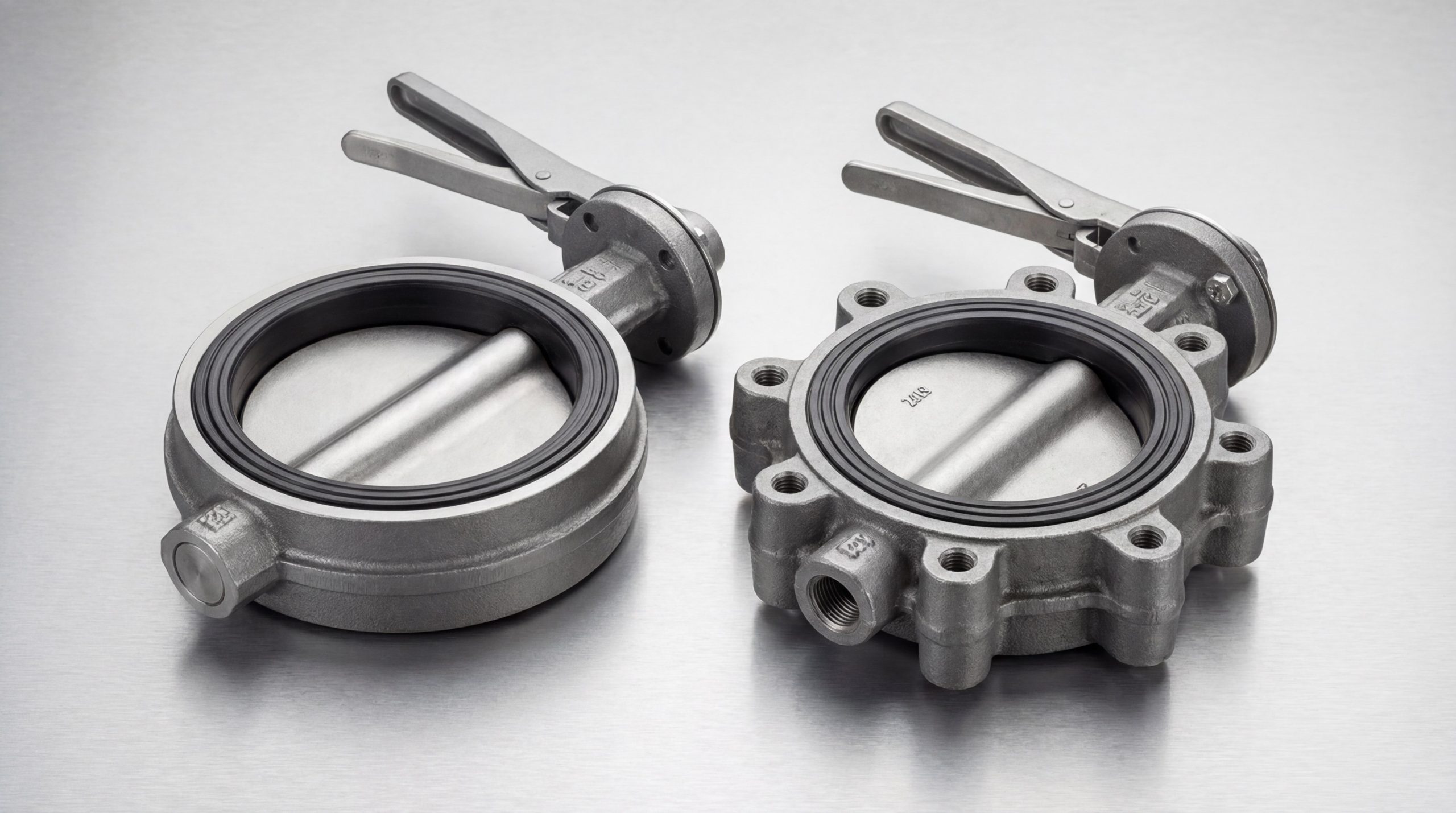
The choice between wafer and lug designs depends on whether your system requires dead-end service and independent bolting for maintenance. Selecting the wrong valve type often leads to catastrophic pipeline leaks and unavoidable system-wide shutdowns during routine repairs. Many engineers mistakenly assume these two designs are interchangeable, only to face expensive downtime when they realize a wafer valve cannot isolate a pressurized line. By specifying a high-quality butterfly lug type valve, you gain the mechanical flexibility to perform maintenance on one side of the pipe without draining the entire network.
What is a butterfly lug type valve?
A butterfly lug type valve is a flow control device featuring threaded metal protrusions, or lugs, around its circumference that allow it to be bolted directly to pipe flanges. This design provides a secure connection that enables the valve to remain in place even if the downstream piping is removed. You will find that this butterfly lug type valve is essential for systems where frequent equipment cleaning or isolation is required.
What are the structural design features?
The structure consists of a disc mounted on a central shaft and a body with integrated threaded holes. These lugs align perfectly with the bolting patterns of standard industrial flanges.
Look:
- The body is typically cast from ductile iron or stainless steel.
- Threaded inserts allow for two sets of bolts rather than one long stud.
- The resilient seat provides a tight seal against the rotating disc.
How do threaded lugs offer an advantage?
Threaded lugs provide the unique ability to act as a stand-alone barrier at the end of a line. This mechanical independence means you can disconnect one side of the flange while the other side stays pressurized.
Think about this:
- Bolts thread directly into the valve body for a rigid fit.
- Vibration resistance is significantly higher than wafer-style alternatives.
- The design supports safer maintenance in high-velocity systems.
Key Takeaway: The threaded lug design transforms the valve into a permanent fixture within the pipeline, allowing for one-sided disconnection without losing pressure on the opposite side.
| Feature | Advantage |
|---|---|
| Threaded Lugs | Independent bolting for each flange side |
| Material | High-strength ductile iron or steel |
| Compatibility | Fits ANSI and DIN flange standards |
This design allows you to isolate specific pipe segments without halting your entire production line.
How does a butterfly lug type valve work?
A butterfly lug type valve works by rotating a circular disc 90 degrees to either block or permit the flow of media through the pipeline. When you turn the handle or actuator, the disc swivels on its axis to sit perpendicular to the flow for a full shut-off. This mechanism ensures that the butterfly lug type valve provides efficient throttling and isolation in various industrial fluid systems.
How does disc rotation control flow?
As the disc rotates, the flow area increases or decreases linearly to manage the volume of media moving through the pipe. This quarter-turn operation makes the valve faster to operate than gate or globe designs.
The best part?
- A 90-degree turn provides an immediate and complete seal.
- Low torque requirements make manual operation effortless for staff.
- The slim profile minimizes pressure drop across the valve seat.
What actuation options are available?
You can operate these valves using manual levers, gear operators, or automated pneumatic and electric actuators. Automation is highly recommended for large-scale systems where precise flow modulation is critical.
Here is the secret:
- Gear operators offer high mechanical advantage for larger sizes.
- Pneumatic actuators allow for rapid fail-safe responses.
- Electric actuators integrate seamlessly into digital control rooms.
Key Takeaway: The quarter-turn operation combined with versatile actuation makes this valve one of the most efficient tools for both manual and automated flow control.
| Actuation | Best Use Case |
|---|---|
| Manual Lever | Small lines with frequent adjustments |
| Gear Box | High-pressure lines requiring precision |
| Pneumatic | Automated systems with fail-safe needs |
Evaluating the torque profile of your specific media is the first step toward selecting the right actuator.
Why choose a butterfly lug type valve?
You should choose a butterfly lug type valve because it offers superior mechanical stability and allows for dead-end service which wafer valves cannot support. This choice ensures that your facility can undergo repairs without draining miles of piping or losing valuable media. Integrating a butterfly lug type valve into your system is a strategic investment in long-term operational flexibility.
What is maintenance flexibility?
Maintenance flexibility refers to the ability to remove downstream equipment while the valve holds back pressure from the upstream source. This feature is a game-changer for facilities that operate 24/7.
Believe it or not:
- You can replace a pump without shutting down the main line.
- Cleaning downstream filters becomes a routine task instead of a crisis.
- The valve remains bolted to the flange during the entire procedure.
Why should you avoid wafer styles?
Wafer styles are often avoided in critical isolation points because they rely on long bolts that clamp the valve between two flanges. If you remove one flange, the wafer valve has nothing to hold it in place.
The bottom line:
- Wafer valves fall out if the piping on either side is removed.
- They cannot be used as an end-of-line termination point.
- Clamping force is less reliable in high-vibration environments.
Key Takeaway: The lug style is the only viable choice for isolation points that may require one-sided piping removal during the lifecycle of the system.
| Comparison | Lug Style | Wafer Style |
|---|---|---|
| Installation | Bolts directly to flanges | Clamped between flanges |
| Maintenance | Supports dead-end service | Requires full line shutdown |
| Security | High vibration resistance | Prone to clamping shifts |
Prioritizing system uptime over initial cost usually leads engineers to select the lug-style design.
Where is a butterfly lug type valve used?
A butterfly lug type valve is primarily used in chemical processing, water treatment, and HVAC systems where reliable isolation is non-negotiable. These valves are frequently installed at the end of pump discharge lines or at the entry points of storage tanks. Because the butterfly lug type valve can serve as a dead-end, it is the standard choice for manifold systems.
How does it serve water treatment?
In water treatment facilities, these valves manage the flow of potable water, wastewater, and filtration chemicals. Their corrosion-resistant coatings ensure they survive in wet and humid environments.
It gets better:
- They handle high volumes of water with very low friction loss.
- Quick isolation prevents cross-contamination during filter changes.
- Epoxy-coated bodies resist rust and chemical degradation.
Is it used in oil and gas?
Yes, the oil and gas industry utilizes these valves for utility lines, cooling water systems, and low-pressure hydrocarbon transport. They are favored for their compact size and reliable shut-off capabilities.
Keep in mind:
- Stainless steel discs prevent erosion from abrasive particles.
- They are significantly lighter than gate valves for offshore platforms.
- Fire-safe designs are available for volatile media handling.
Key Takeaway: From municipal water works to offshore oil rigs, the lug-style valve is the preferred choice for safety-critical isolation and end-of-line termination.
| Industry | Typical Application |
|---|---|
| Water Treatment | Filter isolation and pump discharge |
| Oil & Gas | Cooling water and utility manifold |
| HVAC | Boiler and chiller water regulation |
Matching the seat material to your specific chemical media is essential for ensuring the valve’s longevity.
Can a butterfly lug type valve stop leaks?
A butterfly lug type valve is highly effective at stopping leaks because its resilient seat creates a continuous bubble-tight seal around the entire disc. When you use a butterfly lug type valve with a reinforced elastomer liner, you achieve zero-leakage performance at standard operating pressures. This ensures that even the most sensitive fluid systems remain dry and secure.
How does the resilient seat work?
The resilient seat is an elastomer liner that the disc presses into when closed, creating a physical barrier. This compression ensures that no media can pass through the valve bore.
Here is why:
- The seat covers the entire inner body to prevent corrosion.
- Elastomers like EPDM or NBR adapt to minor disc imperfections.
- The interference fit provides sealing on both sides of the disc.
What ensures zero-leakage performance?
Zero-leakage is achieved through precision machining and high-quality materials that prevent the seat from deforming under pressure. Regular testing during manufacturing confirms the integrity of this seal.
The result?
- You eliminate the risk of environmental contamination from drips.
- System pressure is maintained without constant pump adjustments.
- Maintenance costs drop because the internal components stay clean.
Key Takeaway: The combination of an interference-fit disc and a high-quality elastomer seat guarantees a bubble-tight seal that prevents all downstream leakage.
| Seat Material | Temperature Range | Chemical Resistance |
|---|---|---|
| EPDM | -20°F to 250°F | Excellent for water/steam |
| NBR (Buna-N) | 10°F to 180°F | Ideal for oils and fuels |
| Viton | -10°F to 400°F | Superior for high heat/acids |
Selecting a seat with the correct thermal rating prevents the elastomer from hardening and failing over time.
Is a butterfly lug type valve for end-of-line?
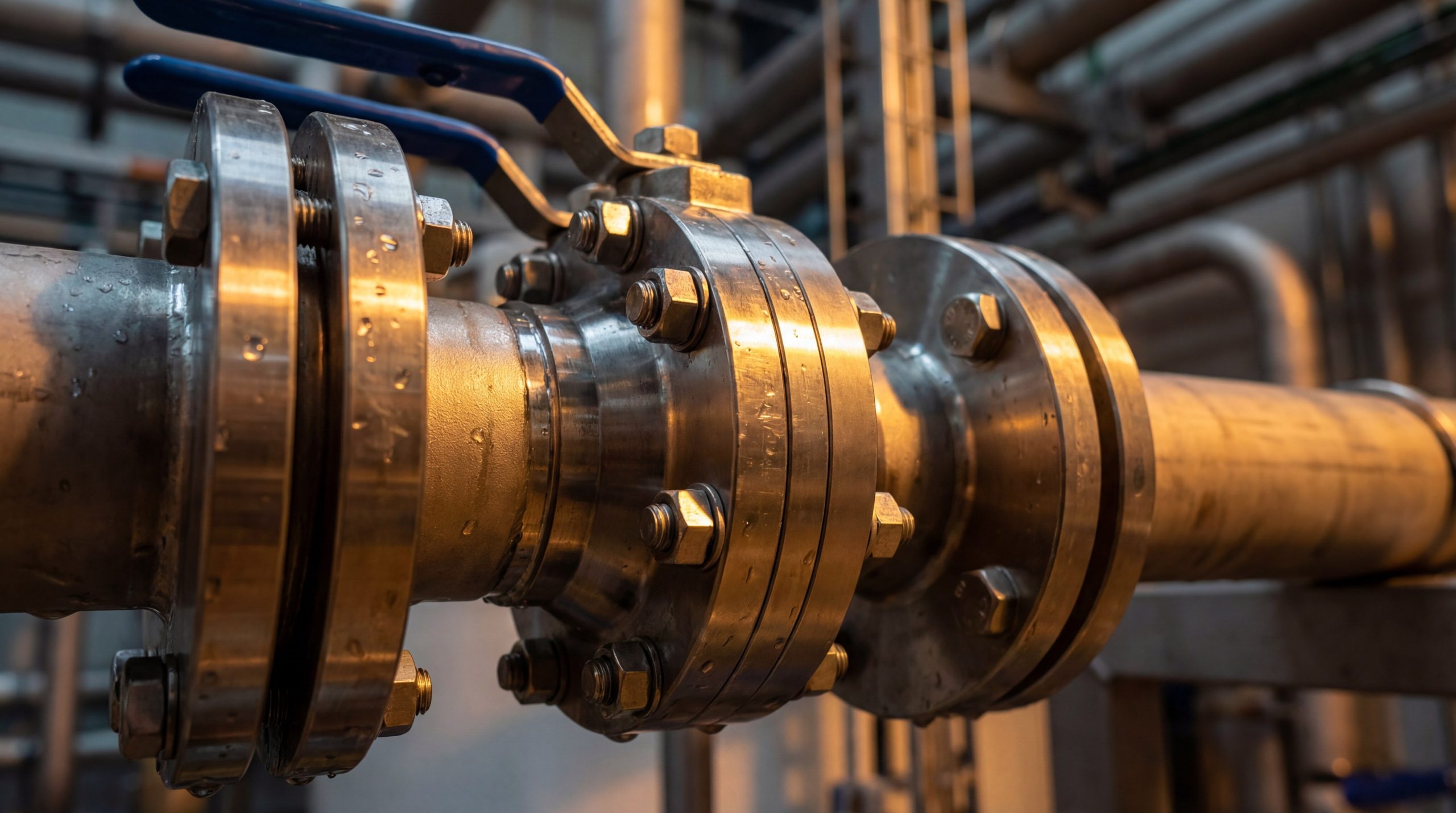
A butterfly lug type valve is specifically designed for end-of-line service because its threaded lugs allow it to stay bolted to the upstream flange when the downstream side is removed. Unlike wafer types, this valve does not rely on a “sandwich” effect to maintain its position. Using a butterfly lug type valve for end-of-line applications is a standard safety practice in modern engineering.
What are the dead-end service rules?
Dead-end service requires the valve to hold full line pressure against only one flange. You must ensure the valve is rated for the specific pressure drop it will encounter in this configuration.
Check this out:
- Always use a blind flange on the open side for long-term safety.
- Verify the pressure rating for dead-end service is not reduced.
- Inspect the bolts regularly to ensure they haven’t loosened.
How does it improve safety in isolation?
Safety is improved because the valve acts as a mechanical plug that cannot be accidentally displaced. This prevents high-pressure media from spraying into the work area if downstream piping is disconnected.
It is simple:
- The valve body stays structurally integrated with the pipeline.
- Workers can operate downstream without fearing a valve blowout.
- The threaded lugs act as a fail-safe against bolt failure.
Key Takeaway: Lug valves are the industry standard for end-of-line service, providing a secure, high-pressure barrier that wafer valves cannot match.
| Feature | End-of-Line Suitability |
|---|---|
| Lug Style | Yes (Threaded lugs hold pressure) |
| Wafer Style | No (Will fall out without downstream pipe) |
| Requirement | Must use a blind flange for permanent ends |
Using a blind flange in conjunction with a lug valve is the safest way to terminate a pressurized line.
What sizes fit a butterfly lug type valve?
A butterfly lug type valve is typically available in sizes ranging from DN50 to DN1200, fitting almost any standard industrial pipe diameter. Most manufacturers offer a wide selection of butterfly lug type valve models that comply with international flange standards like ANSI and DIN. This ensures that you can find a compatible fit for both small pilot plants and massive municipal networks.
What are the standard DN sizes?
Standard sizes follow the Diameter Nominal (DN) system, which translates to inches for US-based projects. Common sizes include 2-inch (DN50) through 24-inch (DN600) for standard industrial use.
Note these points:
- Larger sizes up to DN1200 are used for municipal water mains.
- Small sizes are ideal for intricate chemical dosing systems.
- Every size maintains the same threaded lug bolting pattern.
Is it compatible with all flanges?
These valves are designed to be compatible with ASME B16.5 and EN 1092-1 flange standards. You must specify the flange rating (e.g., Class 150 or PN16) when ordering to ensure the lug holes align.
The best part?
- Universal bolt patterns allow for global system integration.
- The slim body width fits into tight piping configurations.
- Custom hole drilling is available for non-standard interfaces.
Key Takeaway: The wide range of standard sizes and universal flange compatibility makes these valves easy to integrate into existing or new piping projects.
| Nominal Size | Flange Standard | Lug Hole Count |
|---|---|---|
| DN100 (4″) | ANSI Class 150 | 8 Lugs |
| DN200 (8″) | ANSI Class 150 | 8 Lugs |
| DN300 (12″) | ANSI Class 150 | 12 Lugs |
Always double-check your flange bolt circle diameter before finalized procurement to prevent installation delays.
How to install a butterfly lug type valve?
To install a butterfly lug type valve, you must align the threaded lugs between two pipe flanges and secure them using two separate sets of bolts for each side. This process ensures the valve is centered and the seat is properly compressed against the flange faces. Following the correct installation steps for a butterfly lug type valve prevents flange distortion and ensures a leak-free start-up.
What are the torque requirements?
Torque must be applied in a star pattern to ensure even pressure across the valve seat. Over-tightening can damage the elastomer liner, while under-tightening will lead to external leaks.
Follow these steps:
- Use a calibrated torque wrench for every bolt.
- Gradually increase torque in three separate stages.
- Consult the manufacturer’s manual for specific Newton-meter values.
What are alignment best practices?
Alignment is critical because a misaligned valve will cause the disc to scrub against the flange, leading to premature wear. You should ensure the pipe flanges are parallel and centered before tightening.
Here is why:
- Centering prevents the disc from hitting the pipe wall.
- Parallel flanges ensure the gasket seal is even.
- Proper spacing allows the valve to slide in without tearing the seat.
Key Takeaway: Precision in alignment and torque is the only way to ensure the valve performs for its full rated lifecycle without requiring adjustment.
| Step | Action | Tool Needed |
|---|---|---|
| 1 | Align flanges and center valve | Flange pins |
| 2 | Hand-tighten all lug bolts | Wrench |
| 3 | Torque to final spec in star pattern | Torque Wrench |
Ensuring the valve is in the slightly open position during installation prevents the seat from taking a permanent set.
Does a butterfly lug type valve handle pressure?
A butterfly lug type valve is engineered to handle high pressures, often ranging from PN10 to PN40 depending on the body material and thickness. When you select a butterfly lug type valve for a pressurized system, you are getting a component that has been hydrostatically tested to 1.5 times its working pressure. This high-pressure rating makes it suitable for demanding applications like fire protection and hydraulic mains.
What are PN10 to PN40 ratings?
Pressure Nominal (PN) ratings indicate the maximum pressure in bar that the valve can handle at ambient temperatures. Most lug valves are rated for PN16, which is approximately 232 PSI.
Don’t forget:
- PN10 is suitable for low-pressure drainage and gravity systems.
- PN25 and PN40 are for high-pressure industrial processes.
- The rating must match or exceed your system’s peak pressure.
How does it handle dynamic surges?
The rigid lug connection prevents the valve from shifting during water hammer or sudden pressure spikes. This stability protects the internal disc and shaft from bending under stress.
Look:
- Threaded lugs distribute mechanical stress more evenly.
- High-strength shafts prevent “flutter” in high-velocity flows.
- Resilient seats absorb minor shock waves within the fluid.
Key Takeaway: The robust construction and threaded lug design allow these valves to operate safely in systems with significant pressure fluctuations.
| Rating | Max Working Pressure | Typical Use |
|---|---|---|
| PN10 | 145 PSI | Irrigation/Drainage |
| PN16 | 232 PSI | General Industry |
| PN25 | 362 PSI | Power Generation |
Confirming the surge pressure limits of your system will help you choose between a standard and high-performance lug valve.
Who makes the best butterfly lug type valve?
The best butterfly lug type valve is produced by manufacturers who prioritize ISO 9001 certification and 100% pressure testing for every unit. You will find that top-tier vendors offer a butterfly lug type valve that meets international standards for both material traceability and performance reliability. Sourcing from a specialist ensures that you receive the engineering support needed for complex installations.
What are quality control standards?
Quality control involves rigorous testing of the casting, machining, and final assembly to ensure zero defects. Every valve should undergo a seat leakage test and a shell test before leaving the factory.
The best part?
- MTC (Material Test Certificates) prove the metal’s strength.
- Dimensional checks ensure perfect flange alignment.
- Coating thickness is verified to prevent future corrosion.
What are global certifications?
Certifications like CE, WRAS, and DNV indicate that the valve is safe for use in specific industries like potable water or marine engineering. These marks of quality give you confidence in the valve’s long-term performance.
Here is why it matters:
- WRAS approval is essential for safe drinking water systems.
- CE marking ensures compliance with European safety directives.
- DNV certification is the gold standard for offshore and shipping.
Key Takeaway: Choosing a manufacturer with a full suite of global certifications ensures your project meets all regulatory and safety requirements.
| Certification | Meaning | Importance |
|---|---|---|
| ISO 9001 | Quality Management | Consistent production standards |
| CE | European Conformity | Meets safety/health requirements |
| WRAS | Water Regulations | Safe for potable water contact |
Reviewing the manufacturer’s testing records is the best way to verify their claims of quality and reliability.
Frequently Asked Questions
Can I use a wafer valve for dead-end service?
No. Wafer valves rely on the clamping force of two flanges; removing one side causes the valve to lose its seal and potentially fall out of the line.
What is the best material for a lug valve body?
Ductile iron is the most common for general use, while 316L stainless steel is the best for highly corrosive chemical or food-grade applications.
Can I automate a lug-style butterfly valve?
Yes. These valves feature standardized ISO 5211 mounting pads, making them easy to pair with electric or pneumatic actuators for automated flow control.
What is the pressure limit for a standard lug valve?
Most standard lug valves are rated for PN16 (232 PSI), but high-performance models can handle up to PN40 (580 PSI) or higher depending on the design.
Do I need a blind flange with a lug valve?
Yes, if you are leaving the valve as a permanent end-of-line point, a blind flange is recommended for an extra layer of safety and to prevent seat damage.
Conclusion
Choosing between wafer and lug-style valves is a critical decision that impacts the maintainability and safety of your entire fluid control system. While wafer valves offer a lower initial cost and lighter weight, they cannot match the versatility of a lug-style design for isolation and dead-end service. By investing in high-quality components, you solve the problem of system-wide downtime and ensure that your operations remain efficient. Our vision is to provide precision-engineered solutions that empower engineers to build more resilient industrial networks. For expert guidance on selecting the right valve for your specific application, please contact us today.