
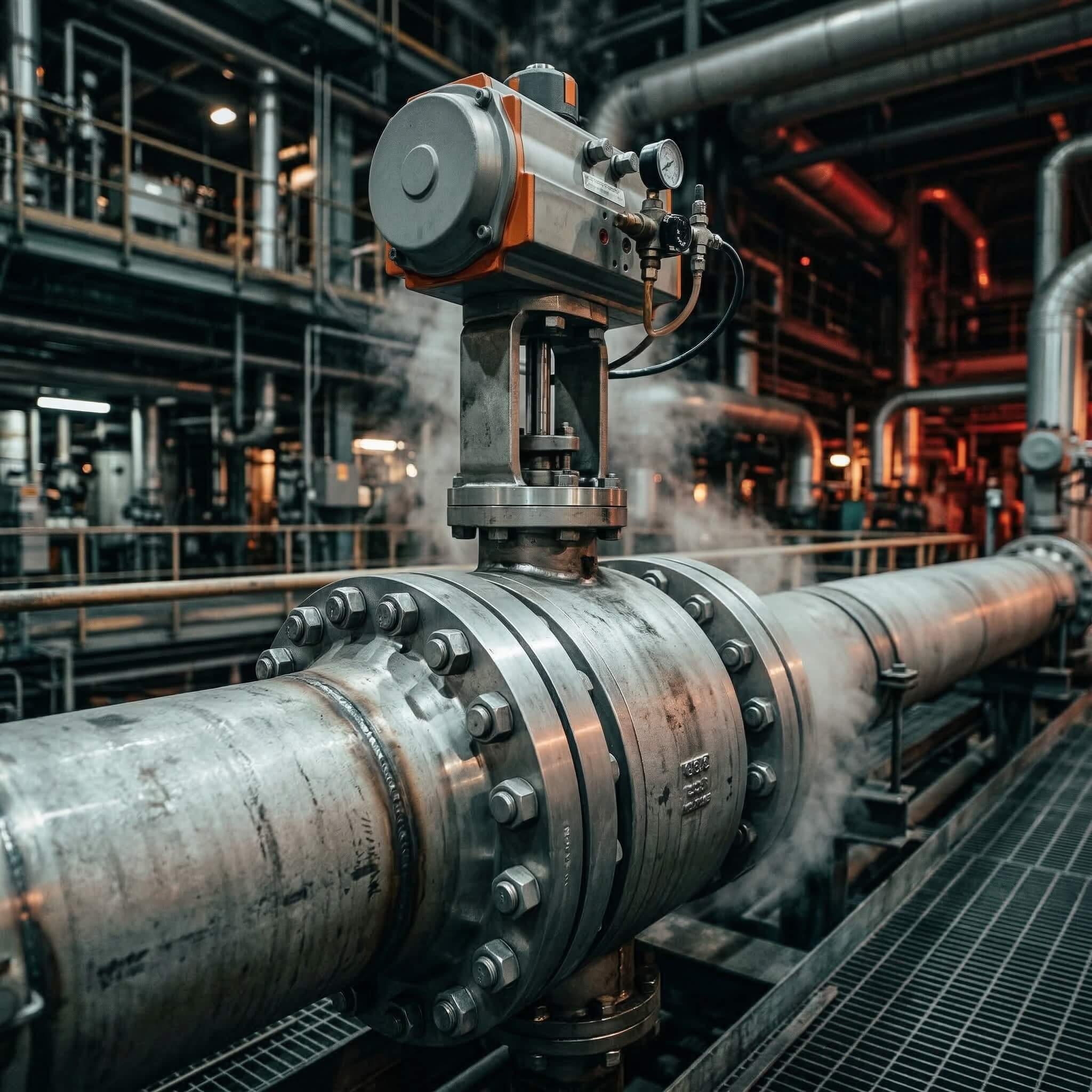
The choice between these two components depends on whether your system requires cost-effective utility flow or high-pressure, zero-leakage isolation. Selecting the wrong valve for your industrial pipeline can lead to frequent leaks, costly seat erosion, and unexpected system shutdowns. You are likely frustrated by the rapid wear of standard rubber seats in demanding environments. This guide explains why the eccentric disc butterfly valve is the engineered solution to these critical infrastructure challenges.
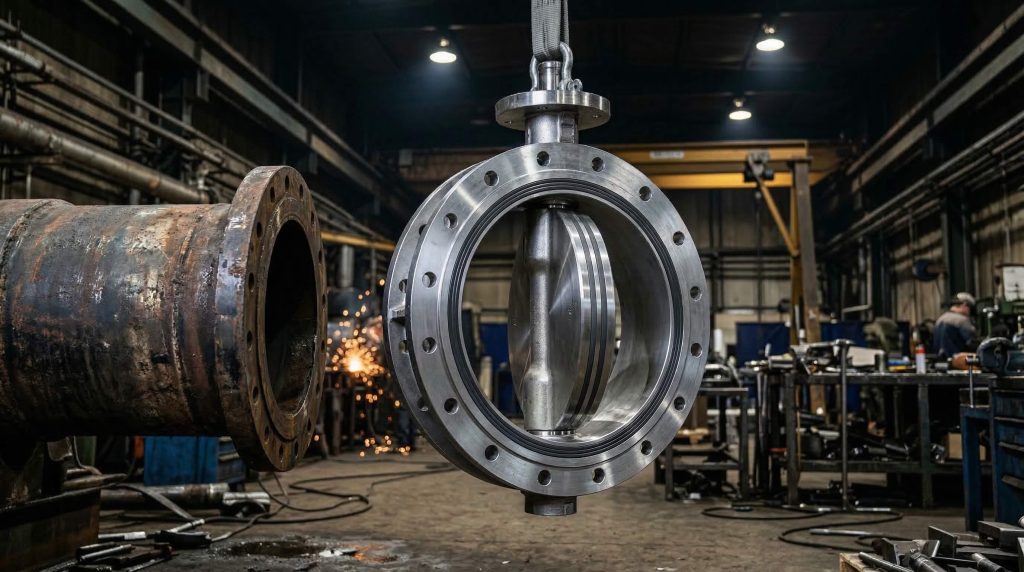
What is a concentric vs eccentric disc butterfly valve?
The primary difference lies in the placement of the stem relative to the disc and the sealing surface. In a concentric model, the stem passes through the center of the disc and the pipe, whereas an eccentric disc butterfly valve features a stem that is offset from the centerline to reduce friction.
Here is the kicker:
- Concentric valves use a resilient seated design for simple water applications.
- Eccentric models use offsets to create a “camming” action for high performance.
- Resilient seats rely on interference, while eccentric seats utilize mechanical torque.
Why is the stem position critical?
Does the stem position change how the valve seals? Yes, because the centerline placement in concentric valves causes the disc to rub against the seat throughout the entire 90-degree rotation.
Key Takeaway: Concentric valves are best for low-pressure utilities, while eccentric valves handle demanding industrial flows.
| Feature | Concentric Valve | Eccentric Valve |
|---|---|---|
| Stem Position | Centerline | Offset from center |
| Typical Seat | Rubber/EPDM | Metal or High-grade PTFE |
| Sealing Type | Interference Fit | Cam-action Torque |
This comparison highlights how the shift in stem geometry fundamentally alters the valve’s mechanical capability.
How does the design of an eccentric disc butterfly valve differ?
This design incorporates one or more offsets that move the shaft away from the center of the pipe and the disc face. An eccentric disc butterfly valve uses these geometric shifts to ensure the disc only contacts the seat during the final moments of closing.
Let’s dive in:
- Single offset designs move the shaft behind the sealing plane.
- Double offset designs move the shaft to the side of the pipe centerline.
- Triple offset designs add a conical sealing geometry.
What components are unique to this design?
Are there different parts inside these valves? You will find that these valves include seal retaining rings and laminated disc seals that are absent in simpler concentric types.
Key Takeaway: The structural anatomy of the eccentric design is built to eliminate the constant friction found in standard valves.
| Component | Purpose in Eccentric Valve |
|---|---|
| Offset Shaft | Reduces seat friction during travel |
| Laminated Seal | Provides flexibility for tight sealing |
| Hardened Seat | Resists erosion from high-velocity flow |
The complex internal geometry of these valves allows them to outperform resilient seated models in harsh conditions.
Why choose an eccentric disc butterfly valve for high pressure?
You should choose this valve because it can withstand significantly higher pressure ratings than concentric models, often reaching up to Class 600. The eccentric disc butterfly valve utilizes the pressure of the media itself to help energize the seal, ensuring a tighter closure as pressure increases.
Wait, there’s more:
- Concentric valves are typically limited to PN16 or PN25 ratings.
- Eccentric designs are frequently used in PN64 and PN100 systems.
- Metal-to-metal contact allows for higher mechanical integrity.
Can concentric valves handle surges?
Will a concentric valve survive a high-pressure surge? Most resilient seats will deform or blow out under extreme pressure, leading to total valve failure.
Key Takeaway: High-pressure environments require the robust metal seating and offset geometry of eccentric valves.
| Pressure Rating | Concentric Valve | Eccentric Valve |
|---|---|---|
| Maximum Class | 150 LB | 600 LB |
| Surge Resistance | Low | High |
| Typical Pressure | < 25 Bar | Up to 100 Bar |
Investing in the correct pressure rating prevents dangerous leaks and protects your downstream equipment.
Is the eccentric disc butterfly valve better for temperature?
Yes, because the absence of soft rubber components allows it to operate in temperatures exceeding 200°C. An eccentric disc butterfly valve typically uses metal or specialized graphite seats that do not melt or degrade when exposed to steam or hot oil.
Think about this:
- EPDM seats in concentric valves fail above 150°C.
- Stainless steel seats in eccentric valves handle extreme heat.
- Thermal expansion is accounted for in the offset disc geometry.
Does cold affect these valves?
How do these valves perform in cryogenic applications? Metal-seated eccentric valves are the industry standard for LNG and other low-temperature fluids where elastomers would shatter.
Key Takeaway: Thermal versatility makes the eccentric design essential for steam and chemical processing.
| Thermal Range | Resilient/Concentric | Eccentric Metal-Seated |
|---|---|---|
| High Temp Limit | 150°C | 500°C+ |
| Low Temp Limit | -10°C | -196°C (Cryogenic) |
| Expansion Risk | High seat deformation | Minimal impact on seal |
The material science behind eccentric valves ensures they remain functional across the widest possible temperature spectrum.
What offsets define an eccentric disc butterfly valve?
The specific offsets refer to the spatial displacement of the shaft relative to the disc and the seat. An eccentric disc butterfly valve is defined by its single, double, or triple offset geometry, which dictates its sealing efficiency.
But that’s not all:
- The first offset moves the shaft behind the sealing surface.
- The second offset moves the shaft off the pipe centerline.
- The third offset creates an asymmetrical cone shape in the seat.
What is a double offset valve?
Why is the double offset so popular? It creates a camming effect that lifts the disc off the seat almost immediately upon opening, preventing wear.
Key Takeaway: Each additional offset reduces friction and increases the valve’s lifespan in high-cycle applications.
| Offset Type | Primary Function | Common Application |
|---|---|---|
| Single | Improved seat contact | General Industry |
| Double | Reduced friction | High Performance |
| Triple | Zero leakage / Metal seat | Critical Isolation |
Understanding these offsets helps you select the exact level of performance required for your specific flow requirements.
Does an eccentric disc butterfly valve reduce seat wear?
Yes, the design virtually eliminates the friction and rubbing that destroy the seals in standard concentric valves. Because the eccentric disc butterfly valve uses a cam-like motion, the disc only touches the seat for a few degrees of its 90-degree travel.
You might be wondering:
- Friction is the leading cause of valve failure in water treatment.
- Eccentric valves can last five times longer in abrasive media.
- Lower friction translates to lower torque requirements for actuators.
Can you replace these seats?
Is maintenance easier on these valves? While concentric seats are easily replaced, eccentric seats are designed to last so long that maintenance intervals are significantly extended.
Key Takeaway: Reduced mechanical wear results in a lower total cost of ownership over the valve’s lifecycle.
| Metric | Concentric Valve | Eccentric Valve |
|---|---|---|
| Seat Life | Moderate | High |
| Friction Level | Constant during travel | Only at closure |
| Maintenance Cycle | Frequent | Long-term |
By minimizing contact, the eccentric design ensures your system stays online longer without requiring seat replacements.
Can an eccentric disc butterfly valve achieve zero leakage?
High-performance models, specifically the triple offset variety, are capable of achieving “bubble-tight” or zero-leakage performance. The eccentric disc butterfly valve uses its unique geometry to wedge the disc into the seat, creating a seal that meets API 598 standards.
Here is the truth:
- Soft-seated concentric valves provide good sealing but fail at high pressure.
- Triple offset eccentric valves offer metal-to-metal zero leakage.
- This performance is critical for hazardous or toxic media.
What is “bubble-tight” sealing?
Does zero leakage mean absolutely no fluid passes? It refers to a specific test standard where no visible gas bubbles pass through the valve during pressure testing.
Key Takeaway: For critical isolation in the oil and gas industry, zero-leakage eccentric valves are the only safe choice.
| Sealing Class | Typical Valve Type | Application |
|---|---|---|
| Class VI | Concentric (Soft) | Water/HVAC |
| API 598 | Double Offset | Hydrocarbons |
| Zero Leakage | Triple Offset | Steam/Chemicals |
Reliable sealing protects your personnel and the environment from dangerous leaks in high-pressure lines.
Which materials suit an eccentric disc butterfly valve best?
These valves are typically manufactured from robust alloys like carbon steel, stainless steel, or duplex steel to handle aggressive media. While a concentric valve often uses ductile iron, an eccentric disc butterfly valve requires high-strength materials to maintain its precise offset geometry under load.
Consider this:
- Stainless steel 316L is excellent for corrosive chemical lines.
- Carbon steel provides cost-effective strength for high-pressure oil.
- Exotic alloys like Monel are available for marine environments.
Are the seals always metal?
Can you use soft materials in an eccentric design? Many double offset valves use reinforced PTFE seats to combine the benefits of soft sealing with high-performance geometry.
Key Takeaway: Material selection should match your media’s acidity, temperature, and abrasive characteristics for maximum longevity.
| Material | Best For | Benefit |
|---|---|---|
| Carbon Steel | Oil & Gas | High strength/Low cost |
| SS316 | Chemicals | Corrosion resistance |
| PTFE | Water/Acid | Low friction sealing |
Choosing the right alloy ensures that your valve body survives as long as the internal components.
What are the costs of an eccentric disc butterfly valve?
While the initial purchase price is higher than a concentric valve, the long-term ROI is significantly better due to reduced maintenance. An eccentric disc butterfly valve prevents the repeated labor costs and downtime associated with replacing failed resilient seats.
The bottom line is:
- Concentric valves are “consumable” in high-demand systems.
- Eccentric valves are capital investments with a 10-20 year lifespan.
- Energy savings occur due to the lower torque required for automation.
Is the actuator more expensive?
Does the valve require a larger motor? Because the eccentric design reduces friction, you can often use smaller, less expensive actuators to operate the valve.
Key Takeaway: Look beyond the price tag to the total lifecycle cost, where eccentric valves often prove more economical.
| Cost Factor | Concentric Valve | Eccentric Valve |
|---|---|---|
| Initial Price | Low | Medium-High |
| Maintenance Cost | High | Low |
| Actuator Size | Large | Small-Medium |
Investing more upfront in an eccentric design pays for itself through system reliability and reduced part replacement.
When should you install an eccentric disc butterfly valve?
You should install this valve whenever your application involves steam, hydrocarbons, high pressure, or temperatures above 150°C. While the concentric model is perfect for simple HVAC or water systems, the eccentric disc butterfly valve is the industrial workhorse for refinery and power plant operations.
Now for the best part:
- Use concentric for low-pressure municipal water.
- Use eccentric for power plant cooling and steam.
- Use eccentric for chemical processing and offshore platforms.
Can I upgrade my current system?
Is it possible to switch from concentric to eccentric? Most eccentric valves are designed with standard wafer or lug dimensions, making them easy to drop into existing pipelines.
Key Takeaway: Use the decision matrix of pressure, temperature, and media criticalness to guide your final valve selection.
| Industry | Recommended Valve | Reason |
|---|---|---|
| HVAC | Concentric | Low cost/Low pressure |
| Refineries | Eccentric | High temp/Hazardous media |
| Power Plants | Eccentric | Steam handling/Reliability |
Matching the valve type to your specific operational environment is the key to engineering a successful fluid control system.
Frequently Asked Questions
Can I use a concentric butterfly valve for high-pressure steam?
No, because the rubber seats will melt and the centerline design cannot provide the mechanical strength required for steam isolation. Steam applications strictly require metal-seated eccentric valves to ensure safety.
What’s the best way to identify an eccentric valve from the outside?
Look at the shaft position relative to the center of the valve body. If the shaft is visibly moved to one side or sits behind the disc face, it is likely an eccentric design.
How do I know if I need a double or triple offset valve?
Choose a double offset if you need high-performance sealing with some flexibility, but select a triple offset for critical applications requiring zero leakage and metal-to-metal contact. Triple offset is essential for fire-safe requirements.
Can I automate an eccentric disc butterfly valve?
Yes, and they are often easier to automate because they require lower torque to break the seal compared to concentric valves. They are fully compatible with pneumatic, electric, and hydraulic actuators.
How do I know if the seat is wearing out?
Monitor the valve for increased leakage in the closed position or an increase in the torque required to move the disc. Eccentric valves show much slower wear patterns than concentric models, but should still be inspected during scheduled turnarounds.
Conclusion
Selecting between concentric and eccentric valves is a strategic decision that impacts the safety and efficiency of your entire plant. By addressing the common problems of seat erosion, pressure limitations, and thermal failure, the eccentric disc butterfly valve provides a reliable solution for critical industrial paths. At RUITO, our vision is to empower global industries with precision-engineered fluid control that eliminates downtime and maximizes operational life. If you are ready to optimize your pipeline performance with high-reliability valve solutions, contact us today to speak with our engineering team about your project requirements.