
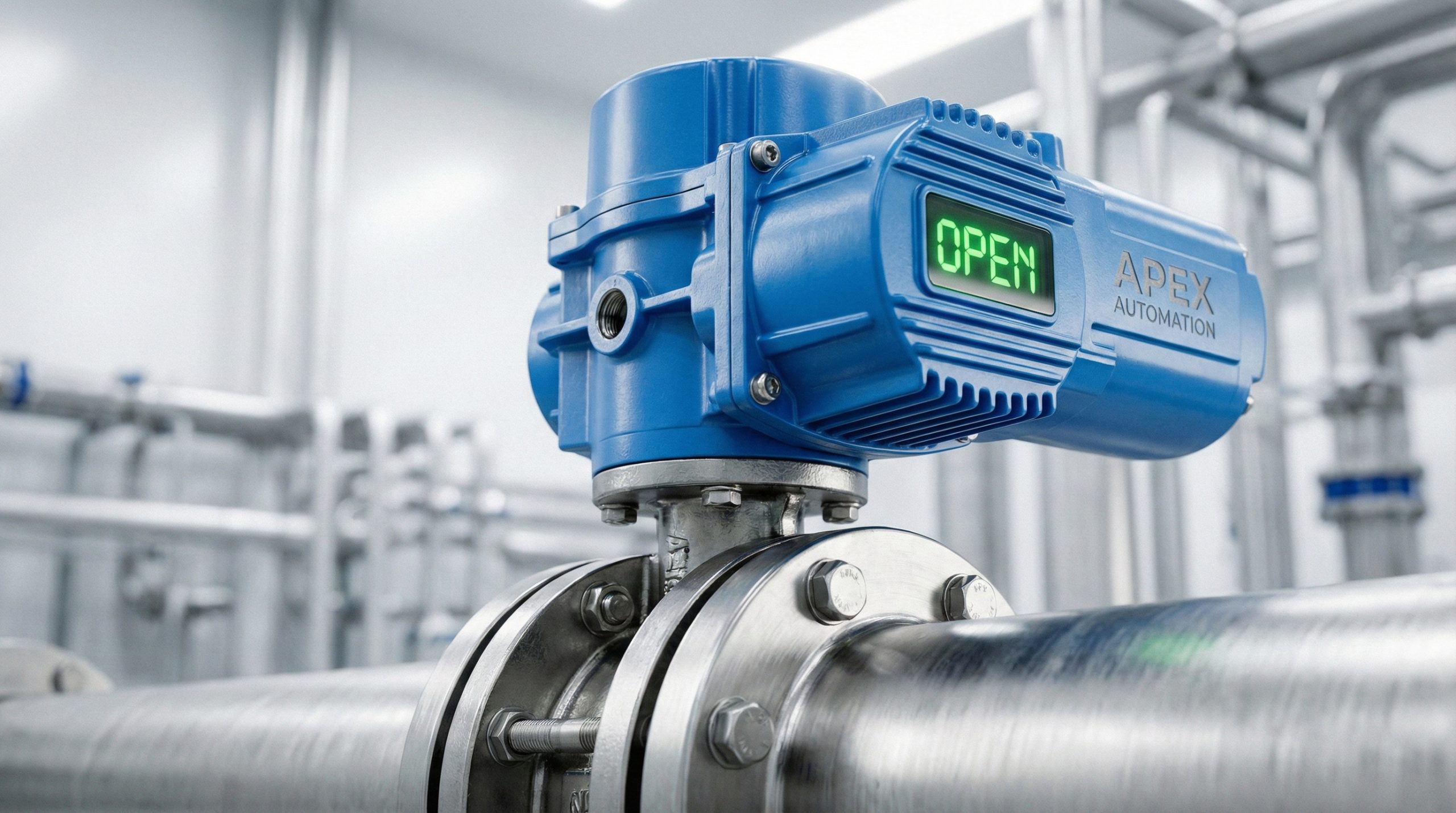
Manual valve operation often introduces delays and inconsistencies that compromise the safety of high-pressure industrial systems. If you rely on manual labor to regulate critical fluid flows, you risk equipment damage from pressure surges and increased operational costs due to inefficiency. Automated flow control provides the precision and reliability you need to protect your assets and streamline production.
Automated butterfly valves are essential because they enable rapid, remote, and precise regulation of large-scale fluid flows without the need for manual intervention. Gaining a deep understanding of the motorized butterfly valve function is the first step toward modernizing your facility and achieving seamless integration with advanced industrial control networks.
What Is a Motorized Butterfly Valve Function in Industry?
A motorized butterfly valve function is to serve as an automated, programmable component that regulates the flow of liquids or gases using an electric actuator. This device allows you to manage system throughput from a centralized control room, ensuring that every movement is tracked and executed with high precision. By understanding the motorized butterfly valve function, you can better appreciate how it stabilizes pressure and flow rates across complex piping networks.
These valves are designed to handle significant volumes while maintaining a compact footprint, which is vital for modern space-constrained plants. You will find that their ability to integrate with digital control systems makes them superior to traditional manual options.
How does the automation process work?
The automation process begins when an electronic signal is sent from a PLC or SCADA system to the valve’s motor. This motor converts electrical energy into mechanical torque, which then rotates the internal disc to the desired angle.
Think about this:
- The actuator receives a 4-20mA or digital signal.
- The motor gears rotate the valve stem 90 degrees.
- Position sensors provide real-time feedback to the controller.
- The system automatically adjusts for pressure drops or flow changes.
Key Takeaway: Motorized butterfly valves transform electrical commands into mechanical motion, allowing for remote and highly accurate flow management.
| Feature | Manual Valve | Motorized Valve |
|---|---|---|
| Operation Speed | Slow/Manual | Fast/Automated |
| Precision | Low (Human Error) | High (Digital Control) |
| Remote Access | Not Available | Fully Integrated |
| Labor Cost | High | Low |
The following table summarizes the core differences between manual and automated operation to help you evaluate your current system’s performance.
Why Are Automated Butterfly Valves Vital for Efficiency?
Automated butterfly valves are vital for efficiency because they reduce human error and minimize the energy required to maintain optimal flow conditions. When you use an automated butterfly valve, you ensure that your system reacts instantly to fluctuations, preventing wasted resources and unnecessary downtime. These valves optimize the flow coefficient (Cv), allowing your pumps and compressors to operate at their most efficient points.
By automating your flow control, you can schedule precise operations that align with your production cycles. This level of coordination is impossible to achieve with manual labor alone.
Can they lower your operational costs?
Yes, they significantly lower costs by reducing the need for on-site personnel and decreasing the frequency of system repairs caused by improper valve settings. By maintaining constant pressure, you extend the life of your entire piping infrastructure.
The best part?
- Reduced energy consumption for pumps.
- Fewer mechanical failures from water hammer.
- Lower labor requirements for routine adjustments.
- Enhanced data collection for predictive maintenance.
Key Takeaway: Efficiency is gained through the synergy of rapid response times and digital accuracy, leading to long-term cost savings for your facility.
| Efficiency Metric | Impact of Automation | Benefit to You |
|---|---|---|
| Response Time | Milliseconds | Prevents system surges |
| Resource Waste | Minimal | Lowers utility bills |
| System Uptime | Maximized | Increases total output |
| Data Logging | Continuous | Simplifies compliance |
Review this analysis of efficiency metrics to see how automation impacts your bottom line and system reliability.
What Components Make Up a Motorized Butterfly Valve?
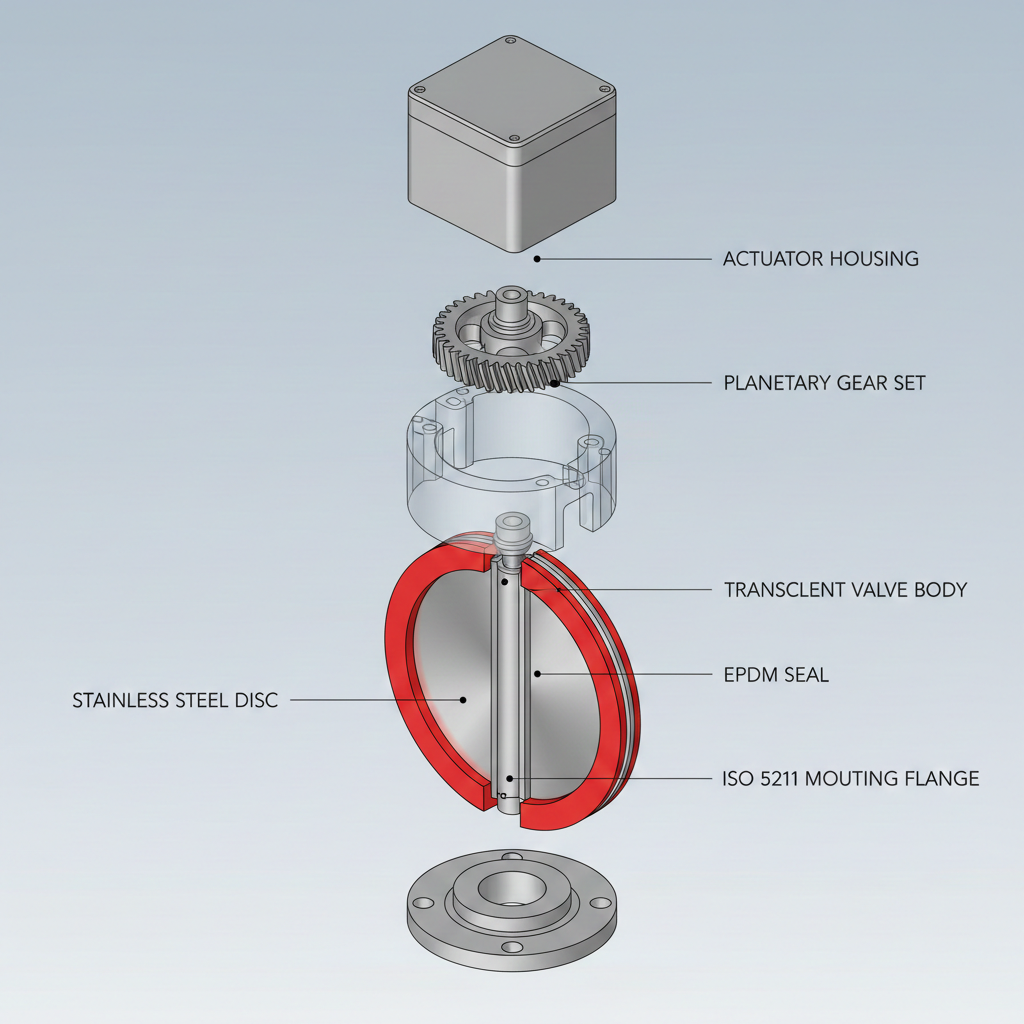
The primary components of a motorized butterfly valve include the valve body, the rotating disc, the stem, and the electric actuator that drives the movement. Understanding the motorized butterfly valve function requires knowing how these parts work together to create a leak-proof seal and provide throttling capability. The disc is the heart of the valve, sitting in the center of the flow path and rotating 90 degrees to open or close the passage.
High-quality materials like stainless steel or ductile iron are typically used for the body to withstand industrial pressures. The seat provides the sealing surface, ensuring zero leakage when the valve is in the closed position.
What is the role of the actuator?
The actuator acts as the “brain” and “muscle” of the assembly, receiving control signals and providing the force needed to turn the stem. It often includes limit switches and positioners to ensure the disc stops exactly where it needs to.
Here is the kicker:
- High-torque motors handle high-pressure differentials.
- Manual overrides allow for safety during power failures.
- Visual indicators show the valve position at a glance.
- IP-rated housings protect electronics from harsh environments.
Key Takeaway: A motorized valve is a complex assembly where the actuator and mechanical valve body must be perfectly matched for reliable performance.
| Component | Material Options | Primary Function |
|---|---|---|
| Valve Body | Ductile Iron / SS316 | Structural Integrity |
| Disc | SS304 / SS316 | Flow Regulation |
| Seat | EPDM / PTFE / Viton | Leak Prevention |
| Actuator | Aluminum / Plastic Shell | Driving Mechanism |
The structural breakdown in this table highlights the critical materials that ensure your valve survives in demanding environments.
Which Actuator Types Power Your Butterfly Valves?
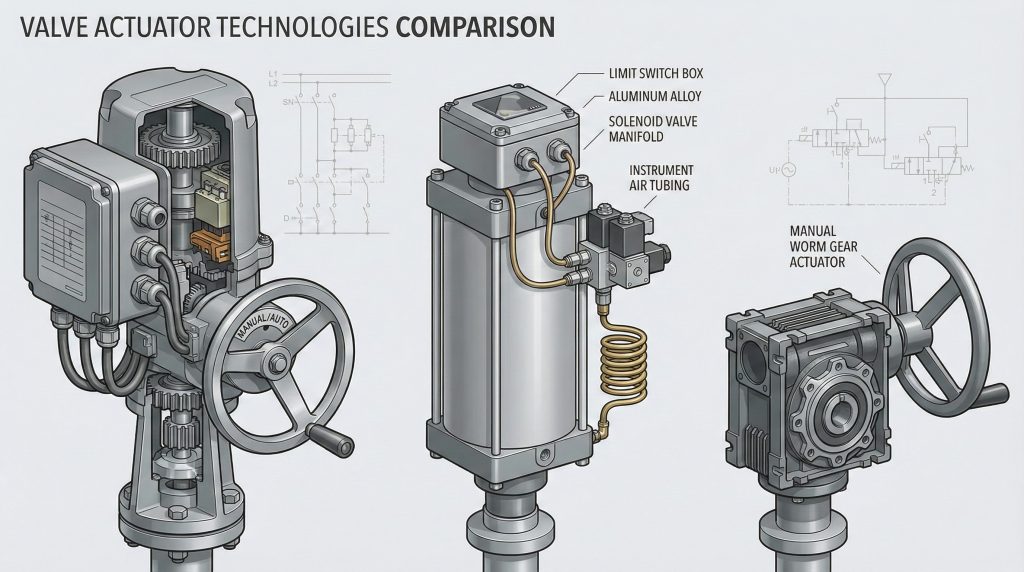
Actuator types primarily include electric, pneumatic, and hydraulic versions, each selected based on your specific speed and power requirements. While a ball valve might use similar actuators, butterfly valves often require specific torque profiles to overcome the resistance of large-diameter discs. Electric actuators are popular for their ease of wiring, while pneumatic types are favored for their fail-safe speeds and explosive-environment safety.
Your choice depends on available power sources and the criticality of the flow control task. Most modern systems are moving toward electric versions for better data integration and lower infrastructure costs.
How do you choose between electric and pneumatic?
Choosing between the two depends on whether you value precise modulating control (electric) or rapid, fail-safe closing speeds (pneumatic). Electric actuators are generally easier to install because they do not require compressed air lines.
It gets better:
- Electric actuators offer superior positioning accuracy.
- Pneumatic actuators are ideal for high-cycle applications.
- Hydraulic actuators provide the highest torque for massive valves.
- Smart actuators include self-diagnostic features.
Key Takeaway: Selecting the right power source for your actuator is essential for meeting your system’s specific response and safety criteria.
| Actuator Type | Power Source | Best Application |
|---|---|---|
| Electric | AC/DC Electricity | Precision Modulation |
| Pneumatic | Compressed Air | Rapid On/Off / Safety |
| Hydraulic | Pressurized Oil | Heavy-Duty / High Torque |
| Manual | Human Power | Backup / Low Frequency |
Compare these actuator types to determine which power source aligns best with your existing facility infrastructure.
What Benefits Do Automated Butterfly Valves Provide?
The benefits of automated butterfly valves include enhanced safety, improved process consistency, and the ability to operate in hazardous environments without risking personnel. By leveraging the motorized butterfly valve function, you can implement emergency shutdown protocols that trigger automatically during a system fault. These valves also provide a much higher degree of repeatability than manual operation, which is critical for chemical dosing or temperature control.
Furthermore, their compact design means you can install them in tight spaces where larger gate valves would not fit. This versatility makes them a favorite for modern industrial upgrades.
Do they improve system safety?
Absolutely, as they allow for immediate isolation of sections of your plant during an emergency without requiring a worker to enter a dangerous area. Automated systems can be programmed to fail-closed or fail-open depending on what is safest for your process.
Why does this matter?
- Prevents toxic leaks through rapid closure.
- Protects downstream equipment from overpressure.
- Reduces the risk of human injury during operation.
- Enables remote monitoring of valve health.
Key Takeaway: Automation is not just about speed; it is a fundamental safety upgrade that protects your workers and your capital investment.
| Benefit | Impact | ROI Value |
|---|---|---|
| Repeatability | Consistent Batches | High Quality Control |
| Space Saving | Smaller Pipe Racks | Lower Construction Costs |
| Safety | Remote Isolation | Reduced Risk Liability |
| Integration | Real-time Analytics | Improved Decision Making |
This benefit analysis demonstrates why upgrading to automated valves is a strategic move for any modern industrial operator.
Where Are Automated Butterfly Valves Typically Applied?
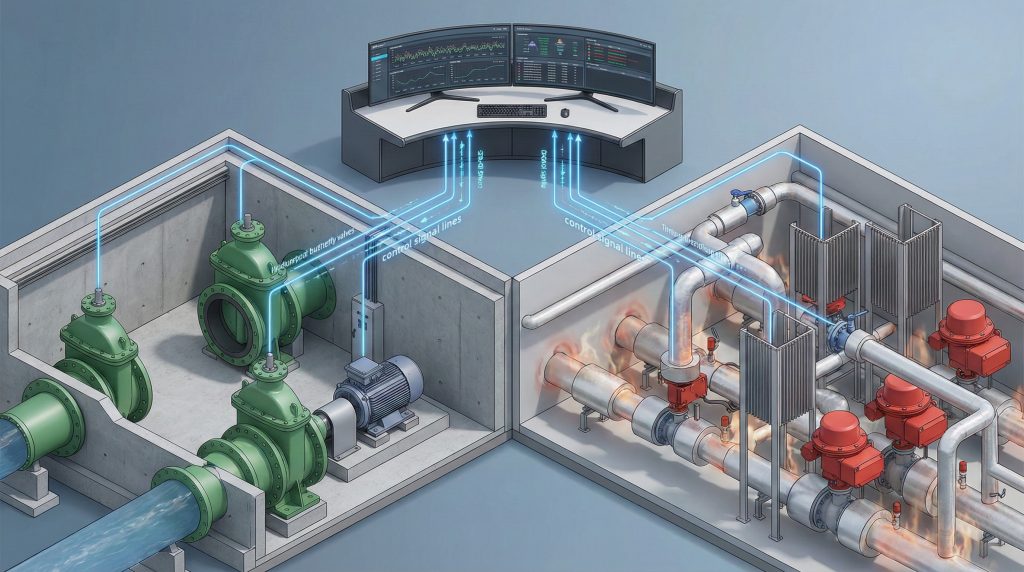
Automated butterfly valves are typically applied in water treatment, HVAC systems, chemical processing, and the oil and gas industry. In a water treatment facility, a check valve prevents backflow, but the automated butterfly valve manages the main distribution and filtration stages. These valves are ideal for handling large volumes of water or gas where the pressure drop needs to be kept to a minimum.
You will also see them used extensively in power plants for cooling water systems. Their ability to handle slightly abrasive fluids makes them more versatile than many other valve types.
Are they suitable for corrosive chemicals?
Yes, provided you select the correct liners and disc materials, such as PTFE or high-grade stainless steel, to prevent chemical degradation. Specialized coatings can also be applied to the valve body to protect against external corrosion in marine or chemical environments.
Keep this in mind:
- PTFE-lined valves handle aggressive acids.
- Stainless steel discs resist pitting and corrosion.
- EPDM seats are excellent for general water service.
- Double-offset designs reduce seat wear in high-pressure service.
Key Takeaway: The versatility of the butterfly design allows it to excel in diverse sectors, from municipal water to high-tech chemical manufacturing.
| Industry | Typical Fluid | Valve Function |
|---|---|---|
| Water Treatment | Potable/Waste Water | Main Flow Control |
| HVAC | Chilled/Hot Water | Temperature Regulation |
| Chemical | Acids / Solvents | Process Modulation |
| Power Gen | Cooling Water | System Thermal Management |
This table provides a snapshot of where these valves are most commonly found and how they serve different industrial goals.
How Do You Select the Right Automated Butterfly Valve?
Selecting the right automated butterfly valve involves evaluating your fluid type, operating pressure, temperature, and the required control accuracy. Understanding the motorized butterfly valve function helps you determine if a standard concentric design is sufficient or if you need a high-performance double or triple-offset model. You must also ensure the actuator torque exceeds the valve’s breakout torque by a safe margin to prevent stalling.
It is vital to match the valve’s end connections—wafer, lug, or flanged—to your existing piping standards. This ensures a secure fit and prevents leaks at the installation points.
What specifications are most critical?
The pressure rating and material compatibility are the most critical specifications, as they determine whether the valve will fail under stress. You must also consider the duty cycle of the actuator if the valve will be modulating frequently.
Here is the secret:
- Always check the Cv value for flow capacity.
- Ensure the seat material matches the fluid temperature.
- Verify the actuator’s voltage or air pressure requirements.
- Consider the environment’s explosion-proof (ATEX) needs.
Key Takeaway: Proper selection requires a holistic view of the entire system’s demands rather than looking at the valve in isolation.
| Selection Factor | Consideration | Why It Matters |
|---|---|---|
| Fluid Media | Corrosivity / Viscosity | Determines material choice |
| Pressure | Max Operating Pressure | Prevents body or seal failure |
| Temperature | Min/Max Range | Protects seat and seals |
| Control Type | On-Off vs. Modulating | Dictates actuator type |
Use these selection factors as a checklist when you are planning your next system upgrade or new installation project.
How Should You Maintain Your Automated Butterfly Valves?
You should maintain your automated butterfly valves by performing regular visual inspections, testing actuator response times, and lubricating mechanical linkages. While a gate valve might require stem packing adjustments, the primary concern for an automated butterfly valve is seat wear and electronic actuator health. Establishing a preventative maintenance schedule ensures that small issues, like a worn seal, do not turn into major system failures.
By monitoring the power draw of your electric actuators, you can often detect internal friction before it causes a complete breakdown. This proactive approach saves you both time and money.
What are the signs of a failing valve?
Signs of failure include increased torque requirements, external leakage around the stem, and a failure to reach the fully closed or open positions. You might also notice irregular noises coming from the actuator gears during operation.
Don’t ignore these:
- Visible corrosion on the valve stem or body.
- Slower-than-normal response to control signals.
- Moisture or oil inside the actuator housing.
- Fluctuations in flow even when the valve is set.
Key Takeaway: Consistent monitoring and minor adjustments are the keys to achieving a 20+ year service life for your automated valves.
| Maintenance Task | Frequency | Expected Outcome |
|---|---|---|
| Visual Inspection | Monthly | Identifies external leaks |
| Operational Test | Quarterly | Confirms response accuracy |
| Seal Inspection | Annually | Prevents internal bypass |
| Actuator Calibration | Bi-Annually | Ensures precise positioning |
Follow this maintenance schedule to keep your flow control systems running at peak performance with zero unexpected downtime.
What Does the Future Hold for Automated Valve Tech?
The future of automated valve tech involves the integration of IoT sensors and AI-driven diagnostics to enable truly autonomous flow control. As the motorized butterfly valve function evolves, these devices will be able to predict their own maintenance needs and adjust their operation to optimize energy usage in real-time. This shift toward “smart valves” will reduce the need for manual inspections and provide deeper insights into plant performance.
You can expect valves to become more communicative, sharing data across cloud platforms to help you manage global operations from a single interface. The efficiency gains from this level of connectivity will be transformative for the industry.
Will AI manage your flow control?
AI is already beginning to assist by analyzing flow patterns and predicting when a valve is likely to fail based on historical performance data. This allows you to replace components exactly when needed, rather than following a rigid time-based schedule.
The future is here:
- Self-calibrating actuators that fix their own drift.
- Energy-harvesting valves that don’t need external power.
- Advanced materials that are virtually immune to corrosion.
- Augmented reality (AR) support for remote repairs.
Key Takeaway: The next generation of valves will be intelligent assets that actively contribute to the efficiency and profitability of your business.
| Technology | Status | Impact on Industry |
|---|---|---|
| IoT Sensors | Currently Available | Real-time data tracking |
| AI Diagnostics | Emerging | Predictive maintenance |
| Wireless Control | Growing | Reduced wiring costs |
| Smart Materials | R&D Stage | Extended service life |
This overview of future technologies shows how your current investments in automation will eventually bridge the gap to fully autonomous operations.
Why Is Choosing the Right Valve Partner Critical?
Choosing the right valve partner is critical because you need a supplier that provides more than just hardware; you need technical expertise and reliable long-term support. A high-quality butterfly valve manufacturer ensures that every component meets international standards and provides the documentation necessary for regulatory compliance. When you partner with an expert, you gain access to customized engineering solutions that address your specific challenges.
Your partner should offer quick response times and a robust supply chain to ensure your projects remain on schedule. This reliability is what separates a standard vendor from a strategic asset.
Can they assist with custom engineering?
A true partner can help you design custom valve configurations for unique pressures, temperatures, or space constraints. They should be able to provide 3D models and FEA analysis to verify performance before manufacturing begins.
Here is the bottom line:
- Access to global certifications (ISO, CE, WRAS).
- Technical support that understands your industry.
- Predictable lead times for critical project phases.
- Transparent quality control and testing reports.
Key Takeaway: The right partner simplifies your procurement process and de-risks your industrial operations through consistent quality and expertise.
| Partner Attribute | Importance | Result for Your Project |
|---|---|---|
| Technical Support | Critical | Faster Troubleshooting |
| Certifications | Essential | Easier Regulatory Approval |
| Lead Times | High | Project Stays on Schedule |
| Customization | Moderate | Optimized System Performance |
This final table outlines what you should look for in a valve manufacturer to ensure the success of your long-term infrastructure projects.
Conclusion
Automated butterfly valves are the backbone of modern industrial efficiency, providing the precision and safety required for today’s complex systems. By integrating advanced actuators with high-performance valve bodies, you can solve the problems of manual inconsistency and high labor costs while future-proofing your operations.
Our mission is to deliver precision-engineered fluid control solutions that exceed international standards and drive your success. We envision a future where every industrial facility operates with maximum reliability and minimum environmental impact. If you are ready to optimize your flow control systems with high-quality, certified products and expert technical guidance, contact us today to start a consultation.
FAQ
Can I replace a manual butterfly valve with a motorized one?
Yes, most standard butterfly valves can be retrofitted with an actuator if the mounting pad follows ISO 5211 standards. This allows you to upgrade your existing system without replacing the entire valve body.
What’s the best seat material for high-temperature water?
EPDM is typically the best choice for water up to 120°C, while Viton or metal-seated valves are required for even higher temperatures. Choosing the wrong material will lead to premature seal failure and system leaks.
Can automated butterfly valves be used for throttling?
Yes, motorized butterfly valves are excellent for throttling because the actuator can position the disc at precise angles to regulate flow. However, ensure your actuator is rated for “modulating service” rather than just simple “on/off” operation.
What is the advantage of a triple-offset butterfly valve?
Triple-offset valves provide a bubble-tight, metal-to-metal seal that is ideal for high-pressure and high-temperature applications where soft seats would fail. They offer the performance of a globe valve with the space-saving benefits of a butterfly valve.
How do I protect my motorized valve in outdoor environments?
You should select an actuator with a minimum IP67 or IP68 rating and ensure it has an internal heater to prevent condensation. This protects the sensitive electronic components from moisture, dust, and temperature fluctuations.