
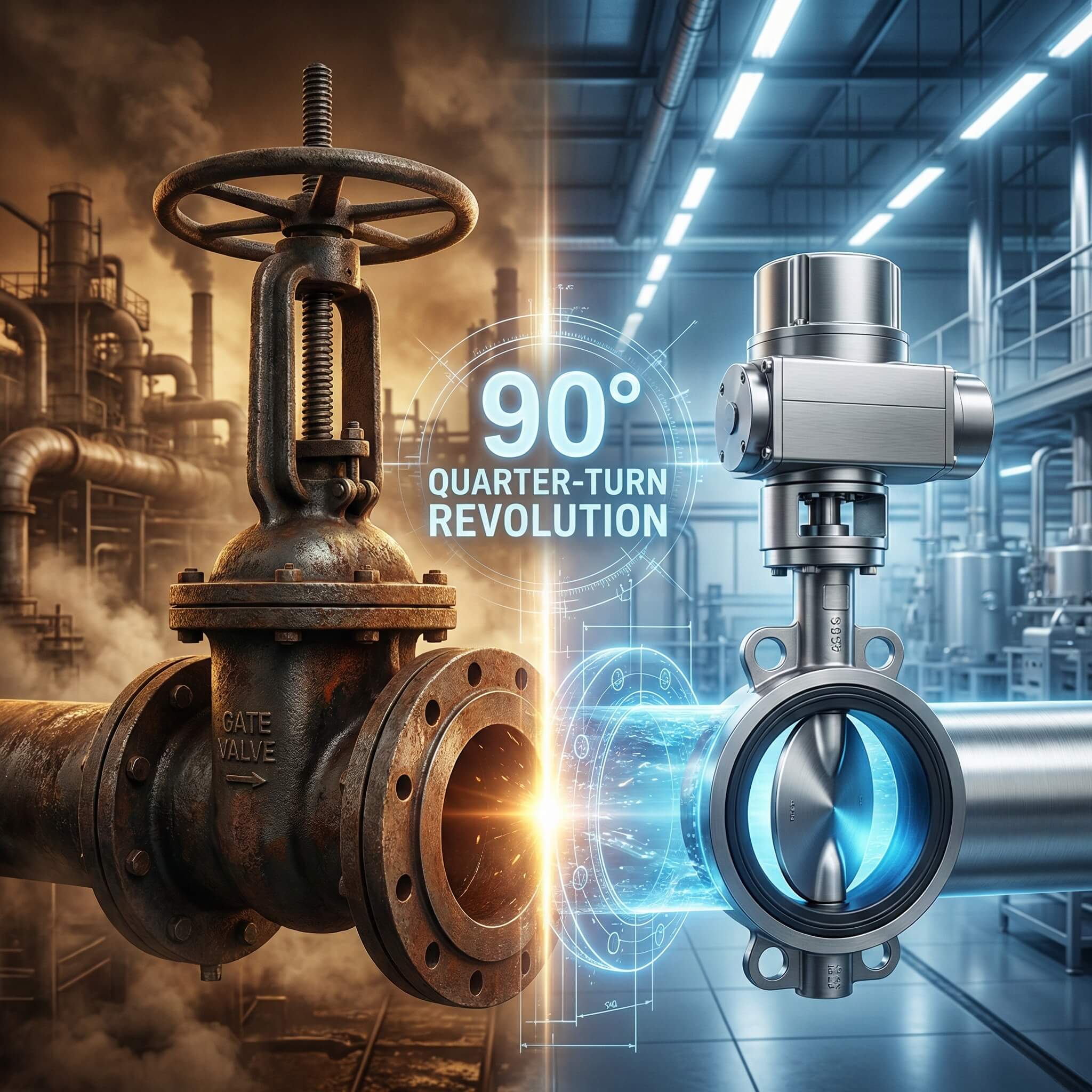
The butterfly valve inventor revolutionized fluid control by introducing a compact, quarter-turn design that drastically reduced the weight and installation footprint of industrial piping systems. You might often struggle with bulky valve designs that lead to excessive weight and slow operation times. These traditional components frequently cause operational bottlenecks and high maintenance costs in high-velocity flows. By leveraging innovations from the original butterfly valve inventor, you can utilize modern butterfly valves to achieve superior efficiency and lower lifetime expenses.
Who was the first butterfly valve inventor in the 1930s?
The first butterfly valve inventor emerged from American engineering firms during the 1930s to simplify flow control in large-scale water and power systems. You can trace the roots of modern industrial efficiency back to these early pioneers who sought to move away from cumbersome legacy hardware. Their work established the foundation for the streamlined components you use in your facilities today.
Earliest industrial applications
Early designs were primarily focused on managing high-volume, low-pressure water systems where space was limited. You would typically find these early versions in the following areas:
- Municipal water distribution networks
- Hydroelectric power generation plants
- Large-scale irrigation projects
- Early industrial cooling systems
How 1930s patents shape current tech
The patents filed nearly a century ago defined the concentric disc movement that remains a core principle of modern engineering.
But that’s not all.
Modern manufacturers still rely on the fundamental geometry established in those early American drafting rooms to ensure reliable sealing.
Key Takeaway: The 1930s origins of the butterfly valve established a legacy of space-saving design that still dominates large-diameter piping today.
| Feature | 1930s Design Impact | Modern Equivalent |
|---|---|---|
| Primary Goal | Weight Reduction | High-Performance Efficiency |
| Operation | Manual Lever | Automated Actuation |
| Focus | Water/Power | Global Industrial Use |
Understanding these origins helps you appreciate the transition from heavy isolation hardware to high-speed control.
How did the butterfly valve inventor impact the industry?
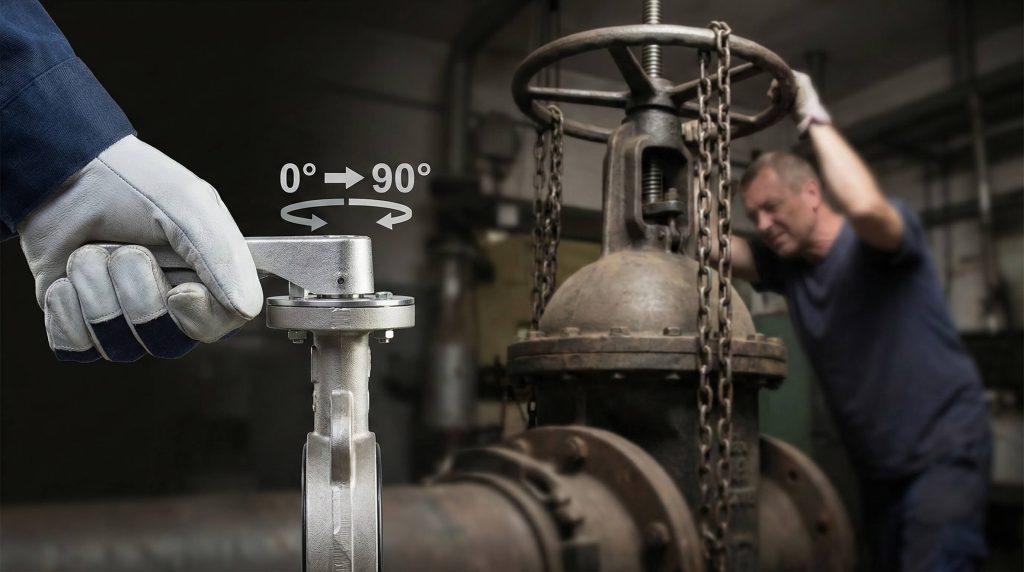
The butterfly valve inventor shifted the entire industrial landscape by offering a viable alternative to the massive, multi-turn gate valves used for decades. You no longer had to deal with the slow response times and heavy lifting associated with traditional isolation equipment. This shift allowed for lighter infrastructure and more flexible piping layouts in your processing plants.
Shifting from gate valves
Before this invention, engineers were forced to use heavy metal wedges that required significant physical effort to operate.
- Gate valves were often too heavy for thin-walled pipes.
- They required massive vertical space for the rising stem.
- Installation costs were significantly higher due to weight.
- Maintenance was difficult in confined spaces.
The role of material science
As the invention gained traction, the integration of new alloys and polymers allowed the technology to expand into corrosive environments.
Think about it.
Without the inventor’s initial leap, we might still be limited by the physical constraints of cast-iron gate designs.
Key Takeaway: Replacing heavy gate valves with butterfly designs significantly reduced material costs and improved installation speeds across global industries.
| Comparison | Gate Valve | Butterfly Valve |
|---|---|---|
| Footprint | Large Vertical | Compact Profile |
| Weight | Heavy/Bulky | Lightweight |
| Actuation | Multi-turn | Quarter-turn |
This industrial shift highlights why rapid operation became a priority for modern fluid control systems.
Why did the butterfly valve inventor choose the quarter-turn?
The butterfly valve inventor prioritized the quarter-turn mechanism because it offered the fastest possible transition between open and closed states. You can appreciate how this 90-degree rotation mimics the efficiency found in modern check valves and other rapid-response systems. By minimizing the travel distance of the disc, the inventor ensured that you could control flow with minimal mechanical wear.
Benefits of the 90-degree turn
The quarter-turn design provided immediate operational advantages that were revolutionary at the time of its inception.
- Extremely fast opening and closing speeds.
- Reduced wear on the internal stem and seals.
- Simplified integration with pneumatic and electric actuators.
- Easier manual operation in emergency shut-off scenarios.
How size constraints drove designs
As industrial pipelines grew in diameter, the need for a valve that didn’t require a massive overhead structure became critical.
You might be wondering.
How did they manage such high flows without a bulky body? The answer lies in the slim profile of the rotating disc.
Key Takeaway: The choice of a quarter-turn mechanism revolutionized speed and automation potential in fluid control engineering.
| Mechanism | Travel Distance | Operational Benefit |
|---|---|---|
| Multi-turn | High | Precise but slow |
| Quarter-turn | Low (90°) | Rapid and efficient |
| Impact | Higher Wear | Lower Maintenance |
Speed of operation is only one part of the equation when considering the replacement of traditional hardware.
Did the butterfly valve inventor replace heavy gate valves?
The butterfly valve inventor successfully provided a solution that replaced gate valves in almost every application above DN300. You will find that for large-diameter pipelines, the butterfly design is significantly more economical and easier to handle than massive globe valves. This transition helped engineers like you optimize project budgets without sacrificing flow capacity or reliability.
Is weight reduction critical?
For large-scale infrastructure, every kilogram of weight saved translates into lower shipping costs and less structural support.
- Modern butterfly valves can be up to 70% lighter than gate valves.
- They require fewer workers for safe installation.
- They put less stress on the surrounding pipe supports.
- Shipping logistics are greatly simplified for international projects.
Installation cost comparisons
When you look at the total cost of ownership, the initial purchase price is only the beginning.
Let’s dive deeper.
The reduced labor hours and smaller crane requirements for butterfly valves make them the clear winner for large systems.
Key Takeaway: Weight reduction and space efficiency are the primary reasons butterfly valves have largely superseded gate valves in large-bore applications.
| Valve Type | Weight (Typical DN600) | Installation Effort |
|---|---|---|
| Gate Valve | ~1,200 kg | Very High |
| Butterfly Valve | ~350 kg | Low to Moderate |
| Saving | ~70% | Significant |
Mechanical advantage extends beyond just weight, influencing the very force required to operate the system.
How does the butterfly valve inventor’s design reduce torque?
The butterfly valve inventor reduced operating torque by centering the disc on a rotating axis, which requires less force than lifting a heavy wedge. You can compare this mechanical advantage to the precision found in high-performance ball valves. By balancing the hydraulic forces acting on the disc, the inventor made it possible for you to use smaller, more affordable actuators.
Mechanical advantages of the disc
The disc design allows the fluid pressure to work with the operator rather than against the entire sealing surface.
- Balanced pressure on both halves of the disc.
- Minimal friction during the initial opening phase.
- Linear torque profiles that are easy to automate.
- Reduced power consumption for electric actuators.
Extending the life of actuators
Because the torque requirements are lower, your actuators don’t have to work as hard during every cycle.
Here’s the kicker.
Lower torque means less internal stress, which directly leads to a longer lifespan for your entire control system.
Key Takeaway: Reduced operating torque allows for smaller actuators and lower energy consumption, significantly cutting your operational costs.
| Component | Torque Demand | System Impact |
|---|---|---|
| Gate Wedge | High | Heavy-duty Actuators |
| Butterfly Disc | Low | Compact Actuators |
| Result | Higher Costs | Lower Lifecycle Cost |
While torque was a success, early material choices for sealing presented their own sets of challenges.
What did the butterfly valve inventor think of rubber seats?
The butterfly valve inventor initially relied on rubber soft-seats to ensure a tight seal, but these materials had clear limitations in demanding environments. You might find that early resilient seats were prone to cavitation damage when used for throttling applications. This caused the rubber to peel or deform, which eventually led to the development of plug valves and specialized hard-sealing alternatives.
Why cavitation damages seats
When fluid passes through a partially open valve at high velocity, pressure drops can cause vapor bubbles to collapse violently.
- This process “pits” the rubber surface over time.
- Damaged seats lead to persistent leakage.
- Soft materials are sensitive to abrasive particles in the fluid.
- Temperature limits restrict the use of standard EPDM or NBR.
Addressing early sealing failures
Engineers realized that while rubber was excellent for low-pressure water, it couldn’t handle the heat of steam or chemicals.
Believe it or not.
These early failures were actually the catalyst for the high-performance metal-seated valves you rely on today.
Key Takeaway: Early soft-seal limitations drove the industry toward material innovation and more robust sealing geometries.
| Seal Material | Pros | Cons |
|---|---|---|
| Resilient (Rubber) | Zero Leakage | Cavitation Risk |
| Metal-to-Metal | High Temp | Higher Torque |
| Hybrid | Versatile | Complex Design |
As these technologies matured, the original American designs began to influence markets across the ocean.
How has the butterfly valve inventor’s concept moved to Asia?
The butterfly valve inventor‘s concept expanded globally, reaching Japanese markets in the 1950s and eventually transforming Chinese manufacturing in the 1970s. You can see the inventor’s influence in the specialized components produced today, such as foot valves used for pump suction lines. This global migration allowed for mass production and the standardization of fluid control across different continents.
Japan’s adoption in the 1950s
Japanese engineers were among the first to recognize the potential for butterfly valves in their rapidly growing industrial sector.
- They focused on improving manufacturing precision.
- Adoption peaked in the 1960s for municipal projects.
- Innovation led to the first low-vibration designs.
- They established early quality standards for the region.
China’s manufacturing acceleration
After the 1970s, China began mass-producing these valves, making high-quality fluid control accessible to the global market.
It’s no secret.
This expansion made the butterfly valve the most common choice for large-diameter industrial applications worldwide.
Key Takeaway: The global spread of butterfly valve technology ensured that standardized, high-quality components became available for every major infrastructure project.
| Region | Adoption Era | Key Contribution |
|---|---|---|
| USA | 1930s | Original Invention |
| Japan | 1950s | Vibration Control |
| China | 1970s | Global Supply Scale |
Global manufacturing soon turned its attention to solving the high-temperature issues that plagued early designs.
Why did the butterfly valve inventor inspire metal seals?
The butterfly valve inventor inspired the shift to metal hard-seals to allow these valves to operate in high-pressure balancing valves and steam systems. You can now use butterfly valves in environments that would have melted the original 1930s rubber components. This evolution from soft to hard seating materials expanded the valve’s utility into the petrochemical and power industries.
Limits of soft-seal temperature
Standard elastomer seals generally cannot withstand temperatures exceeding 120°C to 150°C without losing their structural integrity.
- Rubber becomes brittle and cracks over time.
- Chemical compatibility is often limited with polymers.
- High-pressure steam can “blow out” a soft seat.
- Frequent replacements increase your system downtime.
Preventing seat peeling with metal
By using stainless steel or specialized alloys for the seat, engineers eliminated the risk of the seal peeling off during high-velocity flow.
You see.
Metal-to-metal contact provides a durable barrier that survives years of heavy cycling in harsh conditions.
Key Takeaway: Metal seals transformed the butterfly valve from a simple water-works tool into a robust solution for extreme industrial processes.
| Feature | Soft Seal (Resilient) | Metal Seal (Hard) |
|---|---|---|
| Max Temp | ~150°C | Up to 600°C+ |
| Abrasion | Poor | Excellent |
| Tightness | Bubble-tight | Class IV/V/VI |
Advanced sealing eventually led to even more complex designs like the triple offset geometry.
Did the butterfly valve inventor influence triple offsets?
The butterfly valve inventor set the foundation for the eccentric designs that eventually led to the modern triple offset valve. You use these valves today for critical applications where zero-leakage and zero-friction are mandatory for safety. By offsetting the shaft from the centerline, the inventor’s successors were able to eliminate the “rubbing” that wears out traditional seals.
Purpose of the eccentric design
Eccentricity allows the disc to move away from the seat almost immediately upon opening, rather than dragging across it.
- Reduces mechanical wear on the sealing surfaces.
- Lowers the breakout torque required to open the valve.
- Ensures a more consistent seal over thousands of cycles.
- Allows for “camming” action that wedges the disc tight.
Eliminating friction with offsets
The triple offset design takes this further by creating a cone-shaped sealing path that prevents any contact until the final point of closure.
The result?
You get a valve that seals as tightly as a ball valve but with the lightweight benefits of a butterfly design.
Key Takeaway: Triple offset technology is the ultimate evolution of the butterfly valve, providing a perfect seal in the most demanding conditions.
| Design | Contact Type | Sealing Performance |
|---|---|---|
| Concentric | Full Rubbing | Standard |
| Double Offset | Partial Rubbing | High Performance |
| Triple Offset | Non-Rubbing | Critical/Zero Leak |
Modern refinements continue to build on this legacy, focusing on noise and vibration reduction.
What is the legacy of the original butterfly valve inventor?
The legacy of the original butterfly valve inventor lives on in modern “comb-tooth” designs that integrate with Y-strainers to provide quiet, clean fluid paths. You can now install these specialized valves in sensitive environments where noise and vibration were once major concerns. These innovations ensure that the spirit of efficiency introduced in the 1930s continues to evolve for the next century of engineering.
Modern comb-tooth butterfly valves
Comb-tooth designs use specialized disc edges to break up flow turbulence as the valve opens and closes.
- Significantly reduces the noise generated by high-velocity fluid.
- Minimizes the vibration that can damage sensitive piping.
- Improves the precision of flow control during throttling.
- Extends the life of downstream equipment by reducing stress.
Low-vibration performance
By managing the way fluid interacts with the disc, modern engineers have solved the “fluttering” issues that occasionally affected early designs.
It all adds up.
This performance reliability makes the butterfly valve the most trusted component in modern municipal and industrial infrastructure.
Key Takeaway: The butterfly valve remains the gold standard for efficient, high-volume fluid control, evolving from a simple idea into a high-tech engineering marvel.
| Legacy Innovation | Benefit to You | Application |
|---|---|---|
| Comb-tooth Disc | Quiet Operation | HVAC/Municipal |
| High-Cycle Seals | Less Maintenance | Chemical Plants |
| Compact Bodies | Lower Cost | Global Shipping |
Today’s fluid control challenges are met with the same ingenuity that started in the 1930s.
Frequently Asked Questions (FAQ)
- Who was the original butterfly valve inventor?
The specific butterfly valve inventor is often associated with American engineering firms in the 1930s. They developed the technology to provide a more compact and lightweight solution for water and power applications compared to traditional gate valves. - What is the best application for a butterfly valve today?
Butterfly valves are best suited for large-diameter pipelines where space and weight are concerns. They are excellent for water distribution, cooling systems, and chemical processing where rapid operation is required. - Can I use a butterfly valve for high-pressure steam?
Yes, but only if you select a triple offset metal-seated version. Early rubber-seated designs were not suitable for high temperatures, but modern hard-sealed valves handle extreme steam pressures easily. - Why did industries shift from gate valves to butterfly valves?
The industry shifted because butterfly valves offer faster opening times, lower operating torque, and significantly smaller installation footprints. This results in lower labor and material costs for your projects. - How do I prevent cavitation in butterfly valves?
The best way is to choose a cavitation-resistant design, such as a comb-tooth butterfly valve. These specialized discs manage flow turbulence to minimize the pressure drops that cause vapor bubbles to form.
Conclusion
The evolution from the first butterfly valve inventor’s vision in the 1930s to today’s high-precision triple offset designs has solved the most pressing problems in fluid control. By addressing issues of excessive weight, slow operation, and sealing failures, this technology has transformed how you manage industrial processes. At RUITO, our vision is to continue this legacy of engineering excellence by providing you with the most reliable and efficient valve solutions available.
Are you ready to optimize your system’s performance?
Contact us today to discuss how our precision-engineered valves can enhance your next industrial project.