
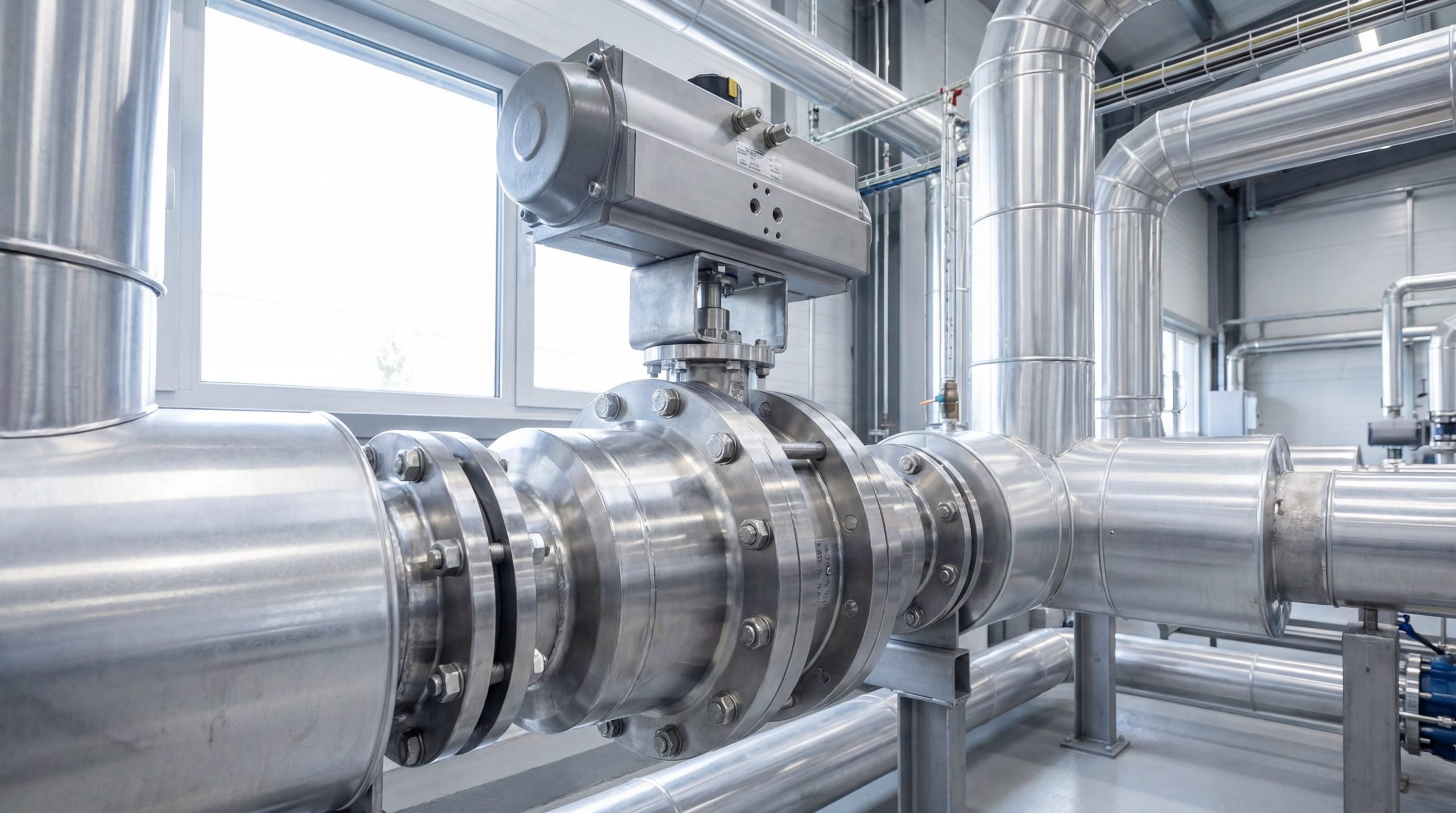
The equivalent length of a valve is a conceptual engineering tool that represents the pressure loss of a component as a specific length of straight pipe. Imagine your industrial facility is facing inconsistent pressure readings and rising energy costs due to inefficient flow control. These friction-induced losses agitate your system’s stability, forcing pumps to work harder and leading to premature mechanical seal failures. By utilizing the equivalent length butterfly valve concept, you can transform complex fluid dynamics into simple linear measurements to optimize your entire piping network.
What is the equivalent length butterfly valve?
This measurement is a theoretical value used by engineers to simplify the calculation of friction loss within a piping system. The equivalent length butterfly valve metric allows you to treat a valve as if it were a straight piece of pipe with identical resistance characteristics. This conversion is essential for balancing complex networks without needing advanced fluid simulation software for every minor fitting.
Why simplify flow resistance?
You can achieve much faster design iterations by converting complex geometries into standardized pipe lengths. This simplification bridges the gap between theoretical physics and practical field engineering.
- Streamlines complex Bernoulli equations for faster calculations.
- Allows for rapid system troubleshooting in existing plants.
- Provides a common language for designers and operators.
Think about this: why struggle with complex friction coefficients when you can use linear meters?
How does it improve design?
You will find that precision in the early design phase prevents the need for expensive system retrofits later. Accurate data ensures that every pump and motor is sized perfectly for the intended workload.
- Optimizes pump selection to prevent over-specifying equipment.
- Reduces unexpected turbulence zones that cause pipe wear.
- Ensures consistent flow rates across all branches of a system.
Here is the deal: using correct equivalent lengths is the secret to a high-efficiency piping layout.
Key Takeaway: Using equivalent length simplifies the calculation of head loss, allowing for more accurate and efficient piping system designs.
| Metric Type | Primary Purpose | Benefit |
|---|---|---|
| Equivalent Length | Simplification | Easy head loss sums |
| K-Value | Raw Resistance | High-precision modeling |
| Flow Coefficient (Cv) | Capacity Rating | Valve sizing accuracy |
Effective engineering relies on the transformation of complex resistance into manageable linear data.
How to calculate equivalent length butterfly valve?
Calculating the equivalent length butterfly valve requires the use of the resistance coefficient (K) and the Darcy-Weisbach friction factor. You must first obtain the specific K-value from the manufacturer’s documentation for the fully open position. This value is then multiplied by the internal pipe diameter and divided by the pipe’s friction factor to find the linear equivalent.
What is the primary formula?
You can calculate this value using the standard equation $L_e = (K \cdot D) / f$. This formula provides the length of pipe that would cause the same pressure drop as the valve itself.
- $L_e$ represents the equivalent length in feet or meters.
- $K$ is the dimensionless resistance coefficient.
- $f$ is the friction factor of the connecting pipe.
It gets better: once you have the K-value, the rest of the calculation is straightforward.
Which variables are critical?
You should pay close attention to the internal diameter and the surface roughness of your piping material. These factors determine the friction factor, which inversely affects the final equivalent length result.
- Nominal pipe diameter (D) influences absolute length.
- Pipe wall roughness (epsilon) impacts the friction factor.
- Fluid velocity affects the Reynolds number and flow regime.
But wait, there is more: the material of your pipe is just as important as the valve itself.
Key Takeaway: Accurate calculations depend on matching the valve’s K-value with the specific friction conditions of your installed piping.
| Variable | Symbol | Impact on Calculation |
|---|---|---|
| Resistance Coefficient | K | Directly proportional to length |
| Internal Diameter | D | Directly proportional to length |
| Friction Factor | f | Inversely proportional to length |
Precision in variable selection ensures that the theoretical length matches the actual pressure drop observed in the field.
How does angle change equivalent length butterfly valve?
The value of an equivalent length butterfly valve changes drastically as the internal disc rotates from a fully open to a partially closed position. Since the disc remains within the flow stream at all times, even a minor angle change significantly increases the obstruction. You must account for these variations if the valve is used for throttling rather than just simple on-off service.
Does a 90-degree turn matter?
You will notice that as the disc rotates toward the closed position, the resistance to flow increases exponentially. A valve that is only 30 degrees open has an equivalent length many times higher than one at 90 degrees.
- 90 degrees (Full Open): Provides the lowest possible resistance.
- 60 degrees: Causes moderate turbulence and initial pressure loss.
- 30 degrees: Results in a very high pressure drop and restricted flow.
Check this out: the relationship between angle and resistance is never linear.
What happens at partial throttle?
You might be surprised to learn that the equivalent length can increase by a factor of ten with just a small adjustment. This sensitivity makes butterfly valves excellent for fine flow control but difficult to calculate without precise data.
- Increased turbulence forms behind the disc edge.
- Localized low-pressure zones may lead to early cavitation.
- The K-value rises sharply as the flow area constricts.
Believe it or not, even a five-degree shift can change your pump requirements.
Key Takeaway: Always use the equivalent length that corresponds to your specific operating angle to avoid massive errors in head loss estimation.
| Disc Angle | Resistance Level | Length Trend |
|---|---|---|
| 90° (Open) | Minimum | Baseline Length |
| 45° | High | Significant Increase |
| 10° | Maximum | Extreme Length |
Understanding the sensitivity of the disc angle is vital for maintaining control over system hydraulics.
Does diameter affect equivalent length butterfly valve?
A larger diameter equivalent length butterfly valve naturally results in a higher absolute length value compared to smaller nominal sizes. While the ratio of length to diameter (L/D) often stays the same, the actual meters of pipe the valve represents will grow. You must re-evaluate these losses whenever you scale your system up or down.
Why does size change results?
You should understand that as the pipe diameter increases, the surface area of the disc interacting with the fluid also grows. This larger obstruction creates a much broader wake of turbulence behind the valve.
- Increased surface area friction across the larger disc.
- Larger stagnation points where fluid velocity hits zero.
- Greater volume of displaced fluid per unit of length.
The truth is: scaling up a pipe means scaling up the complexity of the flow path.
Is the L/D ratio constant?
You will find that the L/D ratio remains relatively stable across various sizes of the same valve model. This consistency allows you to use a standard multiplier to estimate losses across different pipe schedules quickly.
- Simplifies calculations for large-scale industrial projects.
- Provides a reliable baseline for different piping materials.
- Ensures consistent results in systems with multiple pipe sizes.
Surprisingly, this dimensionless ratio is your best friend during the planning phase.
Key Takeaway: While the dimensionless L/D ratio is consistent, you must multiply it by the actual diameter to get the physical equivalent length.
| Valve Size | L/D Ratio | Physical Equivalent Length |
|---|---|---|
| 4-Inch | 45 | ~15 Feet |
| 8-Inch | 45 | ~30 Feet |
| 16-Inch | 45 | ~60 Feet |
Dimensional scaling is a fundamental aspect of translating valve characteristics into physical piping requirements.
Why is loss key in equivalent length butterfly valve?
Monitoring the pressure loss associated with an equivalent length butterfly valve is critical for protecting your pumps and reducing energy consumption. Every additional meter of equivalent length increases the total dynamic head that your pumping system must overcome. If you ignore these losses, you risk operating your equipment outside of its efficient range.
How does it impact energy?
You can directly link high pressure drops to increased electricity consumption in your motor-driven systems. Over the course of a year, an inefficient valve selection can cost your facility thousands of dollars in wasted power.
- Increased motor load leads to higher utility bills.
- Excessive friction generates unwanted heat in the process fluid.
- Accelerated wear on pump impellers due to high head demand.
Listen to this: energy efficiency starts with minimizing unnecessary equivalent lengths.
Can it cause system failure?
You must be aware that if the pressure drop is too extreme, the fluid can drop below its vapor pressure and cavitate. This process creates tiny bubbles that collapse with enough force to erode the valve body and downstream piping.
- High risk of cavitation damage to the valve disc and seat.
- Vibration-induced fatigue in the surrounding pipe supports.
- Reduced total flow capacity at the system discharge.
The bottom line is: high resistance is often the first step toward mechanical failure.
Key Takeaway: Managing pressure loss through proper equivalent length selection ensures your pumps operate within their preferred region.
| Loss Consequence | Operational Impact | Mitigation Strategy |
|---|---|---|
| Overheating | Component failure | Verify equivalent length |
| Low Pressure | Cavitation | Optimize valve positioning |
| Vibration | Pipe fatigue | Use high-performance discs |
Continuous monitoring of pressure loss factors is the only way to guarantee long-term system reliability.
Do L/D ratios matter for equivalent length butterfly valve?
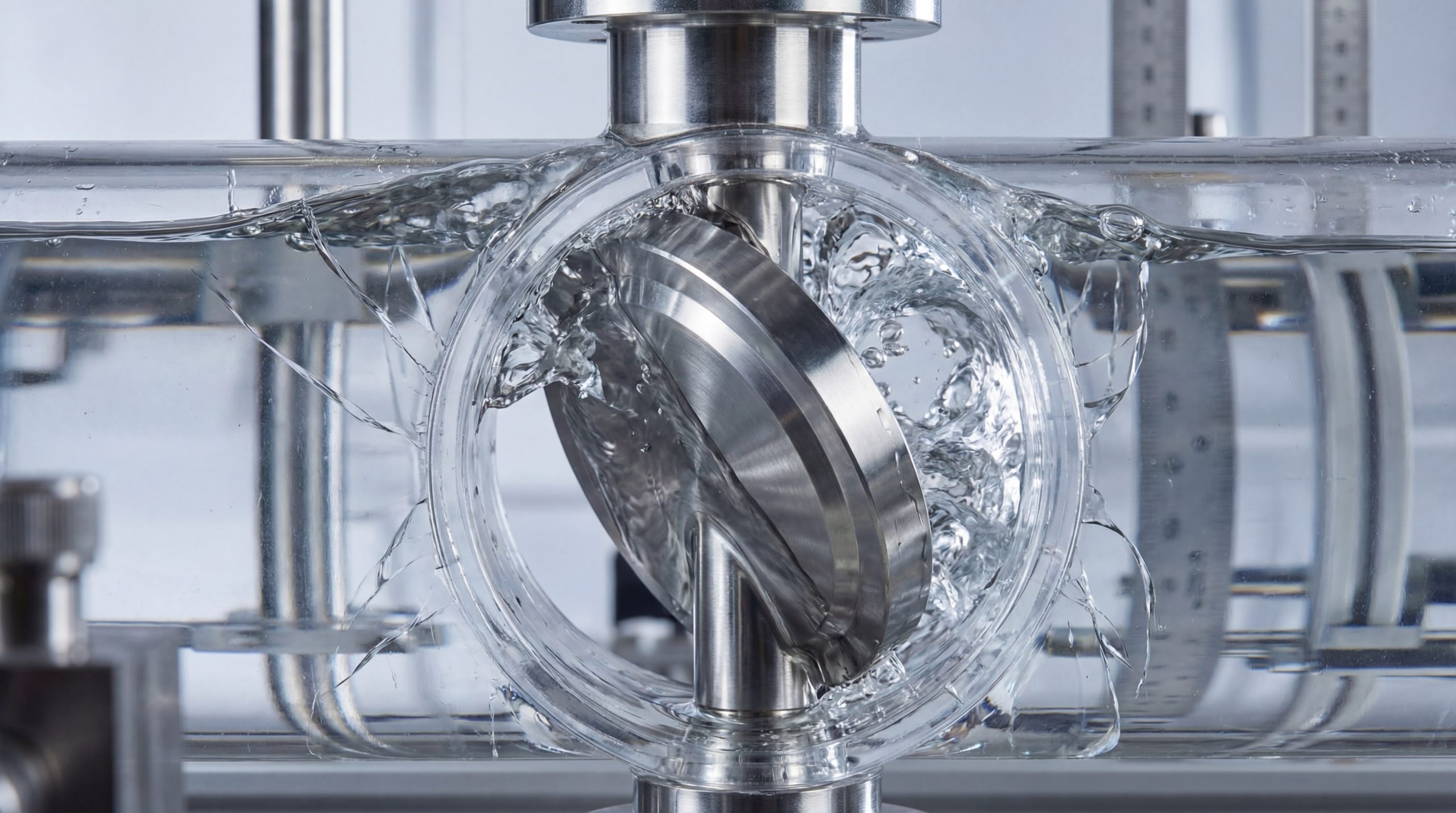
The L/D ratio for an equivalent length butterfly valve provides a universal way to quantify flow resistance regardless of the specific pipe size. This ratio essentially tells you how many pipe diameters of straight pipe would create the same friction as the valve. You will find these ratios in most standard engineering handbooks as a primary reference for system design.
How is the ratio applied?
You can apply this ratio by simply multiplying it by the actual internal diameter of your pipe. For a butterfly valve, the specific application requirements will determine if the standard handbook ratio needs to be adjusted.
- Identifies standard performance levels for different valve types.
- Facilitates easy comparisons between different valve brands.
- Works seamlessly for both metric and imperial measurement units.
Actually, it is quite simple: the ratio is the bridge between the valve and the pipe.
Are all ratios the same?
You should keep in mind that different designs, such as high-performance or triple-offset valves, have unique L/D ratios. A thin-disc design will always offer a lower ratio and less resistance than a heavy-duty resilient seated model.
- High-performance valves: Lower L/D (approx. 35).
- Standard wafer valves: Medium L/D (approx. 45).
- Heavy encapsulated discs: Higher L/D (approx. 55).
Keep in mind: choosing a lower L/D ratio can save significant energy over time.
Key Takeaway: Always select the L/D ratio that matches your valve’s specific construction type to ensure your calculations are accurate.
| Valve Construction | Average L/D Ratio | Performance Level |
|---|---|---|
| High-Performance | 35 | High Efficiency |
| Standard Wafer | 45 | Industry Baseline |
| Lined/Encapsulated | 55 | High Resistance |
Dimensionless ratios provide the most flexible method for comparing the hydraulic impact of various valve designs.
Do fluids impact equivalent length butterfly valve?
Fluid properties such as viscosity and density influence the equivalent length butterfly valve by changing how the medium interacts with the internal disc. While the geometric length of the valve is a constant, the “perceived” length changes based on the fluid’s Reynolds number. You must adjust your friction factors when moving from water to heavier oils or slurries.
Does viscosity increase loss?
You will find that thicker fluids struggle to move around the valve disc much more than low-viscosity liquids like water. This increased internal shear manifests as a significantly higher pressure drop across the valve.
- Increased shear stress on the surface of the disc.
- Boundary layer thickening that reduces the effective flow area.
- Higher energy requirements to maintain the same flow rate.
Think about this: moving honey through a valve is much harder than moving water.
What about flow velocity?
You should note that as velocity increases, the turbulence behind the disc becomes much more violent and chaotic. This non-linear relationship means that equivalent length calculations are most accurate within standard industrial flow ranges.
- Transitions from smooth laminar flow to turbulent flow.
- Magnifies the impact of the disc’s physical thickness.
- Increases the kinetic energy lost to heat and vibration.
Here is the deal: velocity is the primary driver of turbulence-related pressure loss.
Key Takeaway: You must adjust your friction factor based on the fluid’s specific properties to keep your equivalent length calculations valid.
| Fluid Property | Impact on Resistance | Equivalent Length Effect |
|---|---|---|
| Higher Viscosity | Increases drag | Increases effective length |
| Higher Velocity | Increases turbulence | Increases pressure drop |
| Higher Density | Increases inertia | Impacts K-value stability |
Fluid dynamics dictate that the valve’s physical shape is only one part of the total resistance equation.
What are common values for equivalent length butterfly valve?
Standard industry tables provide typical L/D values for an equivalent length butterfly valve to simplify the initial phases of system design. Most engineering references, including the widely used Crane Technical Paper 410, cite a value of approximately 45 for a fully open valve. This benchmark is accepted globally for general industrial applications and utility piping.
Where do these values come from?
You can trust these values because they are derived from thousands of hours of laboratory flow testing. Manufacturers use controlled environments and purified water to establish these baseline benchmarks for the entire industry.
- Based on decades of empirical field data and testing.
- Validated through standardized global engineering practices.
- Provided as a safe “rule of thumb” for non-critical systems.
The interesting part is: these standard values have remained consistent for over fifty years.
When should you use them?
You might be wondering when it is safe to use these general values instead of manufacturer-specific data. They are perfect for the preliminary estimation phase of a project or for simple utility lines where precision is less critical.
- Useful during preliminary piping layout and budgeting.
- Great for estimating the total head requirements of a system.
- Allows for quick field checks of existing pump performance.
You might be wondering: is 45 always the right number? For general estimates, yes.
Key Takeaway: Use the standard L/D ratio of 45 for general industrial estimates, but consult the manufacturer for high-precision requirements.
| Source | Recommended L/D | Confidence Level |
|---|---|---|
| Crane TP410 | 45 | High (Standard) |
| Industry Average | 40-50 | Medium (General) |
| Lab Testing | 30-55 | Very High (Specific) |
Standardized values provide a reliable starting point for any hydraulic analysis involving industrial butterfly valves.
Can features change equivalent length butterfly valve?
The specific design of the disc and the materials used for the seat in an equivalent length butterfly valve can cause significant deviations from standard averages. For example, a streamlined disc profile reduces the size of the turbulent wake, effectively lowering the valve’s resistance. Conversely, a bulky fire-safe seat may protrude into the flow stream and increase the equivalent length.
Does disc shape matter?
You will see that a thin, contoured disc cuts through the fluid with much less disturbance than a flat, thick disc. This design nuance is the primary factor that differentiates high-performance valves from budget models.
- Contoured discs significantly reduce aerodynamic drag.
- Polished surfaces minimize skin friction and buildup.
- Offset shaft designs change the symmetry of the flow path.
The truth is: better disc geometry equals lower operational costs.
How do seats affect flow?
You should check the transition area between the pipe and the valve seat for any “steps” that might trigger turbulence. A smooth, integrated seat design helps maintain laminar-like flow near the pipe walls, reducing overall resistance.
- Reduced losses at the entrance and exit of the valve.
- Minimized dead zones where debris can collect and cause friction.
- Smoother pressure transitions as fluid moves through the body.
Check this out: the seat is just as important as the disc for flow efficiency.
Key Takeaway: Premium valve designs often pay for themselves by offering lower equivalent lengths and significantly reduced energy costs.
| Design Feature | Equivalent Length Effect | Why? |
|---|---|---|
| Streamlined Disc | Decrease | Reduced wake turbulence |
| Triple Offset | Decrease | More efficient flow path |
| Thick Lining | Increase | Reduced internal diameter |
Superior engineering features are the most effective way to minimize the hydraulic footprint of a valve.
How to optimize equivalent length butterfly valve selection?
Optimizing your equivalent length butterfly valve selection ensures that your system operates at peak efficiency while minimizing mechanical stress. By matching the valve’s resistance characteristics to your pump’s performance curve, you create a balanced and harmonious system. If you need assistance with specific calculations or product data, please contact us today for expert guidance.
What are the final steps?
You must always perform a final audit of your total system head loss by summing every equivalent length in the network. This step is the most effective way to prevent the common mistakes found in industrial piping design.
- Sum all valves, elbows, and fittings into a single length.
- Compare the total length against your pump’s rated head capacity.
- Factor in a reasonable safety margin for pipe aging and scaling.
The bottom line is: a final calculation audit saves thousands in future repairs.
How to ensure accuracy?
You can achieve higher accuracy by using digital twin software or advanced flow calculators to validate your manual L/D calculations. This digital verification ensures that the equivalent length you selected will perform exactly as expected once installed in the field.
- Cross-reference manufacturer data with industry standards.
- Account for actual field installation and pipe condition.
- Verify the valve’s flow coefficient (Cv) against the L/D result.
It gets better: modern software makes these complex checks easier than ever before.
Key Takeaway: Optimization requires a holistic view of the system, combining manual calculations with manufacturer data and safety margins.
| Optimization Step | Action | Benefit |
|---|---|---|
| System Audit | Sum all components | Prevents pump overload |
| Data Validation | Check Cv vs L/D | Ensures high accuracy |
| Safety Margin | Add 10-15% | Accounts for pipe aging |
Careful selection and optimization are the hallmarks of a professionally engineered fluid control system.
Conclusion
Precision in flow control is not just about choosing a valve; it is about understanding how that valve interacts with your entire system. By mastering the concept of equivalent length, we have solved the problems of unpredictable pressure drops, inefficient pump operation, and excessive energy consumption. At Ruitoflow, we believe that every component in a piping network should contribute to a seamless, high-performance operation. Our vision is to empower engineers with the most accurate data and robust hardware to build the infrastructure of tomorrow. For more information on how our solutions can improve your facility’s efficiency, please contact us today.
FAQ Section
Can I use a standard L/D of 45 for every butterfly valve?
No, you should only use 45 for preliminary estimates. While it is a standard industry average for fully open wafer valves, high-performance or partially closed valves will have significantly different values.
What’s the best way to handle non-water fluids in these calculations?
You must adjust the friction factor $(f)$ in the formula to reflect the fluid’s actual viscosity and density. Thicker fluids increase the effective resistance, meaning the valve “acts” like a longer piece of pipe.
How do I know if my equivalent length calculation is accurate?
You should compare your calculated head loss against actual pressure gauge readings in a test environment. If the theoretical and physical results align, your chosen L/D ratio and friction factor are correct.
Can I ignore equivalent length in small systems?
No, because even in small systems, multiple fittings and valves can add up to a significant percentage of total head loss. Ignoring these can lead to undersized pumps and poor flow performance.
What’s the best disc angle for balancing flow?
You should aim for an angle between 30 and 70 degrees for effective throttling. Outside of this range, the equivalent length changes too rapidly or too slowly to provide precise control.