
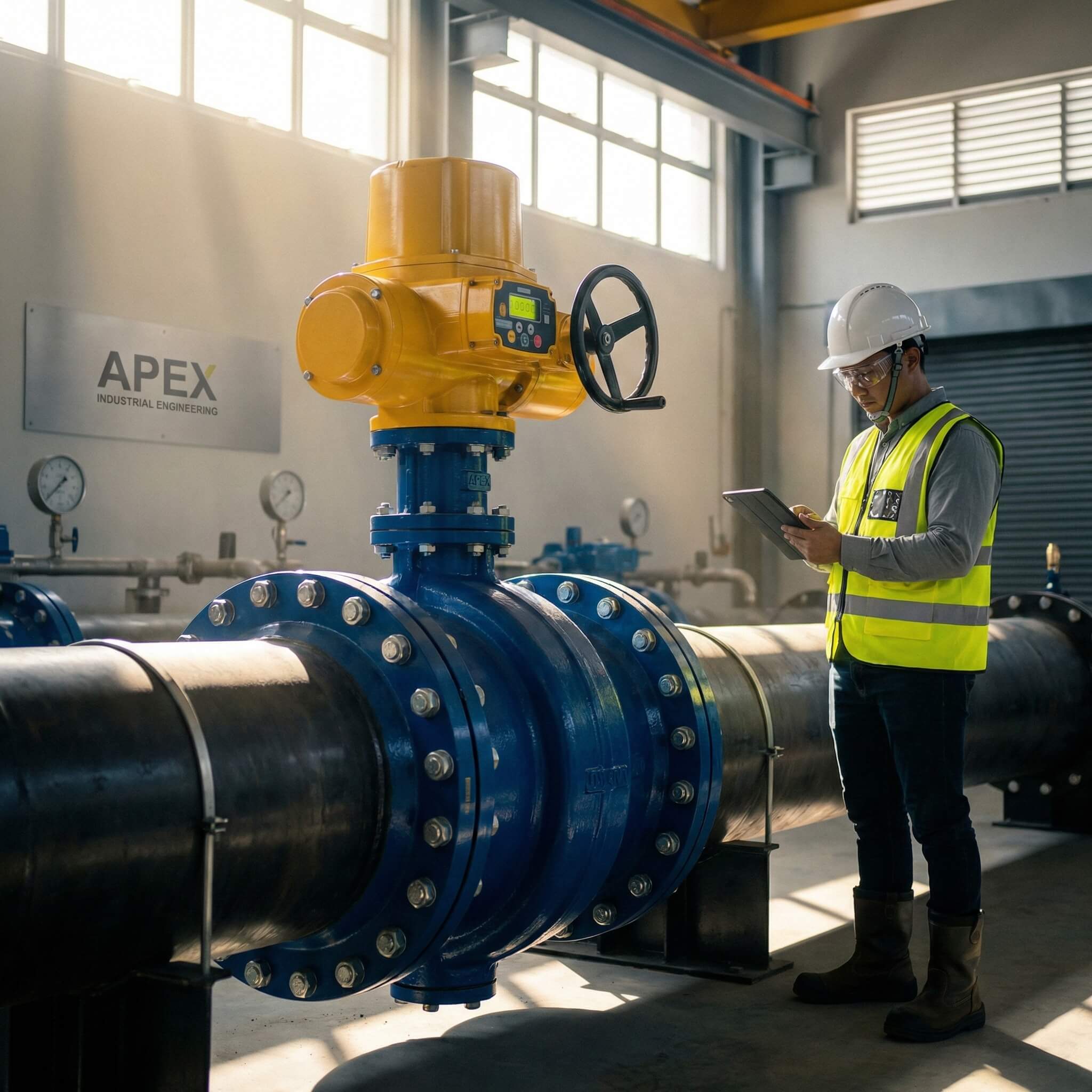
Inefficient flow control and oversized valve installations often lead to increased project costs, space constraints, and high maintenance downtime in industrial piping systems. Traditional gate or globe valves can be excessively heavy and slow to operate, causing operational bottlenecks and potential safety risks in large-scale systems. High-performance butterfly valves provide a lightweight, quarter-turn solution that ensures reliable isolation and cost-effective management for any application of butterfly valve in your facility.
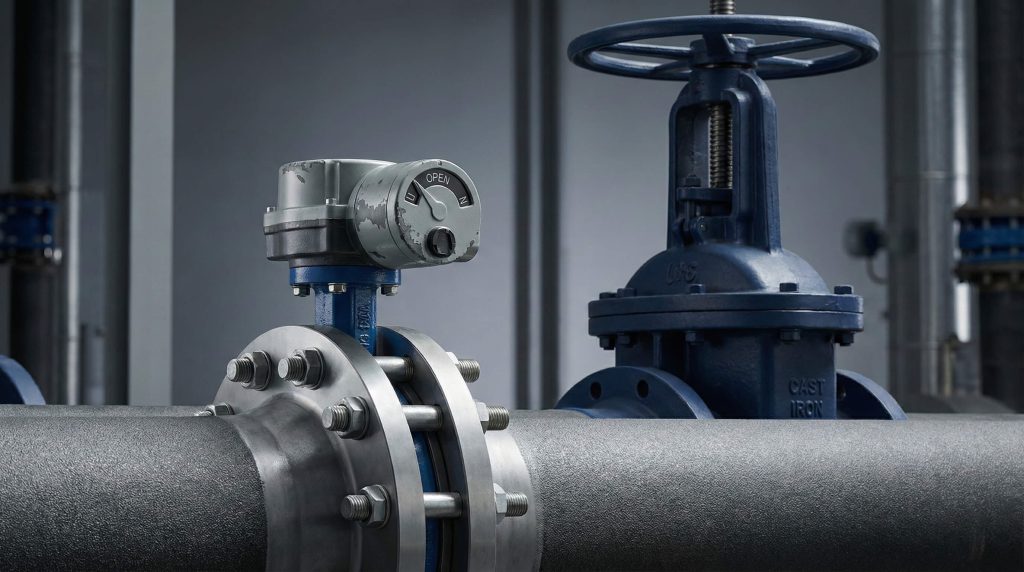
What defines the application of butterfly valve in industry?
A butterfly valve is a specialized quarter-turn rotational motion valve that utilizes a disc as its primary closing element to shut off or regulate flow. This design is foundational to the modern application of butterfly valve because it balances high-volume flow capacity with a compact footprint.
What is the core design and basic structure?
The basic design consists of a circular disc mounted on a rotating shaft located in the center of the valve body. When the valve is closed, the disc is turned so that it completely blocks the passageway.
The best part?
A 90-degree rotation of the shaft moves the disc from a fully closed position to a fully open state.
- Compact body design
- Centrally mounted disc
- Rotational shaft (stem)
- Seating interface
How does it function in flow isolation and control?
These valves excel in on-off services where quick isolation is required to protect downstream equipment. While they are primarily used for shut-off, certain high-performance models can handle throttling for fluid regulation.
Think about it:
Managing large fluid volumes becomes significantly easier when you use a valve that is lightweight yet robust.
- Quick shut-off capability
- Bi-directional flow options
- Throttling versatility
- Minimal pressure drop
Key Takeaway: The butterfly valve is defined by its disc-centric design and quarter-turn operation, making it a versatile tool for both isolation and moderate regulation.
| Feature | Industrial Utility |
|---|---|
| Motion Type | Quarter-turn rotational |
| Primary Part | Rotating disc |
| System Role | Isolation and Throttling |
The structural simplicity of this valve family ensures high reliability across diverse pressure and temperature ranges.
What parts are critical to the application of butterfly valve?
The primary components of a butterfly valve include the body, the disc, the stem, and the seat which work together to ensure a leak-proof seal. Understanding these components is essential for the successful application of butterfly valve technology in your infrastructure.
How do the body, disc, and stem work together?
The valve body is designed to fit between pipe flanges, while the disc acts as the gate that stops the fluid. The stem transmits the necessary torque from the actuator to the disc to facilitate movement.
As it turns out:
The material of the disc is often the most critical choice for preventing corrosion in aggressive media.
- Wafer or lug body styles
- Bored discs for stem attachment
- Precision-machined stems
- Heavy-duty bearings
Which seating materials and sealing rings are used?
Sealing is typically achieved through resilient elastomer seats or metal-to-metal interfaces for high-temperature service. Many designs use a T-profile sealing ring to provide bidirectional tightness and prevent leakage.
But wait, there’s more:
Choosing a resilient seat like EPDM or NBR can drastically reduce the torque required for operation.
- Resilient (elastomer) seats
- Metal-to-metal seats
- T-profile sealing rings
- Multiple O-ring stem seals
Key Takeaway: Every component from the stem to the seat must be selected based on the chemical compatibility and pressure requirements of your specific project.
| Component | Standard Materials |
|---|---|
| Valve Body | Ductile Iron / Carbon Steel |
| Disc | Stainless Steel / Bronze |
| Seat | EPDM / NBR / PTFE |
The interaction between the disc and the seat determines the valve’s sealing class and long-term durability.
How does the working principle impact the application of butterfly valve?
The working principle of a butterfly valve relies on a 90-degree rotation of the internal disc to open or close the flow path. This quarter-turn mechanism is why the application of butterfly valve is preferred in systems where fast operation is a priority.
How is the quarter-turn rotational motion explained?
When the actuator turns the stem, the disc rotates either parallel or perpendicular to the fluid flow. At 0 degrees, the valve is fully closed, and at 90 degrees, the valve is fully open.
Here is the thing:
This simple motion requires much less space than the rising stem of a gate valve.
- 0 to 90-degree transition
- Rapid opening speed
- Low operating torque
- Consistent shaft rotation
What are the flow characteristics and shut-off mechanics?
As the disc opens, it creates a flow path on both sides of the shaft, though the disc remains in the flow stream. This causes a slight pressure drop compared to full-bore valves, but the flow characteristics remain predictable.
Look at it this way:
For many large-diameter lines, the slight pressure drop is a minor trade-off for the massive weight savings.
- Predictive flow coefficients (Cv)
- Linear or equal percentage curves
- Tight shut-off performance
- Bi-directional sealing
Key Takeaway: The efficiency of the 90-degree rotation allows for rapid system response times and easier automation compared to multi-turn valves.
| Operational Phase | Disc Position | Flow Status |
|---|---|---|
| Closed | Perpendicular to flow | Zero flow |
| Partial | Angled (e.g., 45°) | Throttled flow |
| Open | Parallel to flow | Maximum flow |
The mechanical advantage of the quarter-turn principle reduces wear on the actuator and increases the speed of emergency shutdowns.
Which actuation methods optimize the application of butterfly valve?
Actuation is the process of moving the valve, and the choice between manual or automated methods depends on the requirements of your application of butterfly valve. The method you choose will dictate the precision, speed, and remote control capabilities of your system.
How do manual levers and gears operate?
Smaller valves are typically operated with a simple lever or handle for quick manual control. For larger diameters where torque is high, a gearbox with a handwheel is used to provide mechanical advantage.
Believe it or not:
A well-designed gearbox can make even a DN1200 valve easy for a single operator to turn.
- Manual lever handles
- Worm gear operators
- Handwheel control
- Locking mechanisms
How do automated electric and pneumatic actuators work?
Automated systems use electric motors or compressed air to move the valve stem based on signals from a controller. These are ideal for remote locations or processes requiring 4-20mA precision for flow regulation.
The secret?
Pneumatic actuators are often chosen for their “fail-safe” capabilities in critical safety systems.
- 4-20mA control signals
- Pneumatic double-acting units
- Electric multi-turn actuators
- Hydraulic high-torque systems
Key Takeaway: Choosing the right actuation method depends on the valve size, required torque, and the level of automation your plant demands.
| Actuator Type | Power Source | Best For |
|---|---|---|
| Manual | Human effort | Small pipes / Low frequency |
| Pneumatic | Compressed air | Fast action / Safety |
| Electric | Electricity | Precision / Remote control |
Properly sizing your actuator ensures the valve opens and closes reliably even under maximum differential pressure.
What benefits drive the widespread application of butterfly valve?
The primary benefits of these valves include their lightweight design, cost-effectiveness, and small installation footprint. These advantages make the application of butterfly valve the most logical choice for modern fluid networks.
Why is the lightweight design and footprint important?
Butterfly valves are much shorter and lighter than gate or ball valves of the same diameter. This reduces the need for heavy pipe supports and makes installation in tight spaces much easier.
Keep in mind:
Reducing the weight of your piping components can lower your overall structural costs by up to 30%.
- Short face-to-face dimensions
- Reduced structural load
- Easy handling for technicians
- Compact vertical profile
How does cost-effectiveness scale with pipe size?
As pipe diameters increase, the material savings of a butterfly valve become even more significant compared to other types. You get high-performance flow control without the premium price tag of heavy-duty gate valves.
It gets better:
Faster actuation speeds also mean less energy consumption for your automated systems over time.
- Lower initial purchase price
- Reduced labor for installation
- Less expensive automation
- Lower maintenance costs
Key Takeaway: The combination of low weight and low cost makes butterfly valves the dominant choice for large-diameter municipal and industrial pipelines.
| Benefit | Impact on Project |
|---|---|
| Weight | Reduces support requirements |
| Size | Fits in narrow galleries |
| Price | Lowers capital expenditure |
The efficiency of this design ensures that you maximize your budget without compromising on industrial-grade performance.
Where is the most common industrial application of butterfly valve?
Butterfly valves are used across a vast range of sectors, from municipal water treatment to complex chemical processing. Every application of butterfly valve is tailored to handle specific media and environmental conditions effectively.
How are they used in water and wastewater?
In municipal systems, these valves are essential for isolating sections of the distribution network and managing flow in pumping stations. Their corrosion-resistant coatings make them ideal for handling raw and treated water.
Consider this:
The longevity of a valve in a wastewater plant depends entirely on its ability to resist abrasive solids.
- Water filtration plants
- Municipal pumping stations
- Sewage treatment facilities
- Reservoir isolation
What role do they play in HVAC and process cooling?
Butterfly valves are the standard for temperature regulation in large building services and industrial cooling towers. Their ability to throttle water flow makes them perfect for balancing HVAC systems.
But that’s not all:
They are also widely used in chemical plants where specialized alloys prevent damage from aggressive fluids.
- Cooling tower distribution
- Building climate control
- Chemical media handling
- Marine saltwater systems
Key Takeaway: From simple water lines to complex chemical processes, the butterfly valve provides a reliable solution for almost any fluid media.
| Industry | Typical Usage |
|---|---|
| Water Supply | Mainline isolation |
| HVAC | Balancing and regulation |
| Petrochemical | Process flow control |
The versatility of these valves is further enhanced by the wide variety of materials available for discs and seats.
Which design variations exist for the application of butterfly valve?
There are several design types, including concentric, double-eccentric, and triple-eccentric models. Selecting the right design for your application of butterfly valve depends on the pressure and sealing performance you require.
What is the difference in concentric and eccentric offsets?
Concentric valves have a stem that passes through the center of the disc, which is common for low-pressure systems. Eccentric designs offset the stem to reduce seat friction and improve sealing.
Here is the thing:
Reducing friction not only extends the life of the seat but also lowers the torque needed to turn the valve.
- Zero-offset (Concentric)
- Double-offset (High performance)
- Frictionless sealing paths
- Reduced wear on internals
How do double and triple offset designs perform?
Double and triple offset valves are engineered for high-pressure and high-temperature environments. These designs allow the disc to “cam” into the seat, providing a bubble-tight seal that rivals ball valves.
Think about it:
In high-cycle applications, an offset design can prevent thousands of dollars in premature seat replacement costs.
- High-pressure durability
- Metal-to-metal tight sealing
- Reduced operating torque
- Extended service life
Key Takeaway: Moving from a concentric to an eccentric design allows the valve to handle much higher pressures and more demanding cycles.
| Design Type | Best Application |
|---|---|
| Concentric | Low pressure / Water |
| Double Offset | High performance / HVAC |
| Triple Offset | Critical / Petrochemical |
The evolution of offset designs has allowed butterfly valves to enter markets once dominated by more expensive valve types.
How do you size a unit for the application of butterfly valve?
Proper sizing involves matching the valve’s pressure rating and connection type to the existing pipeline. Incorrect sizing for your application of butterfly valve can lead to poor flow control or even mechanical failure.
What are pressure and temperature ratings?
You must ensure the valve is rated for the maximum pressure (PN10, PN16, or PN25) and temperature of your system. Using a valve outside its rated envelope can cause the seat to deform or the stem to fail.
As it turns out:
Operating a valve at its maximum temperature limit often requires a reduction in its maximum pressure rating.
- PN ratings (PN10-PN40)
- Temperature limits (-10°C to 200°C)
- Differential pressure limits
- Media viscosity considerations
What are the wafer, lug, and flanged connection types?
Wafer valves are sandwiched between flanges, while lug valves have threaded inserts for easier maintenance. Flanged valves have their own bolt holes and are common in very large diameters.
The best part?
Lug-style valves allow you to disconnect piping on one side while keeping the other side under pressure.
- Wafer (lightweight)
- Lug (end-of-line service)
- Double-flanged (large diameter)
- Standard bolt patterns (DIN/ANSI)
Key Takeaway: Selecting the correct body style and pressure rating is the most critical step in ensuring the safety and maintainability of your system.
| Connection Type | Key Benefit |
|---|---|
| Wafer | Lowest cost and weight |
| Lug | Allows downstream maintenance |
| Flanged | Best for high-pressure large pipes |
The connection method you choose will dictate how easily your maintenance team can access the valve in the future.
What maintenance steps sustain the application of butterfly valve?
Regular maintenance is necessary to ensure the longevity and reliability of your application of butterfly valve. Preventive strategies focus on inspecting the seals and ensuring the actuation mechanism remains calibrated.
How do you inspect seals and seating surfaces?
Over time, abrasive media can scuff the disc or degrade the elastomer seat. Regular visual inspections help identify wear before it leads to a catastrophic leak or system failure.
But wait, there’s more:
Identifying chemical degradation early can save you from an unexpected total system shutdown.
- Check for elastomer swelling
- Inspect disc edge for scuffing
- Verify seat tightness
- Look for corrosion on the body
Why are lubrication and actuator calibration important?
The valve stem and gearbox require periodic lubrication to maintain smooth rotation and low torque. Additionally, limit switches on actuators must be calibrated to ensure the disc reaches the full “closed” position.
The secret?
A valve that is “stuck” is often just a valve with an unlubricated stem or a misaligned actuator.
- Calibrate limit switches
- Lubricate gearbox components
- Check for stem packing leaks
- Test emergency shut-off speed
Key Takeaway: A proactive maintenance schedule that includes inspection and lubrication can double the operational life of your industrial valves.
| Maintenance Task | Frequency |
|---|---|
| Visual Inspection | Quarterly |
| Lubrication | Annually |
| Actuator Testing | Bi-annually |
Maintaining the integrity of the seat and the accuracy of the actuator is the foundation of a reliable fluid control system.
How do other valves compare regarding the application of butterfly valve?
When choosing a valve, it is helpful to compare the butterfly design with alternatives like gate or ball valves. Each has its strengths, but the application of butterfly valve usually wins on weight and cost for larger systems.
What is the difference between butterfly and gate valves?
Gate valves provide a full-bore opening, which is better for pigging, but they are much slower and heavier. Butterfly valves offer faster operation and a significantly smaller installation footprint for isolation.
Look at it this way:
Replacing a DN600 gate valve with a butterfly valve can save you hundreds of kilograms in weight.
- Weight comparison (Butterfly is lighter)
- Operation speed (Butterfly is faster)
- Maintenance access (Butterfly is easier)
- Space requirements
How does it compare to ball valves for tight sealing?
Ball valves offer excellent sealing and durability but become extremely heavy and expensive in sizes above DN300. Butterfly valves provide a similar quarter-turn benefit with much lower costs in large diameters.
But that’s not all:
Butterfly valves are often preferred in large-scale water projects where the budget is a primary concern.
- Torque requirements
- Cost at large diameters
- Sealing performance
- Footprint differences
Key Takeaway: While gate and ball valves have specific niches, butterfly valves offer the best balance of performance, weight, and price for most industrial needs.
| Valve Type | Weight | Cost (DN300+) | Speed |
|---|---|---|---|
| Butterfly | Low | Low | Fast |
| Gate | High | High | Slow |
| Ball | Medium | Very High | Fast |
Analyzing these trade-offs ensures you select the most efficient valve for your project’s specific mechanical and financial constraints.
Frequently Asked Questions
- Which industries and project scenarios do you manufacture for?
We provide solutions for municipal water, HVAC systems, fire protection, and marine engineering. Our valves are designed for both standard utilities and specialized industrial process water applications. - What is your manufacturing scope and standards compliance?
Our production covers sizes from DN25 to DN1200 and pressure ratings from PN10 to PN25. We manufacture according to international standards including DIN, EN, ISO, and API to ensure global compatibility. - How do you ensure quality consistency and traceability?
We maintain ISO 9001 certification and perform 1.5x hydrostatic pressure testing on every unit. Each batch is fully traceable with material test certificates (MTC) and detailed quality control documentation. - Can I automate my existing manual butterfly valves?
Yes, most of our valves feature an ISO 5210 or ISO 5211 top flange. This allows for the easy mounting of electric, pneumatic, or hydraulic actuators at any time after installation. - How do I choose between a wafer and a lug type valve?
Direct judgment: Choose wafer for the lowest cost if you don’t need to disconnect downstream piping. Select lug type if you require the ability to perform maintenance on one side of the pipe while the other remains pressurized.
Conclusion
Butterfly valves represent a versatile and economical choice for modern fluid control, offering a unique balance of compact design and high-capacity flow. Whether you are managing a municipal water network or a complex industrial cooling system, these valves provide the reliability and ease of use that modern engineering demands.
Are you looking for precision-engineered flow solutions for your next project? You can contact us today to discuss your technical requirements or receive a custom quote for your specific installation needs.