
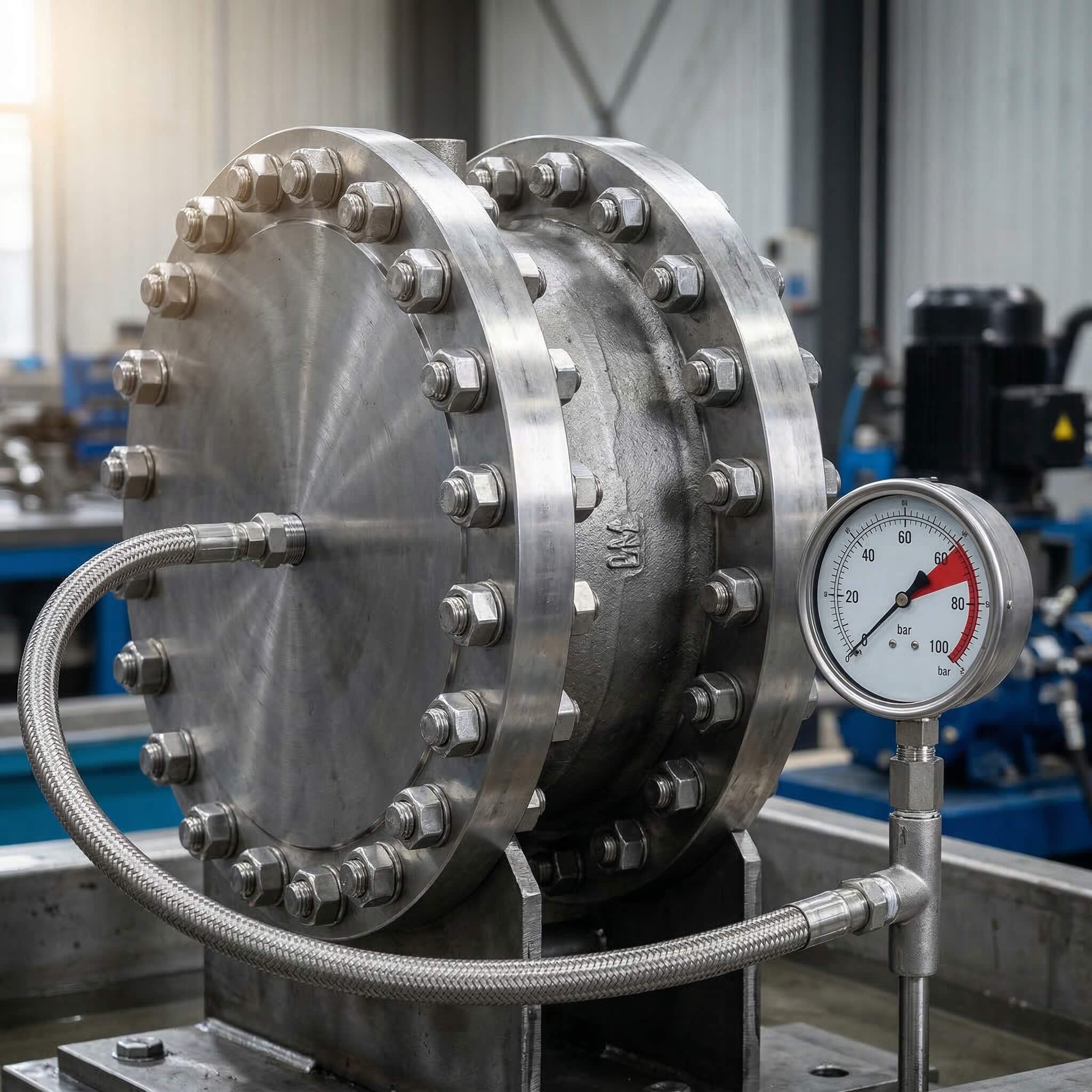
Valve inspection and testing is the systematic process of verifying that industrial valves meet specific pressure, leakage, and structural requirements before they are deployed in a piping system. Media flow failures caused by faulty equipment can lead to catastrophic property damage, environmental leaks, and life-threatening workplace accidents. Relying on unverified components is a gamble that risks massive financial losses and regulatory penalties. Implementing rigorous butterfly valve testing and adherence to international standards ensures your fluid control systems operate with maximum reliability.
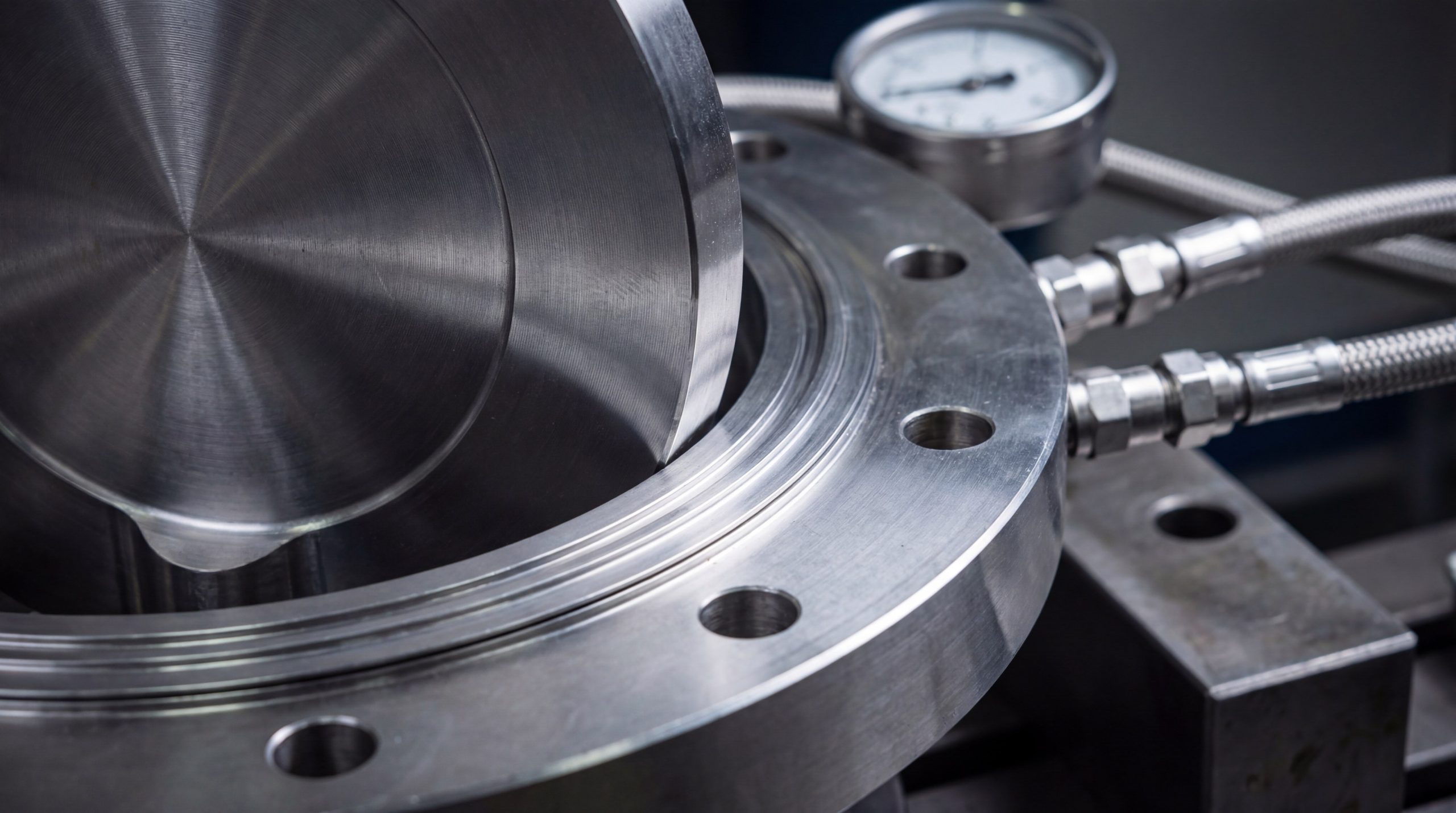
Why is rigorous butterfly valve testing essential for safety?
Industrial butterfly valve testing is required to prevent mechanical failures that could result in hazardous leaks or process explosions. By verifying the integrity of every component, you minimize the risk of unplanned downtime and ensure that the valve can withstand the extreme pressures of your application.
Preventing Operational Failures
The truth is: even a small manufacturing defect can cause a total system shutdown if not caught early. Testing identifies these weaknesses before the valve ever leaves the factory floor.
- Mitigation of high-pressure explosive risks.
- Extension of the overall equipment service life.
- Verification of flow control precision.
Here is why: when you prioritize testing, you are investing in the long-term stability of your entire facility. It is the most effective way to eliminate “invisible” risks in your fluid control loops.
Key Takeaway: Consistent testing protocols serve as a primary defense against operational hazards and equipment failure.
The following table summarizes the strategic advantages of routine valve testing compared to unverified installations.
| Metric | Tested Valves | Unverified Valves |
|---|---|---|
| Risk of Leakage | Minimal (Zero-Leakage) | High |
| Compliance | Meets API/ANSI Standards | Uncertain |
| Operational Life | Optimized | Potentially Shortened |
| Safety Profile | High-Reliability | Significant Liability |
Which standards apply to butterfly valve testing in oil?
Global standards such as API 598 and API 6D establish the criteria that butterfly valve testing must meet to ensure safety in oil and gas environments. These protocols define exactly how many drops of fluid are allowed to pass through a seat and what pressures the valve body must endure.
Adhering to API and ANSI Requirements
Think about it: without these universal rules, engineers would have no way to compare the quality of different manufacturers. Standardized testing creates a level playing field for safety.
- API 598: Covers leakage rates for soft and metal-seated valves.
- ANSI API 607: Specifies fire-safe testing requirements.
- API SPEC 6D: Focuses on pipeline transportation systems.
Look at it this way: following international norms isn’t just about compliance; it’s about guaranteeing that your equipment will perform exactly as designed when it matters most.
Key Takeaway: Utilizing recognized standards like API 598 ensures your valves are globally compatible and structurally sound.
This comparison table highlights the specific focus areas of the most common international testing standards.
| Standard | Primary Application | Pass Criteria |
|---|---|---|
| API 598 | General Process Valves | Zero or Specified Leakage |
| API 607 | High-Risk Fire Zones | Minimal External Leakage |
| API SPEC 6D | Pipeline Systems | Design & Pressure Integrity |
| ISO 5208 | Industrial Gas/Liquid | Standardized Leakage Classes |
Does butterfly valve testing include a shell pressure check?
The shell test is a fundamental part of butterfly valve testing where the valve body is subjected to hydrostatic pressure 50% higher than its rated working capacity. This procedure confirms that the casting and gaskets can handle surges without fracturing or leaking externally.
Verifying Structural Integrity
The best part? This test exposes microscopic porosity in the metal that would otherwise be impossible to see with the naked eye. It ensures the housing itself is a solid barrier against the media.
- Application of 1.5x rated working pressure.
- Requirement for chloride-free water for stainless units.
- Mandatory zero-leakage from the body or gaskets.
Fortunately: once a valve passes this phase, you can be confident that the external housing is safe for high-pressure service. It is the ultimate validation of the manufacturer’s casting quality.
Key Takeaway: Shell tests provide the necessary verification that a valve body is free of structural defects and porosity.
The data below outlines the standard pressure requirements for performing a shell test based on valve ratings.
| Valve Rating | Test Medium | Pressure Level | Minimum Duration |
|---|---|---|---|
| PN10 | Water (Hydrostatic) | 15 bar | 60 – 120 Seconds |
| PN16 | Water (Hydrostatic) | 24 bar | 120+ Seconds |
| PN25 | Water (Hydrostatic) | 37.5 bar | 180+ Seconds |
| Class 150 | Water (Hydrostatic) | 1.5x Working Pressure | Per API 598 Size |
How do you perform seat leak checks during butterfly valve testing?
Seat leak checks are conducted during butterfly valve testing by closing the valve and applying 110% of the maximum allowable pressure to the inlet side. The outlet side is then monitored for any fluid passing through the sealing surface to ensure the valve provides a tight shutoff.
Monitoring Sealing Performance
Here is the deal: if the seat fails to hold pressure, the valve cannot fulfill its primary role of isolation. A failed seat test means the valve needs to be repaired or discarded.
- Monitoring for stem and packing leaks.
- Comparing leakage against allowable rates.
- Checking for deformation under full load.
In fact: while metal-to-metal seats might allow a specific number of bubbles, soft-seated valves are typically expected to provide “bubble-tight” or zero-leakage performance.
Key Takeaway: Seat leak testing confirms the valve’s ability to effectively isolate media flow under standard operating conditions.
This table details the acceptable leakage rates for various seat types encountered during industrial inspections.
| Seat Material | Seal Type | Acceptable Leakage (API 598) |
|---|---|---|
| Resilient (EPDM/NBR) | Soft Seated | Zero Visible Leakage |
| Metal (Stainless/Alloy) | Metal Seated | Limited Drops Per Minute |
| PTFE / Teflon | Soft Seated | Zero Visible Leakage |
| Stellite Overlay | Hard Faced | Specified Per Bore Size |
When should backseats be engaged for butterfly valve testing?
Backseat verification is a specialized part of butterfly valve testing used primarily in gate or globe-style designs where the valve is fully opened to seal the stem against the bonnet. This test ensures that the packing gland can be safely maintained while the valve is under pressure.
Ensuring Stem and Packing Security
Wait, there’s more: a successful backseat test proves that the stem seal is robust enough to prevent atmospheric leaks during maintenance. It adds an extra layer of protection for your maintenance crews.
- Testing in the 100% open position.
- Pressure held at 1.1x the maximum rating.
- Duration of 15 to 60 seconds depending on size.
The truth is: ignoring the backseat seal can lead to dangerous stem blowouts if the packing fails. This test confirms the secondary safety features are fully functional.
Key Takeaway: Backseat testing validates the safety seal between the stem and bonnet, allowing for pressurized maintenance.
The following table summarizes the duration requirements for backseat testing across different valve diameters.
| Valve Size (DN) | Size (Inches) | Test Duration | Pressure Rating |
|---|---|---|---|
| DN50 and below | ≤ 2″ | 15 Seconds | 110% Max Working |
| DN65 – DN200 | 2.5″ – 8″ | 60 Seconds | 110% Max Working |
| DN250 – DN600 | 10″ – 24″ | 120 Seconds | 110% Max Working |
| DN700+ | 30″+ | 300 Seconds | 110% Max Working |
Can safety valves undergo the same butterfly valve testing?
Pressure safety valves (PSVs) require a modified version of butterfly valve testing that focuses on the set-point pressure and the lifting mechanism. Unlike standard isolation valves, safety valves must be inspected for deposit accumulation and spring tension to ensure they open exactly when needed.
Critical Visual and Set-Point Inspections
It gets better: a thorough inspection of the discharge nozzle and bellows can prevent a safety valve from sticking. You must ensure that no corrosion or pitting interferes with the spring action.
- Inspection for corrosion on the spring.
- Verification of the discharge nozzle cleanliness.
- Checking for flange face roughness or damage.
Here is why: a safety valve that doesn’t lift at the right pressure is essentially a ticking time bomb. Routine testing and visual checks are the only way to ensure these devices work in an emergency.
Key Takeaway: Safety valve inspections prioritize the relief mechanism and set-point accuracy over standard isolation sealing.
Use this checklist to ensure all critical components of a pressure safety valve are inspected during your next audit.
| Component | Inspection Focus | Pass Criteria |
|---|---|---|
| External Surface | Corrosion / Cracking | No visible structural flaws |
| Discharge Nozzle | Obstructions / Scaling | Completely clear path |
| Spring / Bellows | Tension / Fatigue | Meets calibrated set-point |
| Flanges | Pitting / Roughness | Smooth sealing surface |
Which designs are influenced by butterfly valve testing norms?
Different designs, such as triple-offset or concentric models, face varying challenges during butterfly valve testing. The geometry of the valve determines how the pressure is distributed across the seat, which impacts the final leakage results.
Design-Specific Testing Challenges
The truth is: a high-performance double-offset valve requires different torque settings during a test than a standard rubber-lined version. You must calibrate your test bench to the specific valve geometry.
- Concentric: Tested for high-cycle elastomer sealing.
- Double Offset: Checked for eccentric disc clearance.
- Triple Offset: Verified for metal-to-metal torque seating.
Look at it this way: knowing the internal mechanics of your valve helps you interpret the testing data more accurately. It allows you to troubleshoot sealing issues based on the specific design.
Key Takeaway: Understanding valve design differences is essential for setting the correct parameters during pressure testing.
This table maps common valve designs to their specific testing focuses and typical applications.
| Valve Design | Primary Test Focus | Typical Industry |
|---|---|---|
| Concentric | Bubble-Tight Seal | Water Treatment |
| Double Offset | High-Pressure Fatigue | Chemical Processing |
| Triple Offset | Metal Sealing Integrity | Oil & Gas (High Temp) |
| AWWA Large | Structural Deflection | Municipal Water |
How do alloys impact the results of butterfly valve testing?
The material composition significantly influences the outcome of butterfly valve testing, especially regarding corrosion resistance and structural strength. Using the wrong alloy for the media can lead to premature failure, even if the valve passes its initial pressure test.
Metallurgy and Material Traceability
Look at it this way: a valve might hold pressure today, but if the material isn’t compatible with the chemicals in your line, it will fail within weeks. Traceable material certificates are your insurance policy.
- Ductile Iron: Cost-effective for water systems.
- Stainless 316L: Critical for corrosive media.
- Exotic Alloys: Necessary for extreme temperatures.
In other words: you must verify that the Mill Test Certificate (MTC) matches the physical valve body. Positive Material Identification (PMI) is a key part of the modern inspection process.
Key Takeaway: Selecting the correct alloy and ensuring material traceability is as important as the pressure test itself.
The following table compares common valve materials and their performance characteristics during inspection.
| Material | Strength | Corrosion Resistance | Best Test Application |
|---|---|---|---|
| Ductile Iron | High | Moderate | Municipal Utilities |
| SS304 / 316 | High | Excellent | Food & Chemical |
| Carbon Steel | Very High | Low (Needs Coating) | Oil / Gas Pipelines |
| Bronze | Moderate | High (Saltwater) | Marine & Offshore |
Why is traceability vital in butterfly valve testing reports?
Documentation is the final, crucial stage of butterfly valve testing that provides a paper trail for safety audits and insurance requirements. Without a signed test report and material certificate, you cannot legally verify that a valve is safe for industrial service.
Generating Comprehensive QA Dossiers
In other words: if there is an accident, the first thing investigators will look for is the testing documentation. Having these records organized can protect your company from significant liability.
- Hydrostatic and pneumatic test logs.
- Batch-level material traceability (MTC).
- Operation and Maintenance (O&M) manuals.
Think about it: complete documentation acts as the “identity card” for your valve. It proves that every quality control step was followed and that the unit is ready for handover to the EPC.
Key Takeaway: Professional documentation packages are necessary for regulatory compliance and project handover.
The table below lists the essential documents that should accompany every shipment of industrial valves.
| Document Type | Content | Importance |
|---|---|---|
| Test Report | Hydro/Seat Pressure Data | Proof of Performance |
| MTC (EN 10204) | Chemical/Physical Analysis | Material Verification |
| Certificate of Origin | Manufacturing Location | Regulatory Compliance |
| IOM Manual | Installation Guidelines | Operational Safety |
What determines a successful pass in butterfly valve testing?
The final determination of a pass in butterfly valve testing depends on meeting the specific zero-leakage or allowable-leakage thresholds defined by the project’s specifications. Success is measured by the valve’s ability to maintain its structural form and sealing integrity under the most extreme predicted conditions.
Defining Success Metrics
The truth is: “good enough” is never acceptable in fluid control. A valve either meets the standard or it fails; there is no middle ground when safety is at stake.
- Consistency across multiple test cycles.
- Absence of visible deformation or “sweating.”
- Reliable torque values during actuation.
Here is why: a valve that passes with flying colors gives the operators peace of mind. It ensures that the transition from commissioning to full production is smooth and hazard-free.
Key Takeaway: A successful test requires adherence to all pressure, duration, and leakage criteria without exception.
The following table summarizes the key success indicators for a standard industrial valve inspection.
| Performance Indicator | Success Criterion | Failure Indicator |
|---|---|---|
| Body Integrity | Zero Sweating / Leaks | Dampness on Casting |
| Seat Sealing | No Visible Bubbles | Continuous Fluid Flow |
| Stem Movement | Smooth / No Binding | High Torque / Sticking |
| Marking / Tags | Fully Traceable | Missing Batch Numbers |
Frequently Asked Questions
Can I perform a valve shell test with air instead of water?
No, because water is incompressible and far safer for high-pressure shell testing than air, which can cause explosive decompression if the body fails. Hydrostatic testing at 1.5x working pressure is the industry standard for verifying structural integrity.
What’s the best way to determine if a valve needs retesting?
Retesting is necessary if the valve has been stored for an extended period, has undergone significant repairs, or if the original test certificates are missing or invalid. Regular maintenance cycles should also include a pressure verification check every few years.
How do I know if a butterfly valve test meets API 598?
You must verify the test report against the API 598 leakage tables, which specify the maximum allowable drops per minute based on the valve size and seat material. A professional manufacturer will provide a clear certificate stating compliance with this specific standard.
Can I replace packing while the valve is under pressure?
Yes, but only if the valve is equipped with a functional backseat that has been pressure tested and verified. You must fully open the valve to engage the backseat seal before attempting to loosen the packing gland.
What’s the best standard for fire-safe valve certification?
The API 607 standard is the most recognized benchmark for determining if a soft-seated quarter-turn valve can maintain its integrity during and after exposure to a fire. It involves testing the valve under intense heat while monitoring for external leakage.
Conclusion
Comprehensive valve inspection and testing are the non-negotiable foundations of industrial safety and efficiency. By strictly following international protocols and ensuring every component passes rigorous shell and seat checks, you eliminate the risks of catastrophic failure and costly system downtime. At our facility, we integrate traceable quality control and 100% pressure testing into every manufacturing stage to protect your critical operations. Contact us today for precision-engineered valves and technical consultation that will secure your fluid control systems for years to come.