
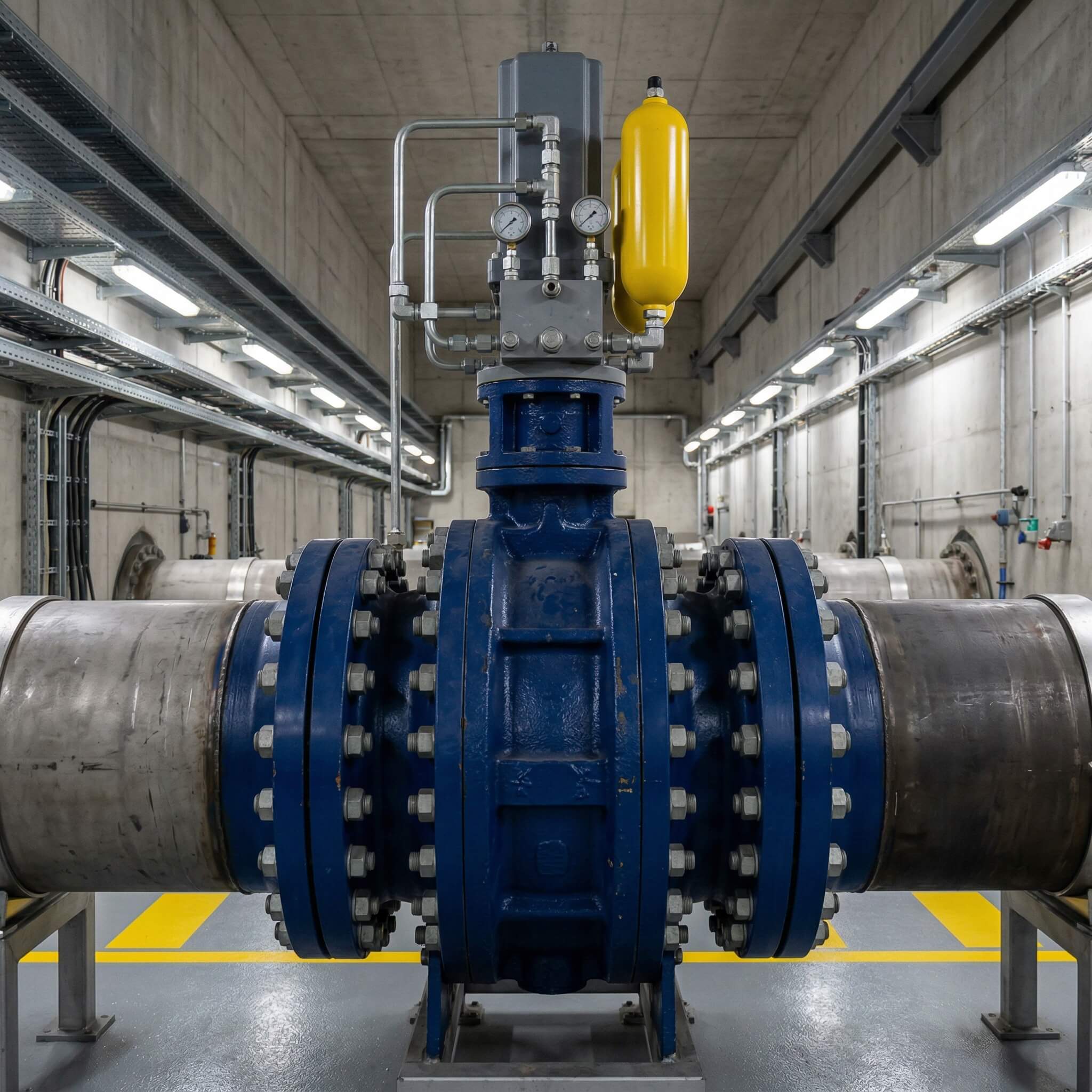
An actuated butterfly valve is a specialized fluid control component that utilizes a mechanical, electric, or hydraulic operated butterfly valve actuator to rotate a disc and regulate the flow of media through a piping system. Managing high-pressure fluid systems manually is not only physically demanding but also introduces significant risks of human error and slow response times. If your system experiences a sudden pressure spike or requires emergency isolation, a delayed manual response can result in catastrophic pipe bursts, equipment damage, and prolonged operational downtime. Fortunately, implementing an automated solution ensures your infrastructure remains protected while optimizing flow efficiency through precision engineering.
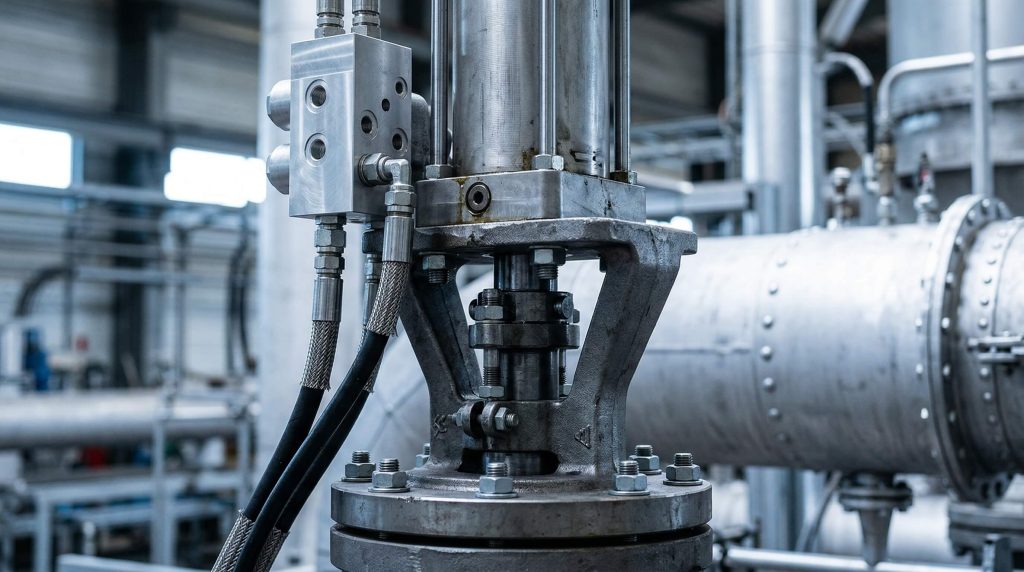
What is a hydraulic operated butterfly valve?
A hydraulic operated butterfly valve is a heavy-duty quarter-turn valve that uses pressurized hydraulic fluid to drive an actuator, providing the necessary force to rotate the internal disc. This specific configuration is designed for applications where extreme torque is required to overcome high line pressures that electric or pneumatic actuators simply cannot handle. By utilizing incompressible hydraulic oil, these valves offer exceptionally stable and powerful movement.
What are the core components?
The system consists of a valve body, a rotating disc, a stem, and a specialized hydraulic cylinder.
- Valve Body: Typically made of ductile iron or stainless steel.
- Hydraulic Actuator: The piston mechanism that converts fluid pressure into torque.
- Control Unit: Manages the fluid flow into the actuator chambers.
- Sealing Elements: High-performance EPDM or PTFE seats to prevent leakage.
Here is the deal: the integration of these components allows for a level of force density that is unmatched in other actuation methods.
Key Takeaway
Hydraulic actuation represents the peak of power in valve automation, specifically suited for large-bore systems and high-pressure environments where reliability is non-negotiable.
| Component | Function | Material Priority |
|---|---|---|
| Actuator Cylinder | Provides mechanical force | High-tensile steel |
| Valve Disc | Regulates fluid flow | Stainless Steel/Bronze |
| Hydraulic Unit | Supplies fluid pressure | Corrosion-resistant alloy |
This component synergy ensures that the valve can perform under the most strenuous industrial conditions without mechanical fatigue.
How does a hydraulic operated butterfly valve work?
The operation of a hydraulic operated butterfly valve relies on the movement of a piston within an actuator cylinder, which is driven by pressurized oil to turn the valve stem 90 degrees. When hydraulic fluid enters one side of the cylinder, it pushes the piston, which is connected to the valve stem via a yoke or rack-and-pinion mechanism. This rotation moves the disc from a fully closed position (perpendicular to flow) to a fully open position (parallel to flow).
How is the motion controlled?
Control is achieved by modulating the direction and volume of hydraulic fluid entering the actuator ports.
- Opening Stroke: Fluid enters the “open” port, moving the disc to clear the path.
- Closing Stroke: Fluid is redirected to the “close” port, seating the disc firmly.
- Throttling: The piston can be held at intermediate positions for precise flow regulation.
The best part? Because hydraulic fluid is incompressible, the disc remains perfectly steady even if the flow media is turbulent.
Key Takeaway
The quarter-turn mechanism, powered by hydraulic pressure, provides a smooth and incredibly powerful method for managing fluid dynamics in large-scale piping.
| Action | Hydraulic Response | Disc Position |
|---|---|---|
| Full Open | Maximum fluid to open chamber | Parallel to flow |
| Full Close | Maximum fluid to close chamber | Perpendicular to flow |
| Throttling | Balanced pressure on both sides | Variable angle |
Precise control over the hydraulic piston allows for fine-tuning the flow rate without the vibration common in pneumatic systems.
Why choose a hydraulic operated butterfly valve?
You should choose a hydraulic operated butterfly valve when your application demands the highest possible torque output in a compact footprint. These valves are superior for large-diameter pipelines because hydraulic systems can generate significantly more force per square inch compared to pneumatic alternatives. Furthermore, the self-lubricating nature of hydraulic fluid reduces wear on the actuator’s internal moving parts.
What are the torque advantages?
Hydraulic actuators are capable of managing valves that require thousands of Newton-meters of torque to operate.
- High Force Density: Smaller actuators can move much larger valves.
- Heat Dissipation: The hydraulic fluid acts as a coolant during high-cycle operations.
- Stability: No “springy” movement, providing exact positioning of the disc.
Think about this: why settle for bulky pneumatic cylinders when a sleek hydraulic unit provides twice the power?
Key Takeaway
The primary motivation for selecting hydraulic actuation is the requirement for massive torque and precise positioning in high-pressure or large-bore scenarios.
| Feature | Hydraulic Benefit | System Impact |
|---|---|---|
| Torque Output | Extremely High | Handles DN1200+ sizes |
| Size | Compact | Saves installation space |
| Durability | Self-lubricating | Lower internal friction |
High force density makes these valves the preferred choice for engineers looking to optimize space without sacrificing performance.
Where is a hydraulic operated butterfly valve used?
The hydraulic operated butterfly valve is most commonly found in heavy industrial sectors such as power generation, large-scale water treatment, and oil and gas transport. These environments involve high-volume fluid movement where the failure of a valve could result in massive operational losses. You will find them acting as isolation valves in main steam lines or as intake valves in large cooling water systems.
Are they used in chemical plants?
Yes, they are frequently employed in chemical processing where aggressive media requires a valve that can close tightly against high backpressure.
- Water Treatment: Managing the intake of massive reservoirs.
- Desalination: Handling high-pressure brine and seawater.
- Energy Sector: Controlling cooling loops in nuclear or thermal plants.
In simple terms: if the fluid volume is massive and the pressure is high, you need hydraulic power.
Key Takeaway
The versatility of hydraulic actuation allows these valves to serve as critical safety and process control points across the world’s most demanding infrastructures.
| Industry | Typical Application | Operating Pressure |
|---|---|---|
| Water Works | Reservoir Isolation | PN16 – PN40 |
| Power Plant | Condenser Cooling | High Velocity |
| Marine | Ballast Management | Corrosive / High Flow |
These applications highlight the valve’s ability to maintain integrity under constant, high-pressure industrial stress.
Which hydraulic operated butterfly valve fits hydro?
For hydroelectric power plants, a specialized hydraulic operated butterfly valve is required to serve as the turbine inlet valve (TIV). These valves must be able to shut off the flow of water under full head pressure in the event of a turbine trip or emergency. Because hydro systems involve massive volumes of water, the valve must be designed to minimize head loss while ensuring a 100% leak-tight seal when closed.
Why is pressure tolerance critical?
Hydroelectric systems often experience rapid pressure fluctuations known as “water hammer,” which can destroy standard valves.
- Surge Protection: Heavy-duty construction absorbs the energy of moving water.
- Emergency Closing: Must function even during a total site power failure.
- Inlet Reliability: Ensures the turbine can be safely isolated for maintenance.
What does this mean for you? It means choosing a valve specifically engineered for the unique kinetic energy of a hydro plant.
Key Takeaway
Hydro-specific hydraulic valves are engineered for safety and efficiency, acting as the final line of defense for expensive turbine equipment.
| Requirement | Hydro Valve Solution | Benefit |
|---|---|---|
| Zero Leakage | Metal-to-metal or Bi-directional seats | Prevents water loss |
| Fast Response | High-pressure hydraulic accumulators | Rapid emergency shut-off |
| Durability | Stainless steel internals | Resists cavitation damage |
The rigorous standards of hydroelectric systems necessitate a valve that prioritizes structural integrity over all other factors.
Is a hydraulic operated butterfly valve fail-safe?
Yes, a hydraulic operated butterfly valve is often equipped with fail-safe mechanisms such as heavy counterweights or spring-return cylinders. These systems ensure that if the hydraulic power or electrical control signal is lost, the valve will automatically move to a predetermined safe position (usually fully closed). This is a critical feature for protecting downstream equipment from uncontrolled flow or pressure surges.
How does the counterweight work?
In a counterweight system, the hydraulic pressure is used to lift a heavy weight while opening the valve.
- Energized State: Hydraulic fluid holds the weight up and the valve open.
- Power Loss: A solenoid valve opens, releasing the fluid.
- Gravity Action: The counterweight falls, mechanically forcing the valve to close.
But wait, there’s more. Many systems also use hydraulic accumulators to provide “stored” fluid pressure for several emergency cycles.
Key Takeaway
Fail-safe hydraulic valves use mechanical energy storage—either gravity or springs—to guarantee closure when all other systems fail.
| Fail-Safe Type | Energy Source | Best Use Case |
|---|---|---|
| Counterweight | Gravity | Large hydro/water valves |
| Spring Return | Mechanical Spring | Smaller process valves |
| Accumulator | Compressed Gas | Rapid multi-cycle needs |
Mechanical fail-safes eliminate the reliance on external power, providing the ultimate layer of protection for your piping system.
How to maintain a hydraulic operated butterfly valve?
Maintaining a hydraulic operated butterfly valve requires regular inspection of the fluid cleanliness, seal integrity, and mechanical linkages. Because these systems rely on pressurized oil, any contamination in the hydraulic lines can lead to erratic movement or damage to the internal piston seals. You should establish a routine schedule to check for leaks at the actuator ports and ensure the valve disc is seating correctly without obstruction.
What are the key check points?
Focusing on the fluid and the seals will prevent 90% of common valve failures.
- Oil Quality: Change hydraulic fluid based on the manufacturer’s recommended intervals.
- Filter Checks: Ensure all inline filters are clear to maintain pressure.
- Stem Packing: Inspect the area where the stem meets the actuator for leaks.
- Disc Inspection: Periodically check for erosion or debris buildup on the disc edge.
It gets better: a well-maintained hydraulic system can easily last 20 to 25 years with minimal major repairs.
Key Takeaway
Proactive maintenance of the hydraulic fluid and sealing components is the most effective way to ensure long-term valve reliability and performance.
| Maintenance Task | Frequency | Objective |
|---|---|---|
| Fluid Sampling | Every 6 months | Check for metal shavings/water |
| Seal Leak Test | Monthly | Ensure environmental safety |
| Actuator Greasing | Annually | Maintain smooth linkage motion |
Consistent monitoring of fluid health prevents the internal degradation of the actuator’s precision-machined surfaces.
What speed does a hydraulic operated butterfly valve offer?
A hydraulic operated butterfly valve offers highly adjustable operating speeds, ranging from rapid shut-offs to slow, controlled closures. The speed is controlled by regulating the flow rate of the hydraulic oil through the control manifold. For large pipelines, a “slow-closing” feature is often mandatory to prevent water hammer, which occurs when a moving fluid is stopped too quickly.
Can the speed be customized?
Yes, by using needle valves or flow control orifices, you can tune the valve to open in seconds but close over several minutes.
- Quick Opening: Helpful for starting up cooling systems rapidly.
- Two-Stage Closing: Fast closure for 80%, then very slow for the final 20%.
- Emergency Speed: Use of accumulators to override normal speed for safety.
The bottom line? Hydraulic systems offer the most granular control over timing compared to any other actuation type.
Key Takeaway
The ability to precisely control the opening and closing velocity makes hydraulic valves essential for preventing hydraulic shock in large systems.
| Speed Profile | Control Method | Primary Benefit |
|---|---|---|
| Constant Speed | Fixed flow orifice | Predictable cycle times |
| Two-Stage | Specialized manifold | Eliminates water hammer |
| High Speed | Accumulator discharge | Emergency isolation |
Customized speed profiles allow engineers to balance the need for rapid response with the physical limitations of the fluid column.
Can a hydraulic operated butterfly valve handle slurry?
Yes, a hydraulic operated butterfly valve is excellent for slurry applications, especially when configured with an eccentric (high-performance) disc design. Slurries are abrasive and can quickly wear down standard valve components, but the high torque of a hydraulic actuator ensures the disc can “cut through” settled solids to achieve a seal. Choosing the right materials for the disc and seat, such as hardened alloys or specialized coatings, is essential for these abrasive environments.
How does material selection help?
In mining or mineral processing, the valve must resist both physical abrasion and chemical corrosion.
- Eccentric Design: The disc lifts out of the seat immediately, reducing friction and wear.
- Hardened Seats: Resistant to the scoring caused by grit and particles.
- Powerful Actuation: Overcomes the resistance of viscous or thickened slurries.
Why does this matter? Because a standard valve would seize or leak within weeks in a slurry line, whereas a hydraulic model thrives.
Key Takeaway
Hydraulic actuation provides the necessary mechanical force to operate reliably in abrasive slurry environments where other valves fail.
| Slurry Type | Recommended Disc | Actuator Advantage |
|---|---|---|
| Fine Grit | Stainless Steel / PTFE | Precise positioning |
| Heavy Mineral | Chrome Carbide Coated | High torque for solids |
| Corrosive Sludge | Hastelloy / Titanium | Steady, slow movement |
The combination of high torque and eccentric motion ensures that the valve maintains its sealing integrity even with abrasive media.
How to buy a hydraulic operated butterfly valve?
When looking to buy a hydraulic operated butterfly valve, you must first calculate the maximum torque required to operate the valve under your highest system pressure. You should also consider the environmental conditions of the installation site, as this will dictate the material of the valve body and the type of hydraulic fluid needed. Finally, ensure that the actuator mounting follows international standards like ISO 5211 to allow for future maintenance or component replacement.
What data do you need for a quote?
Providing accurate technical specifications ensures you receive a valve that is fit for purpose.
- Line Size & Pressure: (e.g., DN600, PN25).
- Media Properties: Temperature, viscosity, and chemical composition.
- Operation Type: On-off, throttling, or emergency fail-safe.
- Control Requirements: Voltage for solenoid valves and required feedback signals.
Look at the numbers: investing in a slightly higher specification today can reduce your total cost of ownership over the next decade.
Key Takeaway
Procuring the right hydraulic valve requires a detailed understanding of your system’s torque needs and environmental challenges.
| Selection Factor | Requirement | Reason |
|---|---|---|
| Torque Margin | 20-30% Safety Factor | Accounts for aging and friction |
| Flange Standard | ANSI, DIN, or JIS | Ensures piping compatibility |
| Coating | Epoxy or Polyurethane | Protects against external corrosion |
Accurate technical data is the foundation of a successful procurement process, ensuring the valve integrates seamlessly into your infrastructure.
Frequently Asked Questions
Can I convert a manual butterfly valve to hydraulic?
Usually, yes. If the valve has an ISO 5211 mounting pad, you can remove the manual lever or gearbox and install a hydraulic actuator. However, you must verify that the valve stem can handle the increased torque generated by the hydraulic unit.
What’s the best hydraulic fluid for outdoor valves?
The best choice is a high-viscosity index (HVI) mineral oil or a synthetic biodegradable fluid if environmental regulations are strict. HVI oils maintain their flow characteristics in both extreme heat and freezing temperatures, ensuring consistent valve timing.
How do I know if my actuator seals are failing?
You will see external oil leakage around the piston rod or notice a significant drop in the “holding” pressure of the system. If the valve “drifts” from its set position when the pump is off, the internal piston seals are likely bypassing fluid.
Can I operate a hydraulic valve without a pump?
Only temporarily if the system is equipped with a hydraulic accumulator. The accumulator stores pressurized fluid that can be used for a limited number of cycles (usually 1 to 3) during a total power or pump failure.
How do I know if the valve torque is sufficient?
You must compare the actuator’s output torque at your minimum operating pressure against the valve’s breakout torque at maximum differential pressure. Always include a safety factor of at least 25% to account for seat wear and debris buildup.
Conclusion
Selecting the right actuation for your piping system is a critical decision that impacts safety, efficiency, and long-term costs. Whether you are managing a hydroelectric plant or a chemical processing facility, the power and precision of hydraulic technology provide unmatched reliability. If you are ready to upgrade your flow control infrastructure, contact us today to speak with our engineering team about a customized solution.
Brand Position: RUITO delivers high-reliability, cost-effective valve and fluid control solutions to global industrial and municipal systems, trusted by engineers for over 15 years.