
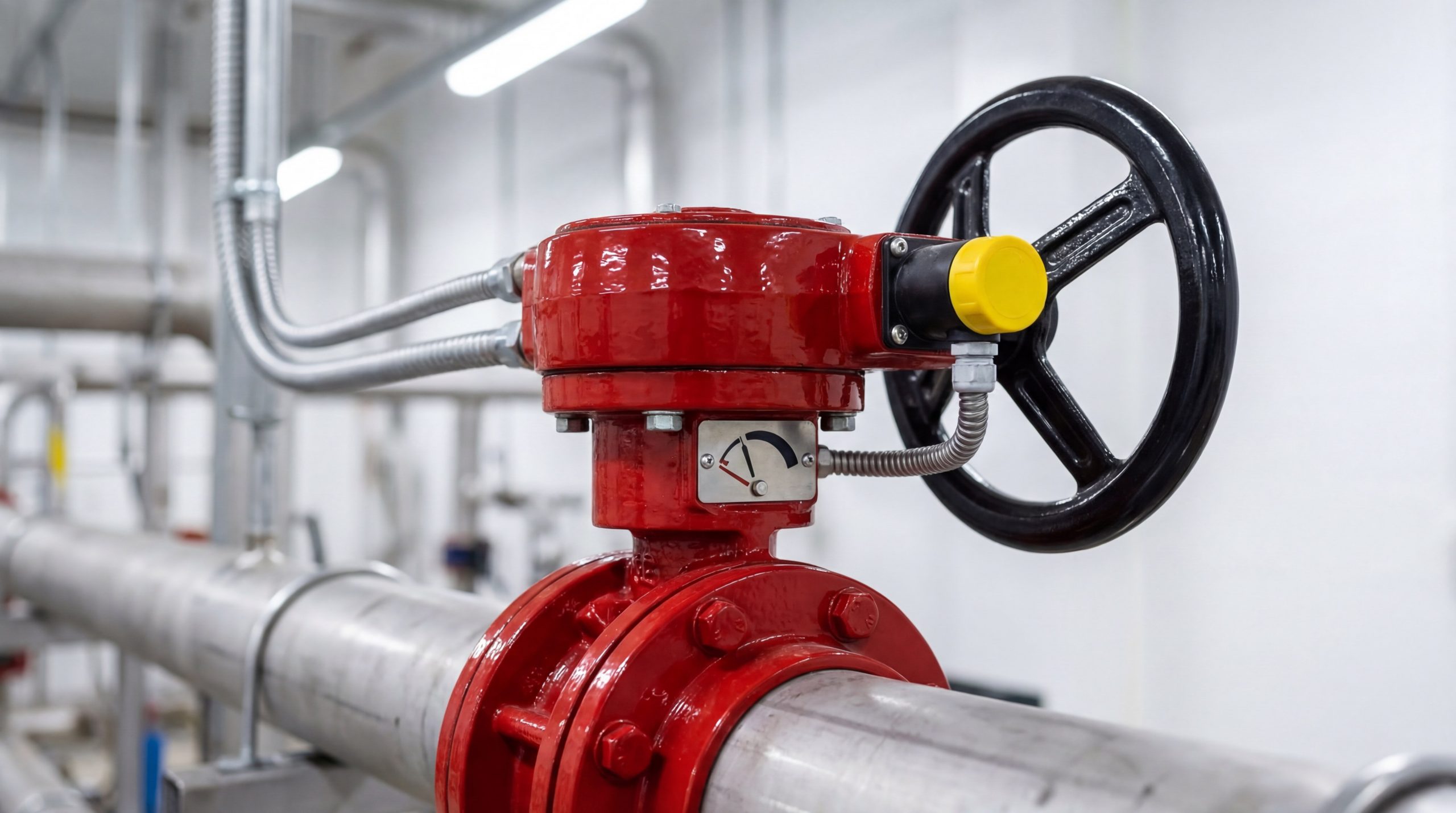
Selecting the correct fire protection butterfly valve requires matching your system’s pipe diameter, pressure rating, and specific certification needs to ensure immediate water delivery during an emergency. Imagine standing in a facility where a fire breaks out, but the suppression system fails because an uncertified valve seized after months of dormancy. This scenario represents a massive liability that can be avoided with reliable, high-performance hardware. Implementing a precision-engineered fire protection butterfly valve into your infrastructure provides the reliable isolation and flow control necessary to protect life and property.
What is a fire protection butterfly valve and its role?
A fire protection butterfly valve is a specialized quarter-turn flow control device designed to isolate water supply in fire sprinkler and standpipe systems. This valve acts as a critical gatekeeper, ensuring that water is either held in reserve or released immediately during a fire event.
What is the primary function of this valve?
The primary role of a fire protection butterfly valve is to provide quick, reliable isolation for maintenance or emergency response. Unlike standard industrial valves, these are painted a distinct red and often include built-in supervisory components.
Think about it:
- They allow for sectional isolation of sprinkler zones.
- The disc remains in the flow path, requiring specific hydraulic calculations.
- Visible indicators provide instant confirmation of the valve’s status.
Why is visual status monitoring important?
Safety codes require that operators can identify if a valve is open or closed from a distance. Most models feature a yellow indicator flag or a protruding stem to satisfy these rigorous safety standards.
Here is the deal:
- Visual indicators prevent accidental system shutdowns.
- Built-in tamper switches alert the fire panel if the valve is moved.
- Red epoxy coating ensures visibility in low-light conditions.
| Feature | Role | Safety Impact |
|---|---|---|
| Red Epoxy Coating | Visibility | Rapid identification during emergencies |
| Tamper Switch | Monitoring | Prevents unauthorized closure |
| Indicator Plate | Verification | Ensures the system is active |
This combination of mechanical reliability and electronic monitoring makes these valves indispensable for modern fire safety infrastructure.
Key Takeaway: The role of the valve is to ensure water is available when needed while providing clear, monitored status updates to safety personnel.
How does a fire protection butterfly valve operate?
The operation of a fire protection butterfly valve involves a gear-driven handwheel that rotates a metallic disc 90 degrees within the pipe. This slow-closing mechanism is essential for protecting your firefighting infrastructure from the destructive forces of water hammer.
How does the gear operator work?
The gear operator utilizes a worm gear assembly to provide high torque with minimal physical effort from the user. This mechanical advantage is crucial when dealing with high-pressure lines.
Simply put:
- The handwheel drives the internal gear.
- The disc rotates slowly to prevent pressure surges.
- Internal stops ensure the disc seats perfectly every time.
What is the purpose of the supervisory switch?
A supervisory or tamper switch is an electronic sensor that monitors the position of the valve stem. It is wired directly into the building’s fire alarm control panel to provide real-time alerts.
The best part:
- It triggers an alarm if the valve is even partially closed.
- It provides a “Normally Open” signal for system health.
- Reduces the need for manual inspections of every valve.
| Operational Element | Action | Benefit |
|---|---|---|
| Worm Gear | Controlled rotation | Prevents water hammer damage |
| EPDM Seat | Bubble-tight seal | Eliminates leaks in closed position |
| Tamper Switch | Signal transmission | Remote safety monitoring |
By integrating mechanical slow-closing features with electronic signaling, these valves provide a dual layer of protection for complex piping systems.
Key Takeaway: Controlled operation through a gear-driven mechanism prevents pipe bursts while the tamper switch ensures the system remains “ready” at all times.
Which types of fire protection butterfly valve are available?
There are three primary types of fire protection butterfly valve configurations: wafer, lug, and grooved end connections. Each type is designed to meet specific installation environments and maintenance requirements.
When should you use wafer or lug styles?
Wafer valves are clamped between two flanges, while lug valves have threaded inserts that allow for independent piping on either side. Choosing between them depends on whether you need to perform maintenance on one side of the line without draining the entire system.
Here is the deal:
- Wafer: Economical and lightweight for mid-line installation.
- Lug: Ideal for end-of-line service or sectional isolation.
- Threaded Lugs: Facilitate easier bolt alignment during setup.
What are the benefits of grooved valves?
Grooved-end valves are the modern standard for fire sprinkler installations because they utilize mechanical couplings instead of traditional flanges. This significantly reduces labor time and allows for slight pipe misalignment.
Think about it:
- Rapid installation with standard grooved couplings.
- Allows for thermal expansion and contraction.
- Easier to replace in tight riser rooms.
| Valve Type | Connection Method | Best Use Case |
|---|---|---|
| Wafer | Sandwiched between flanges | Budget-sensitive projects |
| Lug | Bolted directly to flanges | Sectional maintenance points |
| Grooved | Mechanical couplings | Modern sprinkler systems |
Understanding the physical connection requirements of your project is the first step in selecting the most efficient valve type.
Key Takeaway: Whether you select wafer, lug, or grooved styles, the choice dictates how quickly the valve can be installed and serviced.
Why use a fire protection butterfly valve over other valves?
A fire protection butterfly valve offers a significant reduction in weight and footprint compared to traditional gate valves. For many engineers, the cost-to-performance ratio makes them the superior choice for high-rise and commercial applications.
Is weight a major factor in selection?
Butterfly valves weigh significantly less than OS&Y gate valves of the same diameter. This reduction in mass simplifies structural support requirements and lowers shipping costs.
Consider this:
- They are roughly 50% lighter than gate valves.
- Lighter valves require fewer support hangers.
- One-man installation is often possible for smaller sizes.
Why choose butterfly valves for tight spaces?
The narrow face-to-face dimension of a butterfly valve allows it to fit into compact pump rooms where a gate valve would be too bulky. This space-saving design is critical for retrofitting older buildings.
Fact is:
- Short profile fits between standard pipe flanges.
- Handwheels can be oriented in multiple directions.
- Allows for more components in a smaller manifold.
| Metric | Butterfly Valve | Gate Valve |
|---|---|---|
| Weight | Very Light | Heavy |
| Installation Time | Fast (1/4 turn) | Slow (Multi-turn) |
| Cost | Low to Moderate | High |
The efficiency of a butterfly valve allows for more streamlined system designs without sacrificing the hydraulic performance required by NFPA standards.
Key Takeaway: The compact size and reduced weight of butterfly valves make them the most cost-effective and space-efficient solution for modern fire suppression.
Where is a fire protection butterfly valve typically applied?
You will typically find a fire protection butterfly valve in riser rooms, pump discharge lines, and floor-level isolation points. Their versatility allows them to serve in both above-ground and underground mains.

Are they used in fire pump rooms?
Yes, they are commonly used on the discharge side of fire pumps to isolate the pump for testing or repair. However, they must be positioned carefully to avoid turbulence that could affect pump performance.
The bottom line:
- Used for main system isolation.
- Common in fire pump manifolds.
- Often installed alongside check valves.
Can they isolate individual floors?
In high-rise buildings, butterfly valves are used as floor control valves. This allows maintenance teams to shut off water to a single floor while keeping the rest of the building protected.
Think about it:
- Enables targeted maintenance without full building shutdowns.
- Tamper switches ensure security on every level.
- Compact size fits inside wall cabinets.
| Application | Role | Key Benefit |
|---|---|---|
| Riser Room | Main Water Control | Total system isolation |
| Floor Control | Zone Management | Localized maintenance |
| Pump Discharge | Pump Isolation | Safe equipment servicing |
These valves are essential components in every part of a fire suppression network, from the source of the water to the final sprinkler head.
Key Takeaway: From pump rooms to individual floors, these valves provide the necessary control to manage water distribution across the entire facility.
When should you inspect a fire protection butterfly valve?
A fire protection butterfly valve requires monthly visual inspections and annual functional tests to remain in compliance with local fire codes. Regular oversight ensures that the valve has not been tampered with or obstructed.
How often do you check the indicator?
The “Open/Closed” indicator flag should be checked monthly to ensure it is in the fully open position. This simple visual check can prevent catastrophic system failures during an actual fire event.
Watch out:
- Check for physical damage to the handwheel.
- Ensure the indicator is not obstructed by paint or debris.
- Verify that the lock or seal is still intact.
Is annual testing mandatory?
NFPA 25 mandates that all valves be exercised through their full range of motion at least once per year. This prevents the internal disc from becoming “frozen” or stuck due to mineral buildup.
It gets better:
- Full-cycle testing flushes out debris from the seat.
- Verifies that the gear operator is still lubricated.
- Confirms the tamper switch signal reaches the alarm panel.
| Frequency | Action | Goal |
|---|---|---|
| Monthly | Visual status check | Ensure valve is open |
| Quarterly | Switch test | Verify signal integrity |
| Annually | Full cycle test | Prevent mechanical seizing |
Adhering to a strict inspection schedule is the only way to guarantee the mechanical and electronic readiness of your suppression system.
Key Takeaway: Consistent inspection and annual exercising are non-negotiable requirements for maintaining life-safety compliance.
How to install a fire protection butterfly valve properly?
Proper installation involves aligning the valve disc with the pipe center and ensuring that the flange gaskets do not obstruct the disc’s movement. Errors during this phase can lead to seat damage or permanent leaks.
What are the alignment best practices?
Before tightening any bolts, you must ensure the valve is centered. If the disc hits the pipe wall or the flange, it can strip the EPDM coating and ruin the seal.
The deal is:
- Always install the valve in the “Open” position.
- Ensure the disc does not strike the pipe inner diameter.
- Use standard piping supports to prevent stem stress.
How do you handle the electrical wiring?
The tamper switch must be wired according to the manufacturer’s diagram to ensure the “Normally Open” and “Common” wires are correctly identified. Improper wiring can lead to false alarms or a complete lack of supervision.
Keep in mind:
- Use weather-proof conduits for outdoor installations.
- Test the switch immediately after the wiring is complete.
- Verify the alarm signal with the fire panel operator.
| Installation Step | Action | Potential Risk |
|---|---|---|
| Disc Positioning | Keep open during install | Disc or seat damage |
| Bolt Torquing | Use a star pattern | Uneven sealing/leaks |
| Wiring | Follow wiring diagram | Supervisory failure |
A methodical approach to installation prevents mechanical interference and ensures the electronics are ready to report any unauthorized movement.
Key Takeaway: Correct installation requires precise alignment and immediate electrical verification to ensure long-term operational integrity.
What standards govern fire protection butterfly valve quality?
Quality standards like UL (Underwriters Laboratories) and FM (Factory Mutual) are the benchmarks for any fire protection butterfly valve. These certifications prove that the valve has undergone extreme pressure and fire testing.
Are UL and FM certifications necessary?
Yes, most insurance companies and local fire marshals require UL-listed or FM-approved valves. These marks signify that the product can withstand temperatures and pressures far beyond standard industrial requirements.
Here is why:
- UL tests for structural integrity and cycle life.
- FM focuses on property loss prevention and reliability.
- Uncertified valves can void your building insurance.
Does the valve need to meet NFPA 13?
NFPA 13 is the gold standard for sprinkler system installation, and it specifies exactly where and how butterfly valves should be used. Compliance with this standard is a legal requirement in most jurisdictions.
Think about it:
- Mandates the use of supervisory switches.
- Specifies required pressure ratings (often 175-300 PSI).
- Controls the location of valves relative to other components.
| Standard | Organization | Focus |
|---|---|---|
| UL 1091 | Underwriters Laboratories | Butterfly Valve Safety |
| FM 1112 | FM Global | Reliability & Durability |
| NFPA 25 | National Fire Protection Assoc. | Inspection & Maintenance |
Selecting valves that meet these international standards ensures your project will pass inspection and provide reliable service for decades.
Key Takeaway: Never compromise on certifications; UL and FM approvals are essential for regulatory compliance and system reliability.
How to select the right fire protection butterfly valve?
Selecting the right valve involves evaluating the maximum system pressure, pipe size, and environmental conditions of the installation site. You must also consider the compatibility of the valve materials with the water supply.
How do you determine pressure requirements?
Standard fire systems operate at 175 PSI, but high-rise buildings often require valves rated for 300 PSI. You must verify that the valve’s working pressure exceeds your system’s peak pressure.
Consider this:
- Check the rating on the valve nameplate.
- Account for potential surge pressures from pumps.
- Match the valve rating to the flange or coupling rating.
Which materials provide the best durability?
Ductile iron is the preferred body material due to its high impact resistance. The disc should be coated with EPDM to ensure a bubble-tight seal even after years of inactivity.
Simply put:
- Ductile iron handles physical stress better than cast iron.
- EPDM-coated discs prevent corrosion and sticking.
- Stainless steel stems provide superior longevity.
| Selection Factor | Requirement | Impact |
|---|---|---|
| Size | Must match pipe diameter | Prevents flow restriction |
| Pressure | 175 or 300 PSI | Prevents valve failure |
| Connection | Wafer, Lug, or Grooved | Determines install speed |
By focusing on pressure ratings and material quality, you can ensure the valve remains a reliable part of the safety system for its entire service life.
Key Takeaway: Base your selection on the specific hydraulic needs of your building and prioritize durable materials like ductile iron and EPDM.
Why choose Ruitoflow for your fire protection butterfly valve?
Choosing Ruitoflow for your fire protection butterfly valve needs gives you access to 15 years of engineering expertise and ISO-certified manufacturing. We provide traceable, high-reliability components that meet the strictest international standards.
Do we offer technical support?
Yes, our team provides 24-hour technical responses to help you with specification clarification and order execution. We ensure that our valves integrate seamlessly into your EPC or OEM packages.
You’re in good hands:
- Traceable batch documentation for every order.
- Custom engineering for non-standard requirements.
- Bilingual technical manuals and drawings.
What is our quality guarantee?
Every valve we produce undergoes a hydrostatic test at 1.5 times the working pressure to ensure zero leakage. Our defect rate is recorded at less than 0.5% across thousands of units delivered worldwide.
Here is the deal:
- ISO 9001:2015 certified production lines.
- 12-month warranty on all materials and workmanship.
- 100% seat and shell pressure testing.
| Ruitoflow Advantage | Standard | Benefit to You |
|---|---|---|
| Response Time | 24 Hours | Rapid project progression |
| Testing | 1.5x Working Pressure | Guaranteed field performance |
| Documentation | Full traceable dossiers | Easy regulatory approval |
Our commitment to quality and transparency makes us the preferred partner for fire protection professionals globally.
Key Takeaway: Ruitoflow combines precision manufacturing with world-class technical support to deliver valves you can trust in the most critical moments.
Frequently Asked Questions
Can I install a butterfly valve in any orientation?
Yes, but vertical stems are highly preferred. Installing with the stem horizontal or vertical is acceptable, but a vertical orientation prevents sediment from accumulating in the stem housing, extending the life of the seals.
What’s the best way to prevent water hammer?
Slow closing gears are the most effective solution. The gear-operated handwheel on a fire protection butterfly valve is designed to require multiple turns to close, which naturally regulates the speed of the disc and prevents dangerous pressure surges.
How do I know if the tamper switch is working?
Check the alarm panel while someone partially closes the valve. A functioning switch should trigger a supervisory signal at the fire alarm control panel within two rotations of the handwheel, indicating that the system is no longer in the “Ready” state.
Can I use these valves for suction lines?
Yes, provided they meet the hydraulic requirements of your pump system. While more common on the discharge side, butterfly valves can be used on suction lines if they are rated for the vacuum and pressure conditions specified by your engineer.
What’s the best material for corrosive environments?
Ductile iron with high-build epoxy coating is the industry standard. For extremely harsh environments, ensure the disc is fully encapsulated in EPDM and the stem is made of high-grade stainless steel to prevent localized pitting and corrosion.
Conclusion
At Ruitoflow, we believe that fire safety components should never be a point of failure. Our precision-engineered valves are built to endure decades of service while maintaining total reliability for that one moment they are truly needed. Contact us today for a technical consultation and discover why global engineers trust us for their most critical fire protection projects.