
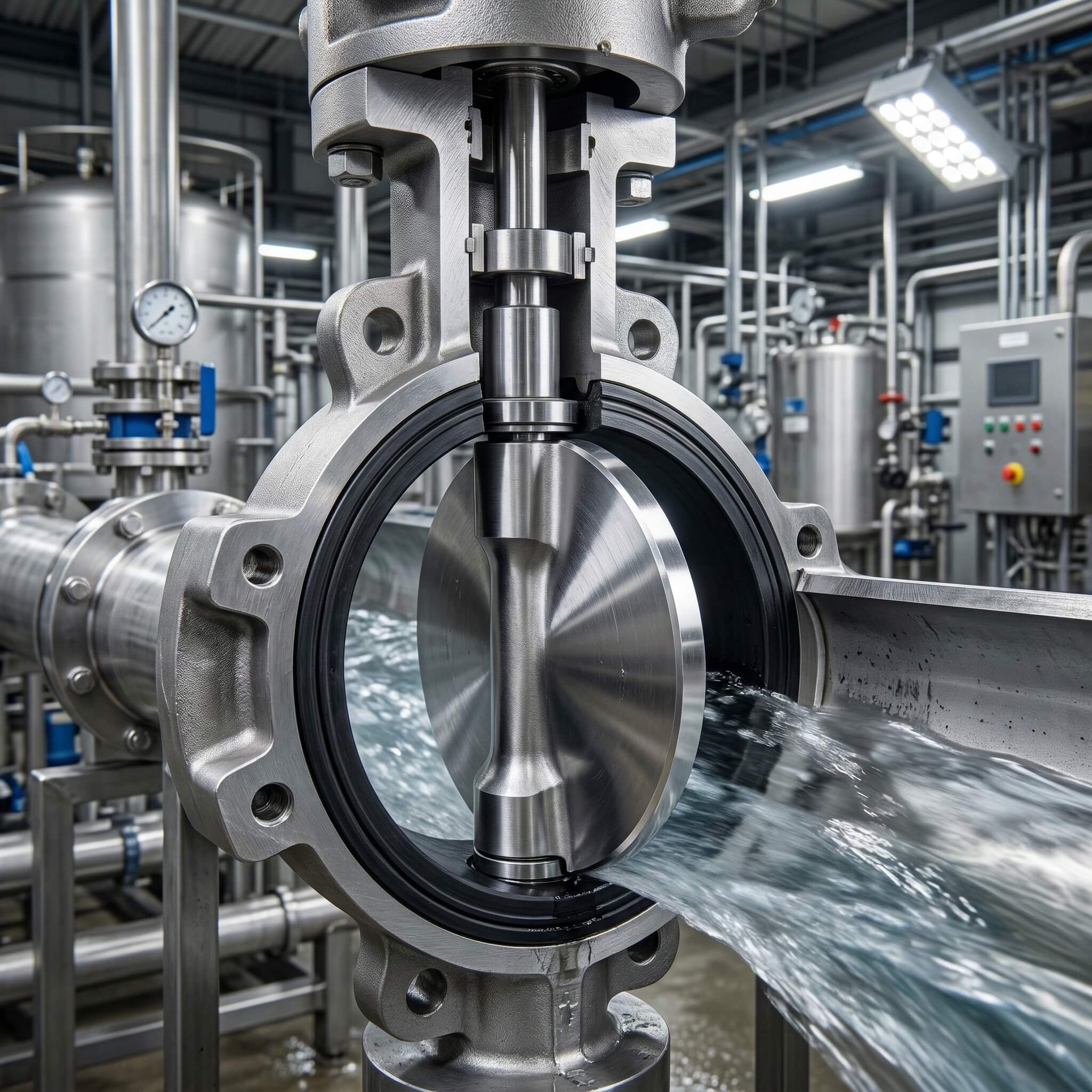
A double eccentric butterfly valve is a high-performance flow control device featuring a shaft offset from both the seal and the pipe centerline to minimize friction. Many industrial operators struggle with persistent leaks in standard concentric valves due to seat pinching and shaft corrosion that occurs over time. These failures often lead to expensive downtime, environmental hazards, and the constant need for costly manual maintenance programs. By utilizing a double eccentric butterfly valve design, you solve these reliability issues through a cam-action mechanism that ensures a bubble-tight seal without compromising the integrity of the internal seat material.
What is a double eccentric butterfly valve design?
A double eccentric butterfly valve design refers to a structural configuration where the stem is positioned behind the sealing face and slightly to one side of the pipe centerline. This specific double eccentric butterfly valve design creates a “camming” action during operation. It allows the disc to lift away from the seat immediately upon opening, preventing the dragging that causes premature wear.
How does the dual offset function?
The dual offset functions by creating a geometric path that allows the disc to rotate into the seat only at the final point of closure. This ensures that the sealing surface is not under constant pressure or friction during the travel cycle.
Think about it:
- First Offset: The shaft is located behind the sealing plane to allow a continuous 360-degree seal.
- Second Offset: The shaft is eccentric to the pipe center to enable the disc to “lift” off the seat.
Key Takeaway: The primary benefit of this design is the dramatic reduction in seat friction, which leads to a longer service life and lower torque requirements for actuation.
| Feature | Design Detail | Operational Benefit |
|---|---|---|
| Stem Position | Offset from centerline | Immediate seat release |
| Sealing Path | Eccentric rotation | Zero-leakage performance |
| Torque | Reduced friction | Smaller actuator sizing |
This analysis demonstrates how geometric offsets directly translate to mechanical longevity and reduced operational costs.
Why use a double eccentric butterfly valve design?
You should use a double eccentric butterfly valve design because it offers superior sealing longevity and lower maintenance requirements than standard concentric alternatives. The double eccentric butterfly valve design is specifically engineered for critical services where zero leakage is mandatory. It eliminates the “seat set” phenomenon that often plagues lower-quality valves in industrial pipelines.
Does it eliminate common leaks?
Yes, this design eliminates leaks by preventing the disc from pinching the rubber seat during the open position. Because the disc does not touch the seat while open, leak paths caused by seat deformation are virtually non-existent.
The best part?
- Dry Shaft: O-ring seals prevent media from reaching the shaft.
- Cam Action: The disc engages the seat with compression rather than friction.
- Durability: The seat remains resilient for decades rather than years.
Key Takeaway: Choosing this valve ensures that your system remains leak-free even after long periods of inactivity, making it ideal for isolation.
| Problem | Standard Valve Result | Double Eccentric Result |
|---|---|---|
| Seat Wear | High (constant rubbing) | Low (contact only at closure) |
| Shaft Corrosion | Common (wetted shaft) | Prevented (dry shaft design) |
| Life Span | 5-10 Years | 20-25 Years |
Evaluation of these factors confirms that the double offset architecture is the most reliable choice for long-term flow isolation.
How does a double eccentric butterfly valve design work?
A double eccentric butterfly valve design works by utilizing two distinct offsets to allow the disc to swing clear of the seat without rubbing. This double eccentric butterfly valve design ensures that the seal is only engaged during the last few degrees of closing rotation. When you open the valve, the disc moves in a cam-like motion, instantly breaking contact with the sealing surface.
What is the cam-action mechanism?
The cam-action mechanism is the result of the shaft being placed off-center, which forces the disc to move in an elliptical path. This ensures that the friction between the seat and the disc is minimized throughout the stroke.
Look at the facts:
- Initial Rotation: The disc lifts off the seat within 1 to 3 degrees of opening.
- Travel Phase: No contact occurs between the disc and the seat during the rest of the 90-degree turn.
- Closure: The disc compresses into the seat for a high-pressure seal.
Key Takeaway: By minimizing contact during travel, the valve reduces the energy needed for operation and protects the integrity of the sealing material.
| Operation Phase | Disc Position | Mechanical Stress |
|---|---|---|
| Opening | Immediate Lift | Negligible |
| Throttling | No contact | Zero friction |
| Closing | Direct compression | Distributed pressure |
This mechanical sequence highlights why the double offset is considered a high-performance solution for demanding flow environments.
Where is double eccentric butterfly valve design applied?
A double eccentric butterfly valve design is primarily applied in municipal water systems, industrial process lines, and power generation facilities. Engineers prefer the double eccentric butterfly valve design for high-velocity transmission lines and pump discharge isolation. Its robust construction handles clean water, gas, and mildly corrosive fluids with ease.
Is it suitable for high-pressure water?
Absolutely, as these valves are designed to maintain a bubble-tight seal even under significant pressure differentials. They are frequently found in reservoir intake stations and major urban water distribution networks.
Here is why it matters:
- High Flow: The disc design allows for high flow coefficients (Cv).
- Isolation: It provides reliable shut-off for maintenance of downstream equipment.
- Versatility: Suitable for both buried service and plant installations.
Key Takeaway: The versatility and pressure handling of this design make it the industry standard for large-diameter water infrastructure.
| Industry | Primary Application | Specific Advantage |
|---|---|---|
| Waterworks | Transmission Mains | Reliable isolation |
| HVAC | Cooling Towers | Energy-efficient flow control |
| Power | Condenser Cooling | Handles high-volume water |
Strategic application of this valve type ensures system stability and reduces the risk of catastrophic pipe failures.
Is double eccentric butterfly valve design better than concentric?
Yes, a double eccentric butterfly valve design is significantly better for high-performance applications because it eliminates the constant seat friction found in concentric designs. While a concentric valve might be cheaper initially, the double eccentric butterfly valve design saves money over time by extending the maintenance interval. Concentric valves often fail due to “pinching” at the shaft, a problem this design solves entirely.
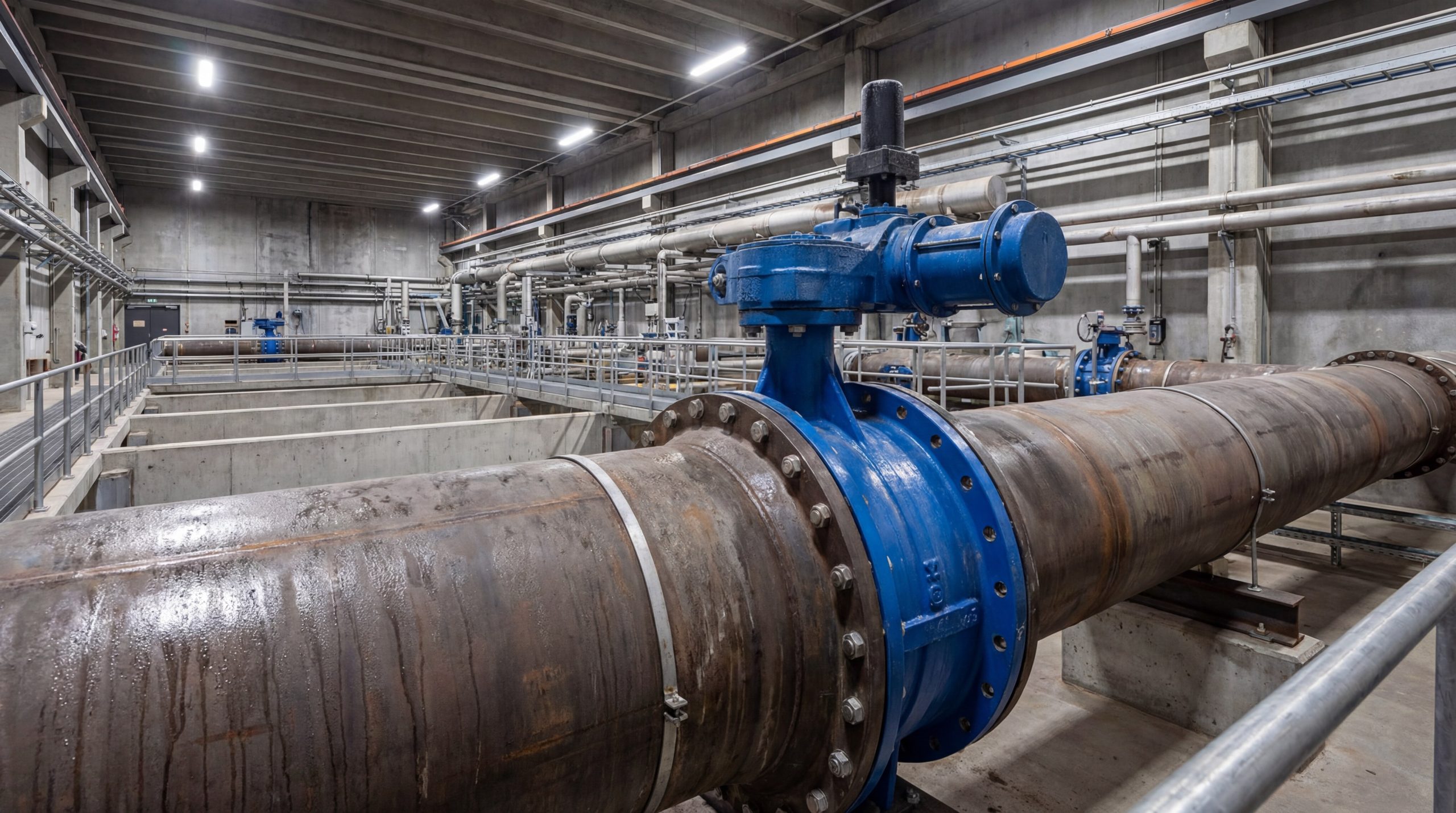
How does it compare in durability?
The durability of the double offset design is vastly superior, often lasting up to three times longer than a standard concentric valve. Because the shaft is dry and the seat is not stressed, internal corrosion and wear are minimized.
Simply put:
- Service Life: 20+ years for double eccentric vs 5-7 years for concentric.
- Shaft Integrity: Internal O-rings protect the stem from the media.
- Seat Health: No divots or “sets” are formed during open cycles.
Key Takeaway: Investing in the double offset design provides a much higher return on investment through reduced replacement costs and downtime.
| Metric | Concentric Design | Double Eccentric Design |
|---|---|---|
| Seat Rubbing | Continuous | Only at closure |
| Sealing Type | Interference | Compression |
| Lifecycle Cost | High (frequent repairs) | Low (extended life) |
Comparative data clearly indicates that the mechanical advantages of the double offset justify its use in critical systems.
When to use double eccentric butterfly valve design over triple?
You should use a double eccentric butterfly valve design when your application involves standard temperature ranges and you need a cost-effective, high-performance seal. While triple offset valves are better for extreme steam temperatures, a double eccentric butterfly valve design is the superior choice for water and general industrial fluids. It provides the same zero-leakage benefits at a much more manageable price point for the average project.
Is it more cost-effective for water?
Yes, for municipal and industrial water applications, the double offset provides the perfect balance between performance and budget. It offers the high-reliability sealing of more complex valves without the unnecessary expense of metal-to-metal high-temp seats.
The best part?
- Resilient Seats: EPDM or NBR seats provide better sealing on water than metal.
- Maintenance: They are easier to repair on-site than triple offset varieties.
- Lead Times: Often more readily available for standard industrial sizes.
Key Takeaway: Unless you are dealing with high-temperature steam or extreme chemicals, the double offset is the most strategic financial choice.
| Application Factor | Double Eccentric | Triple Offset |
|---|---|---|
| Max Temperature | Moderate (Resilient seat) | High (Metal seat) |
| Cost Efficiency | Very High | Moderate |
| Best Media | Water, Gas, Chemicals | Steam, Oil, Hot Gas |
This comparison helps decision-makers select the appropriate valve level without over-specifying for their current needs.
Can you maintain a double eccentric butterfly valve design?
Yes, you can easily maintain a double eccentric butterfly valve design thanks to its accessible internal components and straightforward seal replacement process. The double eccentric butterfly valve design is favored by about us engineering experts because it doesn’t require regular “exercising” to prevent seizing. This makes it an “install and forget” solution for many remote or inaccessible locations.
Are repairs simple for operators?
Repairs are remarkably simple because the seat can often be replaced without specialized factory tools or total valve disassembly. Most components are designed to be serviced in the field by standard maintenance teams.
Think about it:
- Bushings: Bronze or stainless bushings are used to prevent shaft seizing.
- Seal Access: Replacement kits are affordable and easy to install.
- No Rust: The dry shaft design means you won’t have to fight corrosion during repairs.
Key Takeaway: The low maintenance overhead of this design significantly reduces the total cost of ownership over several decades.
| Task | Frequency | Difficulty |
|---|---|---|
| Visual Check | Annual | Low |
| Seal Change | 15-25 Years | Moderate |
| Shaft Lubrication | Not required | N/A |
Maintenance records consistently show that these valves require the least amount of intervention in high-cycle environments.
What materials suit double eccentric butterfly valve design?
Ductile iron, stainless steel, and carbon steel are the most common materials used for a double eccentric butterfly valve design body. Choosing the right material for your double eccentric butterfly valve design depends entirely on the corrosivity of your media. For blog readers interested in longevity, matching the disc material to the fluid is the most critical step.
Which alloys handle corrosive media?
Stainless steel 316 and Duplex steels are the preferred alloys for discs when handling seawater or aggressive chemicals. These materials ensure that the thin sealing edge of the disc remains sharp and effective over millions of cycles.
Look at the facts:
- Body: Ductile iron is standard for water; Stainless for chemicals.
- Disc: SS316 is the “gold standard” for corrosion resistance.
- Seats: EPDM is best for water; PTFE/Viton for harsh chemicals.
Key Takeaway: Proper material selection is the foundation of valve reliability and prevents premature failure in harsh environments.
| Component | Material Option | Environment |
|---|---|---|
| Valve Body | WCB / Ductile Iron | General Industrial |
| Valve Disc | SS316 / Duplex | Marine / Corrosive |
| Valve Seat | EPDM / PTFE | Water / Chemical |
Technical material audits help ensure that the valve can withstand the specific chemical stresses of your process.
How to size a double eccentric butterfly valve design?
To size a double eccentric butterfly valve design, you must calculate the required flow coefficient (Cv) and the maximum differential pressure for the application. A properly sized double eccentric butterfly valve design prevents cavitation and ensures that your actuator has enough torque to break the seal. Incorrect sizing can lead to premature seat wear or the inability to close the valve during an emergency.
What torque factors must you consider?
You must consider the “breakout torque,” which is the force required to move the disc out of the compressed seat after it has been closed for a long period. This is a critical factor when selecting pneumatic or electric actuators for the system.
Here is why it matters:
- Safety Factor: Always apply a 20-30% safety margin to your torque calculations.
- Velocity: High fluid velocity can affect the dynamic torque on the disc.
- Pressure: Higher differential pressures require more robust stems and actuators.
Key Takeaway: Precise sizing ensures operational safety and prevents the unnecessary expense of over-powered actuation.
| Sizing Step | Required Data | Potential Risk |
|---|---|---|
| Flow Analysis | Velocity & GPM | Cavitation |
| Torque Calc | Differential Pressure | Actuator Stall |
| Size Matching | Pipe Diameter | Pressure Drop |
Accurate sizing documentation is essential for ensuring the valve performs as expected under peak load conditions.
What standards govern double eccentric butterfly valve design?
A double eccentric butterfly valve design is governed by international standards such as ASME B16.34, API 609, and ISO 9001. These regulations ensure that the double eccentric butterfly valve design meets specific wall thickness, pressure rating, and testing requirements. Adherence to these standards guarantees that the valve will perform safely in high-risk industrial environments.
Do these meet ASME and API benchmarks?
Yes, high-performance double offset valves are rigorously tested to meet API 609 Category B standards for high-pressure and critical service. They also comply with AWWA C504 standards for municipal water use, ensuring broad industry acceptance.
Look at the facts:
- API 609: Dictates the dimensions and pressure classes for industrial use.
- ASME B16.34: Governs the integrity of the valve body and materials.
- Testing: Every valve undergoes hydrostatic and leakage testing before shipment.
Key Takeaway: Compliance with global standards provides engineers with the peace of mind that the equipment is safe for public and industrial use.
| Standard | Coverage | Focus Area |
|---|---|---|
| API 609 | Industrial Specs | High-Performance Class |
| ASME B16.34 | Pressure/Temp | Material Integrity |
| AWWA C504 | Waterworks | Municipal Reliability |
Standardization ensures interchangeability and verified safety metrics across global industrial projects.
FAQ: High-Performance Valve Selection
Can I use a double eccentric valve for throttling?
Yes. These valves provide excellent throttling characteristics, especially when operating between 20 and 70 degrees of opening.
What’s the best seat material for wastewater?
EPDM is typically the best choice. It offers the resilience needed for water applications while resisting common wastewater chemicals.
Can I install this valve in any orientation?
Ideally, yes. However, for media with high solids, a horizontal shaft installation is recommended to prevent sediment from settling in the seal area.
How do I know if my valve is double offset?
Look at the shaft. If the stem is visibly positioned behind the center of the disc and slightly off the pipe centerline, it is a double offset design.
Do I need an exercise program for these valves?
No. Because of the dry shaft and cam-action design, these valves do not suffer from the rust and seizing that require regular exercising.
Conclusion
Choosing a high-performance valve shouldn’t be a gamble. By implementing a double eccentric butterfly valve design, you resolve the most frustrating issues in fluid management: persistent leaks, seized components, and excessive maintenance costs. This advanced architecture protects your infrastructure and ensures that your systems operate at peak efficiency for decades. We are committed to providing precision-engineered flow solutions that empower industrial leaders to build more reliable and sustainable operations. To find the perfect fit for your next project, contact us today and let our engineering team guide you toward a leak-free future.