
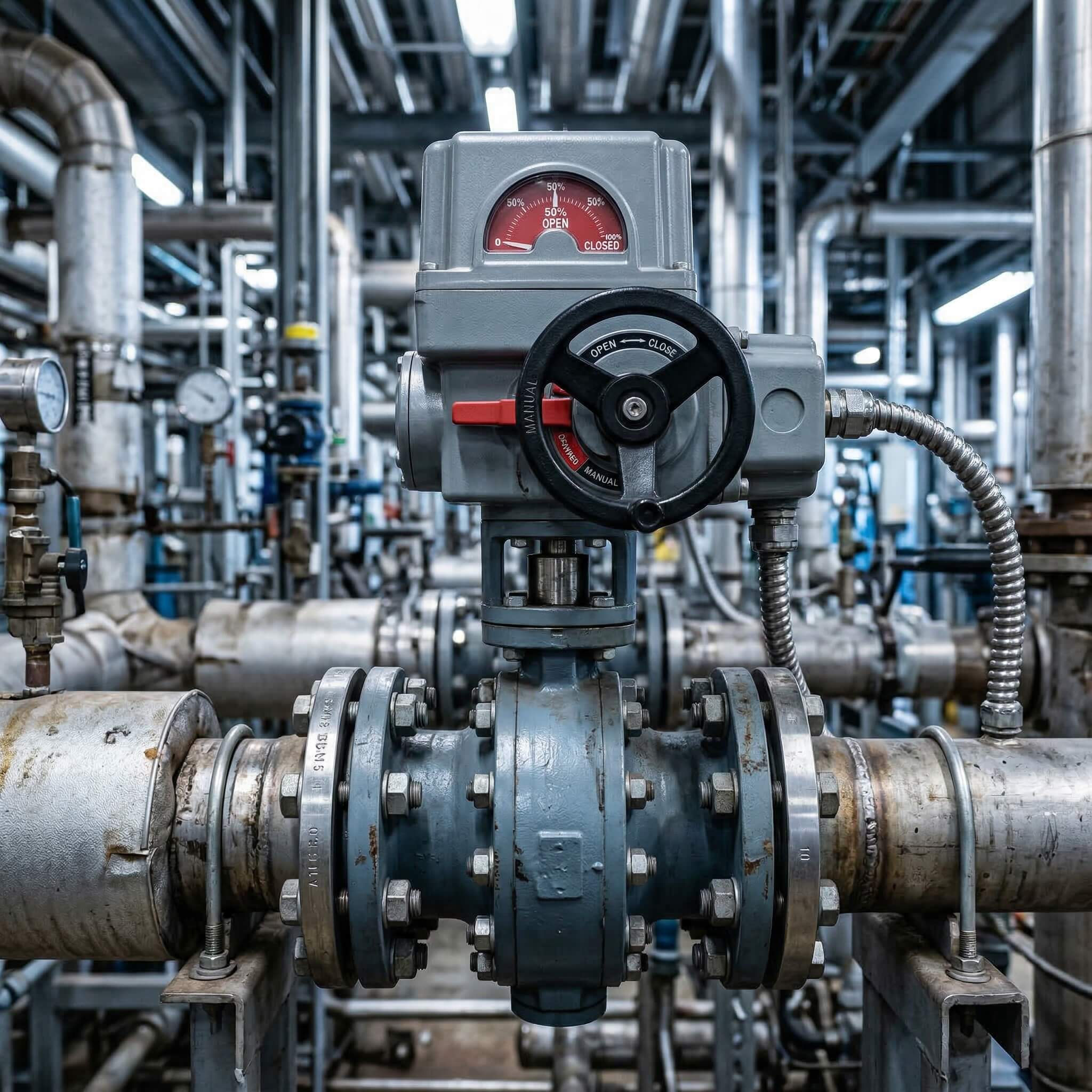
An electric butterfly valve works by using an integrated motorized actuator to rotate a metallic disc 90 degrees within a pipeline to either block or allow fluid flow. Imagine you are overseeing a high-capacity chemical processing plant where dozens of valves must be adjusted simultaneously to maintain system equilibrium. Manually turning every hand-lever is physically exhausting, time-consuming, and prone to human error that could lead to costly pressure surges or leaks. By integrating an electrically operated butterfly valve, you solve these efficiency gaps with a solution that offers precise, remote-controlled automation directly from your centralized workstation.
What is an electrically operated butterfly valve?
It is a specialized industrial valve assembly that combines a quarter-turn butterfly valve with an electric motor-driven actuator for automated flow control. This electrically operated butterfly valve eliminates the need for manual intervention by using electrical power to drive the internal mechanism. It is designed to handle isolation and throttling tasks across various industrial sectors.
The Mechanical Core
Think about it: the core of the system relies on a few critical structural elements working in perfect harmony. These components ensure that the valve can withstand high pressures while maintaining a tight seal.
- Valve Body: The outer shell that houses the internal parts.
- Circular Disc: The “butterfly” that rotates to regulate flow.
- Stem: The shaft connecting the actuator to the disc.
- Resilient Seat: The sealing surface that prevents leakage.
The Role of Actuation
Here is the deal: the actuator is the brain of the assembly, providing the necessary torque to move the disc under heavy load. This motorized unit replaces the traditional handwheel or lever with a reliable electrical drive system.
- Motorized Drive: High-torque motors move the stem.
- Control Interface: Receives signals from PLC or SCADA systems.
- Position Feedback: Sensors confirm if the valve is open or shut.
Key Takeaway: The combination of a lightweight valve body and a powerful motorized actuator creates a compact, efficient tool for modern industrial automation.
| Component | Function | Material Example |
|---|---|---|
| Actuator | Provides rotational force | Aluminum or Plastic |
| Disc | Obstruction of fluid flow | Stainless Steel 316 |
| Seat | Creates a bubble-tight seal | EPDM or PTFE |
Selecting the correct seat material is the first step in ensuring your automated system achieves zero-leakage performance.
How does an electrically operated butterfly valve work?
This device functions by converting electrical energy into mechanical torque through a gearbox to turn the valve stem and disc precisely 90 degrees. When you energize the electrically operated butterfly valve, the motor initiates a rotation that moves the disc from a position parallel to the flow (open) to a position perpendicular to the flow (closed).
The Power Conversion Process
The best part? The internal gearbox acts as a force multiplier, allowing a relatively small motor to move a large disc against significant fluid pressure. This gear reduction is vital for maintaining the slow, controlled movement required to prevent water hammer.
- Signal Input: A 24V or 220V signal triggers the motor.
- Gear Reduction: Speed is traded for high torque.
- Stem Rotation: The shaft turns the disc exactly 90 degrees.
Key Takeaway: Precise gear synchronization ensures that the valve disc reaches its seated position with enough force to ensure a complete seal every time.
| Phase | Action | Result |
|---|---|---|
| Initialization | Motor receives 4-20mA or switch signal | System starts movement |
| Rotation | Stem turns the disc through the flow path | Flow is gradually restricted |
| Completion | Limit switch cuts power at 90 degrees | Valve is fully locked/sealed |
Understanding the relationship between motor duty cycles and gear ratios prevents premature mechanical failure in high-frequency applications.
Why use an electrically operated butterfly valve?
These valves provide superior remote control capabilities, consistent torque delivery, and significant labor savings compared to manual or pneumatic alternatives. An electrically operated butterfly valve is particularly useful in locations where air lines for pneumatic systems are difficult to install or maintain.
Remote Operation Advantages
Think about it: the ability to manage fluid dynamics across several miles of piping from a single screen changes everything for plant managers. You no longer need to dispatch technicians to dangerous or remote areas for simple flow adjustments.
- Centralized Control: Integration with SCADA systems.
- Real-Time Data: Instant feedback on valve position.
- Safety: Remote shut-off capability in emergencies.
Precision and Efficiency
Here is the deal: motorized actuators offer a level of throttling accuracy that is nearly impossible to achieve with manual hand-levers. This precision helps in maintaining exact flow rates for sensitive chemical processes or HVAC loops.
- Modulating Control: Precise disc positioning at intermediate angles.
- Consistency: Every cycle follows the exact same parameters.
- Energy Savings: Only consumes power during the movement cycle.
Key Takeaway: Electric automation reduces human error and optimizes fluid throughput, leading to a much faster return on investment for large facilities.
| Benefit | Operational Impact | Long-term Value |
|---|---|---|
| Remote Access | Reduced technician transit time | Lower operational costs |
| High Precision | Stabilized system pressure | Reduced equipment wear |
| Feedback | Early detection of blockages | Minimized downtime |
Comparing the lifecycle costs of manual versus automated systems reveals that electric units significantly lower total cost of ownership.
Where is an electrically operated butterfly valve used?
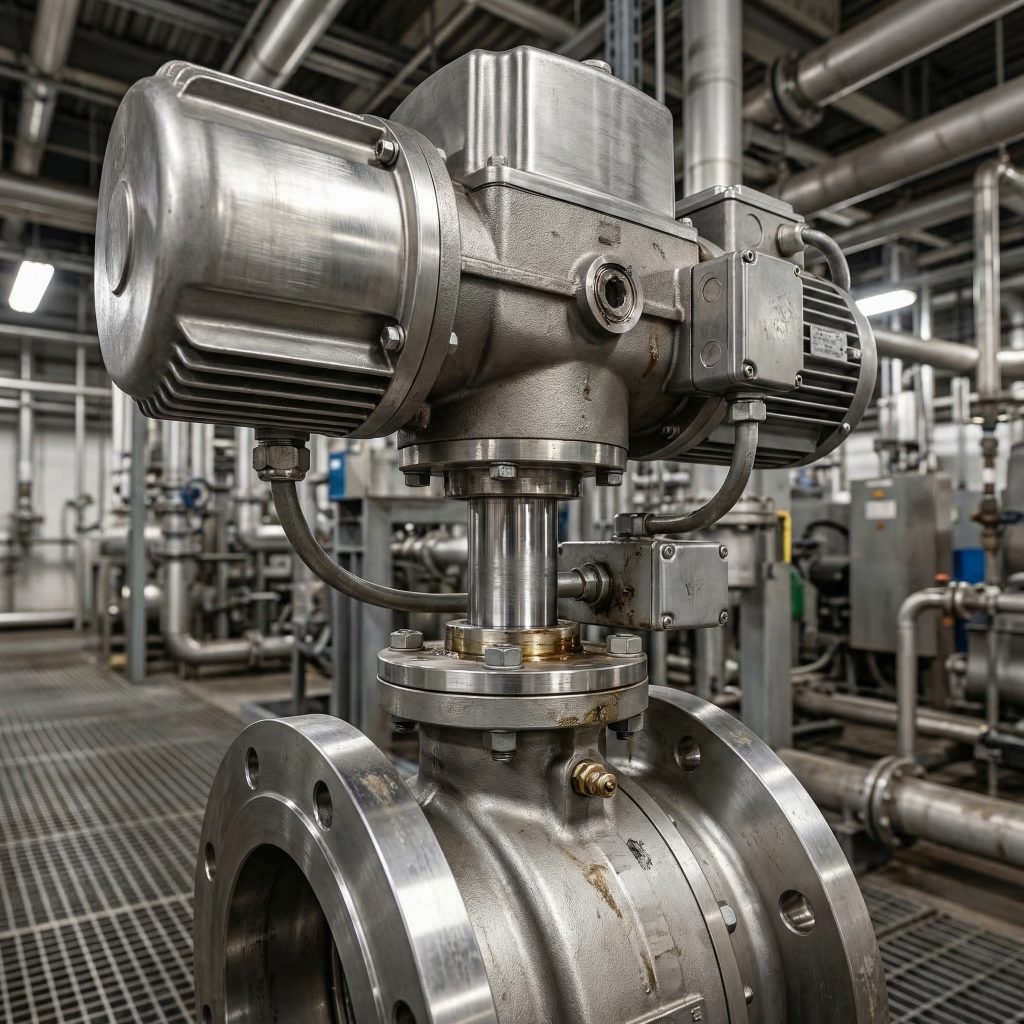
You will find these valves in municipal water treatment, commercial HVAC systems, and chemical processing plants that require automated fluid management. The electrically operated butterfly valve is a staple in infrastructure projects where reliability and remote monitoring are the highest priorities.
Water and Wastewater Systems
The best part? Their compact design allows for installation in tight pump rooms where space is at a premium. They are essential for controlling the massive volume of water moving through filtration and distribution networks.
- Reservoir Levels: Automatic filling and draining control.
- Filtration: Managing backwash cycles without labor.
- Distribution: Throttling flow to maintain city pressure.
Commercial HVAC Applications
Here is the deal: modern smart buildings rely on automated valves to manage chilled water loops and boiler systems for optimal climate control. These valves ensure that every floor receives the correct amount of cooling based on real-time sensor data.
- Cooling Towers: Diverting flow based on temperature.
- Chiller Plants: Managing the flow of refrigerated water.
- Boilers: Precise control of high-temperature fluid loops.
Key Takeaway: From urban water supplies to massive data center cooling, these valves act as the automated gatekeepers of modern utility systems.
| Industry | Specific Application | Media Handled |
|---|---|---|
| Water Treatment | Pump station isolation | Potable or Waste water |
| Power Generation | Condenser cooling loops | River or Sea water |
| Chemicals | Batch processing control | Corrosive or Neutral fluids |
Identifying the specific chemical compatibility of your media ensures the valve seat maintains its integrity over thousands of cycles.
Which parts are in an electrically operated butterfly valve?
The assembly consists of the electric actuator, the valve body, the disc, the stem, and the seat materials designed for specific media. Every electrically operated butterfly valve relies on the seamless integration of these five core elements to function under high-pressure conditions.
The Actuator Housing
Think about it: the actuator must protect the sensitive motor and electronics from harsh industrial environments, moisture, and dust. This is why high-quality housings are often rated to NEMA or IP standards for maximum durability.
- Motor: The primary source of rotational movement.
- Capacitor: Assists in starting the motor under load.
- Terminals: Connection points for power and signal wires.
- Handwheel: Manual override for use during power outages.
The Internal Flow Path
Here is the deal: the disc and seat are the only parts that come into direct contact with the flowing media. Their material composition must be carefully selected to prevent corrosion or erosion over time.
- 316 Stainless Disc: Resists rust and chemical degradation.
- PTFE/EPDM Seat: Provides the necessary elasticity for a seal.
- O-Rings: Prevent fluid from leaking up through the stem.
Key Takeaway: A well-built valve uses high-grade materials for contact parts to ensure the motorized actuator doesn’t have to work against friction or corrosion.
| Part | Role | Common Material |
|---|---|---|
| Actuator Case | Environmental protection | Die-cast Aluminum |
| Valve Stem | Torque transmission | 410 Stainless Steel |
| Bushing | Reduces rotational friction | Bronze or PTFE |
Regularly inspecting the integrity of the actuator’s environmental seal prevents moisture from damaging the internal electrical circuitry.
How to select an electrically operated butterfly valve?
Selecting the right unit involves matching the actuator’s output torque to the valve’s operating torque while ensuring media compatibility. When browsing for an electrically operated butterfly valve, you must calculate the “breakaway torque” required to open the valve after it has been closed for a long period.
Assessing Torque Requirements
The best part? Using a safety factor of 20% to 30% above the rated torque ensures that your actuator will never stall, even if the line pressure increases. This overhead is critical for dealing with unexpected debris or seat swelling.
- Line Pressure: Higher pressure increases friction on the seat.
- Media Type: Slurries require more torque than clean water.
- Frequency: High-cycle apps need heavy-duty motors.
Evaluating Control Signals
Here is the deal: you must decide between a simple on/off switch or a modulating system that can stop at any percentage. Your choice depends entirely on whether you need simple isolation or complex flow regulation.
- Switch Type: Fully open or fully closed only.
- Modulating Type: Uses 4-20mA signals for precision control.
- Intelligence: Smart actuators with self-diagnostic features.
Key Takeaway: Proper sizing prevents the motor from overheating and ensures the valve can always shut off the flow during an emergency.
| Selection Factor | Requirement | Recommended Action |
|---|---|---|
| Valve Size | DN50 to DN3000 | Match actuator to stem diameter |
| Voltage | 24VDC, 110VAC, 220VAC | Check site power availability |
| Signal | Digital or Analog | Align with PLC capabilities |
Matching the actuator’s duty cycle to your process frequency is the most effective way to avoid unexpected motor burnouts.
How to wire an electrically operated butterfly valve?
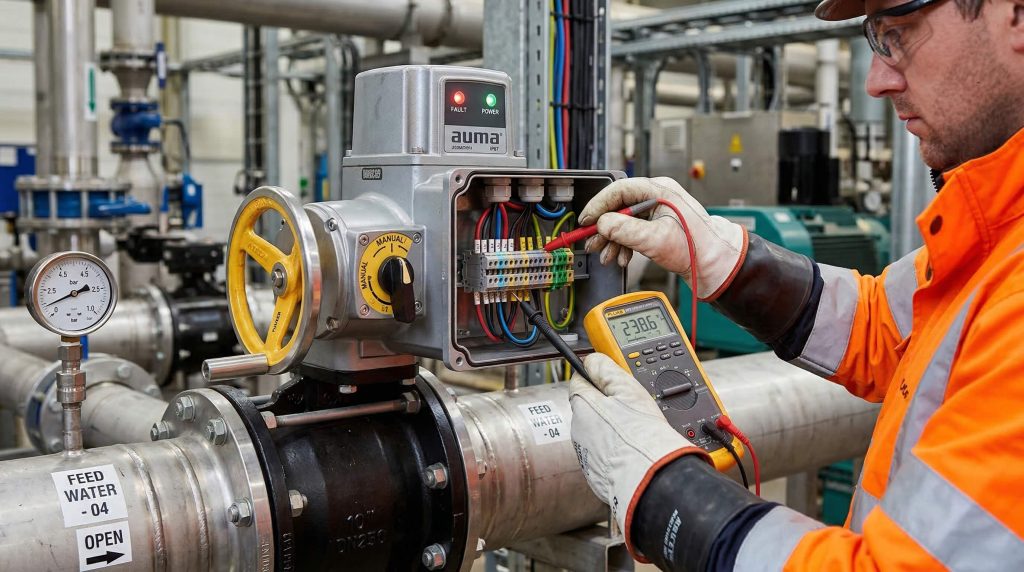
Wiring involves connecting the power supply to the actuator terminals and linking the feedback switches to your control system for monitoring. To set up an electrically operated butterfly valve, you must follow the provided wiring diagram to avoid shorting the motor or damaging the internal limit switches.
Power and Signal Connection
Think about it: a single wiring mistake could not only ruin the actuator but also cause a fault in your entire PLC network. You must ensure that the voltage provided matches the actuator’s nameplate exactly.
- Power Lines: Typically L1, L2, and a Ground wire.
- Control Lines: Open/Close command signals.
- Feedback Lines: Confirm the valve’s physical position.
Setting the Limit Switches
Here is the deal: limit switches are the mechanical safeguards that tell the motor exactly when to stop at the 0-degree and 90-degree points. If these are not calibrated, the motor may continue to turn, damaging the valve seat or the gearbox.
- Open Limit: Stops the motor at the fully open point.
- Close Limit: Ensures a tight seal without over-torquing.
- Auxiliary Switches: Used for remote light indicators.
Key Takeaway: Correct wiring and switch calibration are the two most important steps for ensuring a long, maintenance-free operational life.
| Step | Priority | Task |
|---|---|---|
| Grounding | Critical | Connect the grounding lug to prevent shock |
| Phase Check | High | Ensure motor rotates in the correct direction |
| Calibration | High | Test limits before introducing fluid flow |
Verifying that all terminal screws are tightened to the correct torque prevents vibration-induced electrical failures in industrial environments.
How to fix an electrically operated butterfly valve?
Fixing these units requires a systematic check of the electrical supply, the actuator’s internal gears, and the condition of the valve seat. If your electrically operated butterfly valve fails to move, your first step should always be checking the manual override to see if the problem is mechanical or electrical.
Electrical Troubleshooting
The best part? Many modern actuators include LED status lights that can tell you exactly what is wrong without even opening the housing. You should check for blown fuses or tripped circuit breakers in your main control panel first.
- Voltage Check: Use a multimeter to verify power at the terminals.
- Capacitor Test: Look for bulging or leaking on the start capacitor.
- Switch Continuity: Ensure the limit switches are actually clicking.
Mechanical Maintenance
Here is the deal: if the motor is running but the stem isn’t turning, you likely have a stripped gear or a broken coupling. Periodic lubrication of the gearbox can prevent this type of mechanical wear.
- Gear Inspection: Check for metal shavings or broken teeth.
- Seat Cleaning: Remove debris that might be jamming the disc.
- Seal Replacement: Swap out O-rings if you see stem leakage.
Key Takeaway: Most “failures” are actually simple calibration issues or blown fuses rather than total motor burnouts.
| Symptom | Potential Cause | Solution |
|---|---|---|
| No Movement | Blown fuse or no power | Replace fuse; Check wiring |
| Motor Grinding | Stripped gears | Replace actuator gearbox |
| Slow Leakage | Worn valve seat | Replace EPDM/PTFE seat |
Monitoring the current draw of your actuators can help you identify a sticking valve before it leads to a complete motor failure.
Are there types of electrically operated butterfly valve?
There are several variations including on/off types, modulating types for regulation, and high-performance triple offset designs for extreme conditions. The electrically operated butterfly valve you choose must align with the temperature and pressure requirements of your specific piping system.
On/Off vs. Modulating
Think about it: if you only need to fill a tank and stop the flow once it’s full, an on/off valve is the most cost-effective choice. However, if you need to maintain a precise temperature by mixing fluids, you must use a modulating actuator.
- On/Off: Simple isolation; digital signal control.
- Modulating: Continuous regulation; 4-20mA signal.
- Fail-Safe: Actuators with battery backups or springs for emergency closure.
High-Performance Offsets
Here is the deal: for high-pressure steam or abrasive slurries, a standard concentric valve won’t last. In these cases, you need a double or triple offset design that reduces seat friction during the opening and closing cycle.
- Concentric: Standard for water and low pressure.
- Double Offset: Better for high-pressure HVAC systems.
- Triple Offset: Metal-to-metal seats for high-heat steam.
Key Takeaway: Choosing the right “offset” type is the difference between a valve that lasts ten years and one that fails in six months.
| Type | Best For | Seat Material |
|---|---|---|
| Concentric | Water treatment, HVAC | EPDM / NBR |
| Double Offset | High-pressure chemicals | PTFE / RPTFE |
| Triple Offset | Steam, Power plants | Metal-to-Metal |
Utilizing a triple-offset design in high-temperature steam applications virtually eliminates the friction-related wear common in standard valves.
Why buy an electrically operated butterfly valve?
Purchasing these valves is an investment in long-term operational efficiency, reduced labor costs, and enhanced system safety through automation. By choosing an electrically operated butterfly valve, you are future-proofing your facility and ensuring that your fluid management stays precise and reliable.
Economic and Safety ROI
The best part? While the initial cost is higher than a manual valve, the savings in technician hours and prevented downtime pay for the upgrade in a very short period. You also gain the ability to shut down systems instantly during a leak, protecting both your staff and the environment.
- Labor Savings: Fewer manual checks and adjustments.
- Efficiency: Optimized flow improves process yields.
- Durability: Motorized control prevents violent “slamming” of the valve.
Smart Factory Integration
Here is the deal: as industries move toward “Industry 4.0,” having valves that can talk to your network is no longer a luxury—it is a requirement. These valves provide the data needed for predictive maintenance and energy optimization.
- IoT Ready: Can be equipped with network-ready controllers.
- Diagnostic Data: Predict failures before they happen.
- Scalability: Easily add more valves to an existing automated loop.
Key Takeaway: Automated valves are the building blocks of a modern, efficient, and safe industrial infrastructure.
| Investment Factor | Short-term Cost | Long-term Gain |
|---|---|---|
| Purchase Price | Moderate to High | High durability/Low replacement |
| Installation | Requires wiring | Remote operation/No manual labor |
| Maintenance | Gearbox checks | Data-driven predictive care |
Analyzing the total cost of ownership over five years usually shows that electric automation is the most affordable path for large-scale piping.
Frequently Asked Questions
Can I manually override an electrically operated butterfly valve?
Yes, almost all professional-grade electric actuators include a declutchable handwheel or a manual override screw. This allows you to open or close the valve during power failures or during the initial installation and testing phase.
What’s the best way to prevent actuator condensation?
Install units that come equipped with internal space heaters. These small heating elements prevent moisture from forming inside the electrical housing, which is essential for valves installed in humid environments or outdoor locations.
How do I know if an electrically operated butterfly valve is failing?
Listen for unusual grinding noises from the gearbox or check if the motor is drawing significantly more current than usual. You can also monitor for slow response times or the inability of the valve to reach its fully seated position.
What’s the best voltage for an electrically operated butterfly valve?
The “best” voltage depends on your site’s existing infrastructure, but 24VDC is common for safe, low-voltage control, while 220VAC is preferred for large valves requiring high torque. Always match the actuator to your facility’s available power supply.
Can I use an electrically operated butterfly valve for steam?
Yes, but you must select a high-performance triple-offset valve with a metal seat and an actuator rated for high-temperature service. Standard rubber-seated valves will melt quickly under the intense heat of steam applications.
Conclusion
Integrating the right automation into your piping system solves the most common industrial headaches: manual labor exhaustion, imprecise flow control, and the risk of human error during critical operations. By moving to an electric solution, you can manage your entire facility with a level of precision that manual levers simply cannot match. Whether you are upgrading a water treatment plant or optimizing a commercial HVAC loop, the transition to motorized flow control ensures your infrastructure is safer, more efficient, and easier to monitor.
We are dedicated to providing the high-torque, precision-engineered solutions that keep modern industries moving forward with total reliability. If you are ready to modernize your flow control systems and eliminate manual inefficiencies, contact us today to find the perfect automated solution for your facility.