
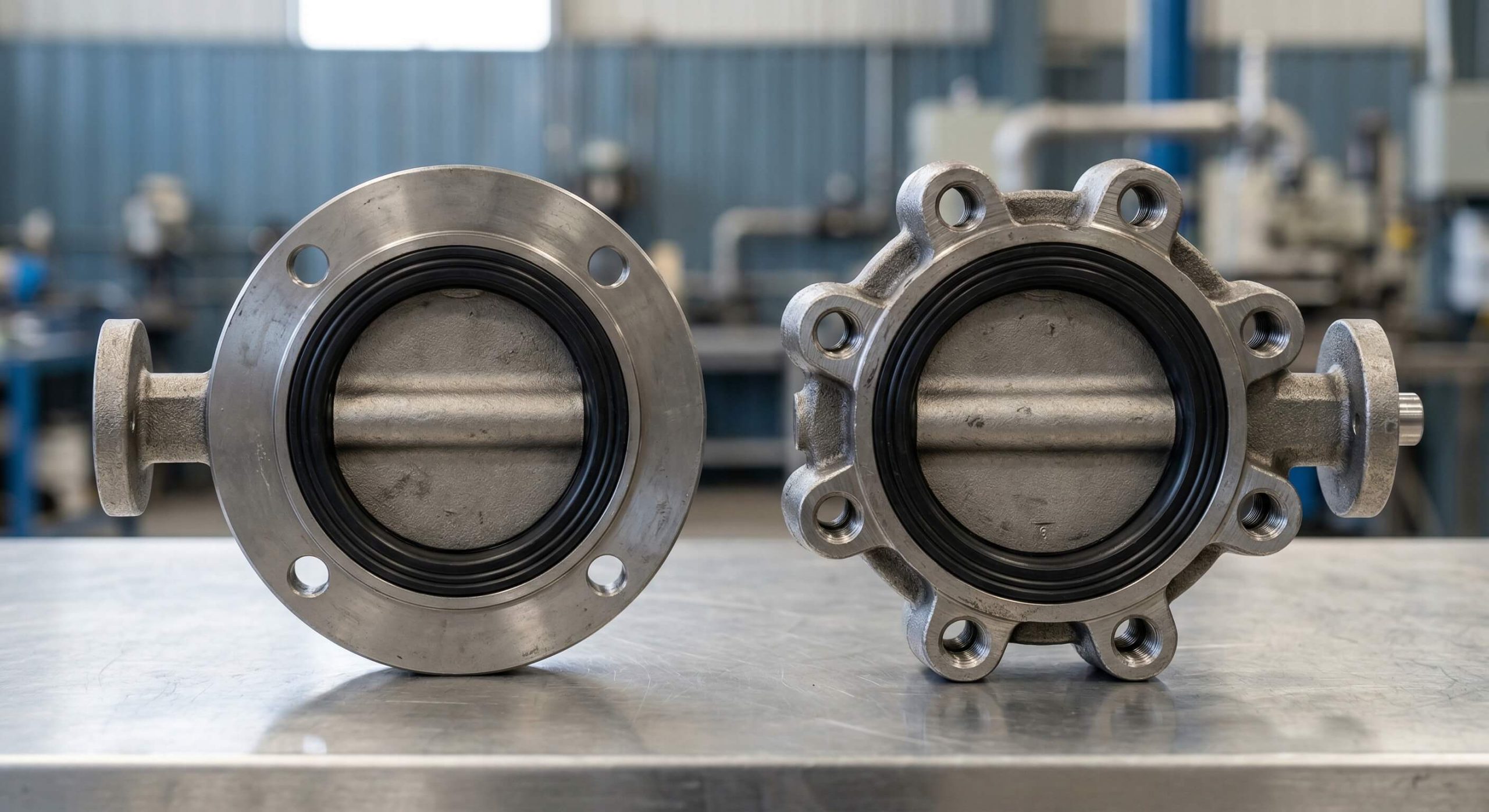
Both designs control fluid flow, but lug valves bolt securely using threaded inserts while wafer styles clamp tightly between flanges. Plant managers frequently face a frustrating scenario where an incorrect part selection causes massive leaks during maintenance. Seeing your entire pipeline shut down from one mistake wastes precious time. We offer a reliable way out of this costly trap through careful component selection. Understanding one difference between wafer and lug type butterfly valve solves many industrial fluid challenges permanently.
What is difference between wafer and lug type butterfly valve?
Their primary contrast involves mounting hole variations. Spotting any difference between wafer and lug type butterfly valve takes just seconds. Lug variants have protruding threaded rings built right into their metal bodies. Wafer designs feature unthreaded alignment holes meant purely for positioning.
What defines wafer styles?
Wafer models offer lightweight control solutions for compact spaces. These units squeeze tightly when squeezed by adjacent pipe flanges. Here’s the deal: they cannot function at dead ends.
- They rely completely on surrounding pipes for structural support.
- Operators must drain entire sections before removing them.
- Maintenance requires shutting down fluid transit entirely.
What makes lug styles unique?
Lug units act independently from downstream piping connections. Threaded metal ears hold bolts securely against one flange side. But here’s the kicker… you can safely detach downstream pipes during active operations.
- Bolts attach directly into built-in metal threads.
- Workers perform downstream repairs without full system drains.
- They withstand higher pressure ratings due to rugged builds.
Key Takeaway: Understanding these mounting contrasts saves your facility from catastrophic blowout events during routine maintenance tasks.
| Feature | Wafer Style | Lug Style |
|---|---|---|
| Mounting | Clamped | Bolted |
| End of Line | No | Yes |
| Weight | Lighter | Heavier |
Design variations directly impact how your maintenance crew approaches future pipe repairs.
Why note difference between wafer and lug type butterfly valve?
Failing at component selection causes massive operational headaches immediately. Every specific difference between wafer and lug type butterfly valve impacts safety protocols. Picking wrong parts creates severe leak hazards during system checks. Your workers depend on accurate valve choices daily.
Does application impact choice?
Matching valve designs against fluid types prevents unexpected breakdowns. Corrosive fluids demand highly durable materials that resist internal wear. You might be wondering: what happens if pressure spikes occur suddenly?
- High-pressure environments need robust bolted connections.
- Low-pressure systems often run perfectly using lighter clamp setups.
- Chemical lines require specific seal materials like EPDM rubber.
Securing long-term success?
Planning ahead reduces replacement costs over your entire project lifespan. Upfront hardware expenses pale against potential downtime losses. What’s the real story? Cheap parts cost more when they break down prematurely.
- Heavy-duty units survive aggressive industrial usage better.
- Lighter components save money during initial installations.
- Smart purchasing balances immediate budget against future durability.
Key Takeaway: Matching equipment against precise working conditions prevents sudden industrial disasters while protecting company profit margins.
| Factor | Low Pressure | High Pressure |
|---|---|---|
| Recommended Type | Wafer | Lug |
| Maintenance Need | Full Shutdown | Partial Shutdown |
| Cost Priority | Initial Savings | Long-Term Reliability |
Choosing correctly early on prevents expensive emergency pipe repairs down your operational road.
Any cost difference between wafer and lug type butterfly valve?
Pricing variations reflect exact raw material amounts used during manufacturing. Analyzing one difference between wafer and lug type butterfly valve reveals distinct financial impacts. Heavy metal castings naturally drive up purchase prices significantly. Lighter models keep your initial project budgets lower.
Are initial costs different?
Wafer models generally carry lower price tags upfront. They require far less metal during their casting processes. Ready for the good part? These lighter units save considerable shipping fees too.
- Fewer raw materials mean cheaper production cycles.
- Smaller footprints reduce logistics expenses completely.
- Faster installation times cut down initial labor bills.
What about long-term expenses?
Initial savings disappear if parts fail under heavy stress. Robust threaded units withstand harsh environments without needing frequent replacements. This is where it gets interesting… durability often outweighs initial purchase savings.
- Fewer replacements mean lower maintenance budgets later.
- End-of-line capabilities prevent full plant shutdowns.
- Stronger seals reduce expensive chemical leak risks.
Key Takeaway: Evaluate both upfront unit prices against future operational downtime risks before finalizing major purchasing decisions.
| Cost Aspect | Wafer | Lug |
|---|---|---|
| Purchase Price | Lower | Higher |
| Installation Time | Faster | Slower |
| Long-Term Value | Moderate | Excellent |
Budget evaluations must include potential future replacement labor alongside simple upfront hardware costs.
Big weight difference between wafer and lug type butterfly valve?
Weight discrepancies stem directly from outer body construction methods. A major difference between wafer and lug type butterfly valve involves total mass. Solid threaded ears add substantial bulk onto lug frames. Clamp-style units strip away all excess exterior metal completely.
How does weight affect handling?
Heavier components demand more physical effort during pipe installations. Crane usage becomes necessary for larger industrial sizes. Truth be told: lifting heavy gear increases workplace injury risks.
- Light units allow quick manual placement by single workers.
- Heavy items require mechanical hoists during assembly.
- Extra mass puts additional stress onto existing pipe networks.
Can weight influence shipping?
Transportation fees climb higher as cargo bulk increases. Moving heavy industrial supplies across long distances eats into profits. Let’s face it: lighter freight always yields better shipping rates.
- Slim profiles allow packing more units per crate.
- Lower gross weight drops international cargo charges drastically.
- Easier handling speeds up warehouse loading times.
Key Takeaway: Factoring physical mass into your project scope helps predict both installation difficulty and total shipping fees accurately.
| Characteristic | Wafer Body | Lug Body |
|---|---|---|
| Total Mass | Minimal | Substantial |
| Handling Needs | Manual often | Mechanical mostly |
| Freight Costs | Cheaper | Expensive |
Physical dimensions dictate logistical planning required before new parts even arrive onsite.
How spot difference between wafer and lug type butterfly valve?
Visual inspection reveals distinct outer flange designs immediately. You can identify any difference between wafer and lug type butterfly valve visually within moments. Look specifically around exterior perimeters for threaded metal bumps. Smooth outer edges indicate a clamp-style mechanism instead.
What exterior details matter?
Threaded inserts stand out as prominent bumps along outer edges. These metal protrusions look like thick ears sticking outward. Here’s a pro tip: count those protruding ears quickly.
- Multiple threaded holes mean you have found a lug design.
- Four smooth alignment holes suggest standard wafer configurations.
- No protruding ears confirms a lightweight clamping model.
Do sizing marks help?
Manufacturers stamp pressure ratings directly onto metal bodies. Reading these casting marks provides immediate specification details. Believe it or not: these simple stamps prevent deadly installation mistakes.
- Body stamps reveal exact maximum operating pressures clearly.
- Material codes show what metals comprise inner mechanisms.
- Size indicators prevent matching wrong parts against pipe flanges.
Key Takeaway: Quick visual checks catch wrong parts before workers bolt them into dangerous pressurized fluid lines.
| Visual Cue | Wafer Unit | Lug Unit |
|---|---|---|
| Outer Edge | Smooth | Protruding Ears |
| Hole Type | Unthreaded | Threaded |
| Bulkiness | Slim | Chunky |
Quick outer shape inspections save hours of wasted labor caused by incorrect component selection.
Any design difference between wafer and lug type butterfly valve?
Structural engineering dictates specific performance limits under stress. Every design difference between wafer and lug type butterfly valve serves distinct industrial purposes. Bolted ear structures grip flanges tightly from both opposing sides. Slimmer profiles merely rest between two clamped pipe ends.
How do sealing mechanisms work?
Both styles utilize internal rubber seats for tight shutoffs. Discs rotate ninety degrees against these seats blocking fluid passage. Want to know a secret? Both share identical internal disc operations despite outer differences.
- Central discs pivot smoothly on internal metal shafts.
- Soft rubber seats compress tightly against metal disc edges.
- O-rings prevent liquids from escaping through top stems.
Does flange matching matter?
Flange compatibility determines whether parts fit together properly. Different global regions follow distinct pipe sizing standards. Don’t forget: mismatched bolt circles cause immediate leak issues.
- European standards use metric measurements entirely.
- American systems rely on standard imperial dimensions.
- Universal designs attempt matching multiple global hole patterns.
Key Takeaway: Internal operations remain largely identical despite radically different exterior structural engineering choices.
| Design Element | Wafer Structure | Lug Structure |
|---|---|---|
| Internal Disc | Identical | Identical |
| Flange Grip | Weak | Strong |
| Stress Tolerance | Low | High |
Understanding structural engineering limitations guarantees safe fluid transit through complex industrial environments.
What piping difference between wafer and lug type butterfly valve?
Piping layouts determine which structural model works best safely. Analyzing this difference between wafer and lug type butterfly valve prevents catastrophic system failures. Dead-end pipes require bolted anchors for absolute security. Continuous pipelines accept lighter clamped components without any problem.
Where do wafer types fail?
Clamp models cannot hold back fluids at pipe ends alone. They lack independent structural grip without downstream flanges attached. Make no mistake: removing downstream pipes causes immediate blowout events.
- Lack of threaded anchors makes end-of-line usage dangerous.
- Pressure pushes these units right out from unbolted pipes.
- They need constant compression from both surrounding sides.
Why do lug types excel?
Threaded ears provide independent grip on single flange faces. Workers can bolt them securely onto open pipe ends safely. Think about this: one secure side holds back massive fluid pressure.
- Bolts secure tightly into threaded metal holes directly.
- They act as reliable caps closing off open lines.
- Independent mounting allows partial system disassemblies easily.
Key Takeaway: Piping architecture dictates your final choice because structural mounting methods define safe operational boundaries.
| Layout Type | Wafer Fit | Lug Fit |
|---|---|---|
| Continuous Line | Excellent | Excellent |
| Dead End Line | Unsafe | Perfect |
| Pump Discharge | Poor | Good |
System layouts demand careful hardware matching against specific structural mounting capabilities.
Any repair difference between wafer and lug type butterfly valve?
Maintenance protocols shift dramatically depending on selected hardware types. One major repair difference between wafer and lug type butterfly valve involves system draining. Clamped units force crews into draining entire operational lines. Bolted versions allow isolated repairs without massive fluid losses.
How does draining affect downtime?
Emptying massive industrial pipes takes hours of valuable time. Production stops completely while fluids drain into holding tanks. Here is a fact: long downtime destroys daily production quotas.
- Full drains waste thousands of gallons of process fluids.
- Refilling lines takes equally long once repairs conclude.
- Air bleeding adds another tedious step after refilling.
Can we isolate sections?
Threaded units let workers isolate specific pipeline segments easily. Closing one sturdy valve lets downstream pipes drain safely. You’ll love this: upstream processes continue running perfectly normal.
- Bolted anchors keep upstream pressure contained securely.
- Downstream pipes come off without causing upstream leaks.
- Targeted isolation speeds up routine maintenance tasks significantly.
Key Takeaway: Smart hardware choices drastically reduce facility downtime during unavoidable routine maintenance procedures.
| Repair Action | Wafer Procedure | Lug Procedure |
|---|---|---|
| Fluid Drain | Full System | Partial Isolated |
| Production Halt | Total | Minimal |
| Labor Time | Extensive | Brief |
Choosing robust hardware upfront simplifies difficult maintenance tasks for your mechanical teams later.
Clear visual difference between wafer and lug type butterfly valve?
Spotting hardware variations requires minimal mechanical training or experience. A clear difference between wafer and lug type butterfly valve shows up immediately upon inspection. Look closely at how bolt holes pass through exterior metal. Smooth pathways indicate a clamp model while threaded paths reveal bolted styles.
Do bolt lengths matter?
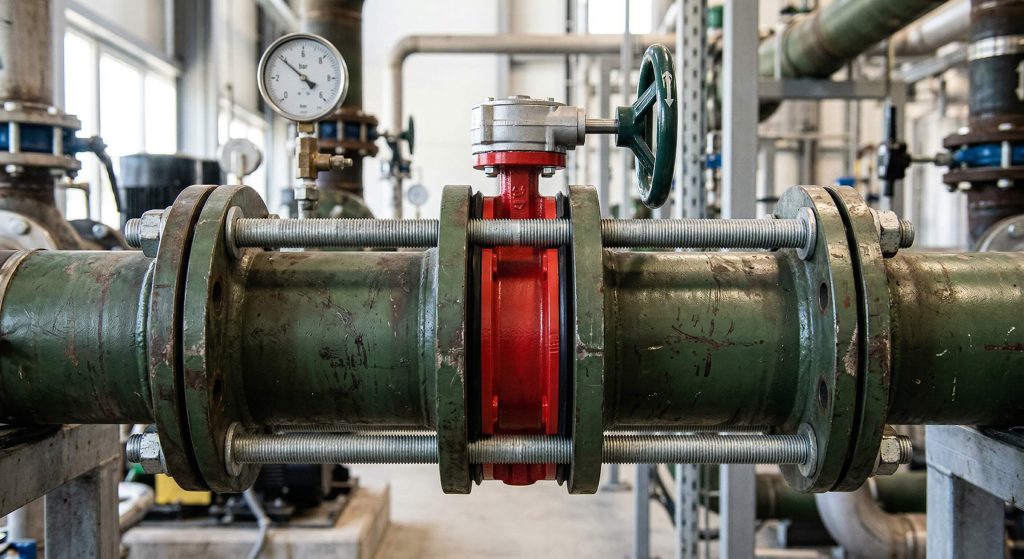
Clamp models require exceptionally long bolts stretching across both flanges. These long rods squeeze everything together like a sandwich. Keep in mind: stretching long bolts properly requires careful torqueing.
- Long bolts stretch completely past the central body.
- They require nuts on both outer ends for tightening.
- Uneven tightening causes rubber seats to leak easily.
How do short bolts work?
Bolted models use shorter fasteners attaching from either side independently. Mechanics thread these shorter pieces directly into tapped metal ears. As a result: tightening becomes much simpler and more accurate.
- Short fasteners do not cross over entire valve bodies.
- Each side tightens independently from opposite flanges.
- Shorter bolts suffer less from thermal expansion issues.
Key Takeaway: Fastener length requirements provide clear clues about which hardware type sits between your pipes.
| Fastener Type | Wafer Installation | Lug Installation |
|---|---|---|
| Bolt Length | Extra Long | Standard Short |
| Nut Requirement | Both Ends | None (Tapped) |
| Torque Difficulty | High | Low |
Fastener mechanics dictate how securely your fluid lines remain sealed under extreme industrial pressures.
Is safety difference between wafer and lug type butterfly valve key?
Workplace protection relies heavily on proper mechanical component selections. Every safety difference between wafer and lug type butterfly valve protects workers from harm. High-pressure lines pose severe risks if weak joints fail suddenly. Heavy threaded bodies provide extra insurance against violent structural ruptures.
How do blowouts occur?
Pressure spikes push forcefully against closed internal disc surfaces. Weak exterior mounting methods fail when lateral forces exceed limits. Consider this reality: flying metal parts cause fatal workplace injuries.
- Clamped units slide out if flange bolts loosen slightly.
- Sudden pressure hammers break weak cast iron bodies easily.
- Improperly torqued joints spray dangerous chemicals onto nearby workers.
Can threaded ears prevent accidents?
Solid threaded connections resist lateral pushing forces exceptionally well. Independent bolts hold firm even during unexpected pressure surges. The bottom line: mechanical redundancy saves lives during catastrophic events.
- Multiple anchor points distribute stress across thicker metal frames.
- Even if downstream pipes fail, upstream seals hold steady.
- Rigid mounting prevents slight movements that damage rubber seats.
Key Takeaway: Prioritizing robust bolted connections over cheaper clamped alternatives adds massive safety layers protecting floor personnel.
| Safety Risk | Wafer Rating | Lug Rating |
|---|---|---|
| Blowout Chance | Moderate | Low |
| Pressure Spikes | Vulnerable | Resistant |
| Worker Safety | Fair | Excellent |
Mechanical stability under extreme stress determines whether your facility avoids tragic industrial accidents permanently.
Final Thoughts
Final thoughts wrap up our deep look into mechanical flow controls. We solved complex purchasing dilemmas by highlighting distinct physical characteristics clearly. Our company provides top-tier industrial fluid solutions tailored perfectly for your specific operations. We build resilient networks that stand firm against extreme industrial demands. Reach out and contact us today for personalized engineering advice. Precision engineering drives human progress forward.
FAQ
Q1: Can I use wafer styles for end-of-line service?
Absolutely not. They rely completely on surrounding pipes for structural support. Removing downstream flanges causes immediate blowout events due to lack of anchored threads.
Q2: What’s the best choice for high-pressure systems?
Lug models work best. Their sturdy threaded ears bolt securely onto flanges. This robust design handles sudden pressure spikes without structural failures.
Q3: How do I know if my valve needs replacing?
Look closely for visible exterior leaks around rubber seals. Fluid drops indicate internal seat wear demanding immediate part swaps. Ignoring minor drips leads straight into major pipe failures.
Q4: Can I replace a wafer unit with a lug unit easily?
Yes, usually. Both share similar face-to-face dimensions across standardized sizing charts. You merely need shorter bolts for securing threaded ears properly.
Q5: What’s the easiest way of telling them apart visually?
Check their outer metallic perimeters instantly. Protruding threaded ears mean you possess a lug model. Smooth alignment holes signify a basic clamping design instead.