
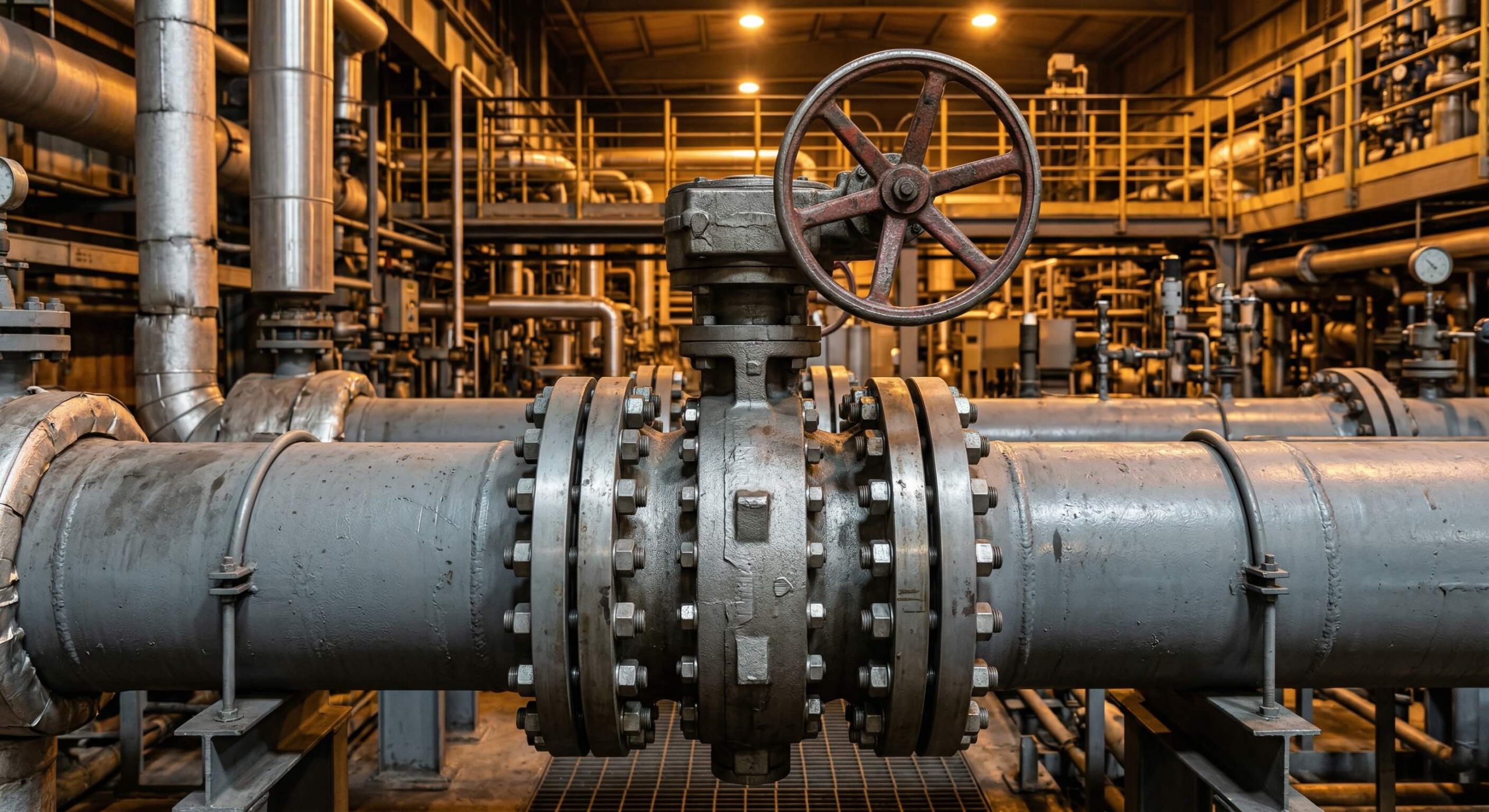
Butterfly valve end connection types are the specific mechanical interfaces—such as wafer, lug, flanged, or welded designs—used to securely attach the valve body to your pipeline system. You often face the challenge of managing high-volume fluid flow in systems where space is limited and budgets are incredibly tight. Choosing the wrong butterfly valve connection leads to leaks, premature wear, and costly system downtime. We solve this problem by breaking down the distinct characteristics of each configuration so you can select the perfect match for your specific operational demands.
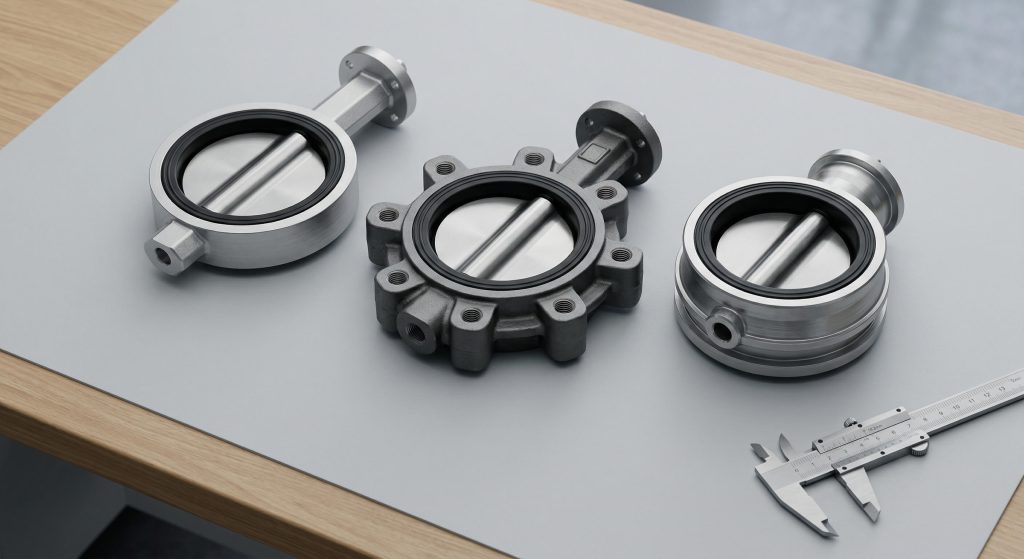
What Is a Wafer Type Butterfly Valve Connection?
A wafer type butterfly valve connection is a compact interface designed to be clamped securely between two pipe flanges. You directly answer the structural requirement by aligning the valve and tightening long bolts across the entire assembly. This minimalist design reduces the overall weight of your pipeline system significantly. You save money on materials and labor during the setup process.
How Does It Save Space?
Here is the deal… Wafer styles offer incredible space savings for tight mechanical rooms. You can fit them into narrow gaps where traditional bulky equipment fails to operate. They provide specific structural advantages:
- They require less physical support.
- Setup happens rapidly.
- Material costs remain exceptionally low.
Are There Any Operational Limits?
Think about it… Because the bolts span across the entire valve, you cannot remove one side of the piping without depressurizing the whole line. This makes end-of-line service impossible for your technicians. Key Takeaway: Wafer designs provide excellent cost savings, but they restrict your ability to perform isolated maintenance tasks on active systems.
| Feature | Wafer Type Specification |
|---|---|
| Installation Method | Clamped between flanges |
| Weight Profile | Exceptionally light |
| Maintenance Flex | Requires full line shutdown |
This data table clearly highlights how the wafer design trades maintenance flexibility for space efficiency.
How Does a Lug Type Butterfly Valve Connection Work?
A lug type butterfly valve connection works by utilizing threaded inserts cast into the valve body to secure it to the pipe flanges. You use two separate sets of bolts to connect each flange directly to the valve. This independent bolting mechanism allows you to maintain one side of the pipeline while the other remains fully pressurized. Your facility gains massive operational flexibility during routine inspections.
Why Use Threaded Inserts?
What is the real story? The threaded lugs provide a robust anchor point that prevents the valve from shifting under high fluid velocity. You get a much more stable mechanical bond compared to clamped alternatives. The lug design offers distinct structural benefits:
- You can perform dead-end service safely.
- The valve acts as a rigid pipe section.
- Alignment during setup is incredibly precise.
Can It Handle High Vibration?
Ready for the good part? The secure bolting pattern resists mechanical vibration better than lighter configurations. Your system experiences less wear over time when dealing with turbulent flow conditions. Key Takeaway: Selecting a lug configuration gives you the freedom to conduct downstream maintenance without completely shutting down your main fluid supply.
| Characteristic | Lug Type Specification |
|---|---|
| Bolting Method | Independent threaded inserts |
| Dead-End Service | Fully supported |
| Stability | Highly resistant to shifting |
The metrics above demonstrate that lug configurations deliver superior mechanical stability for demanding industrial applications.
What Defines a Flanged Butterfly Valve Connection?
A flanged butterfly valve connection features prominent, integrated solid metal rims on both sides of the valve body that match standard pipe flanges. You bolt these integral rims directly to the corresponding pipe ends to create an immensely strong seal. This heavy-duty construction is standard for large diameter pipelines handling massive volumes of water or gas. Your heavy industrial applications rely on this sheer structural mass for long-term safety.
Where Is It Best Applied?
This is where it gets interesting… Flanged styles dominate municipal water treatment plants and heavy manufacturing facilities. You need this specific geometry when pipe diameters exceed standard commercial sizes. They excel in specific environments:
- Underground water distribution networks.
- High-stress chemical processing plants.
- Heavy-duty marine fluid systems.
Does It Handle Extreme Pressure?
Consider this angle… The solid cast flanges distribute mechanical stress evenly across a massive surface area. Your system can withstand aggressive pressure spikes without risking a catastrophic blowout. Key Takeaway: Flanged designs are the heavyweights of flow control, providing unmatched durability for your largest and most demanding piping networks.
| Specification | Flanged Type Details |
|---|---|
| Structural Integrity | Maximum strength |
| Best Application | Large diameter pipes |
| Pressure Resistance | Extremely high |
This reference chart confirms that flanged bodies offer the highest level of structural reinforcement available.
When to Use a Grooved Butterfly Valve Connection?
You use a grooved butterfly valve connection when rapid assembly and disassembly are your primary project requirements. You slide a flexible coupling over the grooved ends of both the pipe and the valve, securing them with a simple bolt-pad mechanism. This mechanical joint accommodates slight pipe misalignment and absorbs thermal expansion naturally. Your fire protection systems frequently utilize this style because it speeds up emergency deployments.
How Fast Is the Setup?
Truth be told… Grooved mechanical joints can be assembled up to three times faster than traditional welded or flanged joints. You eliminate the need for hot work permits and heavy welding equipment on your job site. The speed benefits are clear:
- Setup requires only basic hand tools.
- You avoid complex alignment procedures.
- System modifications take minutes instead of hours.
Are They Reliable for Fire Protection?
Let that sink in… Fire suppression networks depend entirely on reliable, fast-acting components that will not fail under sudden pressure. You find grooved joints dominating this sector due to their proven resilience and flexibility. Key Takeaway: Opting for grooved joints drastically cuts your labor costs and simplifies future system modifications without sacrificing joint integrity.
| Feature | Grooved Type Advantage |
|---|---|
| Assembly Speed | Extremely fast |
| Flexibility | Absorbs pipe movement |
| Tooling Required | Basic wrenches only |
The comparison data highlights how grooved interfaces drastically reduce the labor hours required for system assembly.
Why Choose a Welded Butterfly Valve Connection?
You choose a welded butterfly valve connection when your system absolutely cannot tolerate any fugitive emissions or external leaks. You fuse the valve body directly to the pipeline using extreme heat to create a single, continuous metal structure. This permanent bonding method is standard in high-pressure steam lines and hazardous chemical processing. Your facility remains safe from toxic leaks because there are no gaskets or bolts to degrade over time.
What Guarantees Zero Leakage?
Want to know the best part? By eliminating the mechanical joint entirely, you remove the primary failure point of any piping system. You never have to worry about re-torquing bolts or replacing worn flange gaskets. The permanence offers critical safety benefits:
- Eliminates fugitive gas emissions completely.
- Withstands extreme temperature fluctuations.
- Requires zero joint maintenance over its lifespan.
How Does It Impact Maintenance?
Here is the deal… While the seal is flawless, removing a welded valve requires you to physically cut the pipe. You must plan for extended downtime if the internal components ever require complete replacement. Key Takeaway: Welded configurations provide the ultimate leak-proof security for dangerous fluids, but they make future valve removal highly labor-intensive.
| Element | Welded Type Specification |
|---|---|
| Leak Prevention | 100% leak-proof |
| Joint Type | Permanent fusion |
| Removal Process | Requires cutting equipment |
This summary illustrates that welded systems prioritize absolute environmental safety over maintenance convenience.
What Is a Threaded Butterfly Valve Connection?
A threaded butterfly valve connection features internal or external screw threads that mate directly with corresponding threaded pipes. You simply twist the valve onto the pipe end using a sealant tape to create a secure, watertight seal. This specific design is generally restricted to smaller pipe diameters used in light commercial or residential applications. Your plumbing teams use them frequently for simple water shutoff tasks.
Are They Suitable for Small Pipes?
What is the real story? Threaded interfaces become incredibly difficult to manufacture and tighten as the pipe diameter increases. You will rarely see this style used on pipes larger than two inches in heavy industrial settings. They are perfect for specific low-stress uses:
- Commercial HVAC water lines.
- Light-duty compressed air systems.
- Agricultural irrigation controls.
What Materials Work Best?
Ready for the good part? You typically find threaded bodies cast from brass, bronze, or lightweight stainless steel. These softer metals allow for precise thread cutting and prevent galling during the twisting process. Key Takeaway: Threaded configurations are the most practical choice for small-diameter, low-pressure applications requiring quick and simple assembly.
| Detail | Threaded Type Specification |
|---|---|
| Size Limitation | Typically under 2 inches |
| Assembly Method | Screw-on action |
| Common Material | Brass or Bronze |
The table details confirm that threaded joints are restricted to light-duty, small-scale piping networks.
How Does a U-Section Butterfly Valve Connection Operate?
A U-section butterfly valve connection operates using a unique body shape that bridges the gap between wafer and double-flanged designs. You clamp this U-shaped profile between flanges, but it provides a wider seating area for the internal seal. This geometry offers superior alignment support compared to a standard flat wafer. Your technicians find them much easier to center during tricky overhead installations.
Why Choose a U-Shaped Body?
This is where it gets interesting… The extended body profile protects the internal rubber liner from being crushed or distorted by over-tightened flange bolts. You get a much longer lifespan out of the primary sealing mechanism. The physical shape provides distinct upgrades:
- Prevents gasket extrusion under pressure.
- Simplifies the visual alignment process.
- Accommodates thicker pipe insulation layers.
Is It Good for Vacuum Service?
Think about it… The structural reinforcement of the U-profile prevents the internal liner from collapsing inward under severe vacuum conditions. Your negative-pressure systems stay perfectly sealed without drawing in outside air. Key Takeaway: The U-section design strikes a perfect balance, offering better seal protection than wafer types without the heavy bulk of solid flanges.
| Attribute | U-Section Specification |
|---|---|
| Body Profile | Extended U-shape |
| Liner Protection | Highly protected |
| Vacuum Rating | Excellent performance |
This specification chart demonstrates how the U-section geometry actively extends the operational lifespan of the internal seals.
What Is a Sanitary Clamp Butterfly Valve Connection?
A sanitary clamp butterfly valve connection utilizes polished, flat-faced ends that join together using a specialized quick-release hinged clamp. You place a sterile gasket between the faces and lock the clamp to create an incredibly smooth internal flow path. This style is strictly mandated in the food, beverage, and pharmaceutical industries. Your production lines require this design to eliminate any crevices where bacteria could potentially hide and multiply.
How Does It Prevent Contamination?
Consider this angle… Traditional threads and crevices trap microscopic food particles that ruin entire production batches. You eliminate these dead zones completely with the ultra-smooth, flush mating surfaces of a sanitary clamp. The hygienic benefits are strictly regulated:
- Surfaces are polished to exact micro-inch finishes.
- Gaskets are made from FDA-approved silicones.
- Disassembly for cleaning takes mere seconds.
Where Are They Commonly Used?
Truth be told… Any facility requiring frequent Clean-in-Place (CIP) or Steam-in-Place (SIP) procedures relies heavily on clamp styles. You will find them on dairy processing tanks, brewery lines, and sterile medical manufacturing skids. Key Takeaway: Sanitary clamps provide the only acceptable level of hygiene for consumable product lines, allowing for rapid daily breakdown and sterilization.
| Standard | Sanitary Clamp Requirement |
|---|---|
| Internal Surface | Highly polished and smooth |
| Cleaning Speed | Rapid quick-release |
| Industry Focus | Food and Pharmaceutical |
These hygienic metrics prove that clamp styles are fundamentally required for maintaining strict biological safety standards.
How Do High-Performance Connections Differ?
A high-performance butterfly valve connection is engineered to handle extreme pressure drops and aggressive media that would destroy standard rubber seats. You utilize advanced triple-offset geometry and specialized metal-to-metal sealing interfaces for these demanding applications. These rugged connections are strictly built to withstand the punishing environments of petrochemical refining and power generation. Your most critical infrastructure depends on these highly engineered industrial joints.
What Makes Triple Offset Unique?
Let that sink in… The triple offset design rotates the disc on three separate geometric axes to eliminate rubbing against the seat entirely. You achieve a frictionless stroke that extends the mechanical life of the valve exponentially. The engineering provides unmatched resilience:
- Allows for solid metal seating rings.
- Eliminates wear from constant modulation.
- Handles highly abrasive slurry flows easily.
Can They Handle Steam?
Want to know the best part? Because they use solid metal seals instead of melting elastomers, these connections handle high-pressure superheated steam without fail. Your boiler systems maintain perfect efficiency without sudden blowout risks. Key Takeaway: High-performance configurations deliver severe-service capabilities, allowing you to control extreme temperatures and abrasive fluids safely.
| Capability | High-Performance Specs |
|---|---|
| Sealing Mechanism | Metal-to-metal contact |
| Wear Resistance | Frictionless rotation |
| Temperature Limit | Extreme heat and steam |
The performance data clearly establishes these specific designs as the top tier for severe industrial environments.
How to Choose the Best Connection for Your System?
You choose the best butterfly valve connection by carefully analyzing your specific fluid type, operating pressure, and future maintenance requirements. You must weigh the initial purchase cost against the long-term labor expenses associated with potential system downtime. Selecting the correct interface prevents sudden pipeline failures and keeps your overall facility operating smoothly. Your engineering team must match the mechanical joint exactly to the environmental stresses of the installation site.
Which Factors Matter Most?
Here is the deal… You must first identify if your pipeline requires regular internal cleaning or end-of-line isolation capabilities. You cannot prioritize a low upfront cost if the design forces you to shut down the entire plant for simple repairs. You must evaluate these core variables:
- Maximum line pressure and expected temperature.
- Corrosive or abrasive nature of the fluid.
- Available physical space for the installation.
Does Cost Outweigh Maintenance?
What is the real story? A cheap wafer valve saves money today but costs thousands in lost production when you cannot isolate a downstream pump later. You should always invest in lug or flanged styles when operational flexibility is required. Key Takeaway: Your final selection must perfectly balance initial budgetary constraints with the realistic long-term maintenance demands of your specific facility.
| Consideration | Selection Impact |
|---|---|
| Initial Budget | Dictates basic style |
| Maintenance Need | Drives lug or flange choice |
| Media Type | Determines seal material |
This evaluation matrix guides you toward a balanced decision between upfront capital expenditure and long-term mechanical reliability.
Frequently Asked Questions
- Q1: Can I use a wafer valve for end-of-line service?
No, you cannot safely do this. Wafer valves rely on the opposing pressure of two matching pipe flanges to hold the unit securely in place. - Q2: What’s the best connection for high-pressure industrial systems?
Flanged or welded connections handle extreme pressure the best. They provide superior structural integrity and prevent the microscopic shifting that causes leaks in clamped designs. - Q3: How do I know if a lug type is right for my setup?
You should select a lug type if you anticipate needing downstream maintenance capabilities. The threaded inserts hold the valve securely to the upstream pipe even when the downstream section is completely removed. - Q4: Can I install a grooved valve in a permanent underground pipeline?
No, it is highly discouraged. Welded or heavy flanged connections offer the permanent, stress-resistant seal required for inaccessible underground lines where mechanical joints might loosen over time. - Q5: What’s the best way to prevent bacterial growth in food applications?
Using sanitary clamp ends is the most effective method available. They provide a perfectly smooth internal flow path without any threaded crevices, allowing for rapid daily cleaning and sterilization.
Final Thoughts on Valve Selection
Selecting the proper pipeline interface dictates the safety, efficiency, and longevity of your entire fluid network. We solve the headache of unpredictable leaks and difficult maintenance by offering highly engineered solutions tailored directly to your specific operational parameters. You can secure your infrastructure with robust, precision-machined hardware that keeps your facility running without interruption. Our vision is to empower global industries with reliable flow control technology that outlasts the competition. Reach out and contact us today to upgrade your critical systems.