
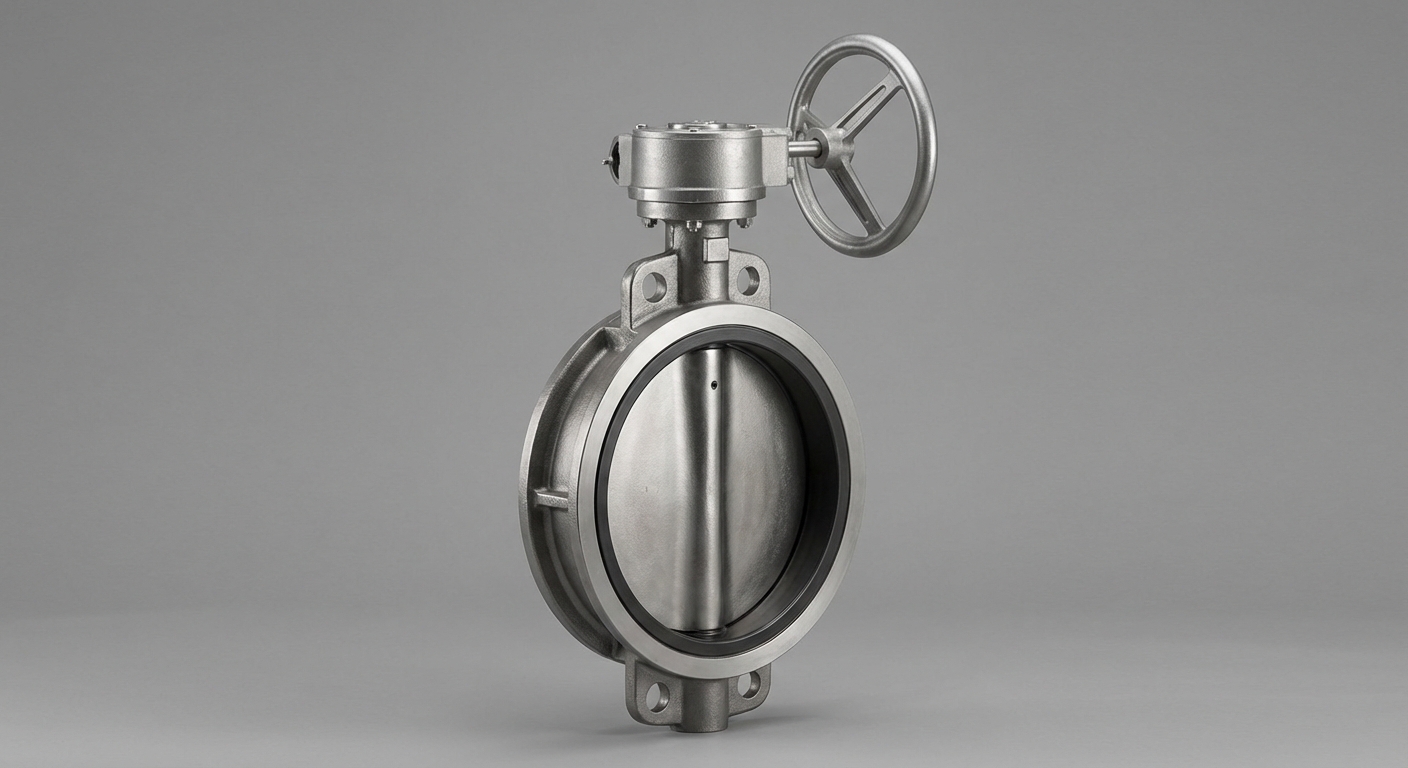
A butterfly valve pressure test is the industry-standard procedure used to verify the structural integrity and sealing capabilities of a valve before it enters service in your facility. You face significant risks when installing unverified components, ranging from minor leaks that drain profits to catastrophic system failures that compromise worker safety. By mandating a rigorous disc strength test butterfly valve, you effectively eliminate these vulnerabilities, ensuring that your fluid control systems operate with 99.9% reliability even under extreme conditions.
Why Is a Disc Strength Test Butterfly Valve Critical?
The primary reason is to prevent structural deformation or “yielding” of the valve disc when subjected to maximum operating pressures. Performing a disc strength test butterfly valve ensures that the component can handle 1.5 times its rated pressure without cracking or permanent bending.
You must realize that the disc is the most stressed component in the entire assembly. If it fails, your entire flow control logic collapses, leading to downtime that costs thousands of dollars per hour.
Protecting Your Infrastructure
Think about it: a single cracked disc can send metal fragments downstream, destroying expensive pumps and instrumentation. Validating strength during the manufacturing phase protects your long-term capital investment.
Reducing Total Cost of Ownership
Here is the deal:
- Fewer emergency shutdowns.
- Lower insurance premiums for certified systems.
- Extended valve service life (often up to 25 years).
Key Takeaway: A strength-verified disc prevents downstream damage and minimizes maintenance costs by ensuring the valve remains structurally sound under peak loads.
| Feature | Benefit |
|---|---|
| 1.5x Pressure Rating | Safety margin against surges |
| Material Integrity | Zero risk of internal cracking |
| Compliance | Meets global ISO 9001 standards |
This analytical data demonstrates why high-strength verification is the foundation of any reliable B2B fluid management strategy.
How Does a Disc Strength Test Butterfly Valve Ensure Safety?
This test ensures safety by exposing the valve to pressures far exceeding normal operating limits to reveal any hidden manufacturing defects. A disc strength test butterfly valve acts as the final gatekeeper, catching casting pores or metallurgical weaknesses that visual inspections might miss.
You cannot afford to gamble with high-pressure steam or corrosive chemicals in your plant. Utilizing valves that have passed these rigorous stress tests provides the peace of mind required for high-stakes industrial operations.
Eliminating Latent Defects
What if the casting has an internal air pocket? The strength test will cause the material to fail in the controlled environment of the lab rather than on your factory floor.
Establishing Operational Limits
You need to know exactly where the breaking point is.
- Determines maximum allowable working pressure (MAWP).
- Verifies the safety factor of the ductile iron or stainless steel.
- Ensures the stem-to-disc connection is secure.
Key Takeaway: Safety is non-negotiable in B2B environments, and strength testing provides the empirical evidence needed to trust your hardware.
| Test Parameter | Safety Impact |
|---|---|
| Shell Test | Prevents external leakage |
| Disc Stress Test | Prevents internal bypass |
| Deformation Check | Ensures long-term shutoff |
The correlation between pre-shipment testing and on-site safety records is undeniable for modern engineering projects.
Which Standards Govern a Disc Strength Test Butterfly Valve?
Standardization is governed primarily by API 598 and EN 12266-1, which dictate the duration and pressure levels for a disc strength test butterfly valve. Following these international benchmarks ensures that the valve you purchase in one country performs identically to one purchased elsewhere.
You should always request documentation proving that your valves meet these specific certifications. These standards provide a universal language of quality that simplifies the procurement process for global EPC contractors.
Understanding API 598 Requirements
API 598 is the most widely used standard for valve inspection and testing in the oil and gas sector. It specifies exactly how long a valve must hold pressure based on its size and class.
The Role of ISO and EN Standards
Are you operating in the European market?
- ISO 5208 covers industrial valve pressure testing.
- EN 12266 focuses on testing for metallic valves.
- Compliance ensures 0.5% or lower defect rates.
Key Takeaway: Adherence to global standards like API and ISO guarantees that the disc strength is verified through repeatable, scientifically backed methods.
| Standard | Focus Area |
|---|---|
| API 598 | Valve inspection and testing |
| ISO 5208 | Pressure testing parameters |
| MSS SP-67 | Butterfly valve specific design |
By aligning your procurement requirements with these standards, you create a robust framework for quality assurance across your supply chain.
What Equipment Is Needed for a Disc Strength Test Butterfly Valve?
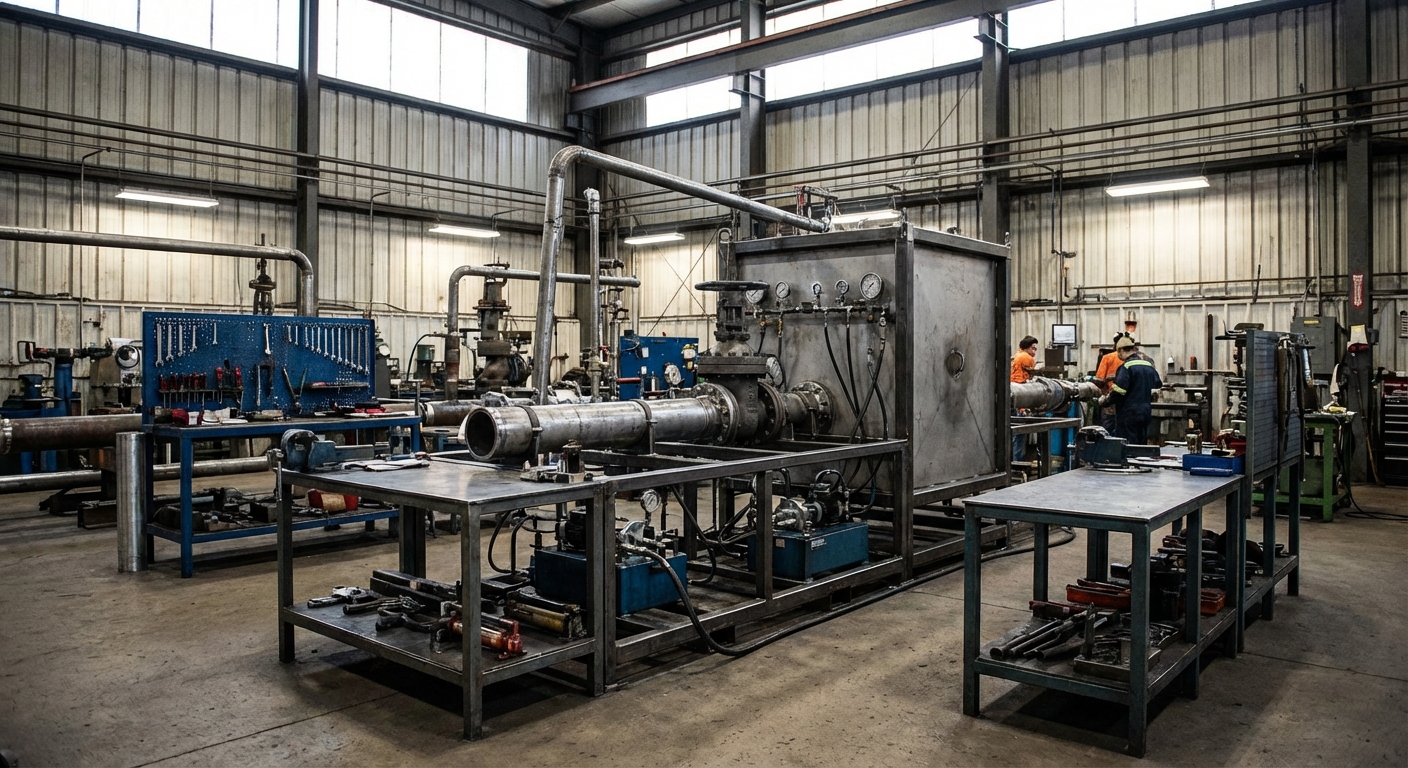
A specialized hydraulic test bench equipped with precision calibrated gauges is mandatory for a professional disc strength test butterfly valve. High-accuracy sensors are required to detect even the slightest drop in pressure during the holding period.
You wouldn’t trust a manual pump and a cheap gauge for critical infrastructure. Professional manufacturers utilize automated systems with CNC-machined interfaces to ensure a perfect, leak-free seal during the test itself.
The Importance of Calibration
Is your gauge accurate? If the equipment isn’t calibrated to national standards, the test results are essentially meaningless for your records.
Safety Enclosures and Containment
Here is the deal:
- Testing at 1.5x pressure creates significant kinetic energy.
- Heavy-duty steel enclosures protect technicians.
- Remote monitoring allows for safe observation of the disc’s behavior.
Key Takeaway: High-quality testing equipment is just as important as the valve itself, as it ensures the data you receive is accurate and actionable.
| Equipment Component | Function |
|---|---|
| Hydraulic Pump | Generates 1.5x rated pressure |
| Digital Manometer | Tracks pressure drop with 0.005mm precision |
| Seal Plates | Ensures test medium doesn’t bypass flanges |
Sophisticated testing rigs are the hallmark of a manufacturer committed to delivering zero-defect products to the global market.
Can You Automate the Disc Strength Test Butterfly Valve Process?
Automation is not only possible but preferred, as it removes human error from the disc strength test butterfly valve procedure. Modern test benches use programmable logic controllers (PLCs) to maintain pressure for the exact duration required by industry standards.
You benefit from automation through digital traceability; every valve gets a unique QR code linked to its specific test results. This level of transparency is essential for modern project management and audits.
Eliminating Human Subjectivity
Manual testing can be inconsistent if the technician is rushed. Automation ensures that every single valve receives the exact same rigorous treatment regardless of the production volume.
Digital Reporting for Clients
Think about it:
- Automated logs are generated instantly.
- Data is stored in a secure cloud for 10+ years.
- You can verify your valve’s history in seconds via a smartphone.
Key Takeaway: Automation increases the reliability of test data and provides the high-level traceability required for sophisticated industrial applications.
| Benefit | Manual Testing | Automated Testing |
|---|---|---|
| Accuracy | Moderate | High (Digital) |
| Speed | Slow | Fast (72-hour emergency dispatch) |
| Traceability | Paper-based | Digital (QR Link) |
The transition to digital testing environments reflects the broader trend toward Industry 4.0 in valve manufacturing and fluid control.
Does Temperature Affect the Disc Strength Test Butterfly Valve?
Temperature significantly impacts material properties, meaning a disc strength test butterfly valve must sometimes be conducted at elevated or cryogenic temperatures. While most factory tests are performed at “ambient” temperatures, specialized applications require testing that mimics real-world conditions.
You must specify if your valves will operate in extreme heat, such as 550°C, or extreme cold. The disc material may become brittle or lose tensile strength, making the testing phase even more critical.
High-Temperature Testing Realities
At 550°C, the molecular structure of steel changes. A disc that passes at room temperature might deform under the same pressure when the heat is turned up in your process line.
Cryogenic Considerations for LNG
Are you working with liquefied gases?
- Materials like SS316 are tested at -196°C.
- Ensures the disc doesn’t shatter like glass.
- Verifies the integrity of the vulcanized rubber or metal seat.
Key Takeaway: Understanding the temperature-pressure relationship ensures that your disc strength remains consistent throughout the entire operational range.
| Temperature Range | Material Focus | Test Criticality |
|---|---|---|
| -196°C to -40°C | Impact Toughness | Very High |
| 0°C to 100°C | General Sealing | Standard |
| 100°C to 550°C | Yield Strength | Very High |
Matching your testing protocol to your specific thermal environment is the only way to guarantee long-term system stability.
Is a Disc Strength Test Butterfly Valve Required for All Sizes?
Yes, a disc strength test butterfly valve is mandatory for every size, from DN25 to DN3000, though the methods may vary. Larger valves present a greater surface area for pressure to act upon, making the mechanical stress on the disc significantly higher.
You might assume small valves don’t need testing, but a failure in a DN50 line can still cause a plant-wide shutdown. Manufacturers must treat every unit with the same level of scrutiny to maintain a 99.5% quality reliability rating.
Challenges with Large Diameter Valves
Testing a DN3000 valve requires massive amounts of water and specialized heavy-lift equipment. The force exerted on the disc of a large valve can exceed several hundred tons.
Consistency Across the Range
Here is the deal:
- Small valves (DN25-DN300) are tested in batches.
- Large valves (DN300+) undergo individual, documented stress tests.
- Standardizing the process ensures no “weak links” in your system.
Key Takeaway: Regardless of diameter, every valve in your order should be backed by a strength test to ensure uniform performance across your entire facility.
| Valve Size (DN) | Test Complexity | Primary Concern |
|---|---|---|
| 25 – 300 | High Volume | Manufacturing Consistency |
| 350 – 1200 | Moderate | Stem-to-Disc Alignment |
| 1200 – 3000 | Custom/Special | Structural Integrity |
A comprehensive testing strategy across all sizes is the only way to mitigate the risks associated with diverse fluid control networks.
How Often Should You Do a Disc Strength Test Butterfly Valve?
Initial testing is done before dispatch, but a disc strength test butterfly valve should also be part of your long-term preventative maintenance cycle. Over years of service, corrosion and erosion can thin the disc, gradually reducing its original strength.
You should schedule re-testing during major plant turnarounds, typically every 3 to 5 years. This proactive approach identifies “at-risk” valves before they reach the point of failure, saving you from expensive emergency repairs.
Pre-Installation Verification
Always perform a quick field pressure test if the valves have been sitting in storage for over six months. Seals can dry out, and environmental factors might have impacted the component’s integrity.
Post-Repair Validation
Have you replaced a seal or a stem?
- Never put a repaired valve back in service without a strength test.
- Re-verify that the assembly still meets its original 1.5x rating.
- Update your maintenance logs with the new test data.
Key Takeaway: Periodic strength verification throughout the valve’s lifecycle is the best way to prevent age-related failures and extend your asset’s ROI.
| Lifecycle Stage | Test Requirement | Objective |
|---|---|---|
| Manufacturing | 100% Mandatory | Baseline Quality |
| Installation | Recommended | Storage Damage Check |
| 5-Year Service | Periodic | Wear and Tear Assessment |
Continuous monitoring through scheduled testing transforms reactive maintenance into a predictable, cost-saving operational strategy.
What Are Fail Signs in a Disc Strength Test Butterfly Valve?
Visible cracking, permanent deformation, or a steady pressure drop on the gauge are the most common indicators of a failed disc strength test butterfly valve. If the pressure drops even slightly during the holding period, it indicates that fluid is either bypassing the seal or escaping through the material itself.
You must reject any valve that shows “weeping”—where moisture appears on the outer surface of the cast iron or steel. This is a sign of porosity and indicates that the valve could burst under a sudden pressure surge.
Detecting Micro-Cracks
Sometimes the damage isn’t visible to the naked eye. Professional testers use dye penetrant or ultrasonic testing after the pressure test to find internal fractures caused by the stress.
Deformation and Alignment Issues
Think about it:
- Does the disc still rotate smoothly after the test?
- Is the seat still bubble-tight?
- If the disc bends even 1mm, it is a failure.
Key Takeaway: Understanding the signs of failure allows you to catch defective units before they become a liability in your operational environment.
| Failure Sign | Probable Cause | Action Required |
|---|---|---|
| Gauge Drop | Seal leak or structural crack | Reject and Investigate |
| Surface Sweating | Material porosity | Immediate Rejection |
| Disc Jamming | Structural deformation | Material Upgrade Needed |
Recognizing these “red flags” during the testing phase is what separates high-reliability operations from those prone to frequent failures.
Who Performs the Best Disc Strength Test Butterfly Valve?
The most reliable results come from manufacturers with ISO 9001 certification and on-site, state-of-the-art testing facilities for the disc strength test butterfly valve. A reputable supplier will offer 100% transparency, inviting you or third-party inspectors like SGS or TÜV to witness the tests.
You should partner with a manufacturer that has a proven track record, such as those with over 15 years of experience and thousands of successful projects. These experts understand the nuances of fluid dynamics and provide the documentation you need for regulatory compliance.
The Value of In-House Facilities
A manufacturer with its own lab can react faster to your needs. If you need a custom valve tested for an emergency 72-hour dispatch, an in-house facility makes that possible.
Third-Party Verification
Are you working on a high-risk municipal or offshore project?
- Request inspections by BV or DNV.
- Ensure the certificates are signed and stamped.
- Verify that the test medium (water/air) was appropriate for your application.
Key Takeaway: Choosing a partner with robust, transparent testing protocols is the single most important decision you can make for system reliability.
| Supplier Attribute | Impact on You |
|---|---|
| 15+ Years Experience | Deep technical expertise |
| 100% Pressure Testing | Zero-defect guarantee |
| Global Certifications | Easier project approval |
The quality of your fluid control system is directly proportional to the rigor of your supplier’s testing and verification processes.
Maximizing System Integrity and Longevity
Ensuring the reliability of your infrastructure starts with the smallest components. By focusing on a rigorous disc strength test butterfly valve protocol, you have successfully addressed the root causes of system failure—material weakness and manufacturing defects. This proactive approach doesn’t just save money; it protects your reputation as a leader in industrial excellence.
You can now move forward with the confidence that your valves are engineered for the most demanding environments on earth. Our vision for the industry is one of zero-leakage, maximum efficiency, and total transparency in the supply chain. If you are ready to upgrade your flow control standards and reduce your total cost of ownership, contact us today for a technical consultation. Let’s build a more resilient system together.
FAQ
- Can I perform a disc strength test butterfly valve at my own facility?
Yes, provided you have a calibrated hydraulic test bench and safety containment. Most B2B users prefer to receive valves with certified factory test reports to save on on-site labor and equipment costs. - How do I know if the disc strength test butterfly valve was actually done?
You should look for a unique QR code or serial number on the valve body that links to a digital test certificate. A legitimate manufacturer will provide time-stamped data and gauge readings for your specific unit. - Is the disc strength test different from a seat leakage test?
Yes, because the strength test focuses on structural integrity at 1.5x pressure, while the seat test focuses on sealing performance at 1.1x pressure. Both are necessary for a fully qualified valve but serve different safety purposes. - Can a disc strength test butterfly valve damage the valve if it passes?
No, the test is designed to stay within the elastic limit of high-quality materials like stainless steel or ductile iron. If a valve is damaged by a standard 1.5x test, it was fundamentally defective and unsuitable for your service anyway. - What happens if a valve fails the disc strength test butterfly valve during production?
The unit is immediately scrapped and the production batch is quarantined for a root-cause analysis. This process ensures that systemic issues—like a bad batch of raw material—never reach your job site.