
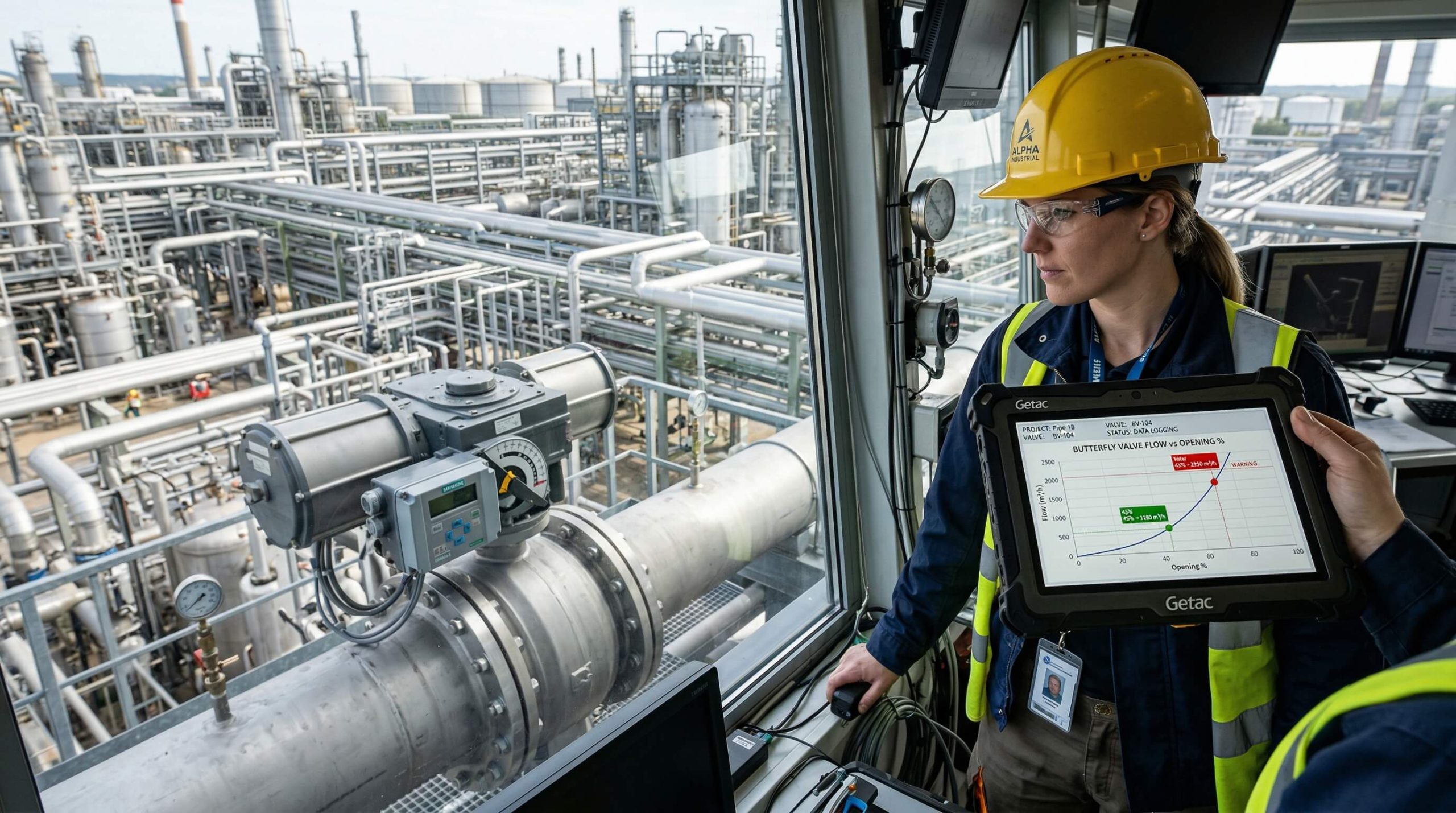
The relationship between fluid passage and disc angle defines our main topic today, showing a non-linear characteristic mostly resembling an equal-percentage curve. Misjudging pipe fluid control often leads toward severe system instability. A badly sized component causes poor regulation, creating massive pressure drops. You can fix such headaches by accurately matching component characteristics against system demands. Analyzing a butterfly valve flow vs percent open graph provides exactly that required solution.
What defines butterfly valve flow vs percent open?
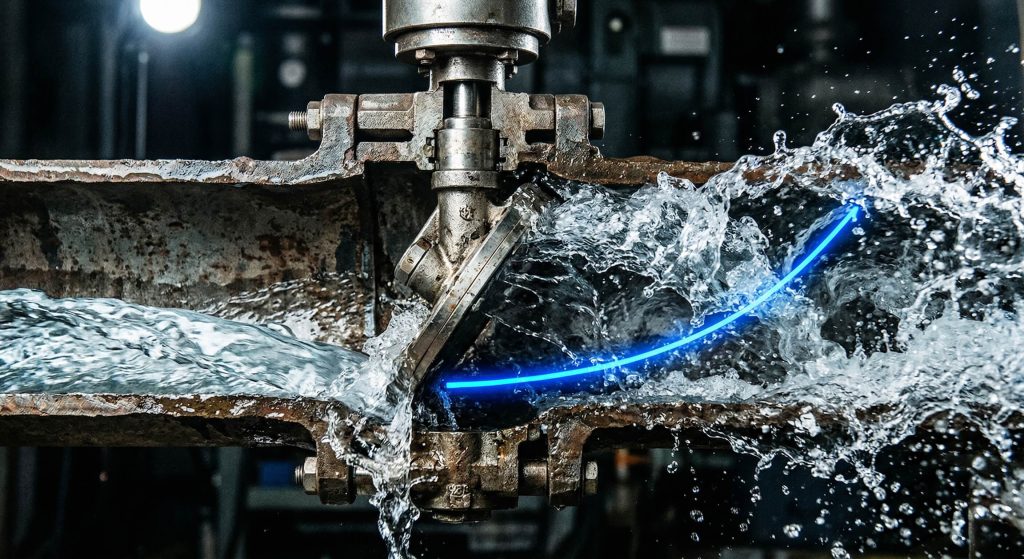
This concept describes how much fluid passes through a disc at specific angular positions. Studying butterfly valve flow vs percent open reveals non-linear performance behaviors across different operating ranges. Operators rely heavily on these specific metrics during complex system design phases. Incorrect assumptions regarding angular capacities cause disastrous pipeline regulation failures.
How does geometry impact performance?
Here is the deal, disc shape changes everything regarding liquid passage efficiency.
- Concentric designs block fluid directly along the middle axis.
- Eccentric models offer smoother pathways by shifting shaft positions.
- Offset varieties reduce seating friction while increasing maximum discharge.
Key Takeaway: Selecting an appropriate disc type guarantees better regulation across all angles while minimizing mechanical wear.
Disc Type Comparison
| Design | Flow Profile | Friction |
|---|---|---|
| Concentric | Standard | High |
| Double Offset | Improved | Medium |
| Triple Offset | Advanced | Low |
A quick glance at this comparison highlights how offset designs minimize friction.
How does a butterfly valve flow vs percent open curve look?
A typical graph displays an equal-percentage trajectory where capacity increases exponentially near wide-open positions. Plotting butterfly valve flow vs percent open shows minimal passage below twenty degrees. Fluid dynamics dictate that small angular changes create massive clearance differences eventually. Operators notice extreme capacity surges once discs pass sixty degrees.
Why does a curve bend exponentially?
What’s the real story? Internal clearances widen drastically as metal discs approach parallel alignments with pipe walls.
- Initial movement cracks a seal slightly without permitting huge volumes.
- Mid-range opening increases area steadily for highly predictable control.
- Final degrees open up massive pathways instantly.
Key Takeaway: Understanding this exponential bending allows precise calibration during mid-range automation operation.
Opening Phase Summary
| Phase | Angle | Flow Change |
|---|---|---|
| Crack | 0-20 | Very Low |
| Control | 20-60 | Moderate |
| Open | 60-90 | Exponential |
Data shown above clarifies why mid-range angles provide superior regulation capabilities.
Why does butterfly valve flow vs percent open matter?
This relationship directly determines whether a component can properly regulate pipe pressure safely. Ignoring butterfly valve flow vs percent open guarantees incorrect component sizing across entire facilities. Facilities suffer massive energy losses when engineers install oversized regulatory equipment. Undersized units choke production rates while creating dangerous upstream pressure spikes.
Does sizing rely on accurate data?
You might be wondering, how do engineers select perfect dimensions for new pipelines? Sizing requires matching maximum capacity requirements against wide-open hardware capabilities perfectly.
- Undersized components choke production rates completely.
- Oversized units operate near closed positions, causing massive turbulence.
- Properly sized models run smoothly within optimal mid-range zones.
Key Takeaway: Utilizing accurate characteristic data prevents costly mismatches between equipment capabilities and piping demands.
Sizing Errors
| Error | Consequence | Risk Level |
|---|---|---|
| Too Large | Poor Control | High |
| Too Small | Choked Flow | High |
| Just Right | Stable Operation | Low |
Reviewing this matrix reveals that accurate sizing prevents catastrophic regulation failures.
When should you check butterfly valve flow vs percent open?
Engineers must consult these specific charts during initial system design phases. Checking butterfly valve flow vs percent open avoids late-stage redesigns entirely. Plant managers demand accurate calculations before approving large capital equipment expenditures. Proper mathematical modeling requires utilizing verified manufacturer performance test data.
Are control loops affected by this?
Ready for the good part? Proper loop tuning absolutely depends on known hardware discharge characteristics.
- Controllers need predictable feedback from field devices.
- Erratic changes confuse sensitive automated software systems.
- Smooth curves guarantee highly stable mathematical adjustments.
Key Takeaway: Referencing characteristic charts early enables programmers to tune automation loops perfectly without hardware surprises.
Tuning Phases
| Phase | Action | Requirement |
|---|---|---|
| Design | Select Profile | Curve Data |
| Install | Calibrate Sensor | Baseline |
| Tune | Adjust PID | Predictability |
Looking at tuning stages highlights how data drives automation success.
Can butterfly valve flow vs percent open limit range?
The physical design fundamentally restricts how wide a component can effectively regulate fluid. Analyzing butterfly valve flow vs percent open shows a sweet spot between thirty and seventy degrees. Attempting regulation outside these specific boundaries generates severe mechanical vibration. Flow streams become highly unpredictable near fully closed or wide-open limits.
What happens outside ideal angles?
This is where it gets interesting… Operation near completely closed positions causes extreme localized fluid turbulence.
- Angles below twenty degrees cause rapid rubber seat wear.
- Positions above eighty degrees offer almost zero usable control.
- Mid-range angles provide highly desirable linear-like response characteristics.
Key Takeaway: Restricting operation within ideal angular bounds extends equipment lifespan significantly while boosting accuracy.
Operational Range Limits
| Angle | Control Quality | Wear Risk |
|---|---|---|
| 0-20 | Very Poor | Severe |
| 30-70 | Excellent | Minimal |
| 80-90 | Very Poor | Moderate |
Studying this angular breakdown proves that mid-range positioning yields superior longevity.
What shifts butterfly valve flow vs percent open?
System pressure changes heavily influence actual discharge rates through any restricting orifice. Your specific butterfly valve flow vs percent open shifts rapidly when upstream pressure drops. Heavy industrial processes often experience fluctuating inlet pressures during peak production hours. Operators must calculate adjusted values accounting for varying operating conditions.
Do fluid properties alter performance?
Truth be told, liquid density directly impacts overall discharge capacity across all angles.
- Heavy fluids require significantly more pushing force.
- Viscous liquids travel much slower through narrow restrictions.
- Compressible gas behaves entirely differently than standard water.
Key Takeaway: Factoring specific gravity into sizing equations prevents unexpected capacity shortfalls after installation.
Fluid Property Impacts
| Fluid Type | Density | Flow Effect |
|---|---|---|
| Water | Base | Standard |
| Oil | High | Reduced |
| Air | Low | Accelerated |
Evaluating these fluid variables shows why standard water charts need adjustment.
How does design alter butterfly valve flow vs percent open?
Internal geometry dramatically changes fluid pathways across different manufacturer models. An offset butterfly valve flow vs percent open behaves distinctly compared to standard concentric types. Thick central shafts block significant amounts of fluid even at ninety degrees. Aerodynamic hardware profiles reduce internal friction while maximizing total throughput capacities.
Why do offset discs perform better?
Here is the deal, shifting a shaft away from center creates an uninterrupted pathway.
- Reduced metal profiles block less rushing fluid.
- Aerodynamic disc shapes reduce harsh localized turbulence.
- Off-center mounting clears synthetic seats much quicker.
Key Takeaway: Picking an aerodynamic internal design dramatically improves high-capacity discharge efficiency immediately.
Geometric Variations
| Design Type | Hub Profile | Capacity |
|---|---|---|
| Centered | Thick | Lower |
| Single Offset | Moderate | Medium |
| Double Offset | Thin | Higher |
Analyzing hub thickness reveals why off-center shafts permit greater maximum volumes.
Does cavitation affect butterfly valve flow vs percent open?
Vapor bubbles collapsing near metal surfaces severely distort expected discharge curves. Severe cavitation ruins butterfly valve flow vs percent open predictability instantly. The immense shockwaves generated by collapsing bubbles destroy hardened metal seating surfaces. Engineers utilize specialized software programs predicting dangerous pressure drop scenarios accurately.
Can you prevent bubble formation?
What is the catch? You must keep pressure drops below critical vaporization limits constantly.
- High fluid velocities trigger massive pressure drops across narrow gaps.
- Low downstream pressures encourage rapid liquid boiling.
- Hardened metal trims resist mechanical damage better than soft rubber.
Key Takeaway: Managing system pressure differentials prevents destructive bubble collapse from ruining expensive equipment.
Cavitation Risk Factors
| Velocity | Pressure Drop | Risk Level |
|---|---|---|
| Low | Minimal | Safe |
| Medium | Moderate | Warning |
| High | Severe | Critical |
Observing these risk thresholds proves that velocity control prevents rapid mechanical failure.
How to optimize butterfly valve flow vs percent open?
Engineers maximize performance by carefully tuning digital positioners alongside physical hardware. Tuning your butterfly valve flow vs percent open requires matching software parameters with hardware realities. Modern facilities rely on smart sensors providing continuous angular feedback data. Plant operators adjust mathematical PID variables based on observed characteristic graphs.
Do digital positioners help control?
Make no mistake, smart digital positioners can modify a physical curve mathematically.
- Software algorithms flatten exponential hardware curves effectively.
- Custom characterization programming matches specific process needs.
- Magnetic sensors detect precise hardware angular positions instantly.
Key Takeaway: Utilizing smart control software allows engineers great flexibility in matching required regulation profiles perfectly.
Software Optimization
| Tool | Function | Result |
|---|---|---|
| Positioner | Tracks Angle | Accuracy |
| Algorithm | Modifies Curve | Linearity |
| Sensor | Reads Pressure | Feedback |
Inspecting digital tool capabilities shows how modern software fixes physical hardware limitations.
What ruins butterfly valve flow vs percent open accuracy?
Mechanical wear drastically alters internal clearances over months of heavy industrial operation. A degraded butterfly valve flow vs percent open profile causes immediate downstream regulation errors. Worn seating surfaces allow unintended fluid leakage even when fully closed. Maintenance teams must re-calibrate smart positioners compensating for mechanical degradation periodically.
Does debris damage internal components?
Truth be told, solid suspended particles scratch delicate seating surfaces relentlessly over time.
- Coarse sand erodes soft synthetic rubber seats quickly.
- Hard metal shavings jam rotating shafts easily.
- Mineral scale buildup restricts maximum hardware clearance capacity.
Key Takeaway: Installing proper filtration hardware upstream protects sensitive regulation equipment from permanent internal damage.
Common Failure Modes
| Hazard | Affected Part | Consequence |
|---|---|---|
| Sand | Rubber Seat | Leakage |
| Scale | Metal Disc | Restriction |
| Debris | Drive Shaft | Jamming |
Evaluating common hazards emphasizes why clean fluids maintain accurate discharge profiles longer.
Final Thoughts
We solved your sizing confusion by explaining exactly how angular positions dictate discharge capacity. Our team designs highly accurate fluid regulation equipment customized for challenging industrial environments. Whenever your facility requires absolute precision, contact us directly for expert engineering support. Precision fluid regulation drives our global manufacturing vision forward daily.
FAQ
Q1: Can I use these units for precise low-flow regulation?
No, you cannot. Minimal angular openings cause high turbulence and severe seat wear.
Q2: What’s the best operating angle for stability?
Mid-range positioning works best. Angles between thirty and seventy degrees offer predictable linear-like responses.
Q3: How do I know if my unit suffers from cavitation?
Excessive noise indicates severe problems. Popping sounds mean vapor bubbles are actively collapsing against metal.
Q4: Can I change a physical discharge curve digitally?
Yes, you certainly can. Smart positioners run algorithms that flatten exponential hardware characteristics mathematically.
Q5: What’s the best way to prevent seat damage?
Filtering upstream fluids extends lifespan. Removing abrasive particles stops relentless scratching on soft rubber seals.