
Complete Guide to Butterfly Valve Sizes. Correct sizing dictates system efficiency and prevents disastrous pipeline failures. You face pipeline leaks because mismatched components disrupt fluid control. Constant maintenance causes downtime which drains your operating budget rapidly. Here lies a dependable sizing methodology securing perfect alignment every time. Understanding butterfly valve sizes solves dimensional inconsistencies easily. We provide reliable specifications securing your industrial operations.
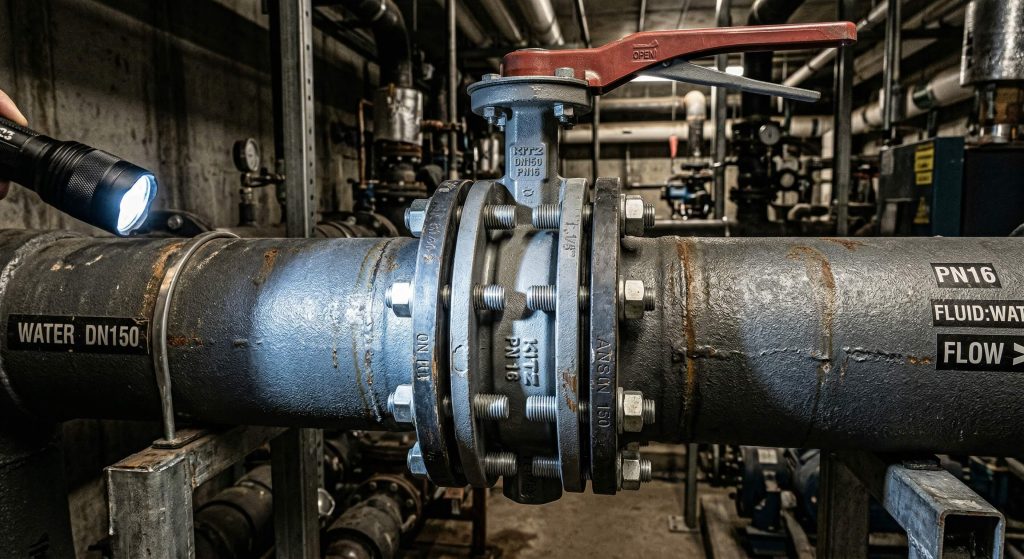
What are standard butterfly valve sizes?
Standard butterfly valve sizes range between two inches and forty-eight inches serving industrial applications. These dimensions follow strict international standards like ASME or DIN. Engineers select specific measurements matching existing pipe diameters seamlessly. Proper selection ensures tight shutoff during fluid transfer operations.
You must match face-to-face dimensions perfectly against flange spacing requirements. Incorrect widths cause installation delays and potential seal damage.
Common Industrial Size Categories
Smaller diameters serve HVAC systems while massive units handle municipal water. Here is the deal, knowing exact specifications prevents costly rework.
- Two-inch variants manage light fluid control tasks easily.
- Twelve-inch options handle moderate chemical processing plant flows.
- Twenty-four-inch designs regulate heavy municipal water distribution networks.
- Custom large models fit specialized power generation cooling systems.
Key Takeaway: Matching standard dimensions with your pipeline guarantees secure installation and prevents operational leaks.
| Nominal Size | Application Scale | Typical Industry Use |
|---|---|---|
| 2″ – 6″ | Small | HVAC Systems |
| 8″ – 16″ | Medium | Chemical Plants |
| 18″ – 36″ | Large | Water Treatment |
| 40″+ | Extra Large | Power Generation |
Evaluating application scale against nominal diameter helps operators avoid catastrophic flow restrictions rapidly.
How do you measure butterfly valve sizes?
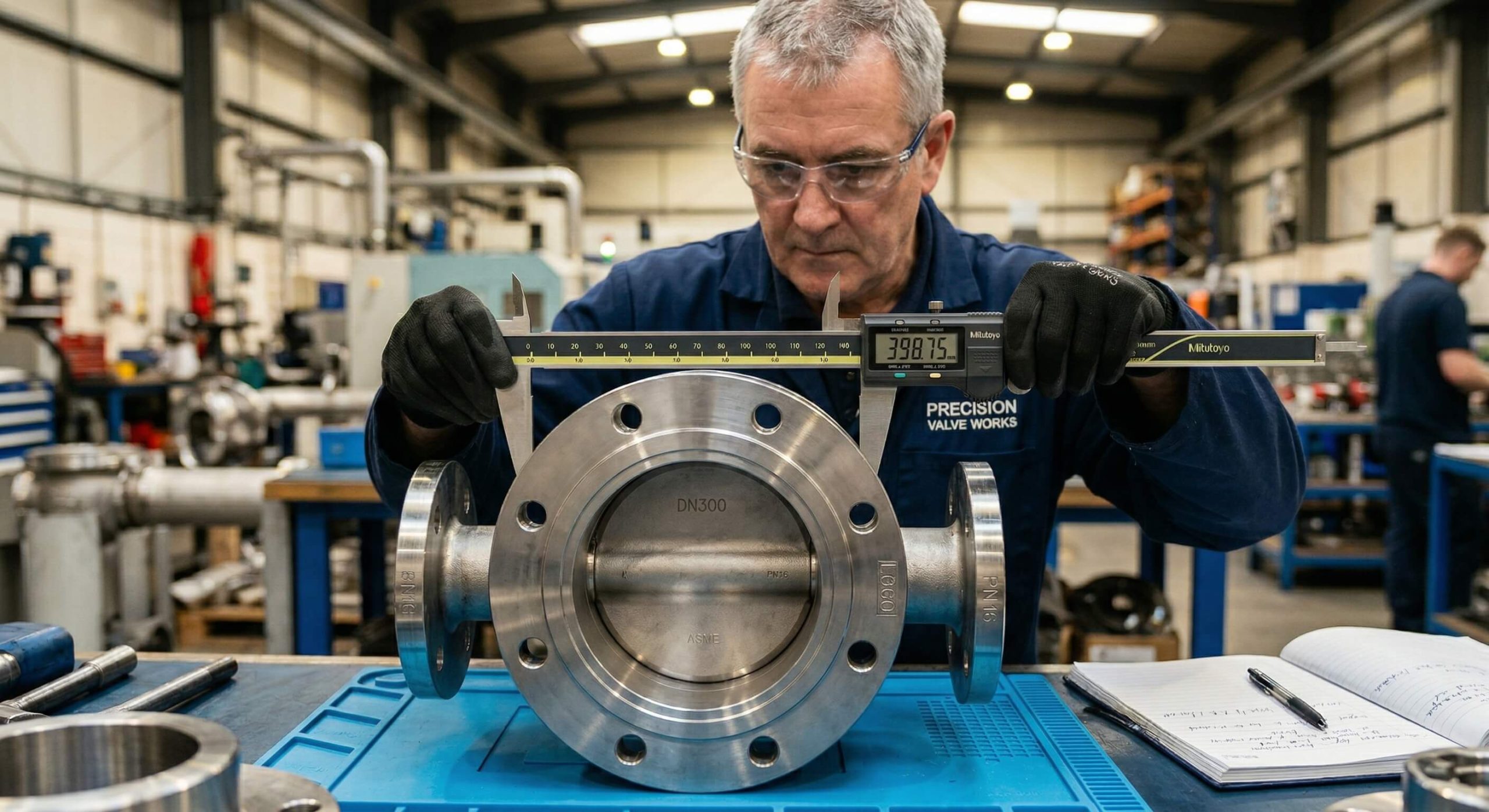
You measure butterfly valve sizes by verifying nominal pipe size against bore diameter. Operators use calipers checking face-to-face distance accurately. Accurate assessment confirms compatibility with existing pipeline flanges. Verification prevents mismatched equipment entering your critical fluid systems.
Measuring outer diameter guarantees proper clearance within cramped installation spaces. Careful documentation during this phase eliminates alignment errors entirely.
Steps for accurate measurement?
Field technicians require precise tools when evaluating component dimensions. You might be wondering, how do professionals avoid sizing mistakes?
- Measure internal bore diameter using digital calipers.
- Verify face-to-face length checking against ASME standards.
- Check bolt hole patterns confirming flange alignment.
- Calculate outside diameter clearance around actuator mechanisms.
Key Takeaway: Using proper measurement techniques guarantees perfect pipeline integration without requiring costly modifications.
| Measurement Type | Tool Required | Purpose |
|---|---|---|
| Bore Diameter | Digital Caliper | Flow Capacity |
| Face-to-Face | Tape Measure | Installation Fit |
| Bolt Pattern | Flange Gauge | Secure Mounting |
Selecting correct tools directly increases measurement accuracy during complex industrial system installations.
Why do butterfly valve sizes impact flow?
Component dimensions dictate flow capacity because butterfly valve sizes determine maximum fluid passage area. Larger bores allow higher volume transfer with minimal pressure drop. Smaller variants restrict movement creating higher fluid velocity automatically. Understanding this dynamic prevents destructive cavitation within piping networks.
Flow coefficient values increase exponentially alongside internal diameter measurements. Proper calculation optimizes energy consumption across pumping stations effectively.
Understanding Flow Coefficients
Flow coefficients represent water volume passing through completely open discs. Let that sink in, miscalculated coefficients destroy pump efficiency quickly.
- Low Cv values indicate significant fluid resistance.
- High Cv ratings allow maximum throughput volumes.
- Velocity variations cause noise issues inside pipelines.
- Correct matching stabilizes system pressure completely.
Key Takeaway: Selecting optimal dimensions maximizes flow efficiency while minimizing destructive pressure drops.
| Size (Inches) | Average Cv Value | Flow Resistance |
|---|---|---|
| 2 | 115 | High |
| 6 | 1800 | Medium |
| 12 | 8500 | Low |
Matching Cv values against system requirements prevents pump burnout and excessive energy usage.
What are wafer butterfly valve sizes?
Wafer butterfly valve sizes offer ultra-compact face-to-face dimensions saving valuable installation space. These thin profile units slip easily between two standard pipe flanges. Their lightweight construction reduces overall structural stress on piping networks. Engineers favor them for cramped mechanical rooms needing efficient flow control.
Lack of threaded lugs means operators cannot disconnect one pipeline side independently. Maintenance requires complete system depressurization before removing this component.
Are wafer styles right for you?
Space constraints dictate component selection during facility design phases. This is where it gets interesting, compact designs drastically lower material costs.
- Ultra-thin profiles fit narrow piping gaps perfectly.
- Lighter weight reduces structural support requirements.
- Simple installation involves squeezing units between flanges.
- Lower material usage makes them highly cost-effective.
Key Takeaway: Choosing wafer configurations saves space and reduces budget strain during facility construction.
| Characteristic | Wafer Style | Benefit |
|---|---|---|
| Profile | Thin | Saves Space |
| Weight | Light | Less Stress |
| Cost | Low | Budget Friendly |
Analyzing these characteristics confirms whether compact designs meet specific mechanical room spatial limitations.
How do lug butterfly valve sizes differ?
Lug butterfly valve sizes feature threaded metal inserts allowing independent flange bolting. This design permits dead-end service without needing downstream piping attached. Thicker body construction handles higher pressure environments compared against wafer types. Maintenance teams appreciate removing downstream sections while keeping upstream lines pressurized.
These variants require precise bolt length calculations ensuring secure attachment. Heavy cast iron or stainless steel bodies increase overall pipeline weight significantly.
Dead-End Service Capabilities
Industrial facilities demand flexible maintenance procedures requiring specialized equipment. What is the real story, threaded lugs provide unmatched operational flexibility.
- Threaded inserts allow single-side bolt attachment.
- Operators isolate downstream pipes easily.
- Thicker bodies withstand intense industrial pressures.
- Perfect alignment requires careful bolting sequences.
Key Takeaway: Threaded lug designs provide maximum maintenance flexibility during live pipeline servicing operations.
| Feature | Lug Style | Maintenance Impact |
|---|---|---|
| Threaded Lugs | Yes | Single-side removal |
| Body Thickness | Heavy | High pressure rating |
| Dead-End | Capable | System stays live |
Implementing lug styles drastically reduces total facility downtime during routine component replacements.
Which flange butterfly valve sizes fit?
Flanged butterfly valve sizes match specific international bolting patterns securing tight connections. Double flanged units connect directly into existing pipeline end connections easily. Large diameter applications rely heavily upon these robust structural designs. They endure extreme mechanical stress within severe heavy industry environments.
Operators must verify bolt circle diameters matching existing infrastructure precisely. Incompatible flanges cause severe sealing failures under operational stress.
Matching Bolt Circle Diameters
Precision matters when aligning heavy industrial pipeline connections together. Get this, mismatched bolt holes ruin expensive installations instantly.
- ASME standards dictate specific hole spacing patterns.
- DIN metrics require different bolt dimensions entirely.
- JIS formats serve Asian manufacturing equipment properly.
- Universal adapters solve rare compatibility issues.
Key Takeaway: Verifying international flange standards guarantees secure bolt alignment and prevents catastrophic leaks.
| Standard | Region | Measurement |
|---|---|---|
| ASME | North America | Imperial |
| DIN | Europe | Metric |
| JIS | Asia | Metric |
Cross-referencing regional standards prevents procurement errors before expensive equipment ships internationally.
Can you convert butterfly valve sizes?
Converting metric butterfly valve sizes into imperial units requires simple mathematical calculations. Engineers multiply inches by twenty-five point four finding exact millimeter equivalents. This conversion ensures seamless integration when sourcing international equipment parts. Miscalculations cause significant sealing issues rendering systems totally inoperable.
You must remember nominal dimensions rarely equal exact physical measurements. Always consult manufacturer specification sheets verifying exact face-to-face distances.
How to calculate metric conversions?
Global supply chains force engineers across borders mixing measurement systems. Here is a secret, accurate conversion charts prevent disastrous procurement mistakes.
- Multiply imperial inches by 25.4.
- Divide metric millimeters by 25.4.
- Round nominal values matching standard charts.
- Verify actual bore dimensions independently.
Key Takeaway: Mastering basic dimensional conversions unlocks global sourcing options without sacrificing operational safety.
| Imperial Size | Metric Equivalent | Nominal Size |
|---|---|---|
| 2 Inch | 50.8 mm | DN50 |
| 4 Inch | 101.6 mm | DN100 |
| 8 Inch | 203.2 mm | DN200 |
Utilizing conversion charts accelerates procurement processes when purchasing components from overseas manufacturers.
How do pressure ratings affect butterfly valve sizes?
Higher pressure ratings demand thicker body dimensions modifying overall butterfly valve sizes. Extreme forces require robust materials like forged stainless steel bodies. Standard face-to-face lengths increase accommodating thicker internal pressure-retaining walls. Upgraded seat materials withstand aggressive fluid dynamics perfectly.
You cannot install low-pressure units into high-stress industrial applications safely. Doing so risks catastrophic structural failure alongside severe safety hazards.
Understanding ANSI Class Ratings
American National Standards Institute defines exact pressure limits regarding industrial equipment. Truth be told, ignoring ANSI classes guarantees pipeline explosions.
- Class 150 handles standard commercial water applications.
- Class 300 withstands higher chemical processing pressures.
- Class 600 serves extreme power generation environments.
- Thicker bodies reflect higher numerical classes.
Key Takeaway: Matching ANSI class ratings secures structural integrity under extreme fluid dynamic forces.
| ANSI Class | Max Pressure (psi) | Body Thickness |
|---|---|---|
| 150 | 285 | Standard |
| 300 | 740 | Heavy |
| 600 | 1480 | Extra Heavy |
Selecting appropriate class ratings prevents dangerous structural failures within high-stress manufacturing environments.
What are common butterfly valve sizes mistakes?
Ignoring face-to-face standards ruins installation timelines because butterfly valve sizes mismatch pipeline gaps. Engineers often confuse nominal pipe numbers with actual physical measurements. Ordering incorrect flange alignments causes frustrating delays onsite immediately. Failing to account for disc clearance ruins internal pipe linings.
You must double-check actuator clearance dimensions avoiding tight overhead obstructions. Rushed procurement processes consistently produce expensive dimensional incompatibility issues.
How do you avoid sizing errors?
Proper planning requires meticulous attention regarding detailed technical specifications. Pay close attention, double-checking dimensions saves thousands regarding replacement costs.
- Never confuse nominal sizes with actual bore diameters.
- Always verify disc protrusion lengths carefully.
- Check bolt hole alignment standards twice.
- Ensure adequate overhead space fits chosen actuators.
Key Takeaway: Thorough dimension verification processes eliminate frustrating installation delays and wasted procurement budgets.
| Mistake Type | Consequence | Prevention Method |
|---|---|---|
| Nominal Confusion | Poor Fit | Check Exact Specs |
| Disc Clearance | Damaged Lining | Measure Protrusion |
| Wrong Flange | Bolt Misalignment | Verify Standards |
Implementing strict verification checklists protects project timelines from avoidable mechanical compatibility errors.
How to choose correct butterfly valve sizes?
Choosing correct dimensions involves matching system flow requirements against manufacturer specifications. Calculate maximum fluid velocity avoiding destructive cavitation entirely. Check existing pipeline flange standards securing perfect structural compatibility. Evaluate environmental space constraints selecting either wafer or lug styles.
Review pressure ratings guaranteeing safe operation under maximum facility loads. Consulting technical experts ensures ideal component selection for demanding applications.
Final Selection Criteria Checklist
Gathering precise technical data streamlines your component purchasing process significantly. Listen to this, methodical selection strategies guarantee flawless pipeline integration.
- Determine exact pipeline internal bore diameter.
- Calculate necessary flow coefficient values accurately.
- Select appropriate wafer or lug configurations.
- Verify pressure and temperature class ratings.
Key Takeaway: Following strict selection criteria guarantees optimal fluid control performance across any industrial system.
| Selection Factor | Consideration | Outcome |
|---|---|---|
| Flow Rate | Target Cv Value | Optimized Efficiency |
| Space Limits | Wafer vs Lug | Perfect Fit |
| Pressure | ANSI Class | Secure Operation |
Systematic evaluation regarding these factors guarantees maximum operational lifespan for fluid control components.
Conclusion
We engineer precise flow solutions ensuring maximum industrial efficiency. Our dependable measurement strategies eliminate dimensional confusion totally. We understand misaligned equipment disrupts fluid control operations causing severe financial strain. Selecting exact specifications secures your pipeline against leaks and costly downtime. Reach out and contact us today resolving your complex pipeline challenges. We build reliable systems powering global manufacturing success constantly.
FAQ
Q1: Can I use metric flanges with imperial valves?
No, mismatched standards cause severe alignment issues. Imperial ASME flanges feature different bolt circle diameters compared against metric DIN standards.
Q2: What is the best way checking disc clearance?
Measure total disc protrusion length extending beyond the component face. Compare this measurement against internal pipe diameter ensuring free movement.
Q3: How do I know if I need lug styles?
You need lug styles when requiring dead-end pipeline service. Threaded inserts allow operators removing downstream sections without depressurizing upstream systems.
Q4: Can I reduce pipe diameter using these components?
No, reducing pipeline diameter causes excessive fluid velocity problems. Install reducers before valves maintaining stable flow dynamics completely.
Q5: What is the best measurement tool for accuracy?
Digital calipers provide perfect internal bore diameter readings consistently. Tape measures work adequately regarding larger face-to-face dimensional checks.