
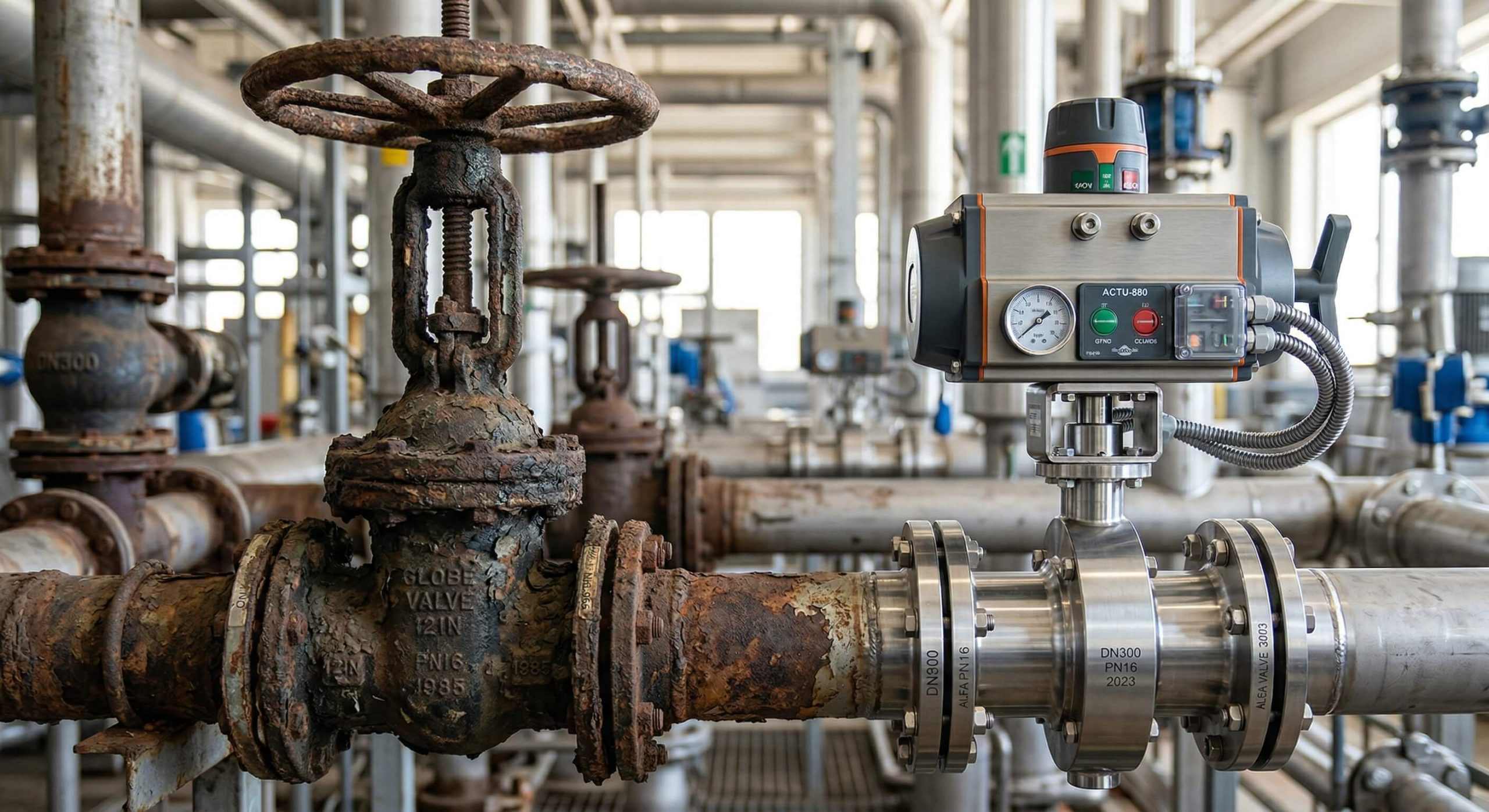
Butterfly valves are characterized by their quarter-turn rotational motion and compact disc-to-stem architecture which facilitates rapid isolation. You often face the problem of bulky, slow-acting valves that increase maintenance time and system footprint. This agitates your operational efficiency, leading to higher labor costs and potential flow bottlenecks in critical pipelines. To optimize your industrial flow systems, understanding the butterfly valve characteristics is the professional solution for achieving high-speed actuation and significant space savings.
Why is design simplicity part of butterfly valve characteristics?
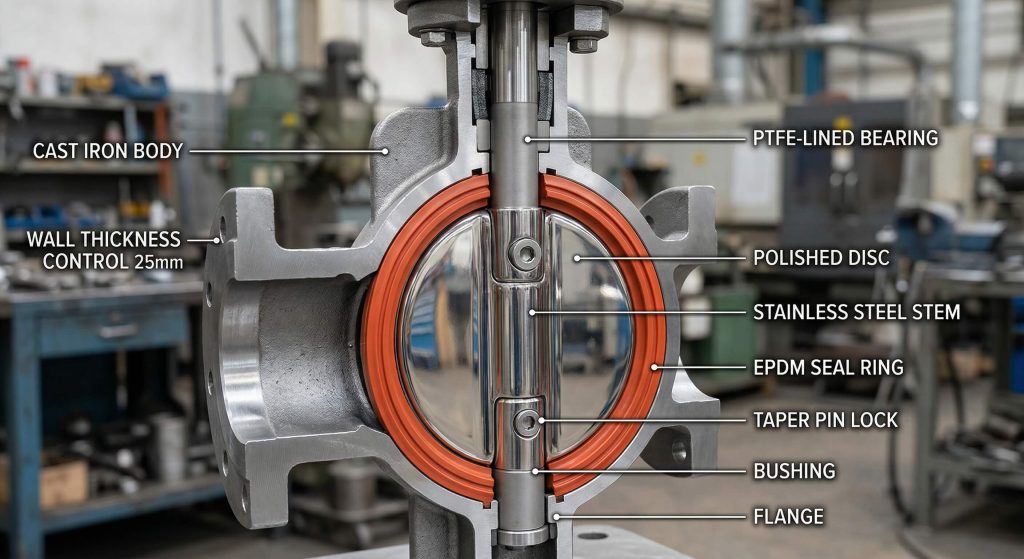
The simple design is a result of having only a few essential parts, primarily the body, seal, disc, and stem. This minimalism is one of the most distinctive butterfly valve characteristics compared to complex gate or globe designs.
You will notice that the absence of heavy internal components reduces the overall weight and manufacturing cost. The sleek, photorealistic appearance of the valve body reveals a high-precision casting that minimizes bulk while maximizing structural integrity.
Does the lightweight design save material?
Yes, the reduced material usage is a direct economic benefit of this valve’s architecture. Because the body is thin and the disc is relatively light, you save significantly on raw material costs and shipping.
Think about this.
- Reduced material weight by up to 60%.
- Lower installation costs due to lighter support structures.
- Streamlined manufacturing process.
Key Takeaway: The simplified structure reduces the total cost of ownership by minimizing material use and making handling easier during field installation.
| Feature | Impact |
|---|---|
| Minimal Components | Reduced failure points |
| Low Weight | Easier installation |
| Thinner Body | Space optimization |
This analysis confirms that structural simplicity directly correlates with reduced procurement and logistical expenses.
How does the disc improve butterfly valve characteristics?
The disc improves the system by acting as a streamlined obstruction that allows for rapid opening and closing. High-quality butterfly valve characteristics ensure that the disc is precision-machined to offer minimal resistance when fully open.
In a professional setting, you can see the disc’s surface polished to a mirror-like finish, reflecting a commitment to fluid dynamics. This smooth surface prevents turbulence and protects the integrity of the media passing through.
Is energy saving a key characteristic?
Absolutely, as the reduced friction translates directly into lower energy consumption for the entire pumping system. When you use valves with optimized flow paths, the pressure drop across the unit remains remarkably low.
But wait, there’s more.
- Low pressure drop reduces pump workload.
- Polished surfaces minimize fluid friction.
- Efficient flow contributes to system sustainability.
Key Takeaway: An optimized disc design minimizes pressure loss, ensuring that your system operates with maximum energy efficiency.
| Component | Benefit |
|---|---|
| Polished Disc | Low friction |
| Centered Stem | Balanced flow |
| Streamlined Edge | Reduced turbulence |
The evidence suggests that disc geometry is a critical factor in maintaining high flow coefficients in industrial networks.
Is durability central to butterfly valve characteristics?
Durability is a core pillar of these valves, often achieved through a robust through-rod stem design. These butterfly valve characteristics allow the valve to withstand high-cycle operations without structural fatigue or misalignment.
The stem is typically crafted from hardened stainless steel, showcasing a matte, industrial-grade texture that resists corrosion. This ensures that the mechanical connection between the actuator and the disc remains firm over years of service.
Are the mechanical properties reliable?
The reliability of these mechanical properties stems from the high-tensile materials used in the stem and body. You can trust these components to handle the stresses of frequent cycling in demanding environments like water treatment.
Here is the deal.
- High-tensile stainless steel stem.
- Corrosion-resistant coating on the body.
- Wear-resistant bushings for smooth rotation.
Key Takeaway: Superior mechanical properties and hardened stems ensure that the valve maintains its operational integrity even under high-frequency usage.
| Metric | Performance |
|---|---|
| Stem Strength | High-cycle ready |
| Material Grade | SS304/SS316 options |
| Wear Resistance | Long service life |
This durability profile demonstrates why these valves are preferred for critical infrastructure where downtime is not an option.
What connection types define butterfly valve characteristics?
Connection versatility is defined by the availability of wafer, lug, and flanged mounting options. These butterfly valve characteristics allow you to integrate the valve into almost any existing piping standard, including DIN, ANSI, and JIS.
The wafer style is particularly noted for its ability to be sandwiched between pipe flanges, creating a very compact assembly. The precision-drilled bolt holes and smooth flange faces ensure a leak-proof interface with the surrounding pipework.
Are butt welding and flange options common?
Yes, they are common for high-pressure or permanent installations where a secure, rigid connection is required. For most industrial valve applications, flanged connections provide the easiest maintenance access.
The best part?
- Compatible with multiple global flange standards.
- Wafer designs for ultra-compact spacing.
- Lug designs for dead-end service capability.
Key Takeaway: Diverse connection methods ensure that these valves can be seamlessly retrofitted into varied industrial piping environments.
| Type | Application |
|---|---|
| Wafer | General space saving |
| Lug | End-of-line service |
| Flanged | Heavy-duty pipelines |
Evaluating connection types allows you to select the most cost-effective and secure mounting method for your specific project.
Which actuators enhance butterfly valve characteristics?
Pneumatic and electric actuators enhance these valves by providing reliable, automated control. These butterfly valve characteristics make them ideal for remote operations where manual intervention is difficult or unsafe.
The image above illustrates the seamless integration of automation components, where the actuator’s robust housing protects the internal gears. This setup allows you to achieve precise positioning and rapid response times in critical fluid loops.
Is automatic operation supported?
Modern butterfly valves fully support automatic operation through standardized ISO mounting pads. You can easily bolt on an actuated solution to manage flow via a central control system or PLC.
Now, let’s look closer.
- ISO 5211 mounting pads for easy automation.
- Rapid 90-degree stroke for quick shut-off.
- Fail-safe options available for safety systems.
Key Takeaway: Automation support through standardized mounting makes these valves a versatile choice for modern, digitally controlled plants.
| Actuator Type | Primary Benefit |
|---|---|
| Pneumatic | High-speed response |
| Electric | Precise modulating control |
| Manual Gear | Cost-effective override |
The ability to automate ensures that your facility can operate with minimal manual labor and maximum process accuracy.
Does size impact butterfly valve characteristics?
Size impacts the valves by allowing them to fit into tighter spaces than gate or globe valves. Compactness is one of the most beneficial butterfly valve characteristics for skid-mounted systems and offshore platforms.
When you inspect a compact butterfly valve, you see a narrow face-to-face dimension that significantly reduces the overall length of the pipeline. This allows for a more dense arrangement of equipment in confined industrial areas.
Is the compact design easy to fit?
The compact design is incredibly easy to fit into existing systems with limited clearance. You can install these units in vertical or horizontal orientations without compromising the structural balance of the pipe.
Simply put.
- Narrow face-to-face dimensions.
- Minimal overhead clearance required.
- Flexible installation orientations.
Key Takeaway: The compact footprint of the butterfly valve enables dense system designs and easier retrofitting in cramped locations.
| Feature | Design Advantage |
|---|---|
| Narrow Width | Space efficiency |
| Light Weight | Low pipe stress |
| Short Stem | Low height profile |
Spatial optimization is a key driver for selecting these valves in complex industrial modules.
How is sealing handled in butterfly valve characteristics?
Sealing is handled by using high-performance resilient liners or metal-to-metal seats to prevent leakage. These butterfly valve characteristics ensure that the valve can provide bi-directional shut-off in various pressure conditions.
The elastomer liner often appears as a vibrant, resilient ring that creates a tight interference fit with the disc edge. This photorealistic detail highlights the precision engineering required to achieve zero-leakage performance in potable water systems.
Is the seal scratch resistant?
High-quality seals are designed to be scratch-resistant and capable of handling abrasive media without losing their sealing integrity. You will find that modern materials like reinforced PTFE or EPDM offer excellent longevity.
Truth be told.
- Resilient seats for bubble-tight shut-off.
- Metal seats for high-temperature service.
- Self-cleaning disc edges to protect the seal.
Key Takeaway: Advanced sealing materials and disc geometry work together to ensure long-term leak prevention and media compatibility.
| Seal Material | Typical Usage |
|---|---|
| EPDM | Water and HVAC |
| PTFE | Chemical processing |
| Stainless Steel | Steam and high temp |
Proper seal selection is the most effective way to guarantee the environmental safety and efficiency of your fluid system.
Why is low torque part of butterfly valve characteristics?
Low torque is a result of the balanced disc design and the short 90-degree travel required for operation. These butterfly valve characteristics mean you can use smaller, more economical actuators to achieve the same results as larger valves.
You will feel the difference in manual operation, where the gear operator turns with minimal effort. This low-friction performance is due to the advanced bearing materials that support the valve stem.
Does the 90-degree rotation help?
The 90-degree rotation helps by making the transition from fully open to fully closed extremely fast. You can achieve rapid isolation in emergency scenarios, which is a critical safety feature.
It gets better.
- Smaller actuators reduce initial costs.
- Faster cycle times improve process speed.
- Reduced wear on mechanical components.
Key Takeaway: Low operating torque translates to smaller actuator requirements and faster system response times.
| Operational Factor | Benefit |
|---|---|
| Quarter-Turn | Rapid shut-off |
| Low Friction | Longer actuator life |
| Balanced Disc | Easy manual override |
This efficiency in movement makes butterfly valves the superior choice for high-speed automated processes.
Can it handle both connection and regulation?
Yes, it can handle both simple on-off connection and sophisticated flow regulation. These butterfly valve characteristics allow for precise throttling, especially when the disc is positioned between 30 and 70 degrees.
In the control room, you will appreciate how linear the flow response is relative to the disc angle. This predictability makes the valve an excellent choice for balancing systems and temperature control loops.
Are fluid control features optimized?
Fluid control features are optimized through specialized disc shapes that reduce cavitation and noise during throttling. You can utilize these valves to maintain steady pressure levels across complex distribution networks.
Bottom line.
- Excellent throttling capabilities.
- Linear flow characteristics.
- Versatile for multiple control functions.
Key Takeaway: The ability to provide both tight shut-off and reliable flow regulation makes this valve a multi-functional tool in fluid engineering.
| Function | Performance |
|---|---|
| Isolation | Bubble-tight |
| Throttling | High precision |
| Mixing | Effective at mid-angles |
By leveraging both characteristics, you can simplify your piping layout and reduce the total number of valves required.
What safety parts affect butterfly valve characteristics?
Safety is enhanced by parts such as the taper pin, which secures the disc to the stem, and blowout-proof stem designs. These butterfly valve characteristics prevent catastrophic failures where the disc could become detached or the stem could be ejected under pressure.
You can observe the robust taper pins machined to tight tolerances, ensuring they remain seated even under intense vibration. This attention to detail reflects a “safety-first” manufacturing philosophy.
Is the taper pin used for safety?
The taper pin is essential for safety as it provides a mechanical lock that prevents the disc from slipping on the stem. You gain peace of mind knowing that the valve will respond exactly as commanded by the actuator.
Make no mistake.
- Taper pins ensure mechanical synchronization.
- Blowout-proof stems prevent injuries.
- Heavy-duty body castings withstand surges.
Key Takeaway: Integrated safety features like taper pins and blowout-proof stems are non-negotiable for high-pressure industrial applications.
| Safety Feature | Risk Mitigated |
|---|---|
| Taper Pin | Disc slippage |
| Blowout-Proof Stem | Stem ejection |
| Locking Handle | Unauthorized operation |
Ensuring these safety components are present is the final step in selecting a high-performance valve for your facility.
Conclusion
We have explored how a simple structure, optimized discs, and robust materials solve the problems of space, energy loss, and durability. Our engineering team can provide you with precision-manufactured valves that are 100% pressure-tested and fully documented to de-risk your procurement process. We invite you to contact us for a technical consultation to discover how our solutions can optimize your industrial operations.
Our vision is to deliver high-reliability fluid control systems that empower global industries to operate with absolute safety and efficiency.
Frequently Asked Questions
Can I use a butterfly valve for high-pressure steam?
Judgment: Generally no, unless it is a specialized triple-offset metal-seated design. Standard resilient-seated valves are better suited for water, air, and low-pressure utilities.
What’s the best seat material for chemical applications?
Judgment: PTFE is usually the best choice. It offers superior chemical resistance and can handle a wide range of aggressive media without degrading.
How do I know if my butterfly valve needs maintenance?
Judgment: Look for signs of leakage around the stem or through the seat when closed. Increased operating torque or unusual noise during actuation are also clear indicators that service is required.
Can I install a butterfly valve in any orientation?
Judgment: Yes, they are highly flexible. However, for media with suspended solids, a horizontal stem orientation is often recommended to prevent debris buildup in the lower bearing.
What’s the best way to prevent disc corrosion?
Judgment: Selecting the correct material grade, such as SS316 or specialized coatings, is the most effective method. Ensure the material is compatible with your specific media and temperature range.